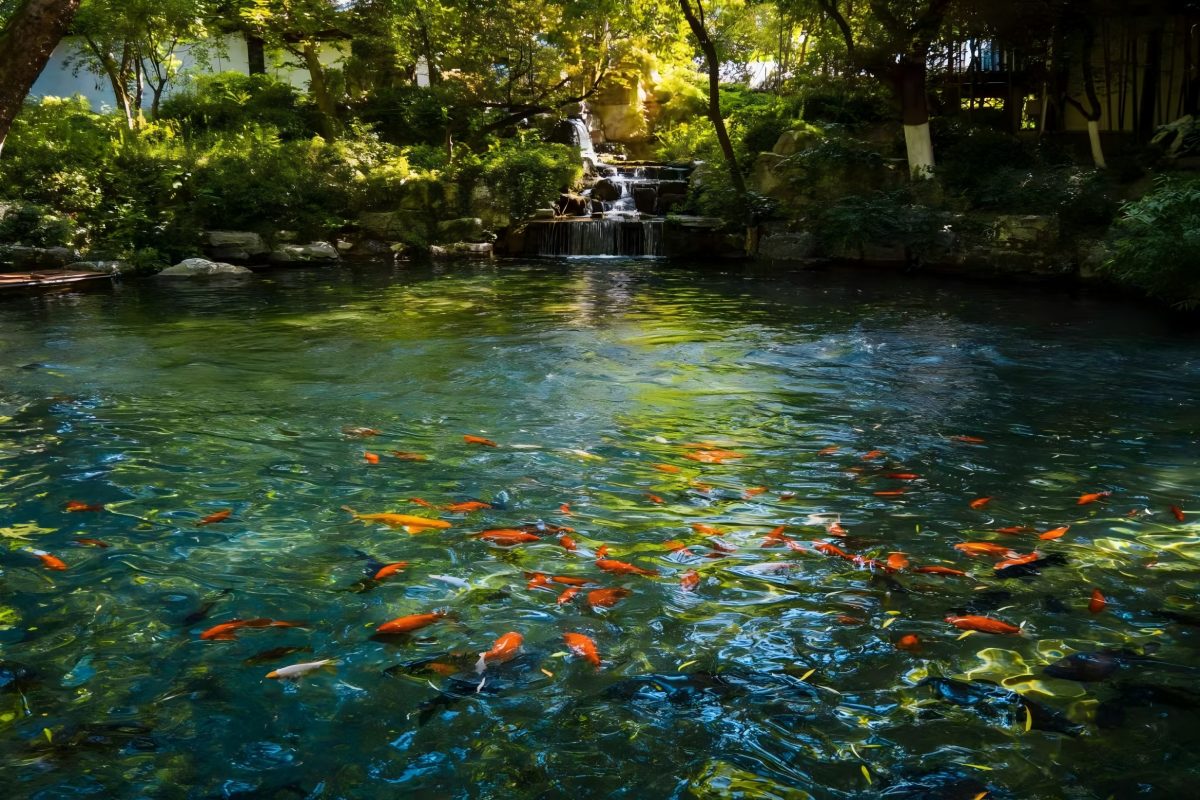
Baotu Spring Jinan
Baotu Spring Highlights
1、Visit the famous No.1 Spring Under Heaven
2、Explore Jinan's rich history and traditional gardens
3、Stay in carefully selected 4-star+ hotels
4、Taste authentic Shandong cuisine
5、Optional visits to Mount Tai and Confucius Temple
6、Flexible itineraries designed by local experts
7、Experience the true charm of China's City of Springs.
Baotu Spring Jinan: The Complete Travel Guide for International Visitors (2026)
Discover the Heart of China’s Spring City
If you're planning a trip to Jinan, the capital of Shandong Province, one attraction should be at the top of your list: Baotu Spring (Baotu Quan). Known as the "No.1 Spring Under Heaven," Baotu Spring is the most famous natural spring in China and the symbol of Jinan, often called the City of Springs.
With crystal-clear water, over 2,000 years of history, beautiful traditional gardens, and rich local culture, Baotu Spring offers visitors a perfect blend of nature, history, and authentic Chinese charm.
Whether you're a first-time visitor to China or a seasoned traveler looking for hidden cultural gems, Baotu Spring is a destination you shouldn't miss.
Quick Facts About Baotu Spring
| Item | Information |
|---|---|
| Chinese Name | 趵突泉 (Baotu Quan) |
| Location | Jinan, Shandong Province, China |
| Famous For | Three natural spring water jets |
| Nickname | No.1 Spring Under Heaven |
| Established | More than 2,000 years ago |
| Recommended Visit Time | 2–3 hours |
| Best Seasons | Spring, Autumn, Winter |
| Suitable For | Families, Culture Lovers, Photographers, Nature Enthusiasts |
Why Is Baotu Spring Famous?
Baotu Spring is not just a scenic attraction—it's the cultural and historical soul of Jinan.
The spring is famous for three main reasons:
1. The Three Water Spouts
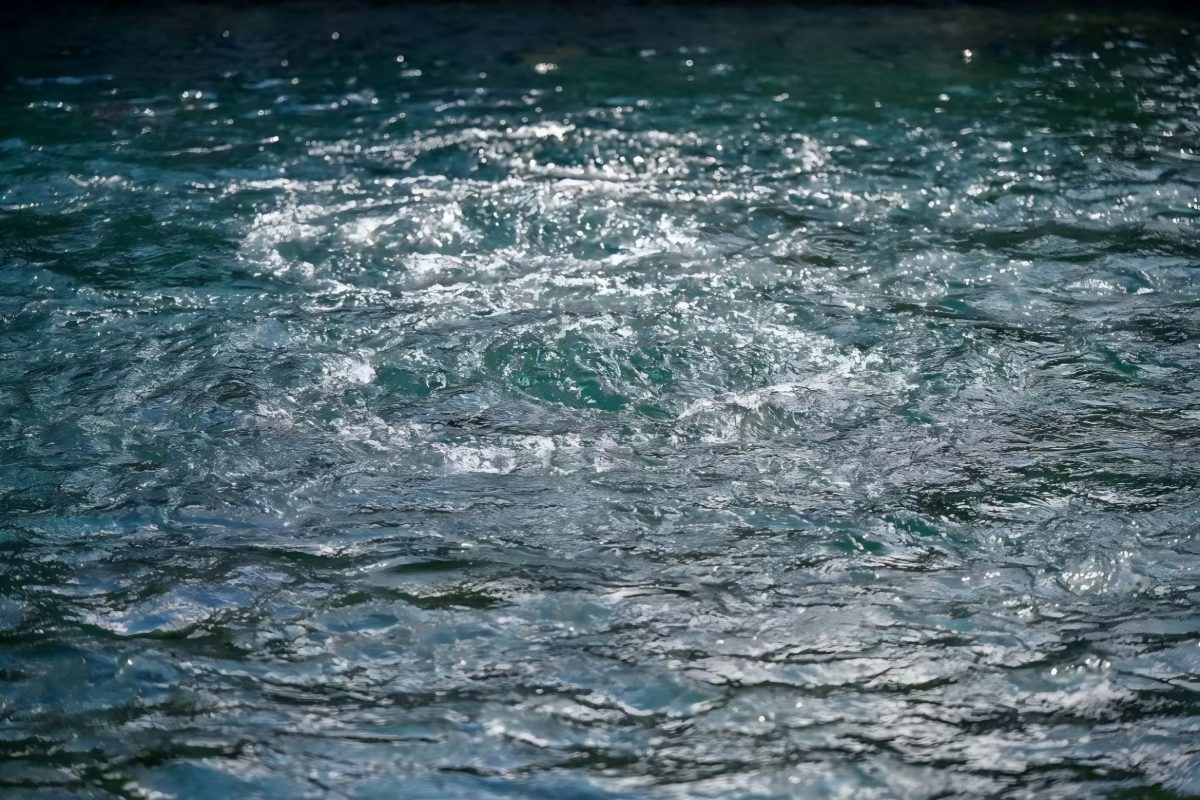
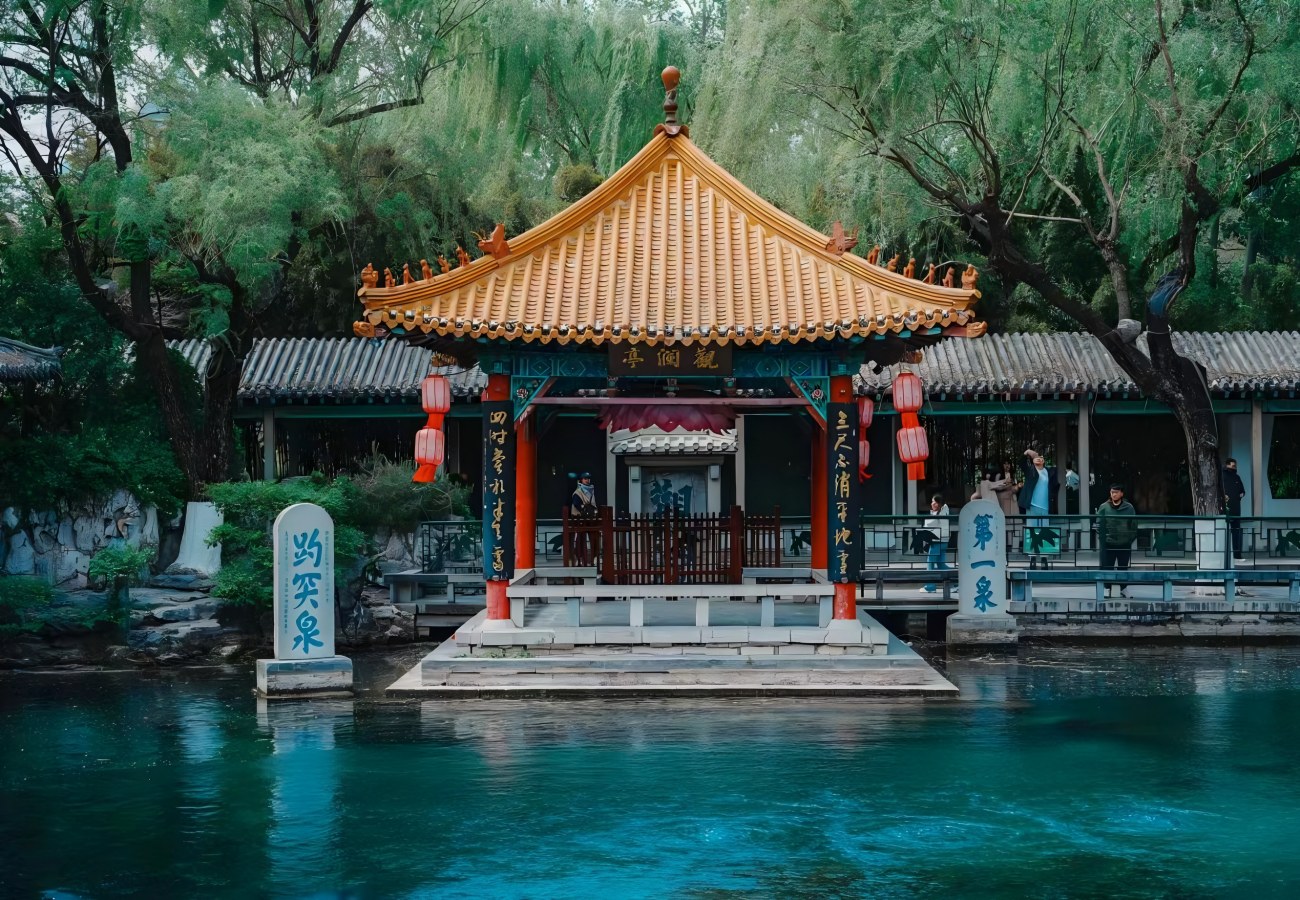
At the center of the spring pool, three powerful streams of groundwater continuously surge from underground limestone formations. Even during dry seasons, the spring never stops flowing.
This remarkable natural phenomenon has amazed visitors for centuries and remains one of China's most celebrated spring landscapes.
2. More Than 2,000 Years of History
Baotu Spring has been documented since ancient times and has inspired emperors, poets, scholars, and travelers throughout Chinese history.
3. The Symbol of Jinan
Jinan is known throughout China as the "Spring City", and Baotu Spring is its most iconic landmark.
For many Chinese people, visiting Jinan begins with visiting Baotu Spring.
What Makes Baotu Spring Special?
One of the most fascinating features of Baotu Spring is its constant water temperature.
The spring water remains around 18°C (64°F) throughout the year.
In Winter
A layer of mist rises above the warm spring water, creating a dreamlike landscape surrounded by willow trees and traditional Chinese pavilions.
In Summer
The cool spring water offers refreshing relief from the heat.
After Rainfall
The underground water pressure increases, making the three spring jets surge even higher and creating one of the most spectacular views in Jinan.
I. The No.1 Spring Under Heaven: The Natural Wonder of Three Water Spouts
The core charm of Baotu Spring lies in its spring eye that gushes year-round. Li Daoyuan, a geographer of the Northern Wei Dynasty, recorded it in The Commentary on the Water Classic: "The spring surges upward, its waters bubbling like a spinning wheel" – a vivid description of the spring’s rushing flow. The "three water spouts" we see today are the result of confined groundwater breaking through rock formations; at their highest, they can reach several feet, and they never dry up even in dry seasons. This is due to Jinan’s unique geological structure: the limestone of the remaining Taishan Mountains acts as a "natural filter", allowing rainwater to seep and converge into underground rivers, which finally gush out at Baotu Spring, creating the spectacle of "water flowing under rocks, springs rising from rocks".
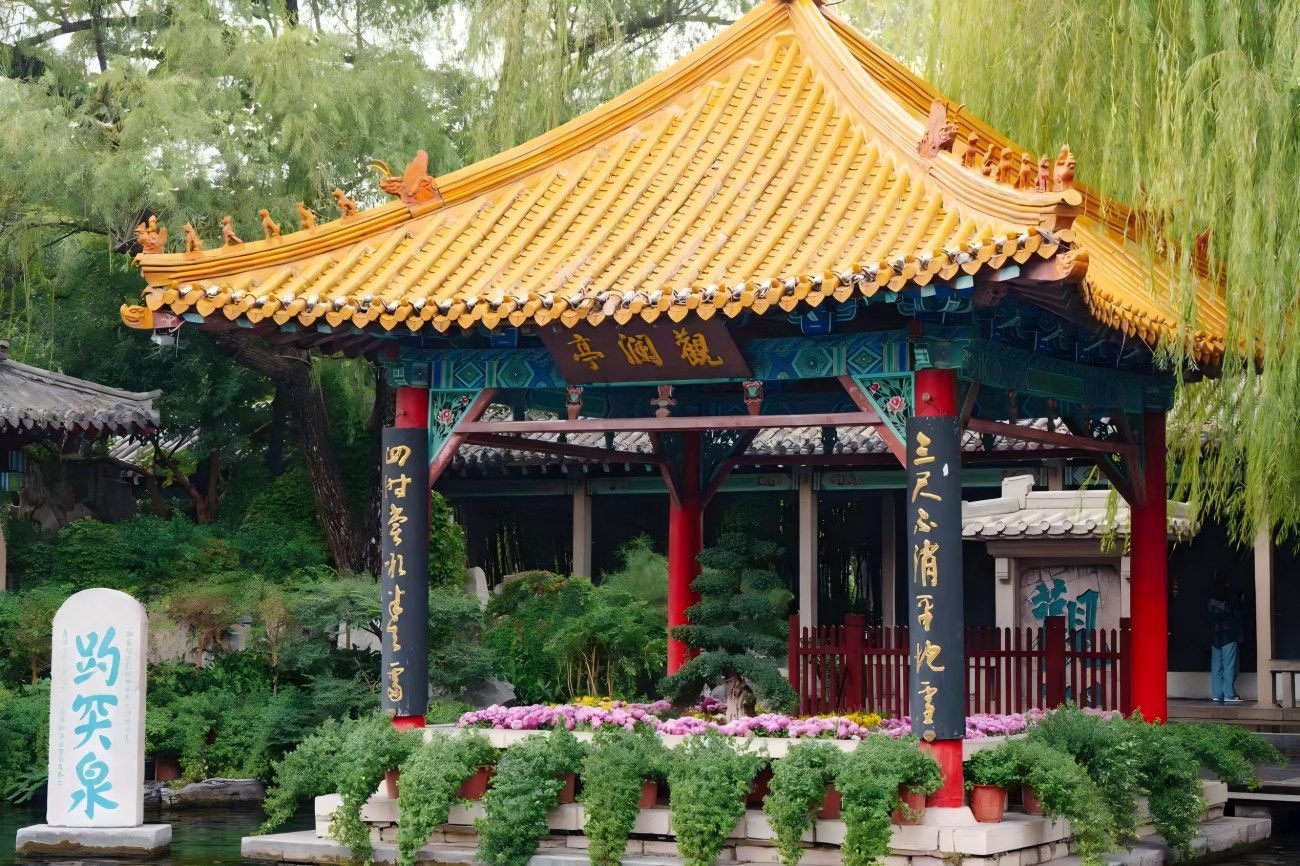
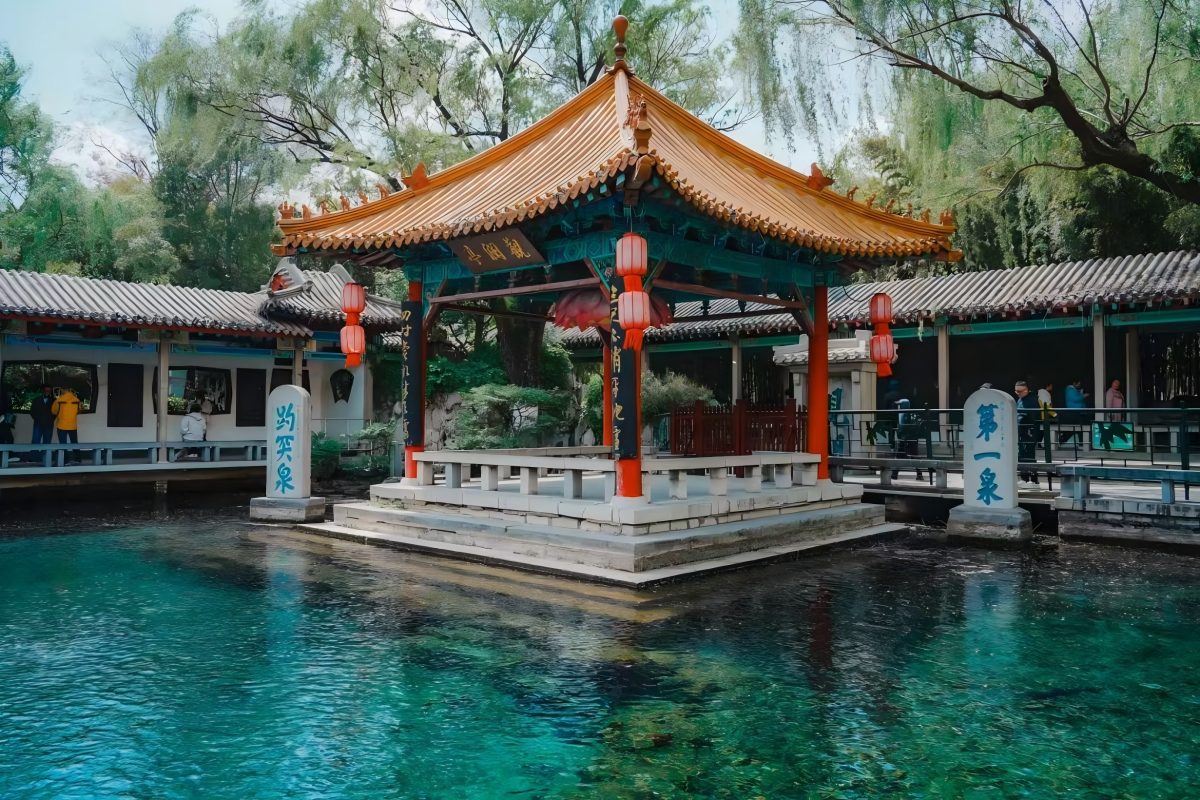
Standing beside Guanlan Pavilion, you will notice the spring water is crystal clear, with a constant temperature of around 18°C. In cold winter, mist shrouds the water surface, blending with the willows and ancient pavilions on the bank to form a scroll-like scene – a hallmark of Jinan’s "warm in winter, cool in summer" spring city charm. After rain, the spring gushes more vigorously; the three water columns intertwine in the air, and water droplets splash into the spring pool, making a clear "ding-dong" sound like nature’s symphony.
II. A Millennium of Cultural Heritage: From Imperial Inscriptions to Literati Calligraphy
Baotu Spring’s history is a cultural chronicle intertwined with celebrities and scholars. Its origins date back to the Shang Dynasty, when it was part of "Lishan" where ancient people settled. Archaeologists have found Shang Dynasty pottery shards by the spring, proving humans lived here by the spring over 3,000 years ago. In the Song Dynasty, Zeng Gong – then magistrate of Qizhou (modern-day Jinan) – not only named the spring "Baotu" (meaning "leaping and surging") but also oversaw the construction of the first spring pool railings and drainage system. This ensured the spring nourished locals without causing floods, and his experience in water management was detailed in Notes on the Two Halls of Qizhou, an important document for studying Baotu Spring’s history.
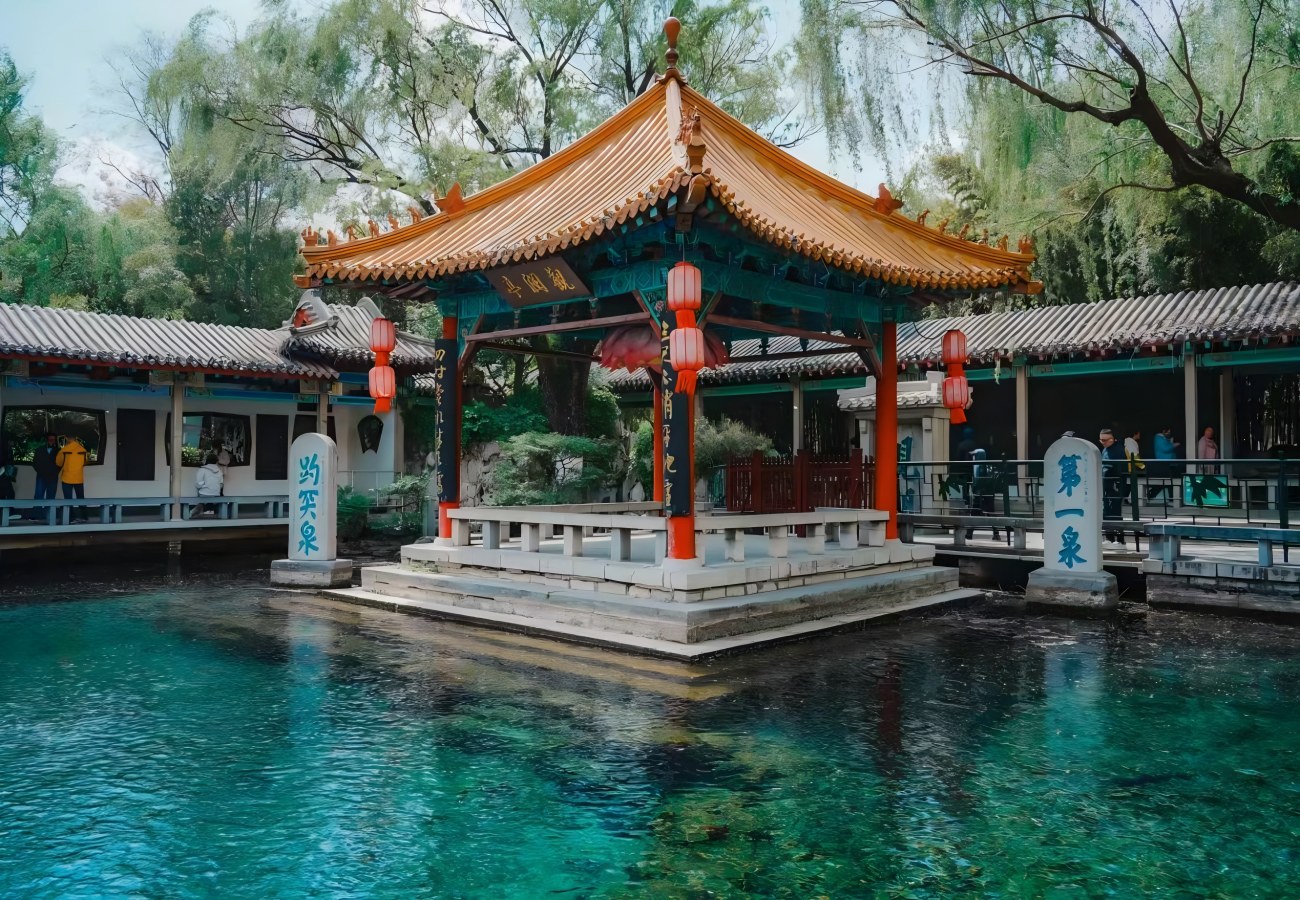
During the Ming and Qing dynasties, Baotu Spring became a "check-in spot" for emperors and literati. When Emperor Kangxi of the Qing Dynasty made a southern tour, he hosted a banquet at "Lixia Pavilion" by the spring. Impressed by the spring’s surging flow, he wrote the two characters "Jituan" (meaning "turbulent rapids") in calligraphy; the stone stele with these powerful characters still stands east of the spring pool. Emperor Qianlong, who made six southern tours, stopped at Baotu Spring every time he passed Jinan. He not only left his imperial calligraphy "No.1 Spring Under Heaven" (the current stele by the pool is a Qing Dynasty replica, with the original kept in Jinan Museum) but also ordered the renovation of buildings by the spring – rebuilding Guanlan Pavilion into a wooden structure with carved railings, making it both functional and ornamental.
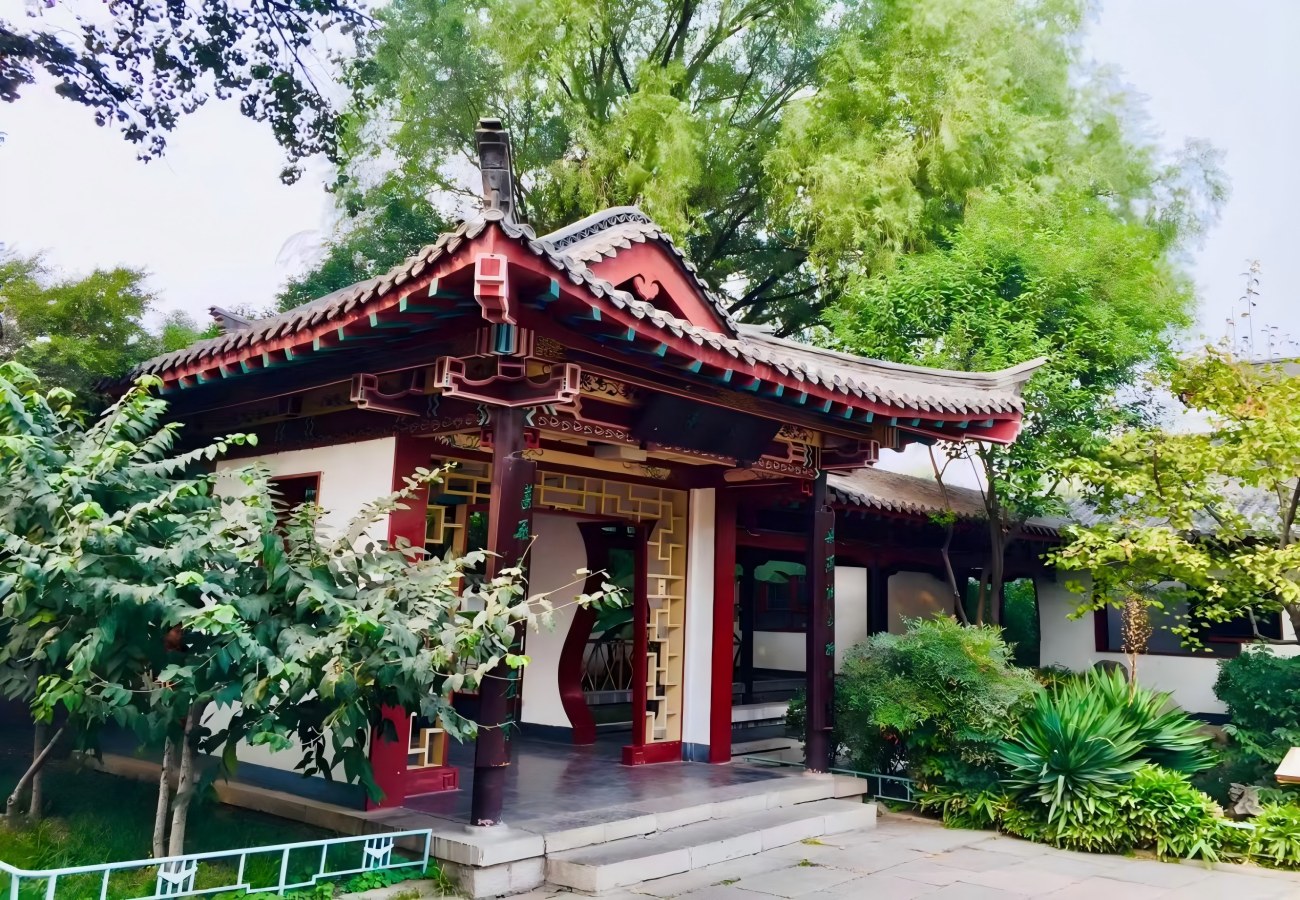
Beyond emperors, literati held a special affection for Baotu Spring. Pu Songling, a great Qing Dynasty writer, set up a tea shed by "Liuquan Spring" (near Baotu Spring), offering free tea to passersby while collecting folk tales. Many stories in his Strange Tales from a Chinese Studio drew inspiration from this, such as the plot in The Cricket ("The magistrate of Huayin wanted to curry favor with his superior, so he presented a cricket") – adapted from locals’ accounts. Wang Shizhen, a Ming Dynasty litterateur, wrote Ode to Baotu Spring after his visit, with lines like "White Dragon Spring sprays snowflakes; Ink Spring churns clouds like dancing black dragons" – vividly capturing the spring’s grace and grandeur. Wandering by the spring, every stone stele and ancient pavilion holds a piece of history; touching the cool stele, you feel as if you’re conversing across time with literati of a thousand years ago.
III. Legends and Beliefs: Stories of White Dragon Spring and Lüzu Temple
Besides its profound history, Baotu Spring is steeped in magical folk legends – passed down orally, they are an integral part of Jinan’s culture. The most famous is "The Story of White Dragon Spring". Legend has it that long ago, Jinan suffered a three-year drought: fields cracked, rivers dried up, and locals searched in vain for water, many on the brink of death. One day, Bai Yu, a young woodcutter, fainted from exhaustion while chopping wood on the mountain. In his dream, an immortal with white hair told him: "A white dragon is trapped under the rock formation; chiseling through the rock will release the spring and save the people."
Waking up, Bai Yu immediately told the villagers about his dream. Though skeptical, they decided to join him in chiseling for water to survive. Armed with hoes and hammers, they worked day and night – their hands blistered, shoulders sore – but no one gave up. After 49 days of digging, just as they were about to despair, a loud "boom" echoed: the rock cracked, and clear spring water gushed out, instantly filling dry rivers and moistening parched fields. The villagers rejoiced; to honor Bai Yu’s courage and perseverance, they named the spring "White Dragon Spring" (an old name for Baotu Spring) and built "White Dragon Shrine" by it. Today, the shrine still houses a statue of Bai Yu leading villagers to chisel for the spring – his determined gaze and the villagers’ hopeful expressions vividly recreating that touching scene. Even now, during dry seasons, locals still come to the shrine to pray for abundant spring water and a bumper harvest.
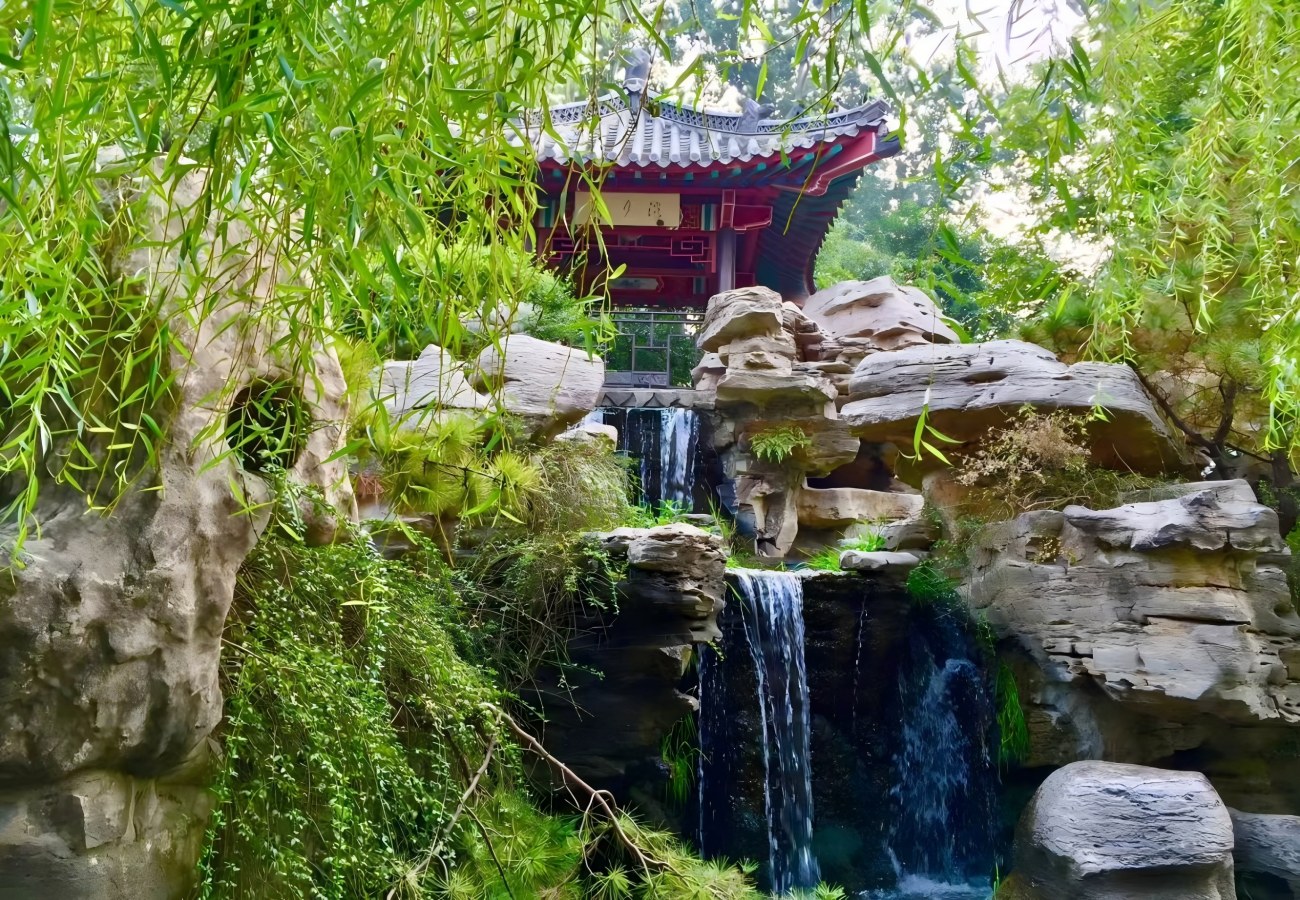
"Lüzu Temple" west of the spring pool is closely tied to Taoist culture. Founded in the Song Dynasty and renovated in the Ming and Qing dynasties, the temple retains the architectural style of the Daoguang era of the Qing Dynasty. Legend has it that Lü Dongbin – one of the Eight Immortals in Taoism – traveled to Jinan and, struck by Baotu Spring’s clear, vital water, set up an alchemy furnace here to refine the elixir of immortality. The "alchemy furnace" in the temple is made of bluestone, carved with the Eight Trigrams pattern, and remains well-preserved after hundreds of years of wind and rain. The statue of Lüzu in the main hall is about three meters tall, wearing a Taoist robe and holding a fly whisk, with a serene expression; the incense burner in front of the statue is always filled with smoke, attracting many Taoist believers. On Lüzu’s birthday (the 14th day of the 4th lunar month), the temple hosts a grand traditional fair: a stage is set up in the square for Peking Opera, Lü Opera, and other traditional performances, while folk crafts like dough figurines, sugar blowing, and paper cutting are displayed. Vendors sell candied hawthorns, cotton candy, and other snacks – adults and children weave through the crowd, creating a lively scene that is a highlight of Jinan’s folk culture. These legends not only add mystery to Baotu Spring but also reflect Jinan people’s reverence for nature, admiration for heroes, and yearning for a better life.
IV. Must-Visit Attractions: Elegance in Every Step
When visiting Baotu Spring, don’t miss these attractions besides the main spring eye – each has unique scenery and stories worth savoring:
Guanlan Pavilion
The best spot to view Baotu Spring’s "three water spouts", Guanlan Pavilion dates back to the Northern Song Dynasty. Originally a stone structure, it was rebuilt as a wooden pavilion in the Ming Dynasty; the current pavilion was reconstructed during the Tongzhi era of the Qing Dynasty. Facing south with its back to the spring pool, it hangs a plaque inscribed with "Guanlan" (meaning "viewing the surging waves") – written by Shao Zhengji, a famous calligrapher of the Ming Dynasty, in bold regular script that subtly complements the spring’s grace. Two couplets are carved on the pavilion’s four pillars: the west couplet – "Three feet of unfading snow on the flat ground; a thunderous roar in the air all year round" – vividly describes the spring’s year-round gushing (like perpetual snow) and roaring sound (like thunder). The east couplet – "Mist moistens Huabuzhu Mountain; waves resound through Daming Lake" – is quoted from Baotu Spring by Zhao Mengfu, a Yuan Dynasty poet, linking Baotu Spring to Jinan’s Huabuzhu Mountain and Daming Lake, showcasing the city’s integrated landscape of mountains and waters. Standing in the pavilion, you can watch the rise and fall of the three water columns up close; occasional water droplets on your face bring a touch of coolness. On rainy days, the pavilion keeps you dry while you listen to the blend of rain and spring sounds – a unique delight.
2. Li Qingzhao Memorial Hall
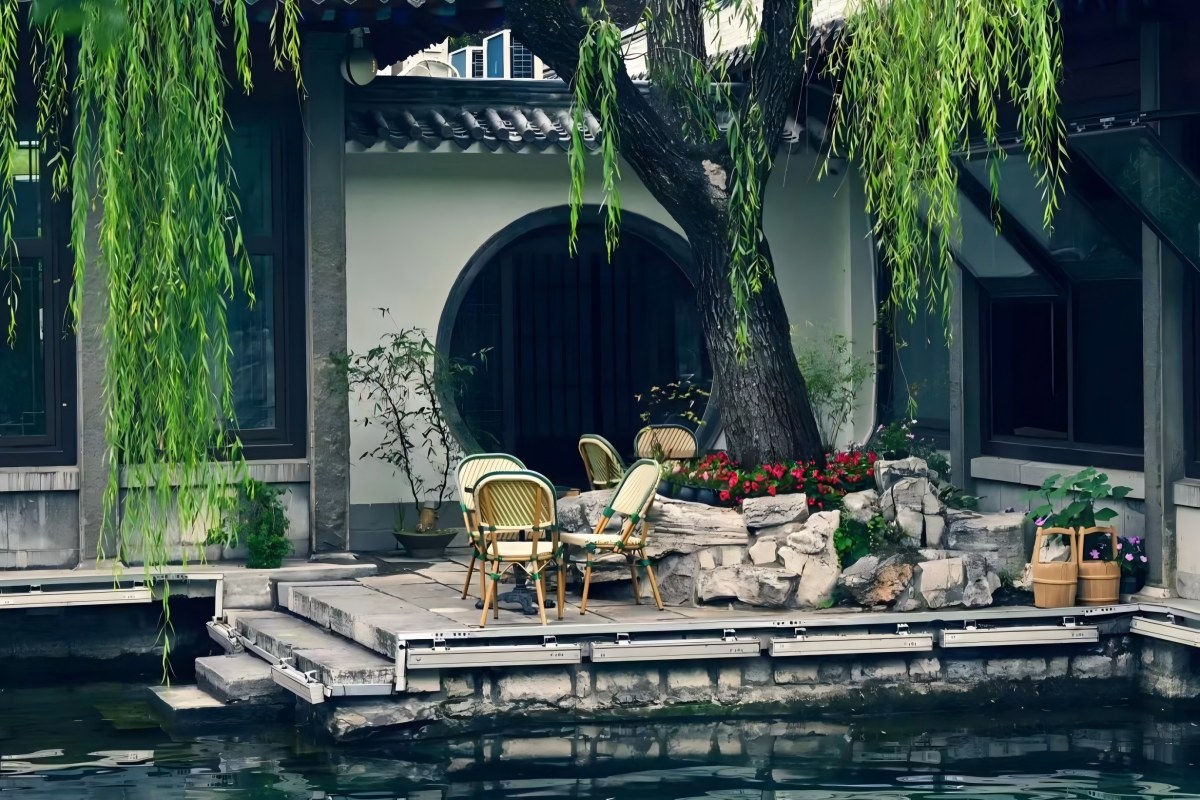
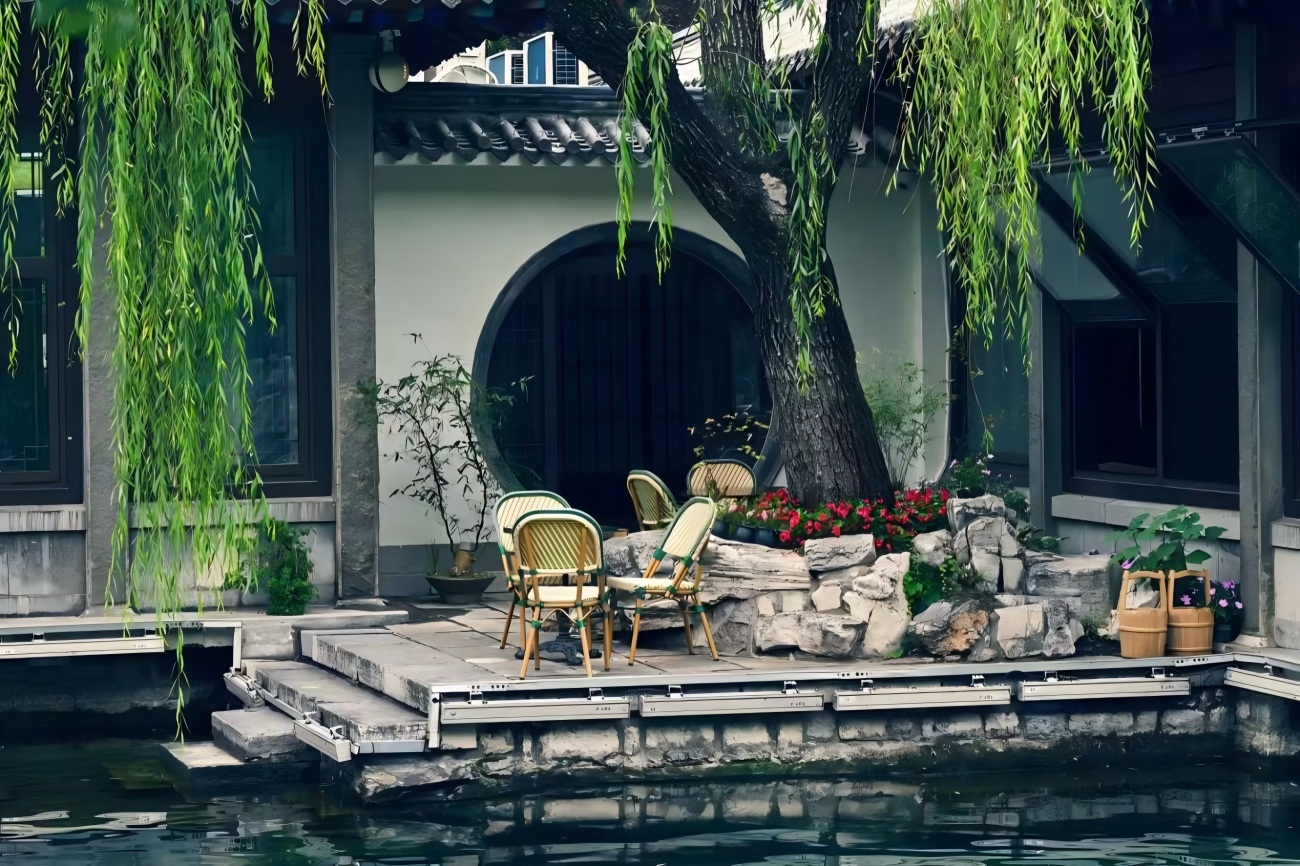
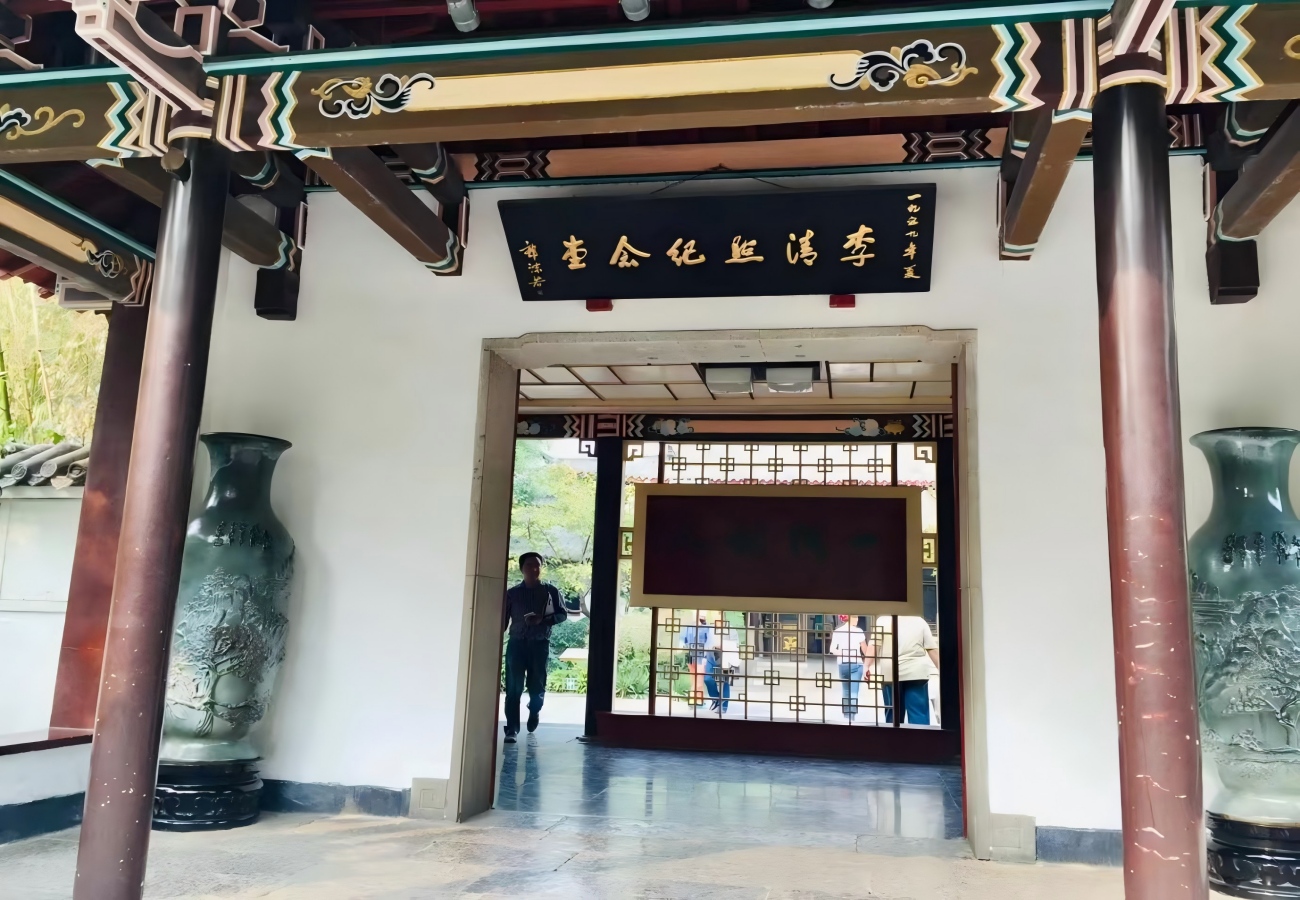
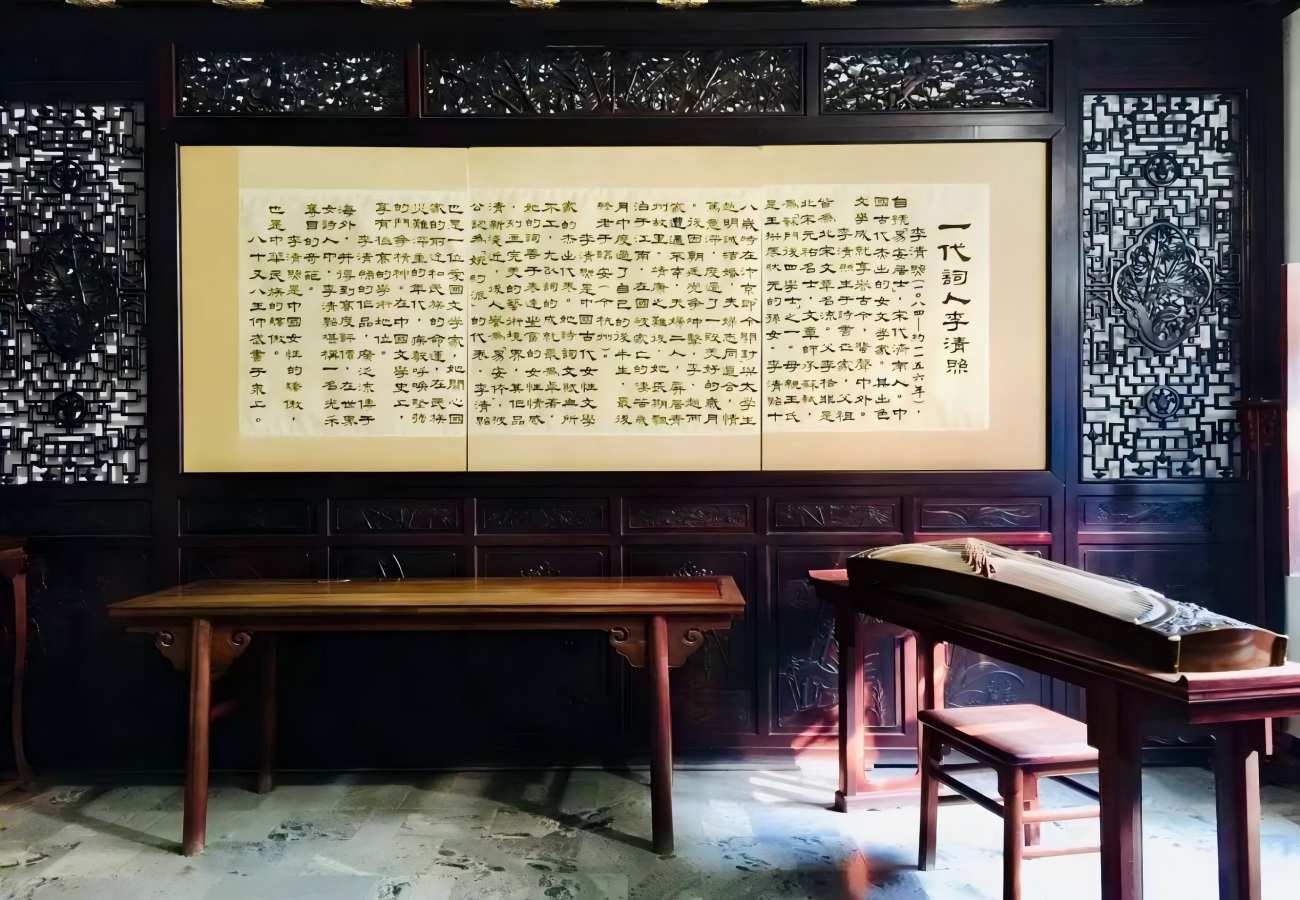
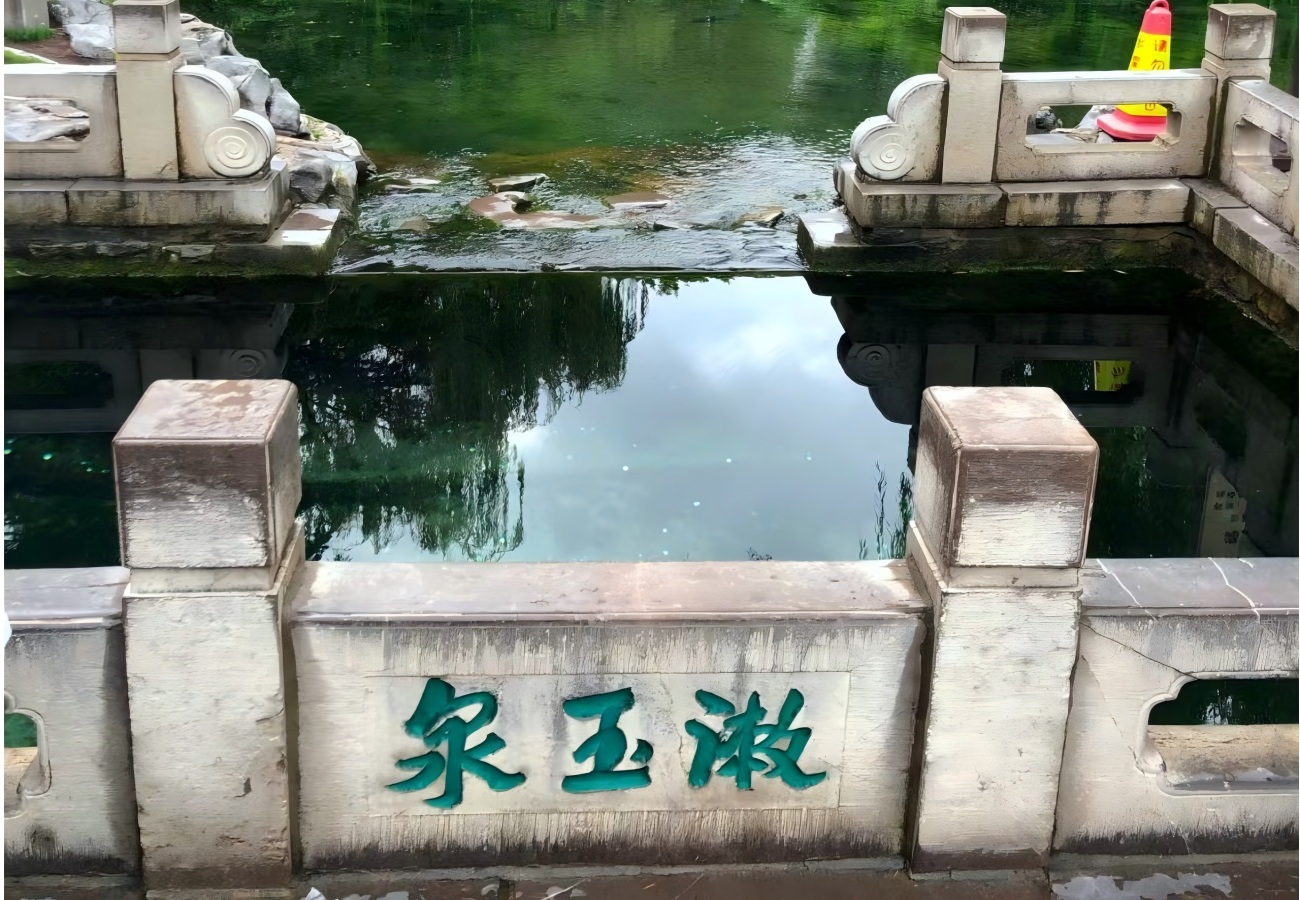
Jinan is the hometown of Li Qingzhao, a renowned female poet of the Song Dynasty. To honor this "greatest female poet of all time", Jinan Municipal Government built this memorial hall in 1959 within the Baotu Spring scenic area, and expanded it in 2000. Covering about 3,000 square meters, the hall centers on "Shuyu Spring" and adopts the architectural style of Jiangnan gardens – white walls, black tiles, and small bridges over flowing water, exuding gentle elegance. The gate hangs a plaque inscribed with "Li Qingzhao Memorial Hall" by Guo Moruo, a modern scholar, in free and elegant calligraphy. The courtyard is planted with crabapples, bamboo, and plantains: crabapples bloom pink and white in spring, plantains provide shade in summer, and bamboo sways gently in autumn – perfectly matching the mood of Li Qingzhao’s poems. The hall has three exhibition halls (east, west, and central): the central hall displays panels on Li’s life – from her innocent youth ("I often recall the sunset by Xiting, too drunk to find my way back"), to her sweet married life with her husband Zhao Mingcheng ("betting on books and splashing tea"), to her lonely old age ("Searching, seeking, cold, clear, sorrowful, miserable, painful") – fully presenting the poet’s life journey. The east hall exhibits various editions of Li’s poems, including Song Dynasty block-printed editions, Ming Dynasty handwritten copies, and modern translations, showing how her works have been interpreted and passed down over time. The west hall displays calligraphy and paintings in memory of Li, including works by famous modern calligraphers like Qi Gong and Zhao Puchu. Beside the memorial hall lies Shuyu Spring – named because Li often washed her face, combed her hair, and composed poems here. The spring water is crystal clear, with green aquatic plants growing in it; the stone wall by the spring is inscribed with "Shuyu Spring" by Wang Zhonglin, a Qing Dynasty calligrapher. Sitting on the stone bench by the spring and reciting Li’s poems softly, you can almost feel her state of mind when creating here.
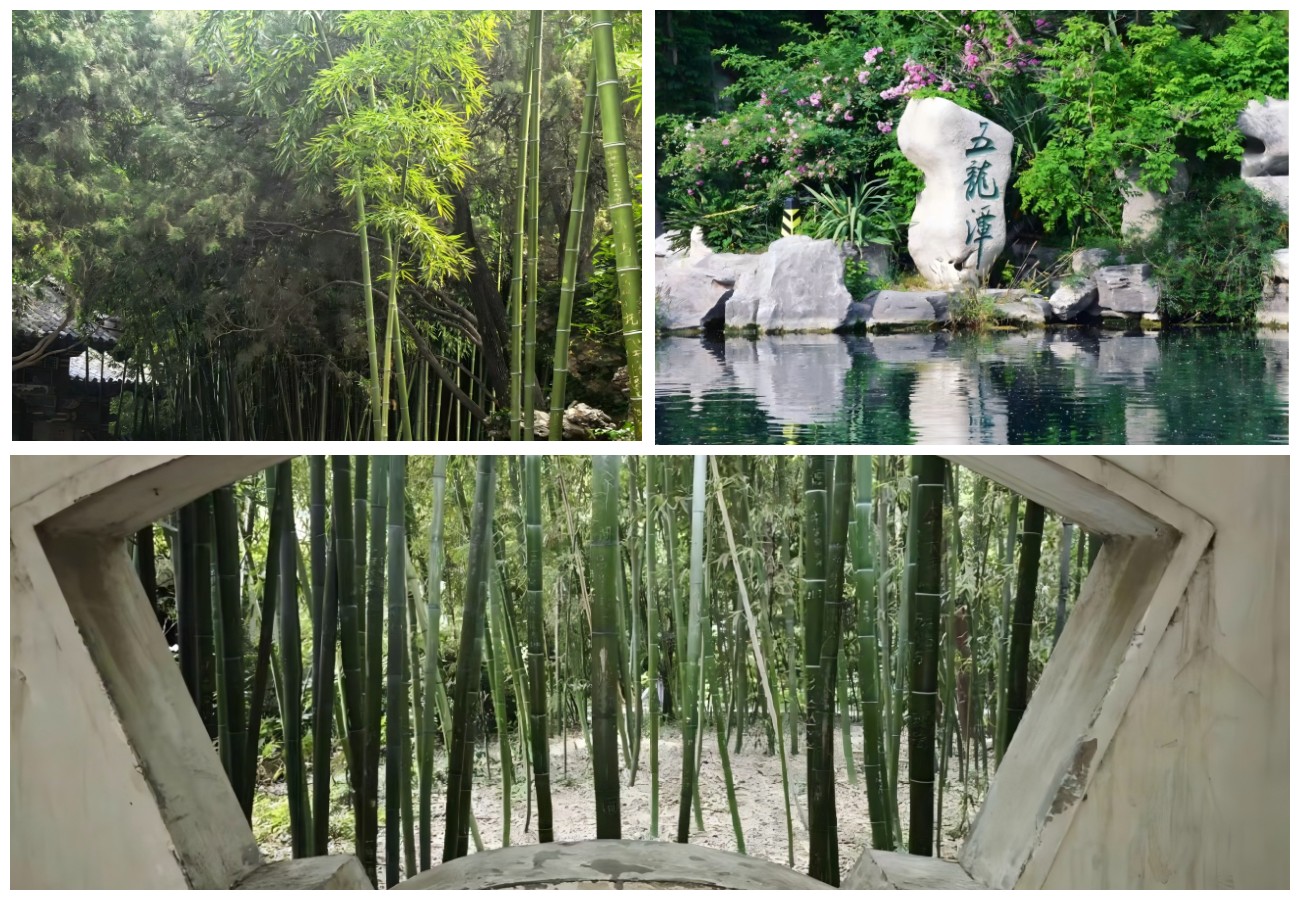
3. Wanzhu Garden
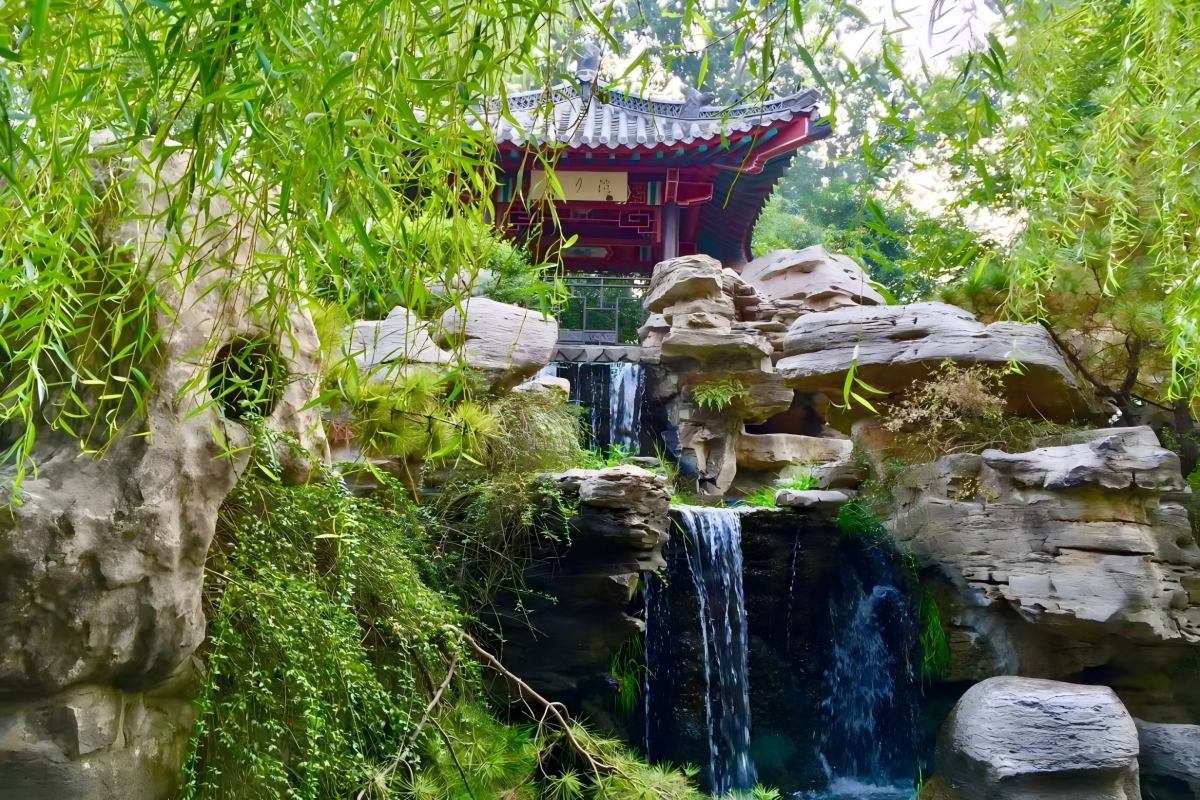
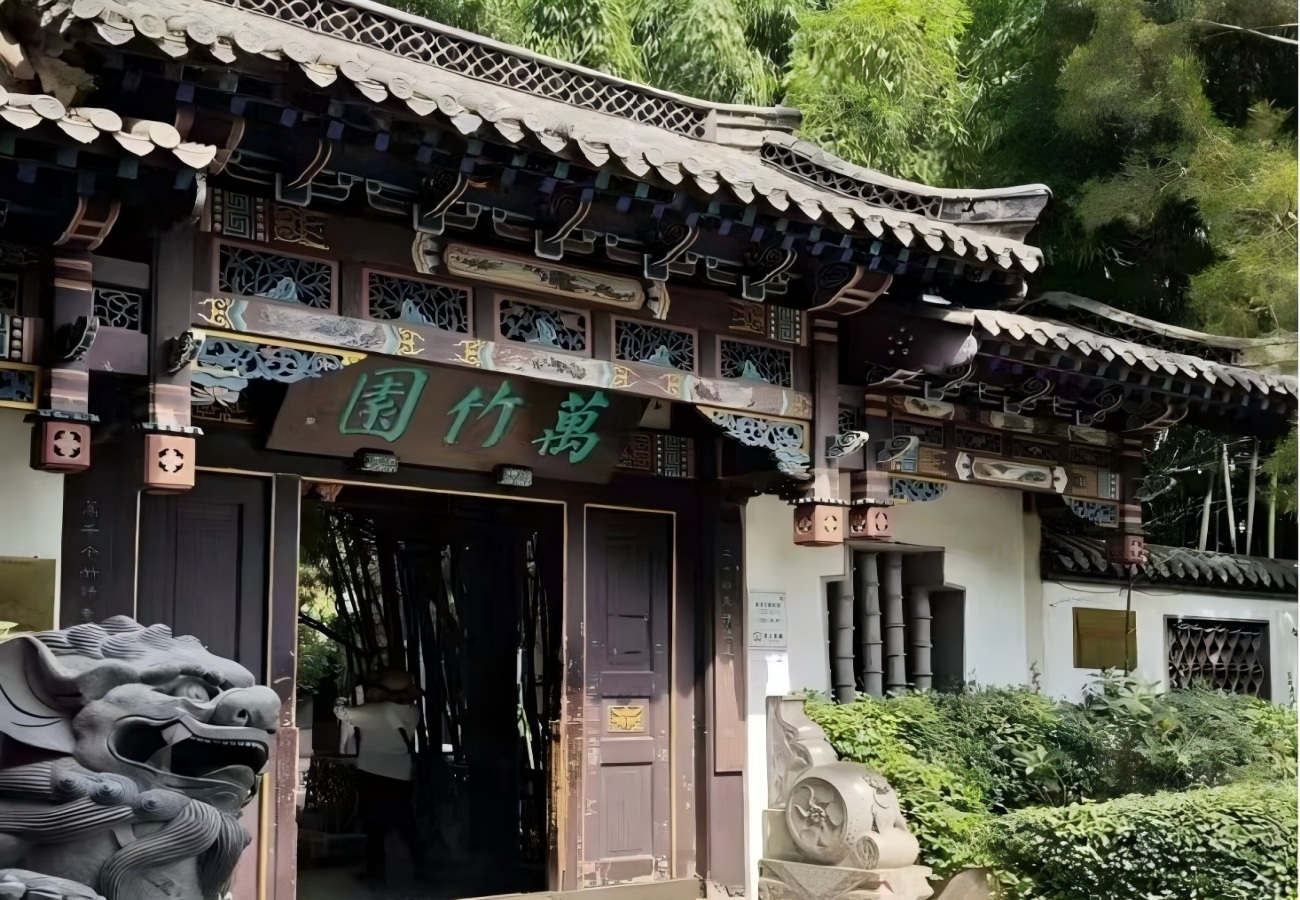
Adjacent to the west of Baotu Spring, Wanzhu Garden was founded in the Yuan Dynasty as a Taoist sacred site, became an official residence in the Ming Dynasty, and was expanded by Zhang Yao (Governor of Shandong) during the Guangxu era of the Qing Dynasty into a complex integrating residence, garden, and ancestral temple. Now the largest auxiliary attraction in the Baotu Spring scenic area, it is known as "Jinan’s Top Garden". Covering about 45,000 square meters, it consists of 13 courtyards and 186 rooms, following the traditional layout of "residence in the front, garden in the back". Its architecture blends the regularity of northern quadrangle courtyards with the grace of Jiangnan gardens – featuring tall gate towers, spacious halls, winding corridors, and small pavilions. The rockery in the garden is a highlight: made of Taihu stones, it stands about 8 meters high, with winding paths on top for viewing the scenery and connected caves below (cool in summer, a popular refuge from heat). Beside the rockery is "Jinghu Pool" (Mirror Lake), filled with water from Baotu Spring; its clear surface reflects the willows and pavilions on the bank, rippling gently in the breeze – a delightful sight. Wanzhu Garden is also a "treasure trove of calligraphy art": its walls and steles are inscribed with works by calligraphers of all dynasties, including copies of masterpieces by Wang Xizhi, Yan Zhenqing, and Liu Gongquan. The most famous is "Yuxiu Screen" – a stone wall composed of 108 steles, inscribed with the full text of Diamond Sutra by Dong Qichang, a Ming Dynasty calligrapher, in delicate and exquisite handwriting – a masterpiece of calligraphy. Additionally, the garden houses a large collection of Ming and Qing furniture, porcelain, and other cultural relics, allowing visitors to appreciate the beauty of the garden while experiencing the charm of ancient Chinese culture.
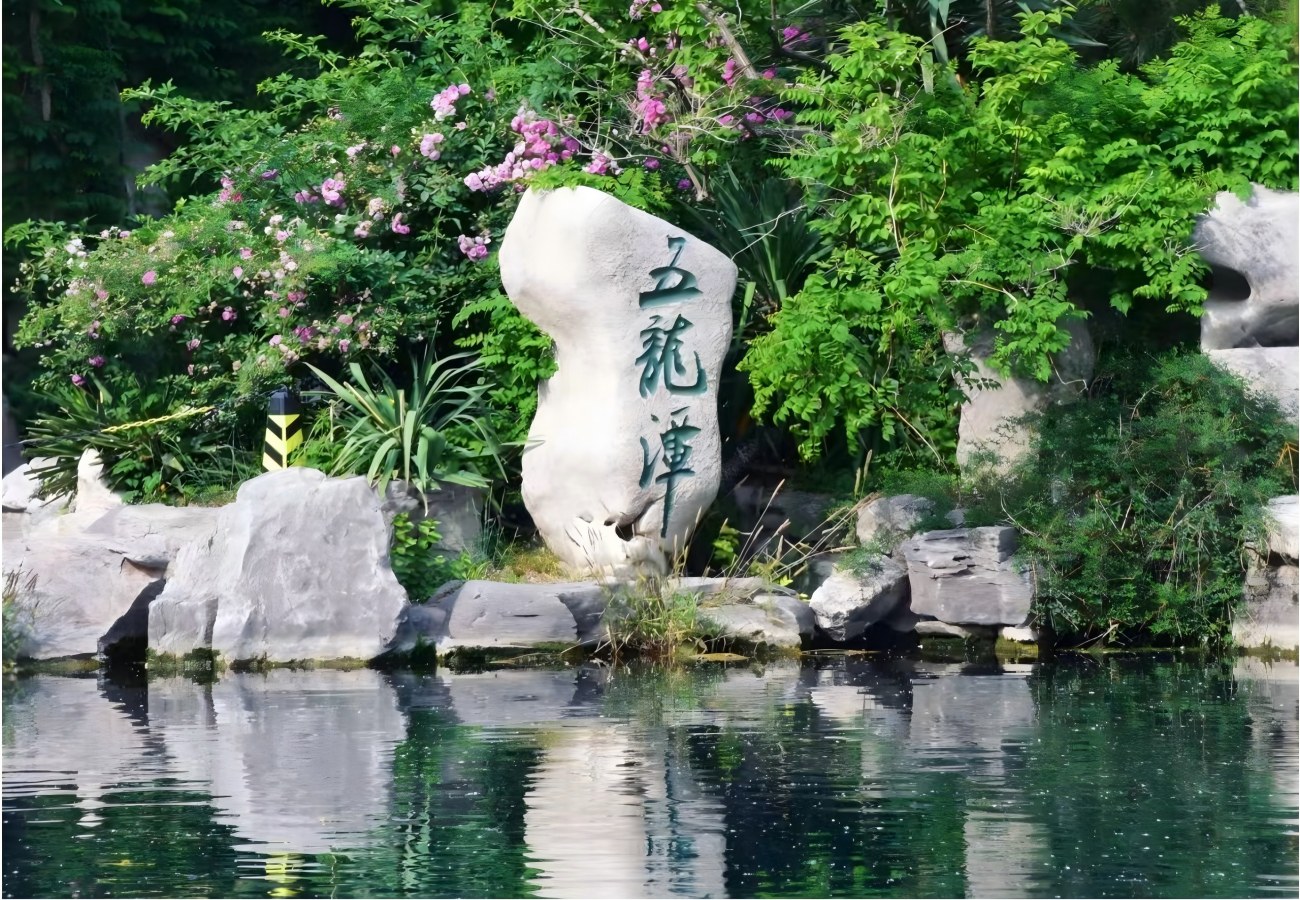
4. Wulongtan (Five-Dragon Pool)
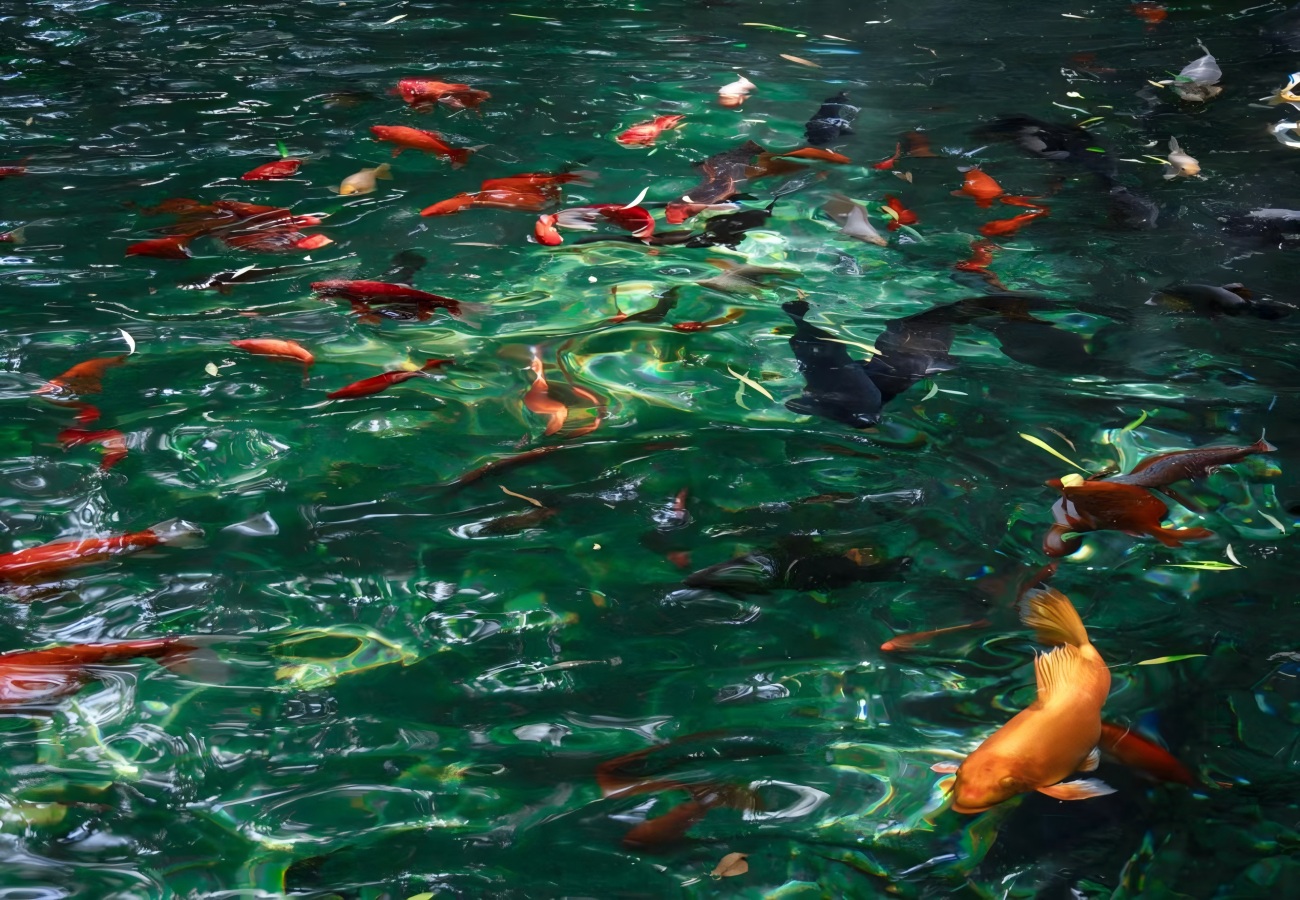
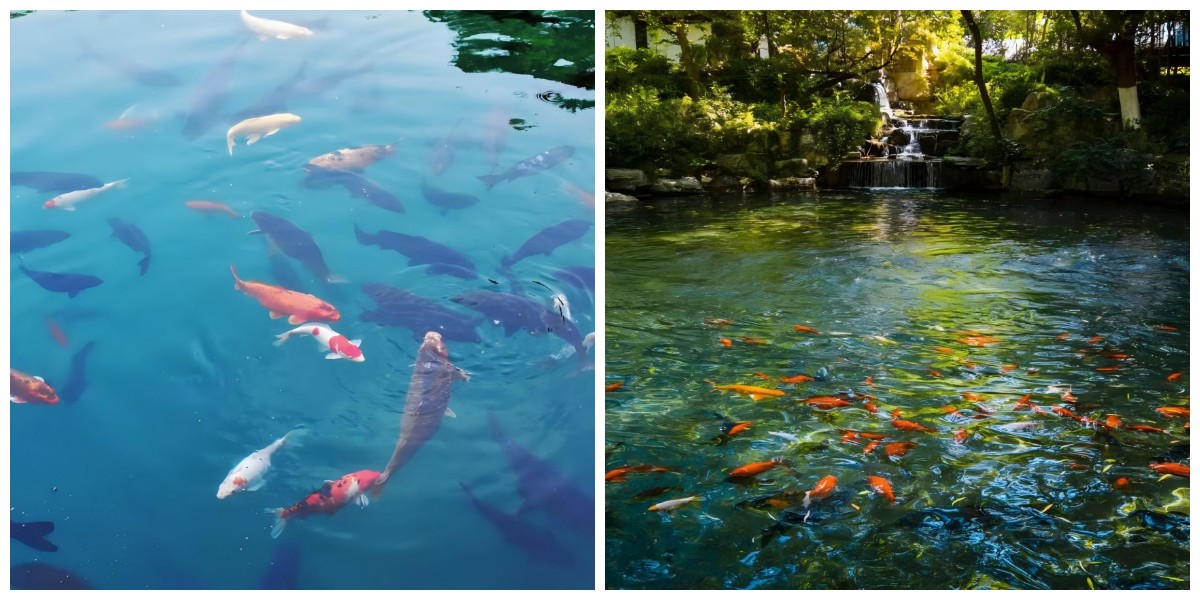
One of Jinan’s "Four Major Spring Groups" (along with Baotu Spring), Wulongtan is located north of the Baotu Spring scenic area, covering about 54,000 square meters. It gets its name from five springs converging to form a pool. With a long history, it is said that after unifying China, Qin Shihuang made several eastern tours and stopped here every time he passed Jinan, using it as a "royal garden" for worshiping Mount Tai. The "Qin Platform" in the garden is the remains of Qin Shihuang’s worship site – about 5 meters high, with a small pavilion on top for viewing the scenery. The pool covers about 1,000 square meters and is about 2 meters deep; its clear water (constant temperature around 16°C) is home to many colorful koi fish. Visitors often stop to watch the koi swim, and many buy fish food to feed them – the sight of koi vying for food is quite amusing. "Qinqiong Shrine" by the pool is a core attraction of Wulongtan. Qin Qiong – a famous general of the late Sui and early Tang dynasties, and a native of Jinan – was revered as a "Door God" by later generations for his bravery. The shrine was founded in the Tang Dynasty, with the current building reconstructed in 2004. The statue of Qin Qiong in the shrine is about 4 meters tall, wearing armor and holding a spear – imposing and dignified. The shrine also displays replicas of Qin’s weapons, panels on his life story, and materials related to operas and films about him, allowing visitors to learn about the legendary life of this "hero of the Sui-Tang period". In addition, Wulongtan is home to many famous springs like "Ancient Hot Spring", "Crescent Spring", and "Xianqing Spring" – each with a unique shape: Ancient Hot Spring has warmer water (misty in winter); Crescent Spring has a crescent-shaped pool (small and delicate). These springs complement Wulongtan, creating a scenic picture of "springs connected to each other, waters flowing into each other".
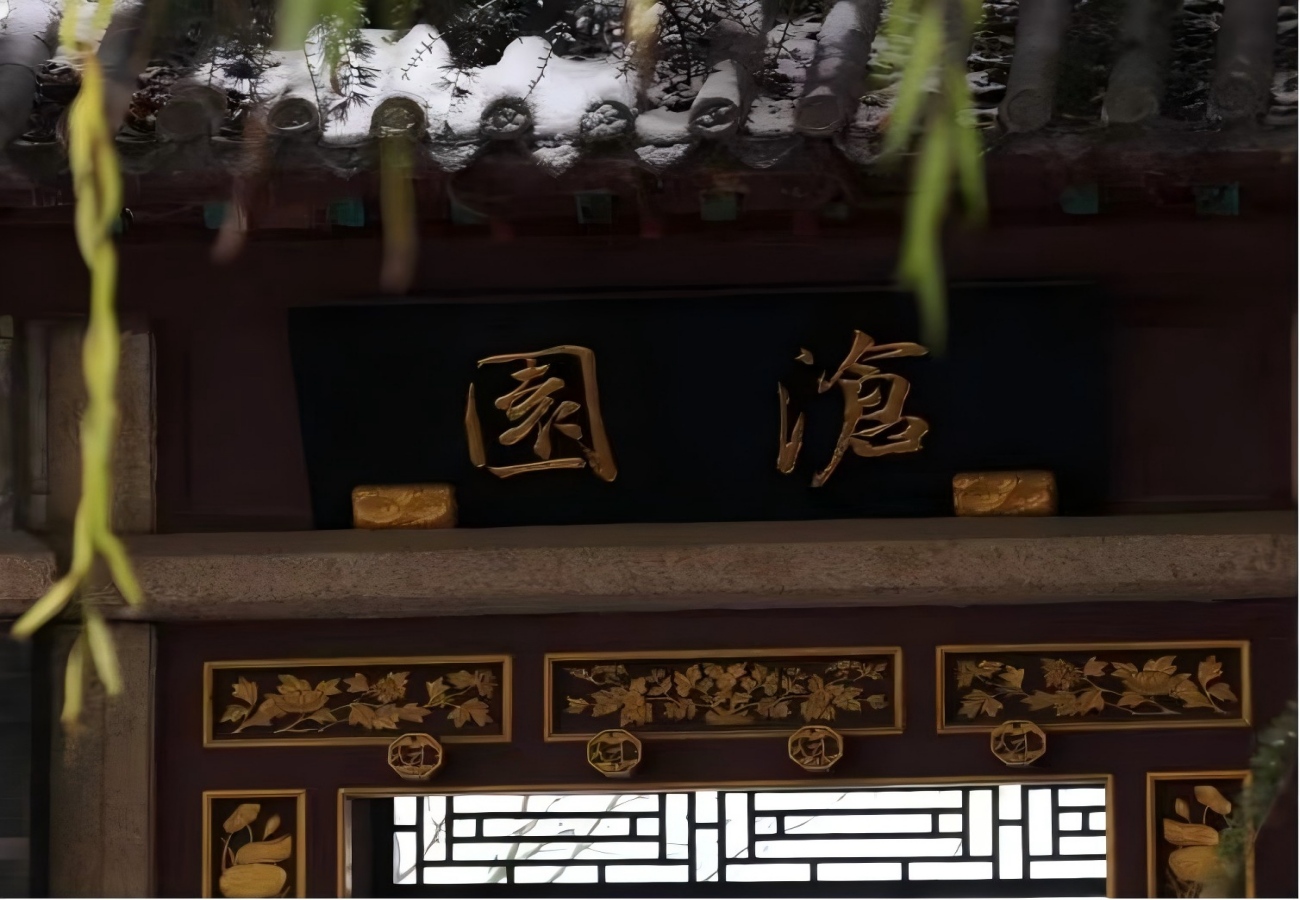
5. Cangyuan Garden
Located in the eastern part of the Baotu Spring scenic area, Cangyuan Garden was founded in the Qing Dynasty as a private garden. It was incorporated into the scenic area during the expansion of Baotu Spring Park in 1956 and now focuses on displaying Jinan’s folk culture. With a simple and elegant architectural style, the garden features buildings like "Sanyou Pavilion" (Three Friends Pavilion) and "Ouxiang Pavilion" (Lotus Fragrance Pavilion). Sanyou Pavilion is named after the three plants around it – pine, bamboo, and plum (known as the "Three Friends of Winter"); in winter, plum blossoms bloom while pines and bamboo stay green, creating a graceful scene. Ouxiang Pavilion stands by a pool; in summer, lotus flowers bloom in the pool, filling the air with fragrance – visitors can enjoy tea and lotus views here, experiencing the mood of the poem "Endless green lotus leaves reach the sky; red lotus flowers reflect the sun bright red". The "Jinan Folk Culture Museum" in Cangyuan Garden is a must-visit: it houses a large collection of Jinan’s folk cultural relics, including traditional farm tools, hand-weaving tools, folk musical instruments, and festival items – such as Qing Dynasty spinning wheels, Republic of China waterwheels, Lantern Festival lanterns, and Dragon Boat Festival sachets. These relics vividly showcase the daily life of Jinan people. The museum also has an interactive area where visitors can try folk crafts like paper cutting, kite making, and Spring Festival couplet writing, experiencing the charm of Jinan’s folk culture firsthand. Additionally, Cangyuan Garden is an important venue for Jinan’s calligraphy and painting circles, often hosting calligraphy and painting exhibitions and pen meetings. If you’re lucky, you might see local calligraphers and painters creating on-site, admiring their exquisite skills.
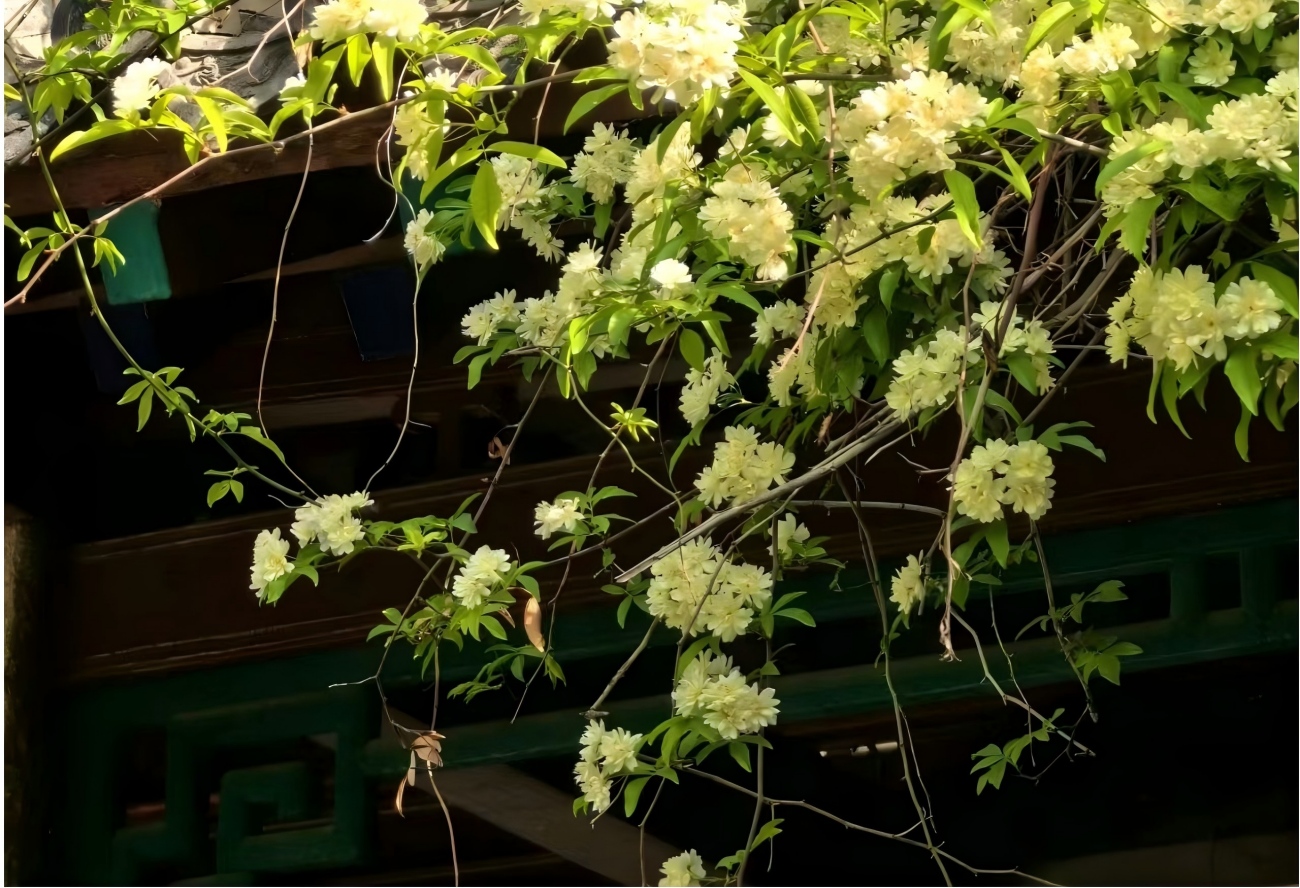
It is recommended to slow down – sit on a stone bench by the spring, listen to local elders tell spring stories, or order a cup of green tea brewed with Baotu Spring water in the garden’s teahouse. Savor the sweetness of the spring water and the richness of the tea aroma, and experience Jinan’s slow life characterized by "springs in every household, willows by every door".
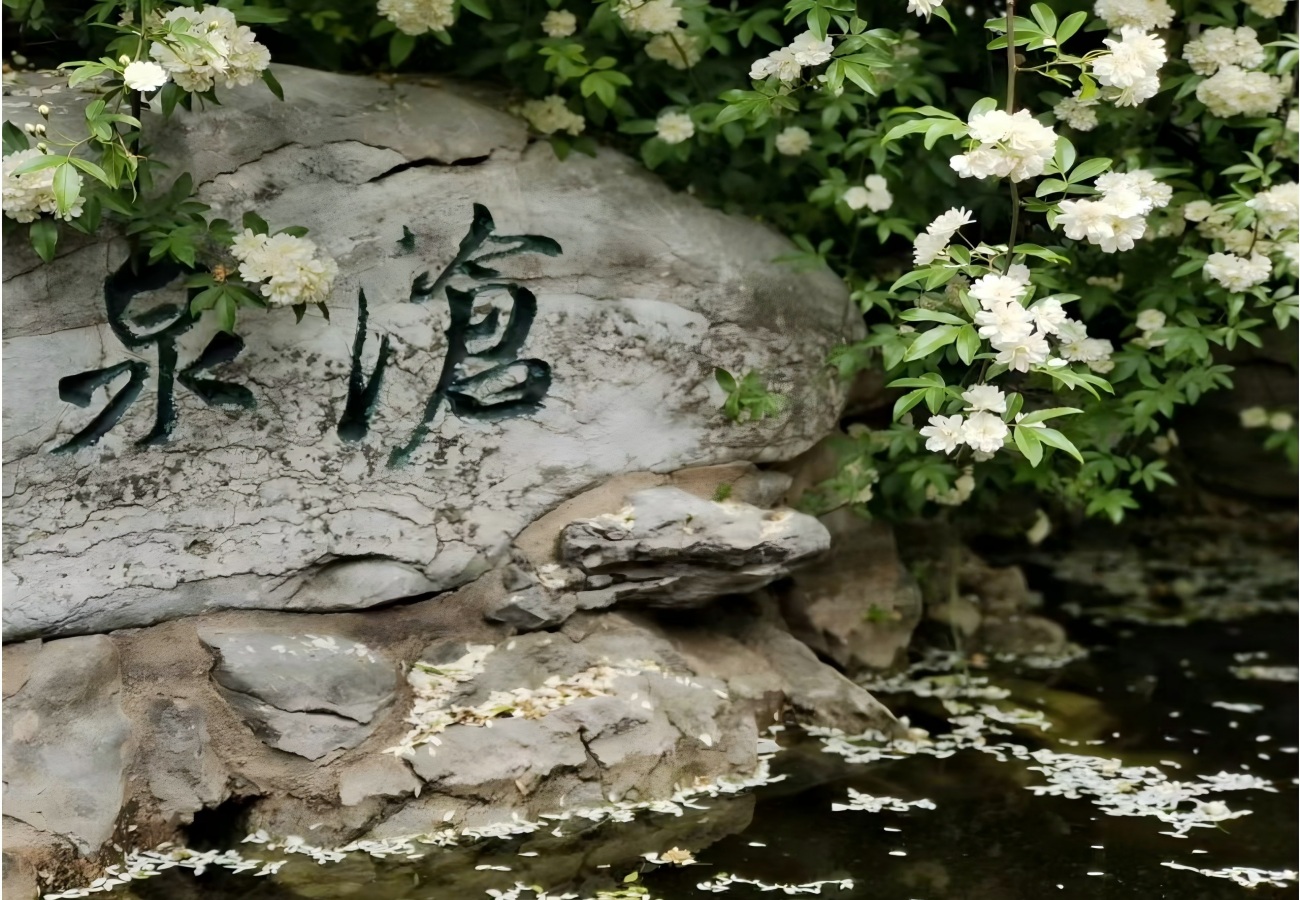
After your tour, be sure to try Jinan’s specialty foods and experience the "flavors of the Spring City":
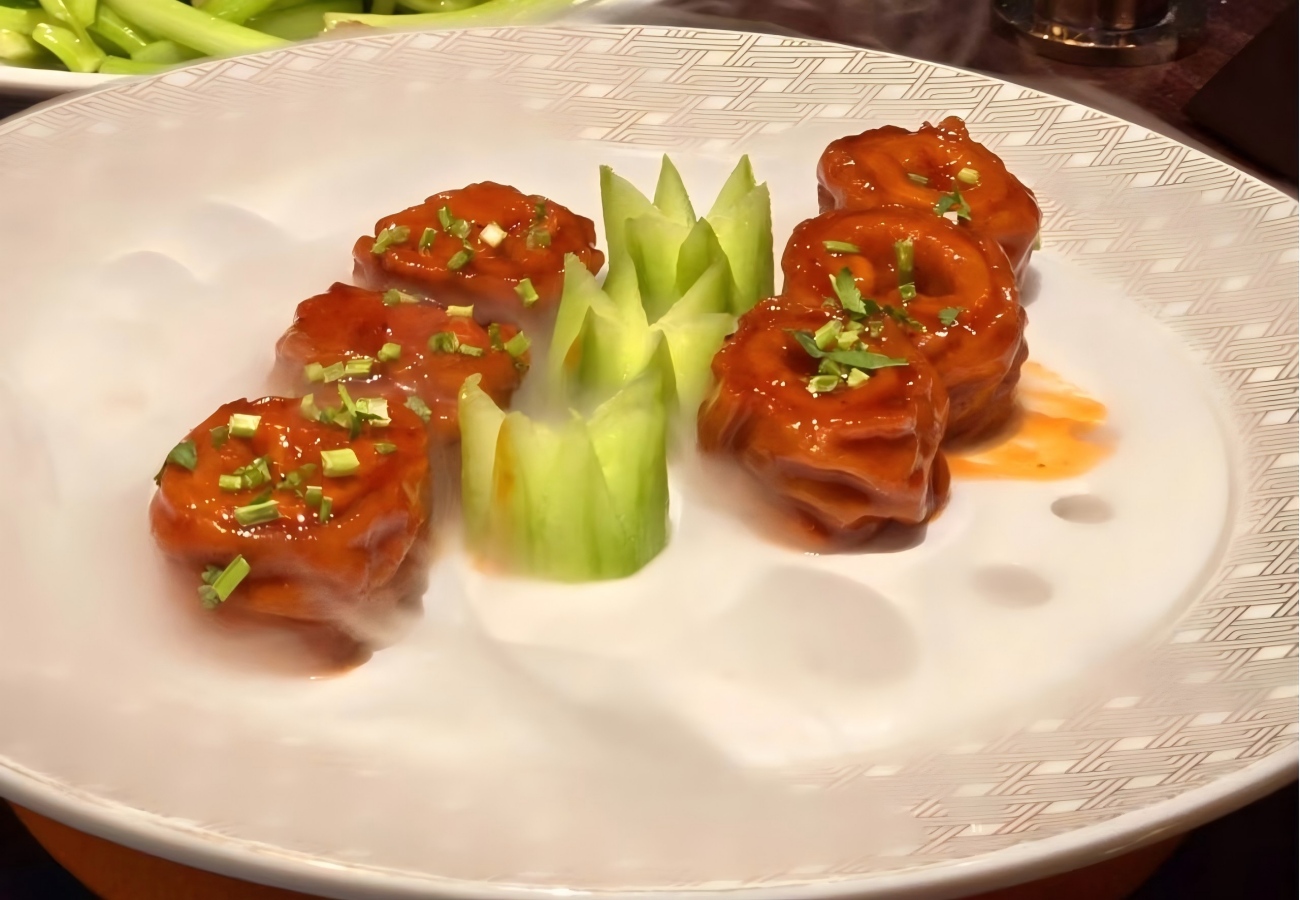
Jiuzhuan Dachang (Braised Pig Intestines with Nine Processes): A signature dish of Shandong cuisine, it uses pig intestines cooked through nine elaborate processes – crispy on the outside, tender on the inside, with a balanced sweet and salty taste. Legend has it that it was the signature dish of "Jiuhua Building" restaurant in Jinan during the Qing Dynasty, named for "its complex processes like refining elixirs through nine cycles".
Shandong-Style Cuisine: Don’t Miss These Delicacies After Visiting Baotu Spring.
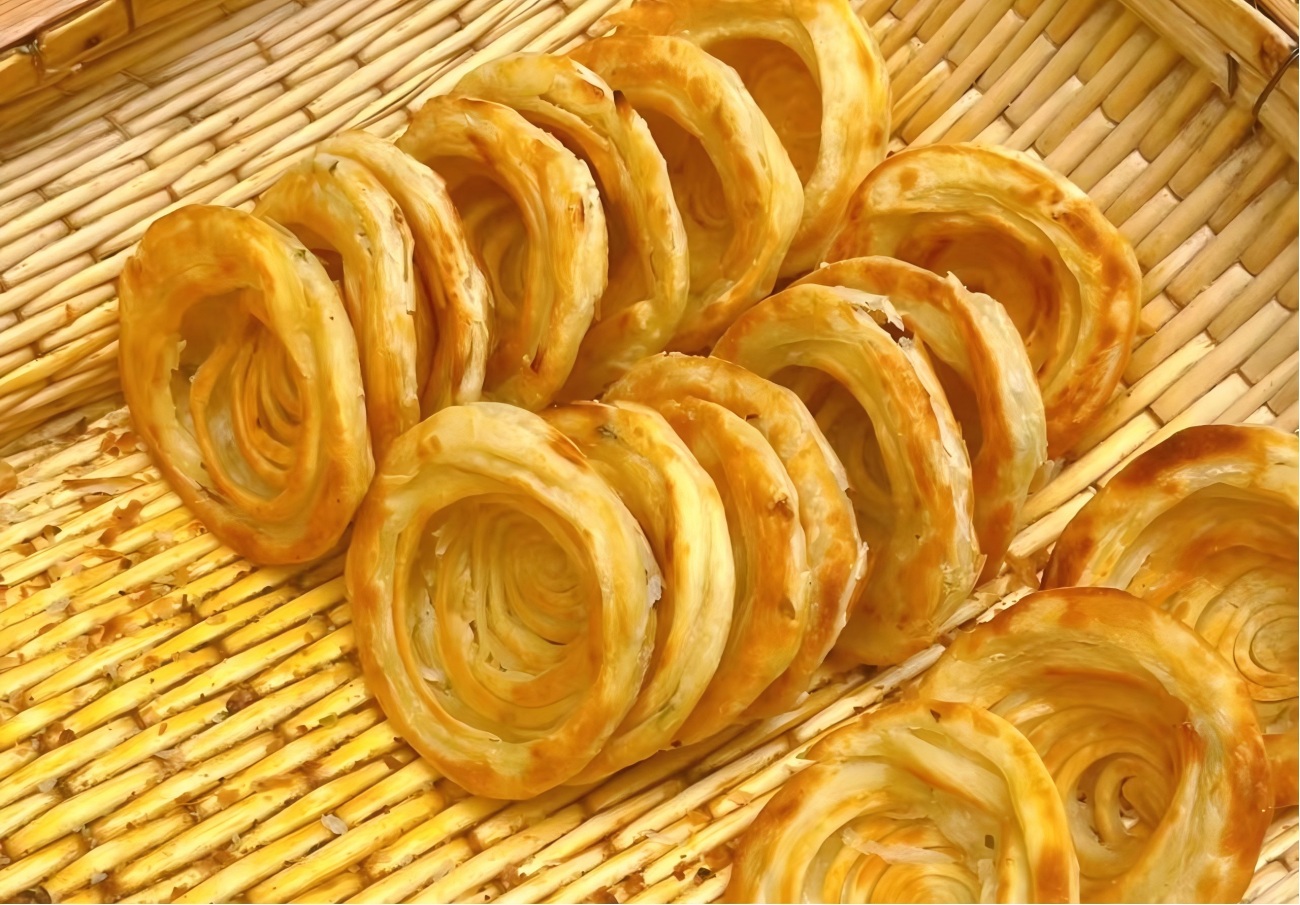
Youxuan (Spiral Fried Dough): A traditional Jinan snack, it has a spiral shape, crispy outer layer, and savory filling – fragrant when just out of the oven. The most authentic way to eat it is with Baotu Spring water: one bite of Youxuan, one sip of spring water – filling your mouth with the homely flavor of Jinan.
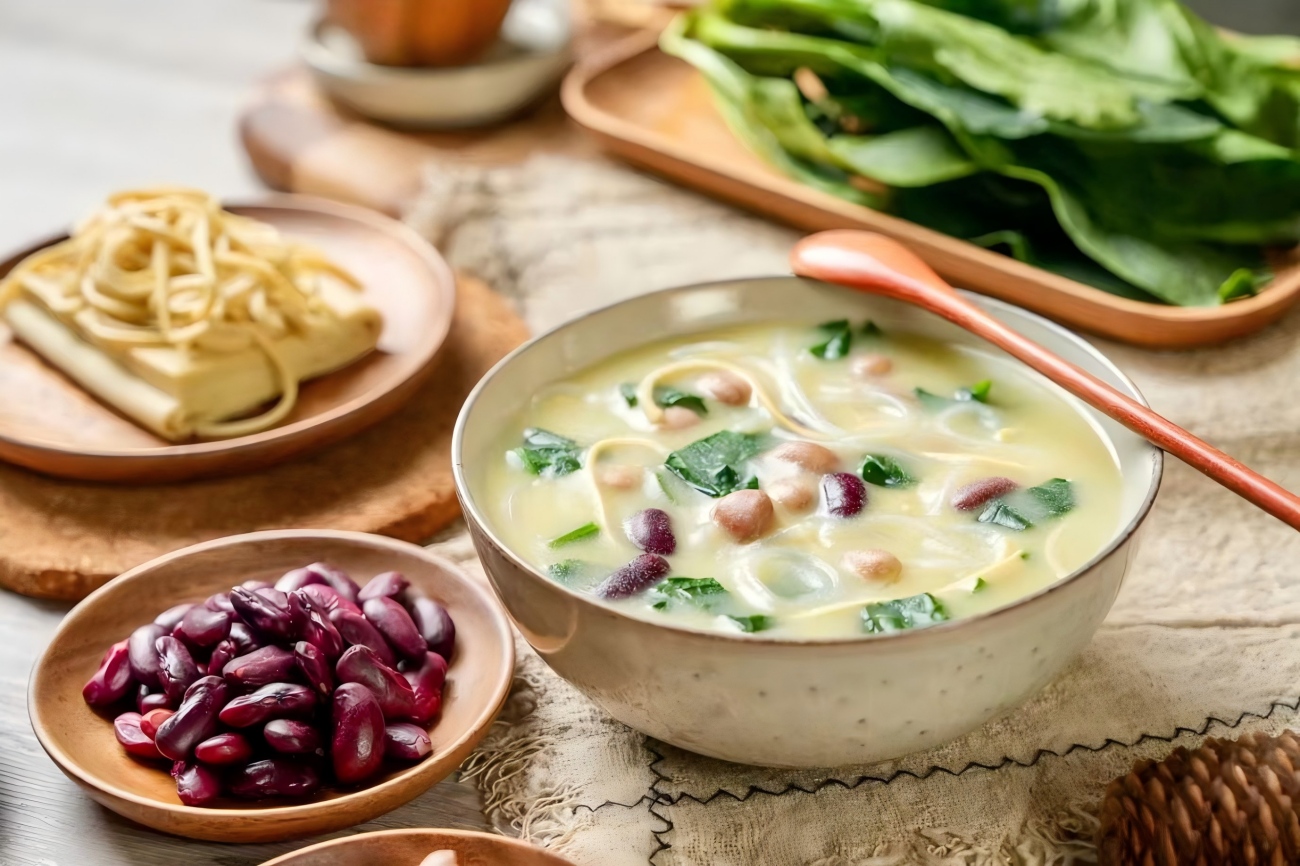
Tianmo (Salty Millet Porridge): Despite its name meaning "sweet foam", it is actually a salty porridge. Made from millet flour, it is cooked with peanuts, vermicelli, and spinach – warming and nourishing the stomach, and a "staple breakfast" for Jinan people. For an authentic taste, try "Tianmo Tang" on Quancheng Road.
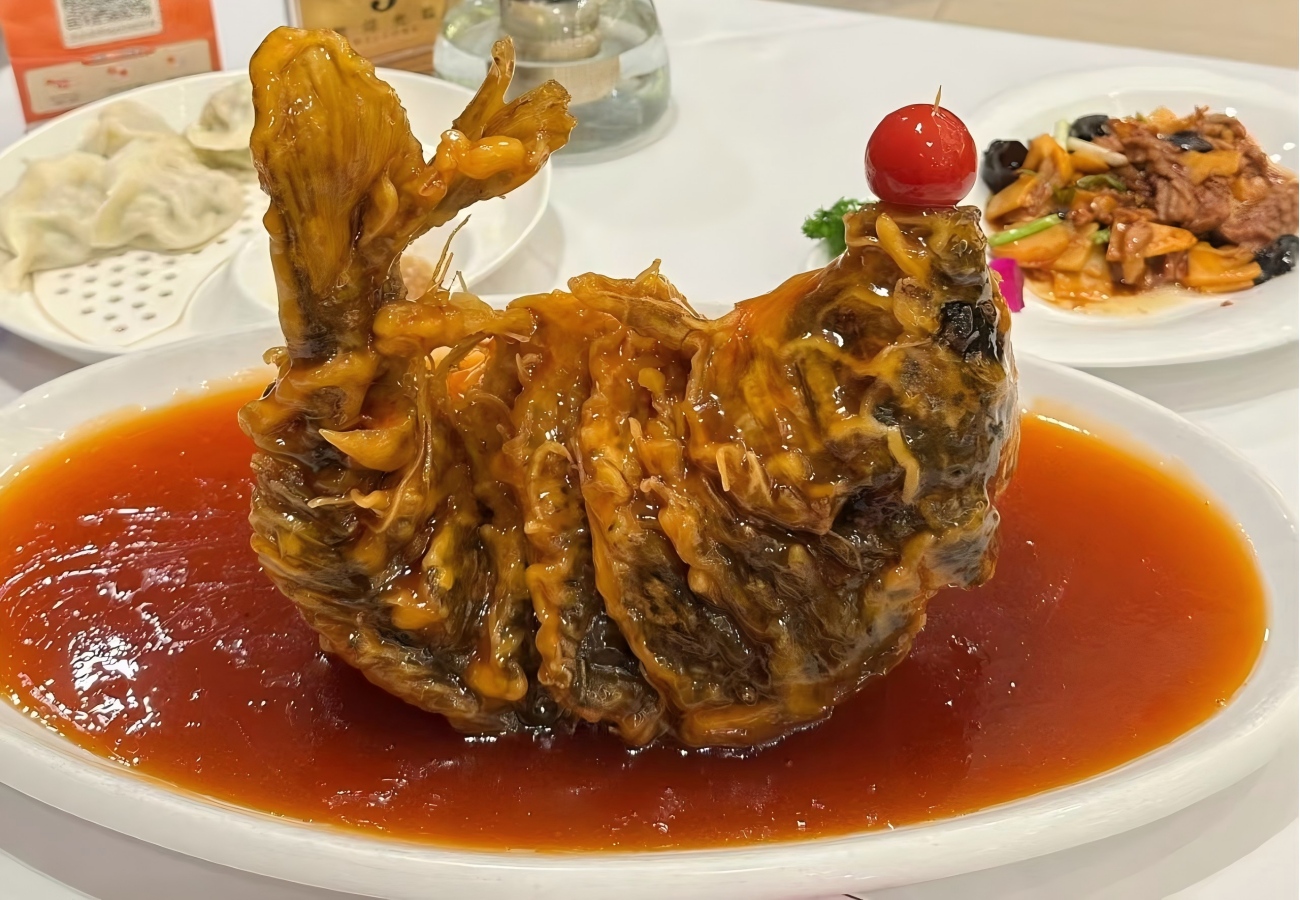
Sweet and Sour Carp: A "skilled dish" of Shandong cuisine, it uses Yellow River carp – deep-fried to resemble a "carp leaping over the dragon’s gate", then topped with sweet and sour sauce. Crispy on the outside, tender on the inside, it symbolizes good luck and is ideal for banquets.
If you want to bring souvenirs, Jinan’s "Pingyin Rose Jam" and "Ejiao Cake" are great choices. The former is made from roses watered by springs – rich in fragrance; the latter is a traditional nourishing food, embodying Shandong’s health-preserving culture.
Frequently Asked Questions
Is Baotu Spring worth visiting?
Absolutely.
It is the most famous attraction in Jinan and one of China's most celebrated natural springs.
How much time should I spend at Baotu Spring?
Most visitors spend between 2 and 3 hours exploring the park.
Can foreign tourists visit independently?
Yes.
Baotu Spring is easy to access by taxi, public transportation, or private tour.
What is the best season to visit?
Spring and autumn offer the most comfortable weather, while winter provides the most unique scenery.
Is Baotu Spring suitable for families?
Yes.
The park is family-friendly and suitable for visitors of all ages.
Final Thoughts
Baotu Spring is far more than a scenic attraction—it is the living symbol of Jinan and one of China's most treasured natural wonders.
From the famous three spring jets and centuries of history to traditional gardens, local cuisine, and cultural heritage, Baotu Spring offers an unforgettable experience for international travelers seeking a deeper understanding of China.
If you're planning a trip to Shandong Province, make sure Baotu Spring is on your itinerary. It is the perfect place to experience why Jinan is proudly known as China's City of Springs.
About Huatu Tours
Huatu Travel has over 15 years of experience serving international visitors across China. From private cultural journeys to customized group tours, we help travelers discover authentic China with professional local expertise.
📱 WhatsApp: +8615954109234
Related China Travel Guides
Best Things to Do in Jinan
One-Day Jinan Itinerary
Shandong Travel Guide
China High-Speed Rail Guide
China Visa-Free Travel Guide
Top Historical Cities to Visit in China
Complete Guide to Traveling in China for First-Time Visitors