Ta'er Monastery
Qinghai Plateau Tours
Your trusted inbound travel partner for exploring Ta'er Monastery—the "Pearl of the Qinghai-Tibet Plateau". We offer curated, cultural-rich tours led by multilingual guides fluent in English, French & German.
Discover the monastery’s five iconic sites: the gilded Golden Roof Halls, sacred Great Assembly Hall, blessing Eight Stupas, and exquisite Butter Sculpture Hall. Savor local flavors like Qinghai copper pot hot pot and traditional yogurt.
We handle all logistics, ensuring respectful, hassle-free journeys to this millennium-old Buddhist sanctuary. Book your spiritual & culinary adventure now!
Ta'er Monastery: A Millennium Journey of Faith Amidst Plateau Chants
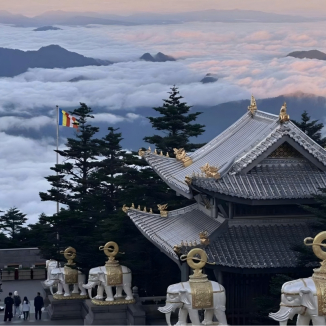
Good morning, everyone! I'm your guide, and I'll be with you today to explore Ta'er Monastery. We're now in Huangzhong District, Xining City, Qinghai Province. The ancient monastery before us, nestled among rolling mountains and resonating with Buddhist chants, is none other than Ta'er Monastery – renowned as the "Pearl of the Qinghai-Tibet Plateau" and one of the six great monasteries of the Gelugpa (Yellow Hat) school of Tibetan Buddhism. It's not just a major center for Tibetan Buddhist activities in northwest China, but also a cultural treasure trove blending religious culture, architectural art, and historical heritage. Today, let's step into this thousand-year-old monastery. We'll visit its five core attractions, hear the historical stories behind them, feel the power of faith, and finally sample some local specialties. I hope this journey helps you appreciate the depth and solemnity of Ta'er Monastery.
1. The Great Golden Roof Hall: Gilded Glory at the Buddha's Birthplace
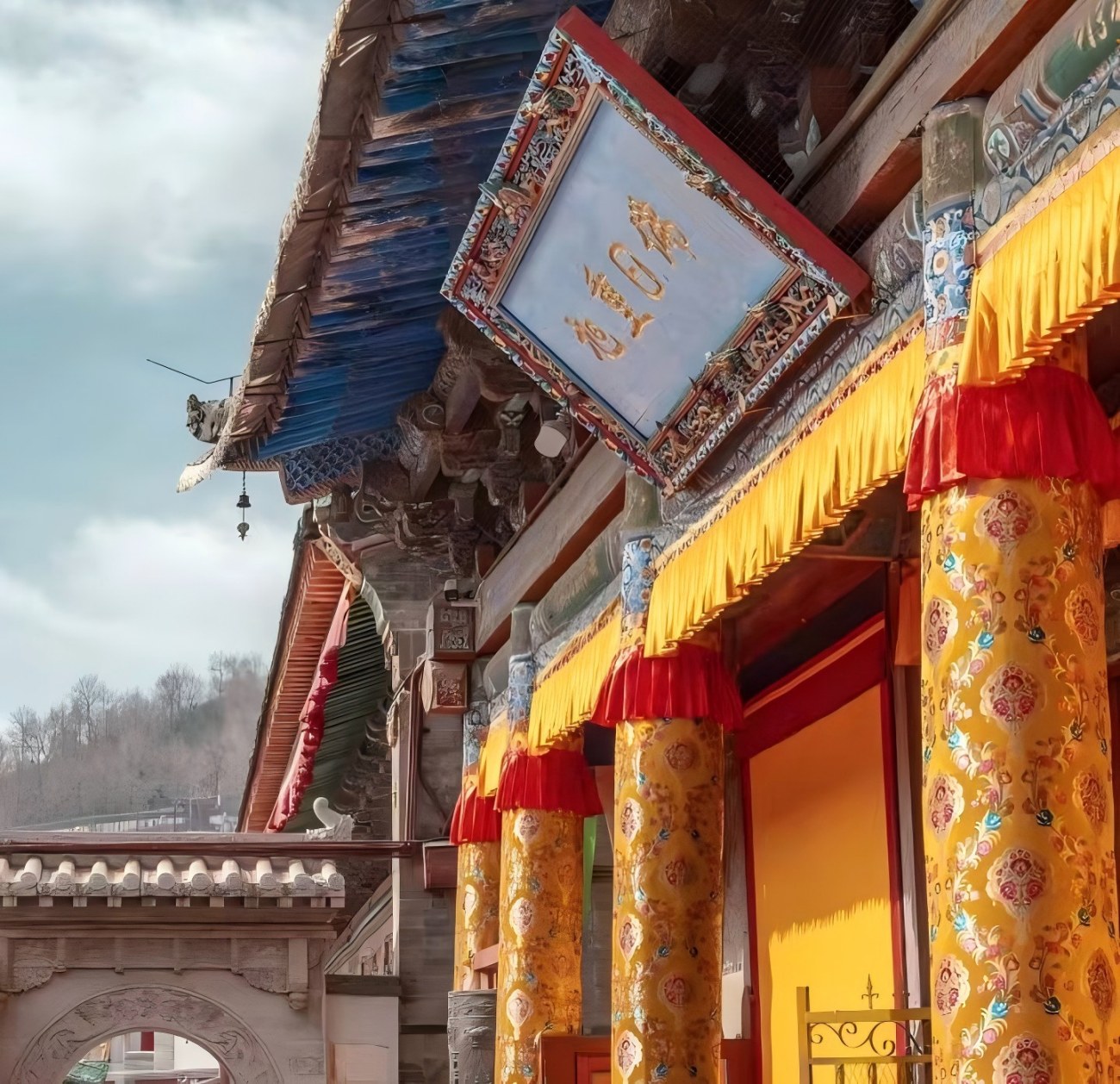
Our first stop is the Great Golden Roof Hall, the central structure of Ta'er Monastery. This hall is the soul of the monastery, rooted in the birth story of Tsongkhapa, founder of the Gelugpa school. Legend says Tsongkhapa was born here in 1357 AD. After his birth, his mother, Shingsa Acho, buried the placenta under a white sandalwood tree in the courtyard. Miraculously, the tree grew, and an image of the Buddha (Sengge Ngaro) appeared on each of its leaves – 100,000 in total. Hence the name. Later, to protect this sacred tree, believers built the Golden Roof Hall around it, creating the unique layout of "the hall embracing the tree."
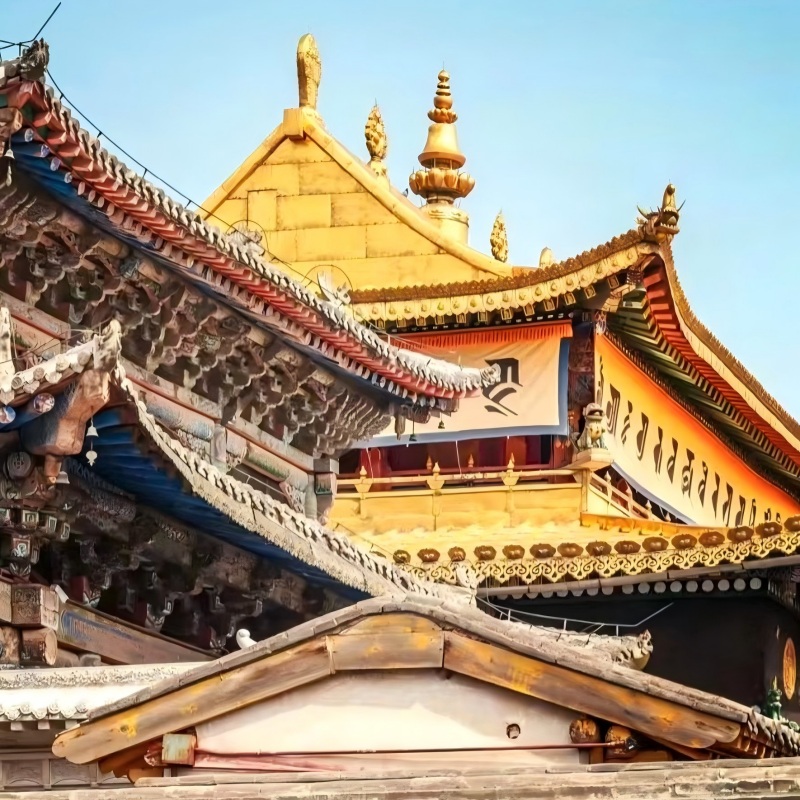
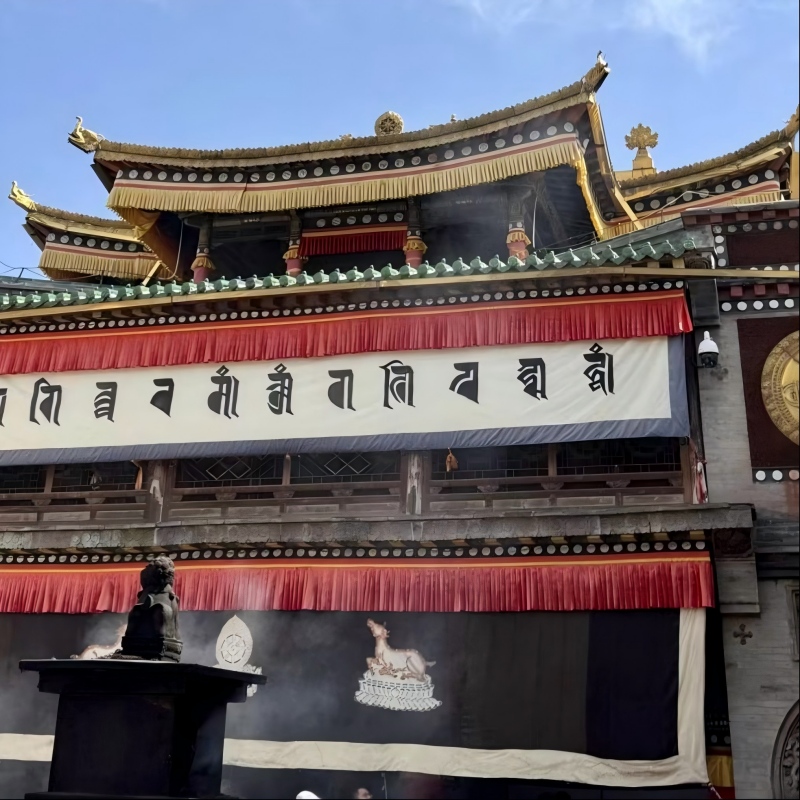
First built in 1379 AD, the hall has been renovated and expanded many times. Its roof is covered in gold foil from over 1,300 taels of gold, glittering brilliantly in the sun. As you approach, you'll see exquisite streamers hanging from the eaves, embroidered with Buddhist scriptures and symbols, seeming to whisper ancient tales of faith. Inside, an 11-meter-tall gilded bronze statue of Tsongkhapa stands solemnly. The hall houses many Buddhist scriptures and relics, most notably a Sakyamuni Buddha statue carved from a single piece of jadeite.
2. The Small Golden Roof Hall: Majesty of the Protector Chapel
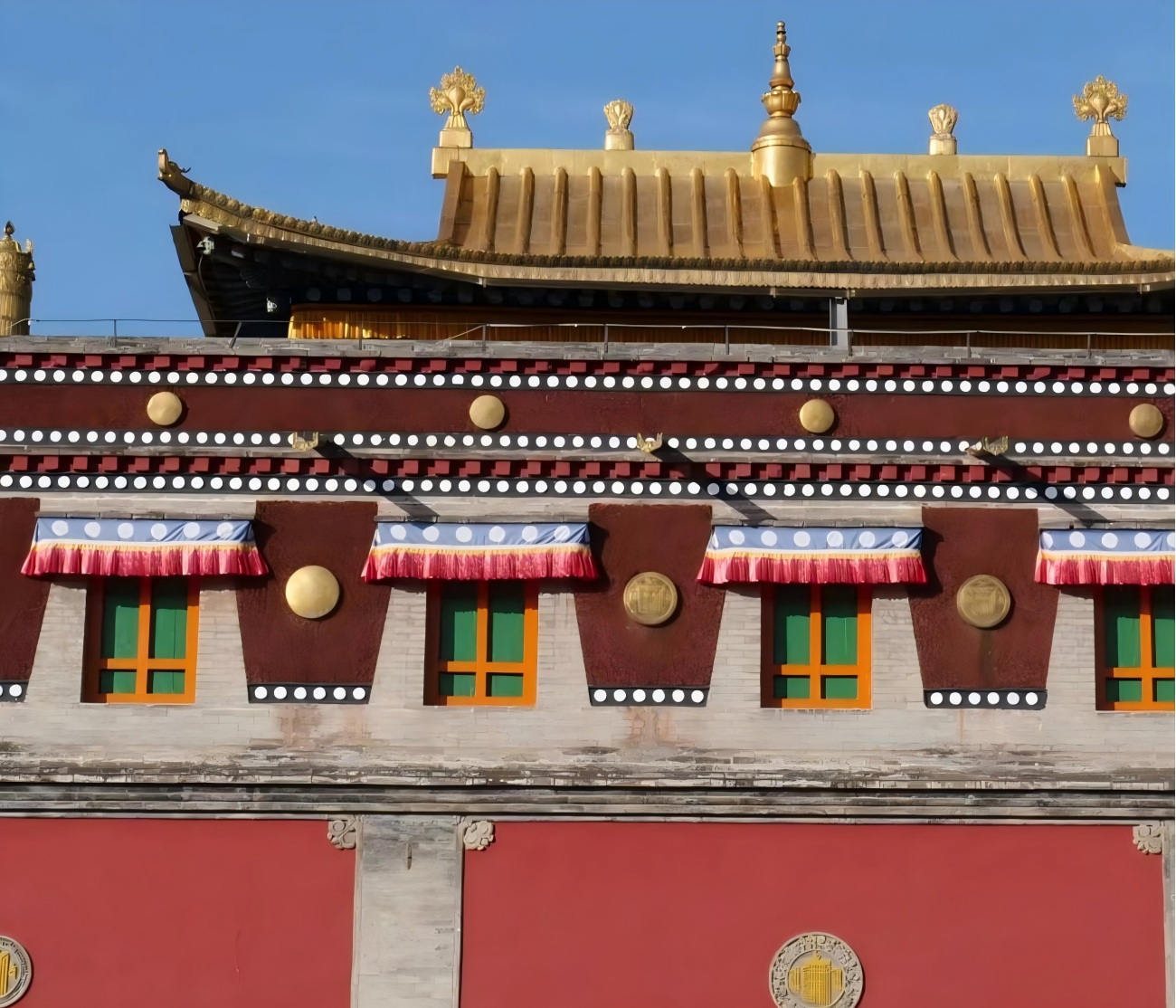
Next, we head to the Small Golden Roof Hall, also known as the Protector Temple. If the Great Hall represents solemnity, the Small Hall shoulders the sacred duty of protecting the Dharma. Built around 1492 AD, it was originally roofed with glazed tiles, later replaced with gold tiles during the Qing Dynasty. It's smaller but equally imposing.
A local legend tells of its origin. When the monastery was first built, evil spirits caused trouble. The head monk invited Palden Lhamo, a protector deity in Tibetan Buddhism, to guard the site. This hall was built to house her statue, and the disturbances ceased. This story adds a layer of mystical protection.
3. The Great Assembly Hall: A Millennium-Old Classroom of Wisdom
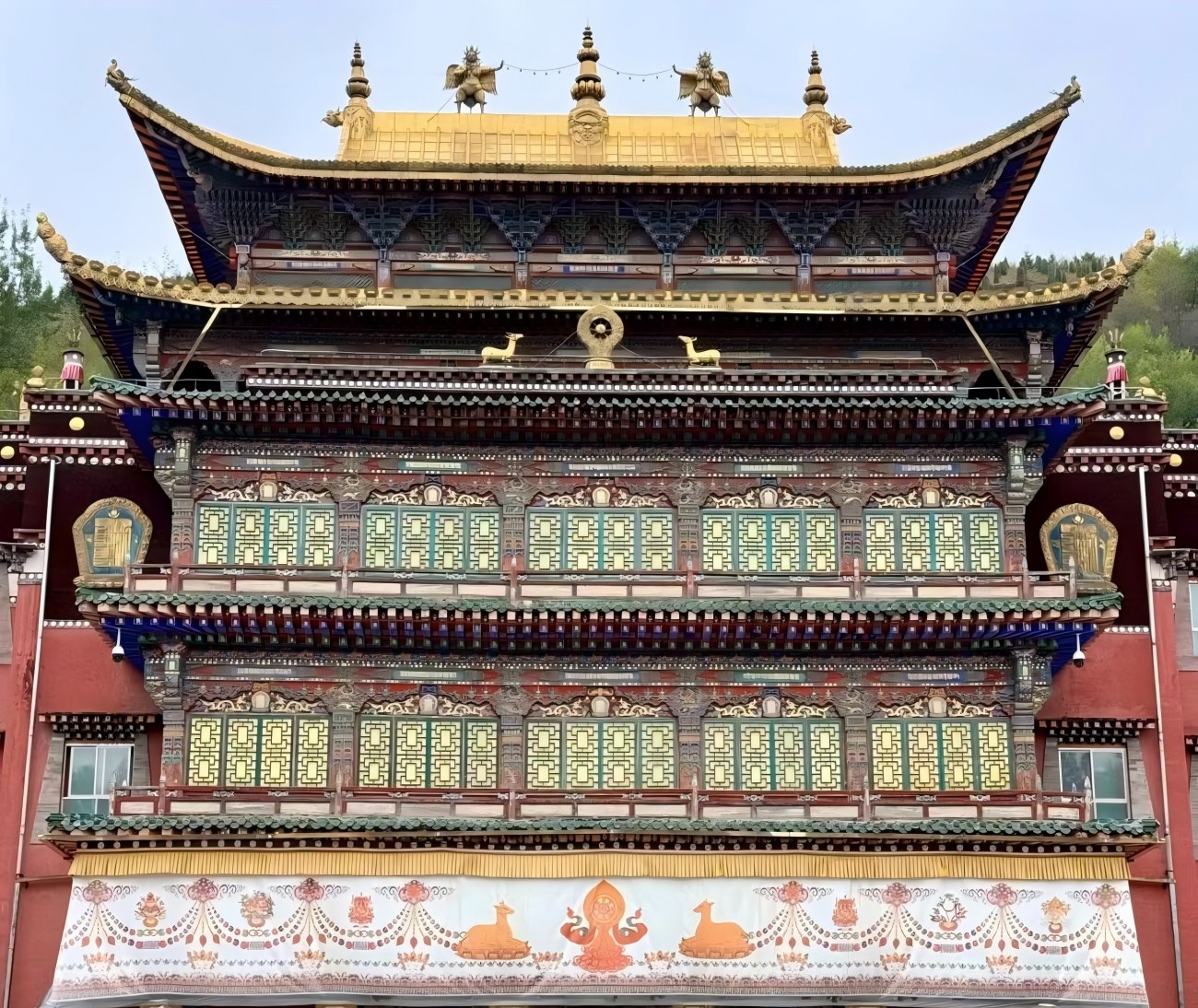
Now, let's visit the Great Assembly Hall – the main venue where monks study Buddhist philosophy and hold ceremonies. As one of the largest buildings here, it's a thousand-year-old classroom for passing down wisdom. First built in 1606 AD and rebuilt after fires, the current hall (Qing Dynasty) covers 2,750 sq m and can hold over a thousand monks.
Its construction reflects deep devotion. Believers from Tibetan, Mongolian, Tu, and other ethnic groups donated money and materials. Some even transported wood and stone from thousands of miles away, some measuring the journey with full-body prostrations. This cross-ethnic piety created the grand hall we see.
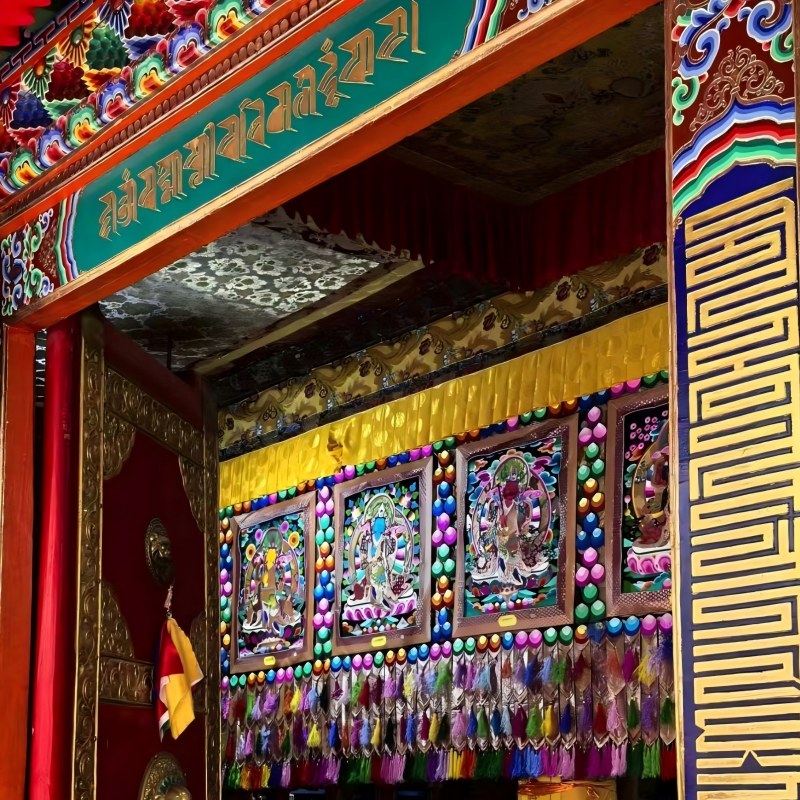
Inside, 168 huge pillars, each donated by believers, support the hall. They're wrapped in colorful Tibetan cloth with Buddhist patterns. The walls are covered in murals depicting Buddhist history and Tsongkhapa's life. Rows of meditation cushions fill the center for scripture chanting. The hall also houses a vast collection of scriptures, including rare Ming and Qing dynasty block-prints. Every morning and evening, the hall echoes with synchronized chanting, creating a profoundly sacred atmosphere.
4. The Eight Stupas (Eight Pagodas): Symbols of Blessings
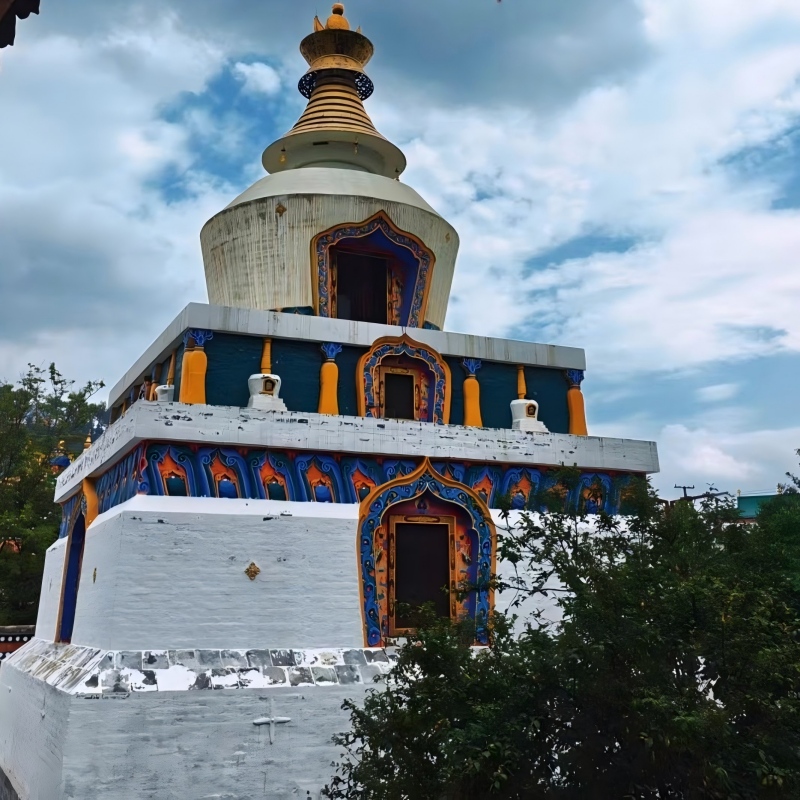
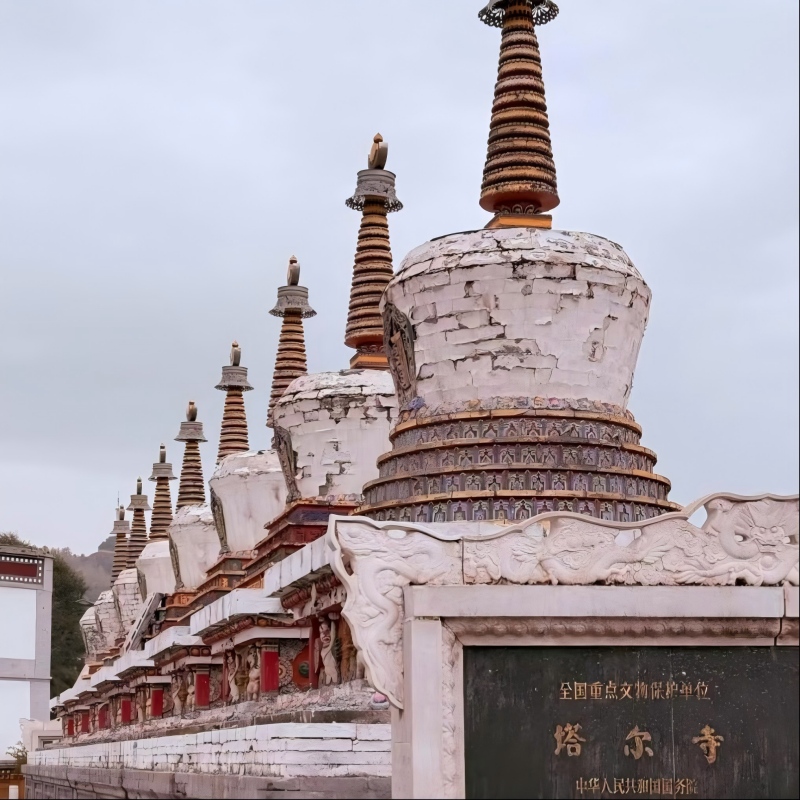
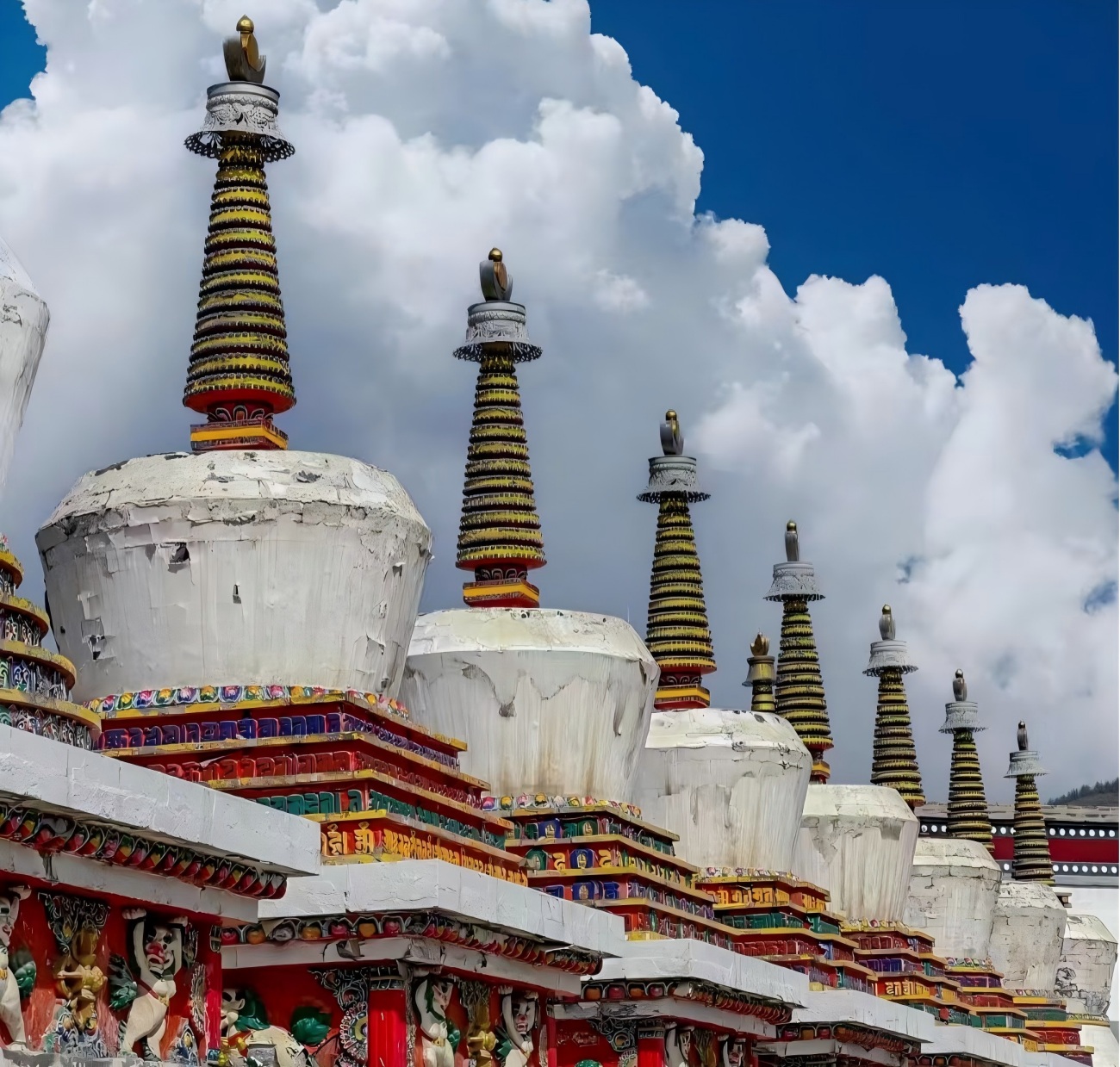
In front of the Great Assembly Hall, you'll see eight beautifully aligned stupas – the famous Eight Stupas of Ta'er Monastery. Each represents one of the eight major deeds of Sakyamuni Buddha's life (like birth, enlightenment). Built in 1776 AD, they are iconic landmarks for blessings and accumulating merit.
A touching story surrounds them. During a severe drought, the abbot led prayers and decided to build these stupas to beseech the Buddha's help. Believers from all around contributed. Miraculously, upon completion, rain fell, ending the drought. Since then, they've been sacred symbols for prayers.
Each stupa is about 11 meters tall, with a square base, angled plinth, bowl-shaped white body, and a ornate finial. The front of each stupa has a stone slab carved with the corresponding Buddhist event. Believers walk around them clockwise, chanting and praying, offering khatas and butter lamps. You're welcome to join this ritual walk for blessings.
5. The Butter Sculpture Hall: Frozen Art at the Fingertips
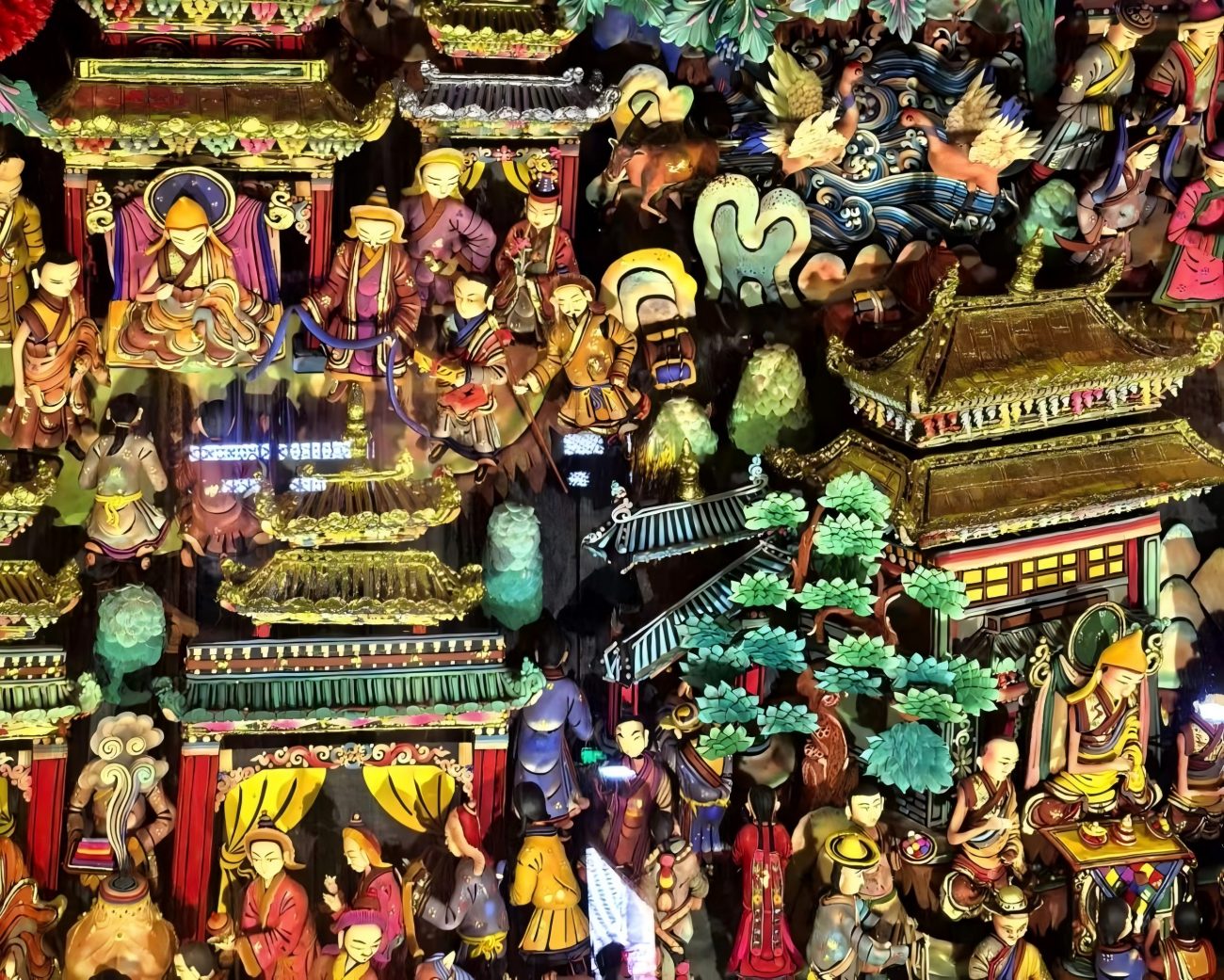
Our final stop is the Butter Sculpture Hall, showcasing one of the "Three Unique Arts of Ta'er Monastery." Butter sculpture is a unique religious art here. Made from yak butter dyed with natural minerals, monks skillfully craft figures, flowers, and scenes. It's called "frozen art blooming at the fingertips." The hall is kept cool year-round to preserve them.
This art is linked to Tsongkhapa. Legend says he made a butter lotus as an offering during a prayer ceremony in Lhasa. His disciples brought the art to Ta'er Monastery. Making butter sculptures is arduous. Monks work in cold conditions, often soaking their hands in ice water to keep the butter firm. A large piece can take dozens of monks months to complete.
Inside, you'll be amazed by the delicate works. Themes range from Buddhist stories (Sakyamuni's life, Bodhisattvas) to realistic flowers and birds. A famous piece is The Life of Sakyamuni Buddha, large and intricately detailed. The colors come from natural minerals—cinnabar for red, lapis lazuli for blue—making them vibrant. Each year at the Butter Sculpture Festival (15th of first lunar month), new works are displayed. Since butter melts, old works are not preserved, making each year's exhibition unique.
6. Local Flavors Near Ta'er Monastery: A Taste of Huangzhong
After exploring, let's try some local food. Huangzhong's cuisine blends Tibetan, Hui, Han, and other influences.
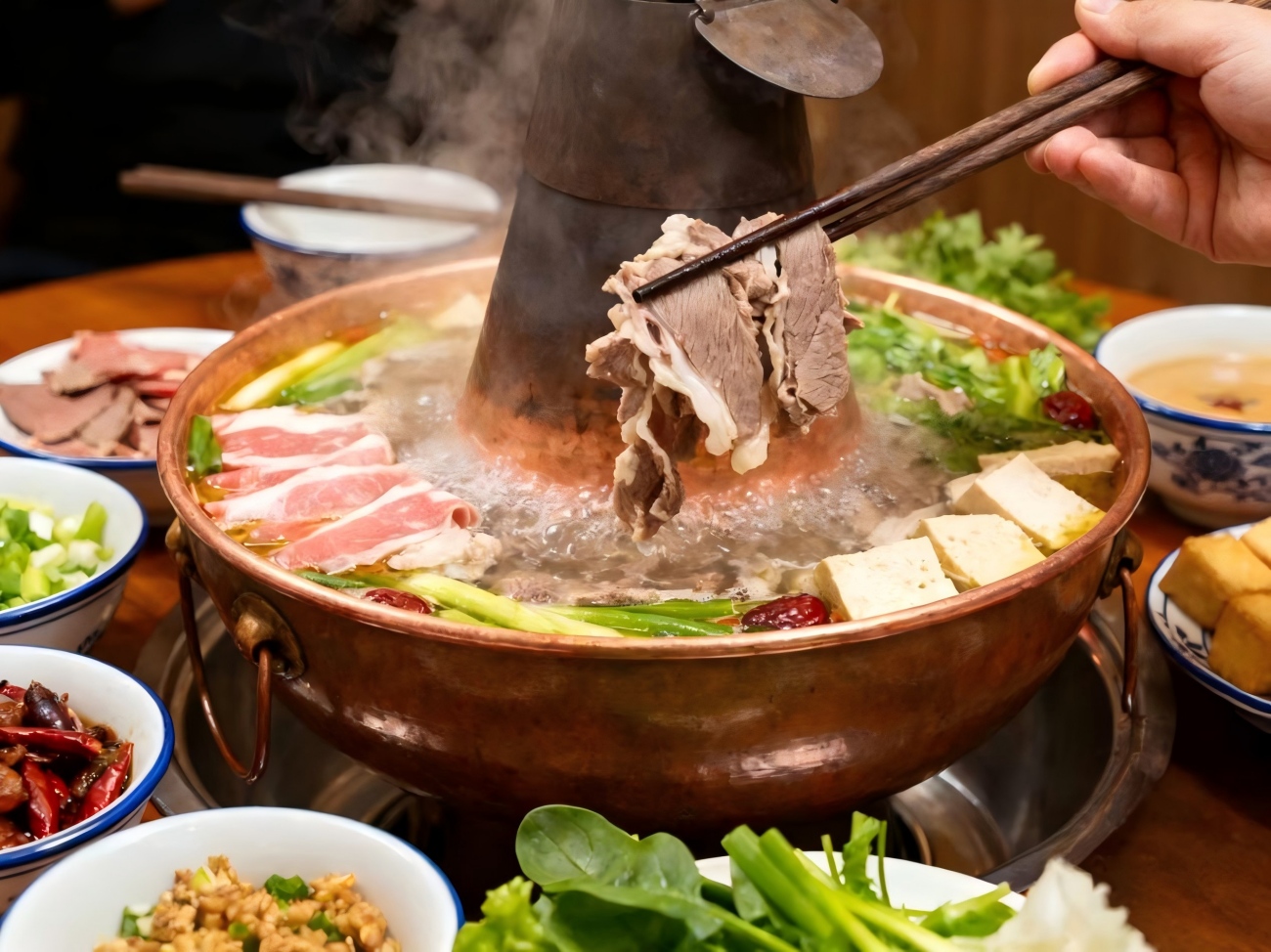
1. Qinghai Hot Pot (Copper Pot Hot Pot): A favorite, especially in winter. Served in a traditional copper pot with a charcoal chimney. The broth is rich, simmered from beef/mutton bones. Ingredients include local yak meat, mutton rolls, handmade meatballs, and Qinghai-style fried potatoes and tofu. It's social, warming, and hearty – a great way to experience local hospitality.
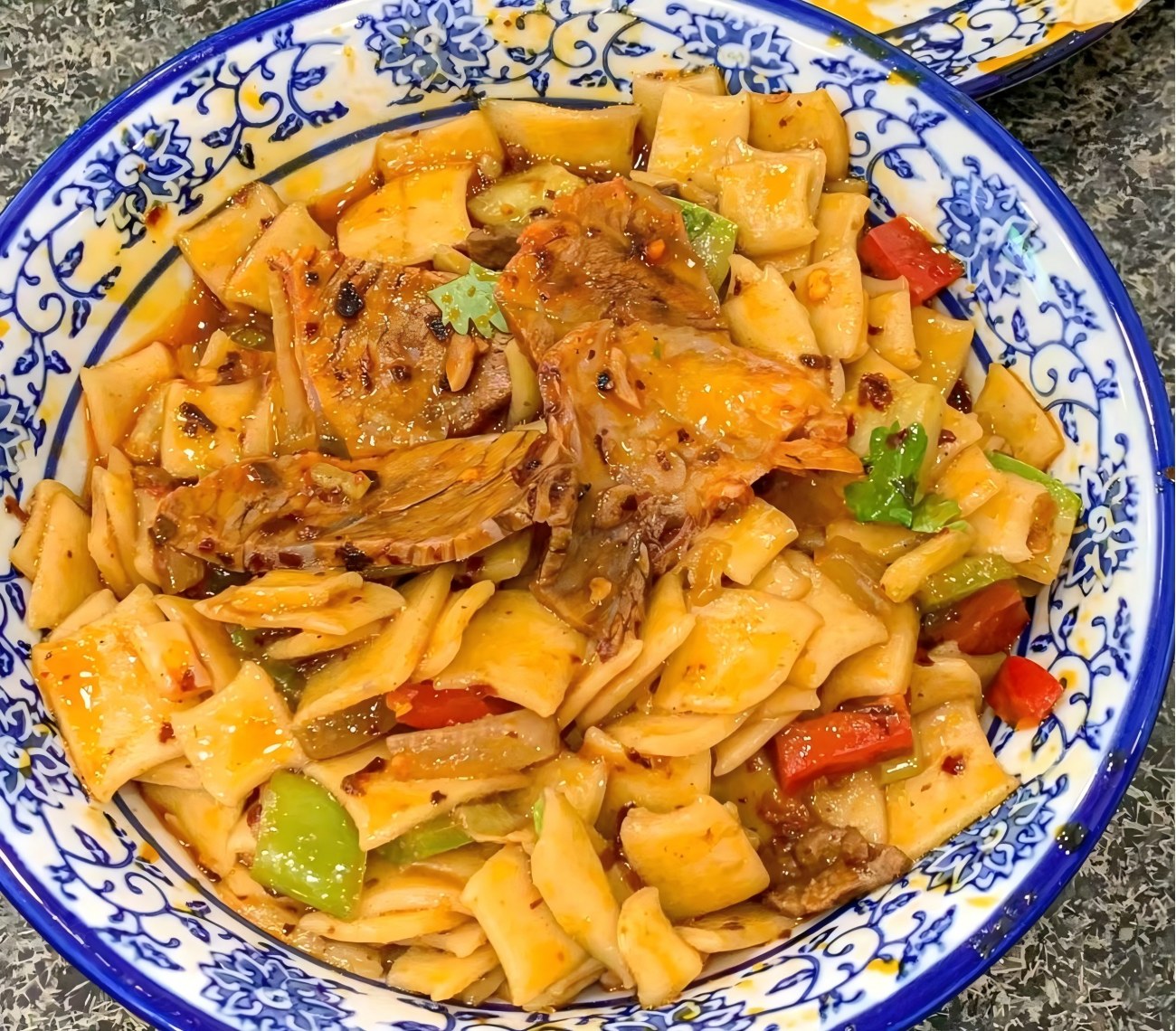
2. Gaxia Mianpian (Pinch-Noodle Soup): A beloved local pasta. Dough is pinched into small, flat pieces (like nail-sized) and boiled. Served in various broths; the classic is with minced mutton, potatoes, carrots, and peppers, garnished with garlic sprouts and cilantro. Chewy, flavorful, and satisfying. Often enjoyed with a dash of chili oil.
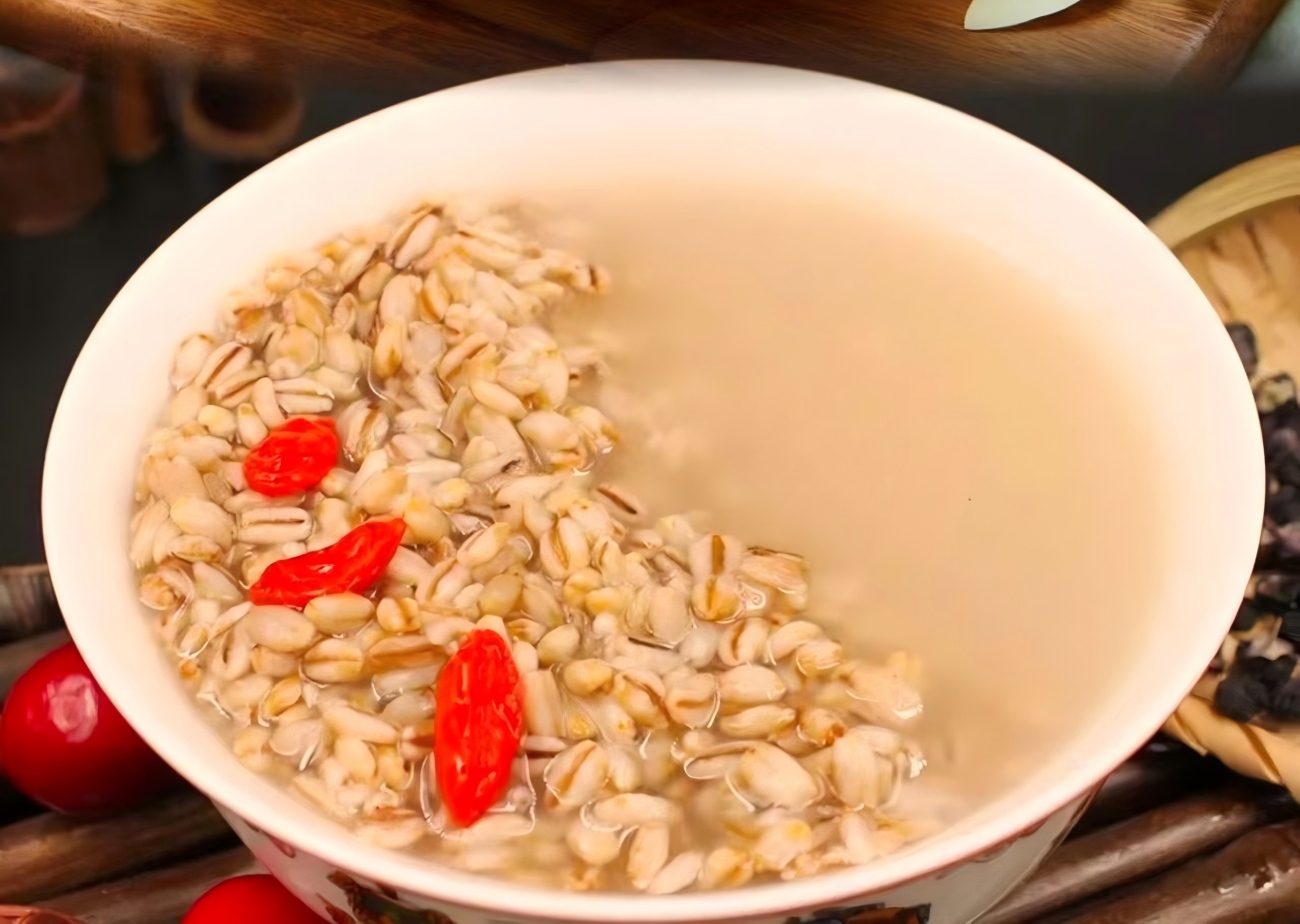
3. Tianpei (Sweet Fermented Glutinous Rice): A traditional snack. Made from fermented highland barley or oats. Sweet, slightly alcoholic aroma, soft and chewy. Can be eaten plain or with hot water. Refreshing in summer, warming in winter. Rich in vitamins and fiber.
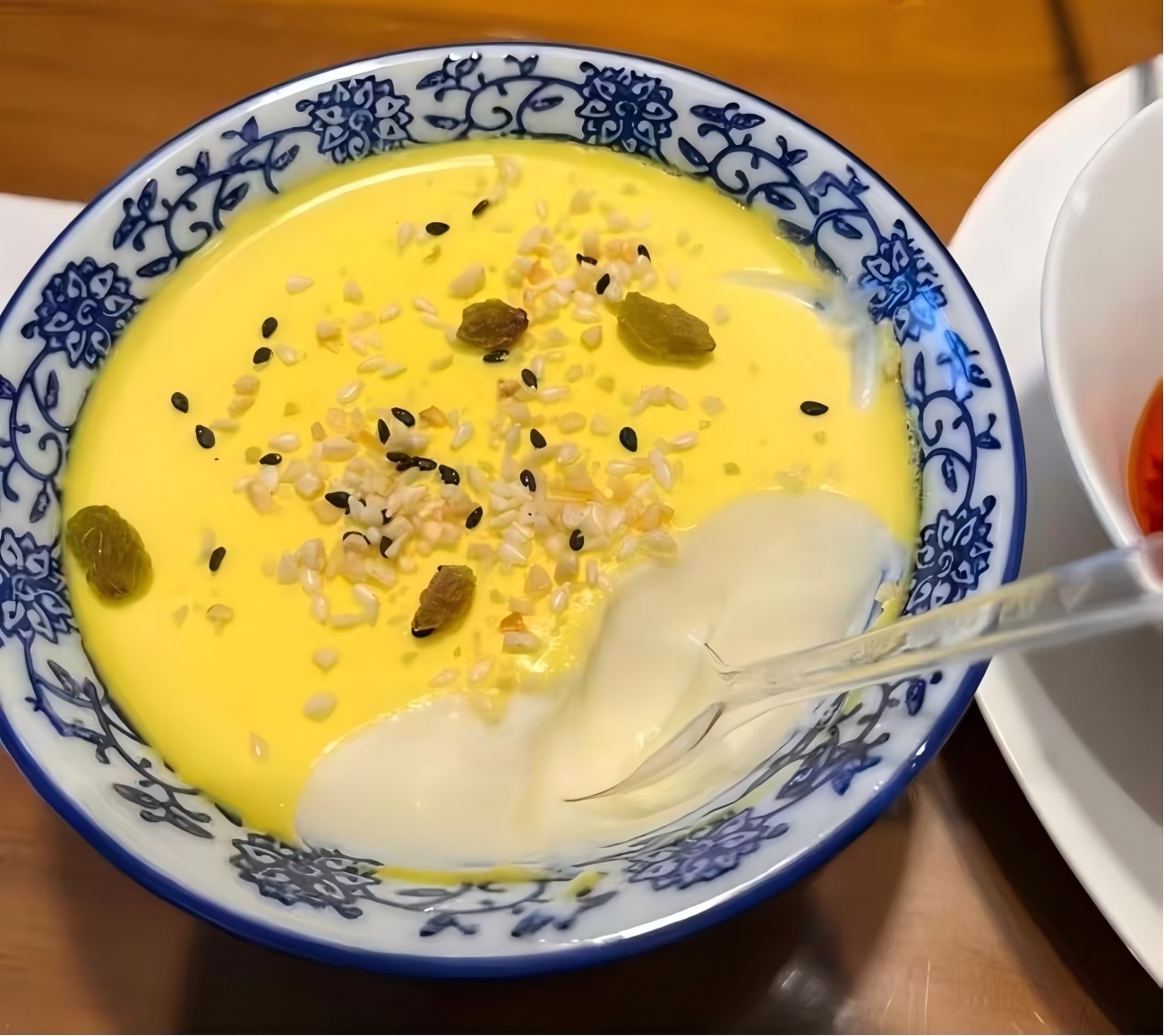
4. Qinghai Yogurt: A must-try. Made from naturally fermented yak/goat milk. Thick, semi-solid with a creamy yellow skin on top. Tart and rich, usually eaten with a sprinkle of white or brown sugar, or mixed with roasted barley flour (tsampa) and dried fruit. Sold in traditional clay pots at stalls. It's probiotic-rich and helps digestion.
7. Journey's End: Carrying Faithful Memories
Dear visitors, our tour of Ta'er Monastery is ending. I hope today you've not only seen its magnificent architecture but also felt the profound culture of Tibetan Buddhism and the deep faith of its people. From the gilded glory of the Great Hall to the protective might of the Small Hall; from the ancient chants in the Assembly Hall to the blessings of the Eight Stupas; and the delicate art of the Butter Sculpture Hall – each site has its own wonder and story. The local flavors have given us a true taste of the plateau.
Ta'er Monastery is a shining pearl on the Qinghai-Tibet Plateau – a sacred site and a living cultural carrier. Here, we've seen devotees from different ethnic backgrounds united in piety. I hope today becomes a precious memory. May you carry this sense of faith and wonder with you. Wishing you all safe travels and good health. We hope to welcome you back to this sacred land someday. Goodbye!