Emei Mountain
🌍 Experience Mount Emei: A Journey Above the Clouds
Unlock the Mystique of China’s Sacred Peak
Escape the ordinary and step into a landscape of ancient legends, misty peaks, and spiritual serenity. As a UNESCO World Heritage Site and one of China’s Four Sacred Buddhist Mountains, Mount Emei is not just a destination—it is a life-changing journey.
Whether you seek a challenging mountain trek, a soul-stirring spiritual retreat, or a deep dive into ancient culture, we craft the perfect, hassle-free itinerary tailored just for you.
Emei Mountain Travel Guide: Golden Summit & Zen Pilgrimage
Overview: Why Visit Mount Emei (UNESCO World Heritage Site)
Good morning! Welcome to Mount Emei, one of China's Four Sacred Buddhist Mountains and a dual UNESCO World Heritage Site for both its cultural significance and biodiversity. Known as "the most elegant mountain under heaven," Emei stands at 3,099 meters, offering a perfect blend of misty peaks, ancient Taoist-Buddhist history, and pristine nature.
The Name's Origin: Legend says the mist-shrouded peaks resembled a maiden's delicate eyebrows ("Éméi").
Spiritual Heart: For over 2,000 years, it has been the sacred seat of Samantabhadra Bodhisattva (Puxian Pusa), attracting pilgrims, poets, and hikers worldwide.
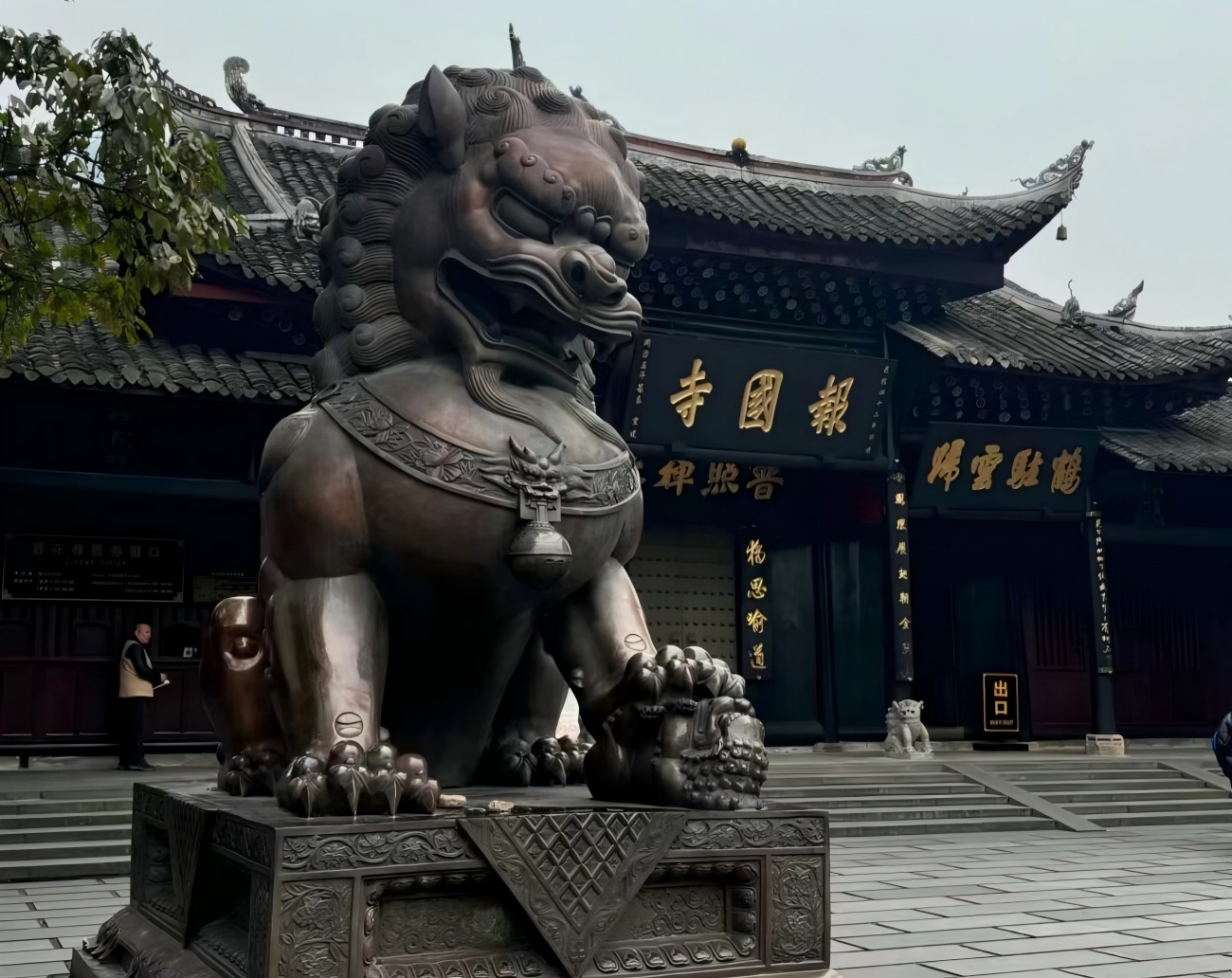
1. Baoguo Temple: The Gateway to Emei's Zen World
Best For: Cultural immersion, historical architecture, easy walking.
Emei Mountain main gate,
📊 Quick Facts for International Travelers
📍 Location: At the base of Mount Emei (Starting Point)
⏰ Recommended Time: 45–60 minutes
🎟️ Ticket Info: Requires a separate small entry fee (Included in our tour packages)
History & Imperial Heritage
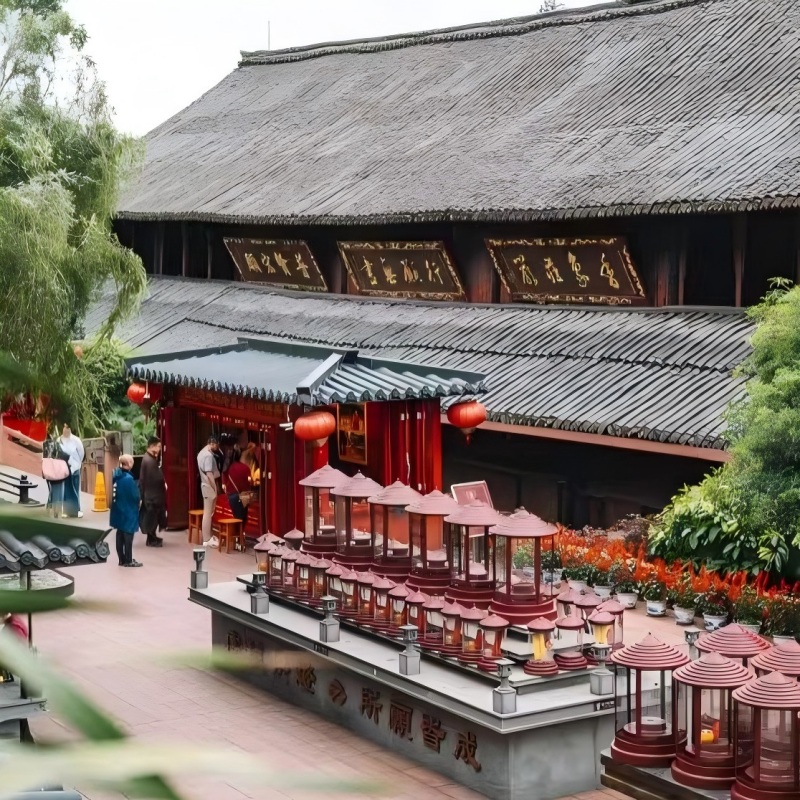
Built during the Ming Dynasty, Baoguo Temple (Serve the Country Temple) is the largest temple on Mount Emei. Originally named the "Hall of Harmony," it uniquely blends Confucianism, Buddhism, and Taoism. Emperor Kangxi of the Qing Dynasty later renamed it and personally inscribed the iconic plaque at the entrance, adding royal prestige to its spiritual peace.
Inside the Temple: What to See
The Laughing Buddha: The first hall houses Maitreya Buddha, symbolizing joy and tolerance.
The Grand Mahavira Hall: Features gilded statues of Sakyamuni and the Medicine Buddha, filled with the soothing scent of incense.
Imperial Couplet: Look for the famous gate couplet: "Phoenixes soar toward the golden palace; bells and drums chime to greet the jade steps."
💡 Inbound Agency Pro-Tip: Baoguo Temple is the best place to buy authentic Buddhist blessings and souvenirs. As your local agency, we handle all entry reservations in advance so you can skip the ticket lines.
Qingyin Pavilion: Where Mountains, Water, and Zen Meet
Best For: Nature photography, hiking, landscape views.📊 Quick Facts for International Travelers
📍 Location: Mid-mountain area (Accessible via scenic boardwalks)
⏰ Recommended Time: 1–1.5 hours
🚶♂️ Trail Condition: Flat, paved pathways suitable for all fitness levels
The Most Picturesque Spot on Emei
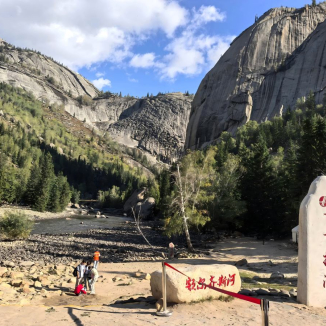
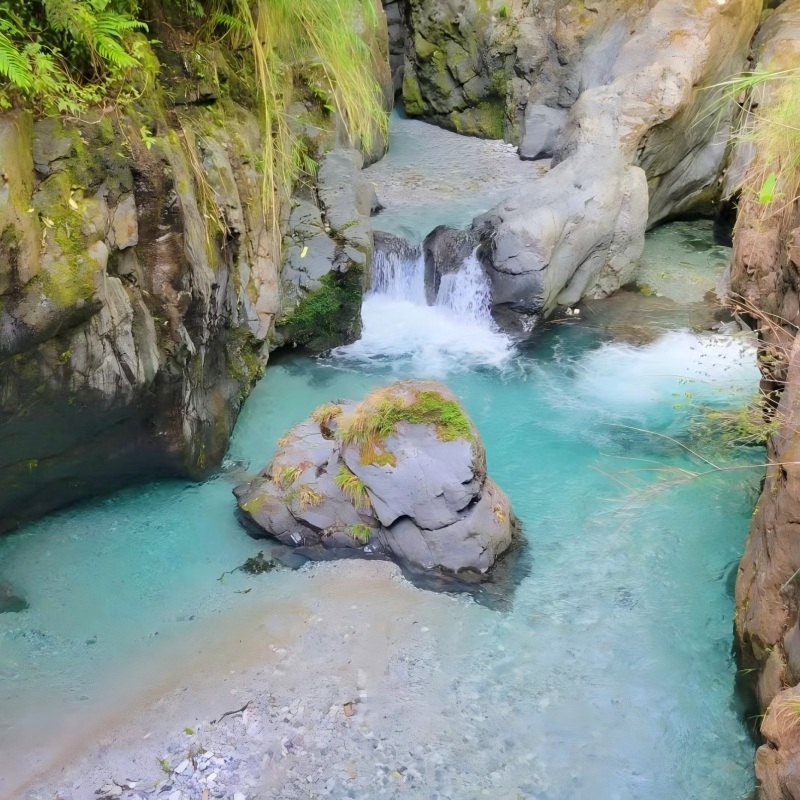
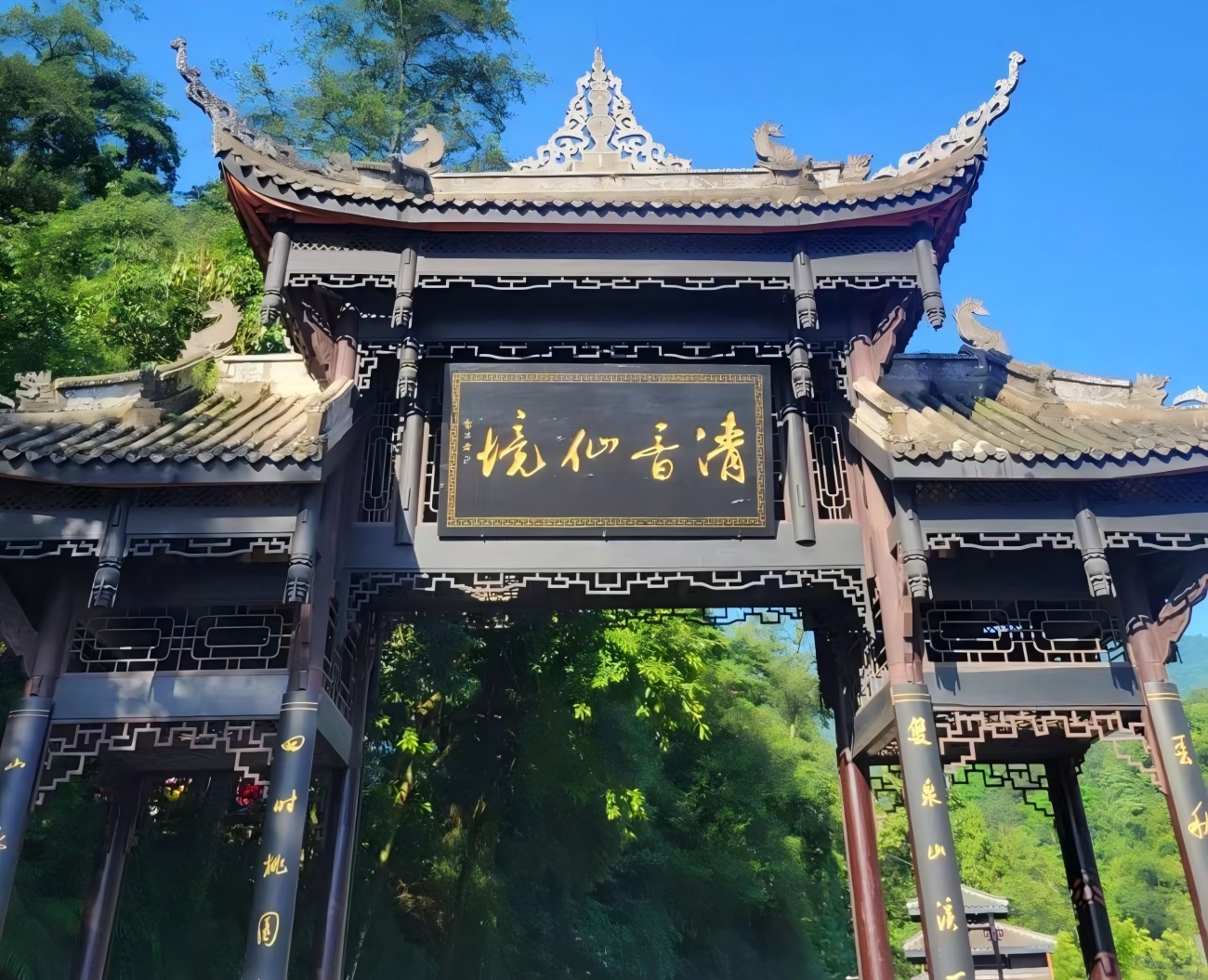
A scenic 5km trek from the base brings you to Qingyin Pavilion (Clear Sound Pavilion). Built in the Tang Dynasty, this pavilion sits precisely where two crystal-clear alpine streams—the Black Dragon River and the White Dragon River—converge around a massive, heart-shaped rock called the Ox Heart Stone. The rushing water creates a natural melody, giving the pavilion its poetic name.
Highlights & Legends
Twin Bridges View: Capture the famous "Twin Bridges Flanking the Clear Sound" landscape, a favorite subject for ancient poets like Li Bai.
The Flood Legend: Locals believe Samantabhadra Bodhisattva placed the Ox Heart Stone here to protect villages from floods.
💡 Inbound Agency Pro-Tip: The trail around Qingyin Pavilion can be slippery after rain. Our guided tours provide walking poles and eco-friendly rain gear for a safe, comfortable trek.
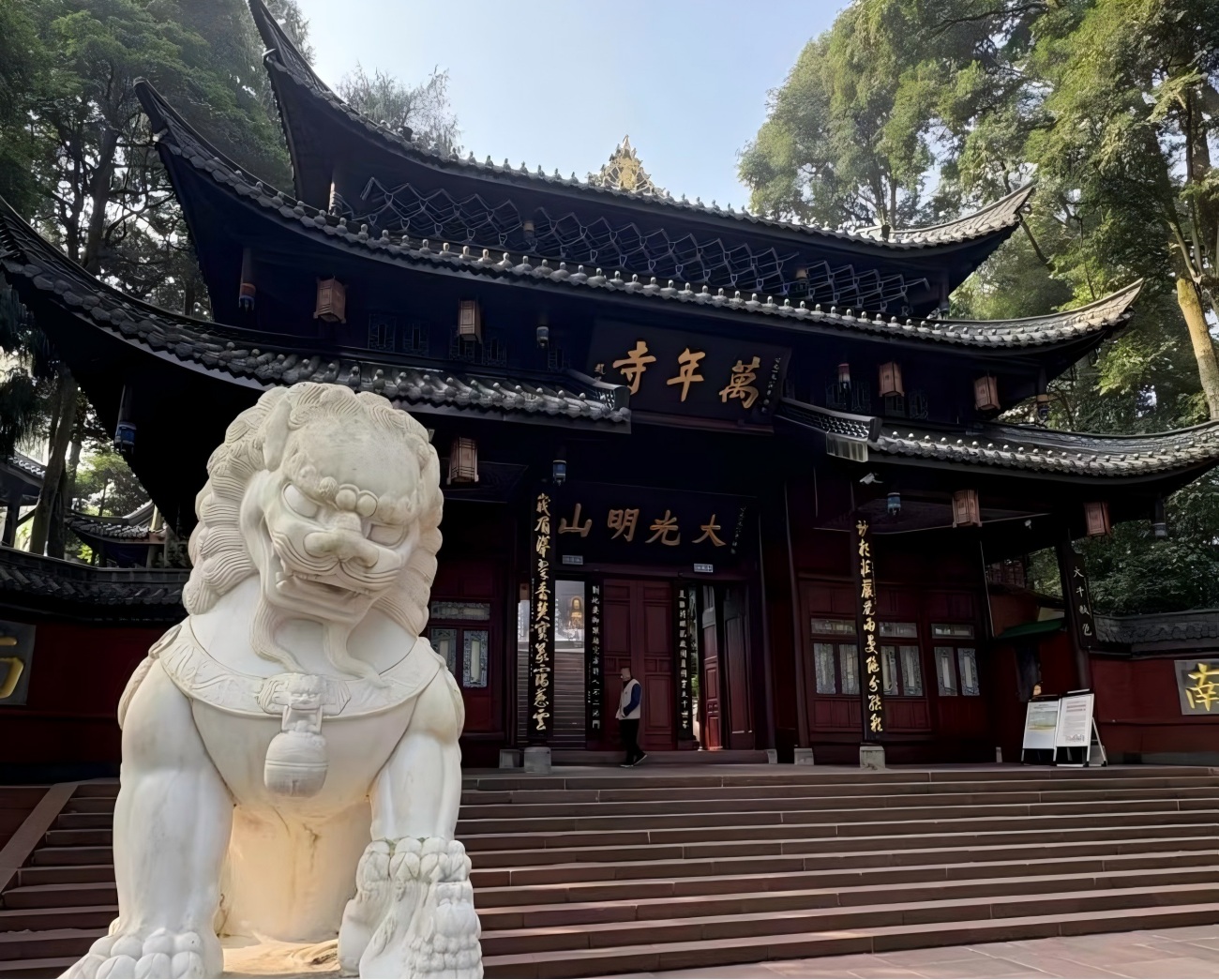
Wannian Temple: Home to a 62-Ton National Treasure
Best For: Ancient engineering, Buddhist art, royal history.
Wannian Temple bronze statue, Oldest temples in Emei.
The Beamless Brick Hall: A 400-year-old architectural wonder built entirely of brick without a single wooden beam, surviving multiple major earthquakes.
The Bronze Colossus: Inside the hall sits the Bronze Statue of Samantabhadra Riding a Six-Tusked Elephant. Cast in 980 AD (Song Dynasty), this national treasure stands 7.35 meters tall and weighs 62 tons.
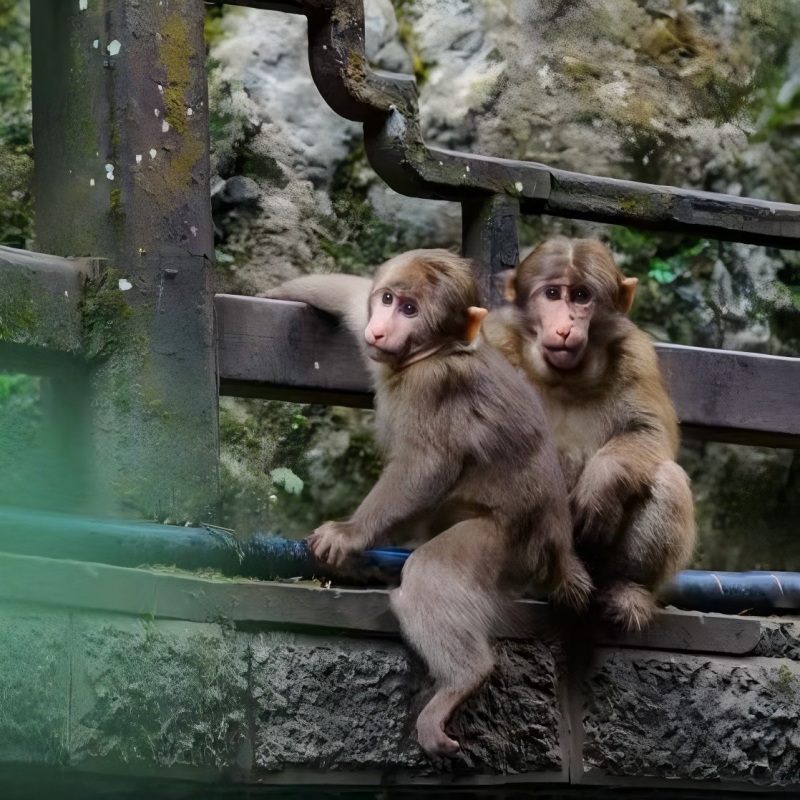
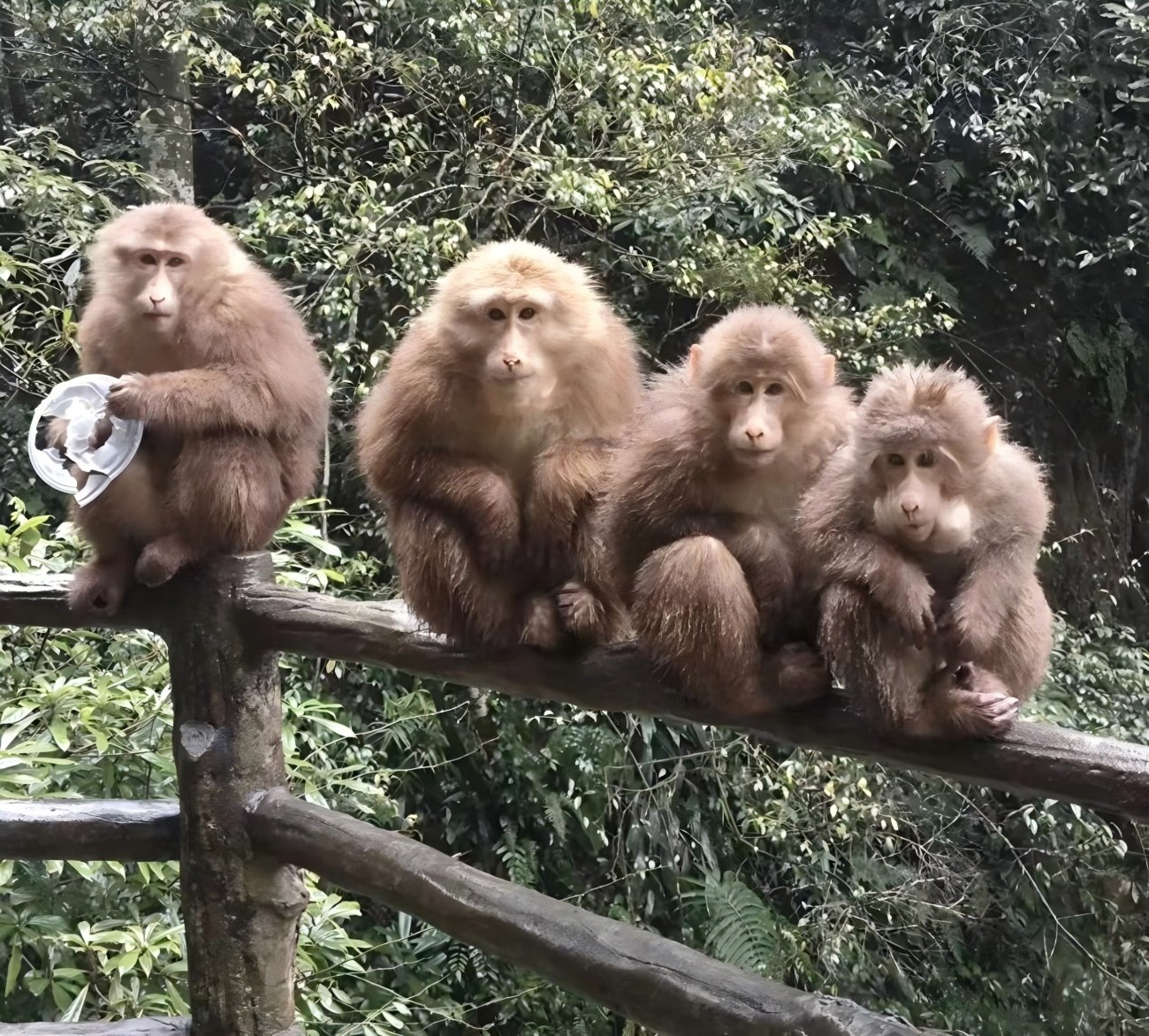
Best For: Wildlife viewing, family-friendly adventure.
Emei Mountain wild monkeys safety, Tibetan macaques Emei.
Keep Food Hidden: Do not carry food in plastic bags or open backpacks.
No Teasing: Avoid making sudden movements or teasing baby monkeys.
Maintain Distance: Observe and photograph from the designated elevated walkways.
Best For: Sunrises, sea of clouds, ultimate spiritual views.
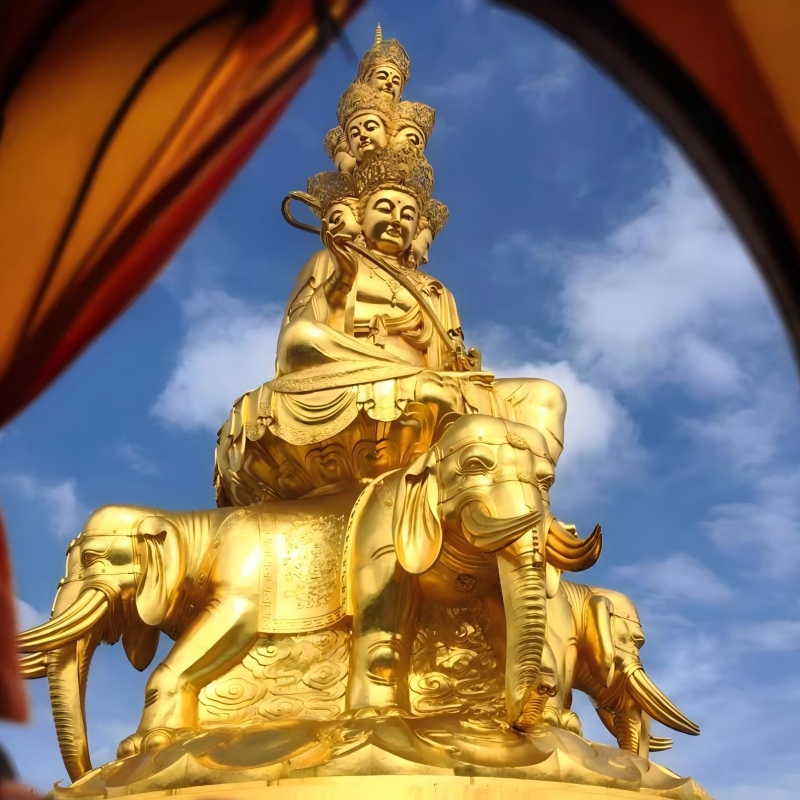
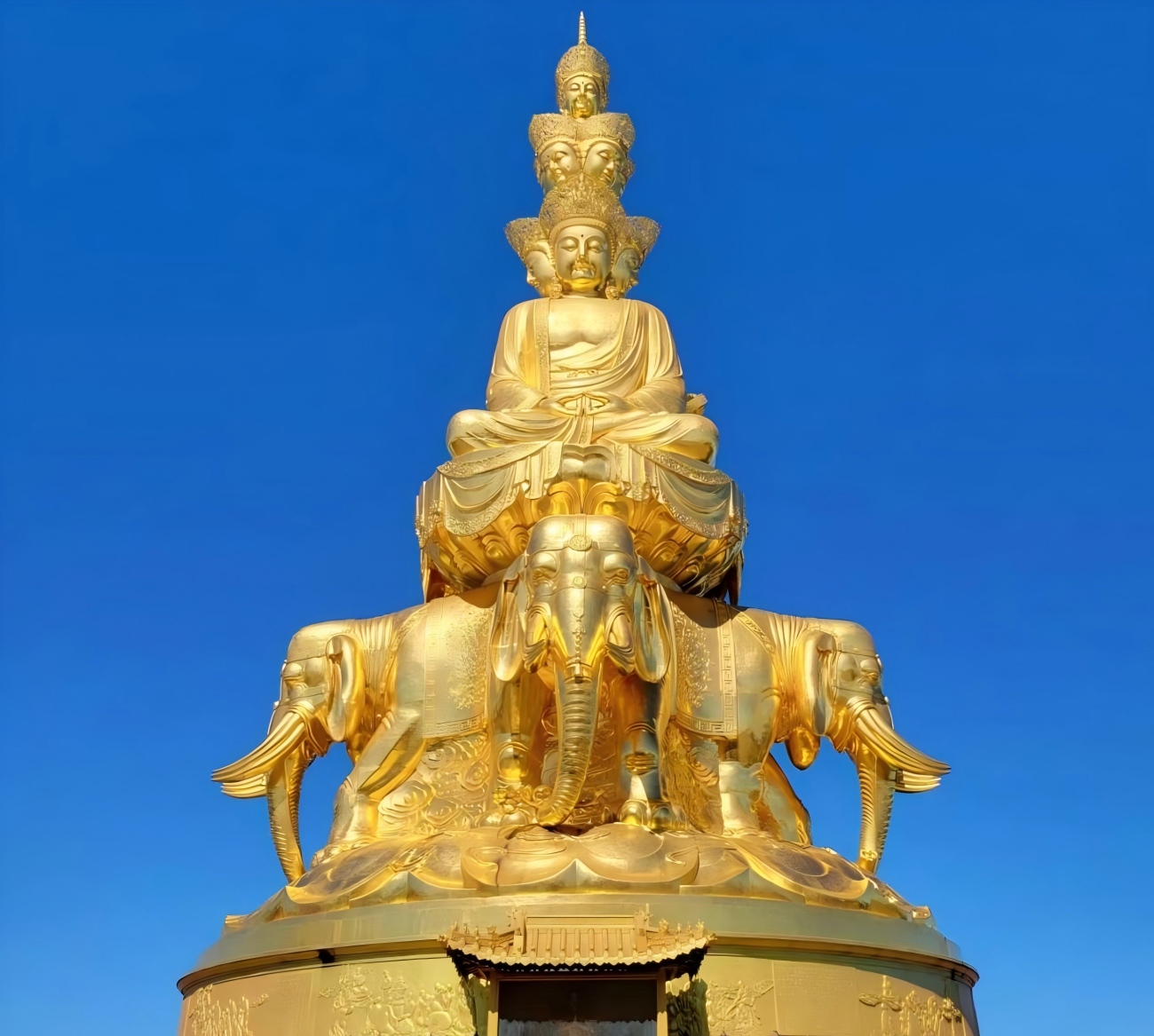
Golden Summit Emei Mountain sunrise, Buddha's Light optical phenomenon.
The Golden Buddha: A breathtaking landmark visible from miles away.
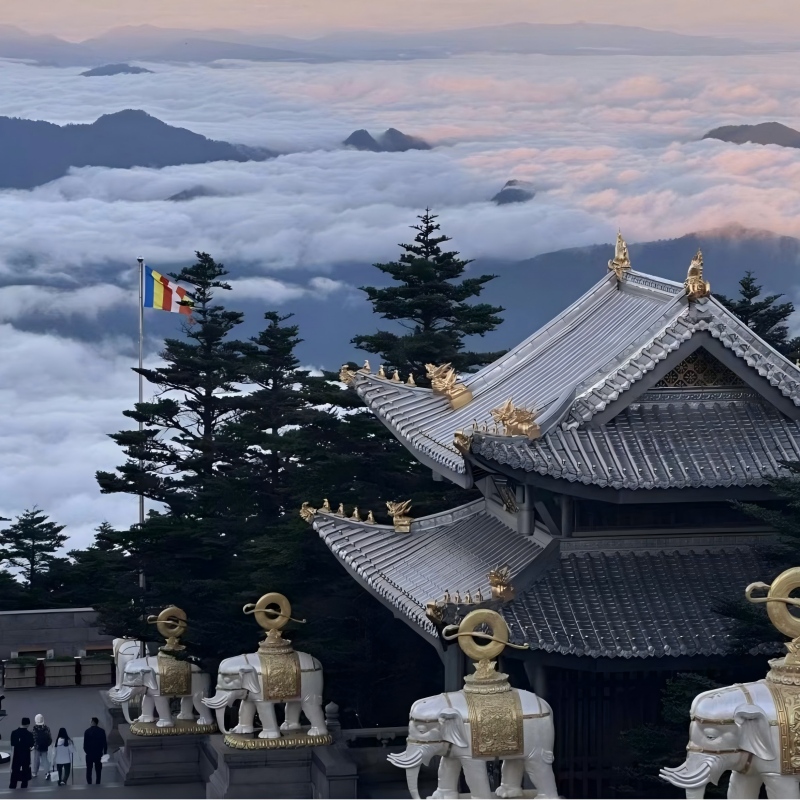
The Sea of Clouds: An endless, rolling ocean of white mist beneath your feet.
The Sunrise: A bucket-list view as the sun breaks over the snowy Sichuan peaks.
Buddha’s Light (Fóguāng): A rare optical phenomenon where light diffractions project your shadow inside a rainbow halo on the clouds. Buddhists view it as a direct blessing from the Bodhisattva.
Best For: Culinary tourism, Sichuan flavors, Buddhist diet.
What to eat in Emei Mountain, Buddhist vegetarian food Leshan.
📊 Quick Facts for International Travelers
📍 Location: Mid-mountain (Accessible by hiking or Wannian Cable Car)
⏰ Recommended Time: 1 hour
🚠 Logistics: We recommend taking the cable car up and walking down to save energy
Architectural & Artistic Marvels
Established over 1,600 years ago, Wannian Temple (Ten Thousand Year Temple) houses one of China’s most significant cultural treasures.
The Royal Blessing
A Ming Dynasty Empress once prayed here for a son. When her wish was granted, she funded the temple's reconstruction and gifted a precious golden seal. The temple was renamed "Wannian" to wish the Empress eternal life.
The Emei Monkey Zone: Meeting the "Mountain Spirits"
📊 Quick Facts for International Travelers
📍 Location: Near the Western Ecology Zone (Past Qingyin Pavilion)
⏰ Recommended Time: 45 minutes
⚠️ Safety Level: Wild animals; caution required
Encounter the Tibetan Macaques
Mount Emei is home to hundreds of wild Tibetan macaques. Regarded by locals as "mountain spirits," these playful primates are highly accustomed to human visitors. In Chinese mythology, these monkeys are often called the descendants of the legendary Monkey King (Sun Wukong) from Journey to the West.
Essential Monkey-Safety Guide for Tourists
💡 Inbound Agency Pro-Tip: Your English-speaking guide will lead you safely through the monkey zone, keeping a protective eye out and ensuring you enjoy the wildlife without any hassle.
The Golden Summit: The Pinnacle of Mount Emei
📊 Quick Facts for International Travelers
📍 Location: The peak of Mount Emei (3,077 meters)
⏰ Recommended Time: Half-day or Overnight stay
🧥 Weather Note: Freezing temperatures; heavy winter coats are required year-round
The Peak of Spiritual Splendor
The Golden Summit (Jinding) is the ultimate destination of the Emei pilgrimage. The summit features the majestic, 48-meter-tall multi-faced gilded statue of Samantabhadra Bodhisattva, gleaming against the high-altitude sky. Next to it sits the Huazang Temple, where incense smoke rises above the clouds.
The 4 Great Wonders of the Summit
Must-Try Emei Mountain Foods & Vegetarian Cuisine
🍽️ Top Local Eats Recommended by Our Guides
- Emei Temple Vegetarian Feast: Authentic, healthy dishes mimicking meat using tofu and mushrooms.
- Xuemo Konjac (Konjac Stew): A savory, spicy local specialty perfect for cold mountain days.
- Mount Emei Green Tea (Zhu Ye Qing): One of China's most premium green teas, grown right
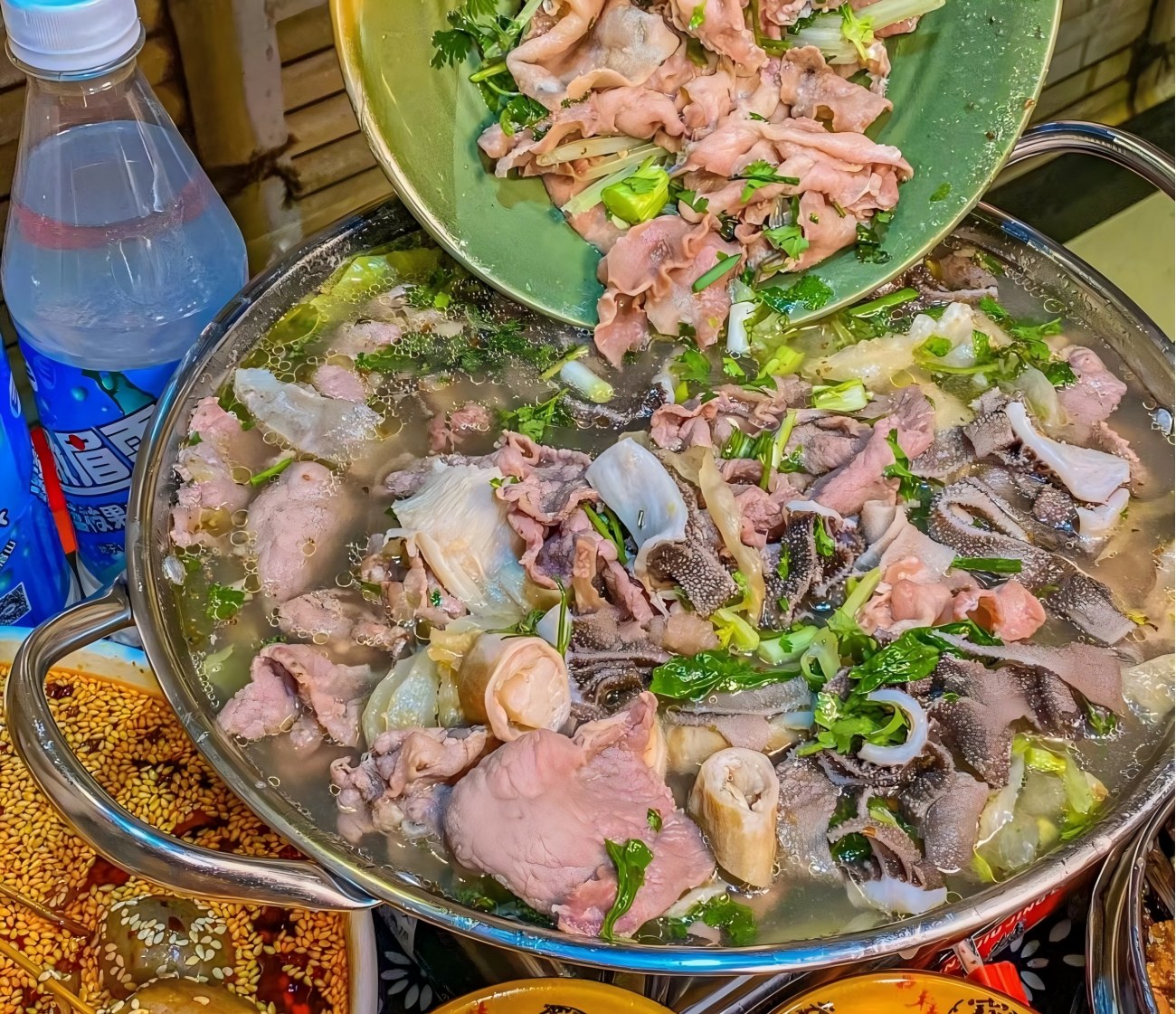
Crossing-Legs Beef (Qiāojiǎo Niúròu)
A local specialty with a fun origin. Workers once ate this hearty beef and offal stew so tired they sat cross-legged. It's aromatic, slightly herbal, and deeply comforting. Perfect after a long hike!
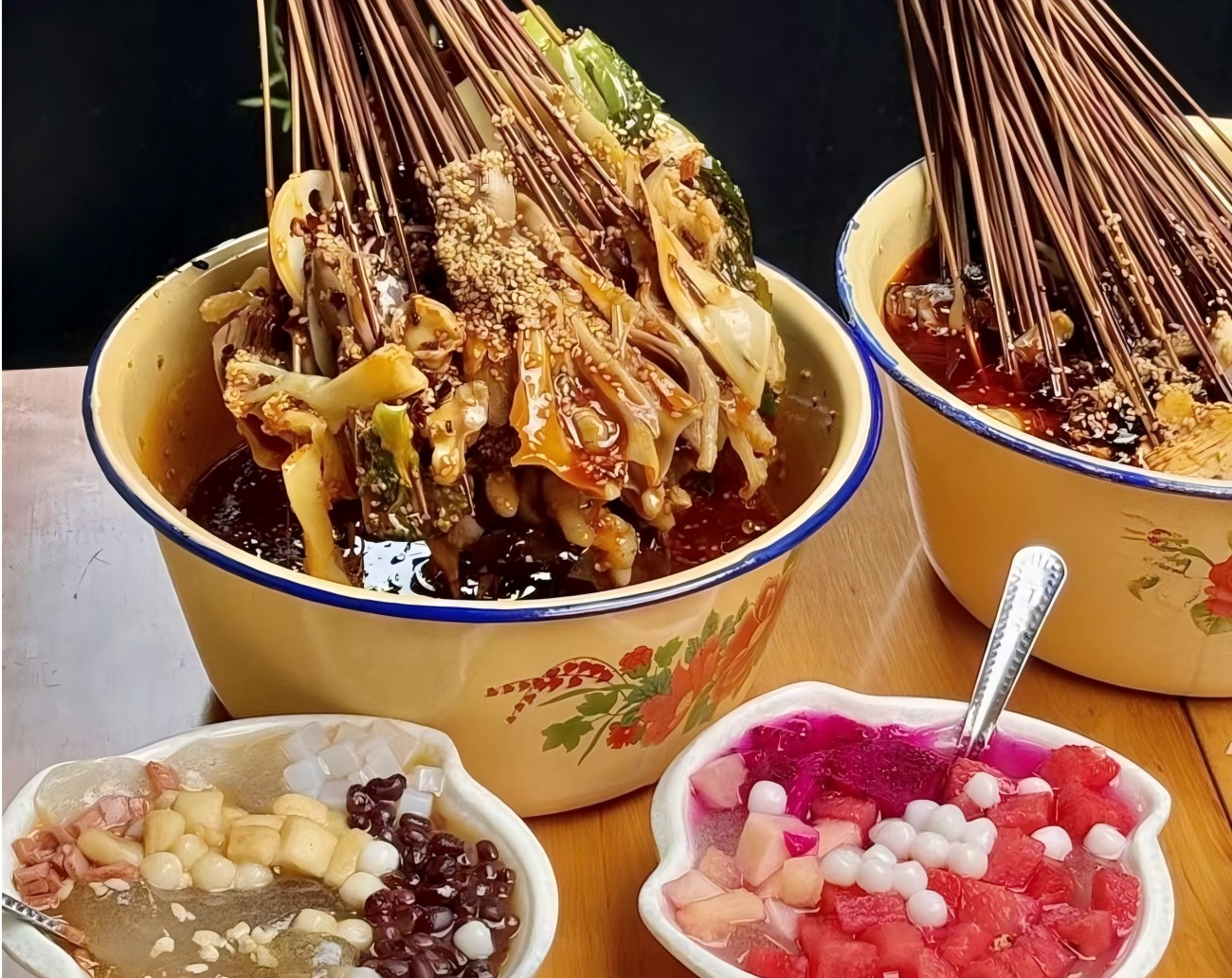
Bobo Chicken
A popular street snack! Skewers of chicken (and other goodies like veggies) are dunked in a flavorful, spicy, or numbing brine sauce kept in clay pots (bobo). It's addictive and great for a quick, tasty bite.
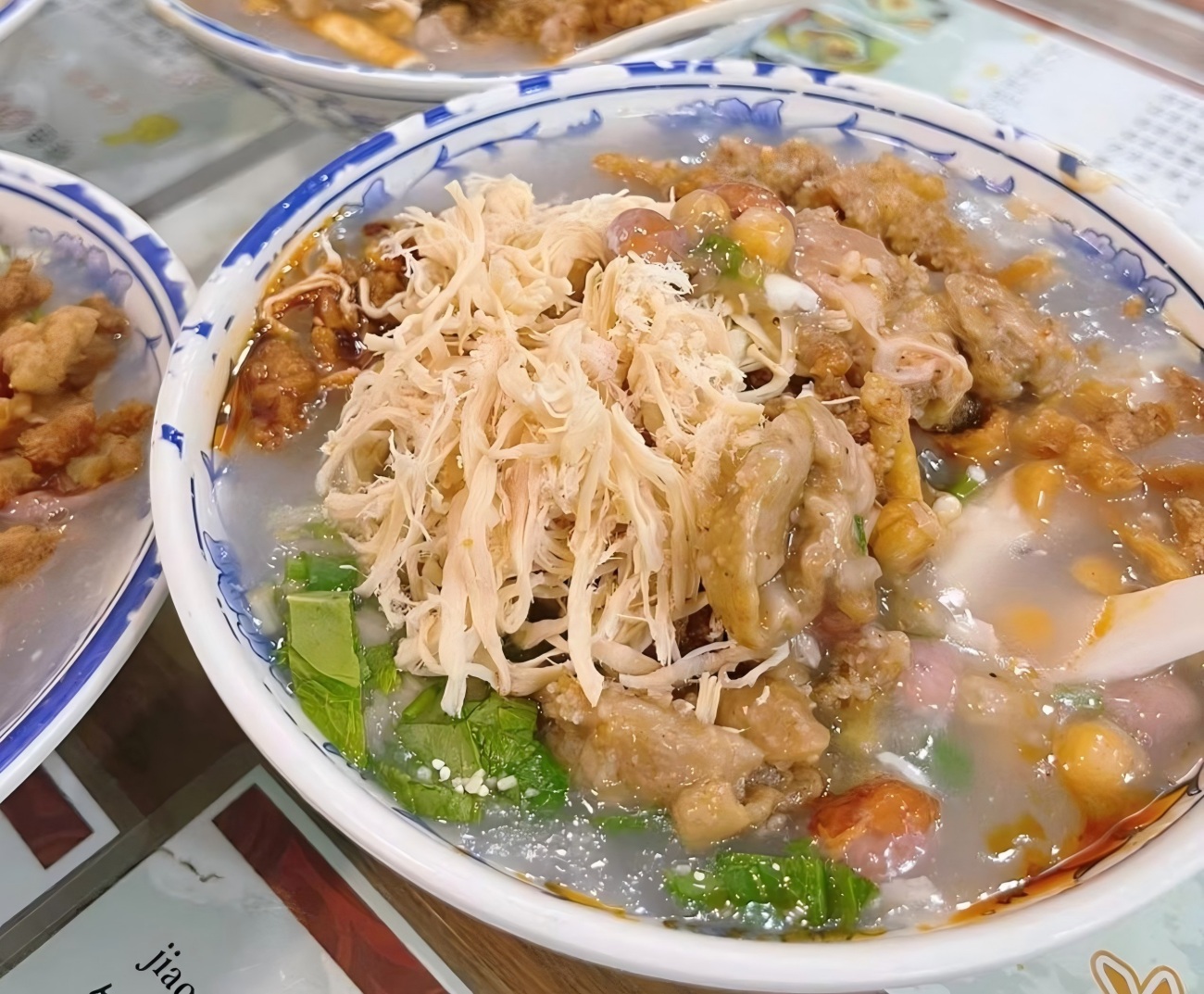
Emei Tofu Pudding (Dòuhuā)
Not your ordinary tofu pudding! This savory version is served with minced meat, pickles, peanuts, chili oil, and scallions in a flavorful broth. A beloved local breakfast.
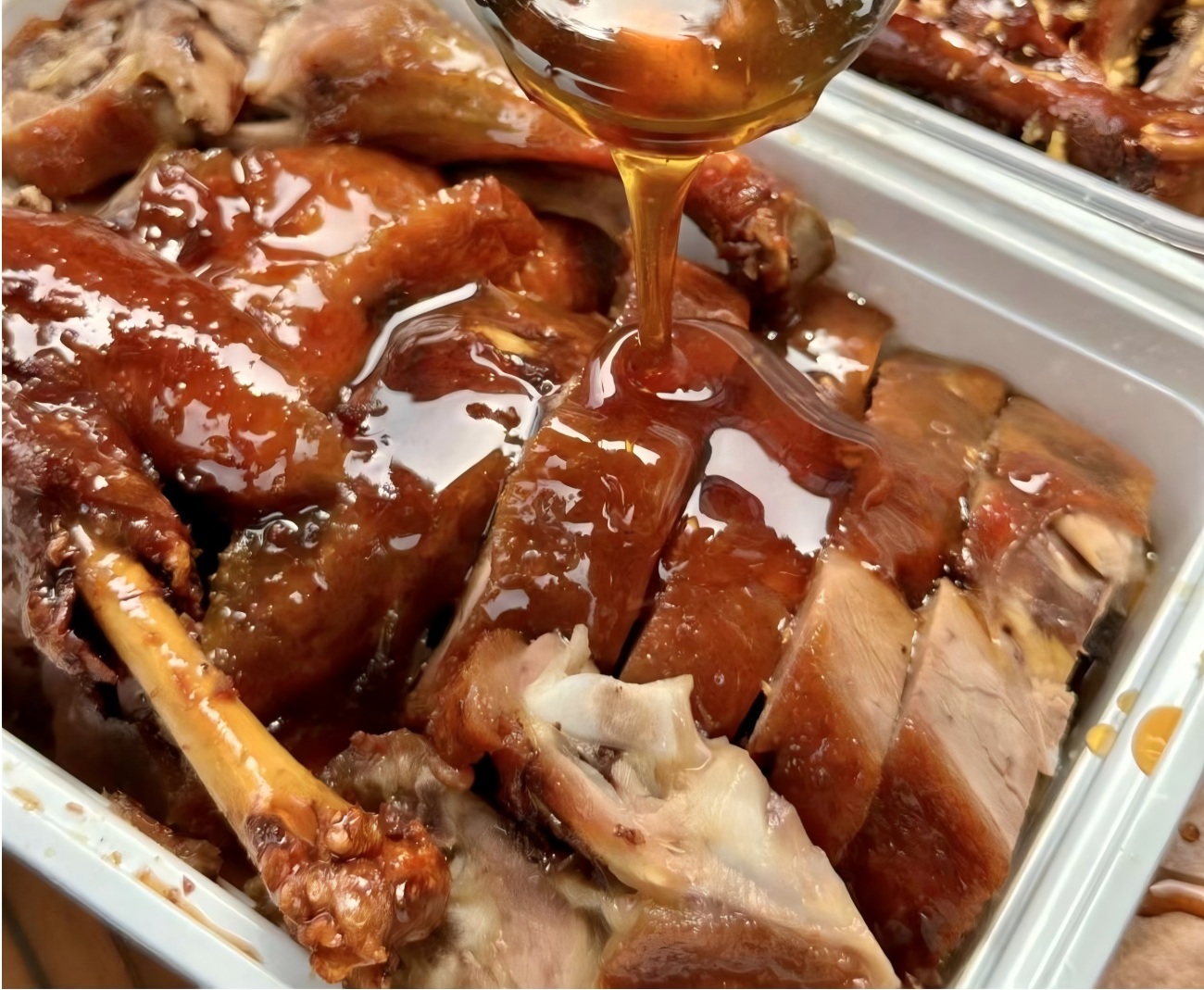
Sweet-Skin Duck (Tángpí Yā)
A delicious marinated roast duck with a signature glossy, sweet, and crispy skin. It's often vacuum-packed, making it a perfect edible souvenir to take home.
🗺️ Book Your Seamless Mount Emei Tour with Us
Navigating bullet train tickets, mountain shuttle buses, cable cars, and temple entry permits in China can be overwhelming for international travelers.
As a trusted China Inbound Travel Agency, we offer fully customizable Emei Mountain & Leshan Giant Buddha Tour Packages. We handle all logistics, provide expert English-speaking guides, and curate hassle-free itineraries tailored to your pace.
👉 [Contact Our Travel Specialists] to get a free personalized itinerary and quote today!