At a Glance: 3 Days in Beijing
Planning a short trip to Beijing and not sure where to start? This 3-day Beijing itinerary is designed for first-time visitors and families who want to see the imperial landmarks, walk on the Great Wall, and still have time to enjoy neighbourhood life, modern art, and great food. With realistic timing, simple transport advice, and options for different energy levels, you can spend more time experiencing Beijing and less time worrying about logistics.
At a Glance: 3 Days in Beijing
•Day 1 – Imperial Beijing: Tian’anmen Square, Forbidden City, plus Jingshan Park or Temple of Heaven. 6–8 hours of sightseeing.
•Day 2 – Great Wall & Summer Palace: A full-day excursion to Mutianyu or Badaling, with an optional stop at the Summer Palace.
•Day 3 – Hutongs & Modern Beijing: Traditional alleyways, Lama and Confucius Temples, then 798 Art District and dinner in Sanlitun.
This route works especially well if you stay centrally in Dongcheng or Chaoyang and use a mix of subway, taxis/ride-hailing, and pre-arranged transfers.
Day 1 – The Imperial Heart of Beijing
Day 1 focuses on the classic imperial sights in central Beijing, almost all within short driving distance of each other. This keeps walking reasonable for families and leaves some flexibility in the afternoon.
Morning: Tian’anmen Square & Forbidden City
Begin at Tian’anmen Square, one of the world’s largest public squares and the traditional gateway to the old imperial city. It is especially atmospheric in the morning, when the light is softer and crowds are still manageable. Security checks are required, so allow a little extra time before you walk into the square.
From Tian’anmen, you pass through the Gate of Heavenly Peace into the Forbidden City (Palace Museum), the former seat of power for Ming and Qing emperors for nearly 500 years (1420–1911). The complex is vast, with ceremonial courtyards, palaces, and private quarters that show the full scale of imperial life.
•When to arrive: Aim to enter between 08:30 and 09:00 to avoid the heaviest crowds and long security lines.
•Time needed: Plan for 2.5–3.5 hours for the key halls, courtyards, and side museums at a comfortable pace.
•Tickets: The Forbidden City now operates on a real-name, advance booking system. During peak seasons and public holidays, book 7–14 days in advance via the official Palace Museum channels or a trusted tour operator such as Huatu International Travel Service. Always carry your passport for ID checks.
Families may want to focus on the central axis (Meridian Gate, Hall of Supreme Harmony, Inner Court) and then choose one or two quieter side courtyards, which are less crowded and offer good photo opportunities.
Midday: View from Jingshan Park or Relax at Beihai
As you exit the Forbidden City from the north gate, you are only a short walk from Jingshan Park. A brief but steep climb leads to a pavilion with one of Beijing’s best panoramic views: the tiled roofs of the Forbidden City stretching south and modern Beijing rising beyond.
•Jingshan tip: Budget about 45–60 minutes, including the walk up and photo time.
•Alternative: If you prefer flatter paths and lakeside scenery, head a little further west to Beihai Park, another former imperial garden, for an easy stroll.
Afternoon: Temple of Heaven or Hutong Walk
For the afternoon, you have two classic options depending on whether you prefer more architecture and history, or a slower exploration of everyday neighbourhood life.
Option 1: Temple of Heaven
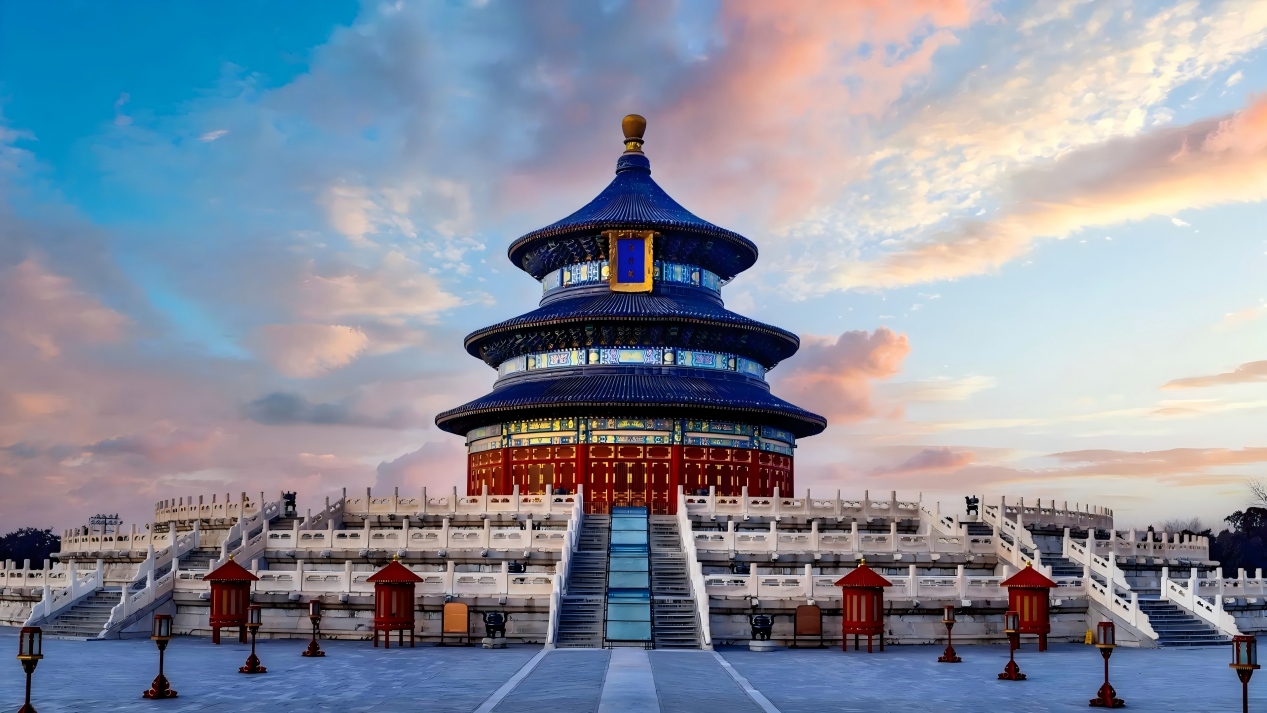
The Temple of Heaven is another UNESCO-listed complex and one of Beijing’s most graceful landmarks. Here, emperors once made sacrifices to Heaven and prayed for bountiful harvests. The Hall of Prayer for Good Harvests, set on a triple marble terrace, is a highlight of traditional Chinese architecture.
•Time needed: Allow 1.5–2 hours to walk through the main ceremonial buildings and the surrounding park.
•Why go in the afternoon: Local residents often gather in the park to play cards, practice tai chi, or sing in informal choirs, giving you a glimpse of Beijing’s social life.
Option 2: Hutong Stroll
If you feel you have seen enough monumental architecture for one day, consider a hutong walk instead. These historic alleyways are lined with traditional courtyard houses, small shops, and simple eateries.
•Try local snacks such as jianbing (savory crepes), baozi (steamed buns), and milk tea in a simple café.
•Many hutong areas are easy to access from Dongcheng hotels and can be explored independently or with a local guide.
Evening: Peking Duck Dinner
A trip to Beijing is not complete without tasting Peking duck. For your first evening, reserve a table at a reputable restaurant.
•Popular choices: Historic names like Quanjude (Dongcheng) or modern-style venues such as DaDong (Chaoyang) are frequent favorites.
•For families: Ask for a quieter seating area or a private room if available. Earlier dinner slots are usually more relaxed and suit younger children.
If you still have energy after dinner, consider an optional evening show, such as a Chinese Kung Fu performance. Your local guide can help with ticket arrangements and transfers.
Day 2 – Great Wall of China & Summer Palace
Day 2 is dedicated to the Great Wall of China, one of the world’s most impressive engineering feats and a symbol of the country’s history. Depending on your pace, you can also add the Summer Palace on the way back.
Choosing the Right Great Wall Section
For a 3-day Beijing visit, most travelers choose between Mutianyu and Badaling.
•Mutianyu: Often recommended for families and small groups. It is slightly farther from central Beijing but generally less crowded and offers cable car and chairlift options, making the climb easier for different fitness levels.
•Badaling: The most famous and most visited section. It has strong infrastructure and can be accessed by coach or train, but during holidays and peak weekends it becomes very busy, with heavy foot traffic and longer waits.
Both sections provide restored wall segments, watchtowers, and dramatic mountain scenery. For visitors who value comfort, photo opportunities, and a quieter experience, Mutianyu is usually preferable.
Getting There: Transport Options
From central Beijing, travel time to the wall is typically 1–1.5 hours each way, depending on traffic and the section you choose. You have several options:
•Private car or private CITS transfer: The fastest and most flexible option, especially for families or small groups. Your driver can pick you up at your hotel, adjust the schedule to your pace, and coordinate timing for any add-on such as the Summer Palace.
•Seat-in-coach tours: More budget-friendly, with shared transport and a fixed group schedule. These usually include hotel pickup at central locations and a set time at the Wall.
•Public transport combinations: For experienced travelers, it is possible to reach some sections by train plus local bus or taxi. This can be economical but requires more planning and travel time.
Whichever you choose, it is wise to:
•Book entrance tickets and any cable car/chairlift rides a few days in advance, especially in high season.
•Carry water, sun protection in summer, and warm layers in spring/autumn.
•Wear comfortable walking shoes with good grip, as many parts of the Wall are steep or uneven.
Suggested Day 2 Schedule
•Morning: Early hotel pickup and arrival at Mutianyu or Badaling. Spend 2.5–3 hours walking select sections of the Wall, taking photos from different watchtowers, and enjoying the views.
•Midday: Lunch at a local restaurant near the Wall or a simple packed lunch if you prefer more time on-site.
•Afternoon (optional): On the return to the city, stop at the Summer Palace for a relaxed walk.
图片
Optional Add-On: Summer Palace
The Summer Palace is the largest imperial garden in China and a UNESCO World Heritage Site. Emperors used it as a summer retreat, building pavilions, corridors, and temples around the calm waters of Kunming Lake.
•Time needed: Plan for 1.5–2.5 hours, depending on how much walking you want to do.
•Highlights: The Long Corridor with painted scenes, the Marble Boat, lakeshore views, and small temples on Longevity Hill.
Adding the Summer Palace works best if you start early and use private transport or an organized day tour that includes both the Wall and the palace. If traveling with young children or older travelers, you may prefer to focus only on the Great Wall and keep the evening free.
Day 3 – Hutongs, Temples & Modern Art
After two days of imperial history and spectacular landscapes, the final day introduces a different side of Beijing: quiet alleyways, living traditions, and contemporary art districts.
Morning: Hutong Life & Historic Temples
Start with a simple street breakfast in one of Beijing’s hutong areas. Look for vendors selling freshly made jianbing, steamed buns, or soy milk. This is a gentle way to see local life at the start of the day.
Then visit the Lama Temple (Yonghe Gong) and the nearby Confucius Temple:
•Lama Temple: One of the most important Tibetan Buddhist temples in Beijing, known for its ornate halls, incense-filled courtyards, and a towering wooden Maitreya statue.
•Confucius Temple: A quieter site dedicated to the great philosopher, with memorial steles and a scholarly atmosphere.
These two sites can easily be combined, as they are located close to each other. Allocate around 45–75 minutes for each, depending on your interest in religious and cultural history.
图片
Afternoon: 798 Art District
In the afternoon, head to the 798 Art District, a former industrial area transformed into a creative hub of galleries, studios, and cafés. Built originally as a factory complex, the district now mixes exposed concrete, industrial pipes, and large-scale artworks.
Visitors will find:
•Contemporary art exhibitions and design shops.
•Street art and outdoor installations perfect for casual photos.
•Coffee shops, bakeries, and small restaurants catering to both locals and international visitors.
Plan for 2–3 hours to wander the main streets, pop into a few galleries, and take a break in a café.
图片
Evening: Dinner in Sanlitun or Central Beijing
Finish your 3 days in Beijing with a relaxed evening in Sanlitun, one of the city’s most popular dining and nightlife areas. Sanlitun offers:
•International and Chinese restaurants suitable for families or groups.
•Casual bars, rooftop venues, and mall-style dining for those who want a livelier atmosphere.
Alternatively, you can return to a favorite hutong restaurant or schedule a second Peking duck dinner if you want to compare different styles.
A simple food pattern for Day 3 could be:
•Street breakfast in the hutongs.
•Creative café or bistro lunch near 798 Art District.
•Relaxed dinner in Sanlitun or near your hotel.
Practical Travel Information
Transport in Beijing
Beijing’s transport network is extensive and generally easy to use once you are familiar with a few basics.
•Subway: The subway is the most efficient way to move between major sites in the city center. Purchase a Yikatong transport card or use mobile payments if your phone and apps support it.
•Taxis and ride-hailing: Metered taxis and services like DiDi are widely available for short rides and evening transfers. They are convenient after a long day of walking.
•Timing tips: Avoid subway and road travel during the busiest rush hours, especially if you are carrying luggage or traveling with children.
For day trips such as the Great Wall or multi-site itineraries with limited time, many visitors choose private cars or organized tours for comfort and efficiency.
Where to Stay
Your choice of base can make a 3-day itinerary smoother:
•Dongcheng District: Ideal if you want to focus on Tian’anmen Square, the Forbidden City, Temple of Heaven, and nearby hutongs. Many city tours start from this area.
•Chaoyang District: Convenient for visitors who value easy access to 798 Art District, Sanlitun, embassies, and modern shopping areas.
Huatu International Travel Service offers itineraries that typically include centrally located hotels with breakfast, plus airport–hotel transfers by private car or coach. Families can request larger rooms, connecting rooms, or special arrangements as needed.
Booking, Season & Visa Notes
•Ticket reservations: For major attractions such as the Forbidden City and Mutianyu Great Wall, advance booking is strongly recommended in busy seasons, national holidays, and weekends.
•Best travel seasons: Spring (April–May) and autumn (September–October) usually bring comfortable temperatures and pleasant conditions for walking and outdoor photography.
•Visa and transit policies: Many international visitors can benefit from updated visa and visa-free transit rules. As of recent policies, passport holders from a range of countries can use 240-hour visa-free transit in cities including Beijing when meeting the relevant conditions. Some nationalities also enjoy short-stay visa-free entry for tourism.
Working with Huatu International Travel
Huatu International Travel Service is one of China’s established travel agencies, offering:
•Private guides and air-conditioned vehicles for full-day or half-day tours.
•Land transfers between airports/railway stations and hotels.
•Entrance tickets to the major sites listed in your chosen itinerary.
•Domestic flights or train tickets for extended China trips.
Many tours are available in shopping and no-shopping versions, depending on your preference. Family-focused and short-stay Beijing tour packages can be customized to match this 3-day plan or combined with other cities such as Xi’an or Shanghai.