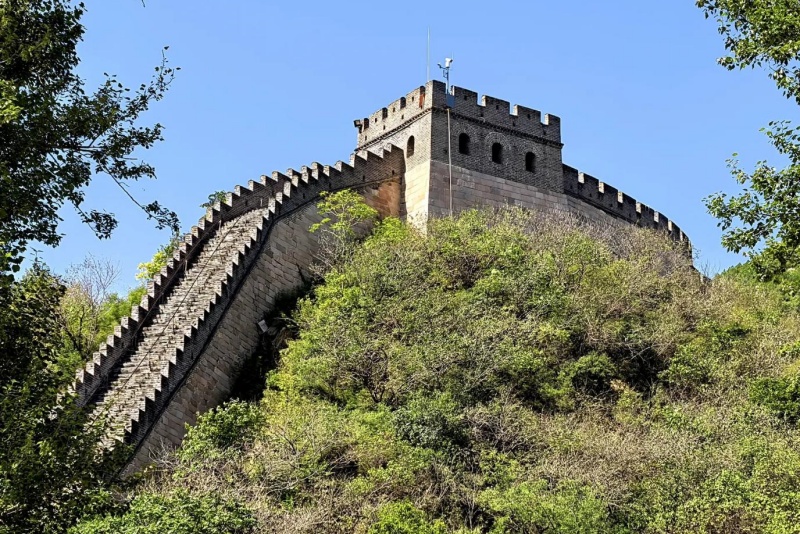
Mutianyu Great Wall Tour
One of the best-preserved and most majestic sections of the Great Wall, built over 1,400 years ago.
Renowned for its spectacular mountain scenery and elegant architectural design.
Features unique double-sided battlements and well-restored watchtowers.
Offers stunning photo spots like Zhengguan Terrace, Ox Horn Edge, and Eagle Flying Upside Down.
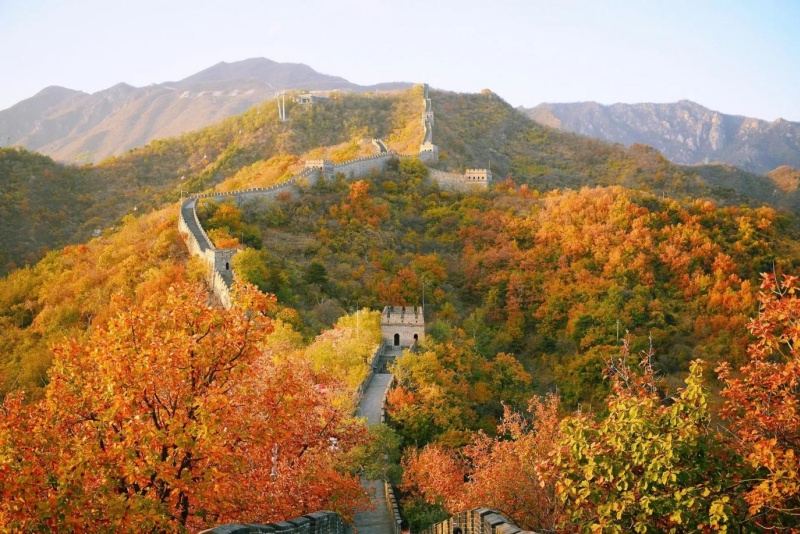
A year-round destination — blooming in spring, lush in summer, fiery in autumn, and snowy in winter.
Convenient access from Beijing with modern facilities and cable car options for all visitors.
At this very moment, beneath our feet lie the stone steps of Mutianyu Great Wall, bathed in the warm golden glow of dawn. Take a moment to inhale deeply—does the air still carry the subtle fragrance of mountain pine needles, mingled with the faint dampness of morning dew soaking the bricks? Feel the warmth of millennia-old stones beneath your touch, listen to the whispers of history carried through the crenellations, and let us share the folk tales hidden within Mutianyu's wall crevices. Together, let us embark on this Great Wall journey where “one step bridges ancient and modern times”!
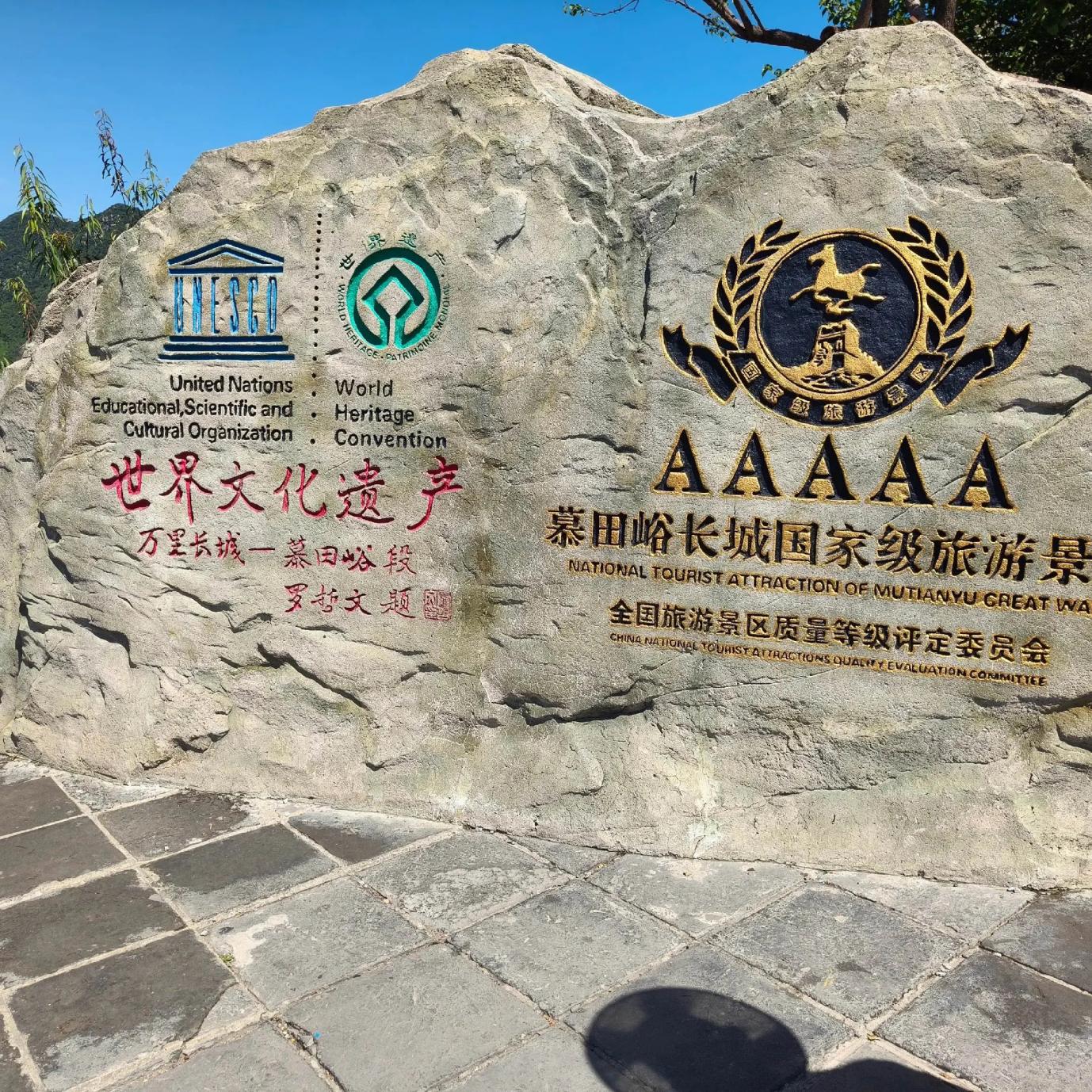
I. Tracing the Great Wall's Origins
Look down at the granite blocks at your feet, trace the varied grooves with your fingertips—these are no ordinary stones, bearing over 1,400 years of history. As early as the Northern Qi dynasty during the Northern and Southern Dynasties period, craftsmen used rudimentary tools to carve through mountains, stacking these stones into the earliest defensive walls. It's said that back then, each stone required a dozen strong laborers chanting in unison to haul it upward. Their cries echoed for miles through the valleys. At nightfall, when work ceased, craftsmen would carve their names into the stones, hoping their families would know they had built the Great Wall here. The Ming Great Wall we tread upon today was rebuilt brick by brick by General Xu Da and his soldiers in the early Ming Dynasty. They dismantled and reinforced the old Northern Qi walls, filling hollows with new rammed earth mixed with glutinous rice paste to strengthen the structure against weathering. The restored Great Wall now stands like a prominent backbone, firmly anchored among Huairou's mountains. Even villagers from afar point to it and declare, “That's the ‘Northern Gateway’ to our capital city!”
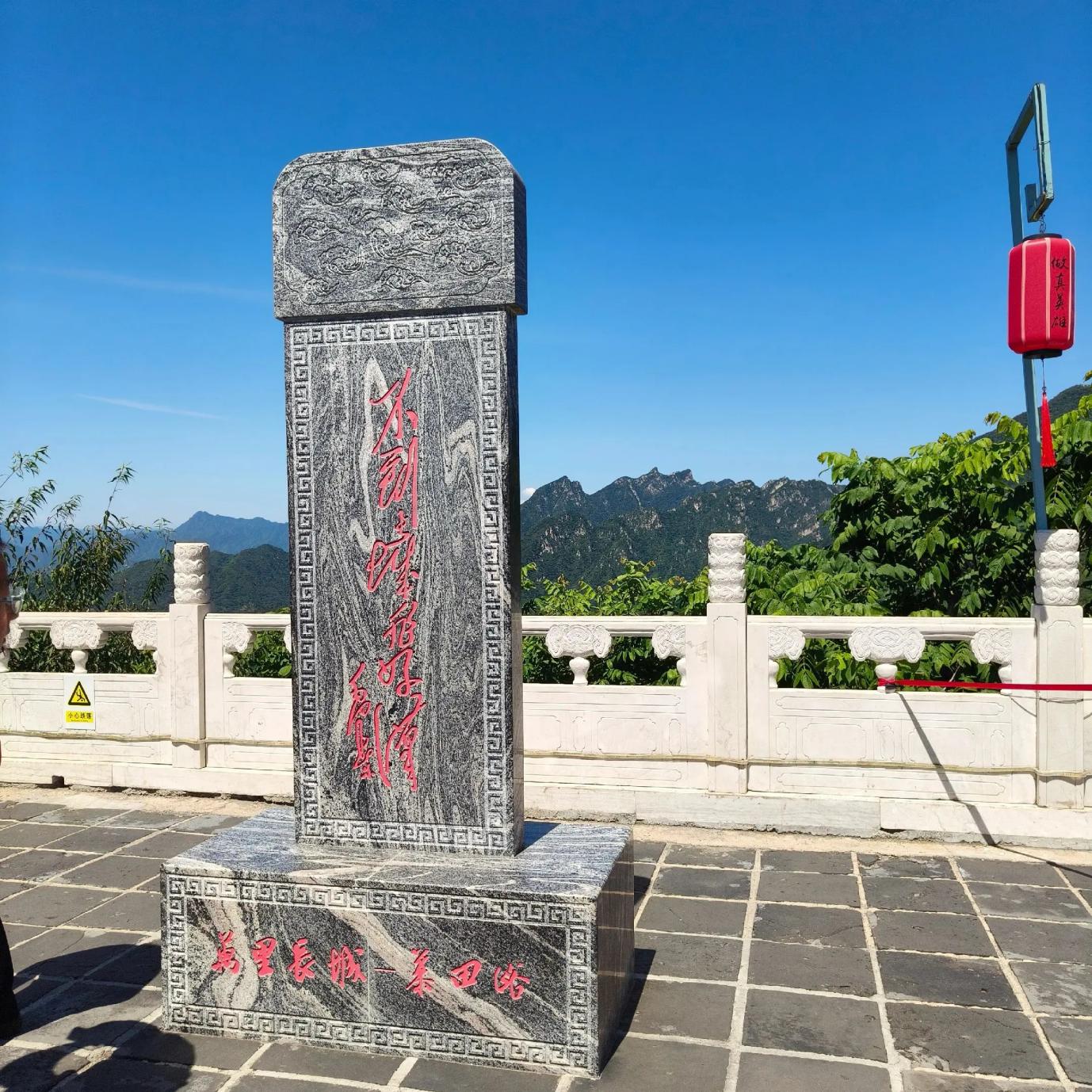
By the second year of the Yongle reign in the Ming Dynasty, the stone stele marking Mutianyu Pass was erected, transforming this site into a crucial defensive barrier protecting the imperial capital. The incense smoke from ancestral rites at the imperial tombs and the bustling cries of vendors in the capital's markets were all safeguarded from afar by this fortress. Local elders also recount that an old man selling sugar sculptures would always sit by the pass gate. While boiling sugar syrup, he'd share the latest news from the capital with passing soldiers. Returning from patrols, the soldiers would buy a sugar sculpture to suck on, its sweetness banishing half a day's fatigue.
Most noteworthy was that autumn of the third year of the Longqing reign in the Ming Dynasty—when the renowned anti-Japanese general Qi Jiguang first set foot on Mutianyu's soil atop his warhorse. As he ran his fingers over the weathered, crumbling walls, his brow furrowed deeply: sections of the ramparts had collapsed, soldiers gripped rusted weapons, and even the wooden posts of the watchtowers were hollowed out by insects. Within days, the open space at the foot of the Great Wall echoed with thunderous shouts: Qi Jiguang personally led his soldiers in sword drills. Sunlight gleamed off his armor as blades struck wooden posts, sending splinters flying far and wide; Archers formed precise formations, arrows whistling through the air to land squarely in the bullseye a hundred meters away. Once, training stretched into noon, and Qi Jiguang squatted on the ground eating with his soldiers. Coarse rice and pickled vegetables filled their earthenware bowls, yet he ate with relish, saying as he did so, “Only by guarding the Great Wall well can our families eat in peace!”
One late night a year later, cavalry from the northern Tartar tribes crept up the mountain. Though their horses' hooves were wrapped in cloth, they still left faint clattering sounds on the stone path. Ming soldiers, already lying in ambush at the “Eagle's Inverted Flight” section, gripped the logs with sweaty palms. As the enemy climbed halfway up the slope, Qi Jiguang gave the command. Rolling logs and boulders thundered down, while arrows rained like an impenetrable black net. The cries of the Tartar soldiers mingled with the whinnies of their horses, drifting down the valley. After this battle, Mutianyu Great Wall became a true “iron wall,” just as the Ming dynasty poet Cao Daixiao wrote: “To the east, it connects with the ancient source of the Bohai Sea; to the west, it reflects the purple-green layers of Juyong Pass.” while Juyong Pass to the west appears and disappears among the green mountains. The two mighty passes stand facing each other from afar, having guarded centuries of peace.
II. Architectural Features
As we walk closer to the wall, you'll notice something unique: along both sides of the Great Wall's crest stand waist-high crenellations, resembling two neat rows of miniature fortresses. Each crenellation still bears the grooves carved by ancient craftsmen, designed to allow soldiers to rest their bows and arrows. Most sections of the Great Wall feature crenellations only on the outer side, but Mutianyu is different. Should enemy forces flank the wall from either ridge, soldiers stationed on either side could lean through the sawtooth-shaped crenellations to fire arrows at the attackers. Even more intriguing are the arched arrow slits beneath the crenellations. Crouch down and peer through one—your field of vision sweeps across half the hillside. No matter which angle the enemy charges from, they cannot escape the arrows' aim. Legend tells of a young soldier named Wang Xiaoer who, using this very arrow hole, struck the helmet of an enemy commander a hundred meters away. This feat struck fear into the enemy ranks, deterring them from advancing recklessly.
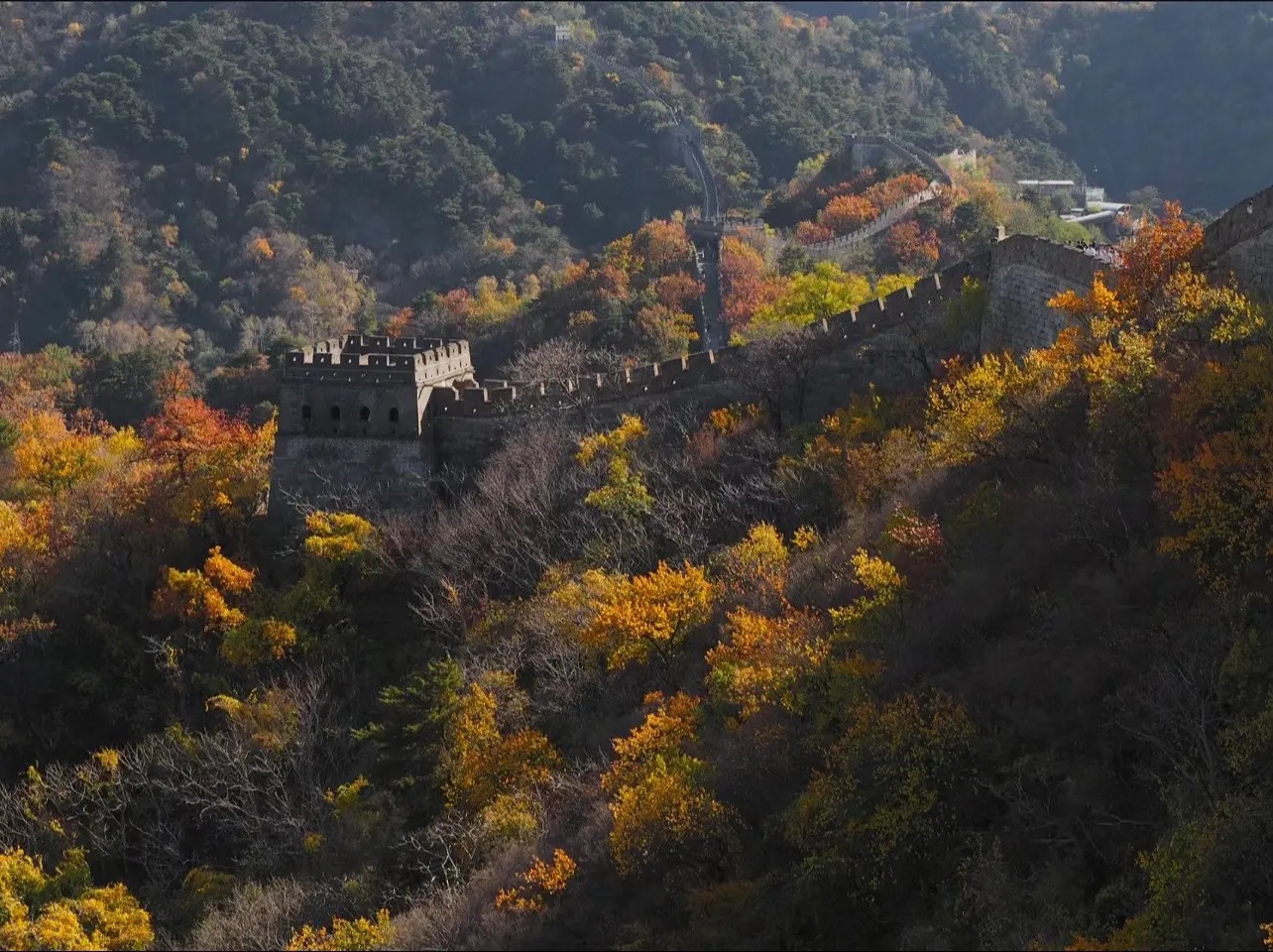
Looking at the watchtowers scattered along the Great Wall, they appear from afar like imposing sentinels. Some still retain their original stone door hinges at the entrance; push them and you'll hear the creaking sound of old age—an echo left by the passage of time. Let's approach one for a closer look: a two-story structure with a winding “U”-shaped passageway in the center. Arrow slits on all four walls, like watchful eyes, scan the surrounding landscape. During night watch, soldiers would light oil lamps in the second-story lookout. The light streaming through the arrow slits would form a string of “stars” in the valley below. villagers in the distance knew all was well on the Great Wall when they saw these “stars.”
The most remarkable are the “knife-handle towers”—see those outposts extending along the ridges? Just a few dozen meters long, they pierce the high ground like sharp blades. Arrow holes from enemy assaults still dot the walls, some still embedded with half-rusting arrowheads. During the Wanli reign of the Ming Dynasty, enemy forces attempted to flank the main Great Wall for a surprise attack. As they crept onto the ridge, sentries in the “knife-handle towers” spotted them. Immediately, beacon fires were lit, thick smoke billowing upward like a black dragon charging toward the sky. Soldiers from the main fortress rushed over with spears, trapping the enemy in the valley and launching a counterattack. Later, soldiers would say this “knife-handle tower” was their “lifesaving tower.” Without it, the consequences would have been unimaginable. Standing here, touching the rough brick walls of the watchtower, the fingertips can feel the coolness of the stones. It truly brings to mind the line “The mighty pass stretches far, as solid as iron”—these stones, long since smoothed by wind and rain, still carry the warmth of the soldiers' palms from years past.
III. Signature Landmarks
1.Zhengguan Tower: The three interconnected watchtowers before you form Mutianyu's signature landmark—Zhengguan Tower. Observe closely: the central watchtower stands tall and broad, its walls clad in large slabs of blue stone. The two flanking towers are slightly smaller, resembling guards protecting the central “general.” Most notably, the gate is not positioned centrally but tucked away on the eastern side. The stone steps leading to the entrance shine brightly from centuries of foot traffic, bearing faint indentations worn by soldiers' boots. Local elders recount that craftsmen deliberated for half a month before finalizing this design: a centrally placed gate would leave it vulnerable to enemy arrows. By shifting it eastward, attackers must first make a detour, granting the soldiers on the ramparts crucial time to draw their bows. During one siege, enemy forces circled the gate for ages, only to be repelled by a hail of arrows before they could even breach the entrance. Now sunlight dances across the walls of the Zhengguan Gate, its patterns leaping between the crenellations like a game of hide-and-seek. It truly resembles the poetic description: “A dragon rears its head, its form awe-inspiring.” This “dragon” has lain quietly upon the mountain ridge for centuries.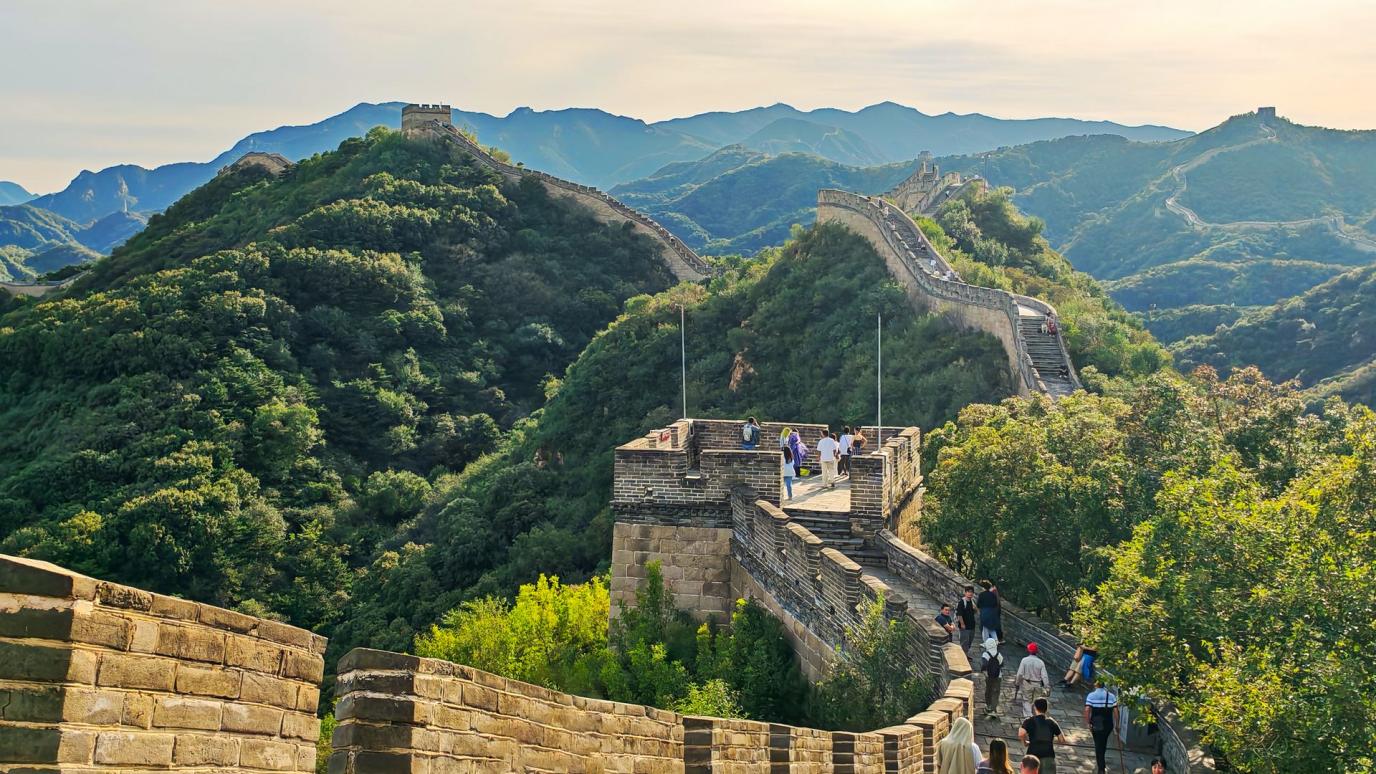
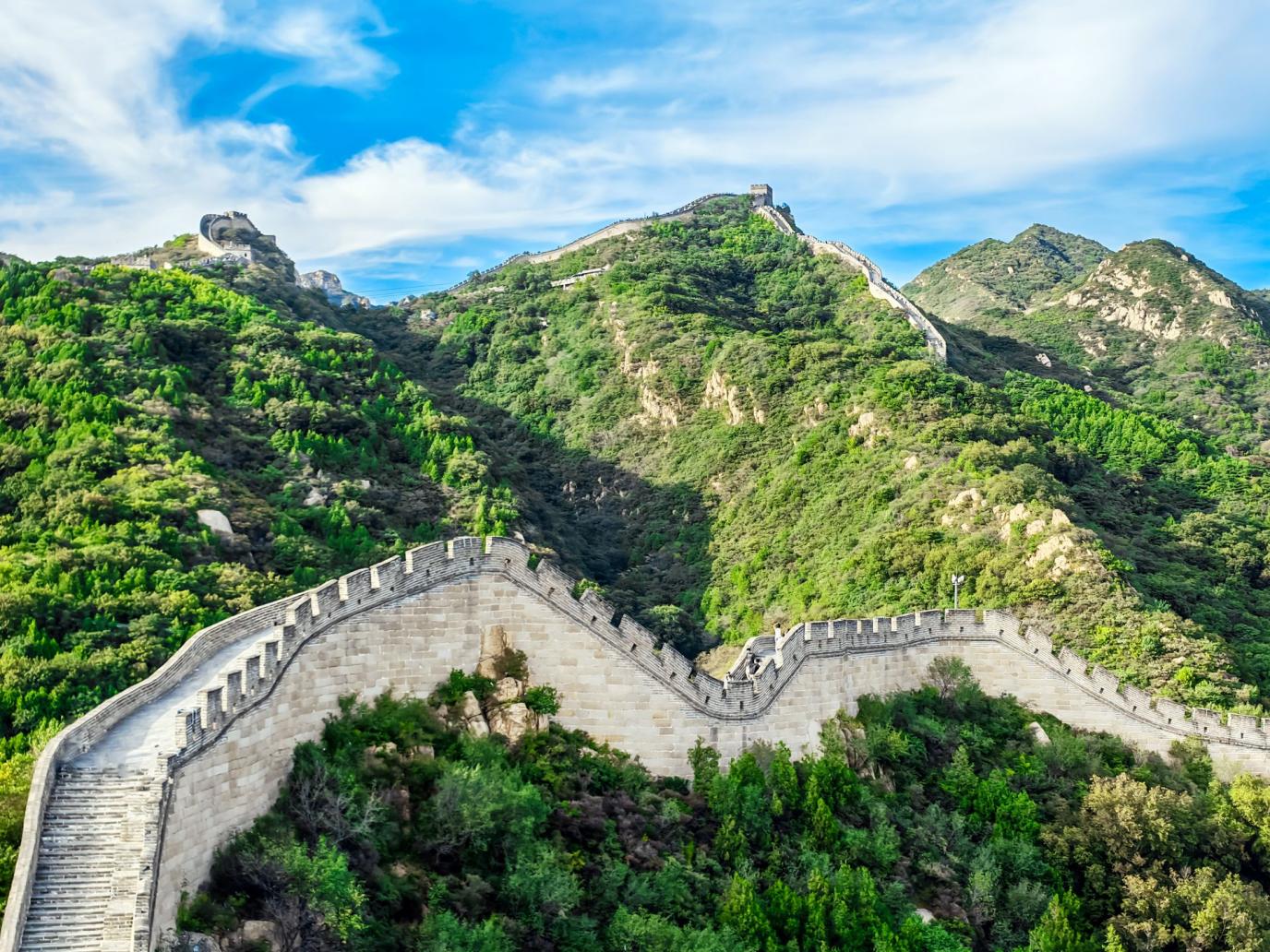
2.Ox Horn Edge: Following the Great Wall upwards, the winding section ahead is known as the ‘Ox Horn Edge’. Observe how it climbs from the mountainside, with tenacious blades of grass sprouting from the brick joints. At the watchtower summit, it makes a sweeping turn before descending along the opposite slope. The entire structure resembles the curved horns atop an ox's head, with even the distant mountain winds seeming to follow the wall's curvature. When constructing this section, the craftsmen faced a formidable challenge: the mountain was too steep to haul stones up. An old master builder named Li Laoshuán roamed the hills for three days, carrying his basket, his shoes worn through and his feet blistered, until he finally discovered this route that ‘followed the mountain's contours.’ Soldiers lashed stones to ropes and lowered them from the summit. The ropes screeched as they ground against the rock, hearts clenched in fear lest the stones slip. When laying the walls, craftsmen stuffed dry grass into the brick joints to repel water. Blisters formed on their hands, bursting and healing, bursting again, yet not a single one complained of fatigue. Now, as we walk along this section of the wall, the steps beneath our feet rise and fall unevenly. some still bearing the chisel marks of bygone days. Mountain winds howl through the gaping crevices, carrying the chill of the heights. Gazing upwards, watchtowers on the summit appear and disappear amidst the clouds, while the occasional bird sweeps past their edges. Only now do we truly grasp the sensation of ‘thousand peaks and valleys seated amidst the clouds.’
3. Eagle's Flight: The nearly vertical section of the Great Wall ahead is Mutianyu's most perilous stretch, known as the Eagle's Flight. Hold fast to the railings beside you and tread carefully on the steps below — — these steps are so narrow that only half a foot can be placed on them. Some have worn edges from years of wind and rain, with a bottomless ravine just beside. Looking down, you can see lush forests. Even eagles flying here must flap their wings and tilt their bodies backwards to avoid the sheer cliff face. This is how the name ‘Eagle Flying Backwards’ came about. During the Ming Dynasty, a young soldier named Zhao Hu once rescued an elderly herb gatherer here. While on patrol, he heard cries of ‘Help!’ from below the cliff. Looking down, he saw the old man clinging to a branch mid-air, his hands still tightly gripping a medicine basket from which half the herbs had spilled. Zhao Hu secured a rope around his waist, letting his comrades pull on the other end as he descended inch by inch. Gravel scraped against his clothing, and the wind stung his eyes shut, yet fear held no sway. He reached out and hauled the old man to safety. Later, the elder gifted Zhao Hu the ginseng he had gathered, but Zhao shared it among his wounded comrades, declaring: We all guard the Great Wall here; this token of kindness should be shared by all." Now, as you walk along this stretch of the wall, you might recall that brave soldier, remembering that the Great Wall holds not only beacon fires but also such heartwarming tales. Sometimes after rain, a rainbow arches over the cliff face. Looking down from Eagle's Inverted Flight, the rainbow resembles a bridge spanning the valley, its beauty making one forget the peril beneath their feet.
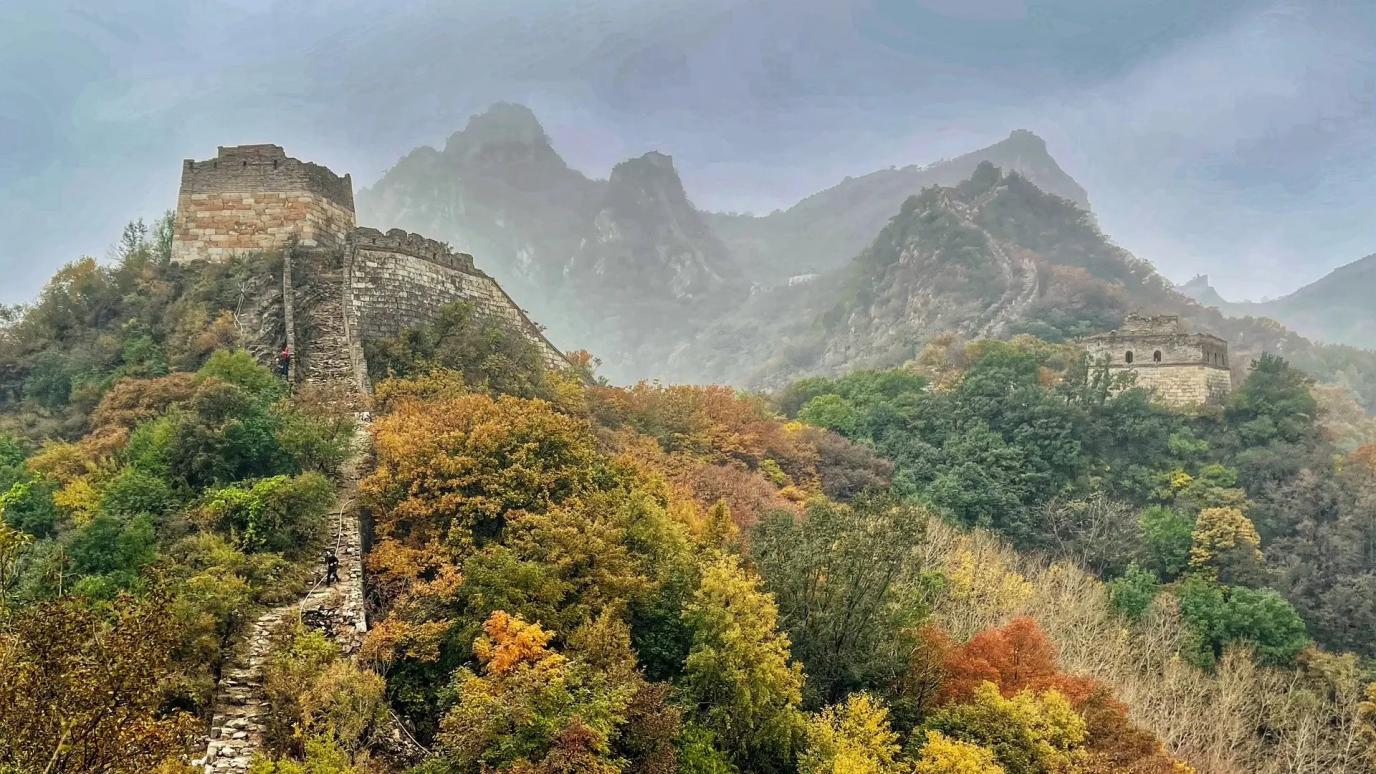
4.Bald Tail Edge: To the east, that section of wall which abruptly branches off the main Great Wall and then ‘breaks off’ at the foot of the mountain is known as the Bald Tail Edge. Over a thousand metres long, this section resembles a dragon abruptly turning back, halting its progress at the watchtower at its terminus. The tower's roof still bears the original tiles, some engraved with simple patterns. Standing atop that watchtower, you can simultaneously see three Great Walls: one stretching northeast, vanishing into a distant mountain hollow; another heading southeast, descending along the hillside; and the main Great Wall beneath our feet. These three ‘dragons’ converge, encircling the valley tightly as if guarding some precious treasure. Local legend tells that this ‘Bald Tail’ section was once complete, until a passing immortal, finding it too long, snapped off a section with his hand, leaving it as it stands today. Should you visit at dusk, the setting sun bathes the ramparts in golden hues, edging distant peaks with amber and tinging the clouds with orange. The spectacle of ‘gazing upon the three-sided dragon’ will remain etched in your memory forever. Occasionally, you may witness villagers herding sheep past the mountain's base, their bleating mingling with the wind's whistling through the Great Wall like a unique melody.
IV. The Beauty of the Four Seasons
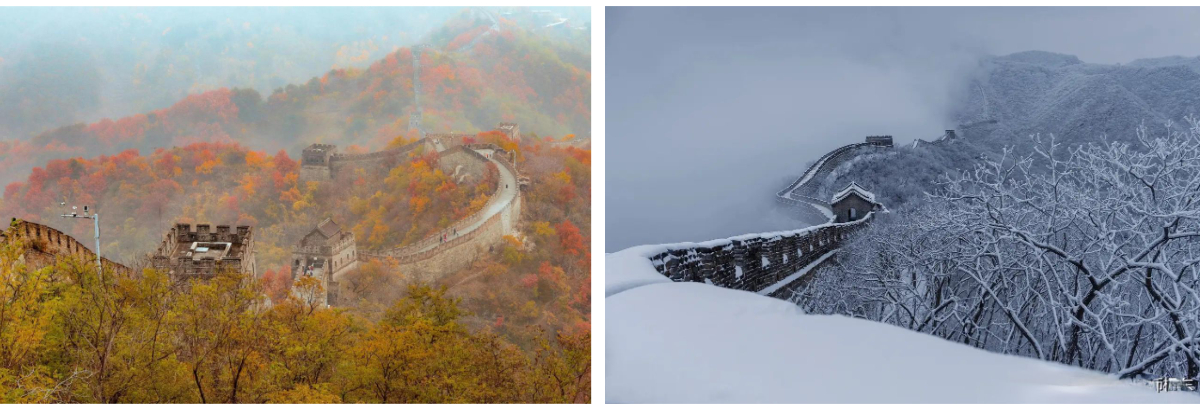
The seasons at Mutianyu are like four distinct paintings, each captivating the eye and concealing its own little surprises. Come spring, mountain peach blossoms burst forth first. Plump pink buds crowd the base of the ramparts, some even sprouting through brick crevices and climbing the steps. Branches cling to the parapet edges; when the wind stirs, petals flutter softly onto shoulders like scattered pink confetti. Soon after, apricot and pear blossoms burst forth—white, pink, and pale yellow—enveloping the Great Wall in a sea of flowers. From afar, the wall resembles a dragon concealed within a floral tapestry. As the Ming dynasty poet Sun Xueshi wrote: "The Mu Valley holds wonders beyond compare, Where the master built his western hall. What treasures lie within this valley? Thousands of peach trees, ten thousand willows." Now, looking down into the valley, willow branches cascade over the ramparts. Some visitors pluck small twigs to weave into floral wreaths, adorning their heads with exquisite beauty. On spring mornings, mist often clings to the Great Wall, swirling around the walls like a veil of white gauze. Walking amidst it feels like wandering through a fairyland.
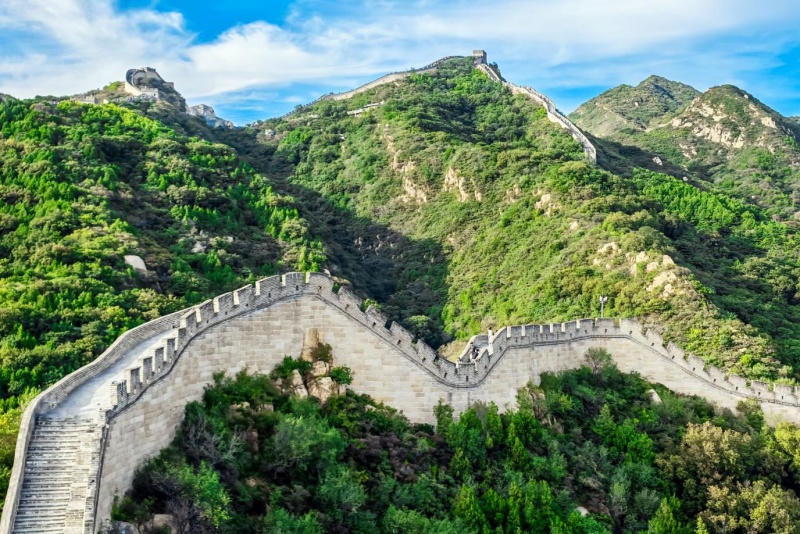
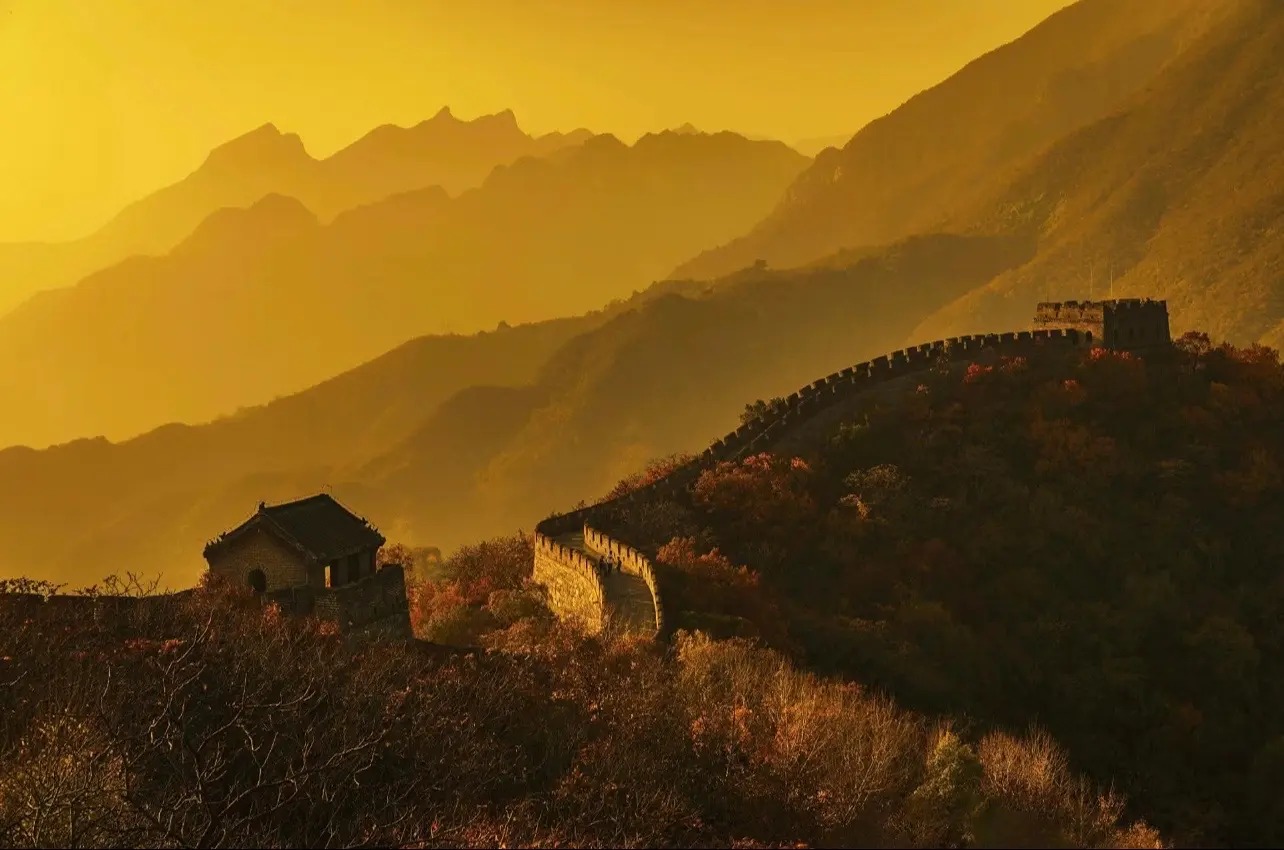
In summer, Mutianyu is a sea of green, with pine and cypress trees shrouding the Great Wall in dense foliage. Sunlight filters through the gaps in the leaves, casting dappled patches of light upon the stone steps, as if scattered fragments of gold lay strewn across the ground. Mountain springs cascade down the valleys, their tinkling accompaniment mingling with birdsong. Where the water pools into small ponds, visitors may crouch to wash their faces, the cool spring water dispelling the summer's heat. When weary from walking, one may rest within a watchtower, where breezes wafting through arrow slits carry the fresh scent of foliage – a comfort surpassing city air conditioning. Summer evenings bring a lively atmosphere to the Great Wall. Some visitors bring picnic blankets to sit by the ramparts and watch the sunset. The setting sun paints the sky crimson, casting distant mountain ranges into silhouette—a truly romantic scene.
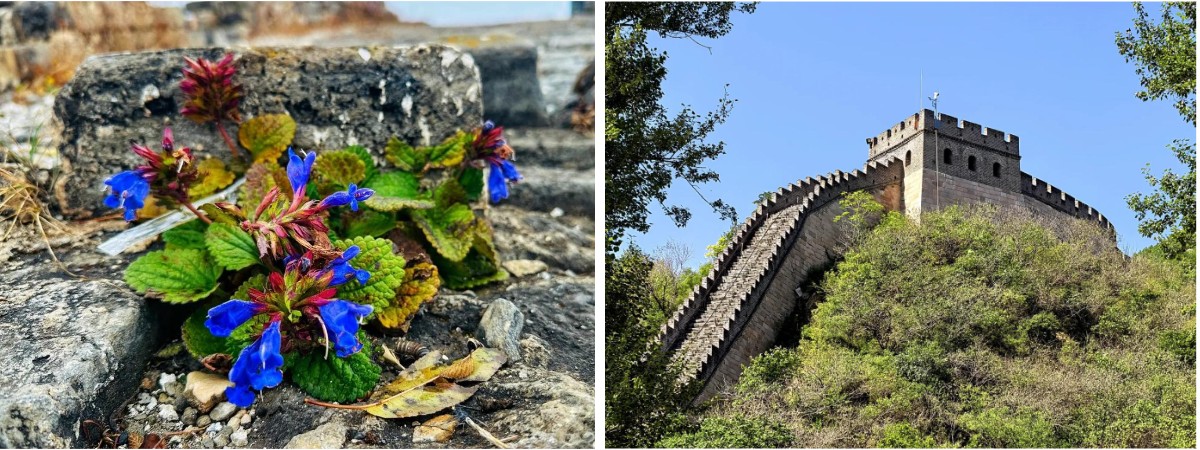
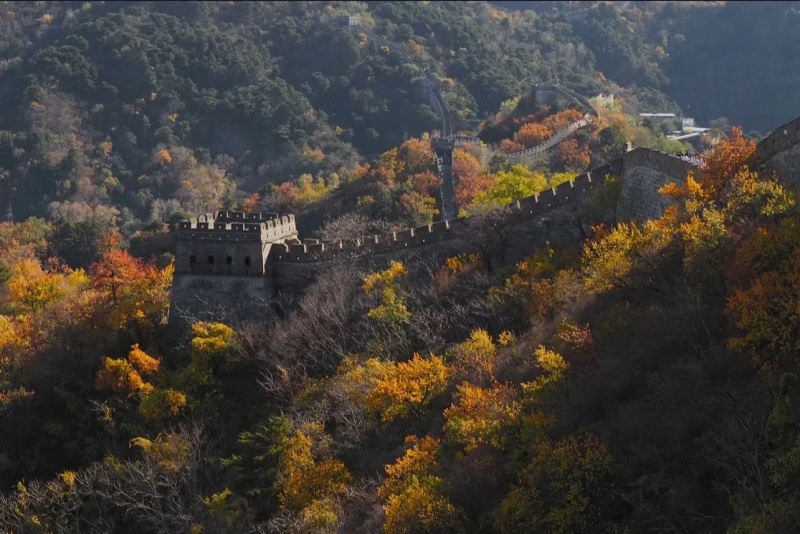
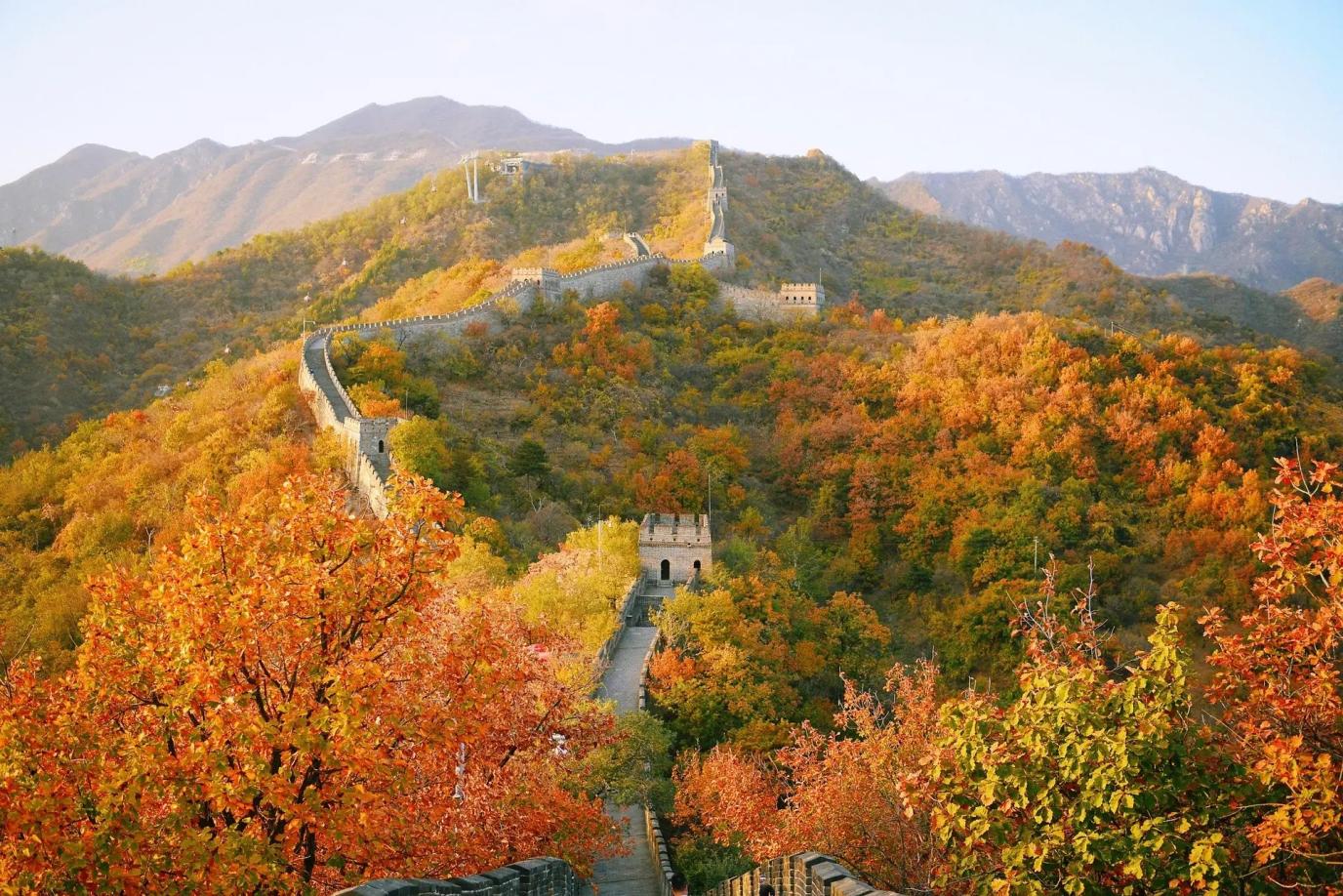
Come autumn, the entire Mutianyu area turns crimson. The leaves of the sumac trees blaze like flames, spreading from the foothills to the summit. The Great Wall winds through the scarlet foliage like a colossal red dragon, with some leaves falling upon the ramparts, rustling beneathfoot. Hawthorn trees hang heavy with crimson berries, like strings of miniature lanterns. One can pluck them with a simple reach, their tart flavour bursting in the mouth to stimulate the appetite. Local villagers sell hawthorn cakes and slices at the mountain's base, all crafted from the mountain's own hawthorns, their flavour exceptionally pure. "Autumn winds arise, white clouds fly, Grass and trees turn yellow, wild geese fly south.‘ At times, flocks of geese pass overhead in a ’V" formation, their cries echoing through the valley. Against the backdrop of crimson foliage, the scene is so beautiful it inspires song. On autumn mornings, frost settles upon the Great Wall, dusting the red leaves like a layer of white sugar. The crystalline frost glistens, creating a sight of extraordinary beauty.
Mutianyu in winter holds a special charm, resembling an ink-wash painting. After a snowfall, the ramparts, watchtowers, and hillsides are draped in white cotton coats, with thick snow piled even on the steps. Treading upon it yields a crisp “creak-creak” sound, leaving behind a trail of deep footprints. When the sun emerges, the snow glitters like scattered silver coins beneath its rays. In some spots, snow slides down the ramparts with a startling ‘whoosh’ – a frightful yet delightfully amusing spectacle. Icicles dangle from the watchtower eaves, forming long, crystal-like curtains. Some visitors even break off a piece to play with, though beware of freezing your fingers! ‘I know not if the courtyard's snow fell this morning, or if the forest flowers bloomed last night.’ Standing on the Great Wall and gazing into the distance, one sees only a vast expanse of white, with only the outlines of the beacon towers clearly visible. Occasionally, a few magpies alight on the ramparts, their black-and-white plumage strikingly visible against the snow. The Great Wall in winter is profoundly quiet, with only the sound of the wind carrying through. Walking upon it feels like conversing with history itself.
V. Visitor Guidelines
These Great Wall bricks and stones are treasures left by our ancestors, each with its own story. Please refrain from carving or scribbling on them. Instead, gently touch them to feel their warmth. If you grow weary, pavilions with stone benches are placed at regular intervals ahead, where you can sit, rest, and drink some water. Mountain weather shifts quickly—sunshine one moment, drizzle the next. Bring an umbrella or light jacket to stay comfortable.
For photo spots:
• The “Ox Horn Bend” curve captures the Great Wall's serpentine beauty. The front of “Zhengguan Tai” looks especially majestic when the sunlight is just right; At dusk, climb the watchtower at “Bald Tail Edge” to capture the three parallel sections of the Great Wall bathed in sunset light—it makes for stunning photos. But remember to watch your step while snapping pictures—don't get so caught up in the viewfinder that you forget about safety.
— Today, we're not just admiring scenery; we're conversing with history and connecting with nature. Let's cherish this precious gift.