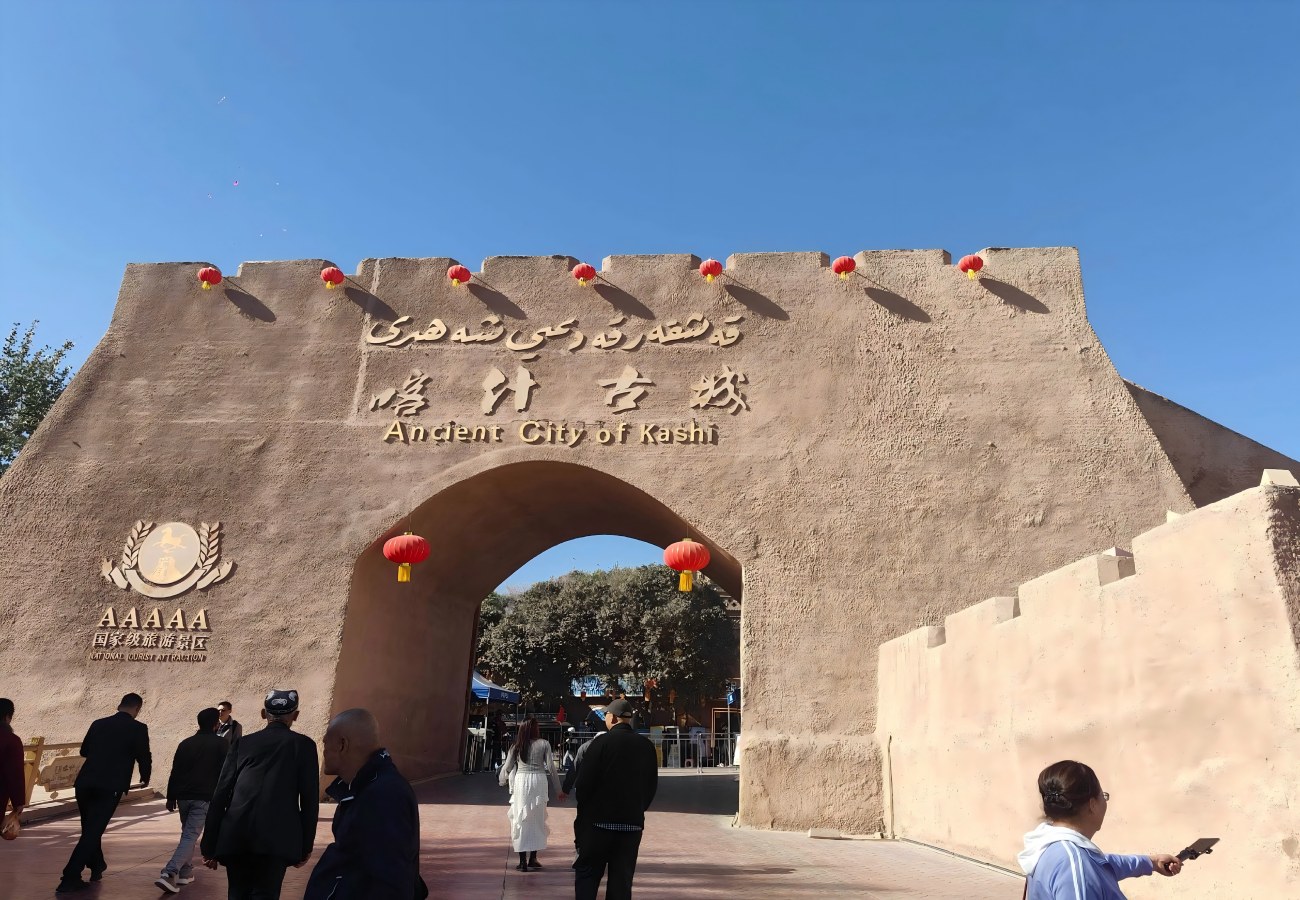
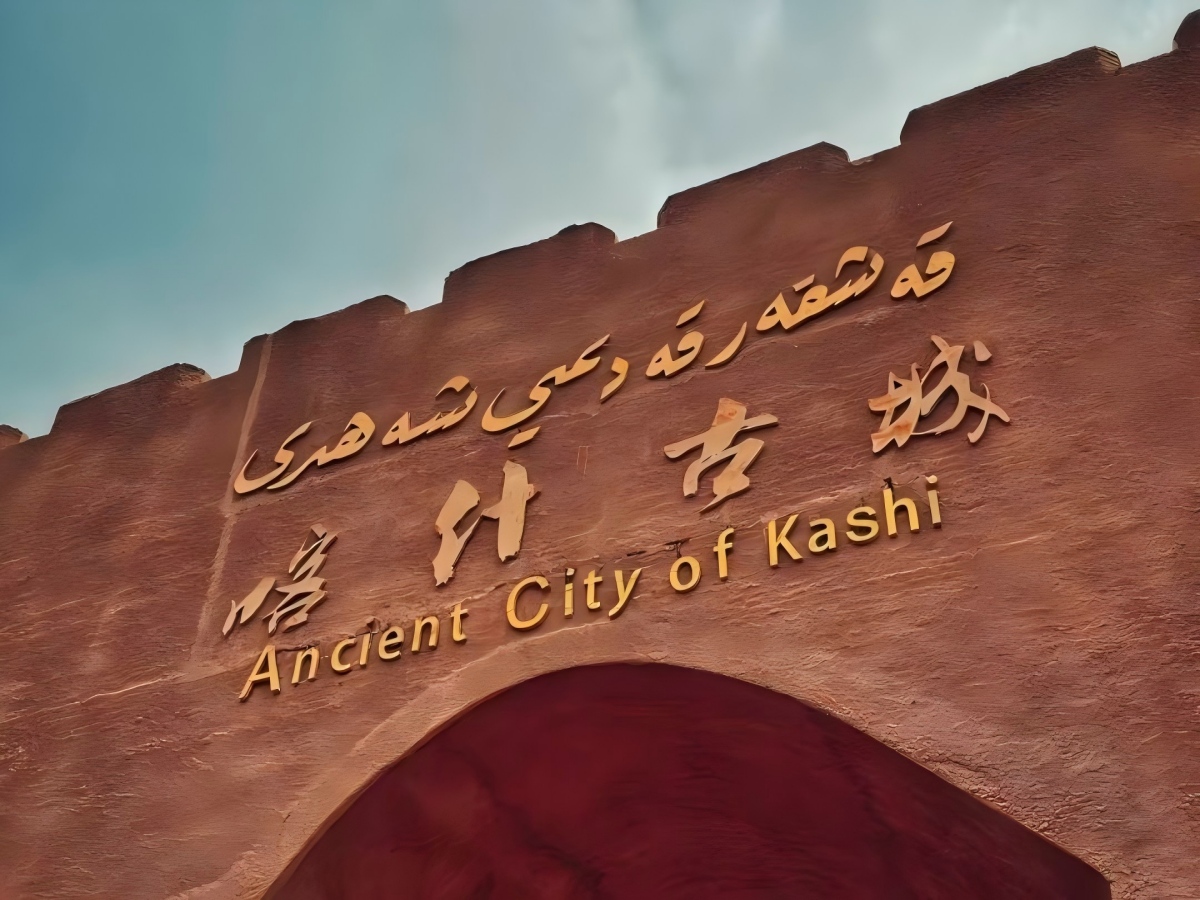
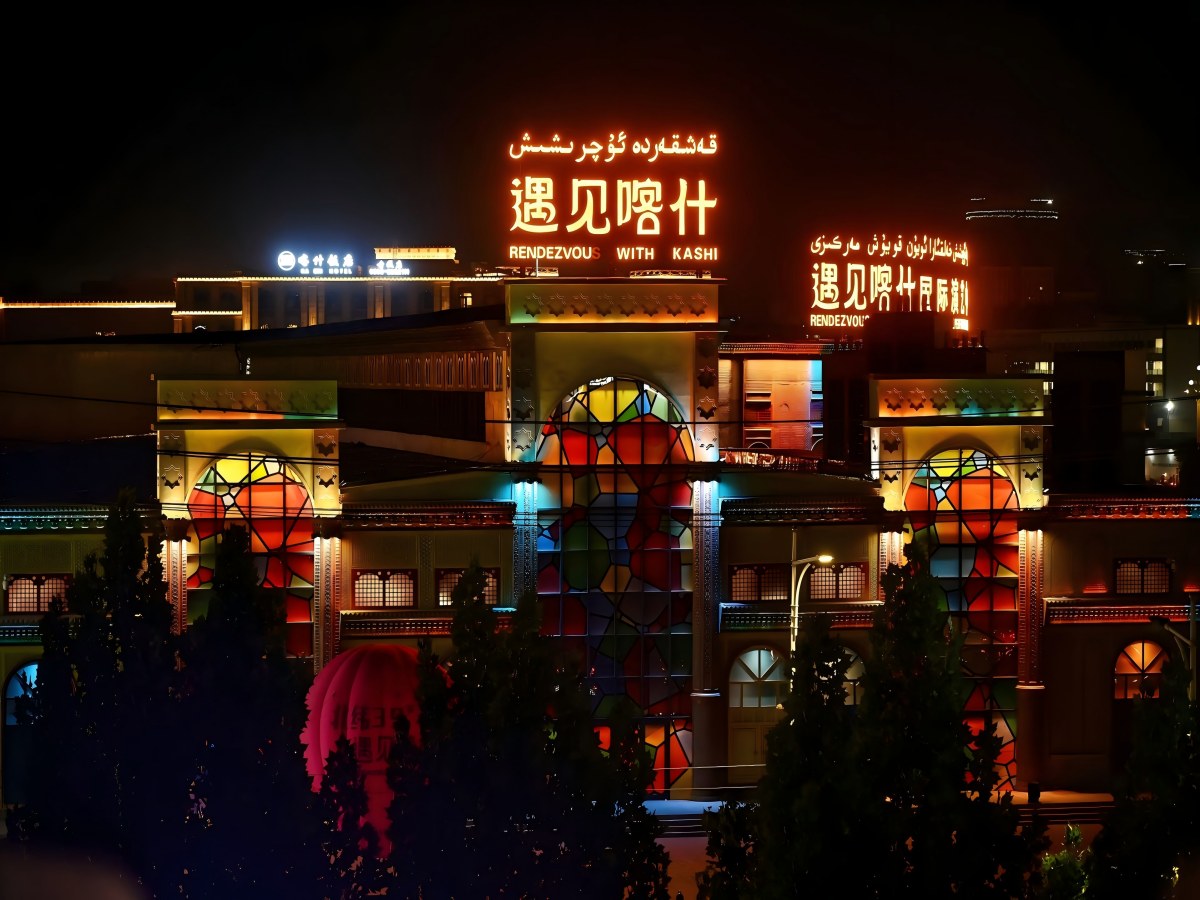
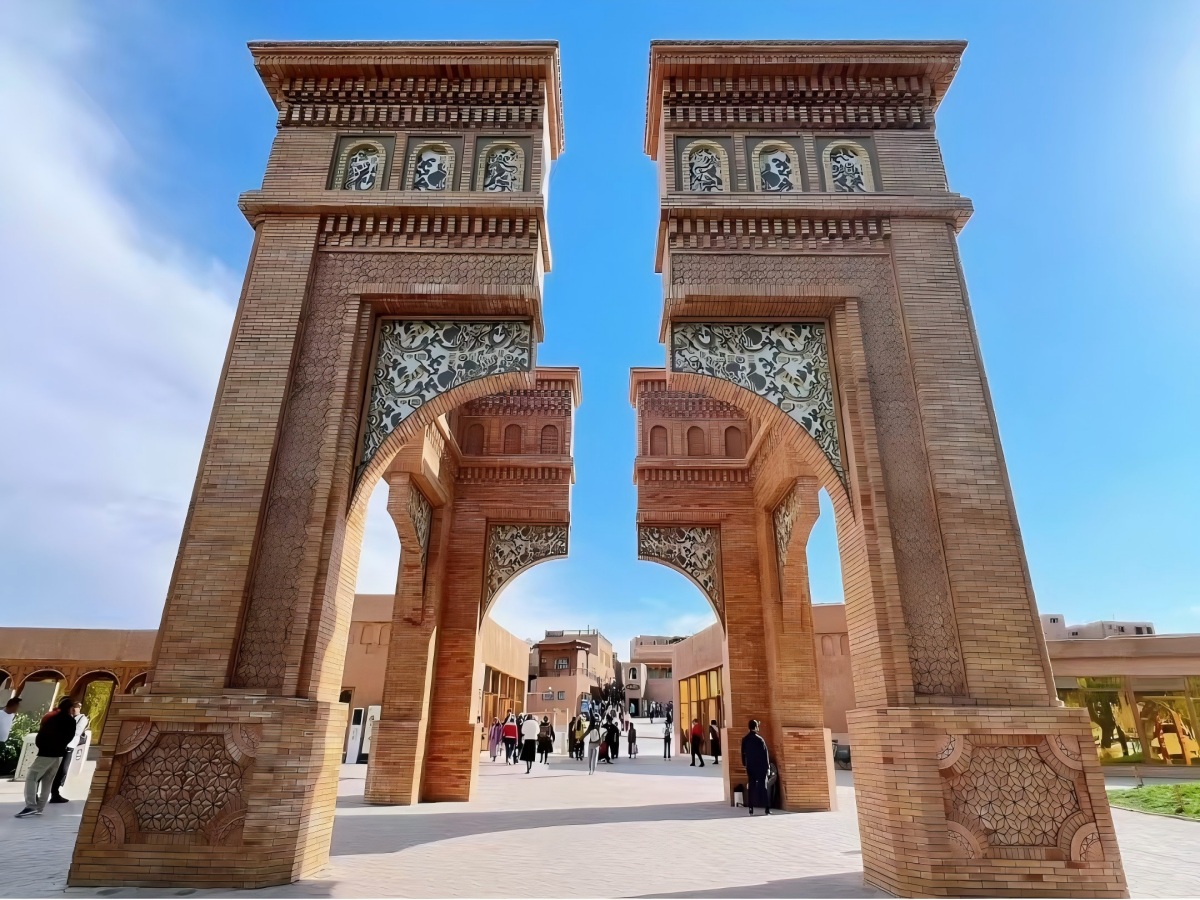
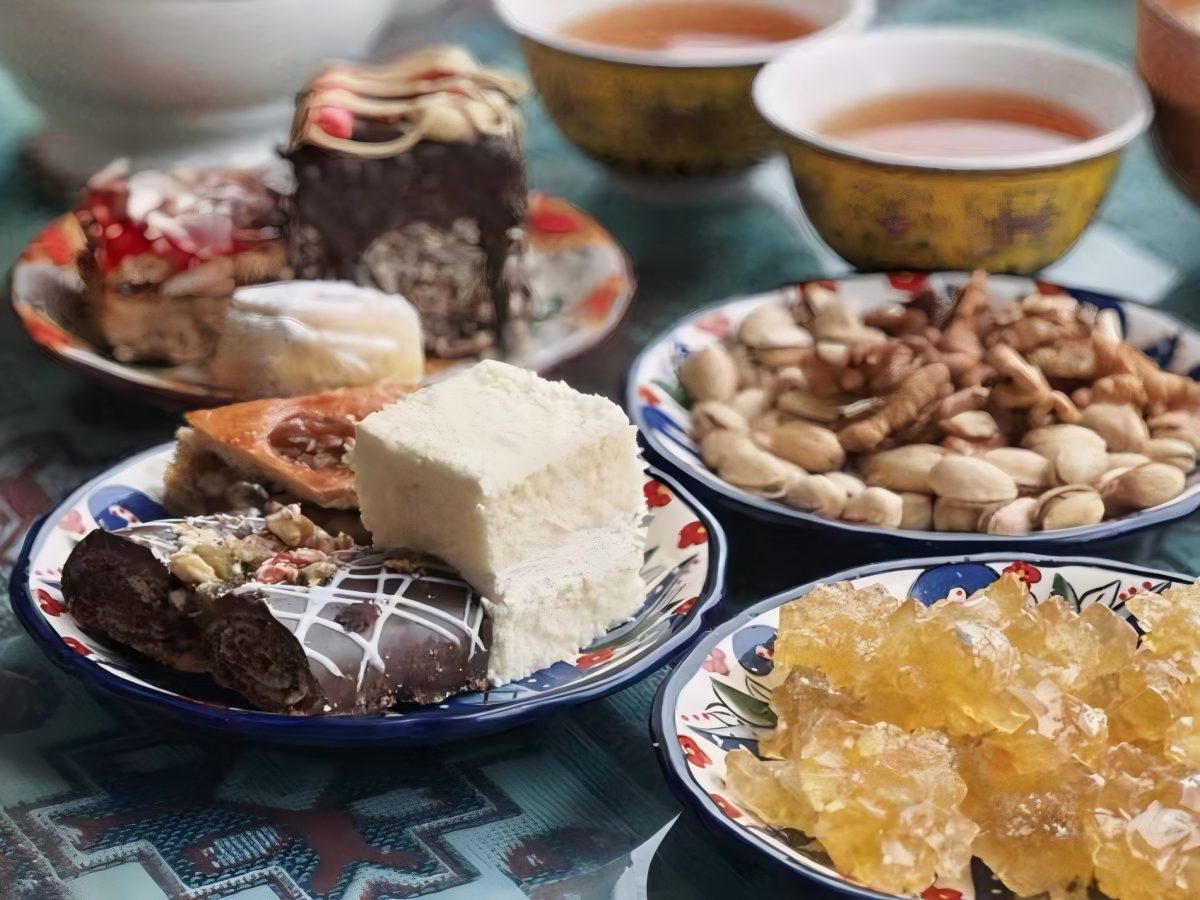
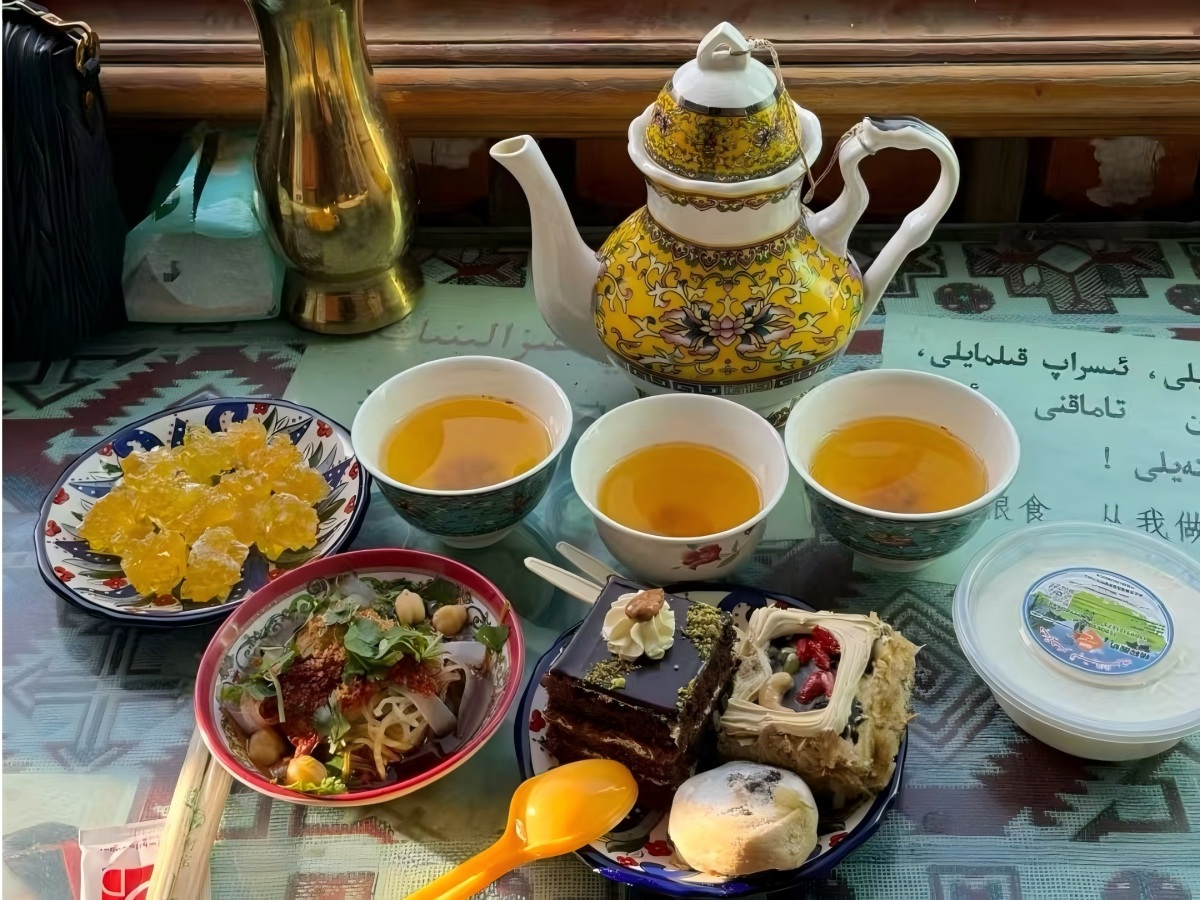
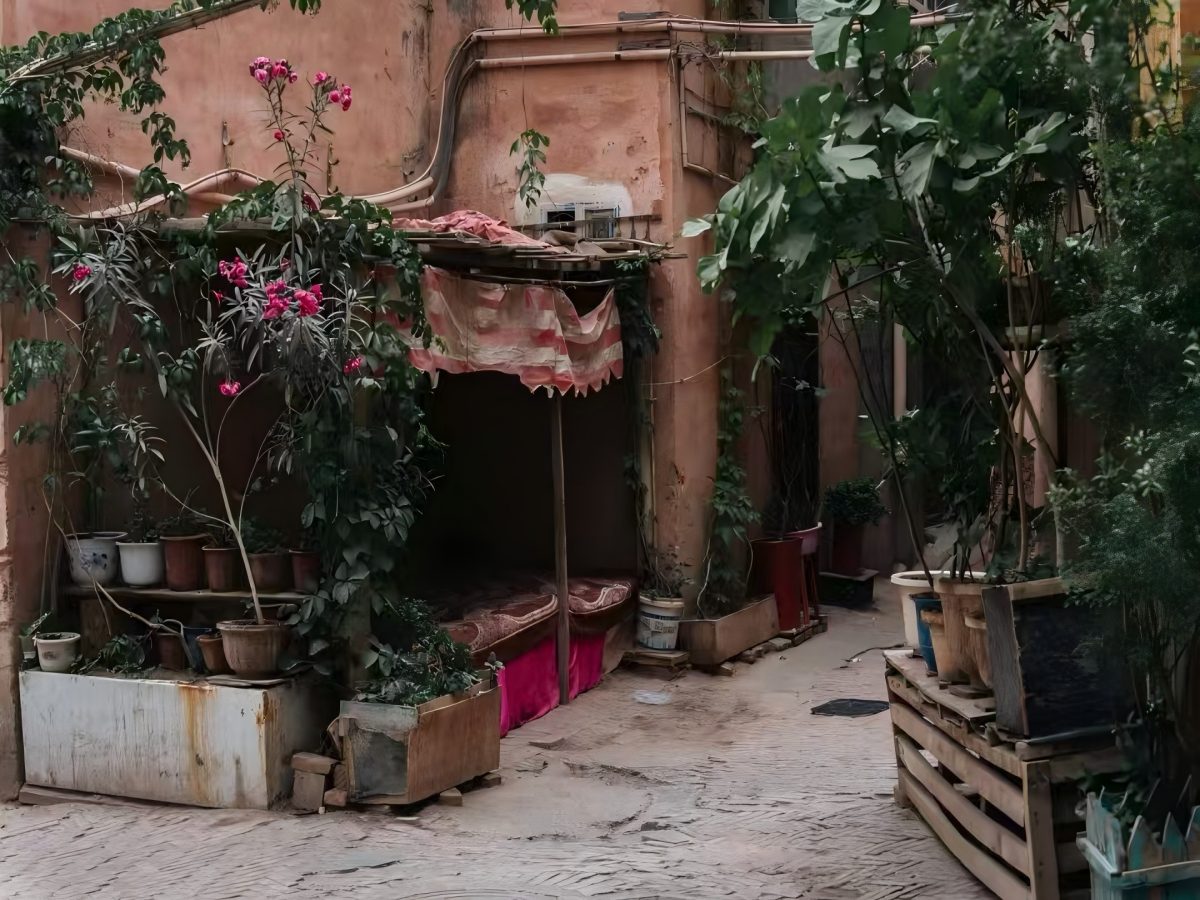
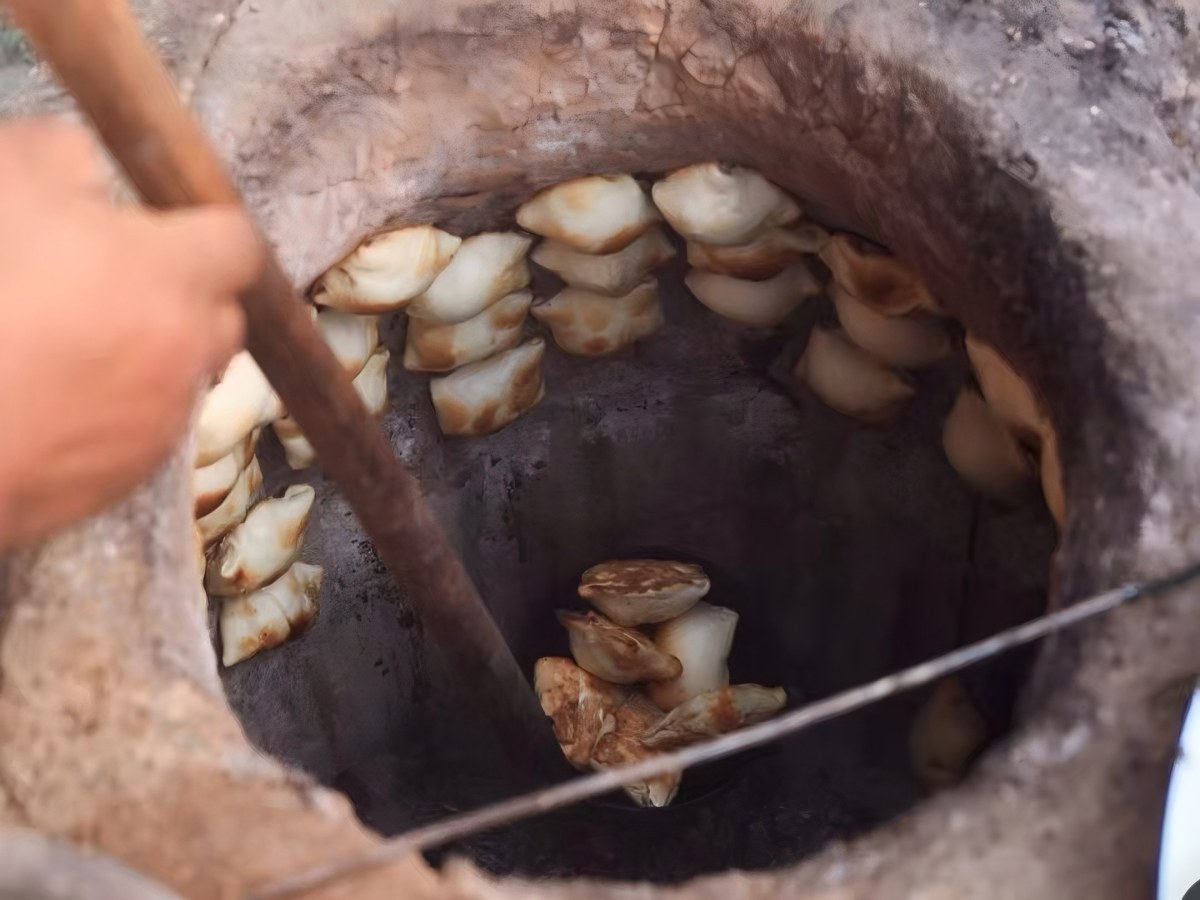
The history of Kashgar Ancient City is far more profound than we can imagine. As early as the Western Han Dynasty (206 BC–25 AD), it appeared in The History of the Han Dynasty under the name "Shule City". It served as the capital of the Shule Kingdom, one of the 36 kingdoms in the Western Regions at that time, and also a crucial node for the Central Plains dynasties to open up and govern the Western Regions, as well as to control the Silk Road.

By the Tang Dynasty (618–907), Kashgar became one of the "Four Garrisons of Anxi". The imperial court established a military governor’s office here, stationed troops, and built post stations, bringing the city’s commercial and cultural exchanges to their peak. According to Tang Dynasty documents, the city was home not only to merchants and craftsmen from the Central Plains but also to envoys and merchants from Persia, the Abbasid Caliphate (modern-day Arab regions), and Tianzhu (modern-day India). They brought exotic goods and cultures, making Kashgar one of the most prosperous cities in the Western Regions back then.
During the Song (960–1279) and Yuan (1271–1368) dynasties, although the control of the Central Plains dynasties over the Western Regions fluctuated, Kashgar remained a core hub of Silk Road trade. Especially in the Yuan Dynasty, as the Mongol Empire connected the Eurasian continent, Kashgar, as an important city of the Chagatai Khanate, became a key transit point for goods between the East and the West. A large amount of silk and porcelain was transported from here to Central Asia and Europe, while fine horses, jade, and spices from the Western Regions were introduced to the Central Plains through it.
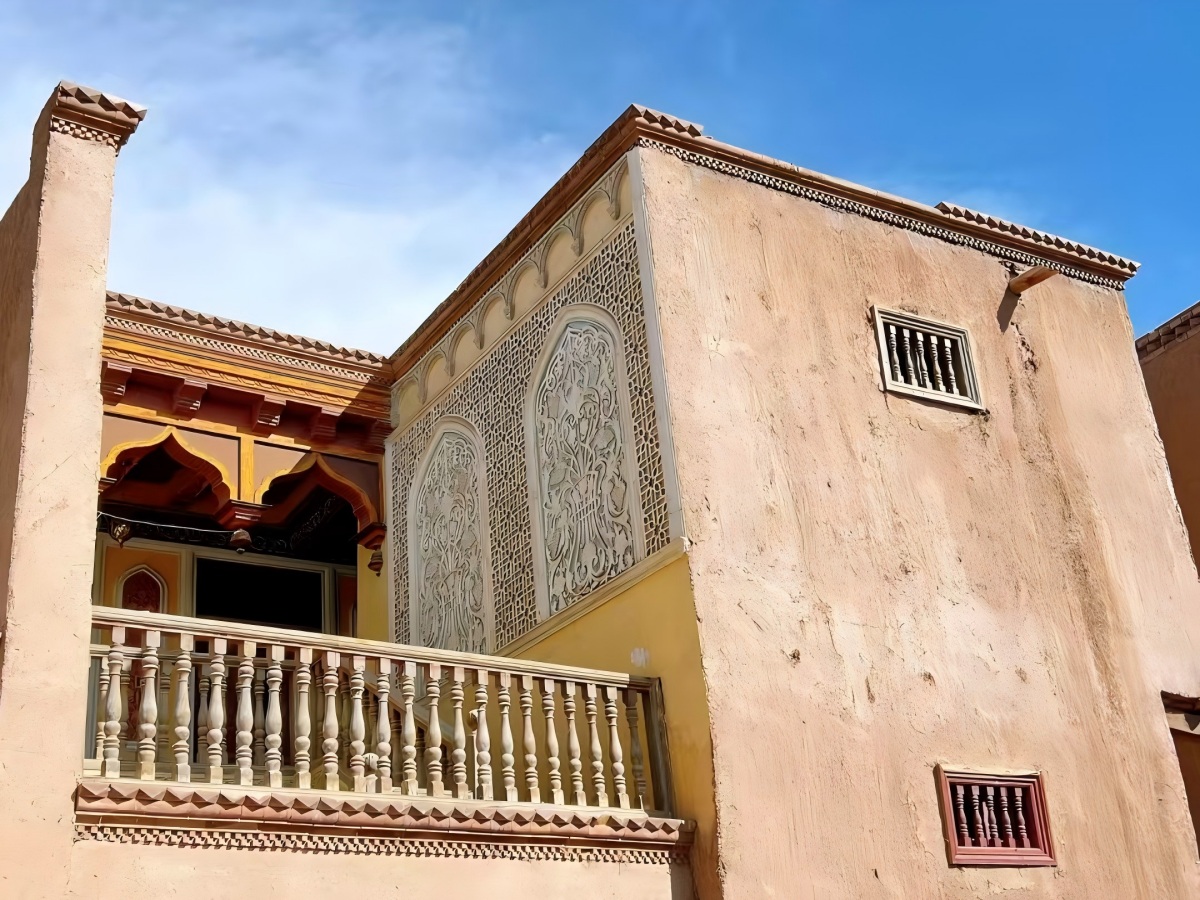
In the Ming (1368–1644) and Qing (1644–1912) dynasties, the urban layout of Kashgar gradually took shape. Most of the ancient city’s streets, lanes, and residential buildings we see today were renovated or constructed during this period. During the Qianlong reign of the Qing Dynasty, the imperial court established the "Kashgar Garrison Minister" post here, further consolidating Kashgar’s political and economic status and promoting in-depth cultural integration among the Han, Uyghur, Hui, Kyrgyz, and other ethnic groups.
In 2014, Kashgar Ancient City, together with the surrounding Id Kah Mosque and Gaotai Residential Quarter, was inscribed on the World Heritage List. This honor not only recognizes its historical value but also reflects its unique status as a "model of human cultural integration".

II. Core Attractions: Exploring the "Vitality and Poetry" of the Ancient City
1. Id Kah Mosque – A Landmark of Religious Culture in the Western Regions
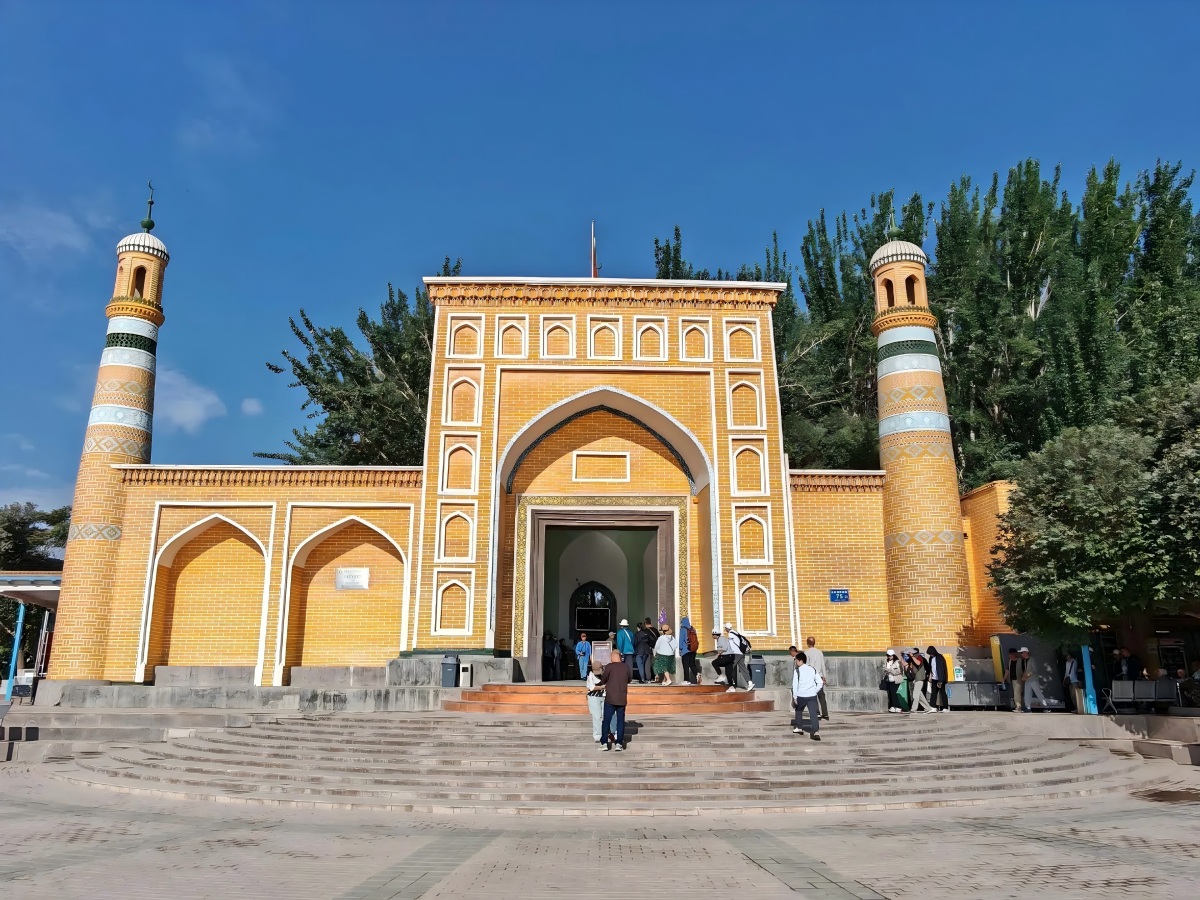
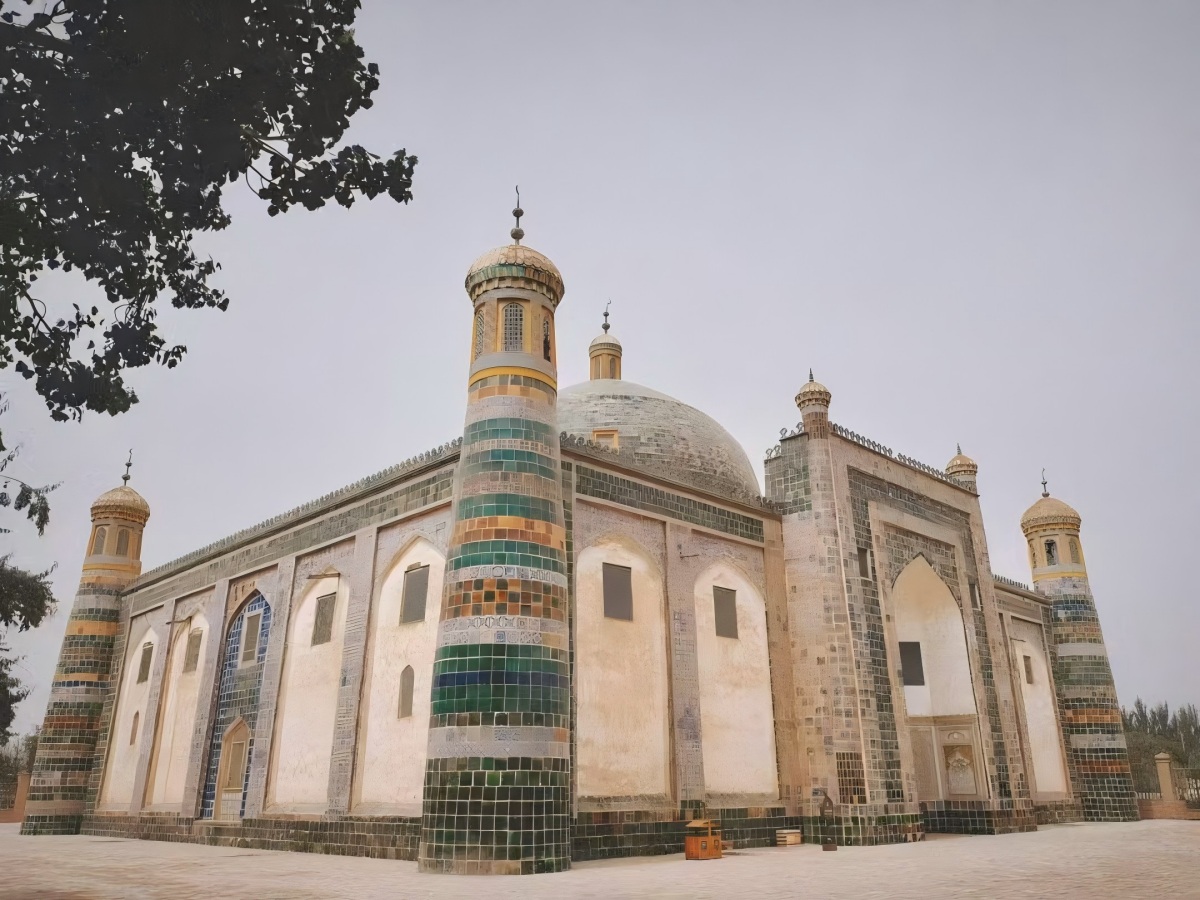
Our first stop is the Id Kah Mosque, one of the largest and best-preserved Islamic mosques in China, and the spiritual heart of Kashgar Ancient City. Founded in 1442 under the auspices of Shah 克斯色孜・米尔扎 (Shah Kessezi Mirza), the ruler of Kashgar at that time, the mosque was expanded several times during the Ming and Qing dynasties to form its current scale.
With white as its main color, the entire building integrates Arab, Persian, and Chinese architectural styles. The minarets on both sides of the gate stand tall and straight, carved with exquisite geometric patterns and Arabic scriptures – these patterns are not only decorative but also embody the cultural connotation of "no idolatry" in Islam. The century-old elm trees in the courtyard are lush and leafy; sunlight filters through the branches and falls on the blue brick ground, creating a quiet and solemn atmosphere.

Five prayers are held here every day. Particularly on Fridays (Jumu’ah), Muslim believers from Kashgar and surrounding areas come dressed neatly, holding prayer rugs, and line up neatly in the main hall to listen to the imam’s sermon – the scene is solemn and peaceful. It should be noted that when entering the mosque, visitors must respect religious etiquette: dress neatly (avoid shorts, short skirts, and off-the-shoulder clothing), remove shoes before entering, refrain from making noise during prayer times, and do not randomly take photos of worshippers.
2. Gaotai Residential Quarter – "The Hometown of Pottery on a Cliff"
Leaving the Id Kah Mosque, we walk along the winding alleys to reach the Gaotai Residential Quarter. Built on a high cliff in the southeast of the old city of Kashgar, this residential area dates back to the Ming Dynasty, with a history of over 600 years. Due to its steep terrain, the houses are built against the mountain, stacked layer upon layer, and look as if they are hanging in the air from a distance – hence its name "Ancient City on a Cliff".
All houses here are made of local loess rammed earth, with roofs covered with red willow branches and soil. This construction method is not only low-cost but also resistant to the local arid climate and sandstorms, embodying the wisdom of the Uyghur ancestors in adapting to the natural environment. Red wooden doors, green window frames, and grapevines winding through the alleys fill the area with a strong Western Regions charm.

The most famous feature of the Gaotai Residential Quarter is its pottery culture. As early as the Neolithic Age, the ancestors here mastered pottery-making techniques, and today dozens of potters still uphold this ancient craft. Entering a pottery workshop in the alley, you will see potters sitting cross-legged on the ground, turning wooden wheels and shaping clay into various forms with their hands. This "wheel-throwing method" requires no machinery, relying solely on feel and experience – a traditional technique passed down for thousands of years.
The formed pottery jars and bowls are carved with patterns such as grape vines and geometric designs, then placed in earth kilns built with red willow branches and slowly fired with firewood for several hours, finally becoming finished products with alternating red and brown colors. The pottery here includes both practical items like washbasins and kettles, and decorative pieces like small vases. If you like, you can take one as a souvenir – each piece is hand-made by potters, making it unique.

3. Xiangfei Garden – "A Love Legend Across Time and Space"
A 15-minute drive from the Gaotai Residential Quarter brings us to Xiangfei Garden. Themed around "Xiangfei" (Fragrant Concubine), a concubine of Emperor Qianlong of the Qing Dynasty, this garden integrates historical legends, Uyghur architectural art, and landscape gardens, serving as an important attraction for understanding Kashgar’s Qing Dynasty history and folk customs.
Xiangfei’s real name was Iparhan, the daughter of a noble Uyghur family in Kashgar. Born with a natural fragrance and beautiful appearance, she was selected to enter the Qing imperial palace and became a concubine, hence the folk name "Xiangfei" (Fragrant Concubine). Although historical records about Xiangfei are limited, her story is well-known in Kashgar, becoming a beautiful tale connecting the cultures of the Central Plains and the Western Regions.
The architecture of Xiangfei Garden is highly distinctive. The gate adopts the traditional Uyghur "arch" design, with walls inlaid with colored glazed bricks carved with patterns of grapevines and flowers – vivid in color and exquisite in craftsmanship. The garden is divided into areas such as "Xiangfei’s Former Residence", "Folk Custom Exhibition Hall", and "Grape Corridor":
Xiangfei’s Former Residence restores the layout of a Qing Dynasty Uyghur noble residence. The adobe walls, wooden beams, and carved window lattices retain the style of a hundred years ago, with Qing Dynasty costumes, furniture, and daily necessities displayed inside, making visitors feel as if they have traveled back in time.
The Folk Custom Exhibition Hall showcases the Uyghur wedding customs, festivals, and handicrafts of Kashgar through physical objects and pictures, vividly presenting the daily life of the local people.
The Grape Corridor is the most popular spot in the garden. In summer, green grapevines cover the corridor, with clusters of purple and green grapes hanging down. Visitors can rest under the corridor and taste fresh grapes, enjoying the comfort of a Western Regions garden.
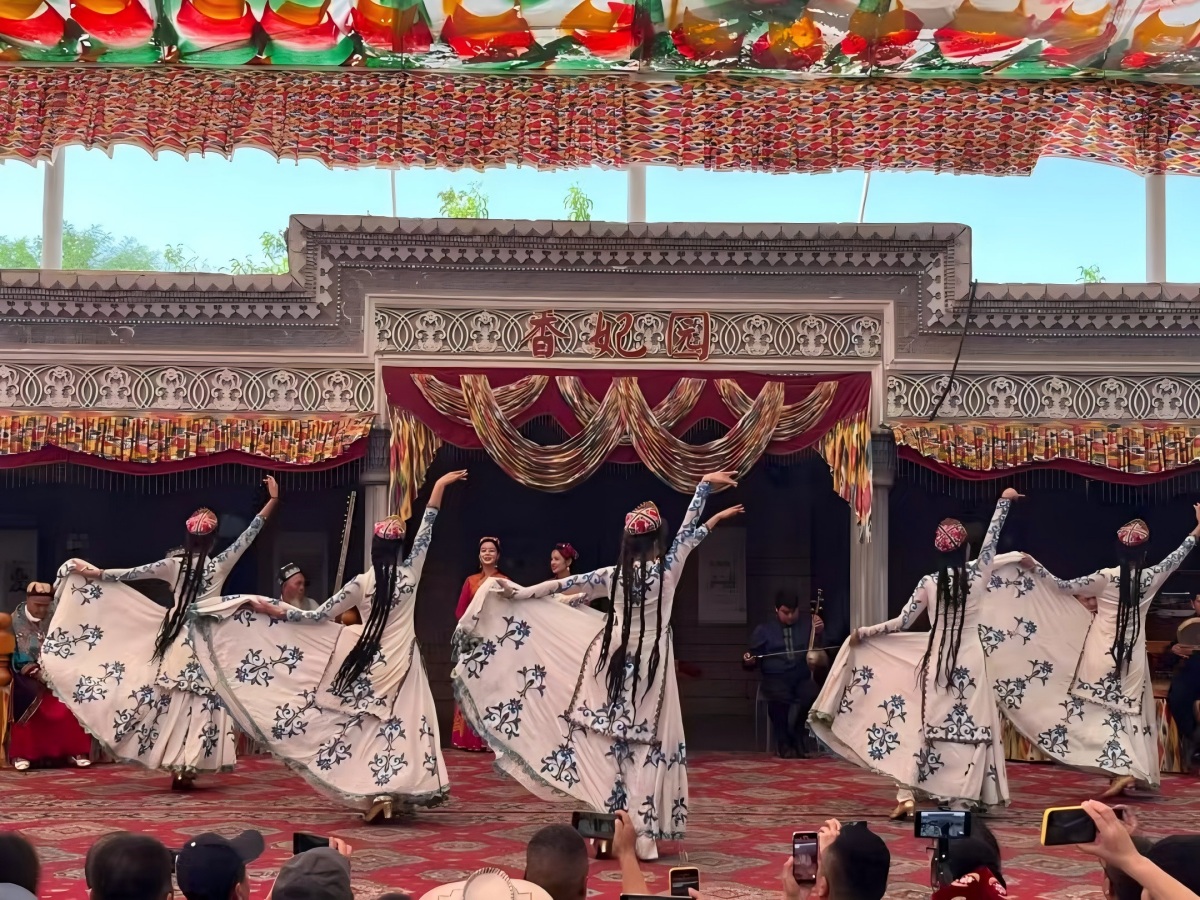
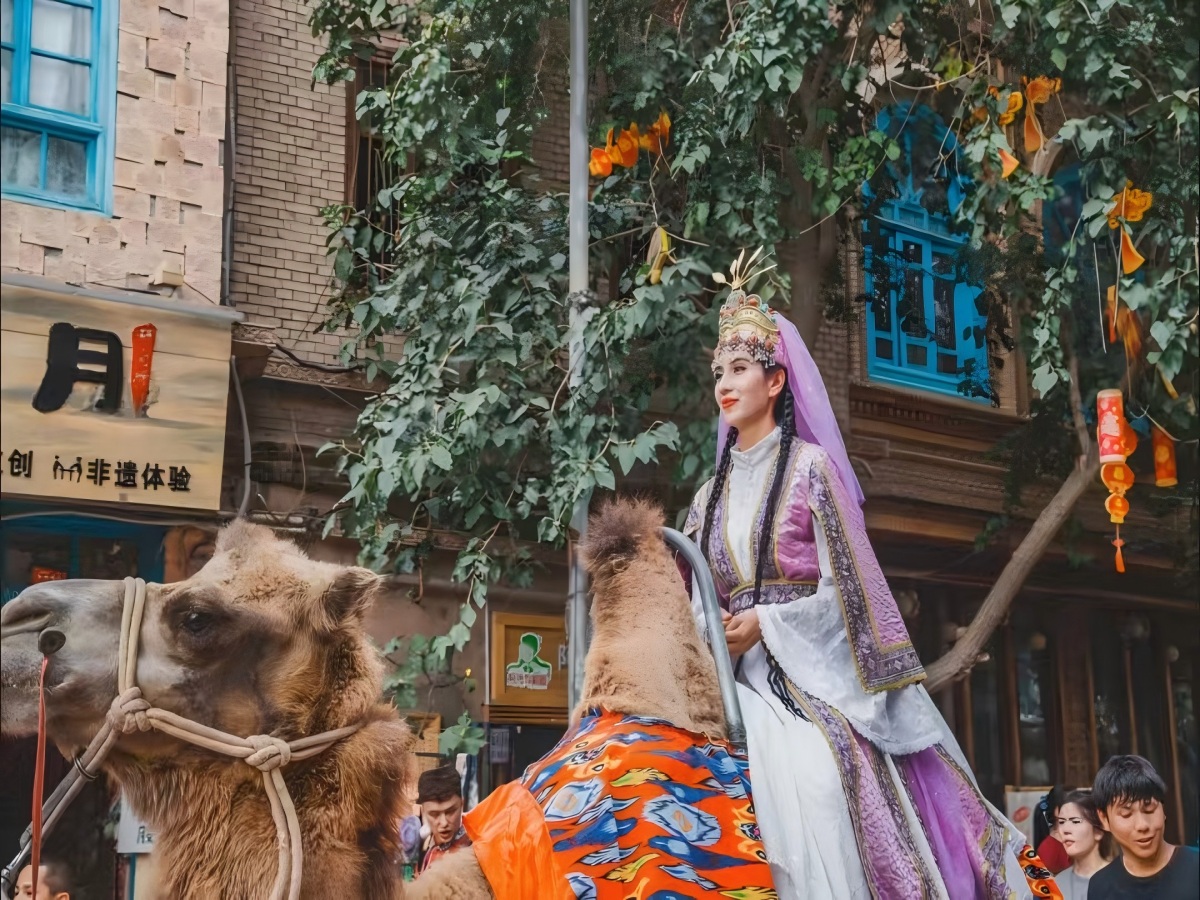
Every summer, Xiangfei Garden holds the "Xiangfei Cultural Festival", featuring song and dance performances based on Xiangfei’s story. Performers dressed in Qing imperial costumes and traditional Uyghur attire use music and dance to recreate this love legend across time and space. If you are interested in historical stories, stay a little longer in the garden, listen to the guide talk about Xiangfei’s life, and experience the cultural integration behind this legend.
4. Kashgar Grand Bazaar – "A Living Fossil of Silk Road Commerce"
After visiting Xiangfei Garden, we return to the Kashgar Grand Bazaar near the ancient city. As the largest agricultural and sideline products market in northwest China, it is also a "living" commercial hub on the ancient Silk Road, known as the "Largest Bazaar in Asia". With a history dating back to the Han Dynasty, the current Grand Bazaar covers an area of nearly 100,000 square meters, divided into dozens of areas for grain, cloth, handicrafts, fruits, and food. Tens of thousands of vendors trade here every day, creating a bustling scene.
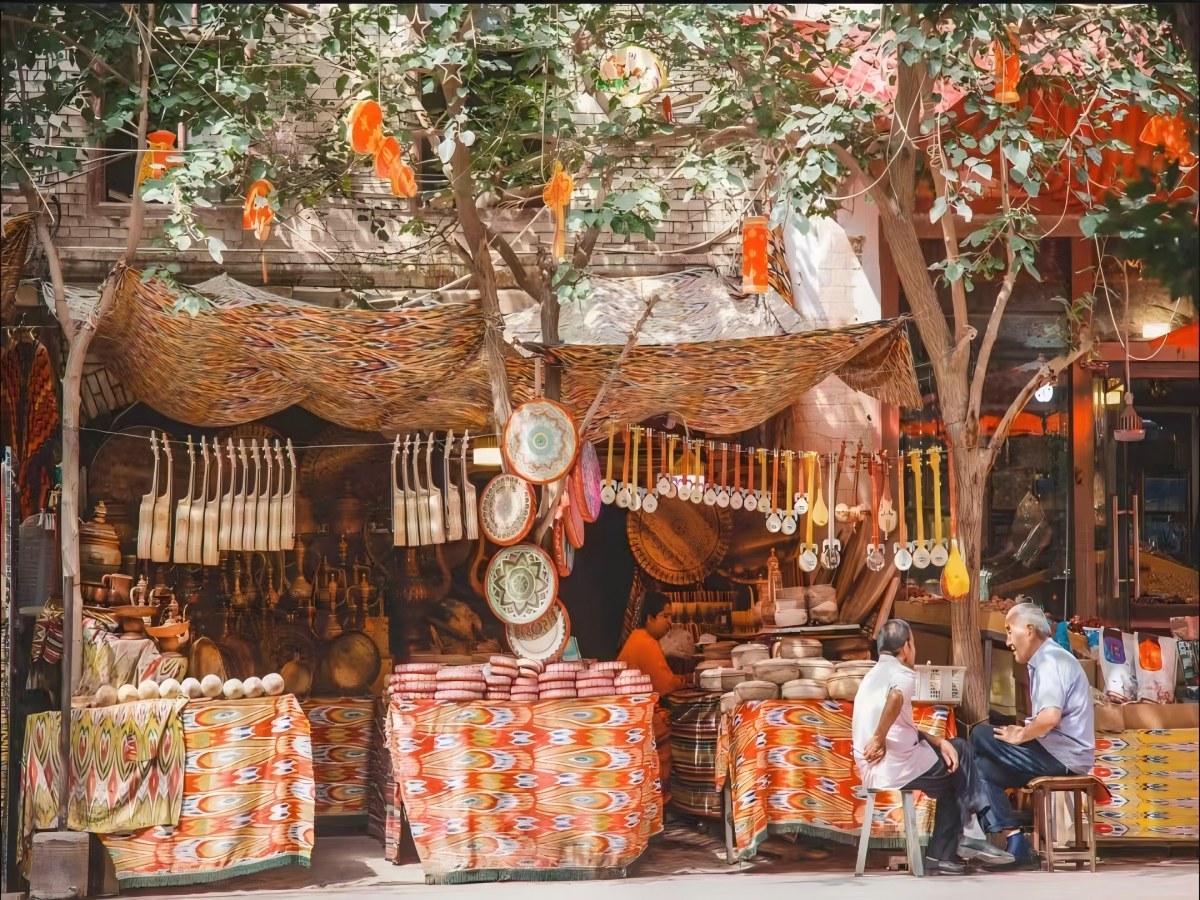
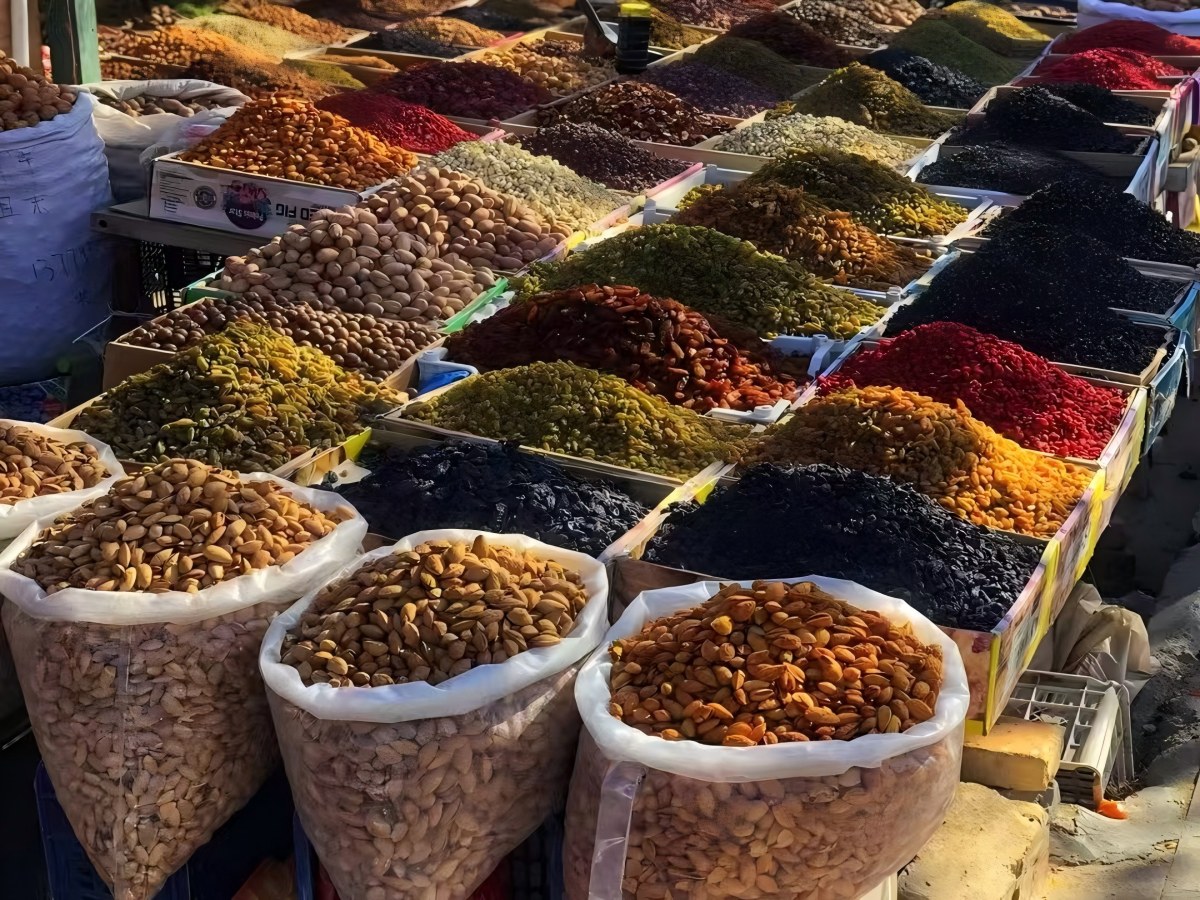
Entering the Grand Bazaar, you will be shocked by the sight before you: colorful cloth hangs from the stalls; hand-woven carpets, ethnic musical instruments, pottery products, and gold and silver jewelry are neatly arranged; vendors warmly greet customers in Chinese, Uyghur, and even simple foreign languages; the air is filled with a mixed fragrance of fruits, spices, and roasted meat. Here, you can buy authentic Kashgar specialties:
Hand-woven wool carpets, with patterns mostly of geometric designs and floral motifs, bright in color and durable.

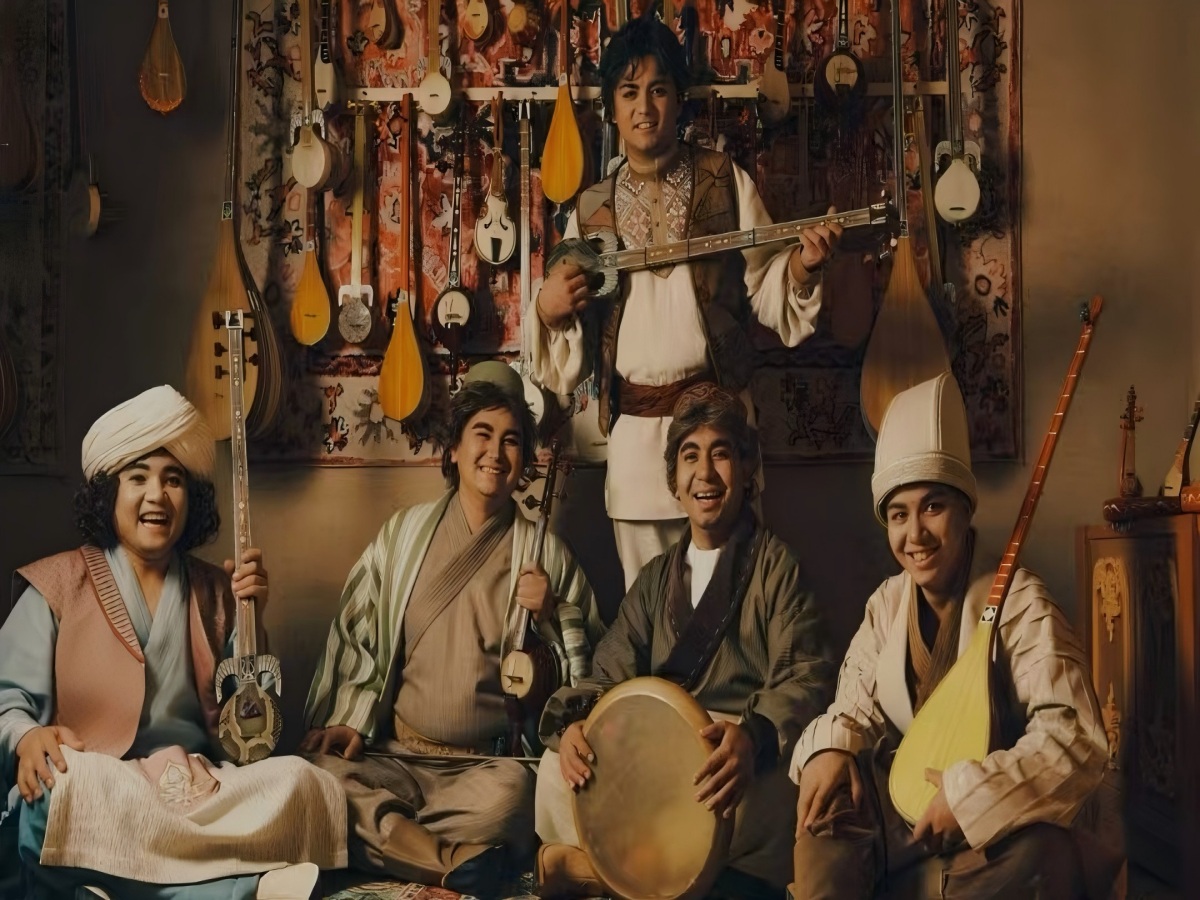
The "Dutar", a traditional Uyghur musical instrument. Its body is made of mulberry wood, producing a mellow and melodious tone.
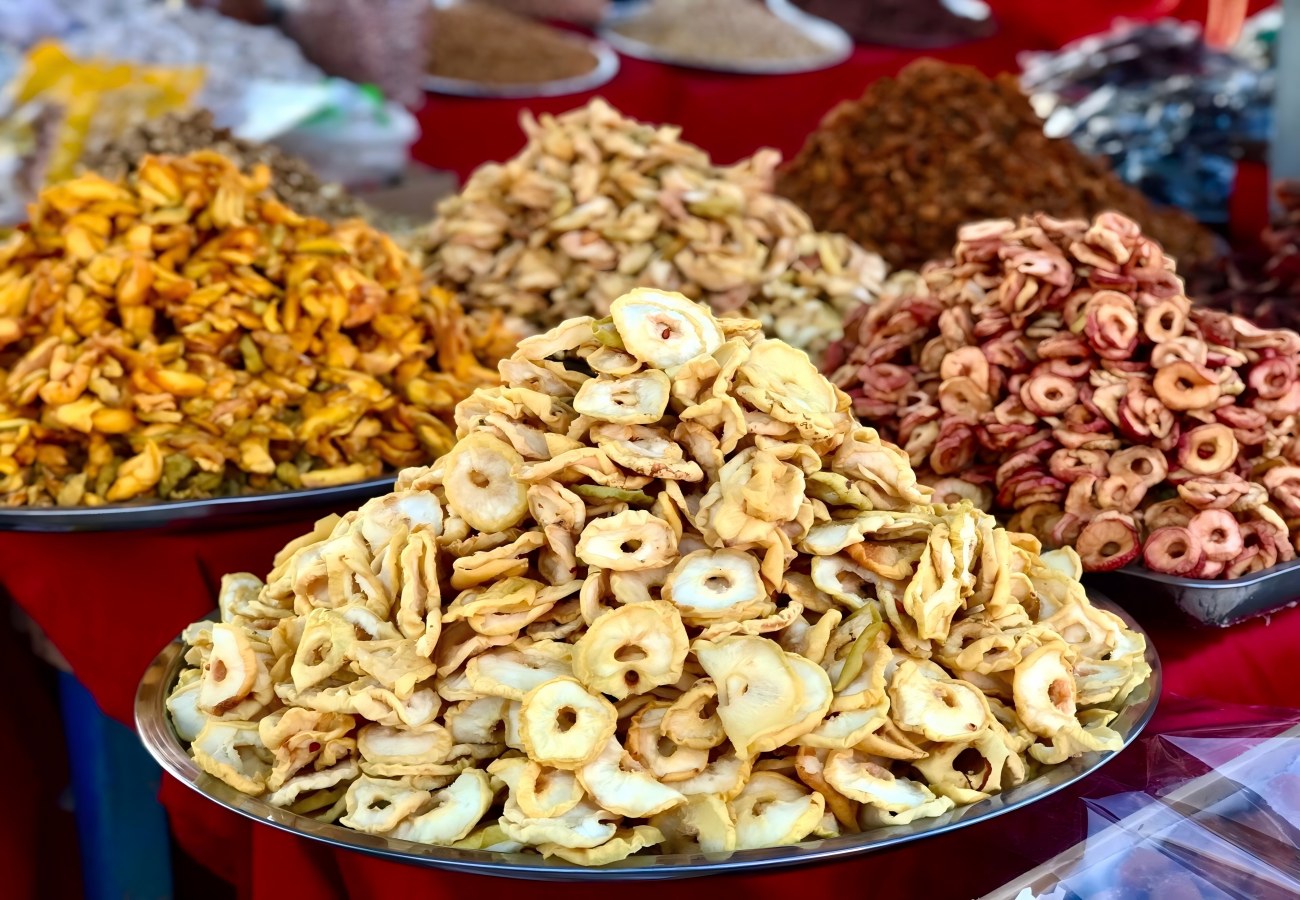
Kashgar’s characteristic fruits – watermelons and grapes in summer, pomegranates and figs in autumn – all famous for their high sweetness and good taste.
The Grand Bazaar is not only a shopping destination but also a great place to experience Kashgar’s folk customs. You can watch vendors make handmade soap and weave straw hats on-site, or sit at a roadside food stall, order a roasted egg (chicken eggs, duck eggs, ostrich eggs, etc.), and drink a cup of homemade yogurt, feeling the vitality of market life. It should be noted that some areas of the Grand Bazaar are most lively on Sundays – if you happen to visit on a Sunday, be sure to come here to experience the prosperity of Silk Road commerce.
5. Century-old Teahouse – "A Time Station in the Ancient City"
After wandering around the Grand Bazaar, take a break at the Century-old Teahouse in the ancient city’s alley. As one of the most representative "folk social spaces" in Kashgar, it is also an excellent place to experience the slow pace of local life. Founded in the late Qing Dynasty, this teahouse has a history of over 100 years. Its exterior is a typical Uyghur adobe house, while the interior retains a wooden roof, carved railings, and old-fashioned tea tables, filled with a retro atmosphere.

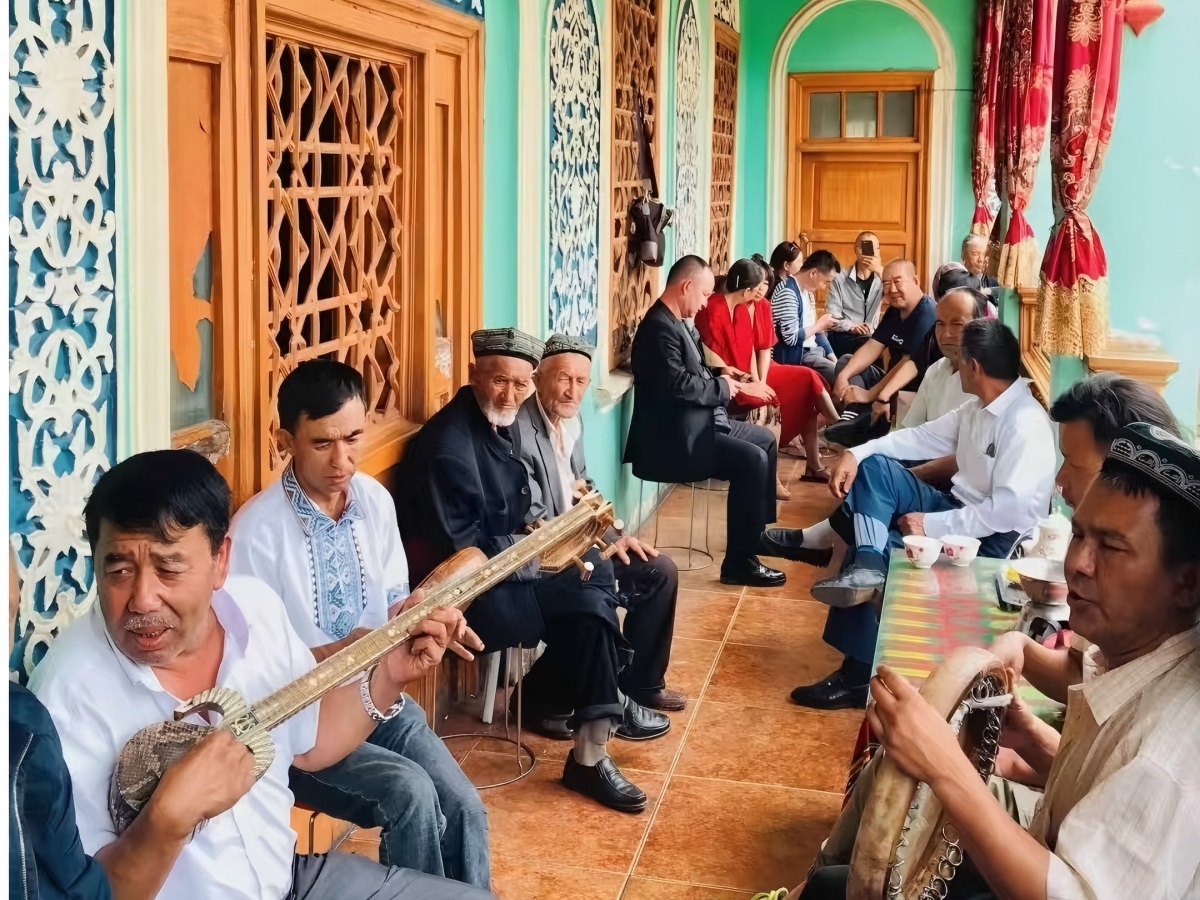
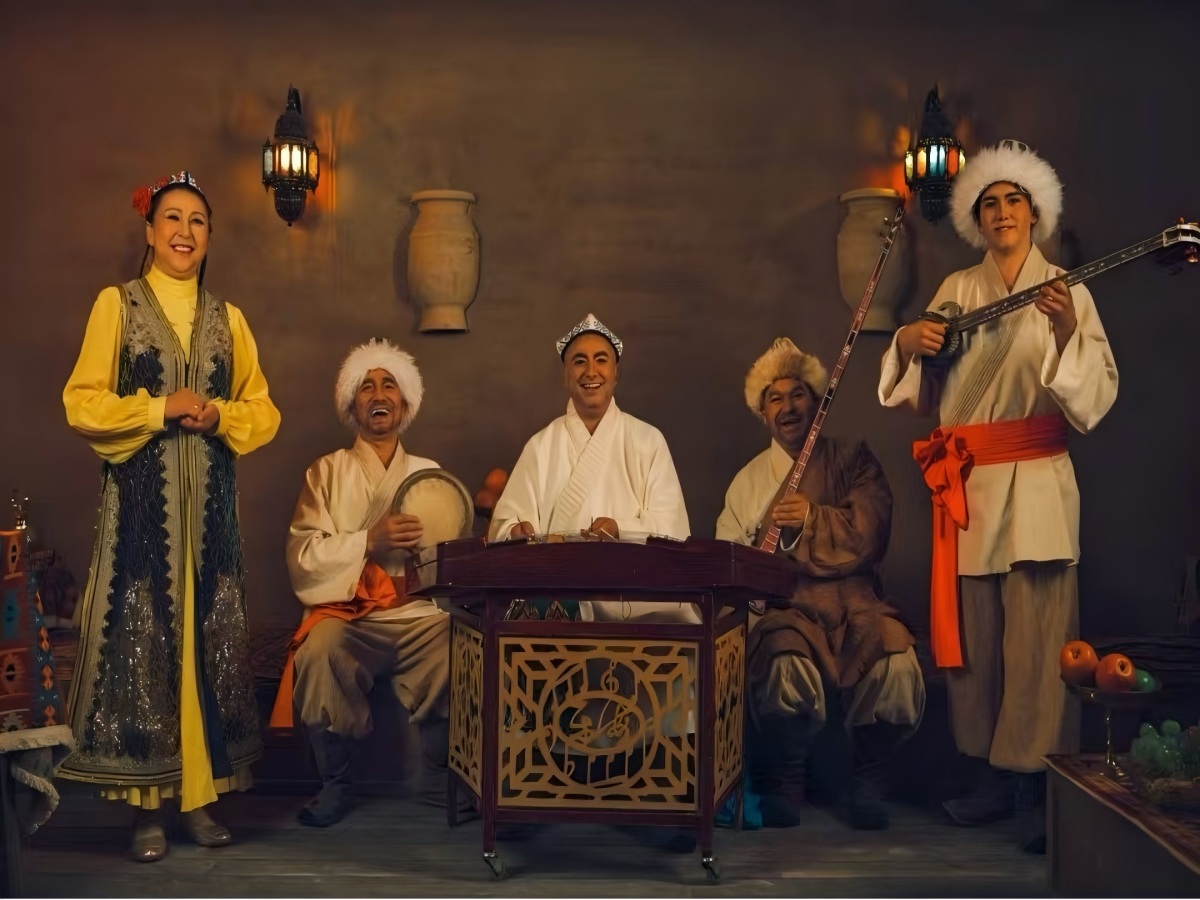
Upon entering the teahouse, you will first smell the rich fragrance of tea and roasted buns. The first floor is a casual seating area, where elderly people sit around tea tables, drinking brick tea, chatting, and playing chess. Occasionally, someone plays the "Tanbur" (a Uyghur plucked string instrument) and sings Uyghur folk songs. The second floor features "Meshrep" performances – every afternoon, folk artists perform the "Twelve Muqam" here. Visitors can dance to the music or simply sit and enjoy the show.

Order a cup of brick tea, paired with a roasted bun or naan, and sit at a tea table, watching the alleys and passers-by outside the window – you will feel the unique leisure and tranquility of the ancient city. The brick tea in the teahouse is brewed from local Fucha (a type of compressed dark tea), with a mellow taste. You can add rock sugar or milk according to your preference. Many local elderly people come here to drink tea every day; as they say, "What we drink in the old teahouse is not just tea, but time." If you want to gain a deeper understanding of the lives of Kashgar people, stay a little longer, chat with the elderly around you (you can ask the guide for help with translation), and listen to their stories about the ancient city.

6. Ancient City Alleys – "A Living Folk Custom Museum"
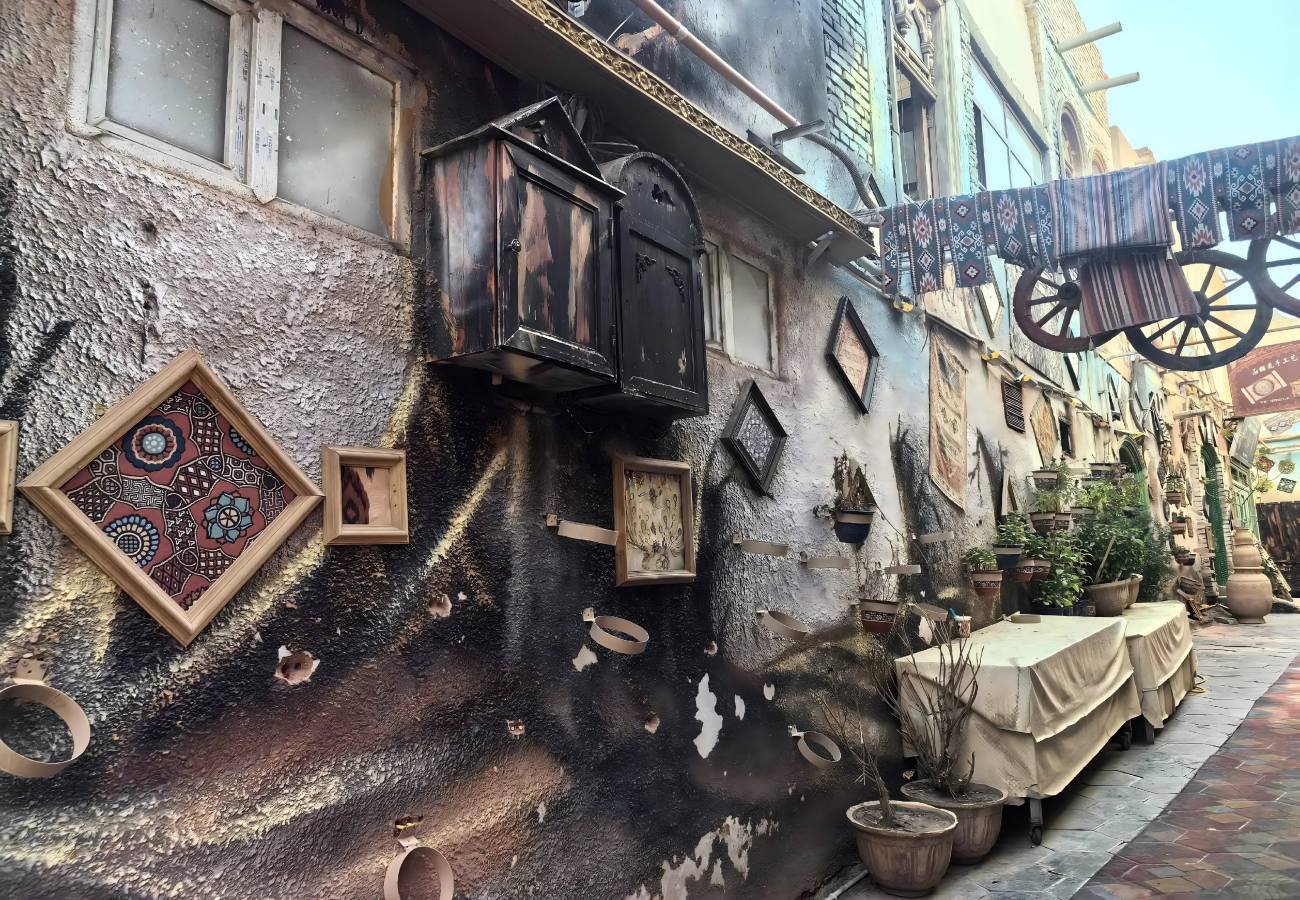
After visiting the core attractions, be sure to slow down and wander through the ancient city’s alleys. There is no commercial hustle and bustle here, only the most authentic atmosphere of daily life – it can be called a "living folk custom museum". You will see elderly people sitting on wooden stools at the door, basking in the sun and chatting, twisting traditional Uyghur "Muqam" musical instruments in their hands; children chasing and playing in the alleys, occasionally greeting you in simple Chinese or English; housewives carrying buckets walking past the well, with just-washed Uyghur printed cloth placed on the well platform. Occasionally, you can hear the sound of tambourines and Tanburs coming from the alleys – that is, residents practicing "Twelve Muqam" songs and dances in their own yards. If you stop to listen, they may even warmly invite you in.

It is worth mentioning that although the ancient city’s alleys seem disorganized, they actually hide "ingenuity": all alleys have clear directions, either leading to the main road or the well, so you will never get lost – this is a "smart road network" designed by the ancients based on their daily needs. Moreover, each alley has its own characteristics: for example, "Huamao Lane" (Flower Hat Lane) is filled with small shops selling Uyghur flower hats. These hats are embroidered with various patterns using colored threads, and different patterns have different meanings – peonies symbolize prosperity, while eagles symbolize courage; "Yueqi Lane" (Musical Instrument Lane) allows you to see various hand-made ethnic musical instruments, including not only the Tanbur but also the Dutar and Rawap; "Meishi Lane" (Food Lane) is a paradise for food lovers, filled with the fragrance of roasted buns, whole roasted lamb, and cold noodles. Next, we will focus on the food of Kashgar Ancient City to experience its "gustatory charm".
III. Ancient City Cuisine: Savoring the Flavors of the Western Regions in One Bite
The cuisine of Kashgar Ancient City is a crystallization of the integration of multiple ethnic cultures. It embodies both the boldness of nomadic cultures and the delicacy of agricultural cultures – each dish carries the local living habits and cultural memories.
1. Roasted Buns (Samsa) – "Golden Delicacy on the Ancient City Streets"
When walking in the ancient city’s alleys, the first fragrance you may smell is that of roasted buns. Known as "Samsa" in Uyghur, roasted buns are one of the most representative snacks in the ancient city. The outer skin is made of flour and water, rolled into thin pancakes, and wrapped around the filling. The filling is mainly diced mutton, mixed with diced onions, cumin powder, pepper powder, and other seasonings. After being shaped into a crescent moon, the buns are baked in a naan oven for 10–15 minutes.

Freshly baked roasted buns have a golden and crispy outer skin – you can hear a "crunch" when you take a bite. The mutton filling inside is tender and juicy, with the aroma of cumin perfectly blending with the freshness of the mutton, and no greasiness at all. If you are afraid of burning your mouth, blow on it first before savoring it slowly. Many local elderly people enjoy it with a bowl of hot tea, taking a bite of the bun and a sip of tea, leisurely enjoying their time.
2. Whole Roasted Lamb – "A Treasured Dish for Festive Feasts and Honoring Guests"
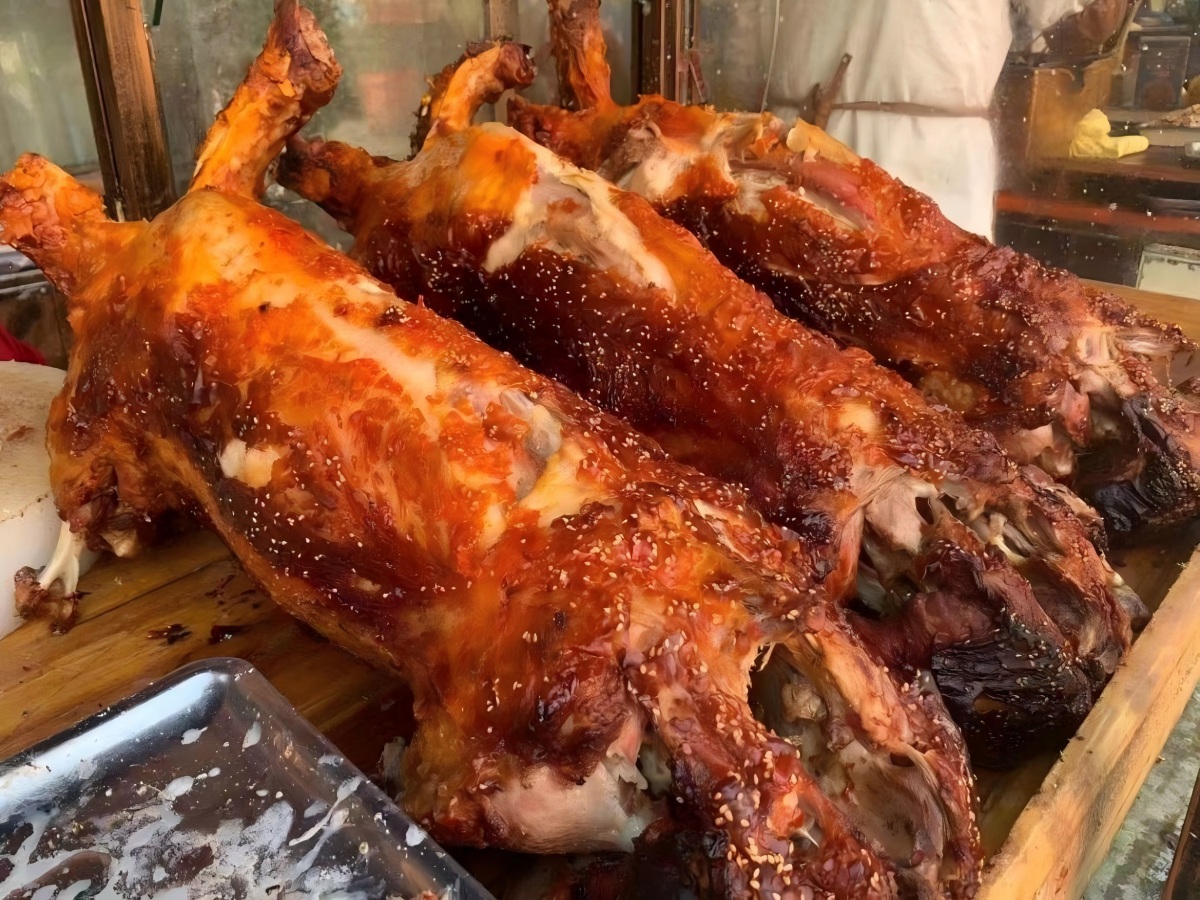
In Kashgar, whole roasted lamb is a "top-tier delicacy" for festive celebrations and entertaining distinguished guests, and the ultimate embodiment of nomadic culinary culture. The sheep used are mostly local castrated rams (wethers), weighing generally 15–20 kilograms, with tender meat and no muttony odor.
Before preparation, the chef cleans the sheep with clean water, then repeatedly smears a secret sauce (made of salt, cumin, Sichuan pepper, onion juice, egg liquid, etc.) on the sheep’s mouth, abdominal cavity, and other parts to ensure the sauce fully penetrates every inch of the meat. The sheep is then marinated for 2–3 hours to absorb the flavors.

During roasting, the whole sheep is fixed on a special iron frame and placed above the charcoal in a naan oven or a dedicated roaster. It is roasted using the method of "slow roasting and slow turning" – the chef turns the iron frame every once in a while to ensure the sheep is evenly heated on all sides. Meanwhile, sheep oil is continuously brushed on the sheep to make the roasted lamb’s outer skin shiny and golden, and the meat inside tender and juicy. The entire roasting process takes 2–3 hours.
The roasted whole sheep has an outer skin as crispy as thin paper – a light tear will make a "sizzling" sound. The meat inside is so tender that it can be easily pulled apart with chopsticks. A bite of it is full of the complex flavor of meat and spices, with no greasiness at all.
During important occasions in Kashgar, such as the Corban Festival and weddings, whole roasted lamb is definitely the "star" dish. It is usually placed in the center of the dining table, and the host personally cuts it and distributes it to the guests, symbolizing sharing and reunion. If you are traveling with a large group, you may wish to experience this "bold delicacy" and feel the enthusiasm and sincerity of the Kashgar people in entertaining guests.
3. Cold Rice Noodles – "A Refreshing Delight for Summer"
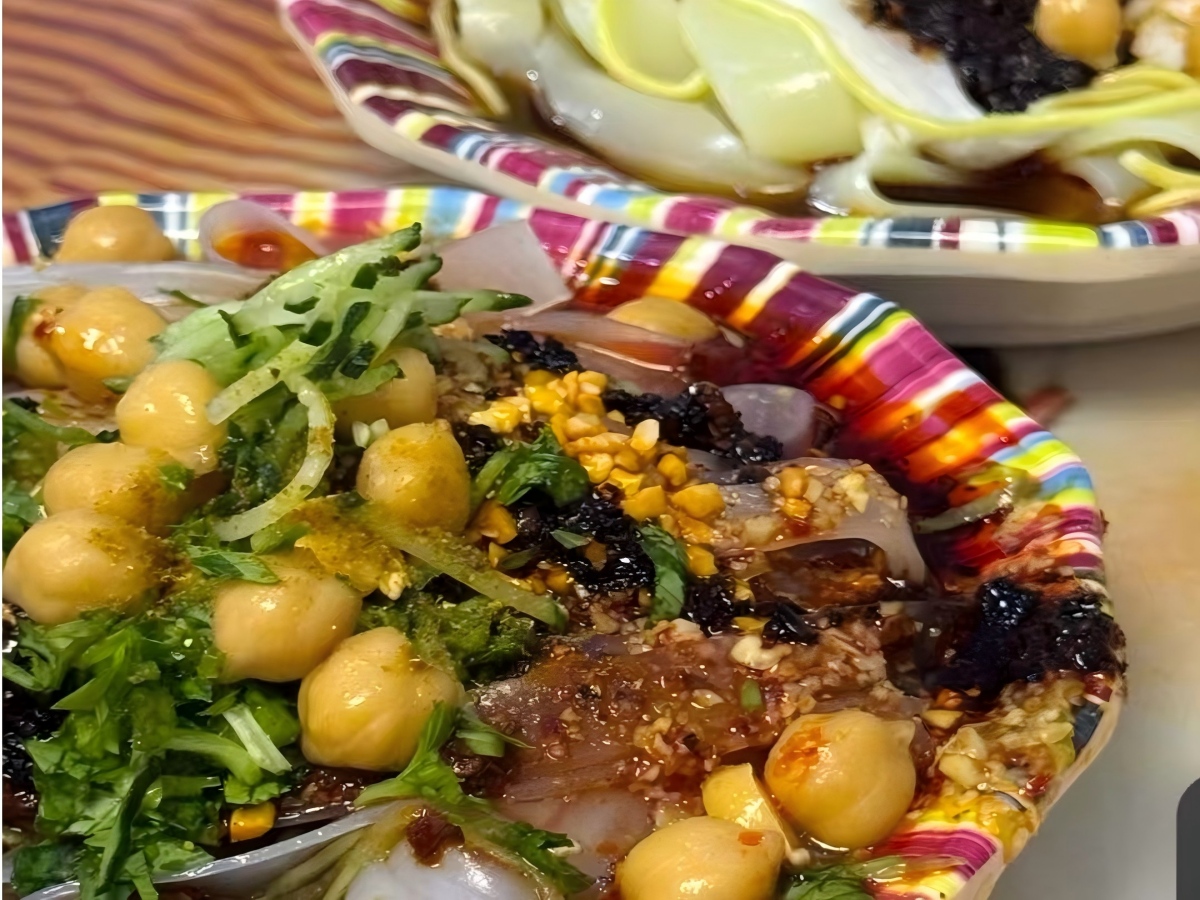
If you visit Kashgar in summer, you must try the cold rice noodles (also known as "mipi") in the ancient city. Made by grinding rice into a paste and then steaming it, the noodles have a soft, glutinous, and smooth texture. They are served with a special sauce – the soul of cold rice noodles – which includes chili oil, vinegar, garlic water, sesame paste, mustard, shredded cucumber, and wheat gluten. This sauce blends sweet, sour, spicy, and salty flavors, creating a rich, multi-layered taste.

Most of the vendors selling cold rice noodles in the ancient city are Uyghur aunties. They chat while preparing the noodles, working quickly and generously adding sauce. A bowl of cold rice noodles not only relieves summer heat but also fills you up. Many tourists can’t help but buy a second serving after eating, saying they want to "take it on the go."
4. Naan – "The Daily Staple of Kashgar People"
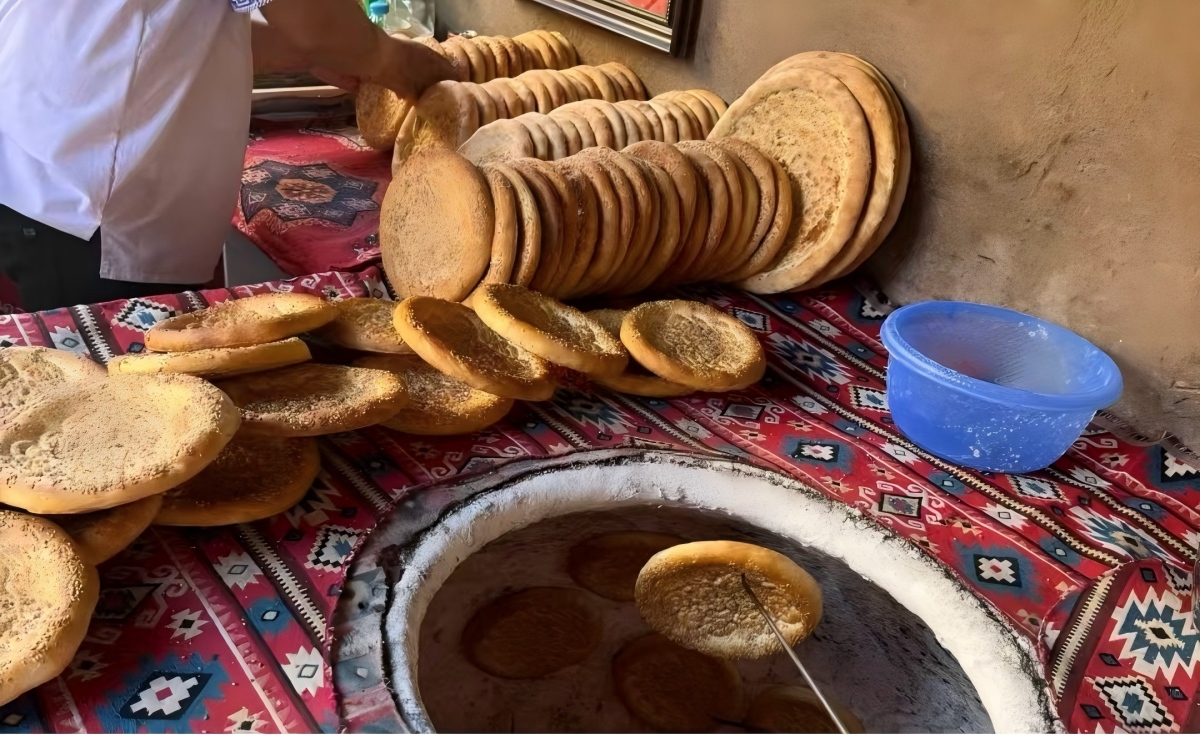
In Kashgar, naan is a more common staple food than rice or noodles, and almost every household knows how to make it. Naan ovens are everywhere in the ancient city; every early morning, long lines form in front of these ovens as people buy several pieces of naan to serve as their daily food supply.

There are many types of naan in Kashgar:
The basic "white flour naan," sprinkled with sesame seeds on the surface, has a crispy texture.
The "meat-stuffed naan," filled with diced mutton and onions, emits a rich aroma once baked.
The "spicy pepper naan," mixed with local dried chili peppers, offers a pleasantly spicy kick.
Naan has a long shelf life and stays good for several days, so many tourists buy large bags of it to take home as souvenirs.
IV. Feeling the Soul of Kashgar in the Details
Beyond its scenic spots and food, the cultural heritage of Kashgar Ancient City lies even more in the details.
Take its architectural decorations, for example:
The patterns of grapevines and pomegranate flowers carved on doors and windows are not only aesthetically pleasing but also symbolic of harvest and auspiciousness. Grapes are a signature fruit of Kashgar, while pomegranates represent "abundant offspring and prosperity."

Scenes of the "Twelve Muqam" painted on the walls reflect the artistic pursuits of the local people. The Twelve Muqam is the culmination of traditional Uyghur song and dance art; it was inscribed on the Representative List of the Intangible Cultural Heritage of Humanity in 2005, and Kashgar is one of its birthplaces.
Another example is its folk activities:
Grand celebrations are held in the ancient city during festivals like Eid al-Adha (Corban Festival) and Eid al-Fitr. On Eid al-Adha, every household slaughters sheep, prepares delicious food, and visits relatives and friends. Stages are set up in the ancient city’s squares, where folk artists perform Twelve Muqam songs and dances. People dress in vibrant ethnic costumes and dance the "Meshrep" – a simple dance where you just move your body to the rhythm. Whether you are a local or a tourist, you can join in and feel the enthusiasm. If you happen to be here during these festivals, don’t miss the chance to experience them – it is the most direct way to understand Kashgar’s culture.

Dear friends, our tour of Kashgar Ancient City comes to a temporary end here. It is my hope that through today’s journey, you have not only seen the ancient city’s architecture and scenic spots, tasted its authentic food but also felt the thousand years of historical accumulation and vibrant cultural vitality behind it.
This is not a "static museum" but a "living ancient city" – its history is in every brick and tile, its culture is in daily life, its delicacies are on the tip of your tongue, and its warmth is in the smile of every Kashgar local. I hope you will take this unique experience back with you, and you are always welcome to return to Kashgar to explore more stories about this ancient city!