I. Encountering Duku Highway – One Highway, Half of Xinjiang’s History
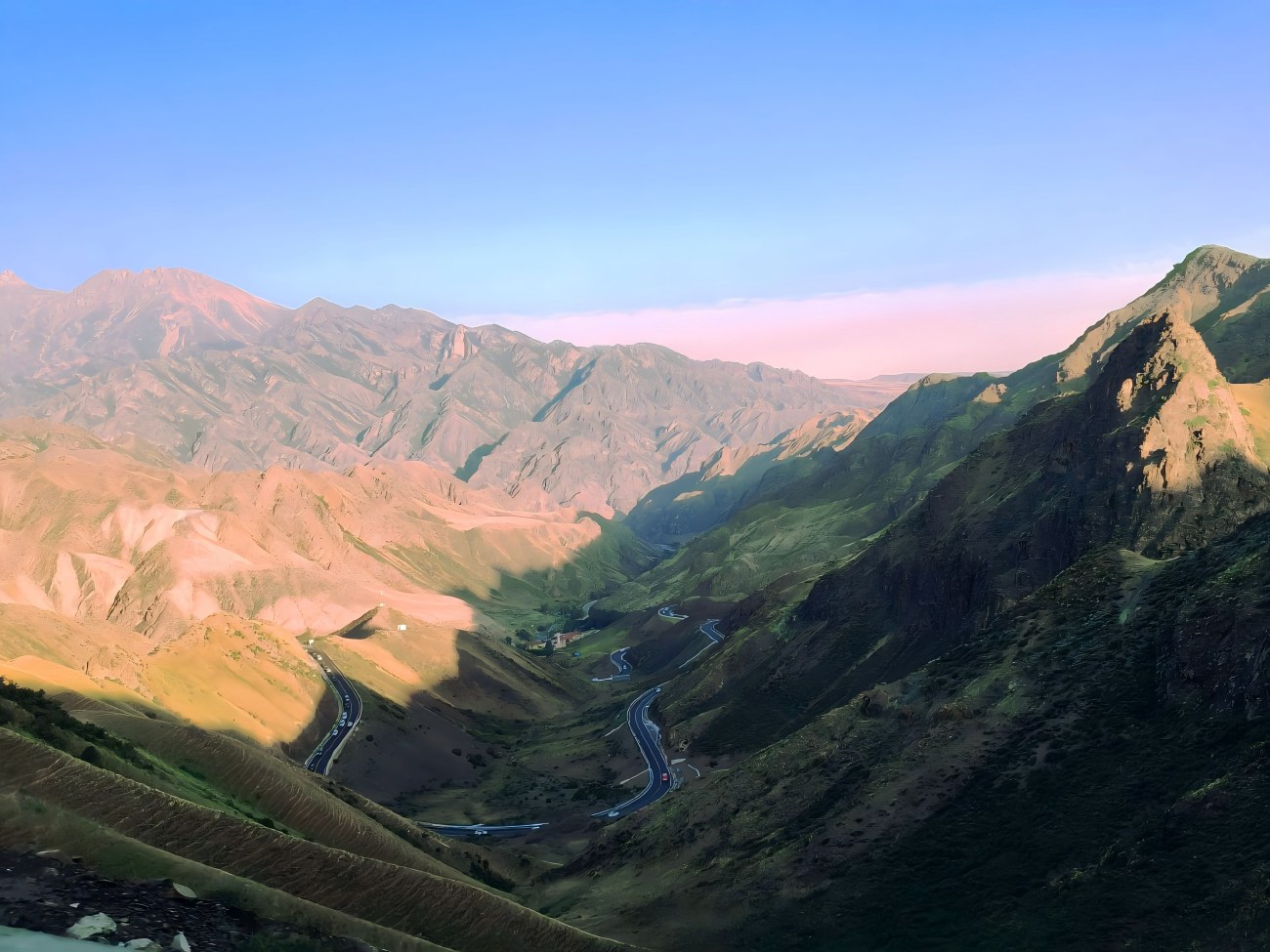
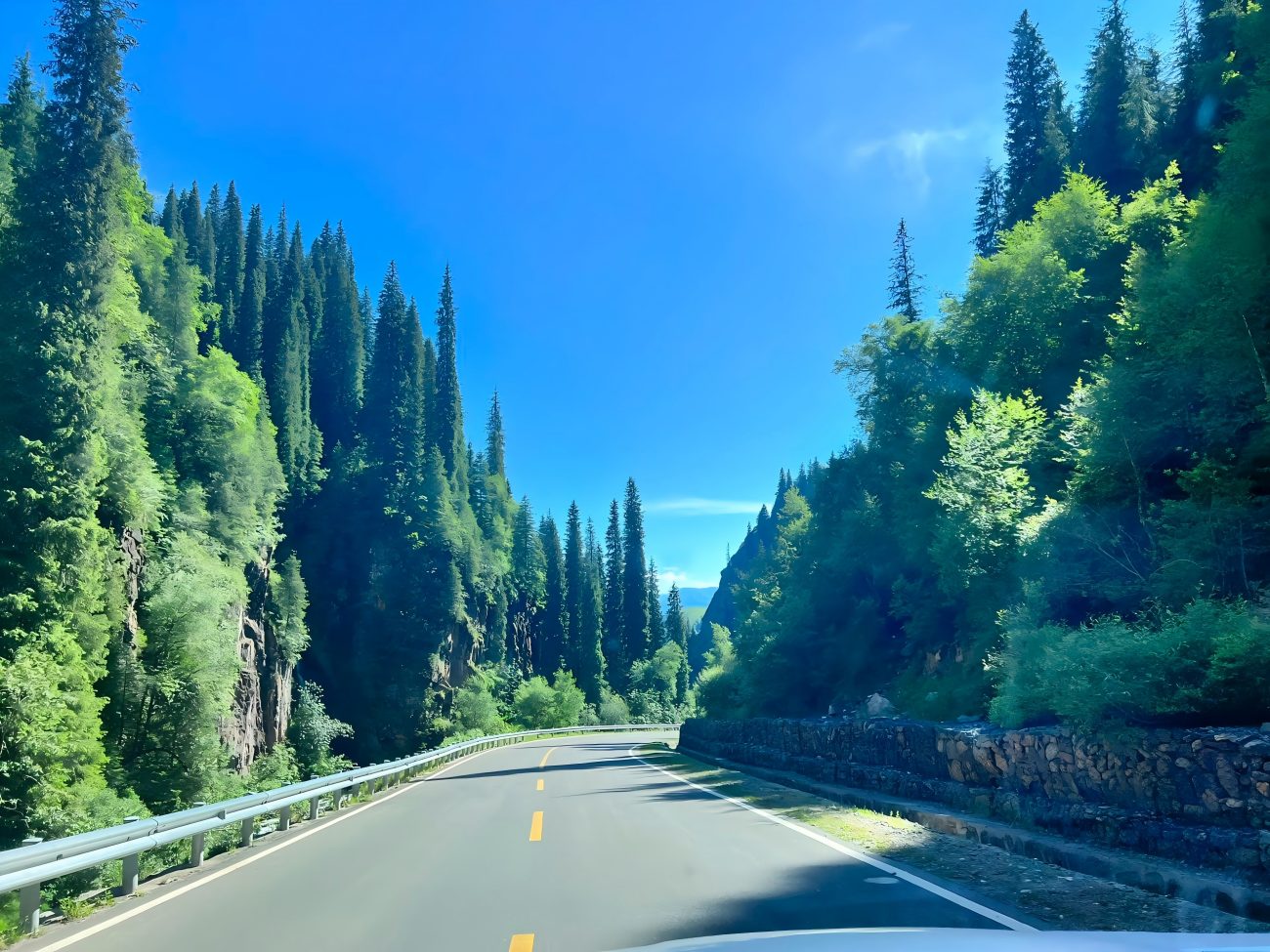
Dear overseas tourists, welcome to embark on this journey along Duku Highway, where you can "experience four seasons in a single day and encounter different weather every ten miles"! As a major transportation artery connecting Dushanzi District of Karamay City (Northern Xinjiang, China) and Kuqa City of Aksu Prefecture (Southern Xinjiang, China), Duku Highway stretches 561 kilometers in total. It is not only a miracle in the history of engineering – taking 10 years to build, with 168 heroic road constructors laid to rest here, every kilometer embodies their passion and perseverance – but also a "scenic avenue" that links Xinjiang’s natural wonders and millennia-old civilizations.
From the canyons and grasslands of Northern Xinjiang to the Gobi deserts and ancient kingdoms of Southern Xinjiang, Duku Highway is like a key that unlocks the door to understanding Xinjiang. It crosses the Tianshan Mountains, offering a panoramic view of extreme landscapes such as snow-capped mountains, grasslands, canyons, lakes, and Gobi deserts. Moreover, it carries the historical memories of Xinjiang: from nomadic tribes of the Neolithic Age to the ancient Wusun Kingdom of the Western Han Dynasty, from the epic eastward migration of the Turghut tribe of the Mongols to the Buddhist civilization of the ancient Qiuci Kingdom. Behind every scenic spot lies a touching story. Next, let us follow this highway to explore one by one the core scenic spots that integrate natural beauty and cultural charm, and embark on a cultural journey spanning time and space.

II. Dushanzi Grand Canyon: "The Rift of the Earth"
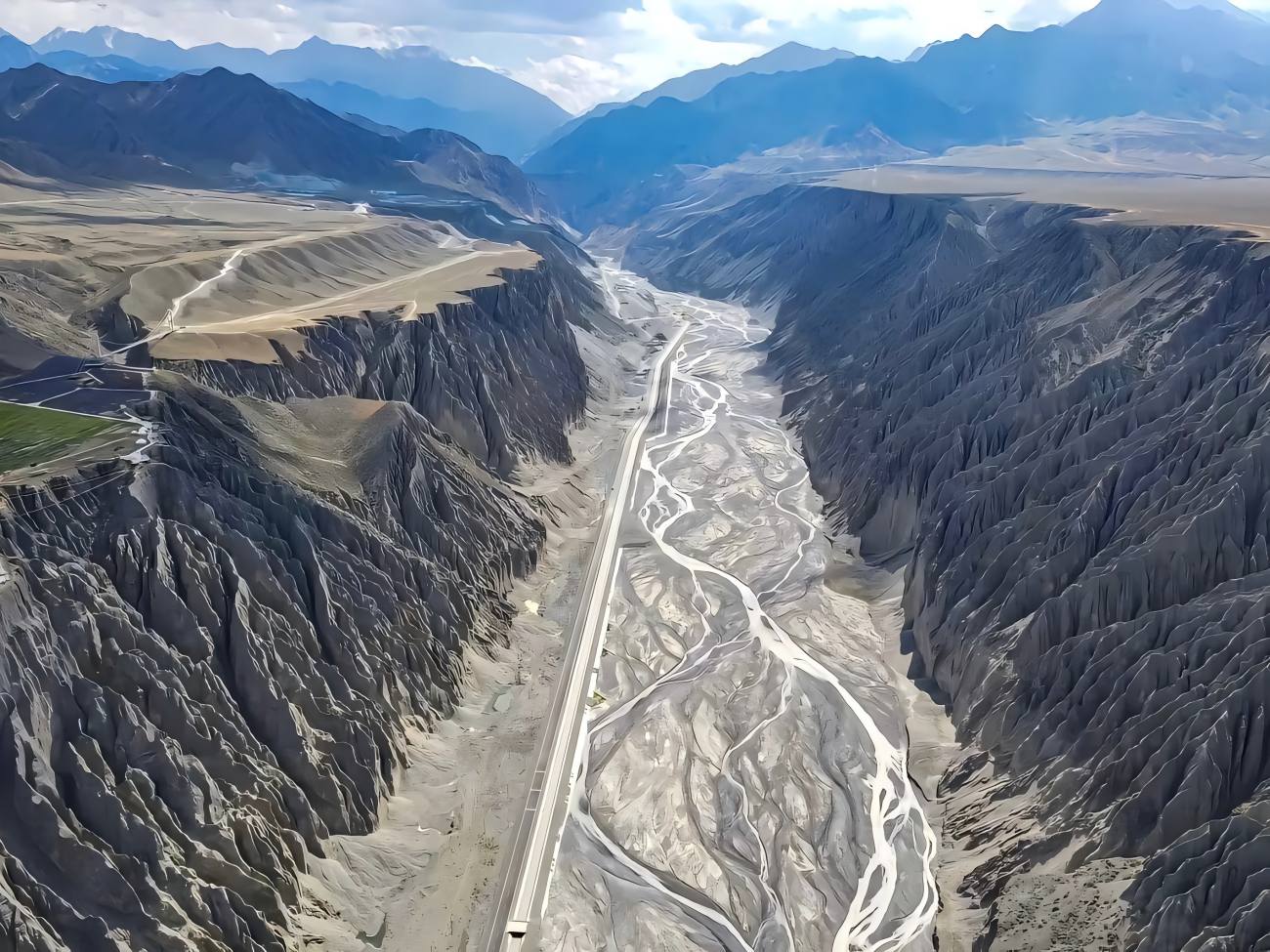
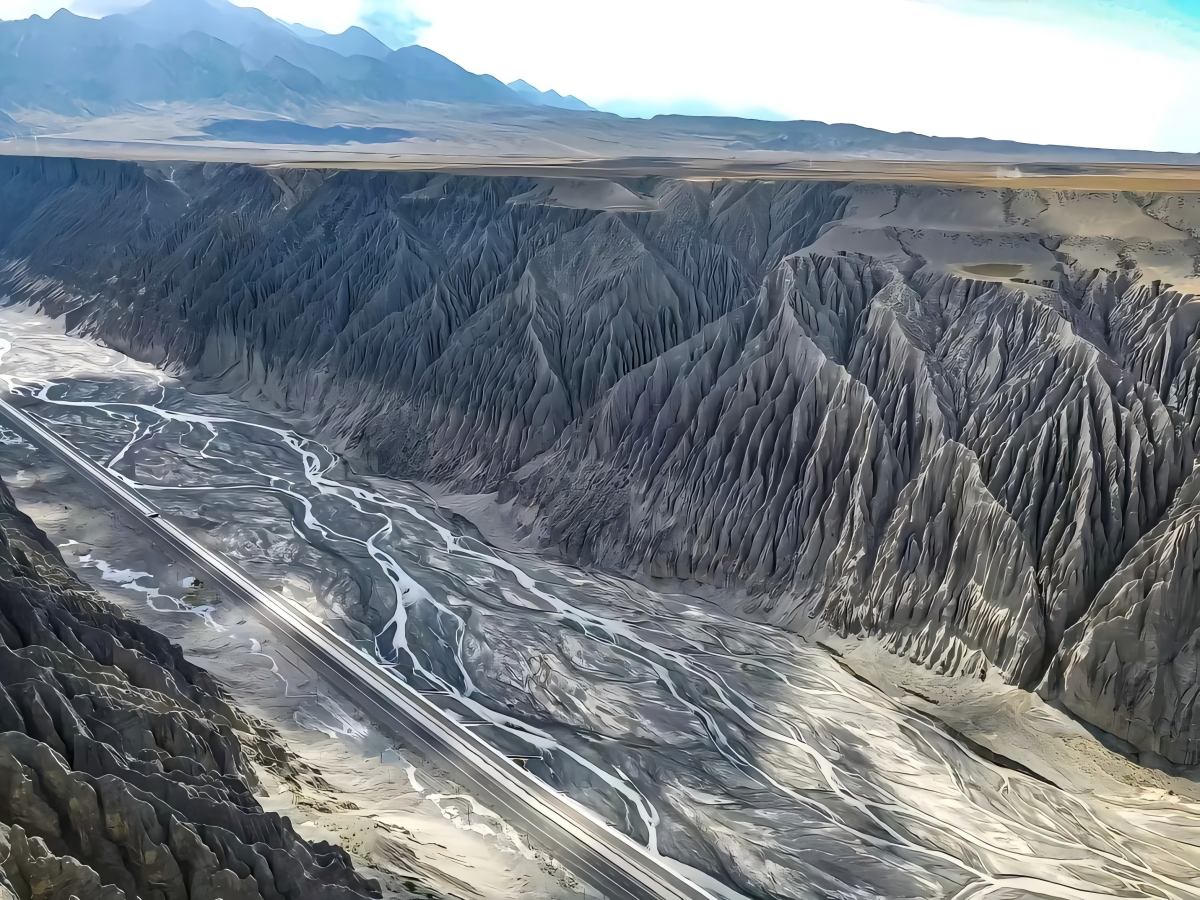
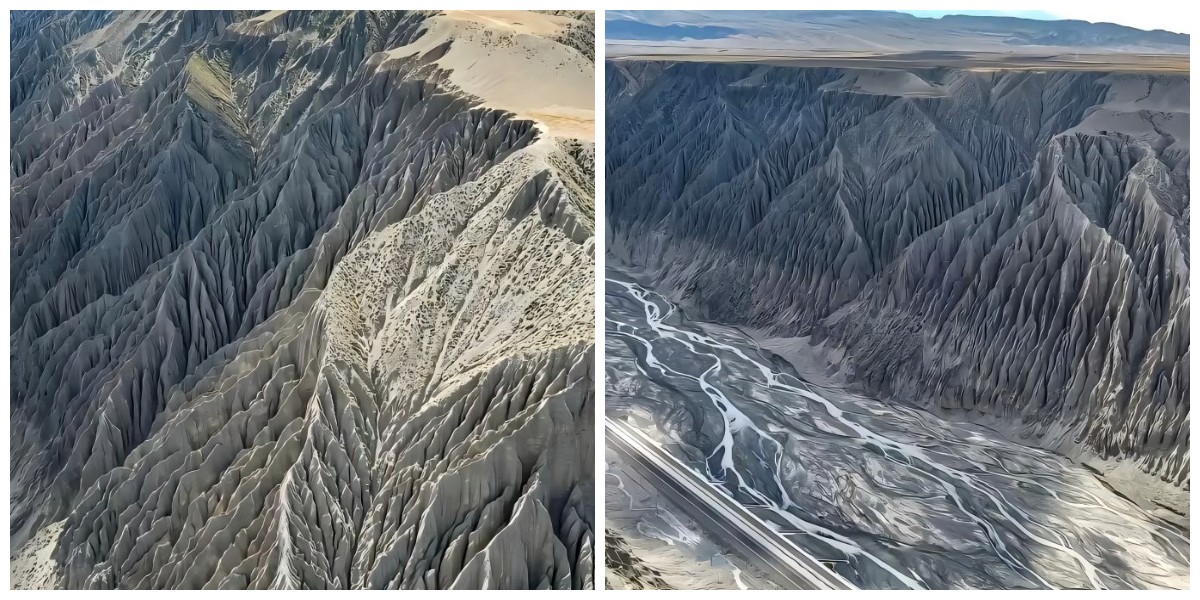
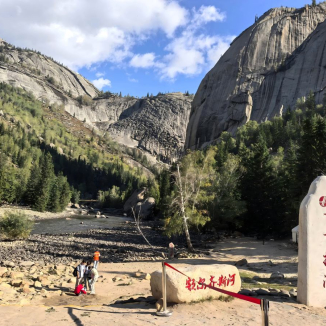
As the starting scenic spot of the northern section of Duku Highway, Dushanzi Grand Canyon is famous as "the rift of the Earth" – a natural wonder jointly created by the erosion of Tianshan snowmelt and wind over hundreds of millions of years. The layered rock formations on both sides of the canyon are like a "living history book" engraved with the Earth’s changes, recording the evolutionary trajectory of the ancient ocean 250 million years ago. The fossils of ancient marine organisms preserved in the gullies of the rock formations are direct evidence of the ancient geological features. As early as the Neolithic Age, nomadic tribes lived here; the stone axes and pottery shards discovered in archaeological studies confirm the traces of early human civilization on this land.
In addition to its geological wonders, the grand canyon also carries the culinary memories of Xinjiang’s nomadic culture. The "No.1 Pot of the Western Regions" at the entrance of the scenic area, with a diameter of 3.6 meters, is a replica of the traditional cooking utensils of ancient nomadic tribes. In ancient times, Xinjiang’s nomadic peoples moved with their livestock in search of water and grass. Whenever they migrated to a place with abundant water and lush grass, they would set up large pots, boil fresh mutton with Tianshan snowmelt, and achieve an extreme umami taste without adding excessive seasonings. This culinary wisdom not only reflects reverence for nature but also evolved into a food culture shared by all ethnic groups in Xinjiang. Today, this "hand-grabbed mutton" with a history of thousands of years can still be tasted in restaurants across Xinjiang.

III. Nalati Grassland: "Grassland in the Sky" and Its Silk Road Bond with the Ancient Wusun Kingdom
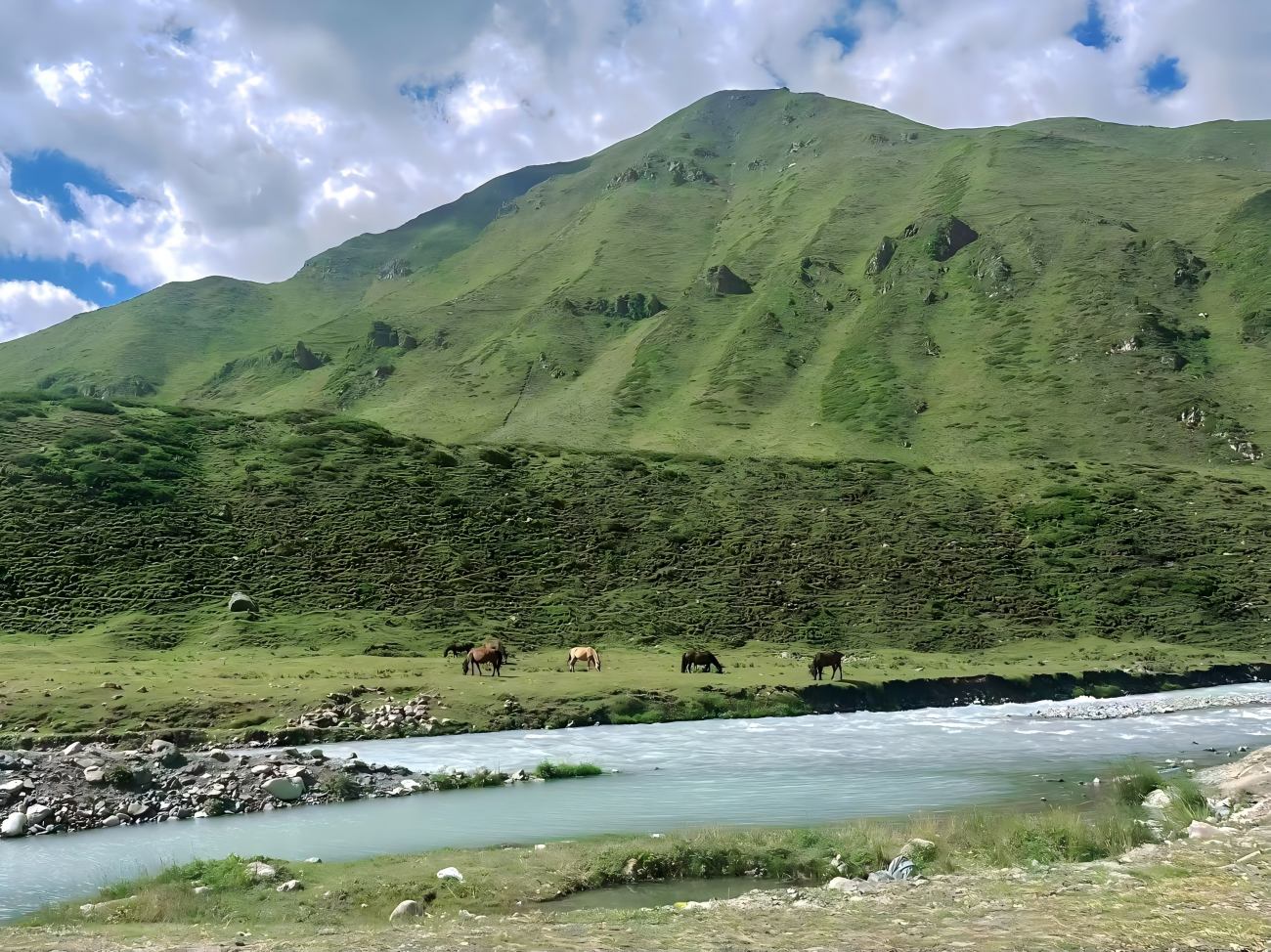
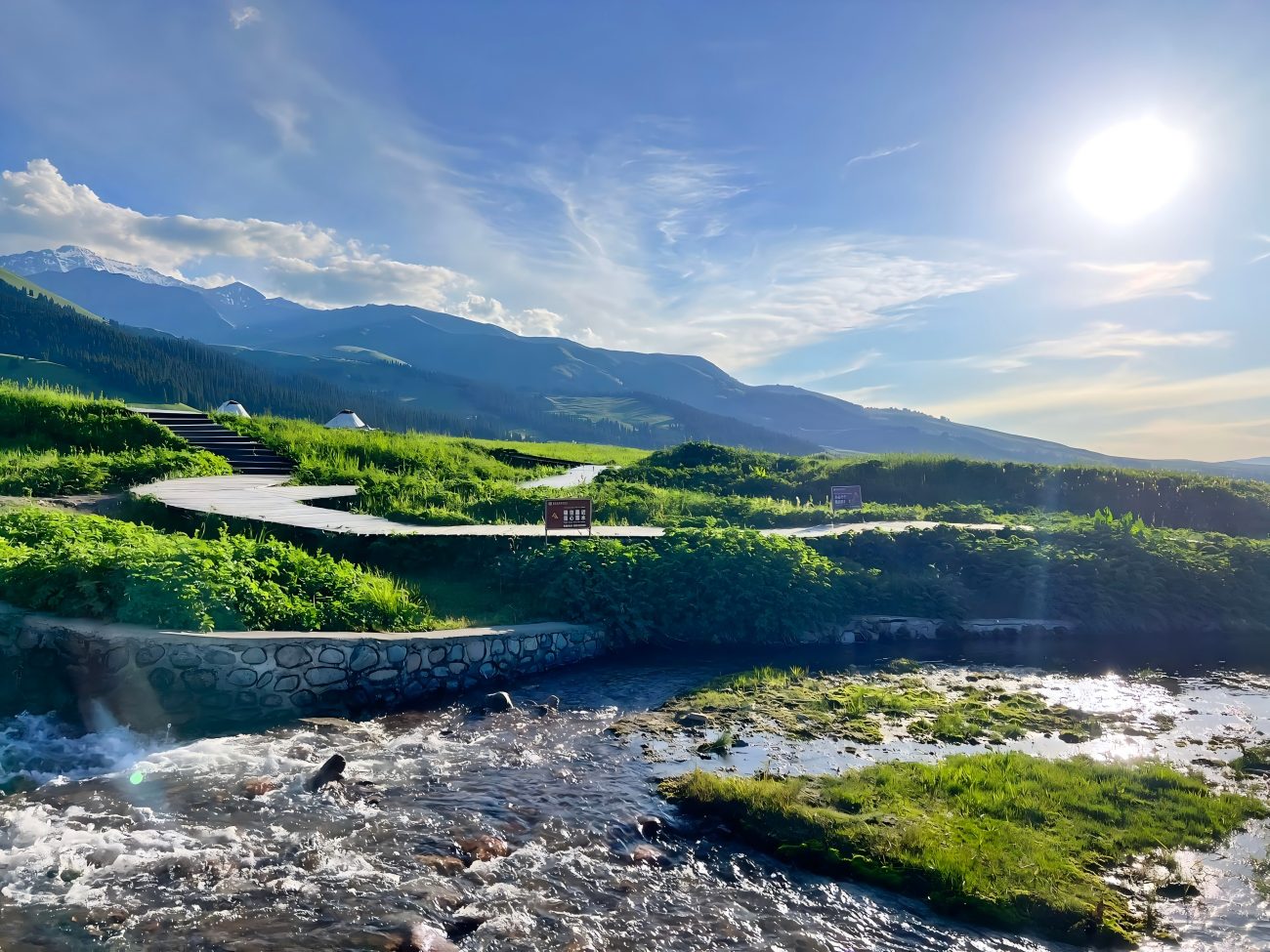
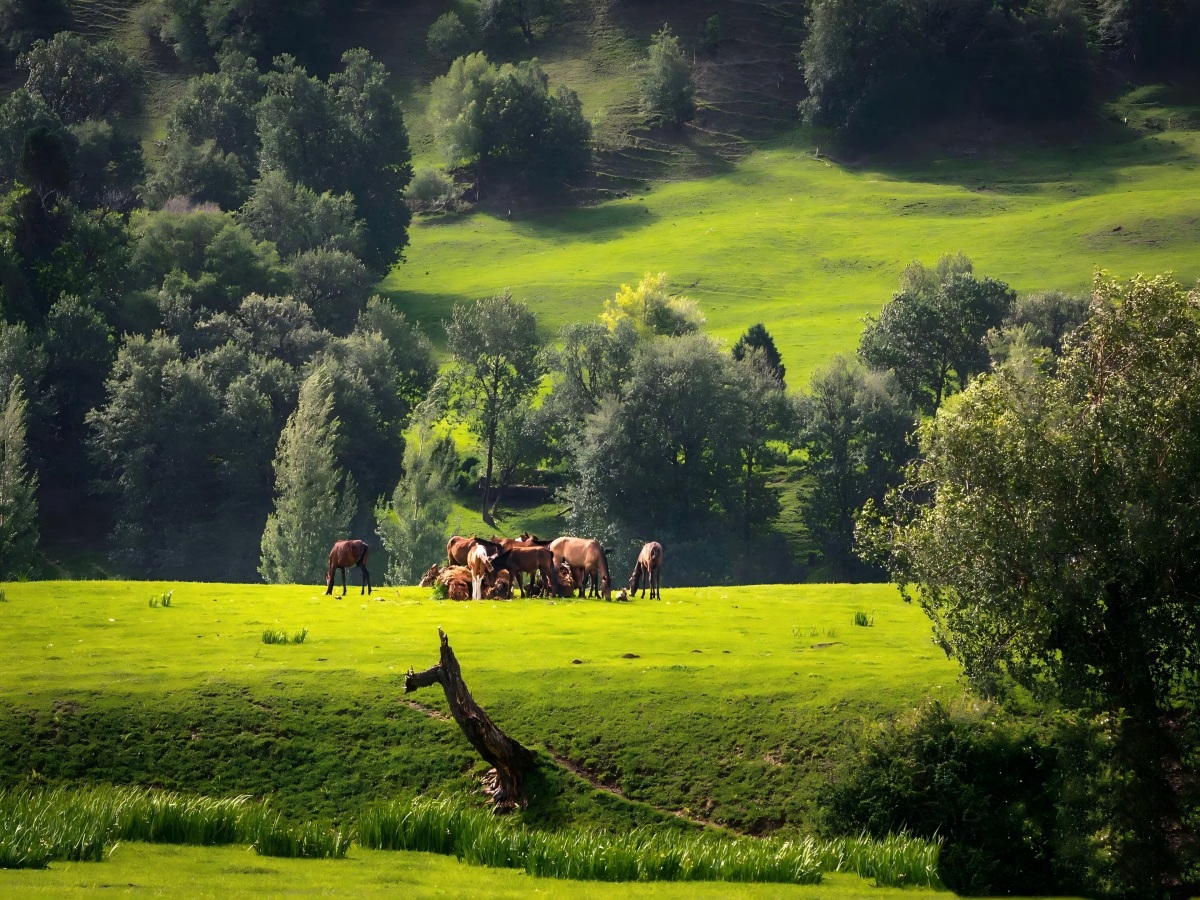
Driving about 150 kilometers south along Duku Highway, you will reach Nalati Grassland, known as the "Grassland in the Sky". With an average altitude of 2,200 meters, this grassland is covered with lush green grass and dotted with wildflowers in summer, and the snow-capped peaks of the Tianshan Mountains are reflected in the streams, forming a picture that combines grandeur and elegance. The in-depth charm of the grassland stems from its historical status as the core territory of the ancient Wusun Kingdom in the Western Han Dynasty – it was once an important node on the northern route of the ancient Silk Road, witnessing the early cultural exchanges between the Central Plains and the Western Regions.

In 138 BC, Zhang Qian was sent on a mission to the Western Regions and attempted to ally with the Wusun to resist the Xiongnu. Later, the Han Dynasty successively married Princess Xijun and Princess Jieyou to the Wusun, initiating a beautiful story of "marriage for alliance". Princess Jieyou lived in the Wusun for 50 years; she not only brought silk, tea, and farming techniques from the Central Plains but also promoted cultural integration. Today, in the yurts of the Kazakh people on Nalati Grassland, the tapestries woven by women include both nomadic elements such as grassland wolves and eagles, and patterns of peonies and auspicious clouds from the Central Plains. The strings of the traditional musical instrument "dombra" were once made of silk introduced from the Central Plains in the early years, producing a mellow tone that serves as a vivid proof of cultural integration. Tourists can enter the yurts, experience the Kazakh "grassland welcome ceremony", and taste the salty milk tea brewed with brick tea and goat milk, feeling the inheritance of Silk Road food culture.

IV. Bayanbulak Grassland: "The Nine Twists and Eighteen Bends" and the Epic Eastward Migration of the Turghut Tribe
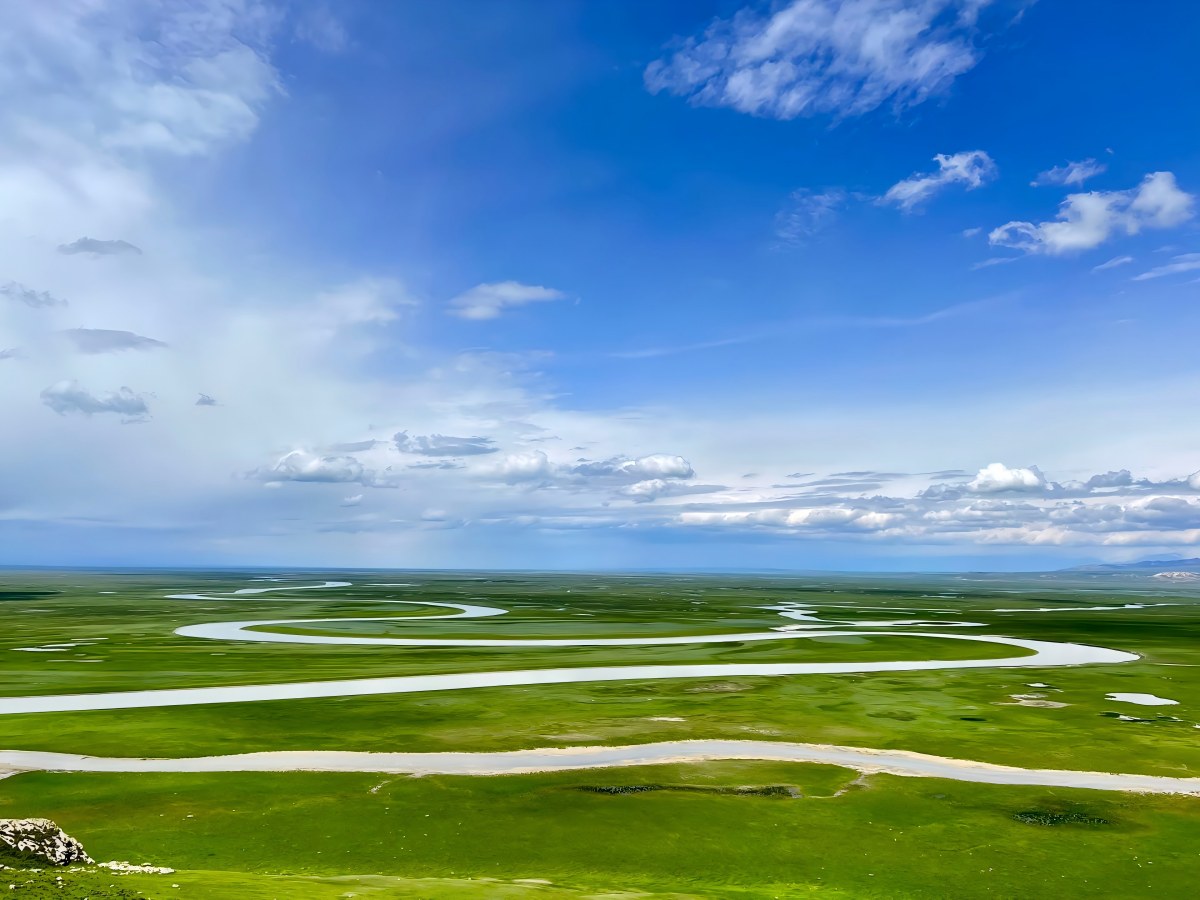
Crossing the hinterland of the Tianshan Mountains, you will arrive at Bayanbulak Grassland, the second-largest grassland in China. Different from Nalati’s "Grassland in the Sky", this grassland is located in an intermontane basin of the Tianshan Mountains, with a flat terrain and crisscrossing rivers. The famous "Nine Twists and Eighteen Bends" of the Kaidu River meanders through it. Every sunset, the afterglow of the setting sun reflects nine images of the sun on the river surface, which can be called a visual miracle of nature.

The history of the grassland is closely linked to the migration epic of the Oirat Mongol Turghut tribe. In the late Ming and early Qing dynasties, the Turghut tribe of the Oirat Mongols moved west to the Volga River basin due to wars, but they always cherished their homeland. In 1771, their leader 渥巴锡 (Wobaxi) led 170,000 tribesmen to resolutely migrate eastward. After half a year of trekking and breaking through the pursuit of Tsarist Russia, only 70,000 people finally reached their motherland, and Bayanbulak Grassland became an important settlement for them. Today, the grassland still retains a strong Turghut culture: during the summer "Nadam Festival", herdsmen demonstrate skills such as wrestling, horse racing, and archery. Among them, the horse racing event where children aged around 10 ride un-saddled horses at full speed originated from ancient hunting culture and has been included in Xinjiang’s intangible cultural heritage. The elderly Mongolians sing the epic Jangar in Mongolian, which tells the stories of tribal heroes. As one of China’s three major heroic epics, it has been listed as a "Masterpiece of the Oral and Intangible Heritage of Humanity" by UNESCO.
V. Kuqa Grand Canyon and Kuqa Old Town: The Echoes of the Ancient Qiuci Kingdom’s Civilization
The core scenic spots in the southern section of Duku Highway are concentrated in the Kuqa area, represented by Kuqa Grand Canyon, Subashi Buddhist Temple Ruins, and Kuqa Old Town. Together, they carry the glorious civilization of the ancient Qiuci Kingdom, and comprehensively demonstrate the diverse charm of this ancient Silk Road hub through natural wonders, religious ruins, and folk streets.

1. Kuqa Grand Canyon (Tianshan Mysterious Grand Canyon)
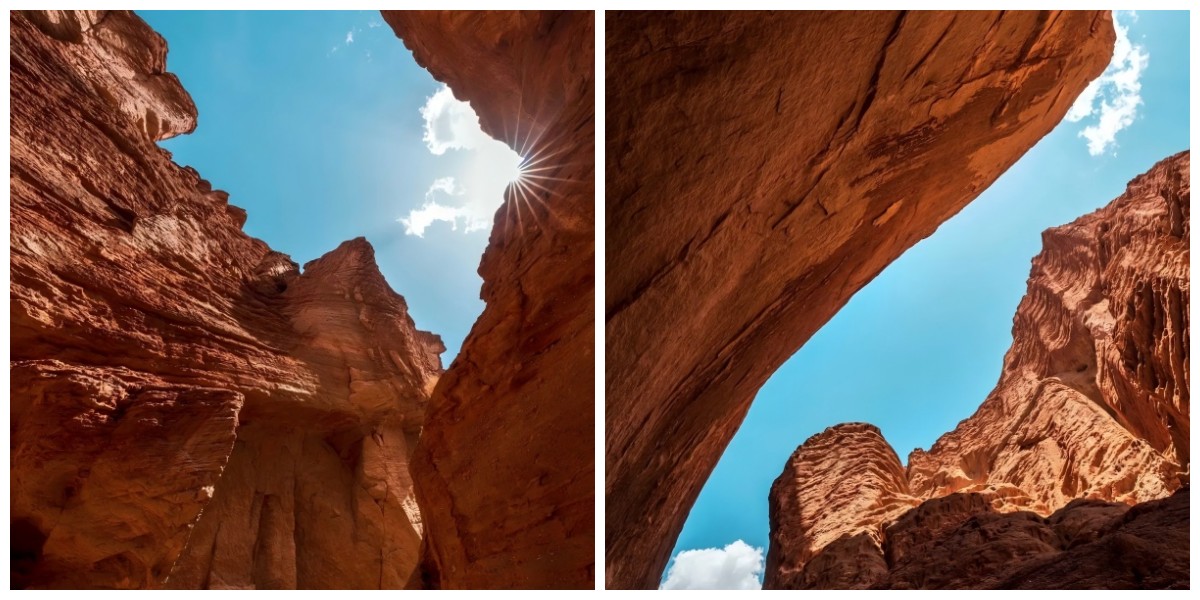
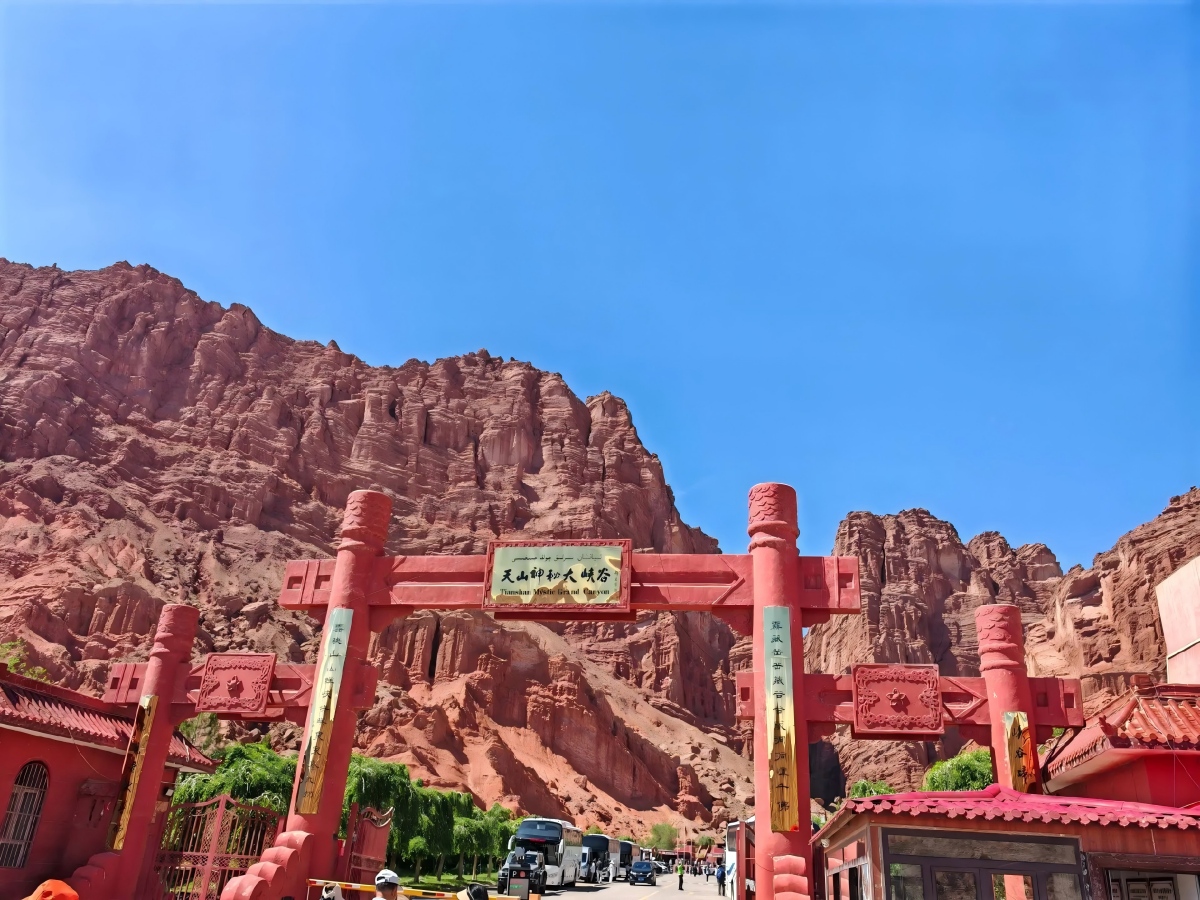
This 5.5-kilometer-long canyon is 53 meters wide at its broadest point and only 0.4 meters wide at its narrowest. The reddish-brown rock walls on both sides change into colors such as golden yellow and dark purple under the sunlight, like a natural geological museum. Kuqa City, where the canyon is located, was exactly the capital of the ancient Qiuci Kingdom. As a hub on the northern route of the ancient Silk Road and an important node for the eastward spread of Buddhism, Qiuci introduced Buddhism in the 1st century AD and became the center of Buddhism in the Western Regions during the Wei, Jin, Southern and Northern Dynasties, with thousands of Buddhist temples. Xuanzang recorded in The Great Tang Records on the Western Regions that it had "more than a hundred monasteries and over five thousand monks and nuns". Today, the Kizil Grottoes, 60 kilometers away from the canyon, are one of the earliest grottoes excavated in China (200 years earlier than the Mogao Grottoes in Dunhuang). The murals here focus on themes such as "flying apsaras" and "jataka stories". Among them, the "flying apsaras" are dressed in thin gauze and hold musical instruments, with their costumes integrating Persian and Indian elements, intuitively demonstrating Qiuci’s characteristic as the "crossroads of Eastern and Western cultures".

2. Subashi Buddhist Temple Ruins: The "Open-Air Museum" of Qiuci Buddhism
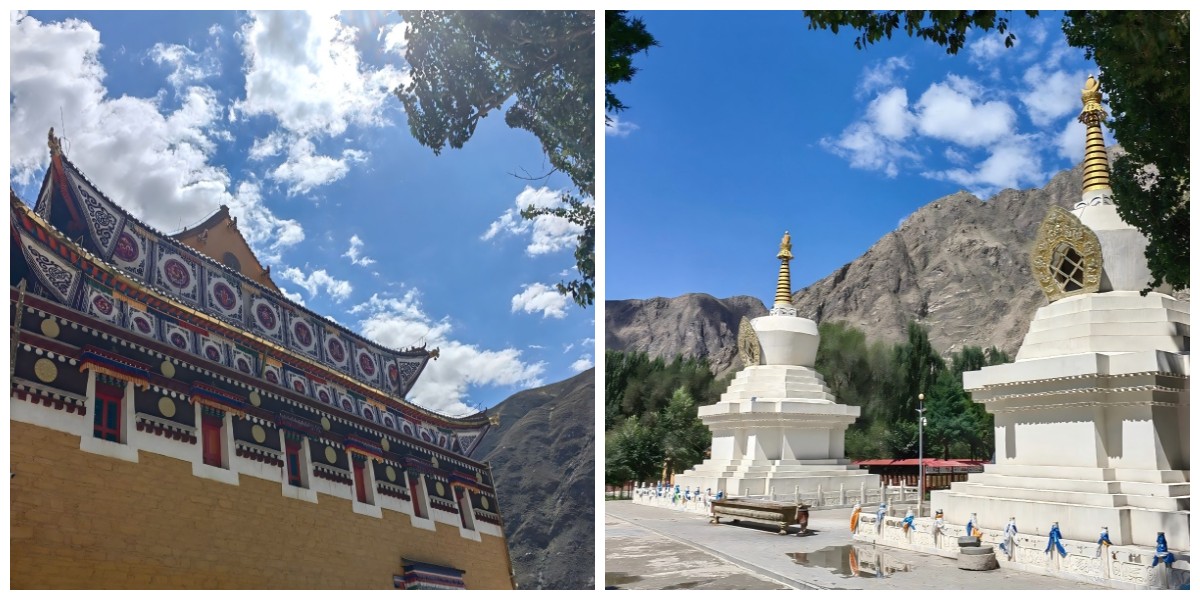
Driving about 23 kilometers northeast from downtown Kuqa, you will reach the Subashi Buddhist Temple Ruins. It is one of the largest and best-preserved ancient Buddhist ruins in Xinjiang, and a direct witness to the heyday of Qiuci’s Buddhist civilization, known as the "living fossil of Western Regions Buddhist temple ruins". The ruins were built in the 3rd century AD and flourished from the Wei, Jin, Southern and Northern Dynasties to the Tang Dynasty. Divided into East and West Temples by the Kuqa River, they cover a total area of about 180,000 square meters. Once the royal temple directly under the Qiuci royal family, it was also an important place for monks to travel and translate scriptures to promote Buddhism on the ancient Silk Road – Xuanzang stayed here during his journey to the West to seek Buddhist scriptures and described it in The Great Tang Records on the Western Regions as "monasteries connected by walls, with solemn Buddha statues", showing its grand scale at that time.

Today, the ruins still retain the tall bases of stupas, the remains of temple hall walls, the traces of Buddha niches, and scattered pottery shards and fragments of Buddhist statues. Among them, the stupa in the West Temple is the most striking, with a remaining height of about 15 meters. The stupa is built with adobe, and the traces of the colored paintings from that year can still be seen on its surface. In the hall ruins of the East Temple, fragments of Buddhist scriptures in Chinese, Sanskrit, and Qiuci scripts, as well as cultural relics such as coins and pottery from the Tang Dynasty, have been unearthed. These all prove that this place was once a religious center where multiple languages and cultures converged. Standing beside the ruins and looking at the broken walls and debris at the foot of the Tianshan Mountains, one can almost imagine the lively scene of monks chanting scriptures and believers worshipping thousands of years ago, and feel the profound influence of Buddhist culture in the Western Regions. Today, the Subashi Buddhist Temple Ruins have been listed as a Major Historical and Cultural Site Protected at the National Level, becoming an important base for studying Qiuci’s history, Buddhist art, and Silk Road culture.
3. Kuqa Old Town: A Living Picture of Qiuci Folk Customs
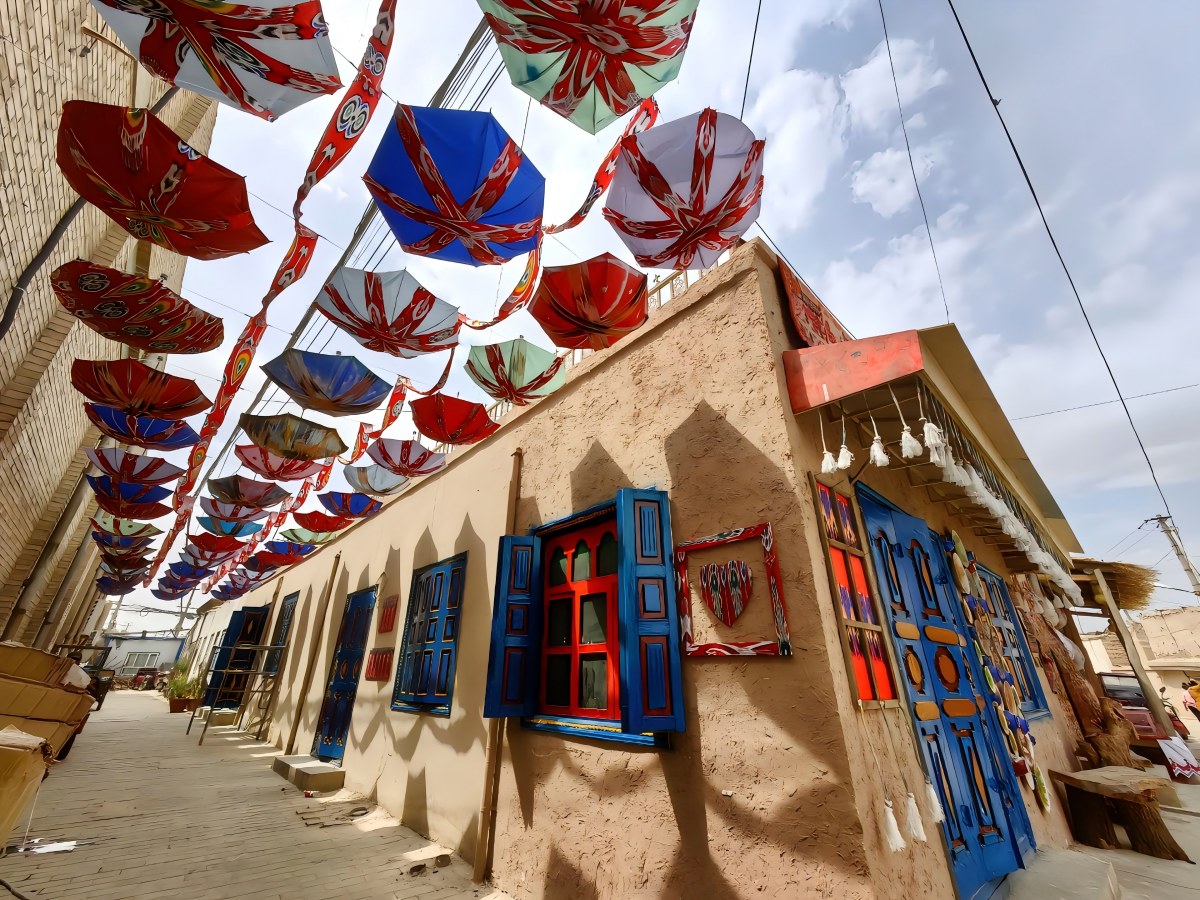
As the endpoint of Duku Highway, Kuqa Old Town is one of the best-preserved traditional Uygur residential communities in Xinjiang and an epitome of the living inheritance of Qiuci culture in modern times. The buildings in the old town are mainly made of yellow adobe walls, with red tiles covering the roofs. Every household plants fig trees and grapevines at the door. In the alleys wrapped with vines, the laughter of Uygur children and the rhythm of tambourines can be heard from time to time, filled with a strong Western Regions style.

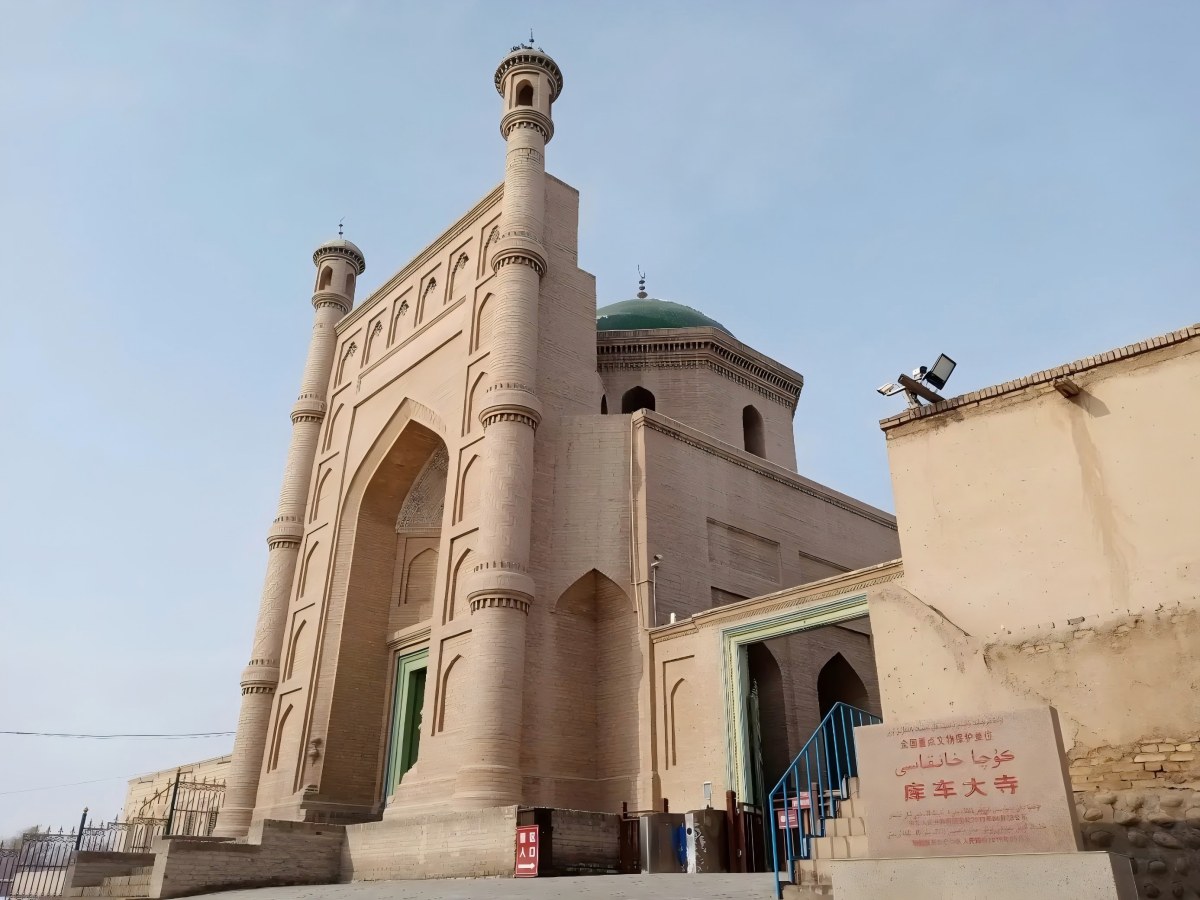
The Kuqa Grand Mosque in the old town was built in the Qing Dynasty and is the second-largest mosque in Xinjiang. Its architectural style can be called a model of multi-ethnic cultural integration: the gate adopts the traditional archway-style structure of the Han people, with upturned eaves and exquisite carvings; the prayer hall inside adopts the dome design with Uygur characteristics, and the surface of the dome is decorated with green glazed tiles, which shine brightly under the sunlight; the wood carvings and brick carvings inside the hall include both geometric patterns of Islamic culture and flower patterns of the Han people, showing the characteristic of coexistence and common prosperity of all ethnic cultures in Xinjiang.
Walking out of the Kuqa Grand Mosque, the nearby "Resitan Lane" is a century-old food street and an excellent place to experience Qiuci food culture. The "Kuqa naan" here can be up to 1 meter in diameter, covered with sesame seeds and chopped onions on the surface. It is baked in a traditional earthen naan oven, and its aroma can drift through the entire alley once it is taken out of the oven. The production process of this naan originated from the Qiuci period, when it was the main food of nomads and Silk Road merchants, easy to carry and preserve. Today, it has become a iconic food of Xinjiang. In addition, the roasted buns, hand-grabbed rice, and thin-skinned buns in the alley all retain traditional production methods – taking a bite, you can taste the authentic flavor of the Western Regions. In the evening, the square in the old town will also have spontaneous song and dance performances by Uygur people. When the melodious Muqam music starts, people dance the Maxrap. This art form, which integrates Qiuci music, Arab music, and Central Plains music elements, has been listed as a "Masterpiece of the Oral and Intangible Heritage of Humanity", allowing tourists to intuitively feel the contemporary vitality of Qiuci culture amid laughter and joy.
VI. To All Overseas Tourists

Dear overseas friends, when you travel along Duku Highway, from the canyon wonders of Dushanzi to the lively scenes of Kuqa Old Town, and from the grassland pastoral songs of Northern Xinjiang to the ancient kingdom civilization of Southern Xinjiang, this journey is not only a visual feast but also a cultural dialogue spanning thousands of years. May the snow-capped peaks of the Tianshan Mountains and the gentle breeze of the grasslands become unforgettable memories in your heart; may you feel the enthusiasm and sincerity of the people of Xinjiang when tasting hand-grabbed mutton, milk tea, and Kuqa naan; may you touch the profound historical pulse of this land when listening to the Jangar epic, enjoying Muqam music, or wandering around the Subashi Buddhist Temple Ruins.
It is hoped that this Duku Highway journey will become a window for you to understand Xinjiang, China – a place that not only has magnificent natural landscapes but also a diverse and integrated culture and friendly and inclusive people. May you return to your hometown with full gains and touching memories, and may this beauty from the foot of the Tianshan Mountains accompany every journey in your future, reminding you from time to time that in the distant East, there is a land that once presented you with such touching scenery and stories. Wish you a safe and smooth journey, and all the best in the future!