A Pearl of Oasis in the Flaming Mountains
Dear friends from afar, welcome to Turpan Grape Valley, known as "the pearl of oasis in the Flaming Mountains"! Not only is this place a kingdom of grapes, but it is also a living museum of ancient Silk Road culture and Uyghur customs. Next, let's explore the charm of this magical land from five dimensions.

I. A Secret Realm Wrapped in Grape Vines
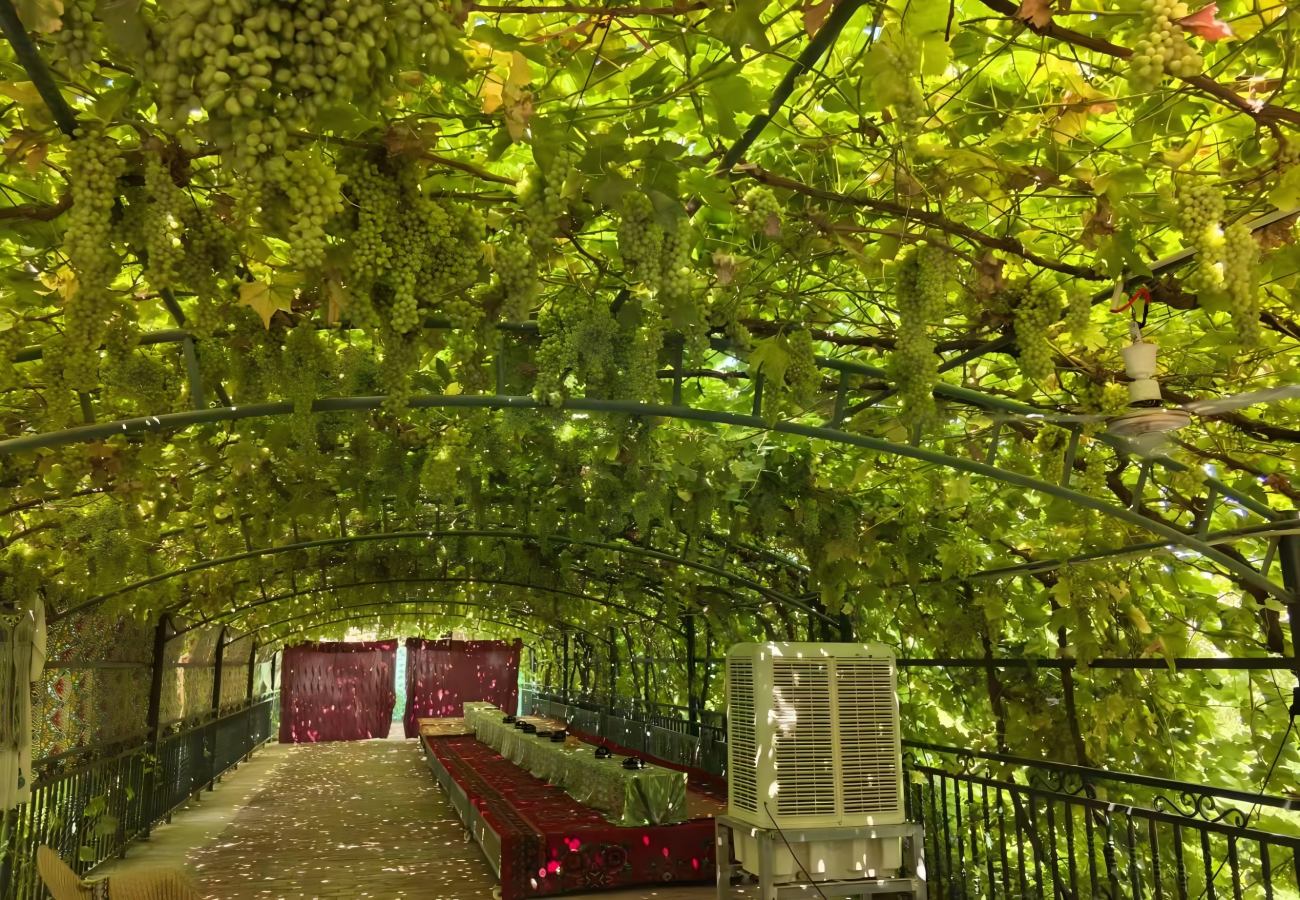
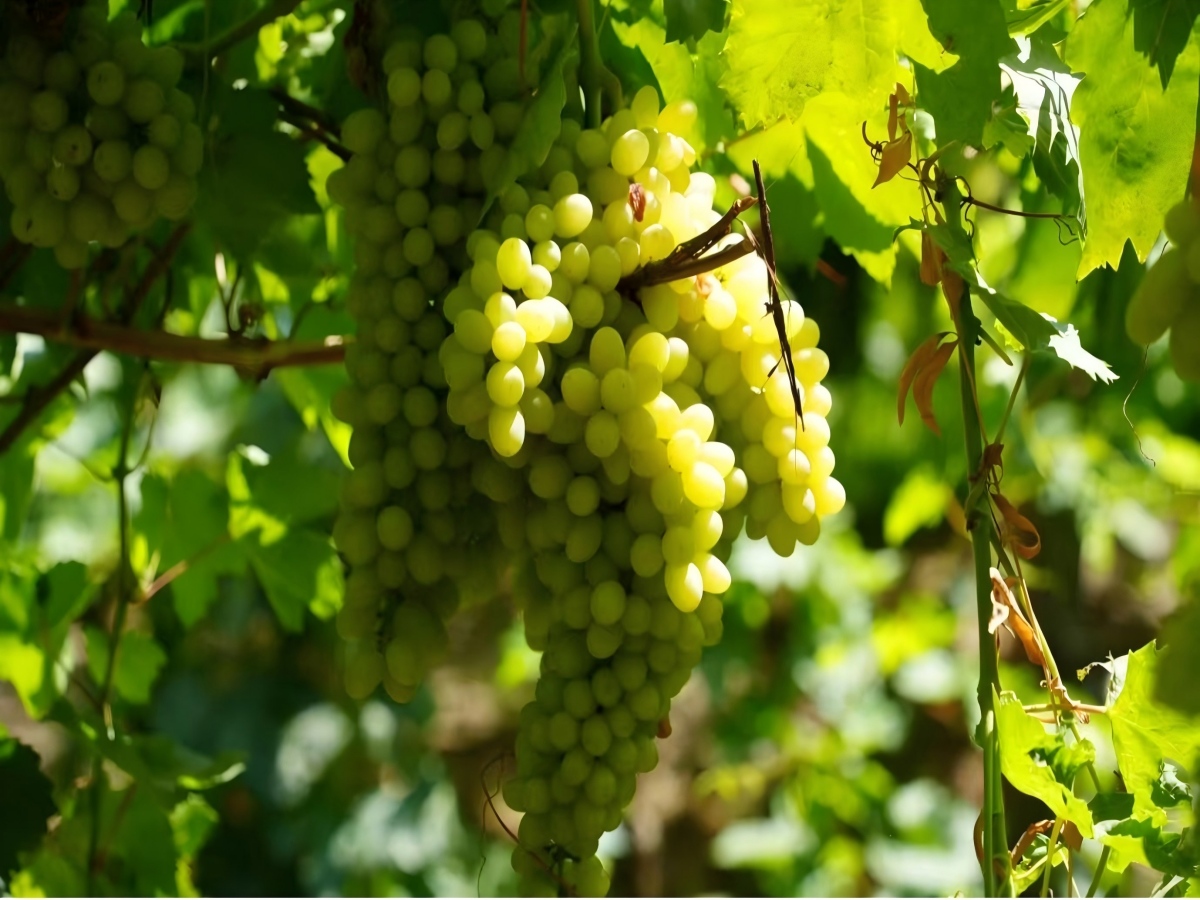
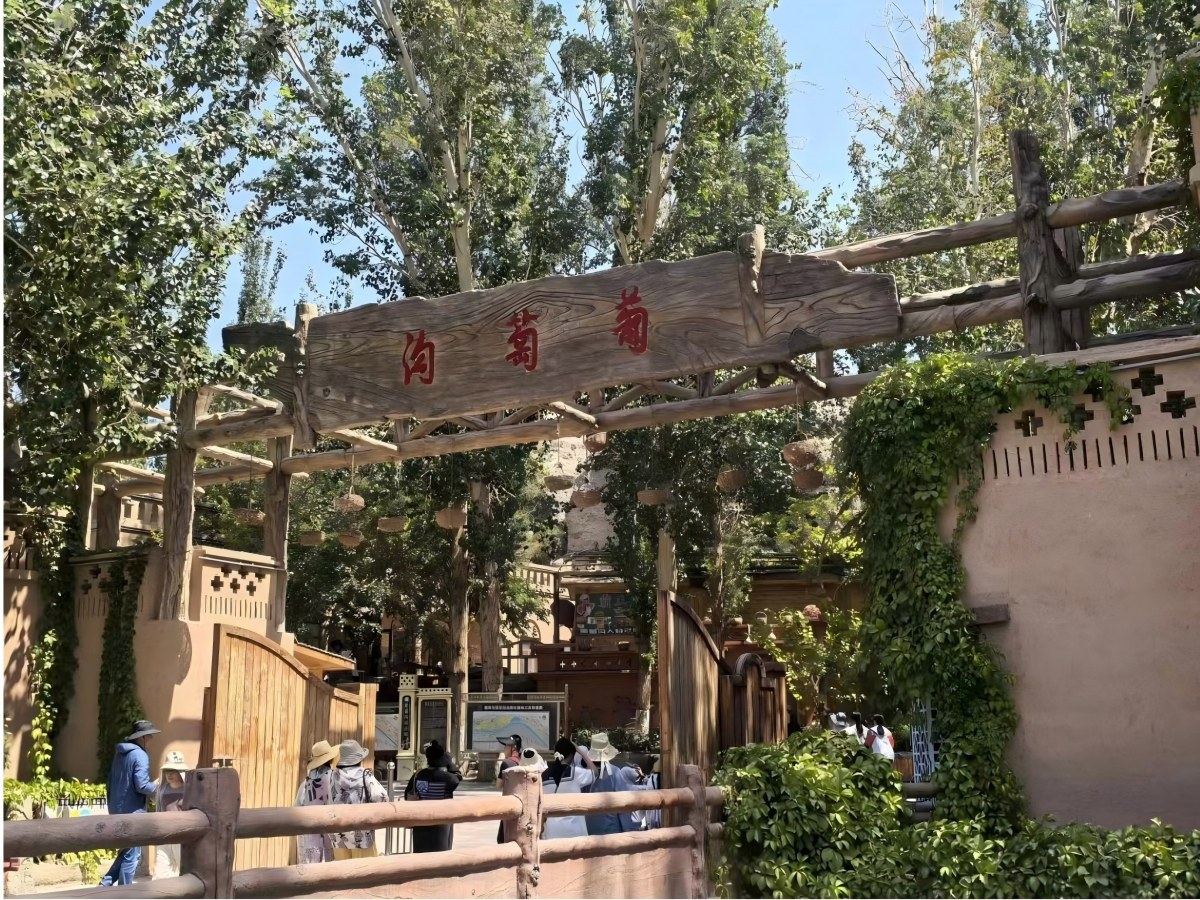
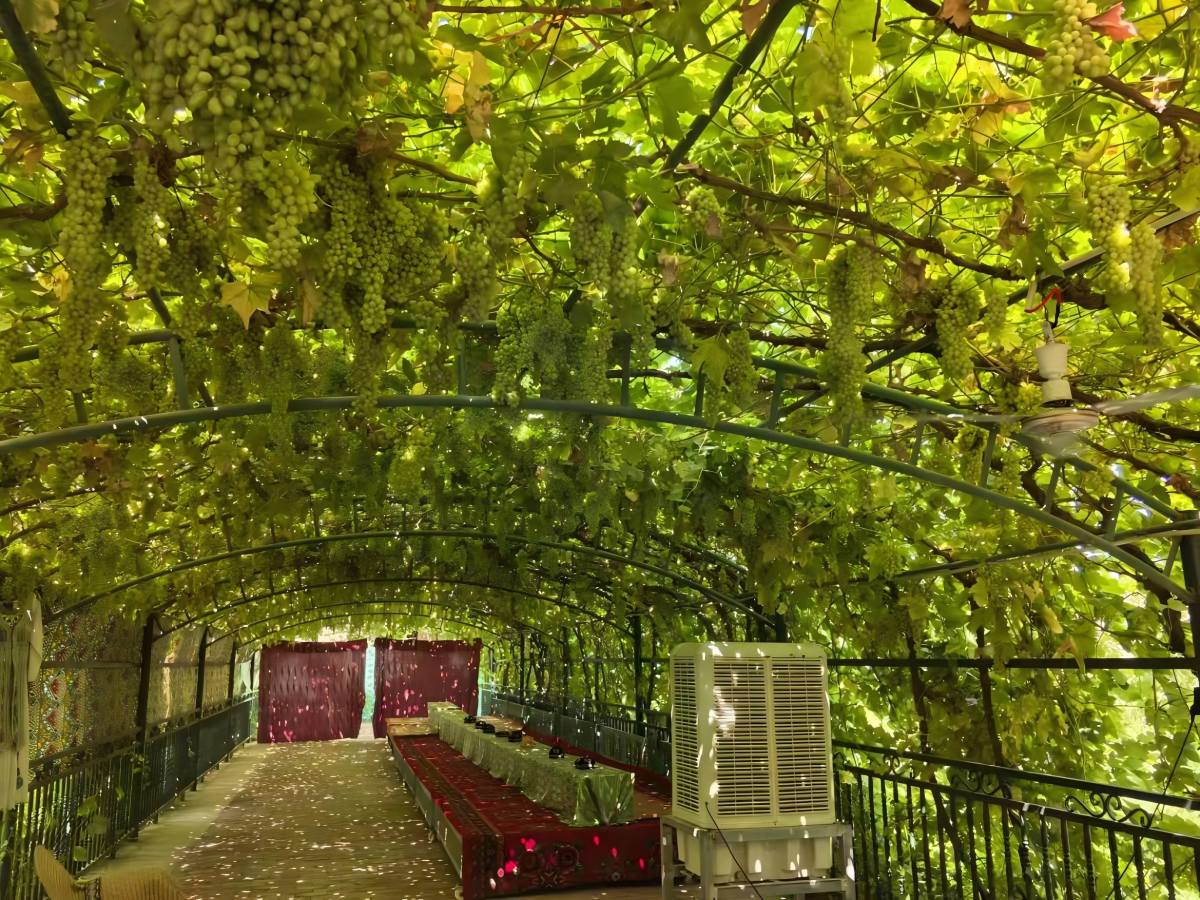
Grape Valley is located in the canyon of the Flaming Mountains, 13 kilometers northeast of Turpan City. It stretches about 8 kilometers from north to south and 0.5 to 2 kilometers from east to west, creating a cool world within the embrace of the scorching Flaming Mountains. When entering the scenic area, the first thing that catches the eye is the several-kilometer-long grape corridor - a green tunnel built by tens of thousands of grape vines. It reaches up to 5 meters in height and is wide enough for 4 people to walk side by side. Above, hundreds of grape varieties such as Seedless White, Mare's Milk, Red Grapes, Kashgar Hal, and Suosuo Grapes hang heavily on the branches. The green ones shine like jadeite, the red ones glow like agates, and the purple ones sparkle like gemstones. When a breeze blows, the air is filled with the sweet fragrance of grapes.

The bluestone path underfoot is moistened by a stream, which originates from the snowmelt of the Tianshan Mountains and meanders along the valley. It not only nourishes the grape fields but also brings a refreshing coolness in summer. Wandering here, you feel as if you are in a natural "green awning", with no trace of the Flaming Mountains' heat. Along both sides of the corridor, there are also painted wooden carved lanterns in Uyghur style. When lit at night, warm yellow light filters through the gaps of grape leaves, casting dappled shadows and creating a unique Western Regions charm.
Notable scenic spots along the way include:

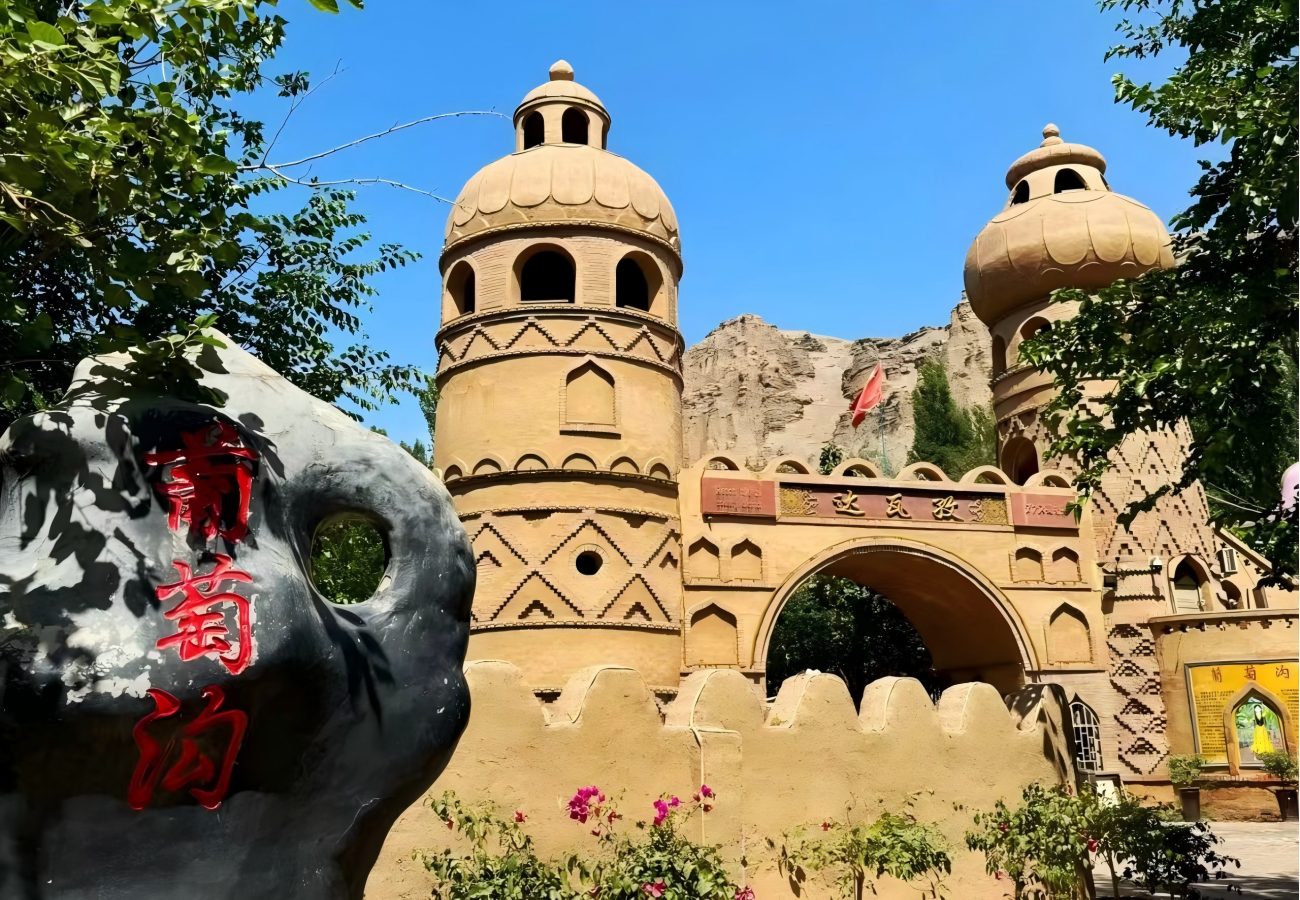
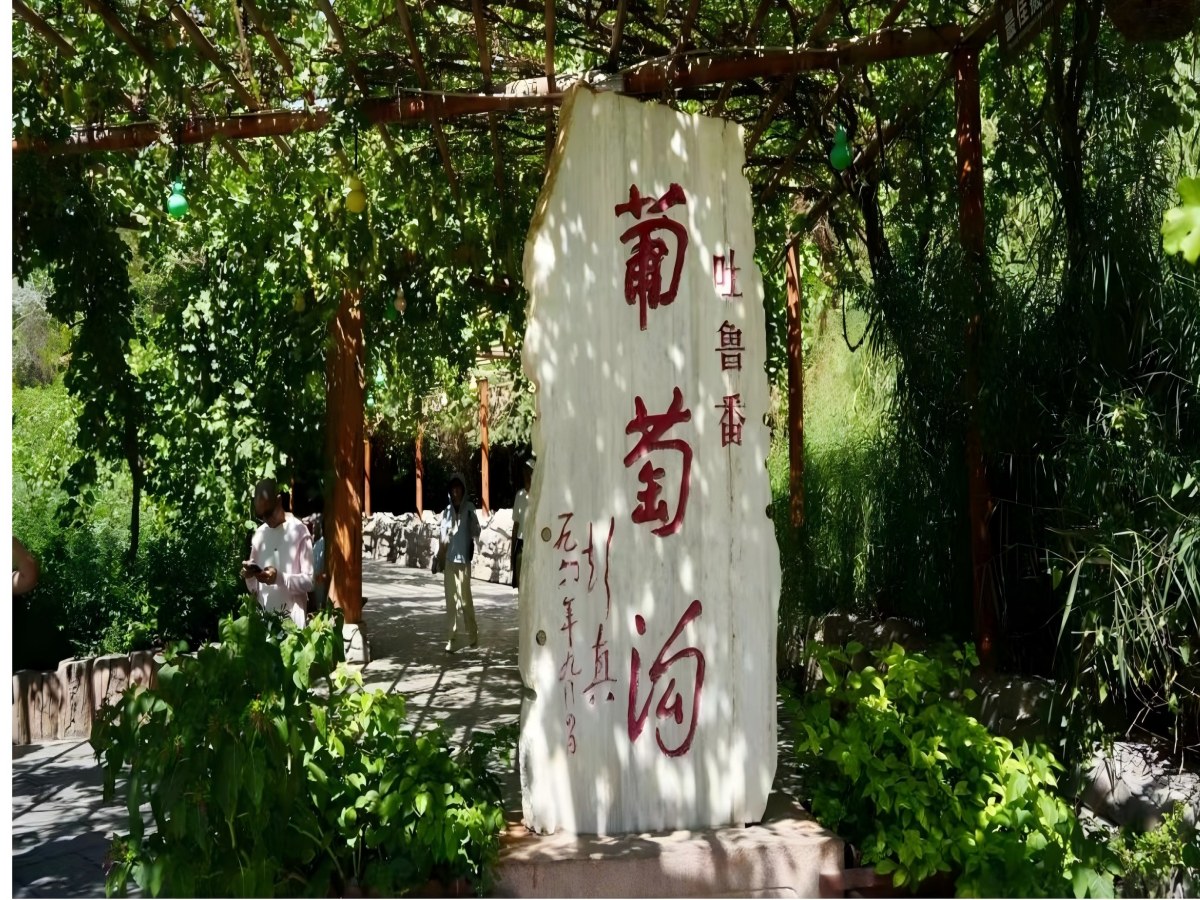
• Grape Valley Amusement Park: As the core area of the scenic spot, it not only has the three vigorous red Chinese characters "Grape Valley" inscribed by Comrade Peng Zhen in 1984 but also hides a romantic "Thousand-Tear Spring". Legend has it that long ago, a beautiful Uyghur girl named Gulnar fell in love with a herding youth named Ali. However, the tribal chief, because Ali was poor, forcibly separated them and forced Gulnar to marry his own son. To defend her love, Gulnar jumped into the canyon on a moonlit night. Her tears flowed down the rock face and eventually gathered into a clear spring, nourishing the grape vines on both banks. Since then, the grapes here have carried a hint of sweet "tears" and taste particularly refreshing. Today, a wooden viewing platform and rest pavilions have been built around the Thousand-Tear Spring. The spring seeps out from the cracks in the rocks, making a tinkling sound as it converges into a green pond. Drought-tolerant plants such as camel thorns and Chinese alhagi grow by the pond, and occasionally butterflies and bees flit among the flowers, making it a popular spot for tourists to take photos and relax.

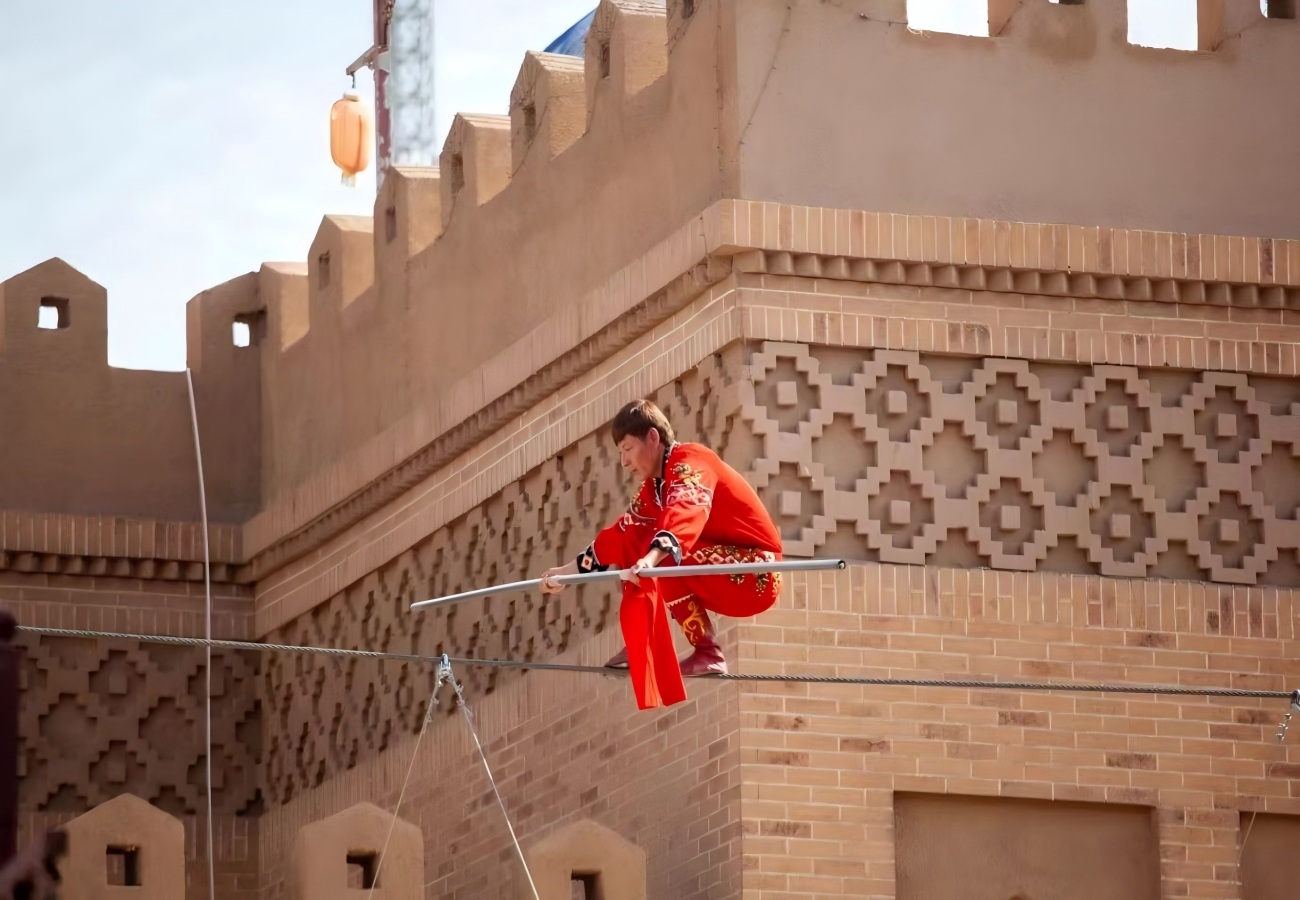
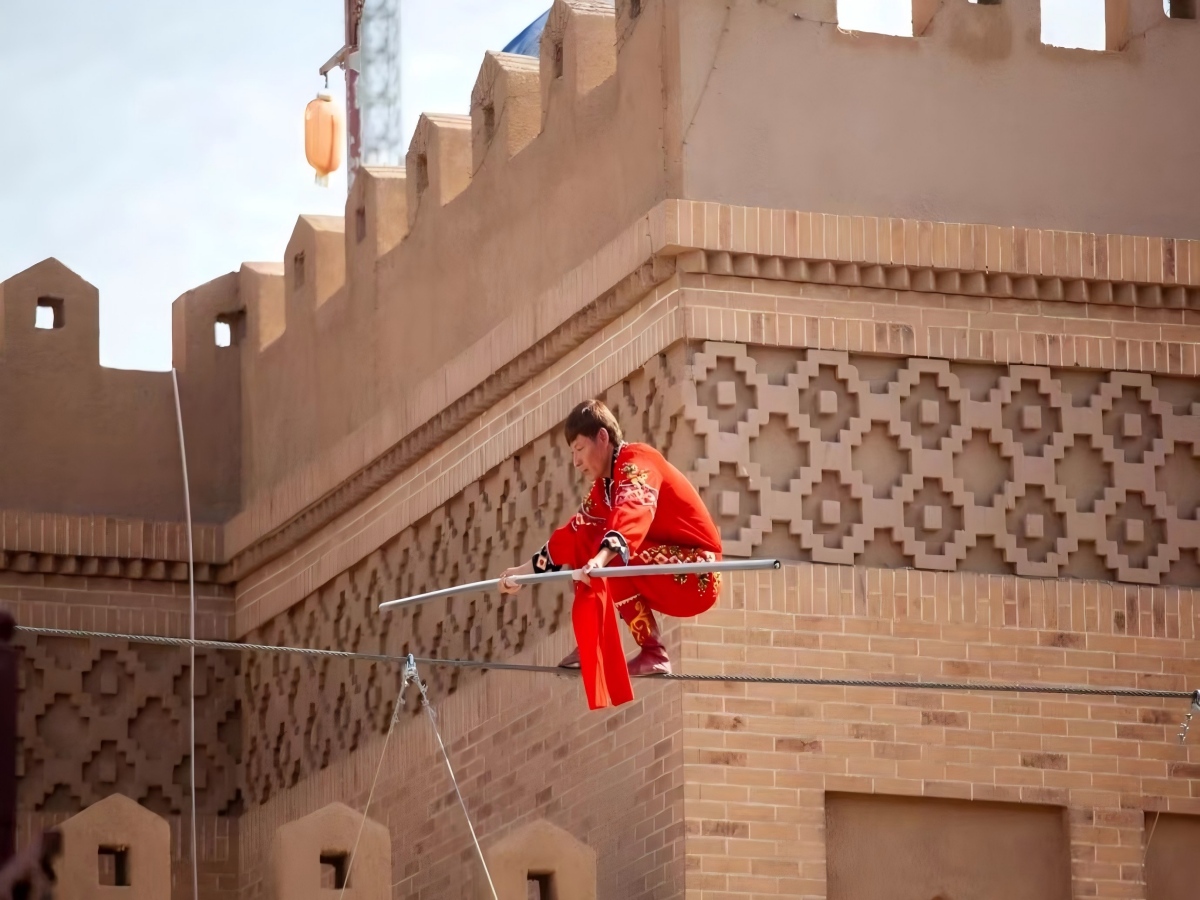
• Dawaz Folk Custom Park: "Dawaz" in Uyghur means "high-wire walking", a thousand-year-old folk stunt that can be traced back to the "rope-walking acrobatics" of the Western Regions in the Han Dynasty. In the park, professional Dawaz artists, dressed in traditional costumes and without any safety protection, walk on a steel wire only 3 centimeters in diameter, 20 meters above the ground. They sometimes stand on one foot, sometimes sit cross-legged, and even perform thrilling moves like handstands and spins while holding a balance pole. Each posture makes the audience hold their breath, with waves of exclamations and applause rising and falling. The park also grows more than 100 varieties of grapes, including the "Giant Grape" (single clusters can weigh up to 3 kilograms) and the "Golden Finger Grape" (shaped like fingers with a sugar content as high as 26 degrees, a treasure among grapes). The earthy yellow buildings in Western Regions style contrast beautifully with the green grape vines. The folk custom exhibition hall displays traditional Uyghur costumes, musical instruments, and handcrafted products - bright-colored Adras silk long skirts embroidered with grape patterns, exquisitely carved Tanbur (a Uyghur stringed instrument) with a rich tone, and hand-woven carpets and tapestries. Each piece embodies the craftsmen's dedication and tells the charm of ethnic culture.

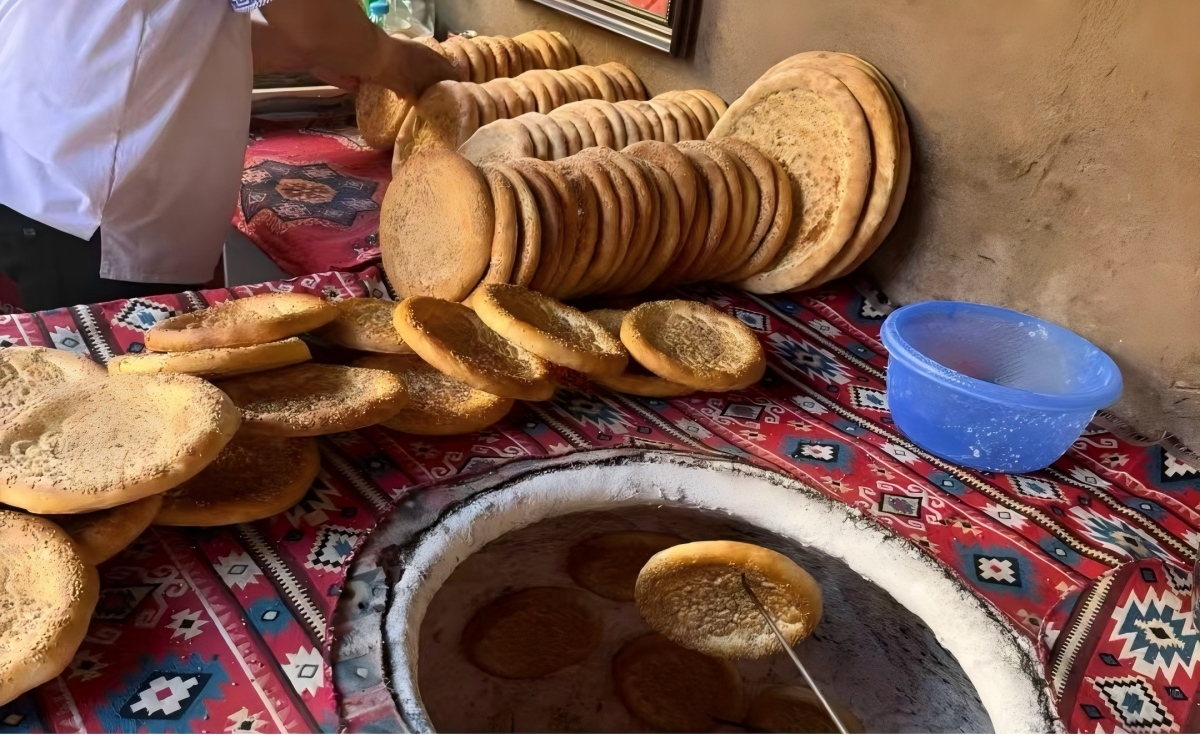
• World's Largest Naan Oven: This giant naan oven, a "living fossil of food culture", stands 8 meters high and 10 meters in diameter. It is built entirely with red clay unique to the Flaming Mountains, mixed with cattle and sheep hair and wheat straw. The stickiness of the clay combined with the toughness of the hair and wheat straw makes the oven not only highly heat-preserving but also able to release a unique herbal aroma during baking, giving the food a rich roasted flavor. The interior of the oven has three layers of iron racks, which can simultaneously roast one camel, two cows, and ten sheep. Before baking, the chef first evenly coats the inner wall of the oven with sheep oil, then hangs the ingredients (marinated with salt, cumin, chili, and other seasonings) on the iron racks. They light Tianshan pine wood to heat the oven, and when the temperature inside reaches 200°C, seal the oven mouth and braise for about 3 hours. When taken out, the roasted meat has a golden and crispy outer skin and tender, juicy flesh. Its aroma can drift for miles, attracting tourists to stop and taste. During major festivals such as Eid al-Adha and Eid al-Fitr, a whole camel roasting ceremony is held here, inviting tourists to taste this special Western Regions delicacy together.

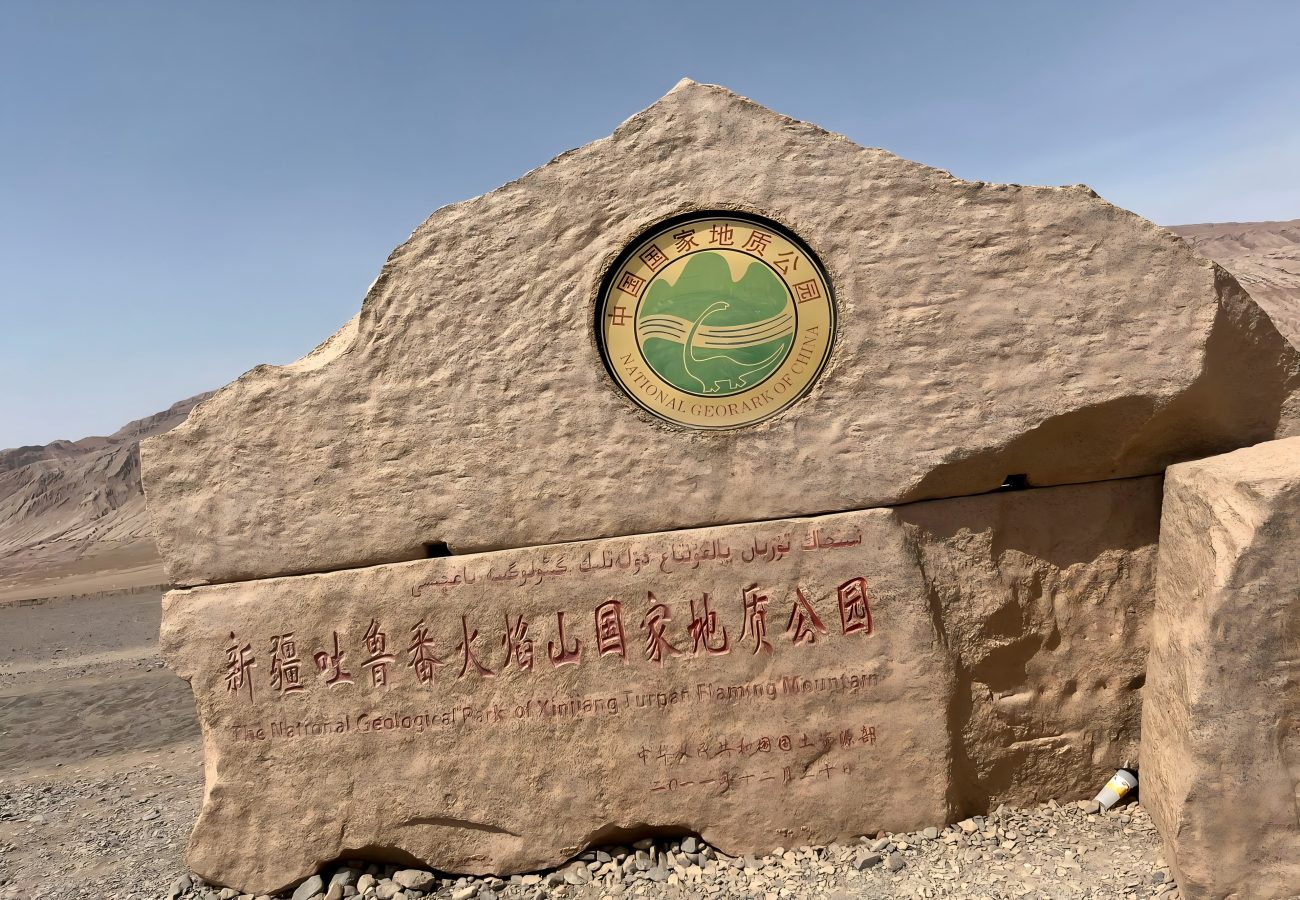
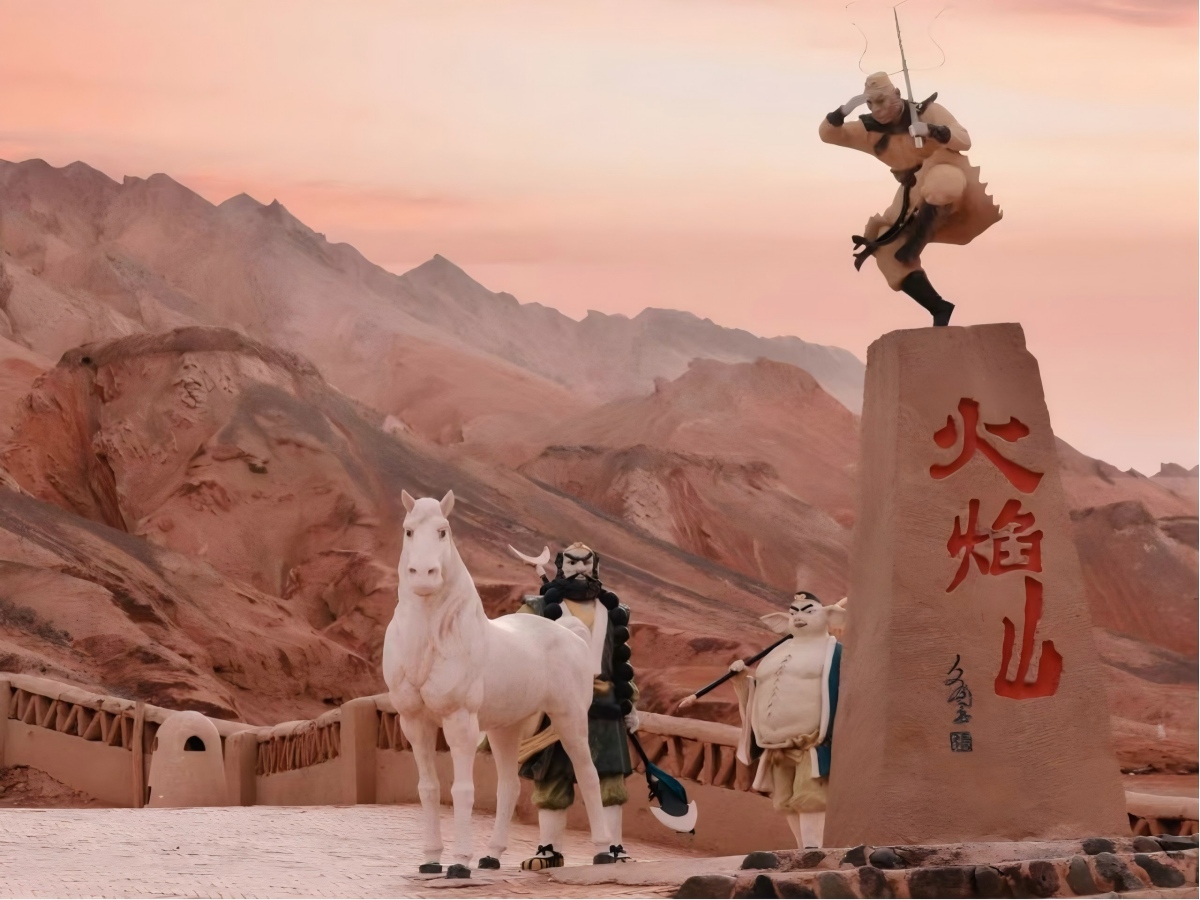
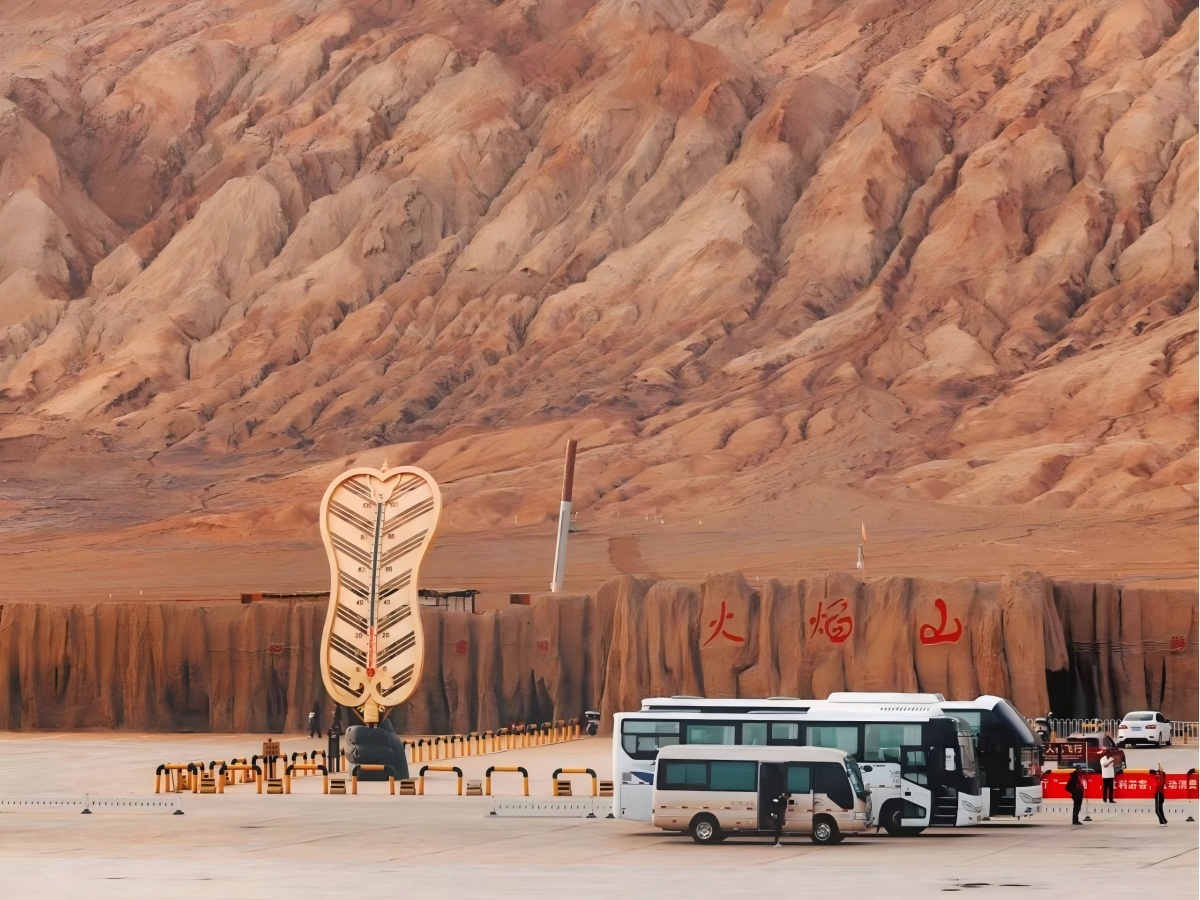
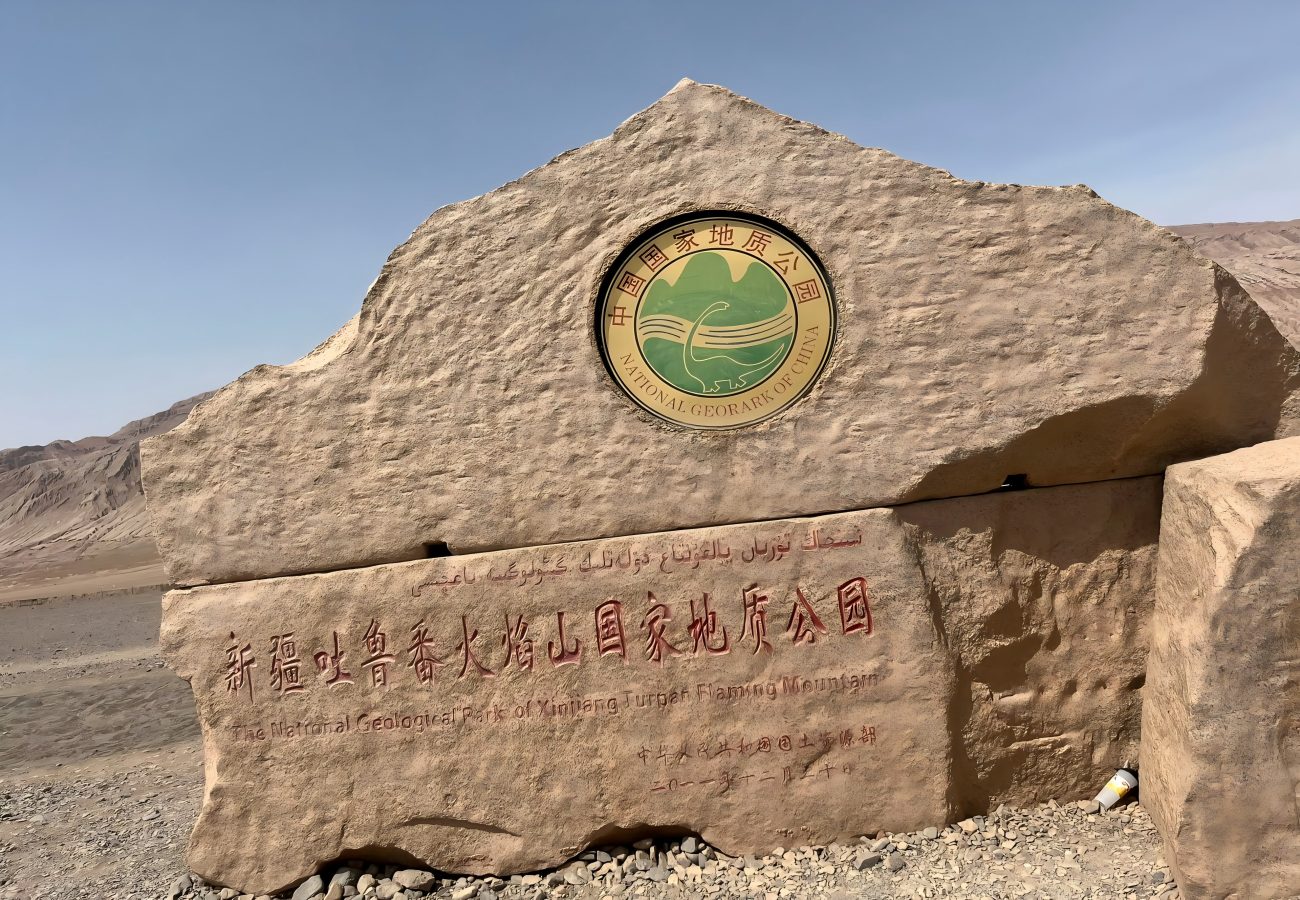
• Flaming Mountains: Dear tourists, welcome to the Turpan Flaming Mountains, known as "China's Heat Pole"! The red mountain range in front of you, stretching over 100 kilometers with a maximum altitude of 831.7 meters, is the filming location for the scene in Journey to the West where Sun Wukong borrows the palm-leaf fan three times to put out the fire. It is also a magical place where "eggs can be roasted" in reality. As you can see, the mountain is composed of reddish-brown sandstone. Under the scorching sun, the rocks reflect intense red light, and heat waves roll between the mountains. From a distance, it looks like a blazing fire - hence the name "Flaming Mountains". In summer, the maximum temperature here can reach 47.8°C, and the surface temperature even exceeds 89°C. You can feel the "heat" under your feet when stepping on the ground, making it truly the "heart of the Fire State". Beyond the mythical story of Journey to the West, there is a scientific explanation for the Flaming Mountains: hundreds of millions of years ago, this area was an ancient ocean. Tectonic movements lifted the rock formations, and the iron elements in the red sandstone oxidized, giving it a fiery red appearance. Combined with Turpan's arid climate and intense sunlight, this unique landscape was formed. You can try the "Internet-famous activity" here - bury an egg in the sand, and it will be roasted in more than ten minutes. You can also take a photo with the 12-meter-tall "Golden Cudgel" thermometer to check the real-time high temperature of the day. Although it is hot here, every red rock and every wisp of heat wave is a magical gift from nature. Let's experience the unique "enthusiasm" of the Flaming Mountains together!


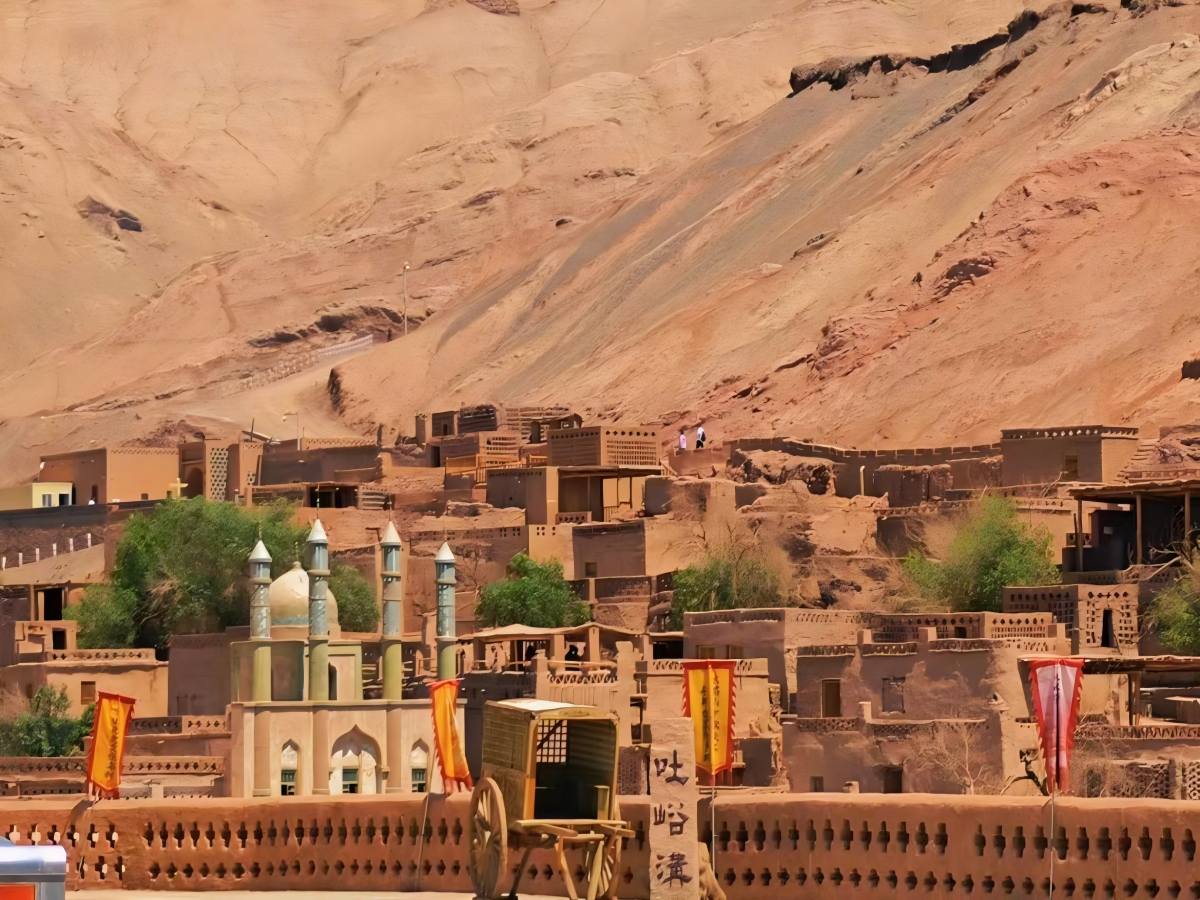
• Mazar Village: Dear tourists, welcome to Mazar Village, known as "the thousand-year-old ancient village at the foot of the Flaming Mountains"! Located at the southern foot of the Turpan Flaming Mountains, this village has a history of over 1,700 years. It is one of the oldest existing Uyghur villages in Xinjiang and a "living adobe architecture museum" named a "National Historical and Cultural Village". The houses you see are all built with rammed adobe. Their earthy yellow walls complement the red rocks of the Flaming Mountains, and the roofs are covered with fine wheat straw, which is both sun-proof and heat-insulating - a testament to the wisdom of the Uyghur ancestors in adapting to the arid and scorching climate. Wandering through the narrow earth alleys of the village, the houses on both sides are stacked layer by layer. Some are built against the mountain, while others are independent courtyards. The courtyard walls are carved with simple patterns of grape vines and flowers, and dried chili peppers and corn are hung at the door, filling the air with a strong rural atmosphere. The most representative spot in the village is the "Ancient Folk House Exhibition Hall" with a history of over 100 years. It preserves traditional adobe kang (a heated brick bed), hand-operated looms, and copper tea sets, restoring the daily life scene of a Uyghur family. The mosque in the center of the village, though small in scale, has an exquisite carved wooden lintel and a crescent-shaped dome. Every Sunday, you can hear the melodious call to prayer. Today, more than 100 Uyghur households still live in Mazar Village. Elderly people weave carpets at the alley entrances, children chase each other under the grape trellises, and every household warmly invites tourists to taste homemade yogurt, naan, and raisins. There is no commercial hustle and bustle here, only the tranquility and simplicity precipitated by thousands of years. Let's slow down and experience this timeless Western Regions charm!


• Grape Valley Folk Village: This is a village that preserves the original ecological Uyghur lifestyle. All houses here are built with adobe. The thick adobe walls become as hard as stone after being exposed to the sun, effectively resisting the extreme heat of Turpan's summer and the cold of winter, keeping the interior warm in winter and cool in summer. In front of every household, there is a spacious courtyard where grape vines are a must-have. Under the grape trellises, exquisitely carved wooden tables and chairs are placed, with copper tea sets and fresh fruits often on the table - this is the main place for families to relax and entertain guests. Tourists can enter the villagers' homes to experience the traditional Uyghur life: learn to make naan with the hostess - knead the dough, shape it, sprinkle with sesame seeds and minced onions, then bake it in the family's small naan oven. Soon, the fragrant naan with a wheat aroma is ready. You can also participate in hand embroidery, using colored threads to embroider patterns of grapes, flowers, and geometric shapes on white cloth, experiencing the charm of traditional craftsmanship. You can also taste the yogurt zongzi made by the villagers themselves - fresh fermented yogurt mixed with candied fruits and raisins, wrapped in fragrant bamboo leaves. It is sweet and sour, a unique summer refreshment in the local area, and every bite is filled with the taste of home.

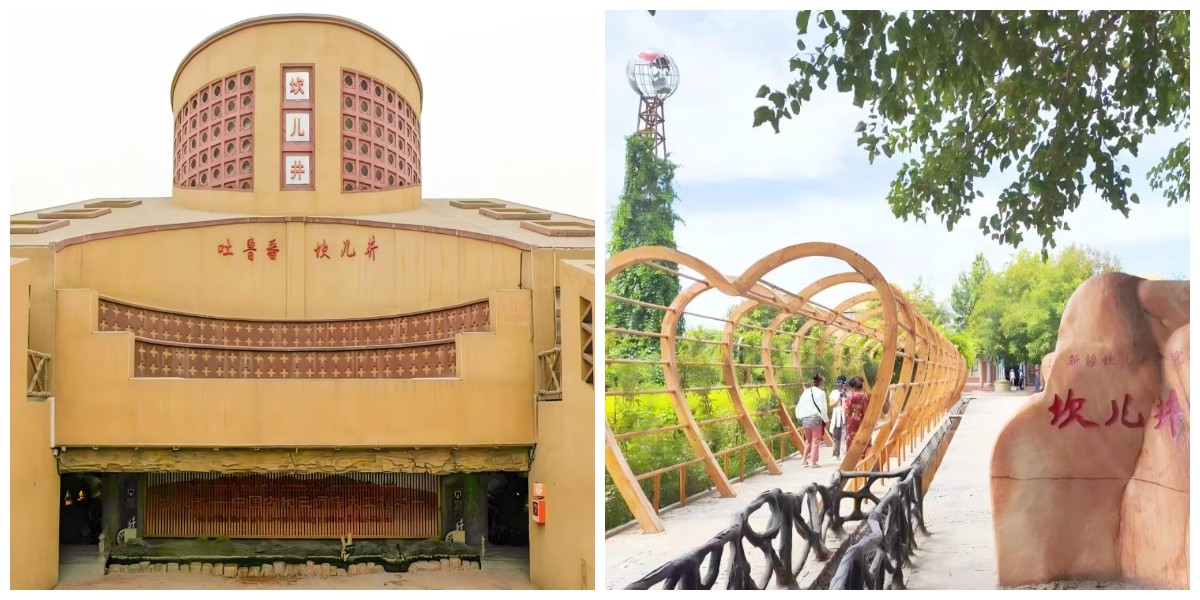
• Karez Paradise: Karez (underground irrigation system) is one of China's three major ancient projects, along with the Great Wall and the Beijing-Hangzhou Grand Canal, and is known as the "Underground Great Wall". The prosperity of Grape Valley cannot exist without the nourishment of Karez. In Karez Paradise, tourists can walk through a 50-meter-long underground passage to observe the structure of Karez up close. This water conservancy system consists of four parts: vertical shafts, underground channels, open channels, and reservoirs. By digging vertical shafts, snowmelt from the Tianshan Mountains is diverted into the underground channels. The gentle slope of the underground channels allows water to flow naturally while avoiding water evaporation caused by intense sunlight, ultimately transporting water to the grape fields and villages. The paradise also has a popular science exhibition hall, which uses dynamic models and animated videos to vividly explain the construction history and principles of Karez. Ancient craftsmen dug thousands of meters of underground channels using only ropes, oil lamps, and simple tools - a massive project that can be called a miracle in the history of human water conservancy. The exhibition hall also displays cultural relics such as the digging tools and oil lamps used by the craftsmen back then, allowing people to intuitively feel the wisdom and perseverance of the ancient working people.

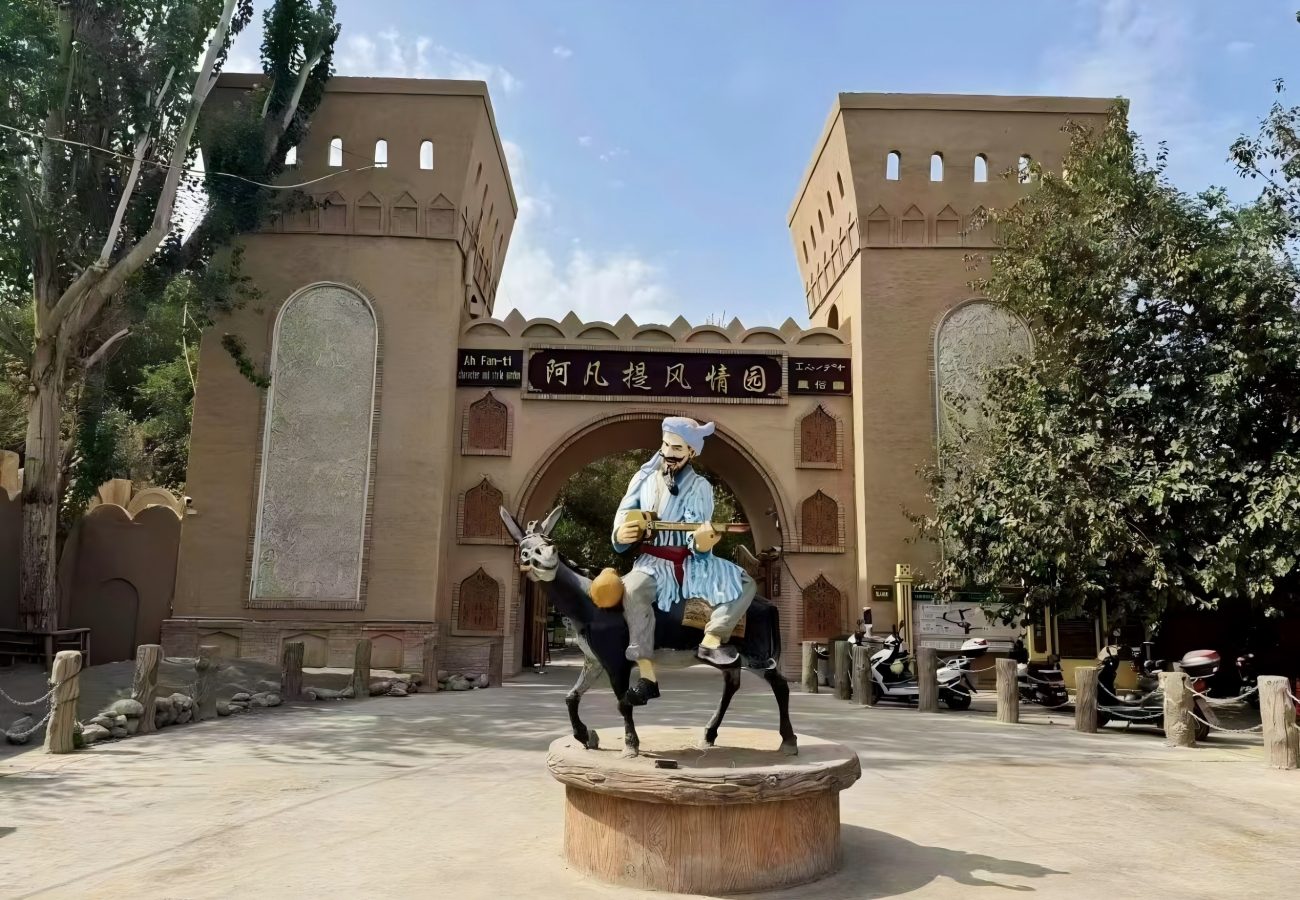
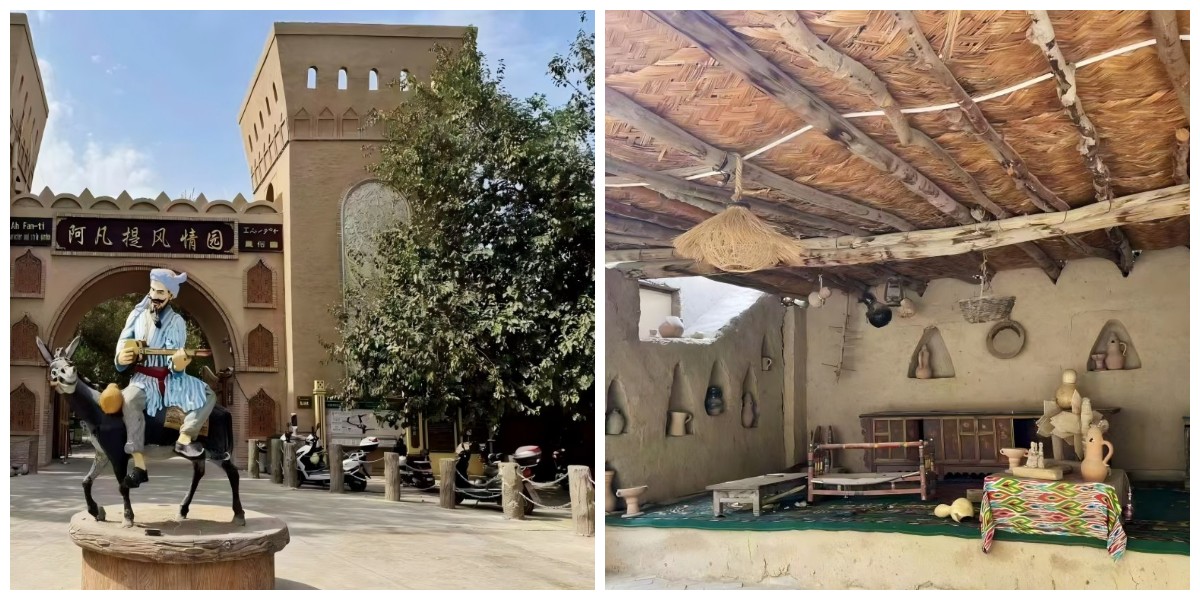
• Afanti Folk Custom Park: Afanti is a wise figure in Uyghur folklore, deeply loved for his humor, wit, and courage. In the park, vivid statues and scene restorations recreate classic stories of Afanti: the statue of Afanti riding a small donkey and wearing a headscarf has a cunning smile, and next to it are scenes of his battles of wits with the greedy Bayi (landlord). Some scenes show Afanti using his wisdom to make the Bayi hand over grain, while others depict him skillfully solving the villagers' problems. The park also has an interactive experience area where tourists can put on the costumes of Afanti or the Bayi to take photos, and listen to folk artists tell Afanti's stories. The humorous plots not only make children laugh but also let adults feel the charm of folk wisdom. At the exit of the park, there is a specialty store selling Afanti-themed handicrafts such as dolls, keychains, and paintings - excellent souvenirs for the trip.

II. A Millennium of Grape Connection at the Silk Road Post Station
The story of Grape Valley began more than 2,000 years ago in the Western Han Dynasty. At that time, Zhang Qian was sent on a mission to the Western Regions, opening up the ancient Silk Road. Due to its strategic location at the throat of the northern route of the Silk Road - connecting Hami to the east and Kashgar to the west - Grape Valley became an important post station for passing caravans. Merchants brought grape cultivation techniques from Dayuan (now in Uzbekistan), and local residents, combining with Turpan's climatic conditions, began to try growing grapes. Initially, grapes were only used as ornamental plants and fruits enjoyed by nobles. With the popularization of cultivation techniques, they gradually entered ordinary households and took root in this land ever since.

During the Southern and Northern Dynasties, Turpan had become an important grape-producing area in the Western Regions. The Book of Wei - Biography of Gaochang records that "there is plenty of grape wine, and wealthy families even have hundreds of dan (a traditional Chinese unit of capacity) of it", showing that grape cultivation and processing were quite common at that time, and grape wine had even become an important asset for wealthy families. By the Tang Dynasty, Turpan's grapes and grape wine were sold far to the Central Plains via the Silk Road, becoming treasures sought after by the royal family and literati. The poet Wang Han wrote the famous line "Grape wine in luminous cups" in his poem Liangzhou Ci, depicting the prosperity of Western Regions grape wine.

In the Ming Dynasty, Seedless White grapes were widely planted in Grape Valley. These grapes have small berries, thin skins, and plump flesh, with a sugar content of over 24%. When dried, they become raisins, which are not only easy to store and transport but also became an important trade commodity, sold to the Central Plains and Central Asia via the Silk Road, and known as "pearls". The reason why Turpan, a "Fire State" with an annual precipitation of only 16 mm and a maximum summer temperature of 47°C, can grow high-quality grapes lies in its unique natural conditions: it has over 3,000 hours of annual sunlight, and the maximum temperature difference between day and night can reach 15°C. Sufficient sunlight allows grapes to undergo full photosynthesis and accumulate a large amount of sugar, while the large temperature difference reduces nutrient consumption. Moreover, the Karez running through the valley solves the irrigation problem, continuously transporting Tianshan snowmelt to the grape fields, creating the agricultural miracle of "growing grapes in the Fire State".
200,000 years ago, due to crustal uplift and tectonic movements, a canyon landscape was formed in the Flaming Mountains area, and Grape Valley is the most fertile section of it. The valley has fertile soil rich in minerals, and with the nourishment of Tianshan snowmelt, it has become an ideal place for grape growth. The Uyghur people who have lived here for generations have continuously improved their cultivation techniques: they adopt the "valley planting" method, planting grape vines on both sides of the valley to use the terrain to block the scorching sun; they prune the branches to control the growth direction of the grapes, ensuring the fruits receive sufficient sunlight; they also summarized the field management experience of "applying base fertilizer in autumn and irrigating with regreening water in spring" to ensure annual grape harvests. In 2007, with its profound historical and cultural heritage and unique natural landscape, Grape Valley was successfully selected as a national 5A-level scenic spot, becoming an important window for inheriting Silk Road civilization and showcasing Western Regions customs.
III. Folk Roots Nourished by Grapes
Grapes are not just a product of Grape Valley; they are deeply integrated into the lives and beliefs of the Uyghur people, becoming a vital symbol of their ethnic culture. In Dafusan Gai Folk Village, tourists can directly experience the distinctive features of traditional Uyghur residences: the outer walls of the houses adopt a polished brick inlay pattern technique. Craftsmen use red, yellow, and gray bricks to create patterns of grapevines, flowers, and geometric designs. Some of these patterns carry auspicious meanings—for instance, grapevines symbolize prosperity and numerous offspring, while flowers represent a happy life.

Doors and windows are made of poplar wood, carved with exquisite patterns that are both aesthetically pleasing and structurally reinforcing. The interior furnishings are simple yet warm: colored hand-woven carpets are laid on the adobe kang (a heated brick bed), embroidered tapestries and ethnic musical instruments hang on the walls, and low wooden tables are placed beside the kang, often holding naan, fruits, and tea sets. Whenever guests arrive, the hosts warmly invite them to sit under the grape trellises and serve freshly baked naan oven-roasted meat—crispy on the outside, tender on the inside, sprinkled with cumin and chili powder, emitting a rich aroma. Polo (hand-pulled rice) is made by braising mutton, carrots, raisins, and rice together, glistening with oil, soft and glutinous, with a balanced sweet and savory taste. Paired with a glass of freshly squeezed grape juice, which is sweet and sour to quench thirst, this is the most authentic way of entertaining guests, reflecting the generosity and enthusiasm of the Uyghur people.
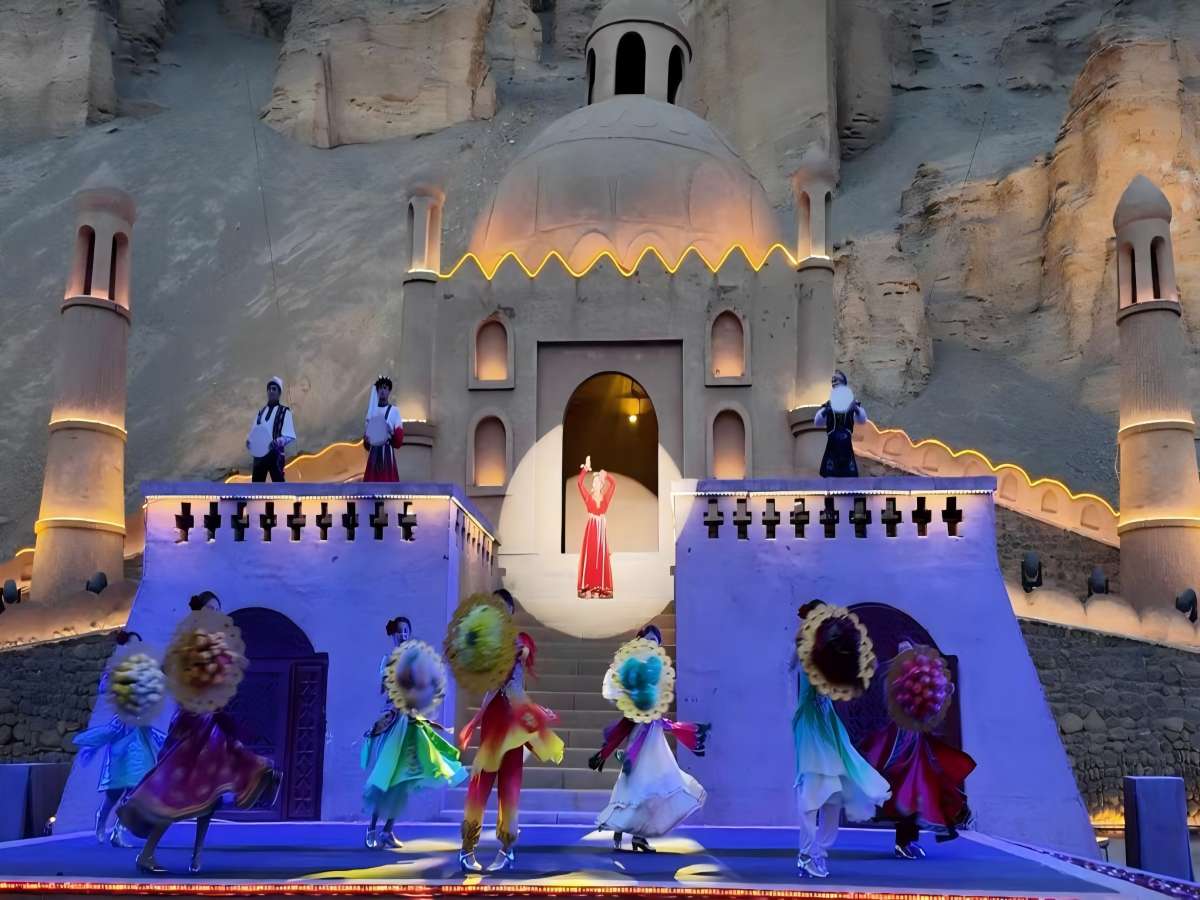
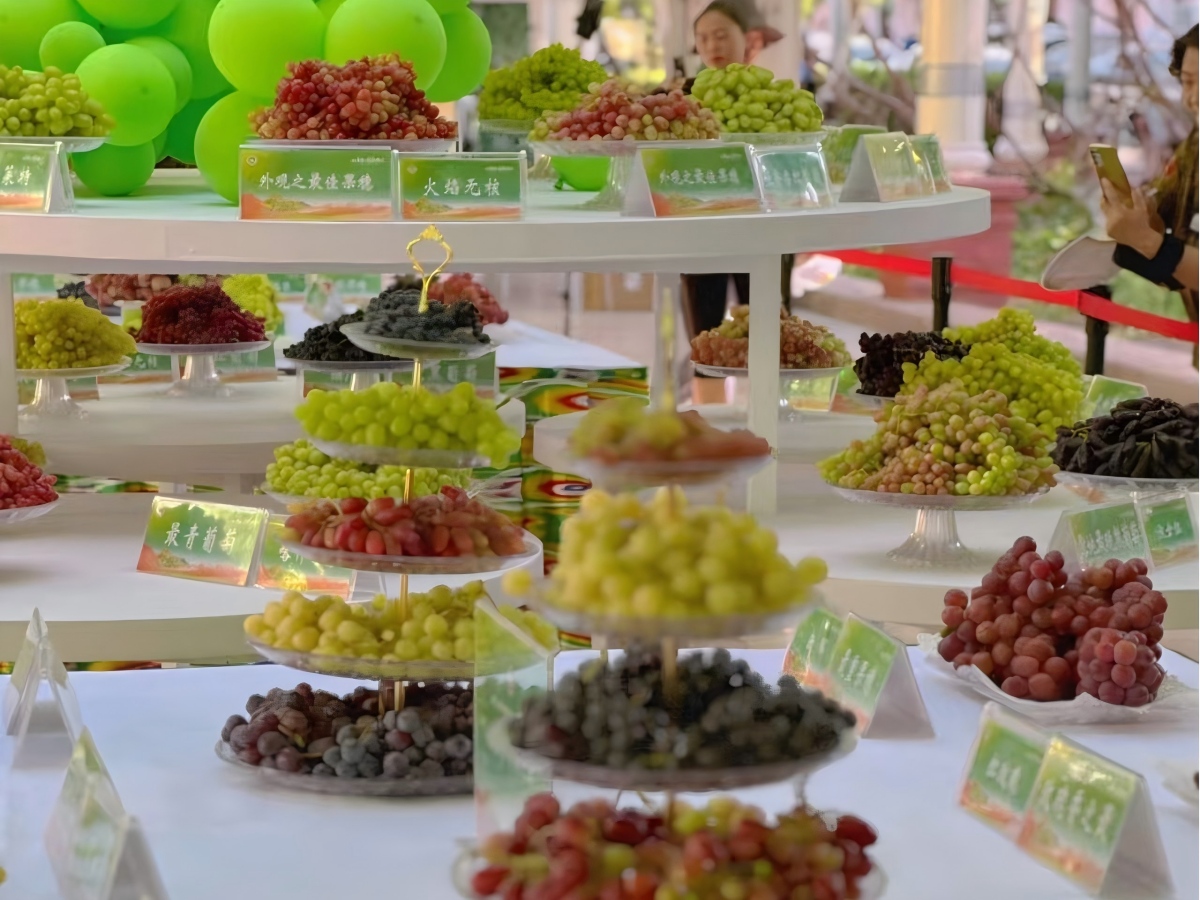
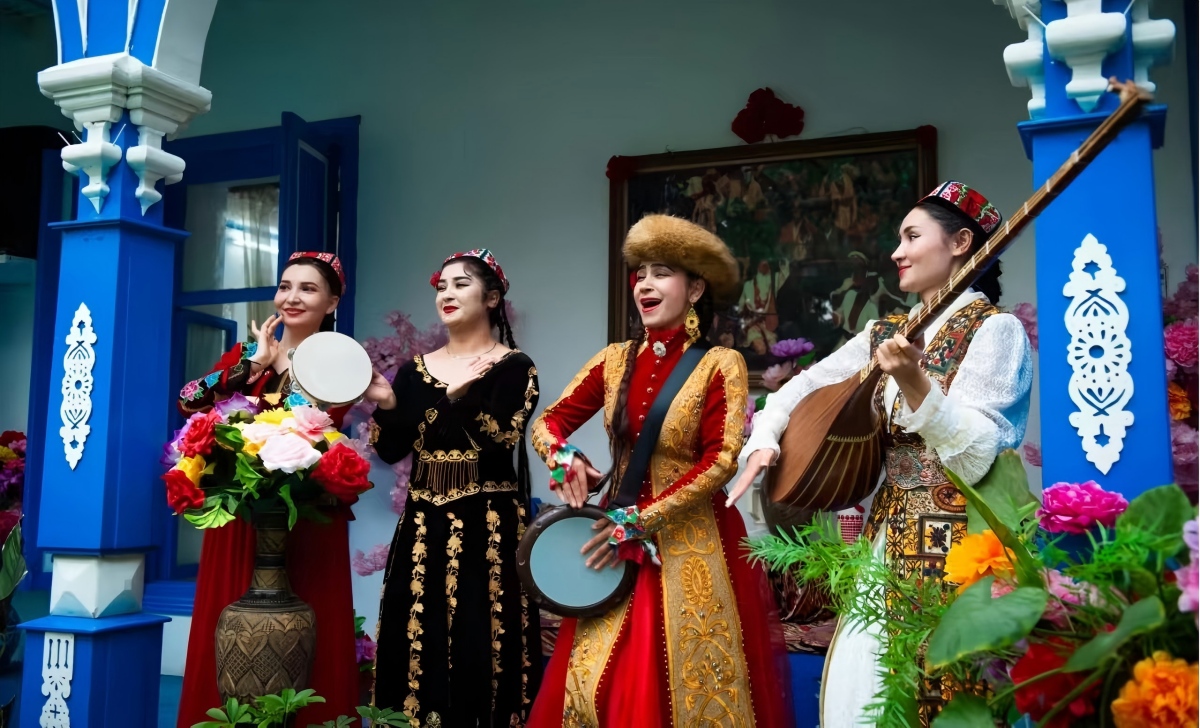
From August 20th to 26th every year, when the grapes in Grape Valley reach their peak ripeness, the annual Turpan Grape Festival kicks off. This is the most lively time in Grape Valley and one of the important cultural festivals in Xinjiang. During the festival, the entire valley is immersed in a joyful atmosphere: Uyghur people dress in brightly colored embroidered costumes—men wear white jiapan (a traditional long robe), with colorful belts tied around their waists; women drape Adras silk shawls and wear small flower hats. They gather in the scenic area's square to dance the lively Meshrep. Accompanied by the melodious music of the Tanbur and Dutar (traditional Uyghur stringed instruments), people hold hands to form circles, spinning and jumping from time to time, with light steps and bright smiles. Tourists are also welcome to join in, dancing to the rhythm and feeling the joy of the festival.

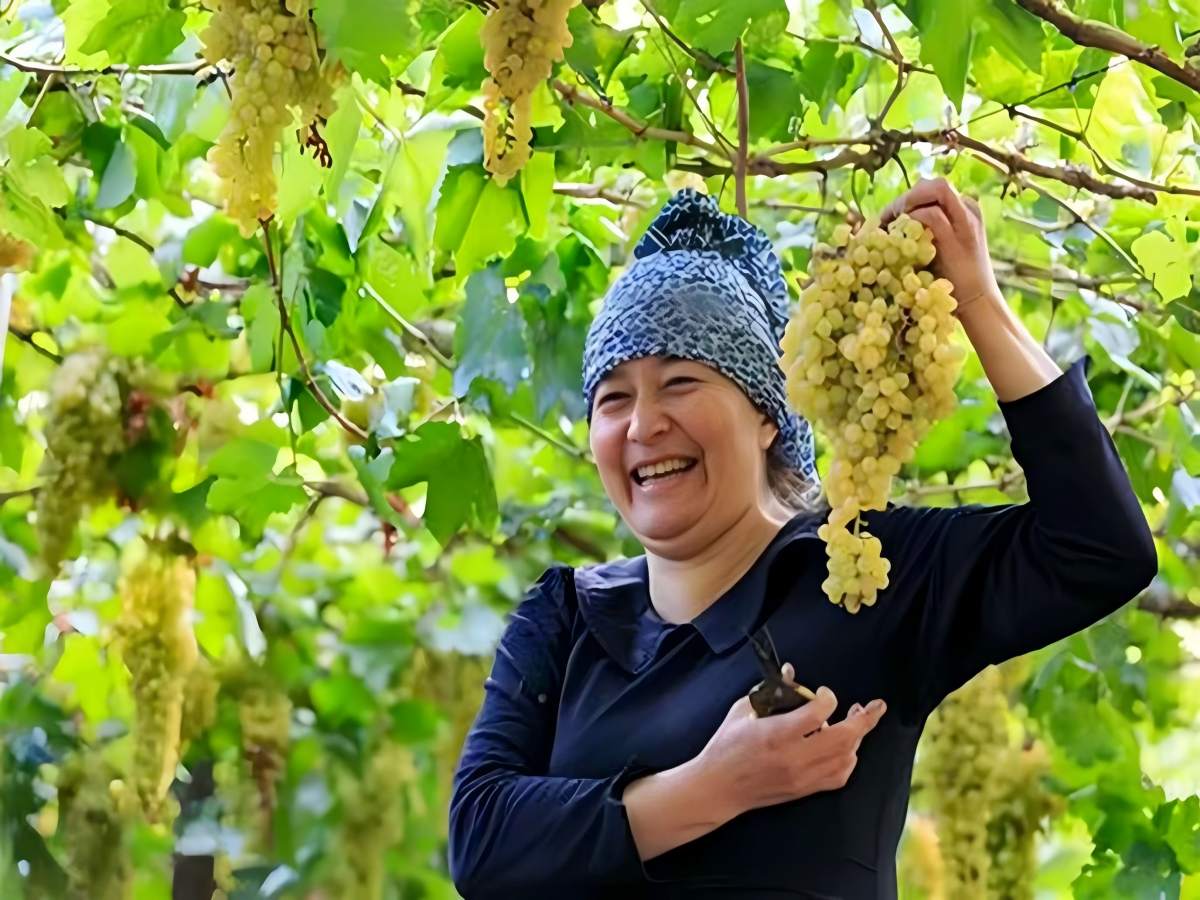
In addition to song and dance performances, the Grape Festival features a series of special activities. In the grape-picking competition, participants hold baskets and pick grapes within a specified time, competing not only in speed but also in the completeness and sweetness of the grapes. At the raisin-drying technique demonstration, villagers show how to hang fresh grapes in drying houses and control ventilation and temperature, allowing tourists to understand the essence of this intangible cultural heritage skill. There are also ethnic costume shows, folk musical instrument performances, and food tasting competitions, enabling people to fully experience the cultural charm of the Uyghur people.
IV. The Wisdom of Coexistence and Mutual Prosperity
The existence of Grape Valley is a perfect combination of nature's gifts and human wisdom. Every landscape and every skill embodies the concept of harmonious coexistence between humans and nature. Besides the Karez (underground irrigation system) that nourishes the grapes, the local drying houses are a miracle in the history of architecture.
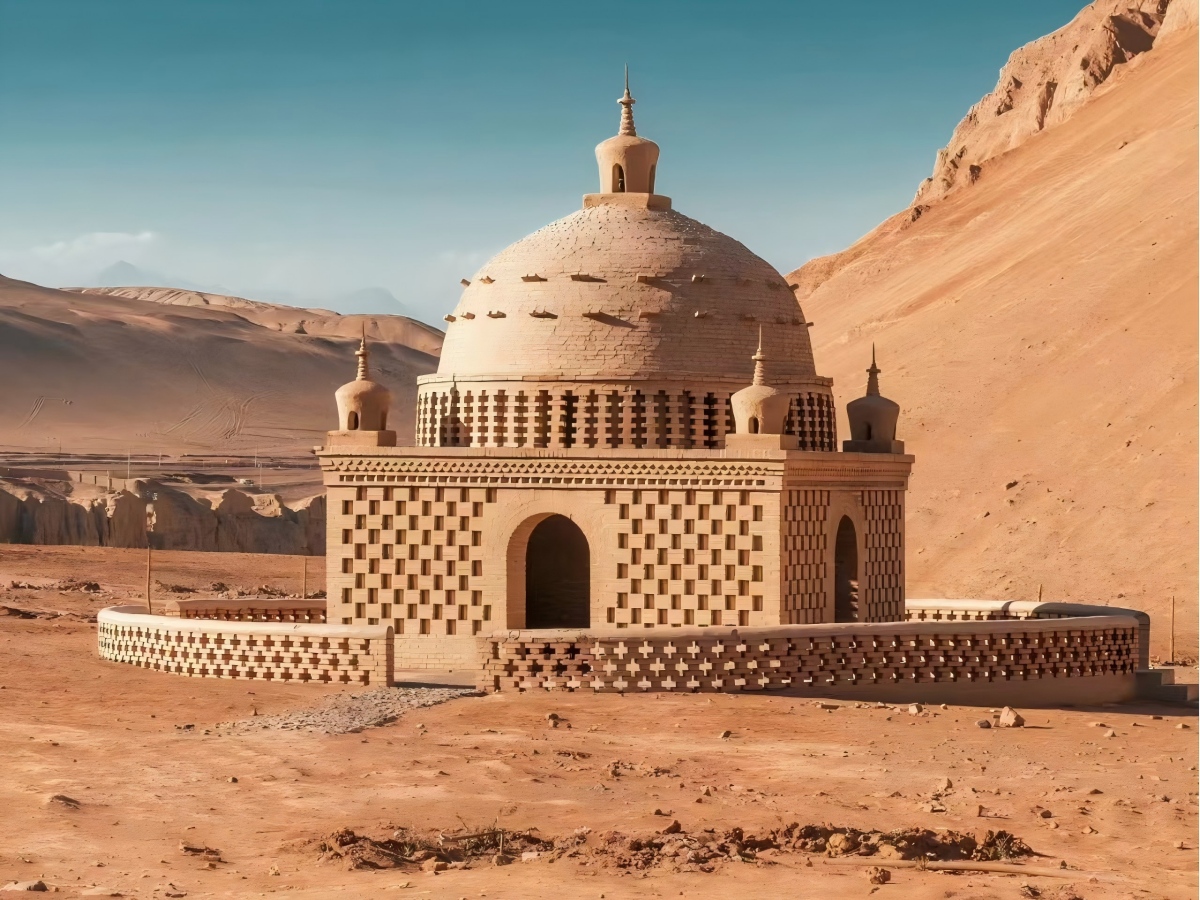
Most of these drying houses are built on hillsides with high terrain and good ventilation, in rectangular or square shapes, all constructed with adobe bricks. The walls are covered with dense square ventilation holes—each about 10 centimeters in diameter, spaced 20 centimeters apart—ensuring air circulation while preventing direct sunlight from spoiling the grapes. Inside the drying houses, multi-layered wooden frames are built, and thin wooden poles are laid on the frames to facilitate hanging grapes.

After the grapes are harvested in September each year, villagers hang bunches of fresh grapes on the wooden poles. Taking advantage of the dry and hot air of the Flaming Mountains—high daytime temperatures, low air humidity in summer, and strong winds on the hillsides—the grapes naturally dry in about 30 days, turning into bright-colored, sweet-tasting raisins. This drying method requires no additives but keeps the raisins' original flavor, with a shelf life of over one year. Today, it has become a signature skill of Grape Valley and was included in the national intangible cultural heritage list in 2008.
V. A Farewell and Invitation Lingering with Grape Aroma
Dear friends, as the sweet taste of grapes still lingers on your fingertips and the rhythm of the Dafu drum (a traditional Uyghur drum) echoes in your ears, our journey in Grape Valley is coming to an end. Do you remember? Under the grape corridor, we looked up to catch the hanging Seedless White grapes; by the Thousand-Tear Spring, we sighed softly at that love legend; in the folk village, we tasted the freshly baked naan oven-roasted meat and saw the strings of "pearls" hanging in the drying houses.
This land, nourished by the snowmelt of the Tianshan Mountains, has not only brought us surprises on the taste buds but also allowed us to understand the profoundness of Silk Road civilization and the enthusiasm of the Uyghur people. Perhaps one day in the future, when you think of this "coolness in the Fire State," you may wish to return here—see the green buds of grapevines in spring, taste the newly brewed wine in autumn, and let the wind of Grape Valley bring you the tenderness of the Western Regions once again.
Finally, may this grape aroma accompany you throughout your journey, and may we meet again here in the season when a certain bunch of grapes ripens. Wish you a smooth journey and peace and joy always!