Shanghai Yuyuan Garden
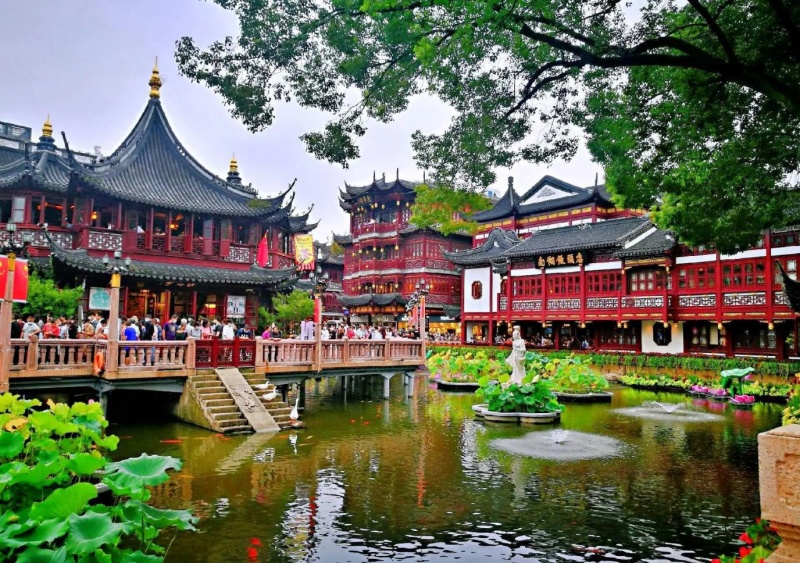
Yuyuan Garden, Shanghai’s oldest classical garden, showcases over 400 years of history.
Exquisite architecture and layout blend pavilions, corridors, towers, and water features.
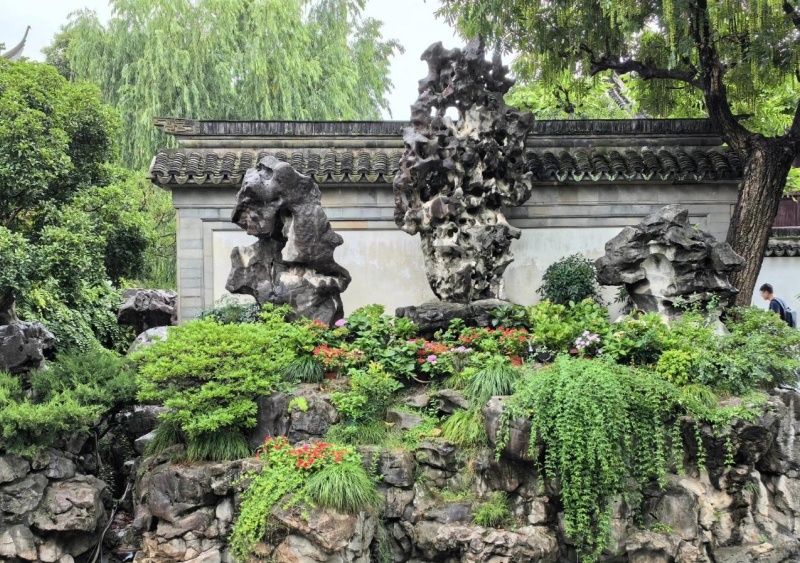
Artful rockeries and ponds create dynamic, natural scenery within a compact space.
Rich cultural heritage reflects traditional Chinese values, art, and garden philosophy.
Interactive experiences include calligraphy, tea ceremonies, and traditional crafts.
Nearby historic streets offer iconic local snacks and unique cultural souvenirs.
Welcome to Yuyuan Garden in Shanghai. As the city's oldest and most representative classical garden, Yuyuan boasts a history spanning over 400 years. Now, let us step into this “urban mountain retreat”. As we admire its exquisite architecture and elegant landscapes, we shall also listen to the historical tales and cultural heritage they embody. Experience the surrounding culinary delights and rich folk traditions, delving deeper into the unique charm of classical Chinese gardens, diverse cultural activities, and distinctive cultural and creative products.
I. The Historical Origins of Yuyuan Garden
To understand Yuyuan Garden, one must begin with its creator. During the Jiajing and Longqing reigns of the Ming Dynasty (1559–1577 AD), Pan Yunduan, then Governor of Sichuan, commissioned this garden at great expense to provide his elderly father, Pan En, with a tranquil retreat for his twilight years. In classical Chinese, ‘Yu’ signifies ‘contentment’ and “joy”. The name ‘Yu Garden’ thus embodies Pan Yunduan's wish for his father to live out his days in peace and happiness – reflecting the profound value of filial piety within traditional Chinese culture, where reverence and care for one's parents remain central to ethical principles.
At that time, although Shanghai had become a major commercial hub on the southeast coast thanks to its convenient water transport, there were very few large classical gardens of any note. To realise this garden, Pan Yunduan devoted himself almost entirely: he sought out the nation's foremost garden artisans and designers, striving for perfection in every detail from the overall layout to the intricate carvings of pavilions and towers. The garden's rare stones and plants were meticulously selected from across the land and transported from afar. The entire construction process took nearly 20 years. Upon completion, the Yu Garden swiftly gained renown throughout the Jiangnan region for its exquisite horticultural artistry and elegant scenery, attracting countless literati and scholars to visit.
However, the Yu Garden's century-long journey was not without its trials. Over the subsequent centuries, it endured the ravages of war and natural disasters: during the turmoil at the turn of the Ming and Qing dynasties, parts of the garden's structures were destroyed; in the mid-Qing period, it suffered damage from floods and fires. Fortunately, each time it suffered damage, visionary individuals spearheaded its restoration. During the Qianlong reign of the Qing Dynasty, local merchants pooled funds for a major overhaul. From the 1950s onwards, the Shanghai Municipal Government invested repeatedly in protective restoration, adhering to the principle of ‘restoring old structures to their original state,’ thereby breathing new life into this classical garden that had weathered so much. Today, the Yu Garden stands not only as a National AAAA-level Tourist Attraction but also as a living testament to Shanghai's historical and cultural heritage, bearing witness to the city's evolution from an ancient trading port to a global metropolis.
II. Distinctive Features of Classical Chinese Garden Architecture: The Essence of Yu Garden's Design
As an outstanding representative of classical gardens in the Jiangnan region, Yu Garden perfectly embodies the core principle of Chinese classical garden design: ‘Though crafted by human hands, it appears as if nature itself had created it.’ Its architectural characteristics manifest across multiple dimensions, with each design element reflecting the aesthetic wisdom and philosophical outlook of ancient practitioners.
(1) Layout: The Spatial Alchemy of ‘Compact Mountains and Forests, Multiple Scenic Vistas’
Covering approximately 30 mu (about 2 hectares), Yuyuan Garden is not the largest among Jiangnan gardens. Yet through the techniques of ‘dividing views, separating vistas, and borrowing scenery,’ it achieves a spatial effect of ‘finding grandeur within compactness,’ as if condensing a three-dimensional landscape painting into a confined space. Centred around a grand artificial hill, the garden features surrounding structures such as the Jade Splendour Hall, Pavilion of Ten Thousand Flowers, and Pavilion of Gathering Views, forming a layout characterised by ‘clear hierarchy and staggered elevation.’
The application of ‘dividing views’ and ‘separating views’ is particularly ingenious: within the garden, corridors, flower walls, rockeries, and ponds partition the space into multiple independent yet interconnected courtyards. For instance, the ‘Yuhuatang Courtyard’ housing the Jade Linglong Pavilion is separated from the external space by a flower wall, creating an intimate and elegant micro-environment. The technique of ‘borrowed scenery’ transcends physical boundaries—from the Hui Jing Pavilion, one beholds not only the garden's pavilions, towers, flowers, and rocks, but also the ancient structures of the distant City God Temple, achieving the effect of ‘scenery beyond the garden, and the garden within the scenery,’ vastly expanding the visual horizon.
(2) Architectural Form: The Refined Aesthetics of ‘Pavilions, Terraces, Towers and Halls, Each Serving Its Purpose’
Yuyuan Garden boasts a rich variety of architectural types, featuring pavilions, terraces, towers, halls, corridors, pavilions, alcoves, and boats, each possessing its own unique function and formal aesthetic.
• Pavilions: Examples like the ‘River-View Pavilion’ atop the Grand Rockery feature a four-cornered pyramidal roof, light and graceful in form. Primarily serving as a vantage point for visitors to rest and admire the scenery, they embody the functional essence of ‘pavilion as a place to pause.’
• Towers: Exemplified by the ‘Ten Thousand Flowers Tower,’ this two-storey timber-and-brick structure features upturned eaves and ornately carved beams. Its ground floor hosts small-scale cultural events, while the upper level offers prime vantage points for garden appreciation, demonstrating the spatial advantage embodied in the principle that ‘a tower is elevated.’
• Corridors: Winding paths interconnect structures throughout the grounds. Columns adorned with intricate floral and zoomorphic carvings provide shelter from elements while guiding visitors along designated routes, achieving the effect of ‘corridors leading the way, each step revealing new vistas’;
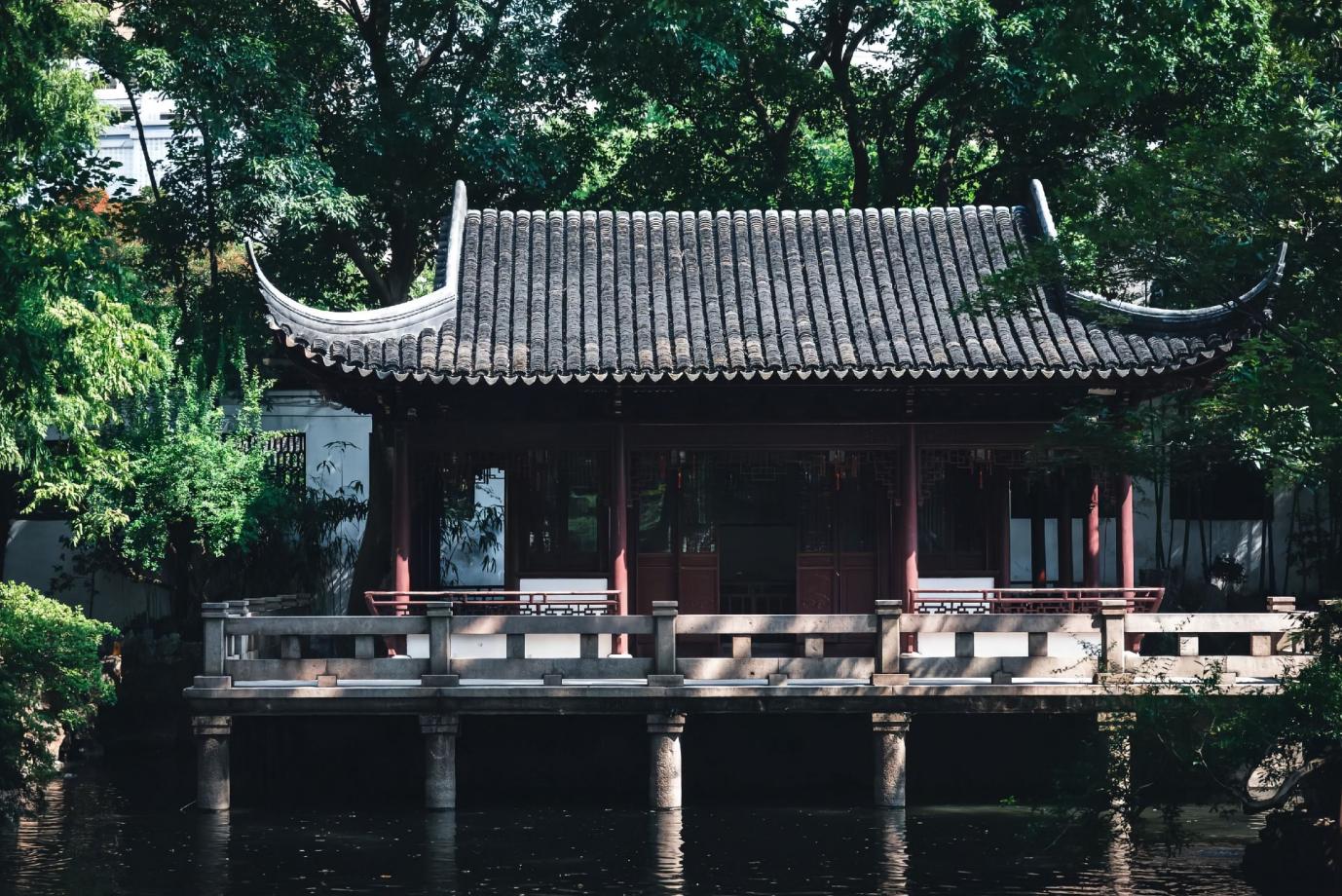
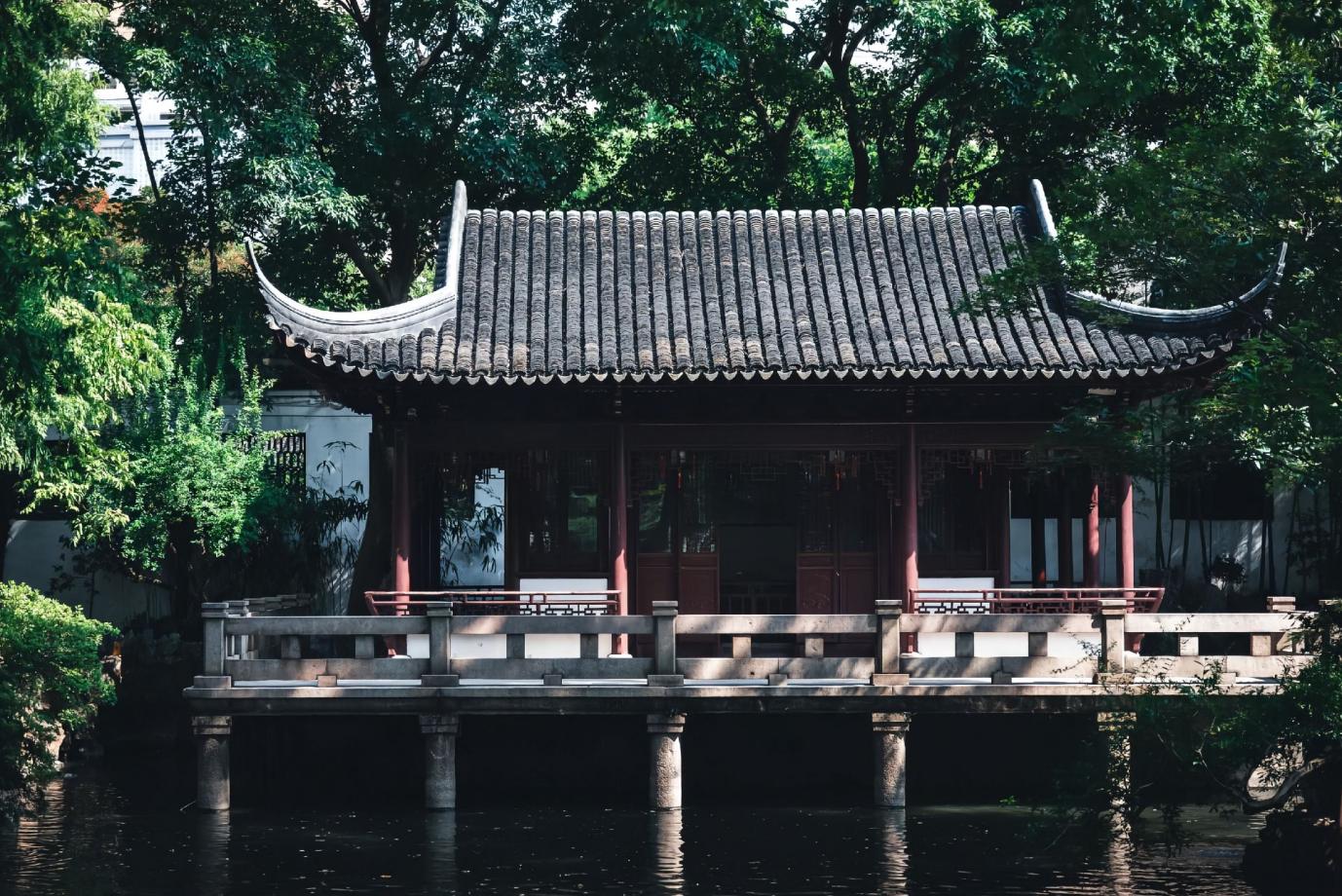
• Gazebos: The ‘Fish Delight Pavilion’ near the water extends half over the shore and half over the surface. Here, visitors observe swimming fish, experiencing the scholar's refined pleasure of ‘finding joy in watching fish’ – perfectly embodying the design intent that ‘a gazebo lends charm by borrowing from the water.’
Moreover, the architectural details carry profound cultural significance: wood carvings on doors and windows predominantly feature motifs such as the ‘Four Noble Plants’ (plum blossom, orchid, bamboo, and chrysanthemum, symbolising noble character) and ‘pine and crane for longevity’ (signifying longevity and auspiciousness). Roof tiles adorned with carved auspicious beasts like dragons, phoenixes, and lions serve both to protect the eaves and convey traditional auspicious cultural values.
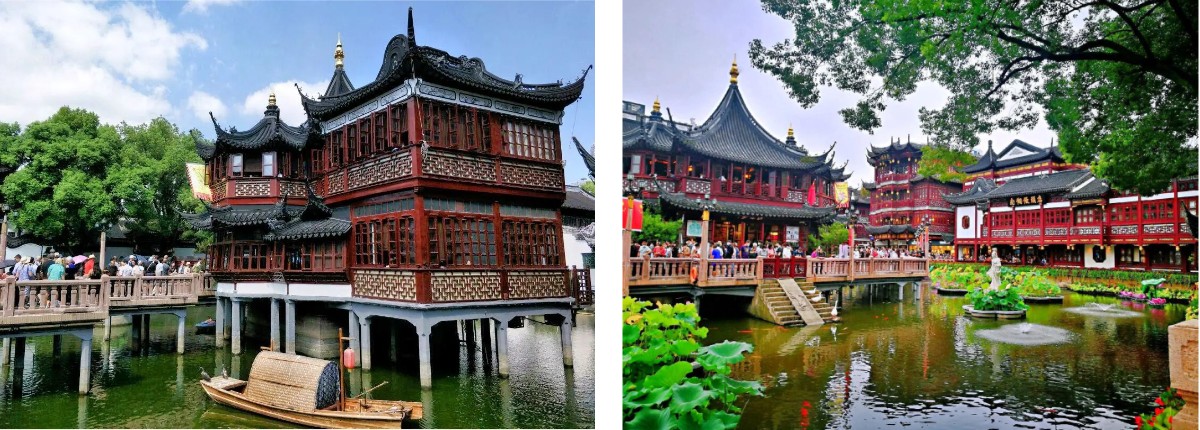
(3) Landscape: ‘Mountains encircling waters, harmonising movement and stillness’
Classical Chinese gardens adhere to the principle that ‘no garden lacks mountains, no garden lacks waters,’ and Yuyuan Garden exemplifies this landscape arrangement. The grand rockery, central to the ‘mountain’ element, is constructed from stacked yellow stone, mimicking the undulating contours of natural landscapes. Caves and winding paths within the rockery allow visitors to traverse them, creating the sensation of traversing authentic mountain terrain. The garden's ponds serve as the “water” element, complementing the rockery to achieve a dynamic interplay where ‘mountains gain vitality through water, and water flows in harmony with mountains.’
The pond's design conceals subtle ingenuity: its irregular shape mimics a natural lake, while its banks feature stone-piled riprap complemented by weeping willows and lotus plants, avoiding artificial rigidity. Koi carp swimming within add vitality and liveliness. More ingeniously, the pond serves to ‘reflect borrowed scenery’ — the blue sky, white clouds, pavilions and towers are mirrored in the water, creating an interplay of reality and illusion that enriches the garden's landscape with depth and dimension.
III. Core Scenery and Cultural Allusions
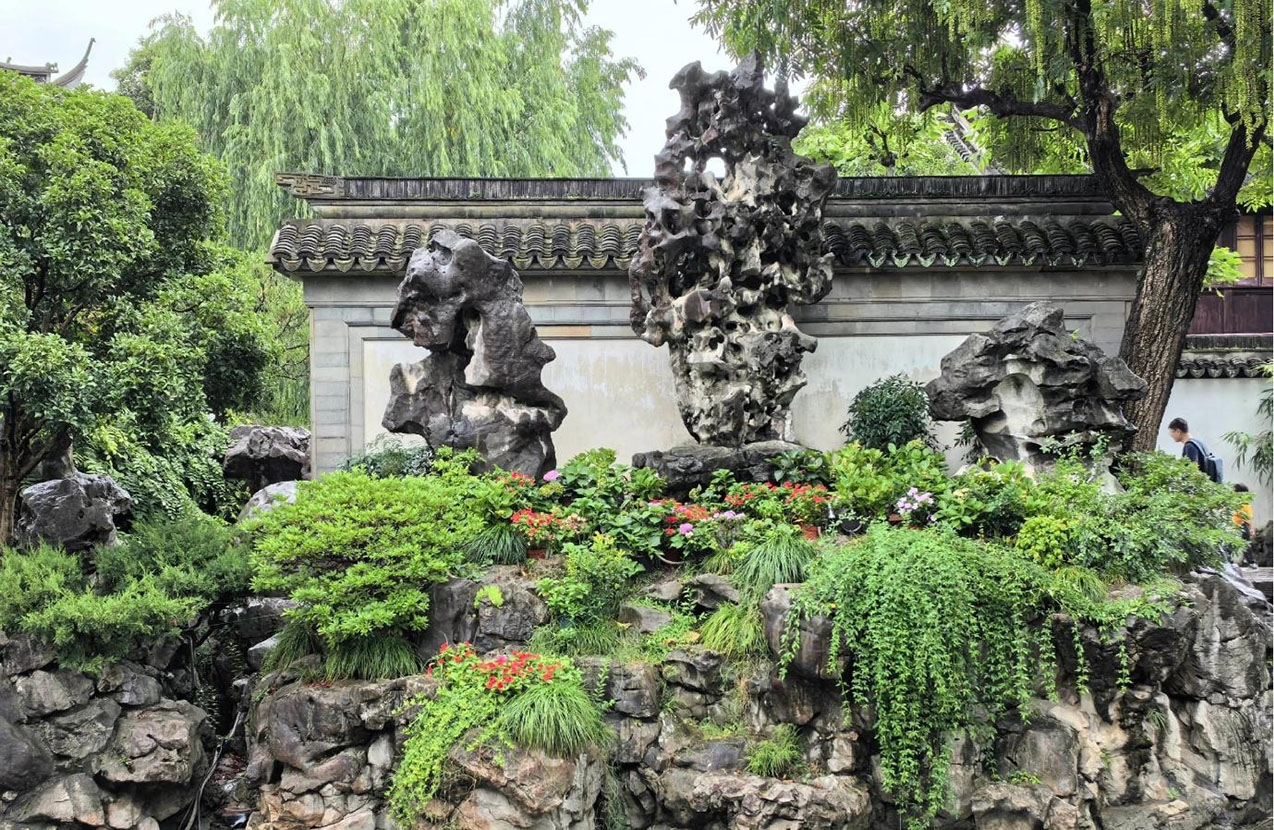
(1) The most remarkable aspect of the Jade Linglong lies in its characteristics of ‘lean, wrinkled, porous, and translucent’ — these also constitute the core criteria for evaluating rare stones within traditional Chinese stone appreciation culture. One need only observe closely: the stone's surface is criss-crossed with ravines, as if weathered by millennia of wind and rain; Its entire body is dotted with cavities; should one light an incense stick beneath it, smoke will wisp through the holes like mist from a fairy realm. A gentle tap against the stone yields a clear, resonant chime, akin to jade striking jade. For centuries, Jade Linglong has remained the “treasure of the garden” at Yuyuan, becoming a quintessential symbol of Jiangnan garden stone appreciation.
(2) The Lake Heart Pavilion and Nine-Turn Bridge — A “Landscape Painting” Within the Garden
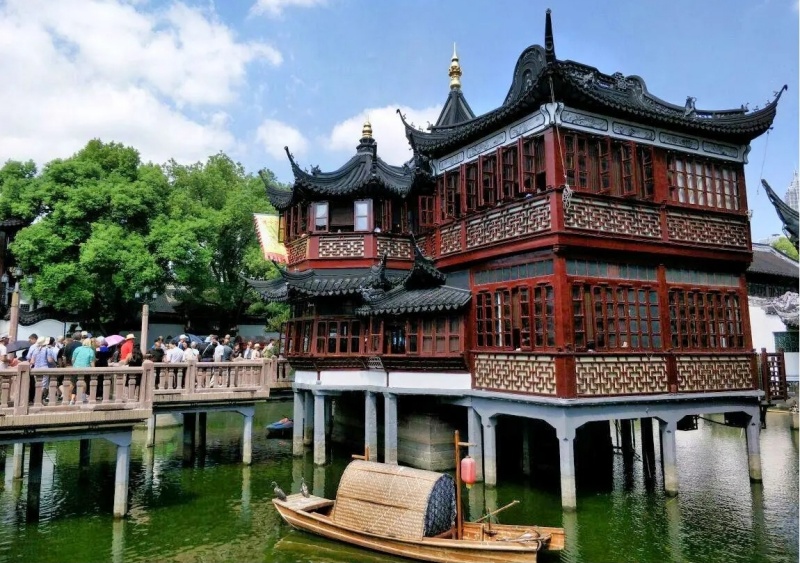
Passing through the courtyard housing the Jade Linglong, one arrives at the central waters of the Yu Garden — the site of the Lake Heart Pavilion and Nine-Turn Bridge, the most iconic landscape pairing within the grounds. Constructed during the Qianlong reign of the Qing dynasty, the Lake Heart Pavilion originally served as a gathering place for local literati to savour tea and compose poetry. Today, it offers visitors a tranquil spot to rest and admire the lake scenery. Standing within the pavilion and surveying the surroundings: willows weep gracefully along the shore, lotus leaves spread across the water (particularly elegant in summer), while distant pavilions and towers reflect in the waves, creating a flowing ink-wash painting of the Jiangnan landscape.
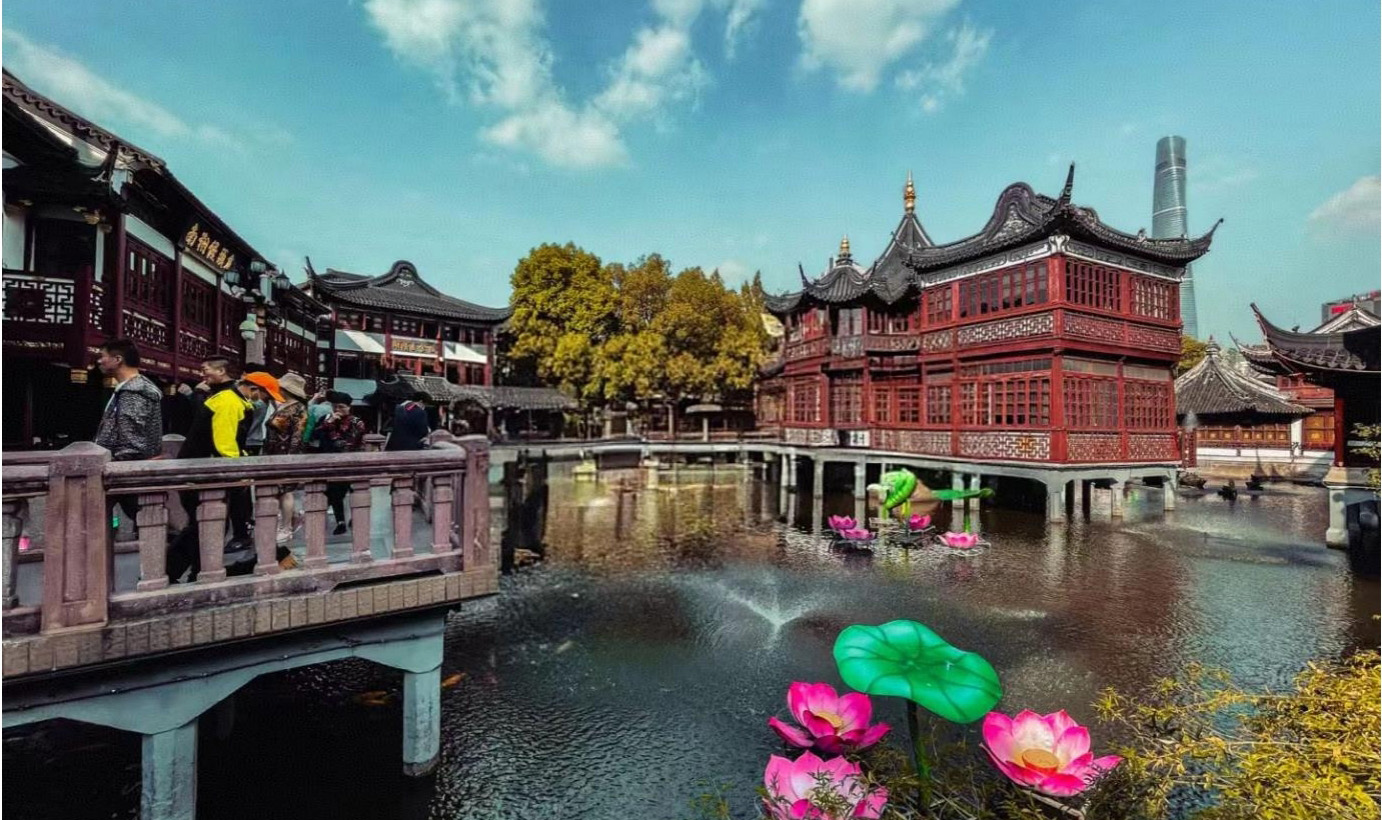
The Nine-Turn Bridge connecting the pavilion to the shore is a masterpiece of design. Its name derives from its nine distinct curves – in traditional Chinese culture, “nine” is the highest yang number, symbolising auspiciousness and longevity. More intriguingly, each turn of the bridge reveals a distinct vista: at times the carved railings along the shore come into view, at others the fish glide through the lake, and occasionally the ancient structures within the garden come into focus. Truly, ‘each step unveils a new scene, each turn brings a different view.’ Strolling along the Nine-Turn Bridge feels like walking through a living landscape painting, compelling admiration for the ingenuity of ancient garden designers.
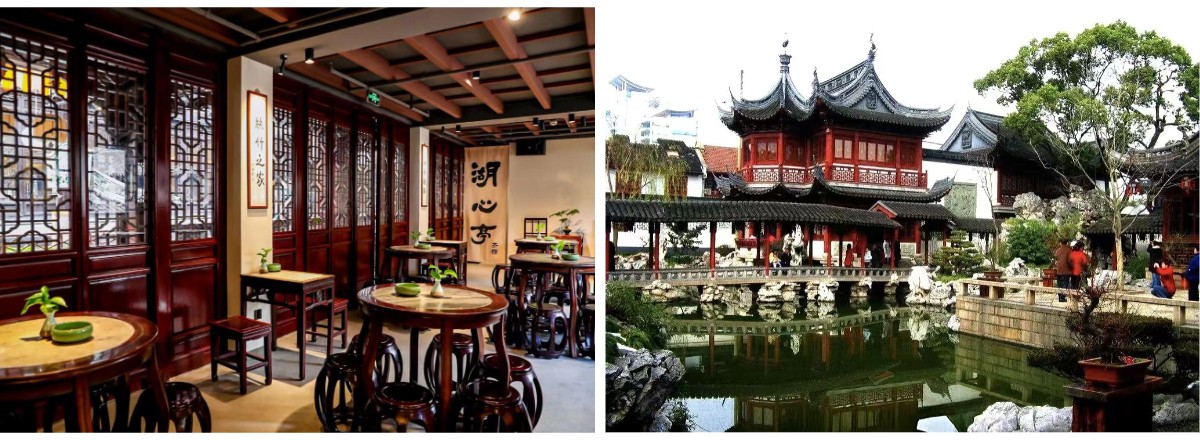
(3) Three Penetrations, Six Girders, Eighteen Turns — The Architectural Code of Yuyuan Garden
Beyond its natural beauty, Yuyuan Garden's architectural details conceal numerous cultural codes, most notably embodied in the ‘Three Penetrations, Six Girders, Eighteen Turns’ construction technique — referring to the craftsmanship behind the garden's grand rockery. This grand rockery stands as one of Yuyuan Garden's defining features, designed and constructed by the renowned Ming Dynasty landscape architect Zhang Nanyang. Entirely built from stacked yellow stone, it rises approximately 14 metres high, ranking among the largest artificial rockeries in Jiangnan gardens.
The ‘three passages’ refer to three channels within the rockery through which visitors may pass; the ‘six pillars’ denote the six stone columns supporting the structure; and the ‘eighteen steps’ signify the eighteen tiers of the rockery. Though seemingly haphazardly arranged, the rockery conceals intricate design: the passageways ensure visitor safety while evoking the poetic imagery of ‘winding paths leading to secluded beauty’; the stone pillars provide precise, robust support, remaining steadfast after centuries of weathering; the steps' gradient and width are meticulously calculated, preventing excessive steepness while allowing ascending visitors to appreciate garden vistas from varying heights. More remarkably, the summit features the ‘River View Pavilion’ – in ancient times, one could gaze upon the Huangpu River from here. Though now partially obscured by surrounding structures, the expansive spirit of ‘ascending to survey the distance’ remains palpable. This grand rockery stands not only as a pinnacle of ancient Chinese garden craftsmanship but also embodies the Chinese philosophy of ‘drawing inspiration from nature and harmonising with it.’
IV. Multicultural Experiences: Immersive Encounters with Traditional Charm
Yuyuan Garden serves not merely as a scenic spot but as a living classroom for experiencing traditional Chinese culture. Numerous interactive activities within and around the garden allow visitors to participate hands-on, gaining profound insights into traditional crafts and cultural heritage.
(1) Traditional Craft Experiences: Intangible Heritage at Your Fingertips
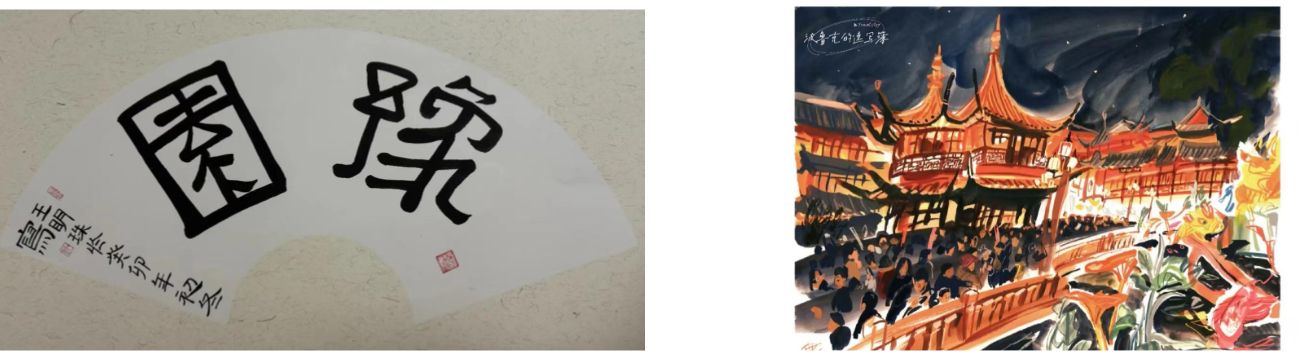
• Paper-cutting Workshop: At Yuyuan's Intangible Cultural Heritage Experience Centre, professional paper-cutting artisans provide live instruction. Visitors may learn to create simple ‘Fu’ (福) characters and zodiac motifs, or even commission bespoke paper-cut pieces according to personal preference. This traditional folk decorative art employs merely scissors and red paper to craft auspicious patterns, embodying aspirations for a prosperous life.
• Calligraphy Copying: Within Yuhua Hall, brushes, ink, paper, and inkstones are laid out. Visitors may copy classic calligraphic works in regular script, running script, and other styles under staff guidance, such as excerpts from the Preface to the Orchid Pavilion Collection or classical poetry. Calligraphy, a uniquely Chinese traditional art form, is hailed as ‘poetry without words, dance without steps.’ Through each stroke, it reveals the aesthetic lines and cultural depth of Chinese characters.
• Woodblock New Year Print Making: As the Spring Festival approaches, the garden offers woodblock print workshops. Visitors can personally use traditional wooden blocks, dip them in pigment, and print classic New Year motifs like ‘door gods’ and ‘Fuwa’ (good fortune children). Woodblock New Year prints are a beloved folk art form in China, rich in rustic charm and festive spirit, with a history spanning over a millennium.
(2) Literati Gathering Experience: Recreating the Life of Ancient Scholars
• Tea Tasting and Music Appreciation: In the tea house beside the Lake Heart Pavilion, visitors can savour renowned southern teas such as West Lake Longjing and Dongting Biluochun. While savouring tea, visitors may also enjoy traditional opera performances by professional actors, including Kunqu opera—hailed as the ‘ancestor of all operas’ for its melodious and lyrical vocals—and Pingtan storytelling, delivered in the distinctive soft Wu dialect. These performances evoke the refined lifestyle of ancient literati, who would ‘sip tea, listen to music, discuss poetry, and appreciate paintings.’
• Floral Arrangement Experience: Traditional flower-arranging workshops are regularly held in the courtyards surrounding the Pavilion of Ten Thousand Flowers. Instructors elucidate the essence of Chinese floral artistry—‘achieving more with less, evoking profound artistic conception’—guiding visitors to create compositions embodying Eastern aesthetics. Using materials like plum blossoms, orchids, and bamboo, participants arrange these elements within rustic porcelain or ceramic vessels. Traditional Chinese flower arrangement emphasises harmony with nature, pursuing an artistic conception where ‘though crafted by human hands, it appears as if created by heaven’ – a philosophy that perfectly complements the garden design principles of Yuyuan.
(3) Folk Customs and Ceremonial Experiences: Immerse Yourself in Traditional Festival Culture
During significant traditional festivals, Yuyuan also offers distinctive folk customs and ceremonial experiences:
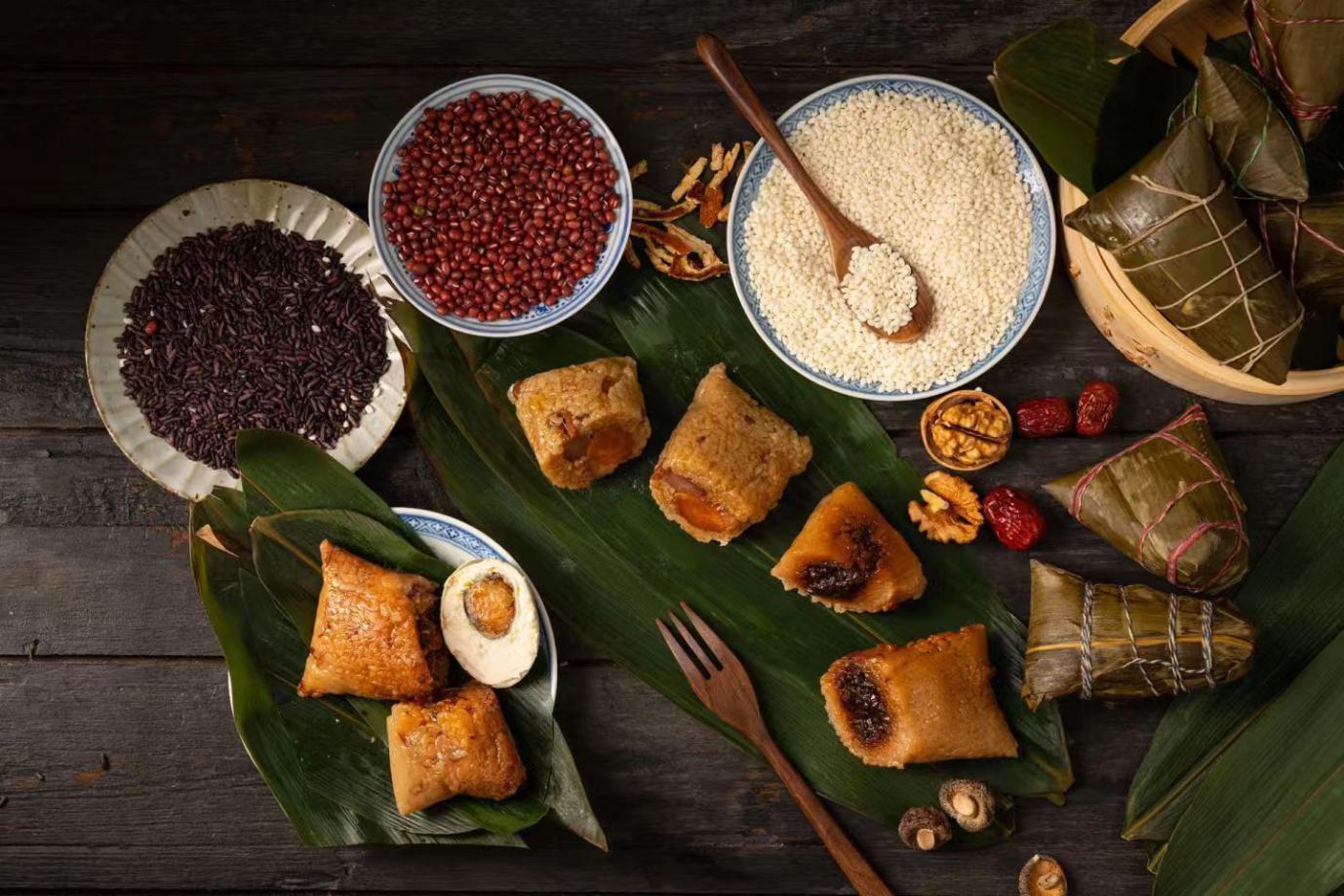
• Dragon Boat Festival Zongzi-Making: During the festival, visitors learn to wrap traditional Jiaxing meat-filled zongzi and red bean paste zongzi. They explore the cultural significance of commemorating Qu Yuan and warding off evil spirits, while savouring their handcrafted zongzi amidst festive warmth.
• Mid-Autumn Mooncake Making: Ahead of the Mid-Autumn Festival, the garden hosts Suzhou-style mooncake workshops. Visitors participate in kneading dough, filling pastry, and moulding designs, crafting mooncakes featuring traditional motifs like ‘Chang'e Flying to the Moon’ and ‘Jade Rabbit Pounding Medicinal Herbs.’ This hands-on experience embodies the festival's cultural symbolism of reunion.
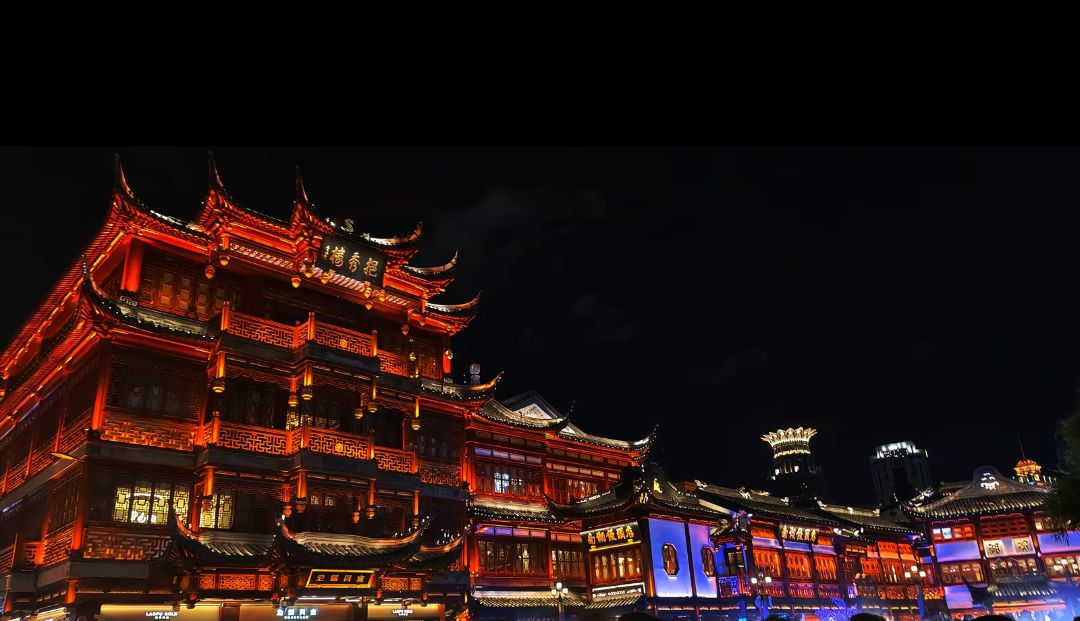
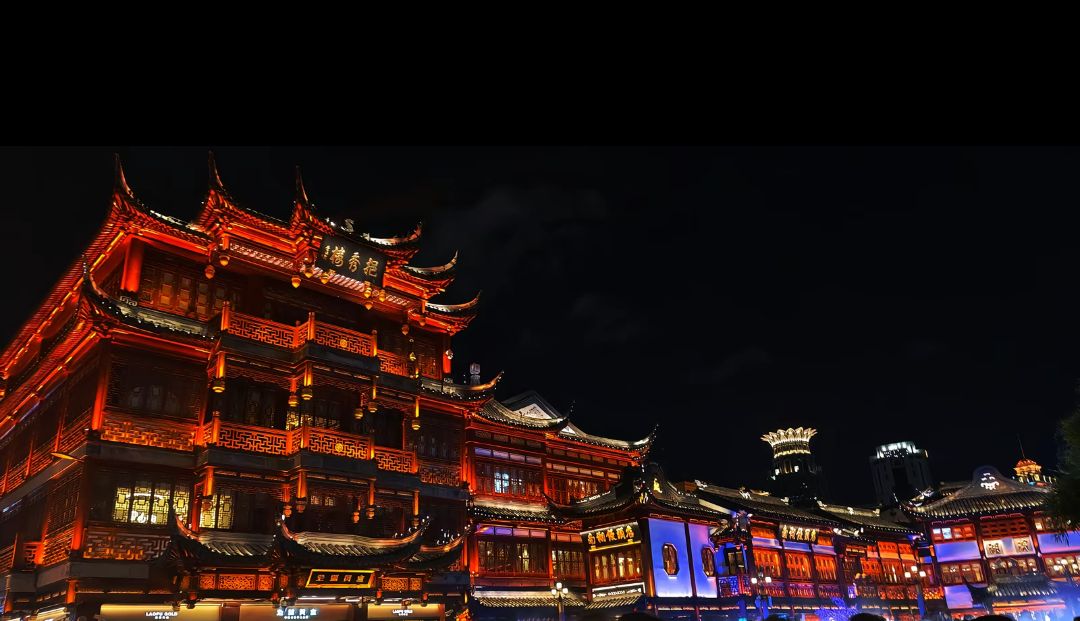
• Spring Festival Folk Art Lantern Festival: Each Lunar New Year, Yuyuan Garden transforms into a dazzling sea of lanterns. This decades-old tradition has evolved into a renowned cultural symbol of the Spring Festival, celebrated across Shanghai and beyond. Typically commencing in late December of the lunar calendar and continuing until the Lantern Festival, the entire garden is adorned with an extraordinary array of themed lanterns, creating a spectacularly vibrant display.
V. Signature Cultural and Creative Products: Bringing Yuyuan Garden Culture Home
To help visitors preserve memories of Yuyuan Garden and perpetuate traditional culture, the garden has launched a range of practical yet culturally rich creative products spanning homeware, accessories, stationery and more. Each item incorporates classic elements and cultural symbols of Yuyuan Garden.
(1) Classic Element Collection: Inspired by Yuyuan's Landscapes
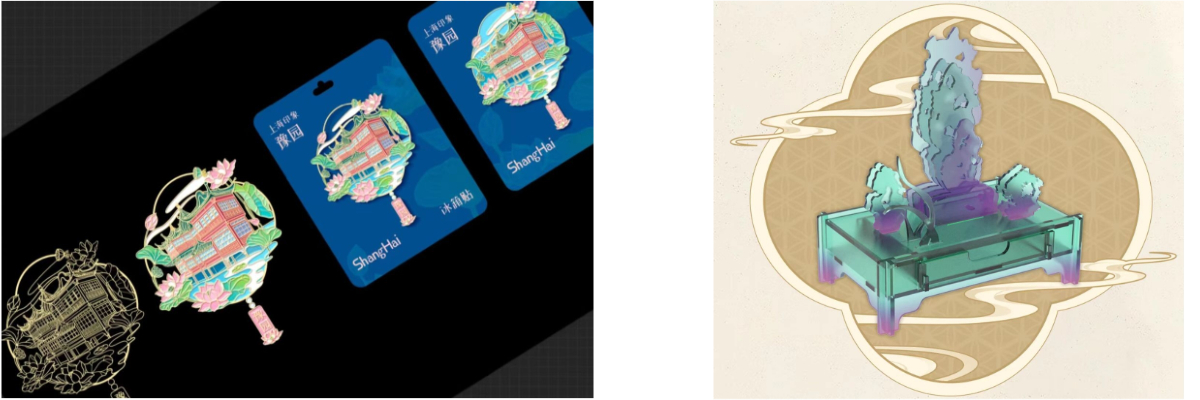
• Jade Linglong Series: Featuring bookmarks, ornaments, jewellery and more in the shape of jade linglong. The bookmarks, crafted from transparent resin, replicate the Jade Linglong's characteristic translucency and perforations, with a miniature Jade Linglong motif delicately engraved at the top. The ornaments, fashioned from bluestone, faithfully recreate the Jade Linglong's form, serving as both decorative and culturally evocative pieces for desks. Jewellery pieces such as necklaces and earrings draw inspiration from the perforated contours of jade linglong, paired with pearls and other gemstones for a minimalist yet elegant aesthetic.
• Nine-Turn Bridge and Lake Pavilion Collection: Features keyrings and fridge magnets shaped like the Nine-Turn Bridge, alongside scarves and notebooks adorned with the Lake Pavilion motif. The keyrings and fridge magnets employ metal craftsmanship, using openwork and relief techniques to faithfully recreate the bridge's sinuous form and the pavilion's upturned eaves, rich in detail. Scarves depict the pavilion and bridge in ink-wash style with subtle hues, perfect for everyday wear. Notebook covers feature line drawings of the pavilion, while pages interweave historical narratives and scenic descriptions of the Yu Garden, blending practicality with collectible value.
(2) Folk Culture Creative Products: Blending Traditional Festivals with Intangible Heritage
• Festival Limited Editions:
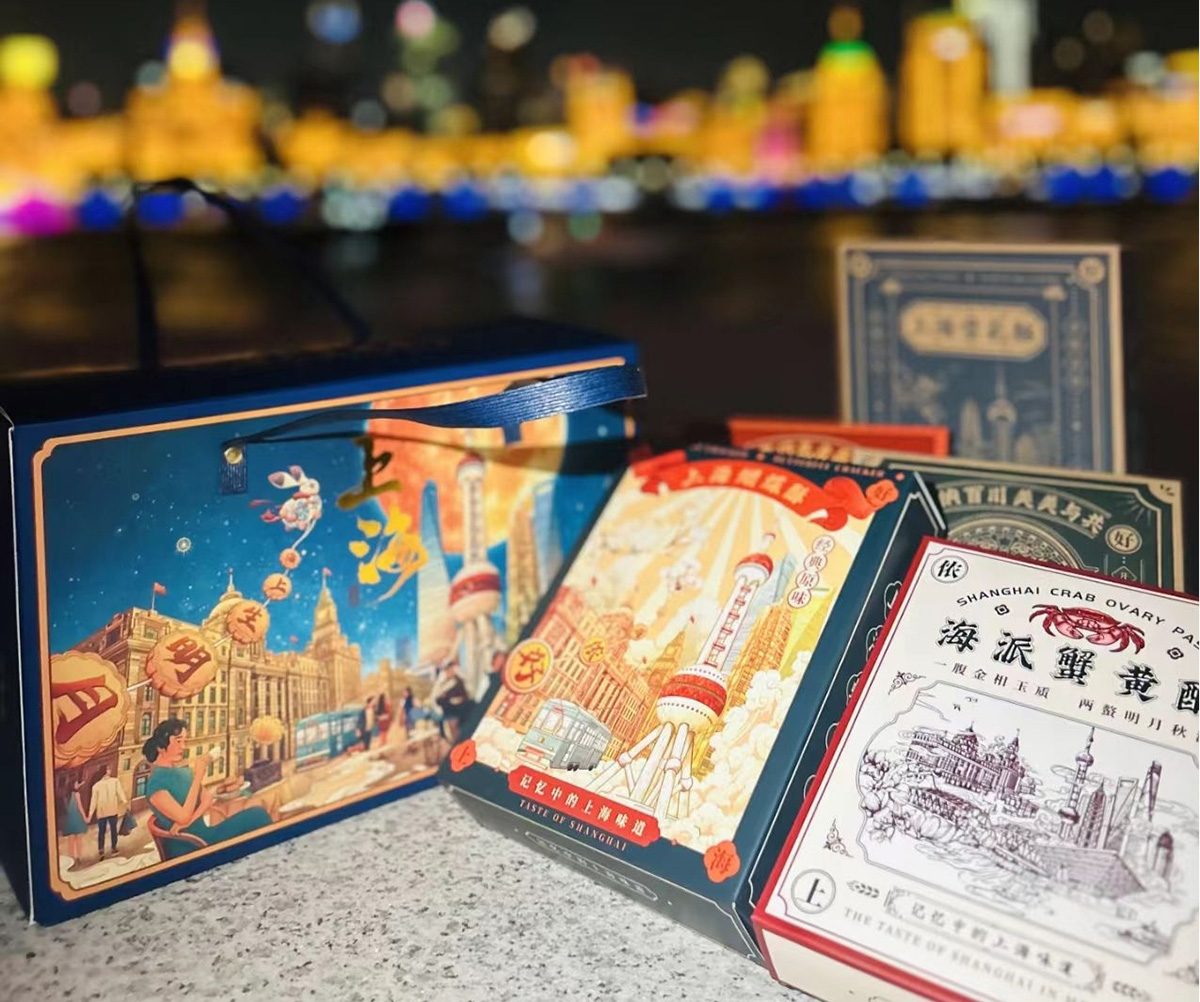
For Spring Festival, the ‘Celestial Official Bestows Blessings’ series features red envelopes and couplets. Envelope covers bear the image of the Celestial Official from Yuyuan's lantern festival, while couplets blend Yuyuan's history with auspicious meanings. • Mid-Autumn Festival: ‘Full Moon over Yuyuan’ themed mooncake gift boxes. Packaging showcases Yuyuan's moonlit scenery, while mooncake designs mimic iconic elements like the Jade Linglong Pavilion and Lake Heart Pavilion, seamlessly blending culinary artistry with cultural heritage.
• Intangible Heritage Craft Cultural Products: Examples include paper-cut art table lamps, where lampshades employ paper-cutting techniques featuring Yuyuan Garden landscapes and traditional auspicious patterns. When illuminated, light filters through the cut-outs to project exquisite designs, serving both functional and decorative purposes. Additionally, canvas bags in woodblock New Year painting style, printed with motifs such as Yuyuan's door gods and Fuwa mascots, are eco-friendly and highly practical, proving popular among younger visitors.
(3) Practical Lifestyle Cultural Products: Integrating Traditional Culture into Daily Life
• Tea Fragrance Collection: Featuring Yuyuan-themed tea sets and tea gift boxes. The tea sets are crafted from celadon porcelain, with cups adorned with patterns of Yuyuan's pavilions and towers, while the teapot design draws inspiration from the silhouette of the Lake Heart Pavilion. The tea gift boxes contain renowned teas from the Jiangnan region, with packaging featuring Yuyuan's landscape scenery, making them ideal as souvenirs for friends and family.
• Stationery Collection: Includes fountain pens, notebooks, and adhesive tape adorned with Yuyuan Garden motifs. The fountain pens feature engraved patterns of the garden's corridors and rockeries, with the characters ‘豫园’ (Yuyuan) etched upon the nib. The adhesive tape displays continuous patterns of Yuyuan Garden scenery, perfect for decorating handwritten journals and infusing daily notes with cultural flair.
These cultural products are primarily sold in the Yuyuan Garden cultural shops, with select popular items also available via the official Yuyuan online platform. This allows visitors to take home the cultural charm of Yuyuan, ensuring traditional heritage endures in daily life.
VI. Local Culinary Delights
Yu Garden's Culinary Heritage: Centuries-Old Flavours
Beyond the garden's walls, the Chenghuangmiao commercial district harbours countless century-old eateries embodying Shanghai's culinary soul, where every bite blends history with artisanal craftsmanship.
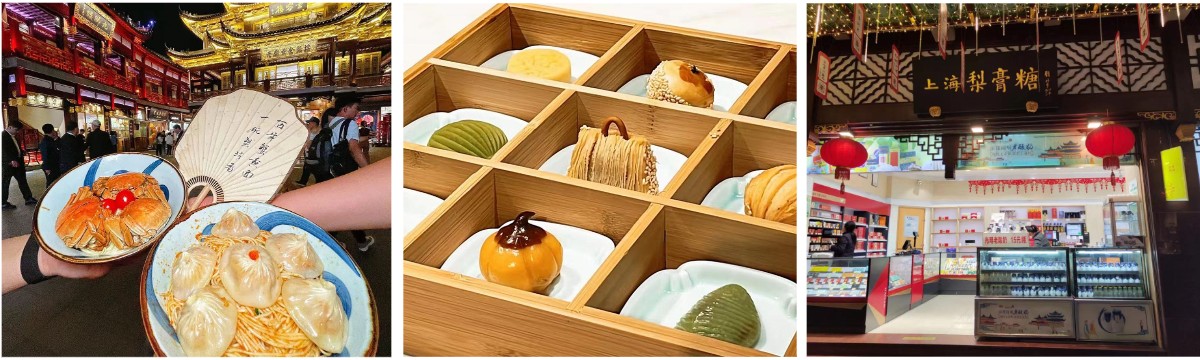
Foremost among these is Nanxiang Steamed Bun Shop's crab roe xiaolongbao, the culinary calling card of Yuyuan. Established in 1900, the shop adheres to the meticulous craft of ‘tightly pinched, finely pleated’ dumplings, each requiring at least eighteen folds to resemble a blooming chrysanthemum. Freshly steamed, the wrappers are paper-thin. Bite gently to release the luscious crab roe broth, best enjoyed with ginger and vinegar to balance the richness and enhance the umami – the quintessential Jiangnan dim sum experience.
For those with a sweet tooth, Green Wave's Gourd Pastries are an absolute must. Having graced state banquets for numerous heads of state, these pastries feature a delicate white flour crust encasing either date paste or red bean filling, meticulously shaped into miniature gourds. In Chinese culture, the gourd symbolises ‘fortune and prosperity.’ The pastries offer a delightful contrast of crisp exterior and soft interior, sweet yet not cloying, combining exquisite texture with auspicious meaning.
Then there's the traditional pear syrup candy from the Pear Syrup Candy Shop, boasting over 160 years of history. Made primarily from snow pears and rock sugar, with added Chinese medicinal herbs like fritillary bulb and poria, it offers a refreshingly sweet flavour while soothing sore throats. Old Shanghai locals often remarked, ‘Even the hawkers' cries are theatrical,’ and today you might still catch glimpses of these traditional sales performances in the shop – quite an amusing sight.