Jokhang Temple Tour
Discover the Jokhang Temple – Where Tibetan Spirituality Comes Alive
As a UNESCO World Heritage site and the spiritual heart of Tibet, the Jokhang Temple invites you to walk through centuries of faith and culture. From the sacred 1,400-year-old Jowo Buddha statue to the vibrant energy of Barkhor Street, every corner tells a story of devotion and unity between Han and Tibetan traditions.
At 【HuaTu Travel】 we craft personalized Tibetan journeys just for you:
✓ Skip-the-line access & expert local guides
✓ Flexible private tours – choose your pace and focus
✓ Cultural add-ons: thangka painting, butter tea tasting, and monastery blessings
Ready for a meaningful adventure?
Book your customized Jokhang Temple experience today — where ancient faith meets personal discovery.
👉 Contact us now to design your Tibet itinerary!
Jokhang Temple: The Spiritual Heart of Tibet for a Thousand Years
Hello friends from around the world! Welcome to the soul of Lhasa—the Jokhang Temple. If the Potala Palace is the grand palace of the snow-covered plateau, then the Jokhang Temple is the spiritual core of Tibetan faith. Built in the 7th century, this ancient temple has witnessed the peak of the Tibetan Empire, carries a thousand years of cultural exchange between Han and Tibetan peoples, and holds the most precious symbols of Tibetan Buddhism. Now, let’s step inside this millennia-old temple and explore the history and faith behind its five core highlights.
1. The Starting Point of Faith: Main Gate & Tang-Tibet Alliance Stele
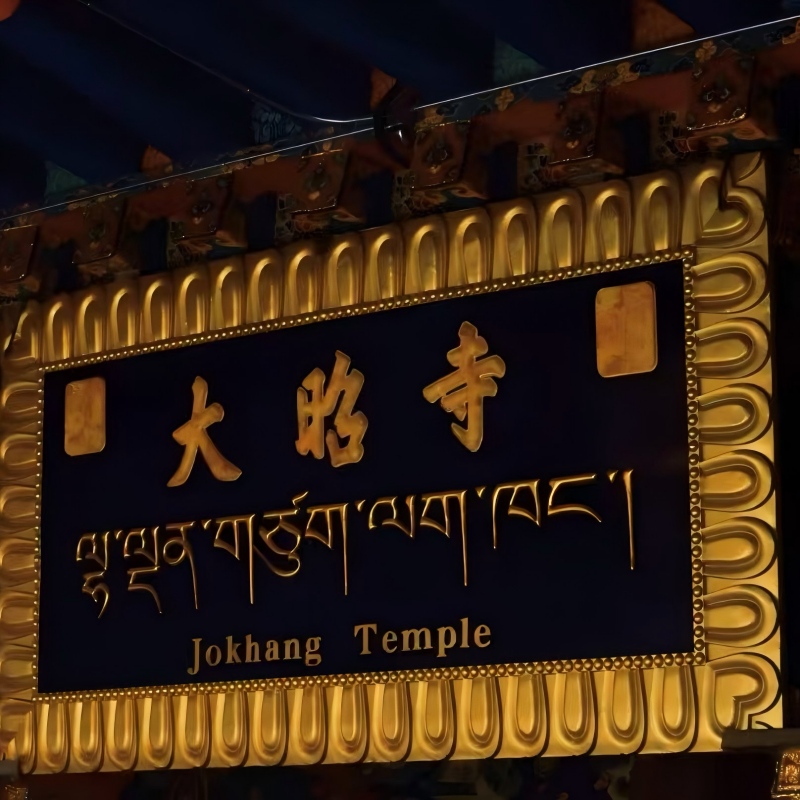
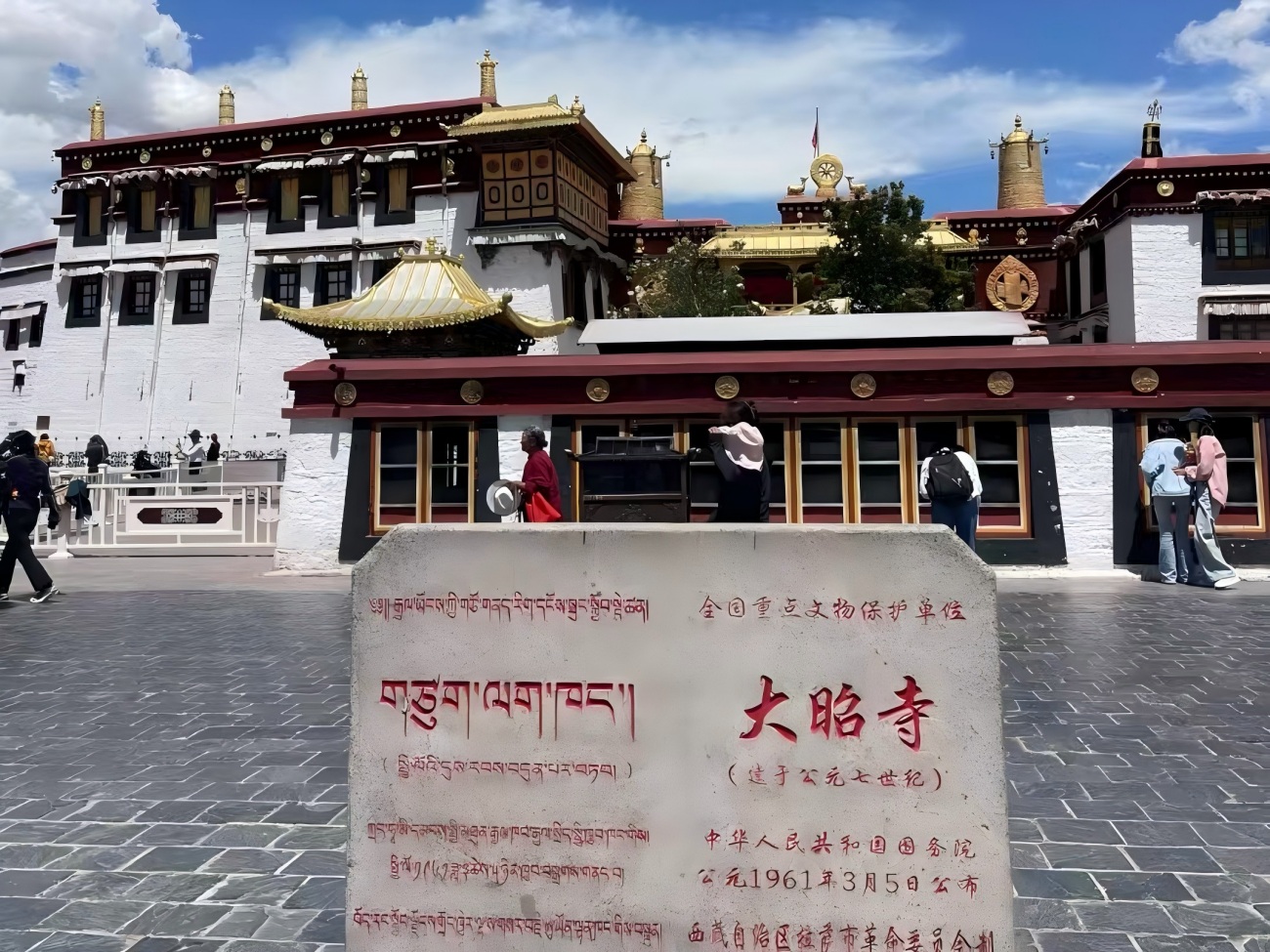
Before entering the temple, we are greeted by its simple yet solemn main gate. To the left stands the historic Tang-Tibet Alliance Stele, a stone monument commemorating the friendship between the Tang Dynasty and the Tibetan Empire. In 821 AD, Emperor Muzong of Tang and King Tritsu Détsen of Tibet signed a peace treaty, inscribed with the words: “The uncle and nephew rulers have united as one family, making a great treaty of peace that shall never change.” This stele marks the historic moment when Han and Tibetan peoples became “one family.”
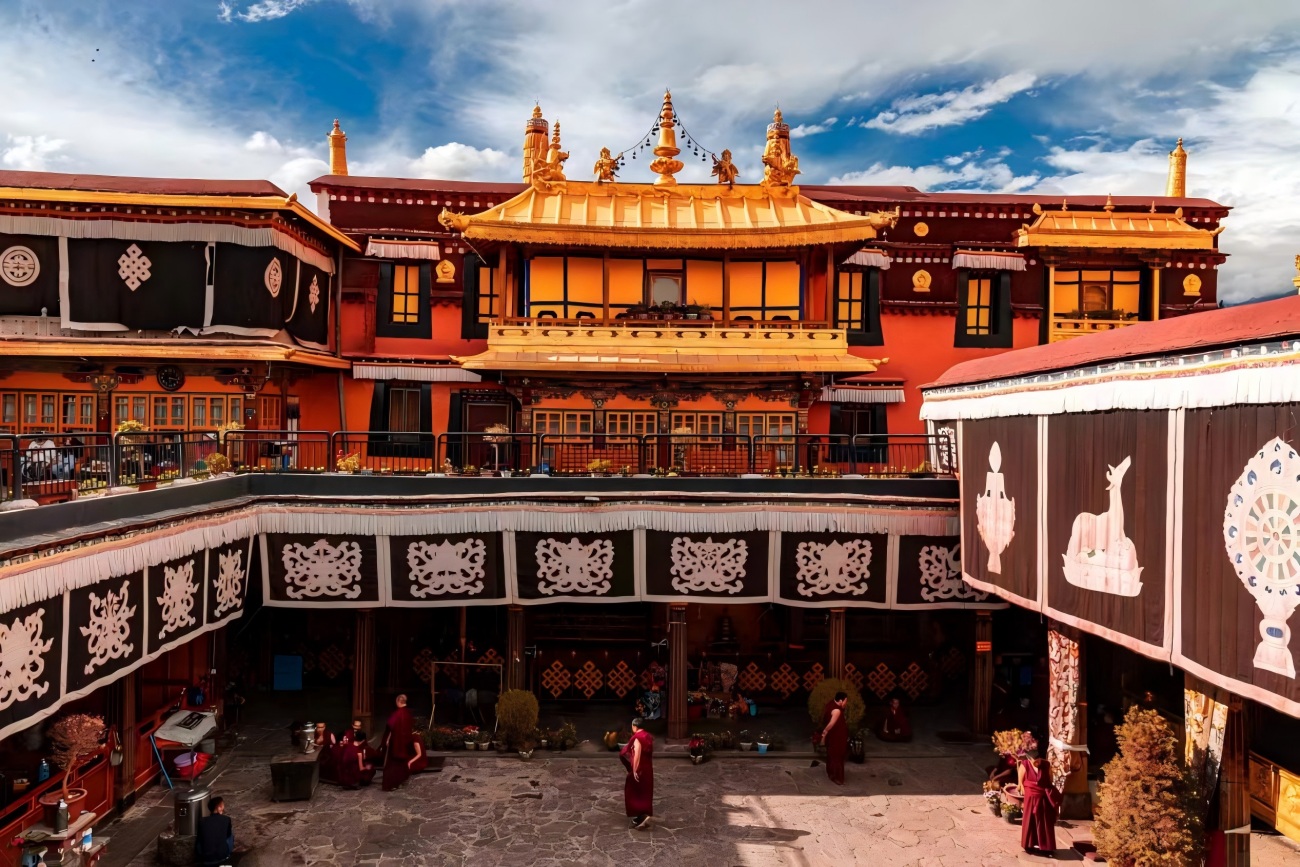
The Jokhang Temple itself was born out of a legendary marriage. In the 7th century, Tibetan King Songtsen Gampo married Princess Wencheng of the Tang Dynasty and Princess Bhrikuti of Nepal. Both princesses brought sacred Buddha statues—a 12-year-old life-sized statue of Shakyamuni from China, and an 8-year-old one from Nepal. To enshrine these precious statues, King Songtsen Gampo ordered the construction of the Jokhang Temple. Though small at first, it grew over generations into today’s grand complex spanning 25,000 square meters.
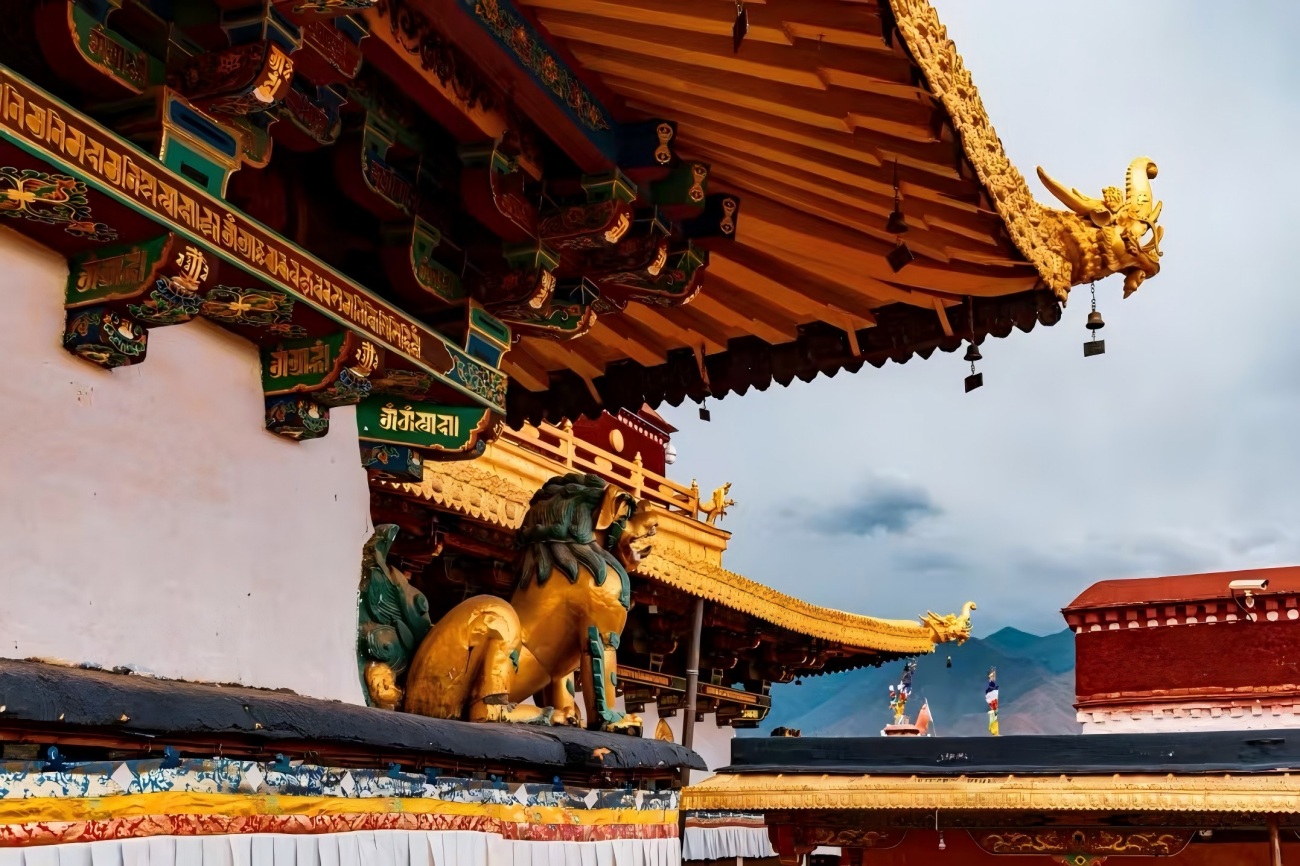
At the main gate, you’ll see a classic Tibetan hip-and-gable roof adorned with Buddhist treasures like dharma wheels and victory banners. Look closer, and you’ll also find traces of Chinese joinery in the wooden structure—a beautiful blend of Han and Tibetan craftsmanship right from the entrance.
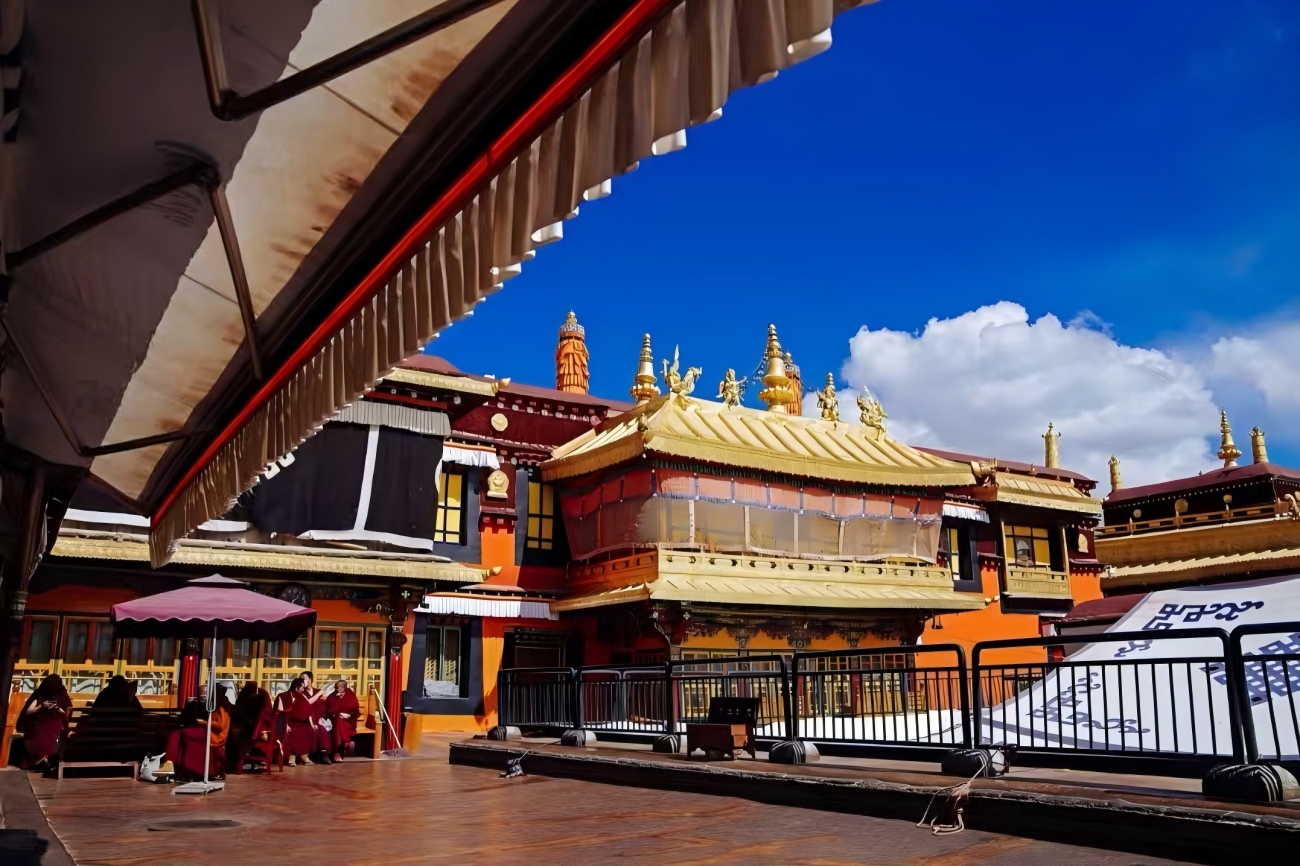
2. The Sacred Treasure: The 12-Year-Old Life-Sized Statue of Shakyamuni
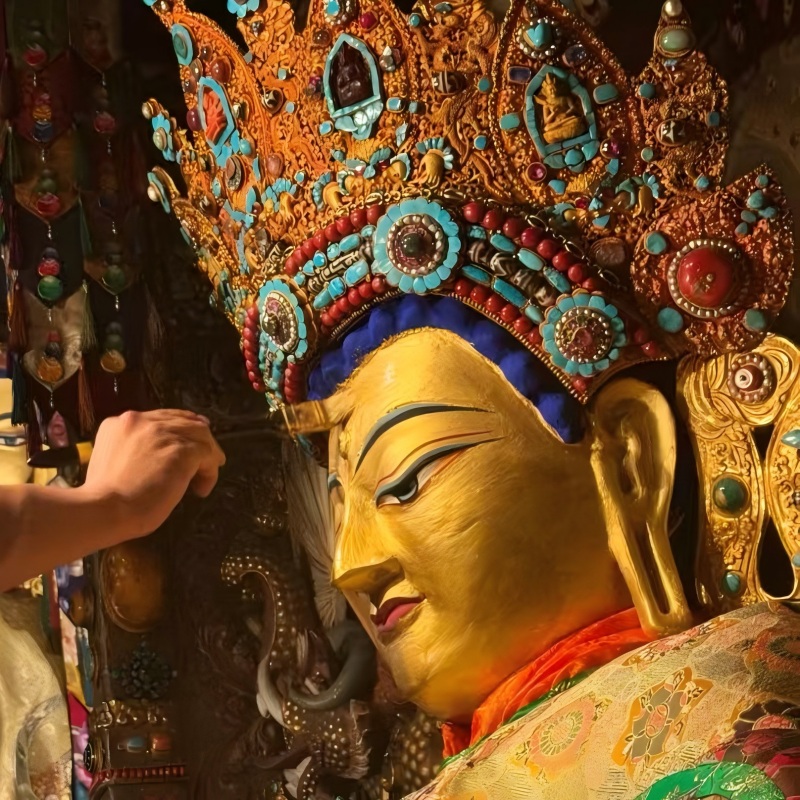
Inside the Jokhang’s main hall, known as Jokhang Chapel, stands the most revered statue in all of Tibetan Buddhism—the 12-year-old life-sized Jowo Shakyamuni statue. This statue is the very soul of the temple. It was crafted during the Buddha’s lifetime and blessed by him personally, making it known as the “living Buddha.” Devotees travel thousands of miles just to glimpse it.
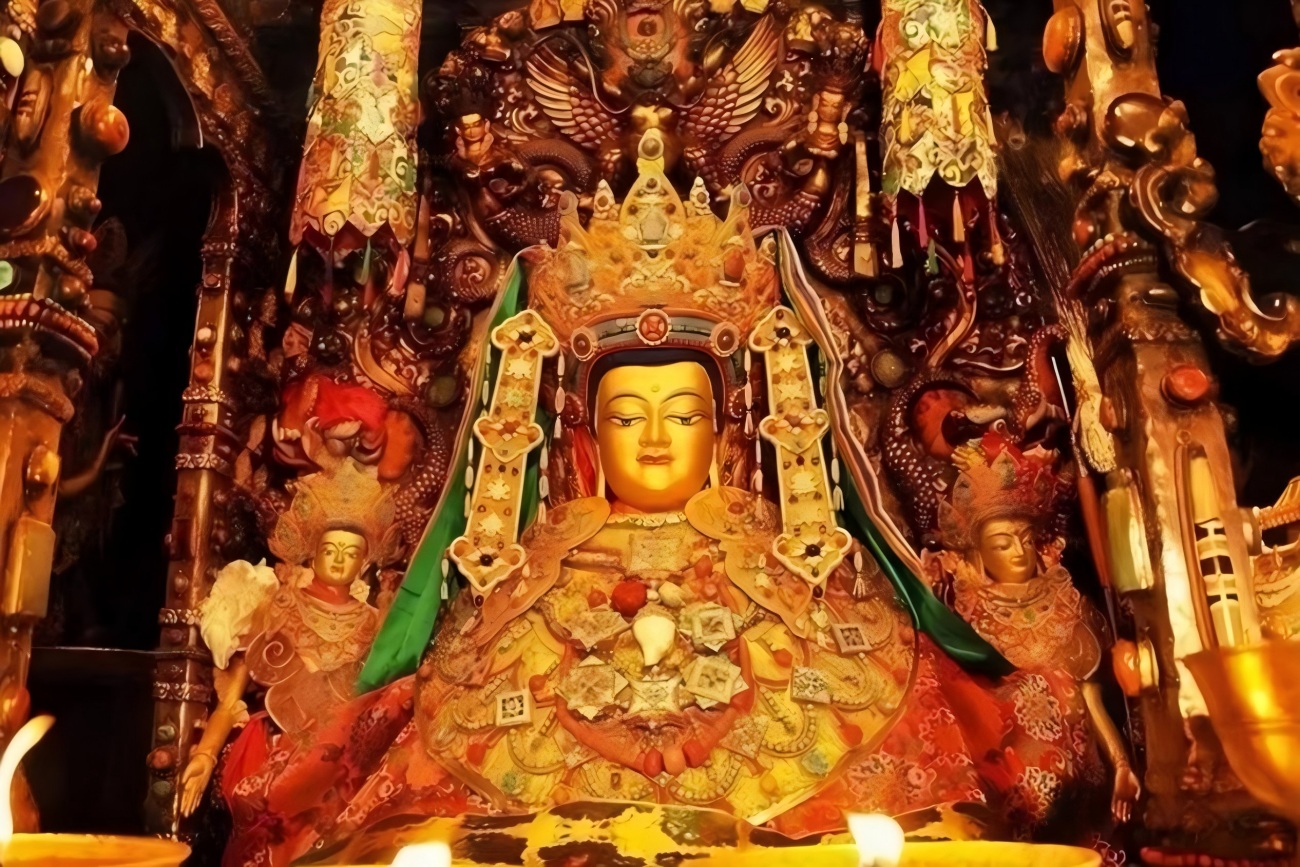
The statue’s journey is a story of devotion and protection. It was originally brought to Tibet by Princess Wencheng and housed in the Ramoche Temple. To protect it during periods of turmoil, Tibetan followers moved it to the Jokhang Temple and swapped its location with the 8-year-old statue brought by Princess Bhrikuti—a arrangement that remains to this day.
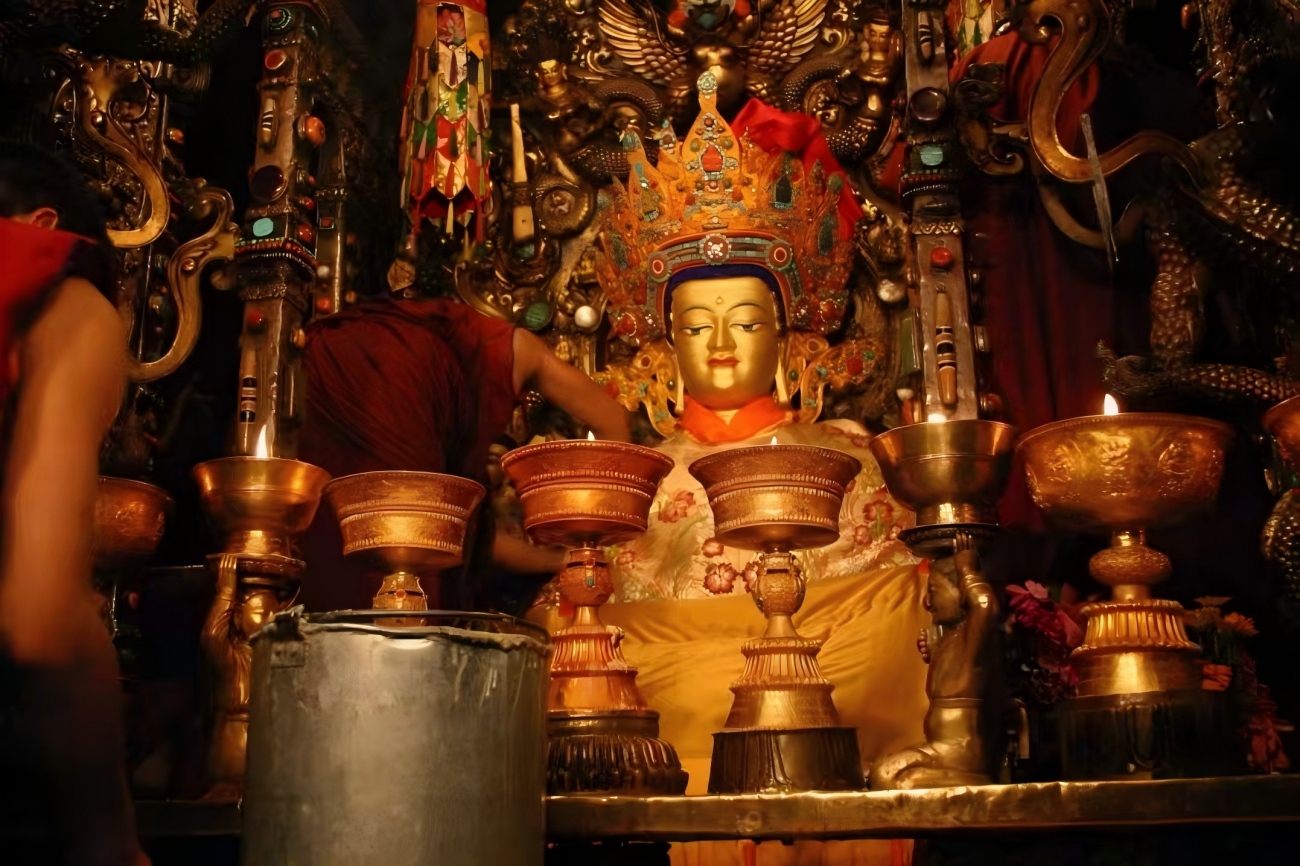
The statue rests in a gilded shrine adorned with pearls, agate, turquoise, and other jewels. It is dressed in exquisite Tibetan brocade robes, many of which were gifts from Chinese emperors during the Ming and Qing dynasties. Every year on the 15th day of the first Tibetan month, the Great Prayer Festival is held here, drawing huge crowds of pilgrims—a powerful display of Tibetan devotion.
3. A Thousand-Year Visual Epic: Murals & Thangkas
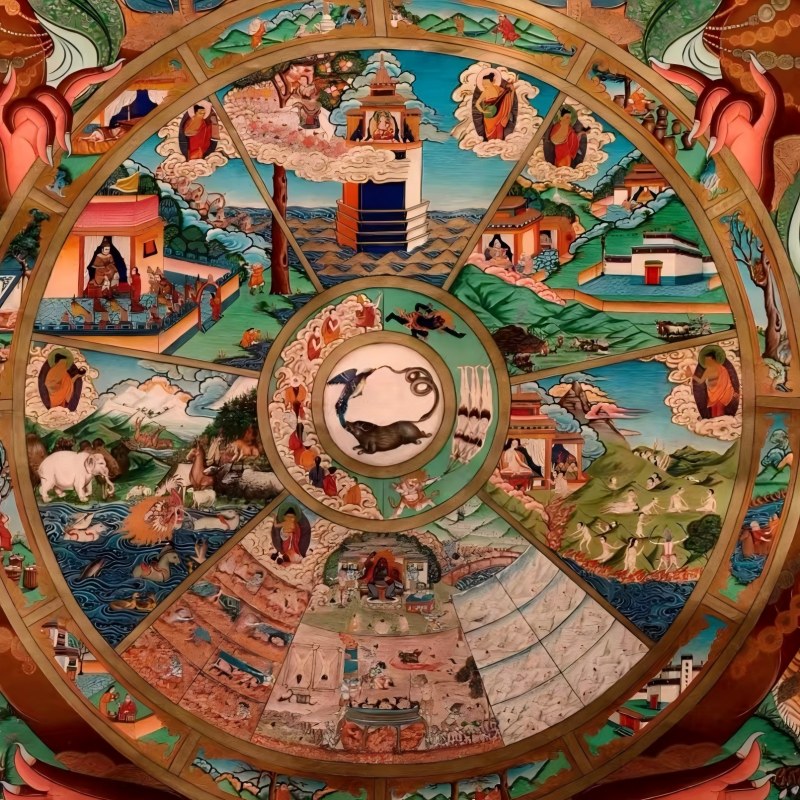
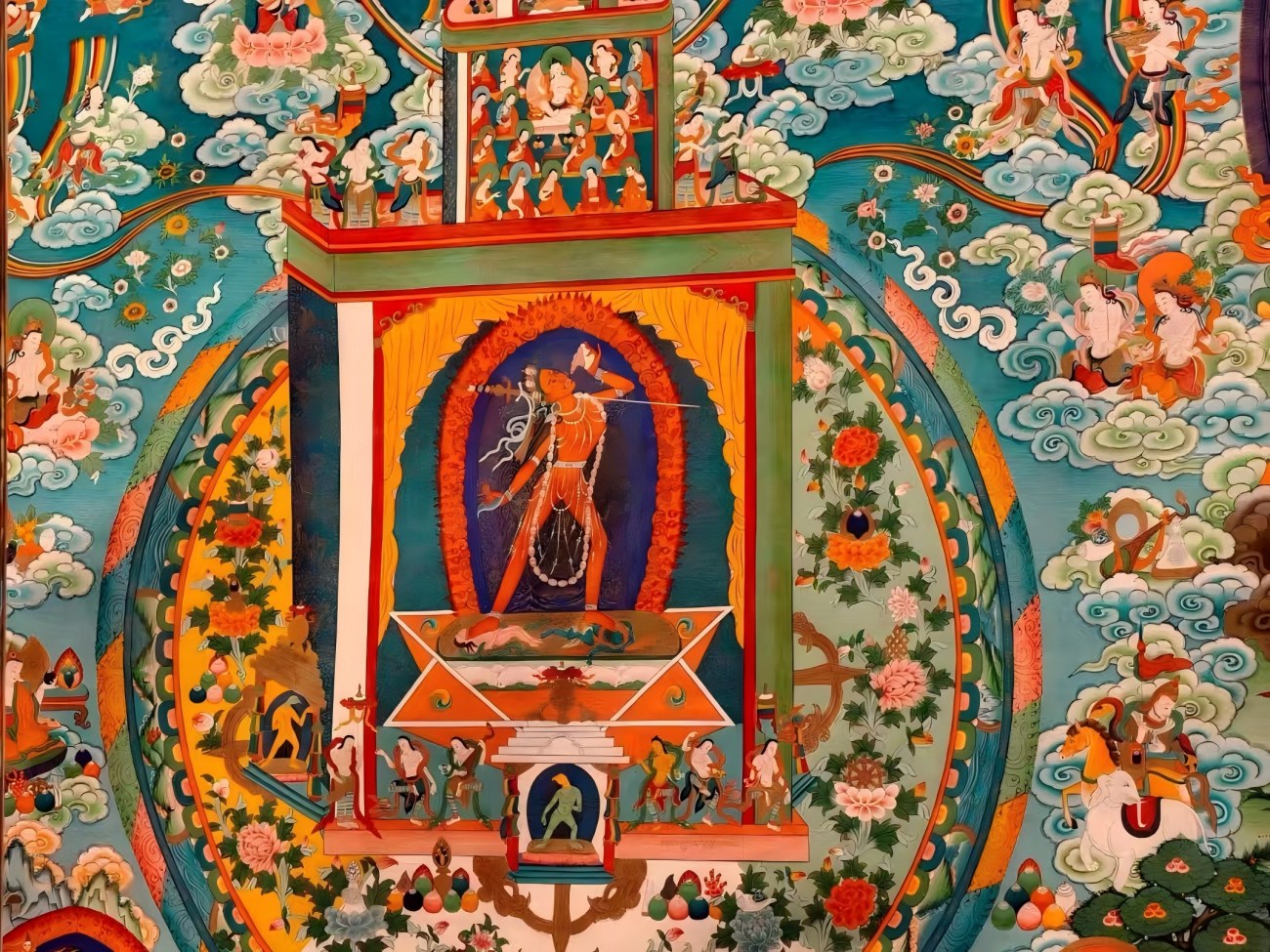
Inside the Jokhang’s halls and corridors, nearly a thousand murals and hundreds of precious thangkas form a stunning visual chronicle of Tibetan faith and history. These artworks are among the most treasured examples of ethnic art in China.
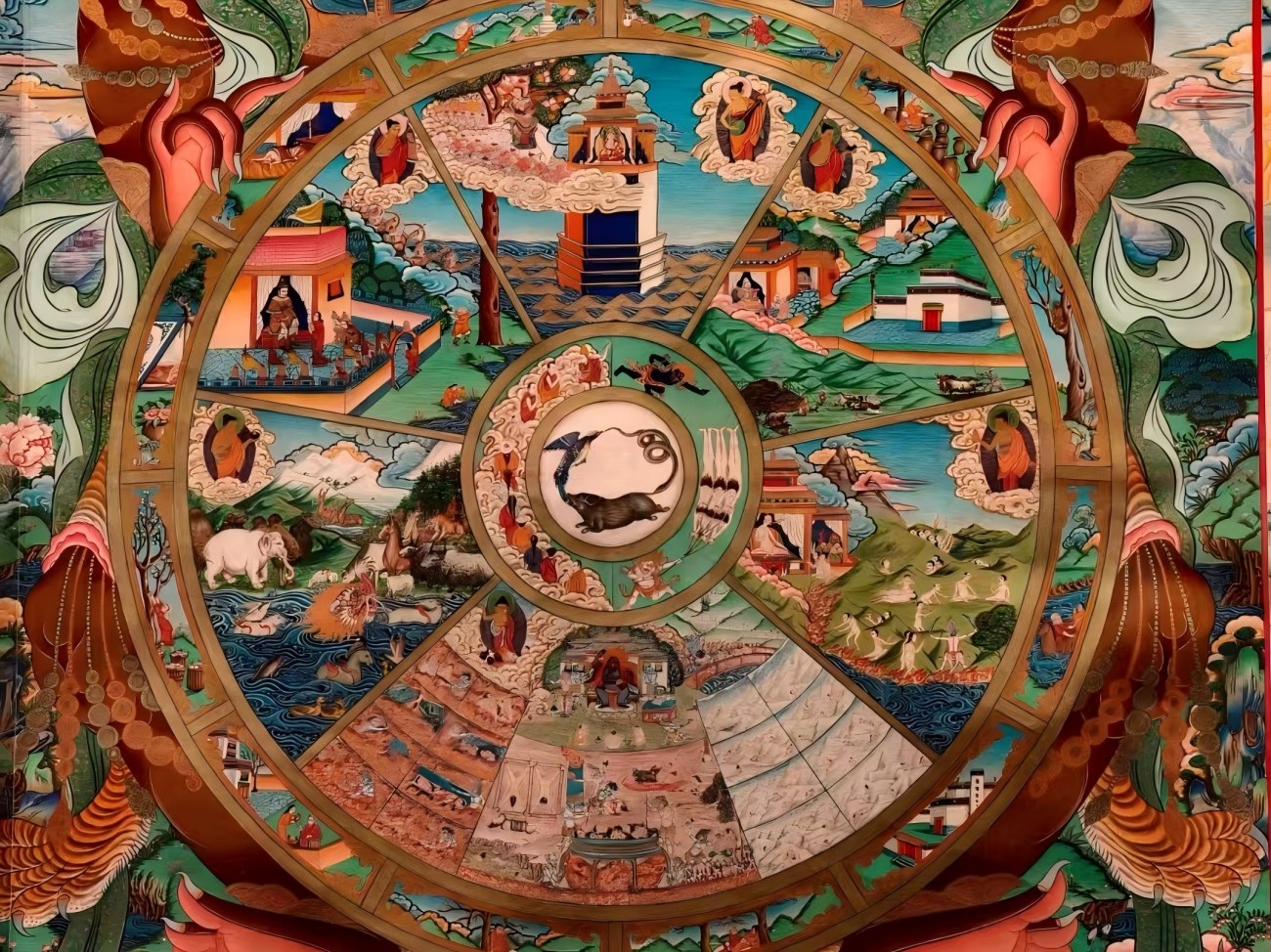
The murals feature a rich range of themes—from Buddhist cosmology and deities to historical scenes like the marriage of Songtsen Gampo and Princess Wencheng, and cultural exchanges between Tang and Tibet.
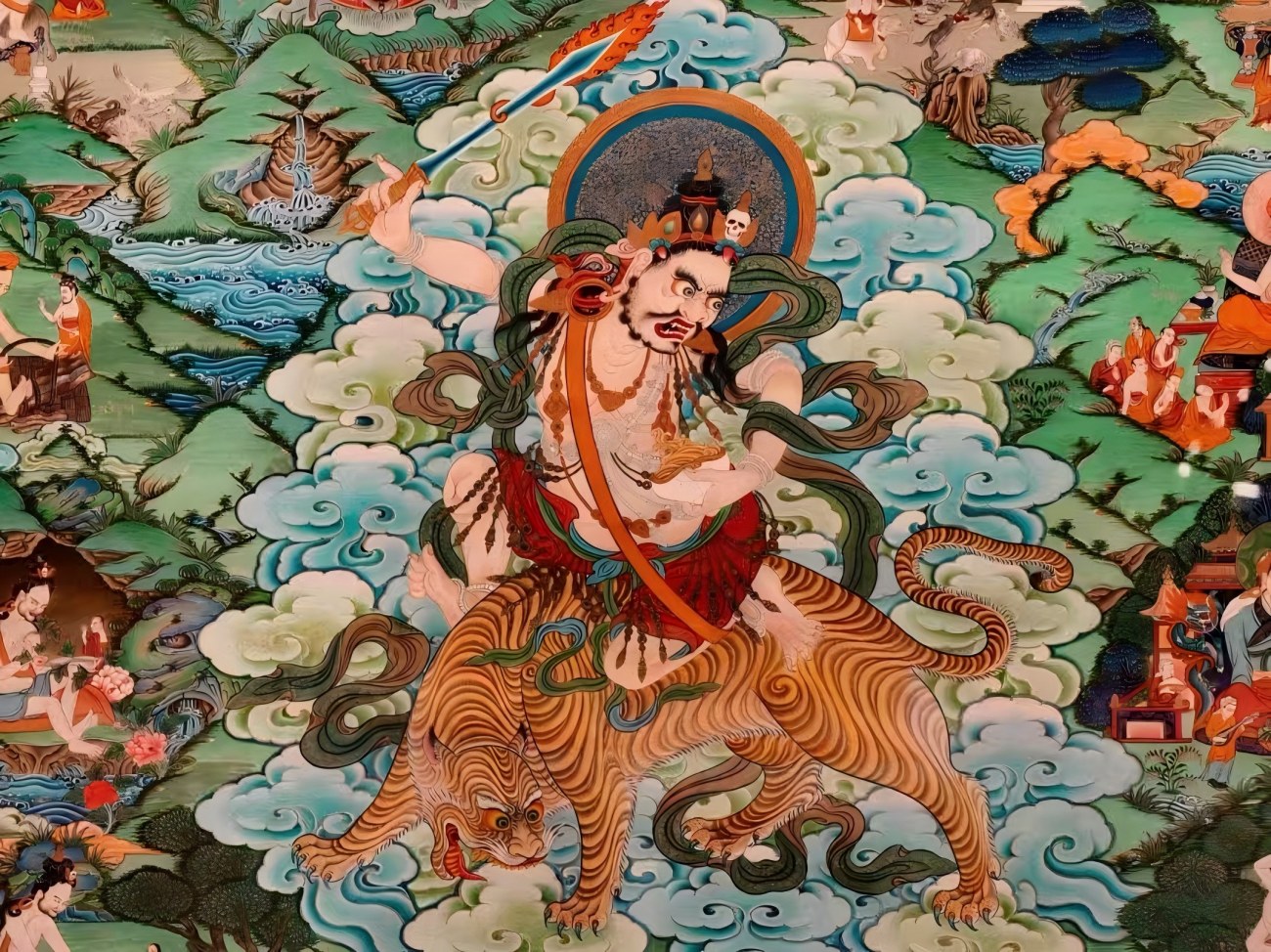
Painted using traditional Regong art techniques, the murals are known for smooth lines and rich mineral colors that remain vibrant even after a thousand years. One of the most famous works, Princess Wencheng’s Journey to Tibet, vividly depicts her travel from Chang’an (today’s Xi’an) to Lhasa, showing Han Chinese silk, tea, and farming tools alongside Tibetan snow mountains and grasslands—a beautiful snapshot of cultural fusion.
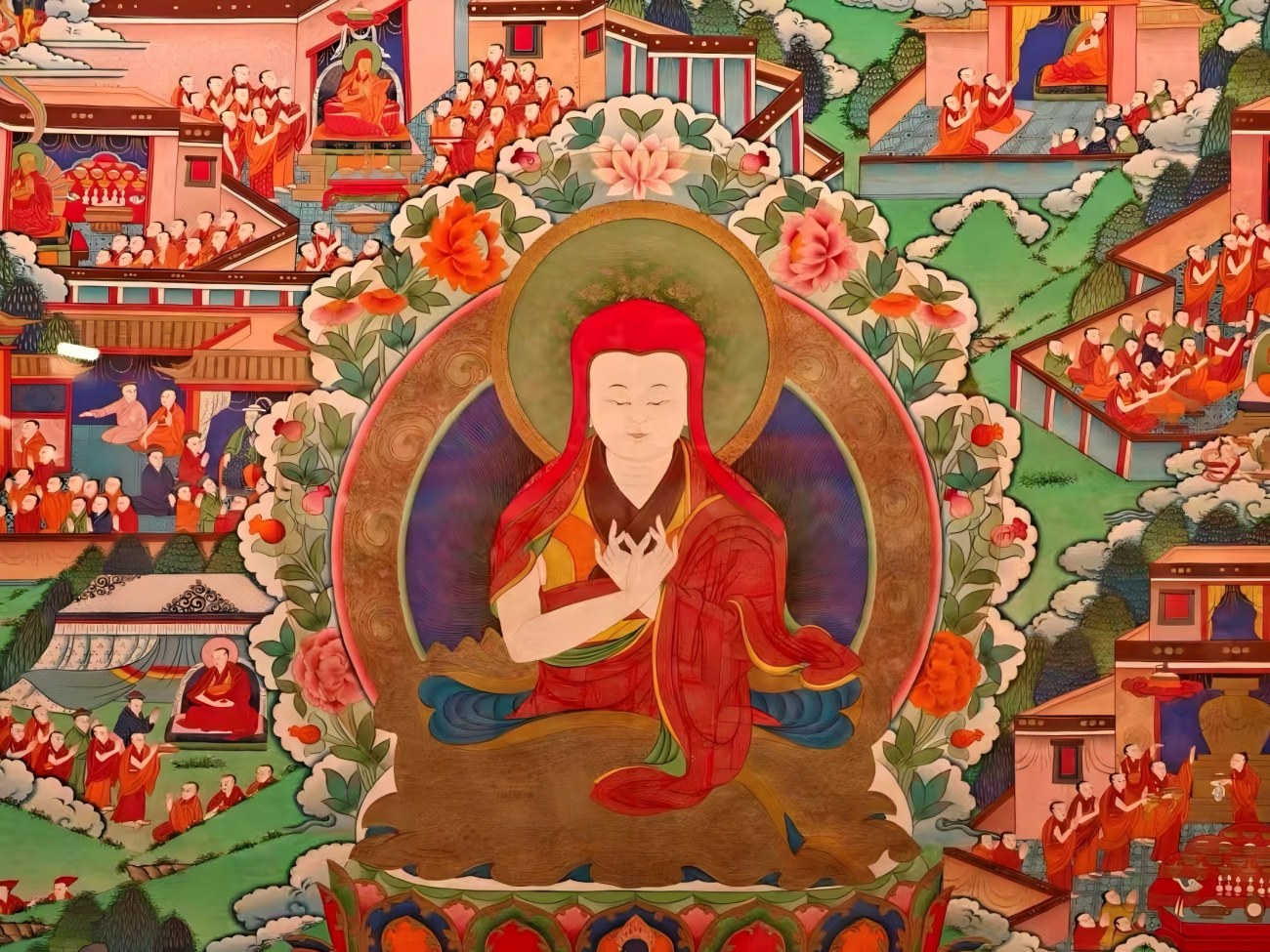
Thangkas, made of silk and crafted using embroidery, appliqué, and painting, are equally impressive. One standout is a 5-meter-long Qing Dynasty thangka illustrating the life stories of Shakyamuni—a true masterpiece.
4. Architectural Splendor: Main Hall & Golden Roof
The Jokhang Temple showcases the best of Tibetan architecture, blended seamlessly with Han Chinese influences. The main hall follows a circular layout inspired by traditional Chinese courtyard design, while its pillars, brackets, and carvings reflect Tibetan craftsmanship. The pillars are decorated with Tibetan Buddhist motifs, and the brackets are carved with flying apsaras and lotuses—exquisite in detail.
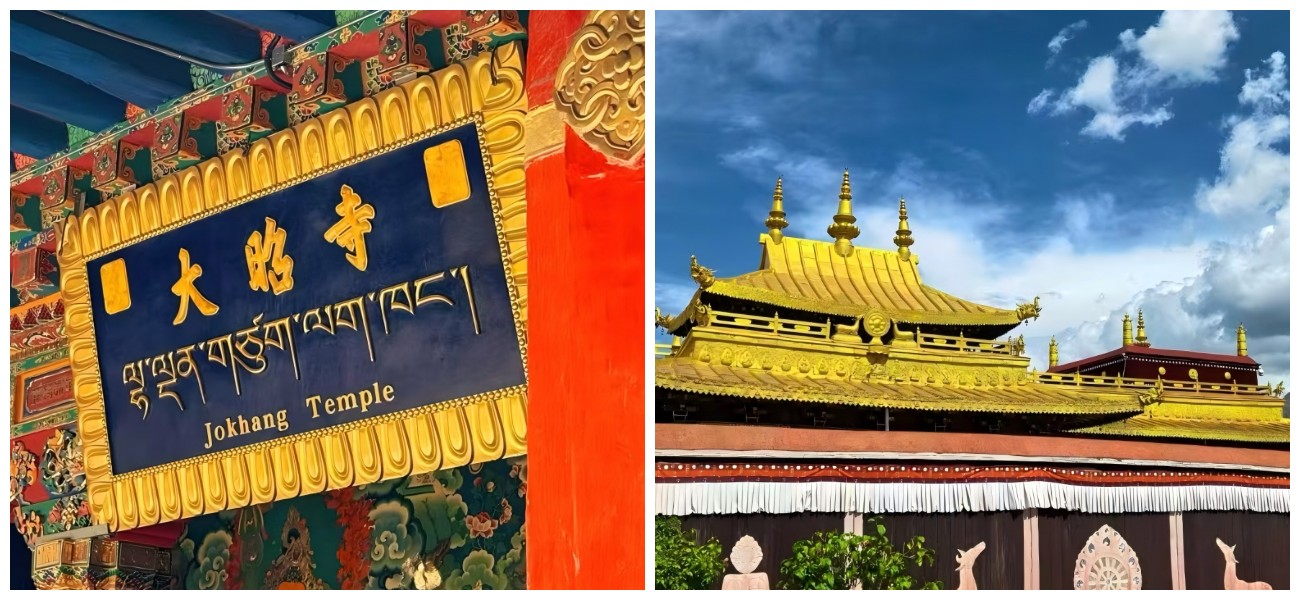
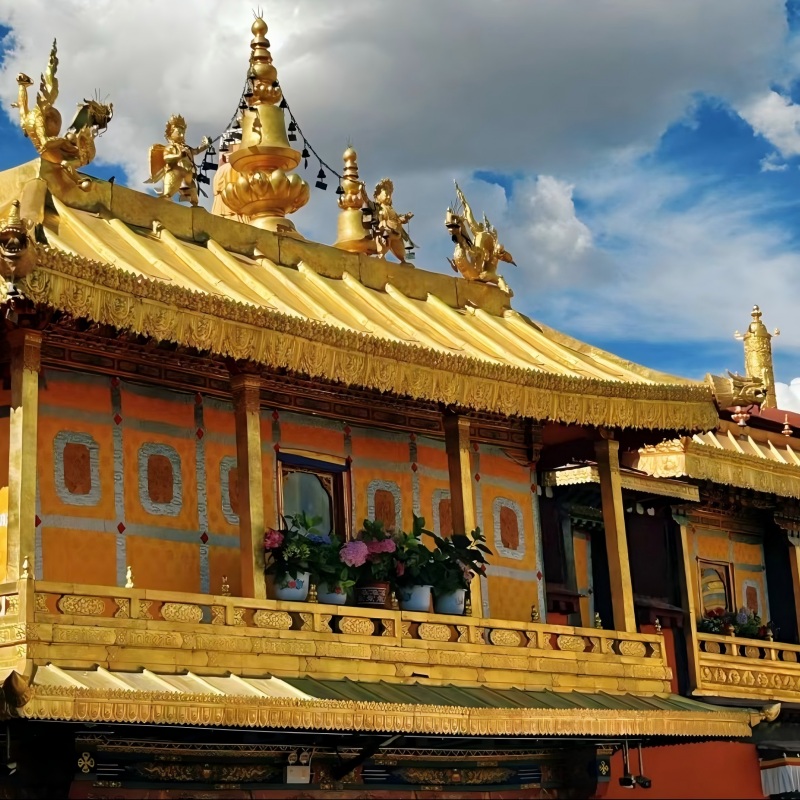
The temple’s golden roofs are one of its most iconic features. Made up of five gilded structures above the main chapels, they are designed in the Chinese hip-and-gable style and decorated with dharma wheels, mythical beasts, and jeweled finials. They shine brilliantly under the sun, embodying a perfect fusion of Tibetan gilding techniques and Chinese roof architecture.
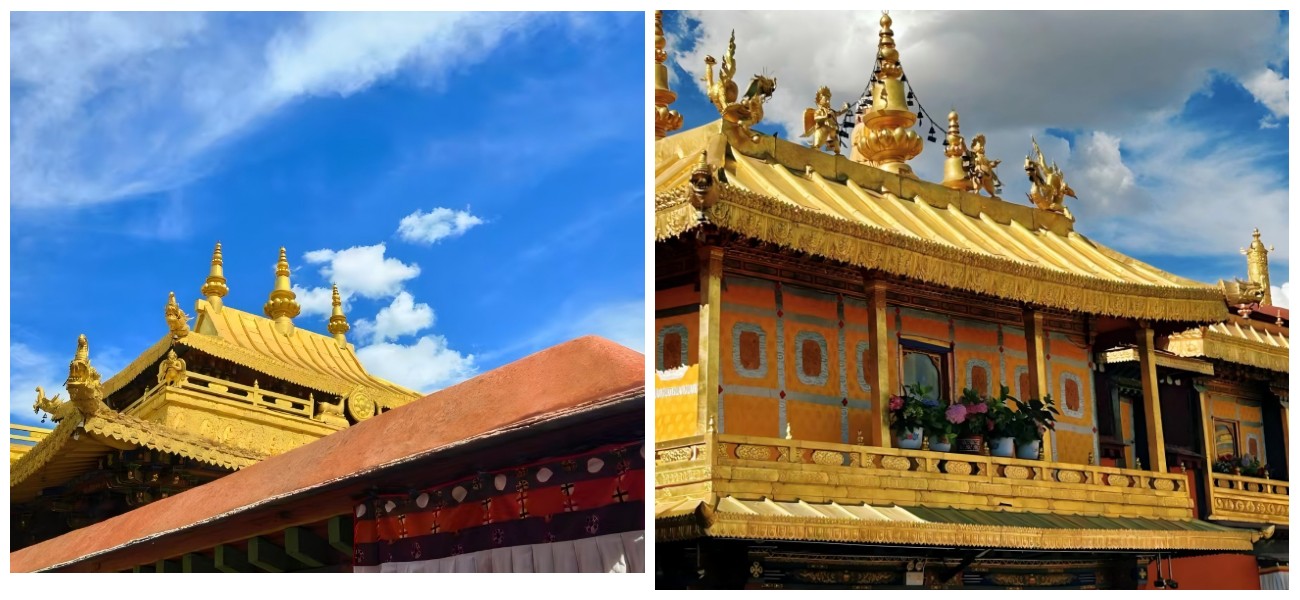
From the upper levels of the hall, you can enjoy a panoramic view of the golden roofs set against Lhasa’s old Tibetan houses—a signature scene of the city’s skyline. The outer walls are also embedded with Mani stones carved with the six-syllable mantra “Om Mani Padme Hum,” a common Tibetan Buddhist practice for blessings.
5. Faith in Motion: Barkhor Street & Pilgrim Circuit
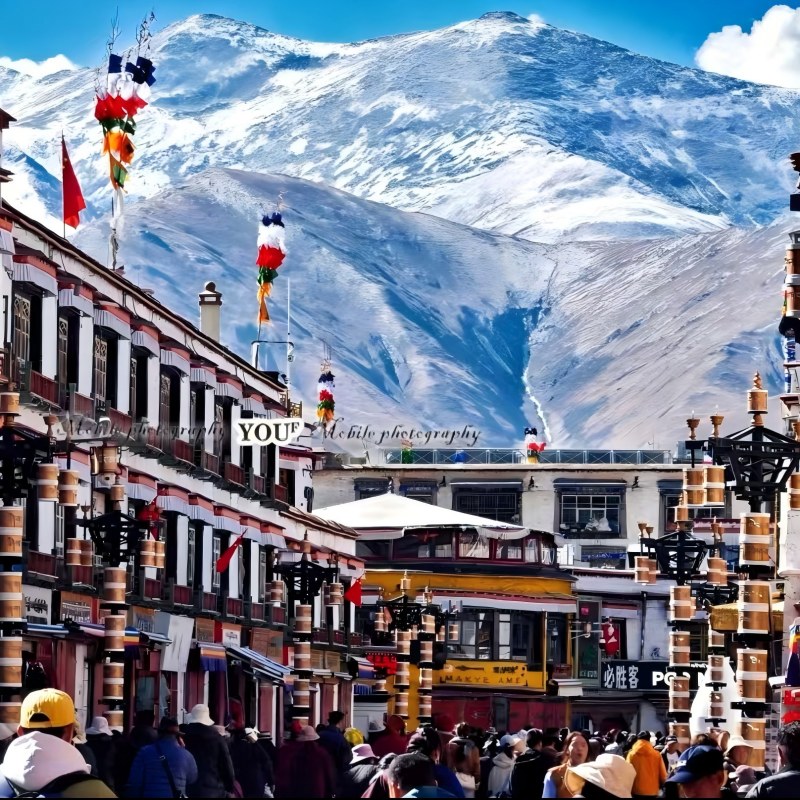
Just outside the Jokhang Temple lies Barkhor Street—the vibrant extension of the temple’s spiritual life and the most lively area in Lhasa. Originally a 1.5-kilometer pilgrim path circling the temple, it’s now a bustling mix of faith, culture, and commerce, recognized as part of a UNESCO World Heritage site.
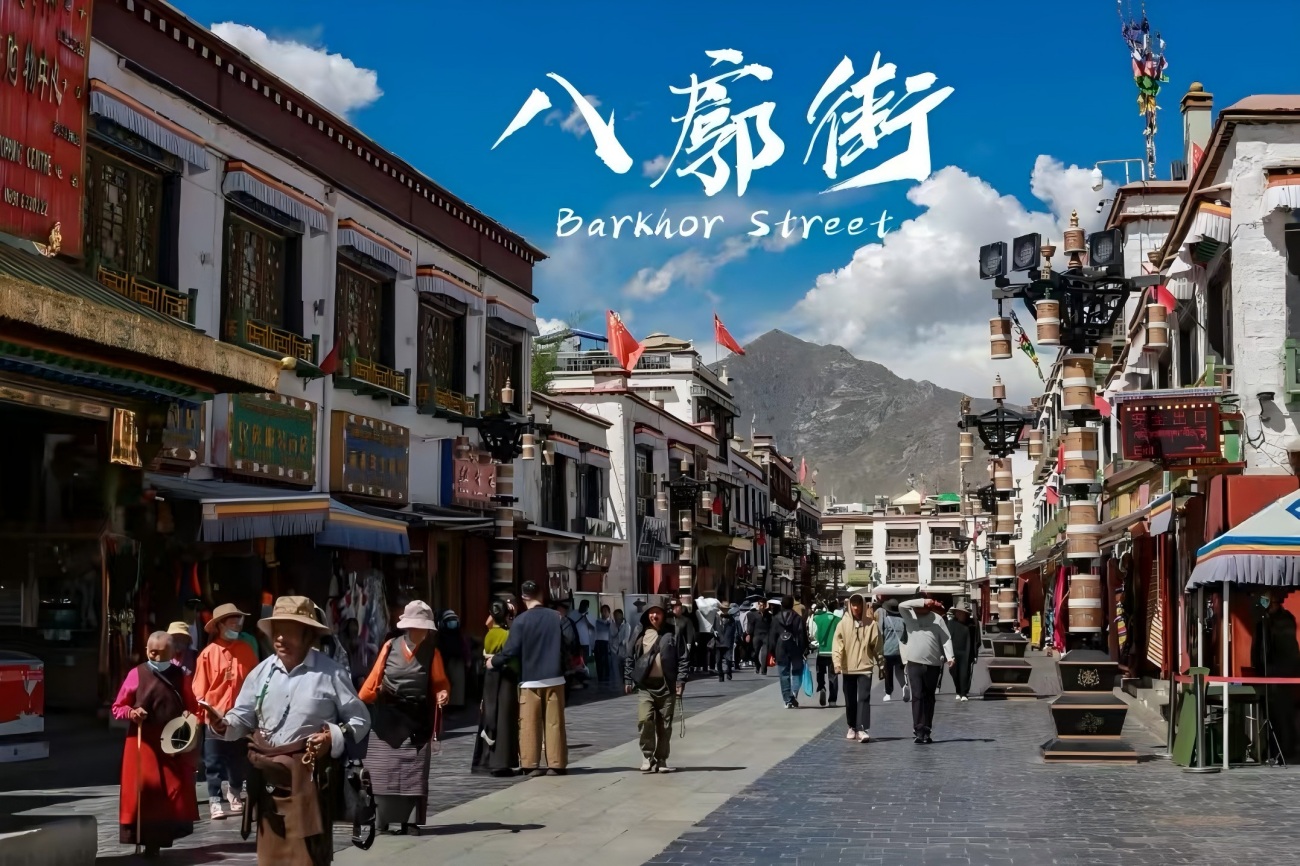
Every day, countless pilgrims walk the Barkhor kora (circumambulation) clockwise, spinning prayer wheels and chanting sutras with deep devotion. Along the route, you’ll find sacred sites like the Tang Willow Park, where a willow tree was planted by Princess Wencheng, and a branch of the Tibet Museum housing important Buddhist scriptures.
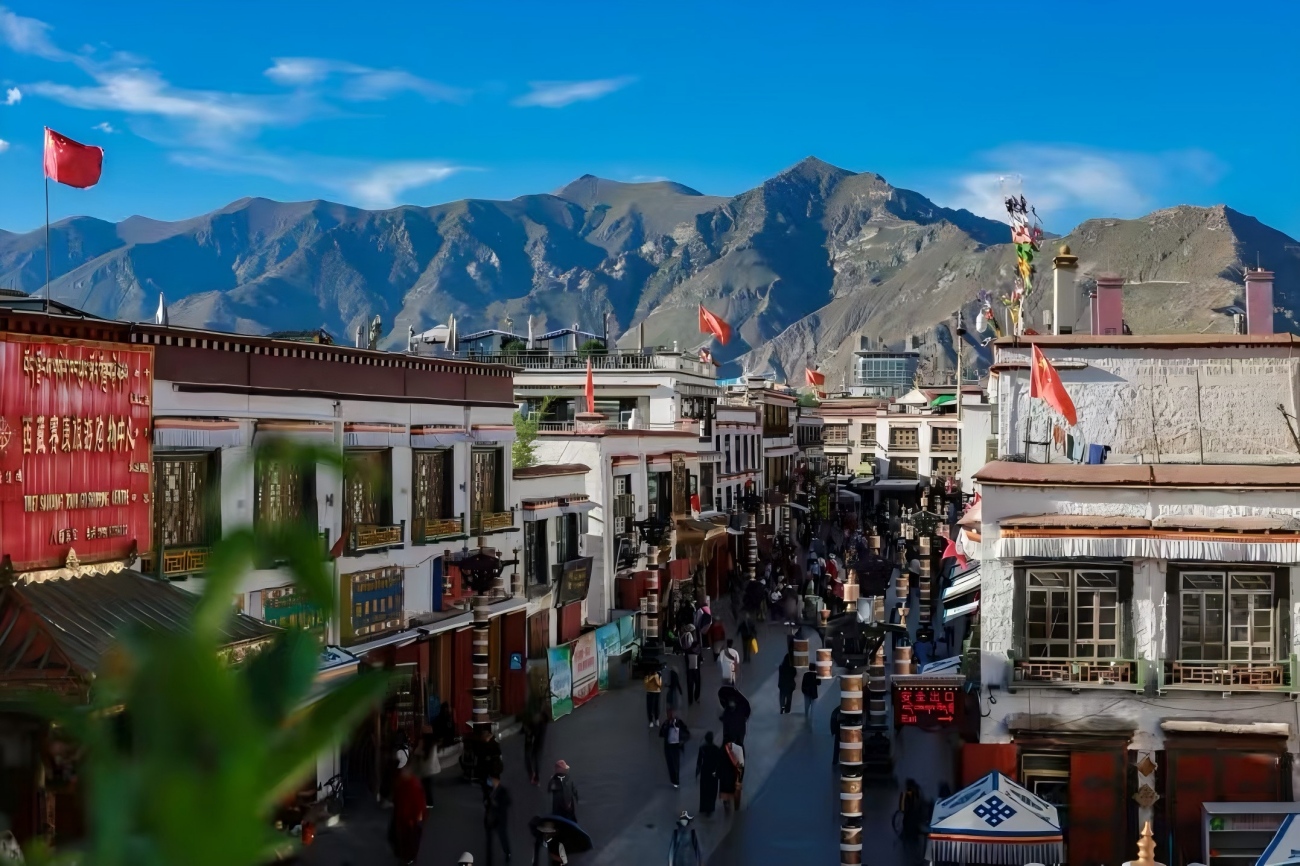
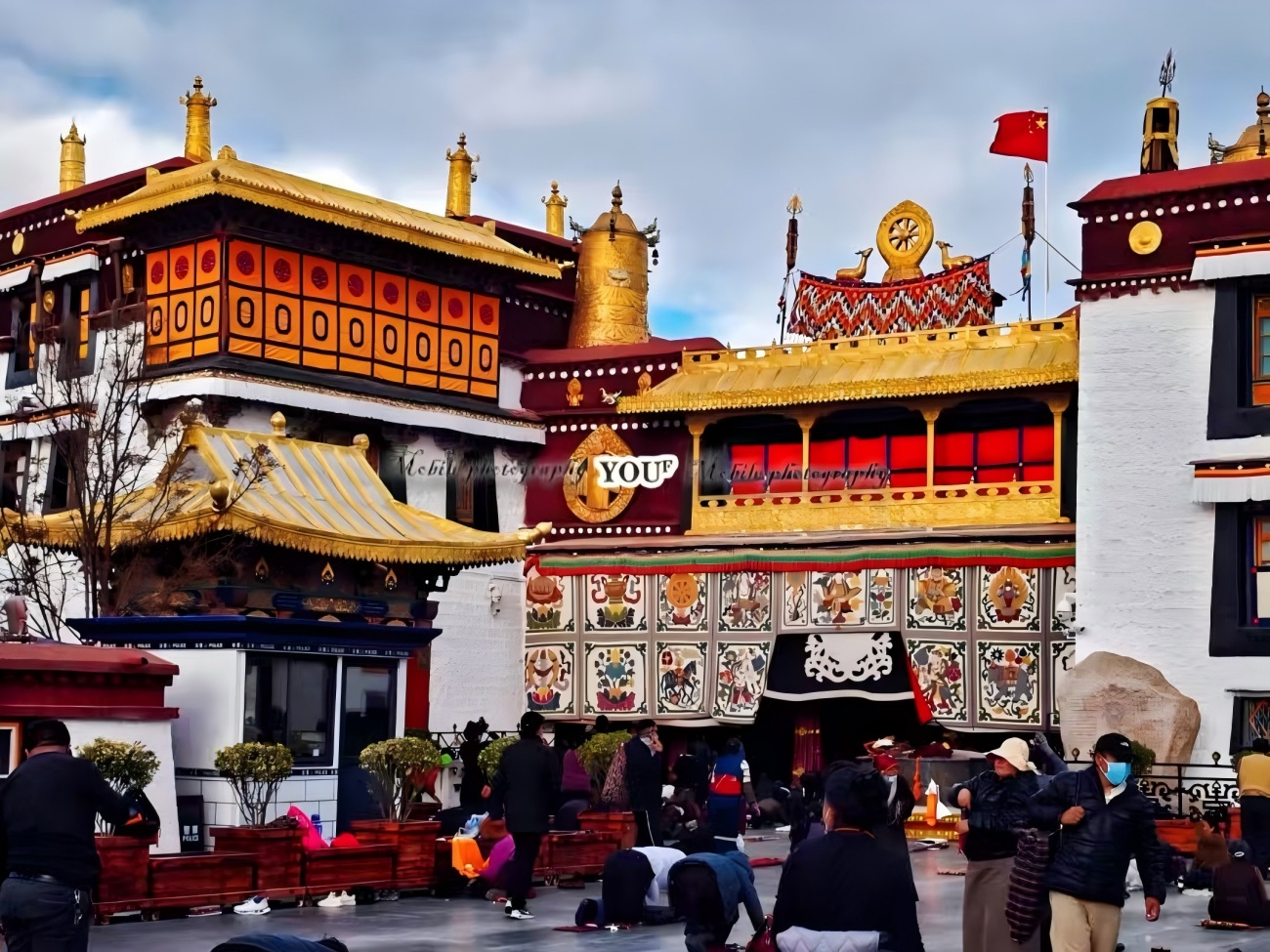
The street is also lined with Tibetan-style shops selling thangkas, incense, butter tea, and local jewelry—a perfect place to feel the blend of traditional life and modern vibrancy. Barkhor Street grew because of the Jokhang Temple’s spiritual significance, making it a living symbol of Han-Tibetan cultural exchange.
6. A Taste of Tibet: Must-Try Local Foods
After exploring the spiritual and cultural richness of the Jokhang Temple, treat your taste buds to some authentic Tibetan flavors. Here are four local favorites you shouldn’t miss:
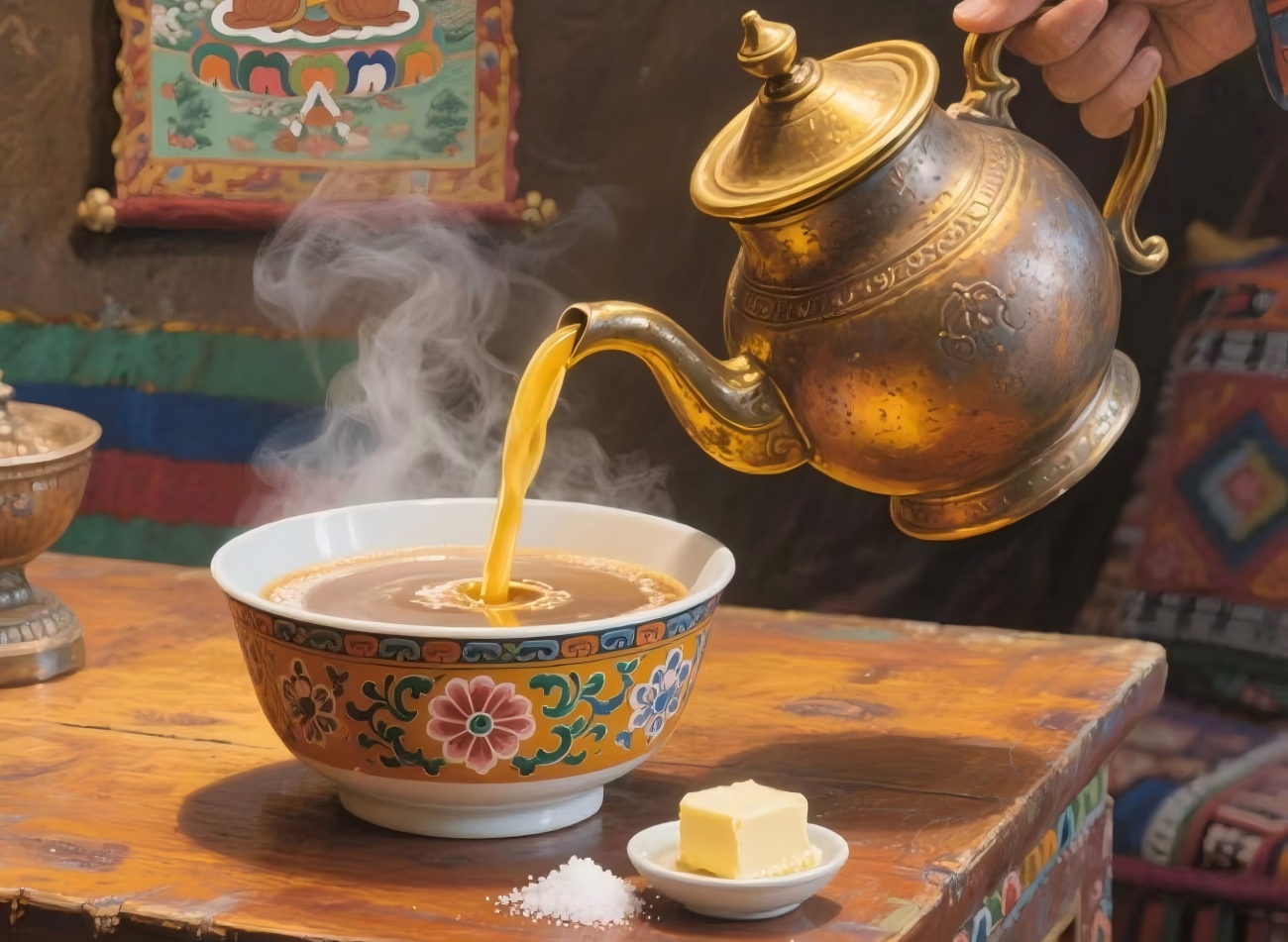
Butter Tea
A daily essential for Tibetans, this rich tea is made with yak butter, tea leaves, and salt. It helps combat the cold and can ease mild altitude sickness. The taste may be strong at first—try a small cup and savor its unique warmth.
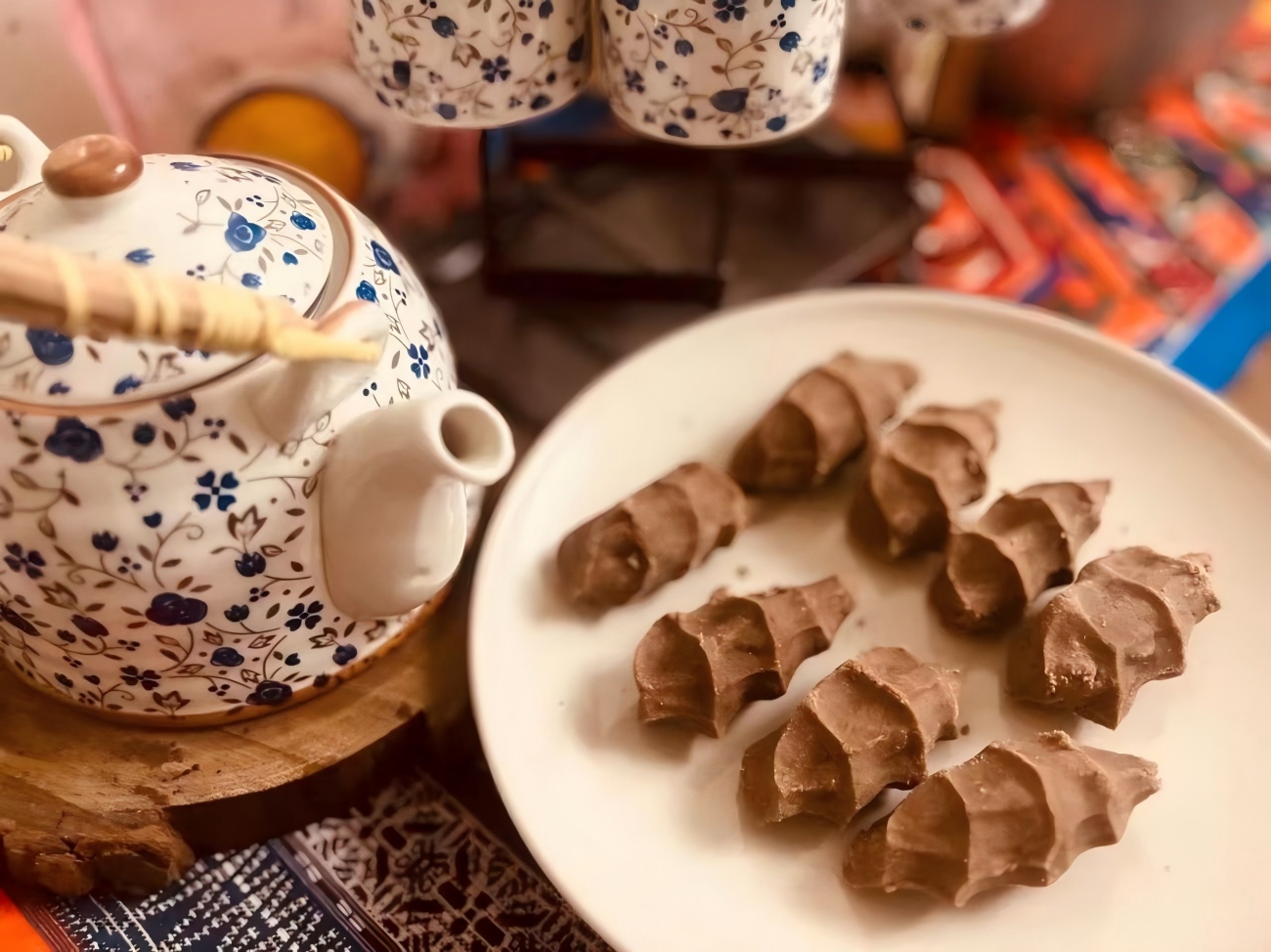
Tsampa (Roasted Barley Flour)
Tsampa is a Tibetan staple made from roasted barley. Mixed with butter tea or barley wine and shaped into small balls, it’s nutritious, portable, and perfect for nomadic life. Its simple, nutty flavor offers a true taste of the highland.
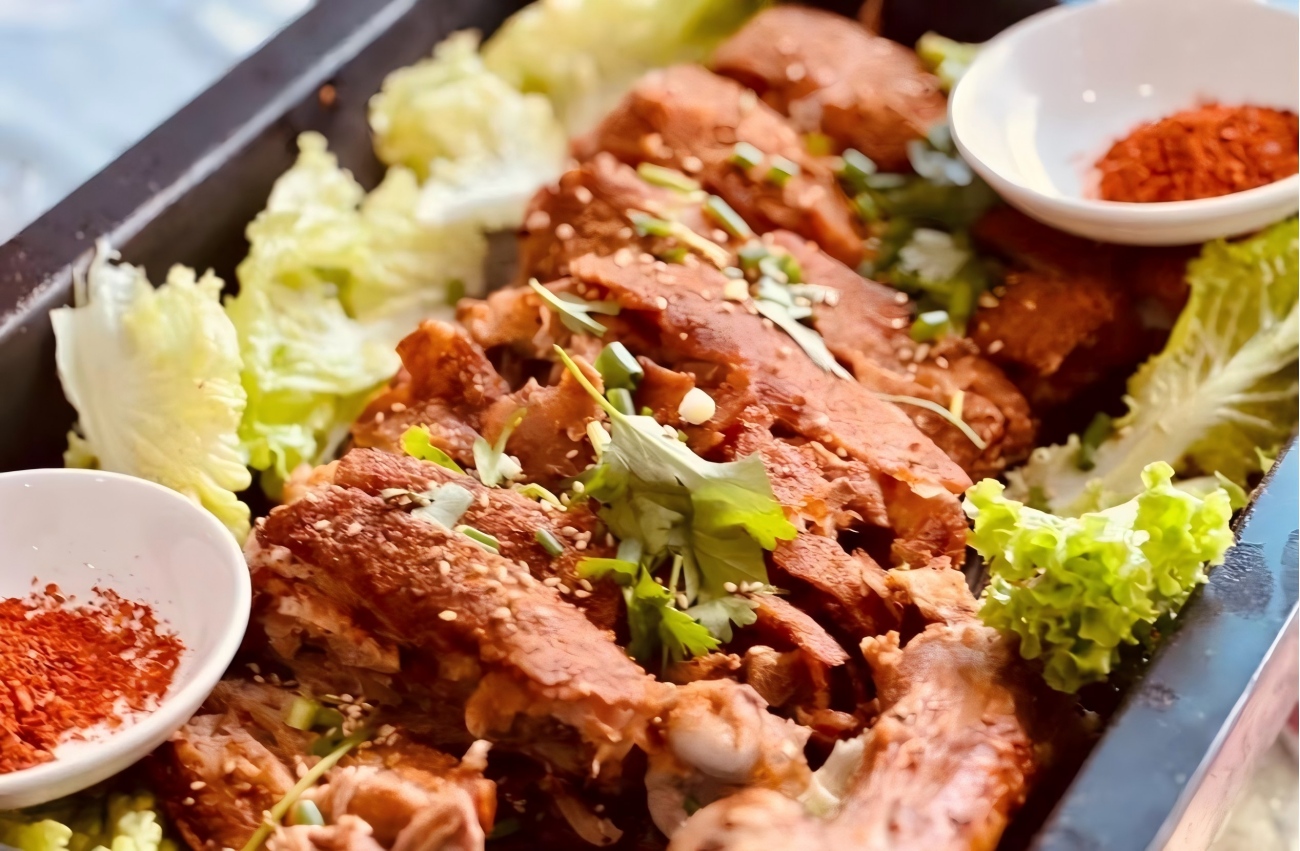
Tibetan Fragrant Pig
This free-range pig is a local delicacy. Raised on natural grasses in the highlands, its meat is tender and flavorful, without any gamey taste. Try it braised or roasted for an authentic Tibetan meal.
Yogurt Rice
A refreshing and slightly sweet dessert made with thick Tibetan yogurt, rice, and a bit of sugar. Loved by locals and travelers alike, it’s a perfect way to end your meal.
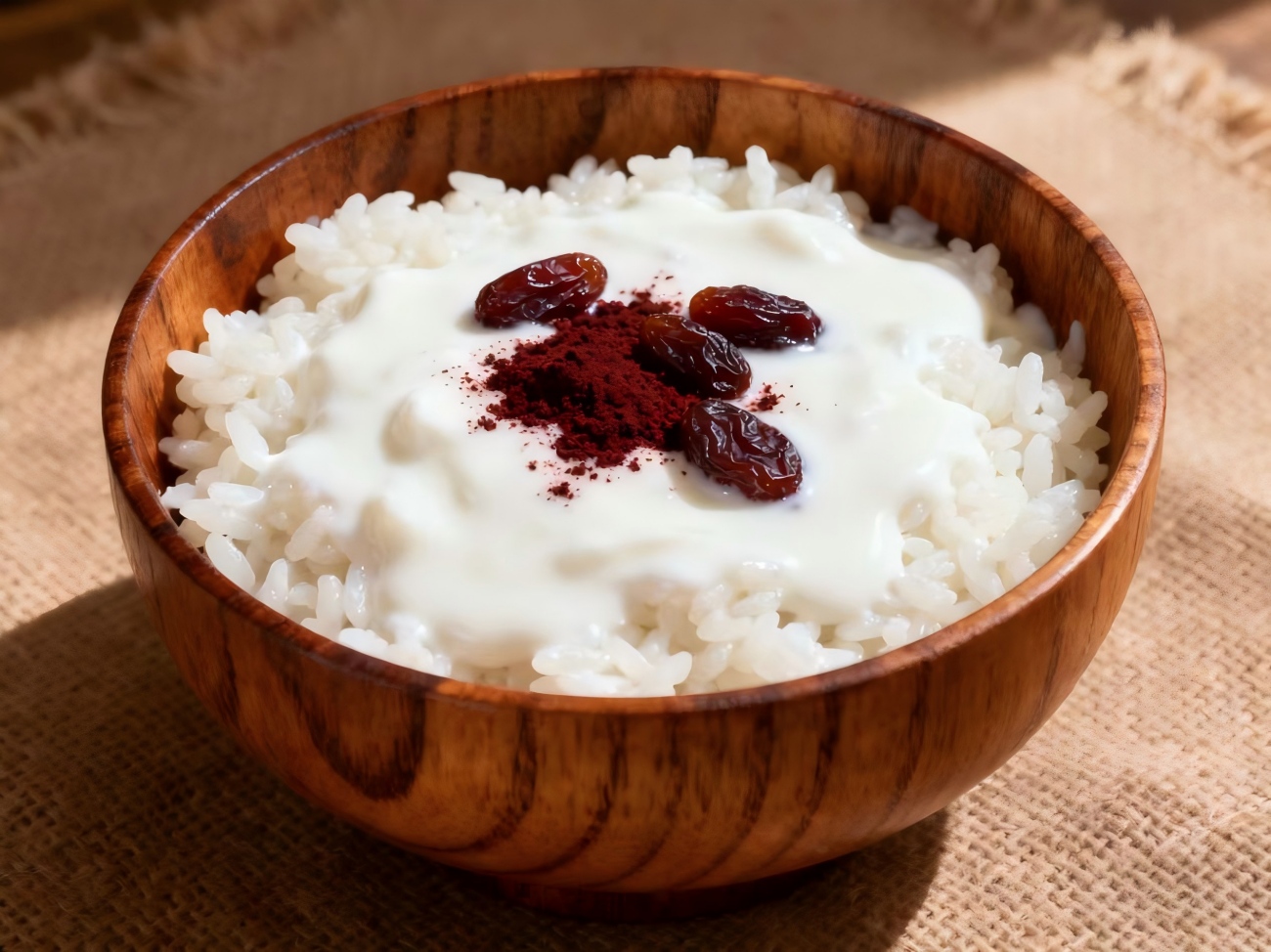
You can find all these dishes in Barkhor Street’s restaurants—where tasting local food is also a cultural experience.
Farewell, Friends
As our tour of the Jokhang Temple comes to a close, we hope you’ve felt the depth of its spiritual heritage and witnessed the lasting connection between Han and Tibetan cultures. From the Buddha statue brought by Princess Wencheng, to the Tang-Tibet Alliance Stele; from the blended architecture to the historic murals and delicious Tibetan cuisine—every detail reflects the diversity and richness of Chinese civilization.
We hope this “cloud-level” journey has left you with a sense of Lhasa’s sacred warmth and timeless stories. May we one day meet here in person—in the heart of Tibet.
【 Om Mani Padme Hum 】