Tashilhunpo Monastery Tour
【Discover Tibet's Spiritual Jewel with HuaTu: Your Curated Journey to Tashilhunpo Monastery】
Tired of crowded tours? Explore Shigatse’s Tashilhunpo Monastery—one of Tibet’s most sacred grade gems—with HuaTu Travel. Designed for overseas travelers who seek depth and flexibility.
✅ Why Choose Our 5A Custom Experience?
Menu-Style Itineraries: Mix & match experiences—from the majestic Maitreya Chapel (world’s largest bronze Buddha) to serene thangka unveiling ceremonies.
No Planning Stress: We handle permits, guides, and transport. You enjoy a seamless, respectful journey into Tibetan Buddhist culture.
Authentic & Immersive: Engage with monastic life, taste local butter tea, and capture panoramic views from the Thangka Wall—all curated with respect and insight.
Travel deeper, without the hassle. Let HuaTu craft your perfect Tibetan spiritual encounter.
📩 DM to customize your private tour. Unveil the soul of the Himalayas .
A Sacred Wonder at the Foot of Mount Niseri: The Tashilhunpo Monastery
Hello, friends from around the world! I'm your guide for today's exploration of the magnificent Tashilhunpo Monastery. We're standing here in Shigatse, Tibet, often called the "Roof of the World." Before us lies one of the six great monasteries of the Gelug school of Tibetan Buddhism and the spiritual heart of the Tsang region. Its name, "Tashilhunpo," means "Heap of Glory" in Tibetan. Founded in 1447, this sacred site holds centuries of religious wisdom, countless captivating stories, and rich cultural secrets. Get ready to step inside and embark on a journey through time!
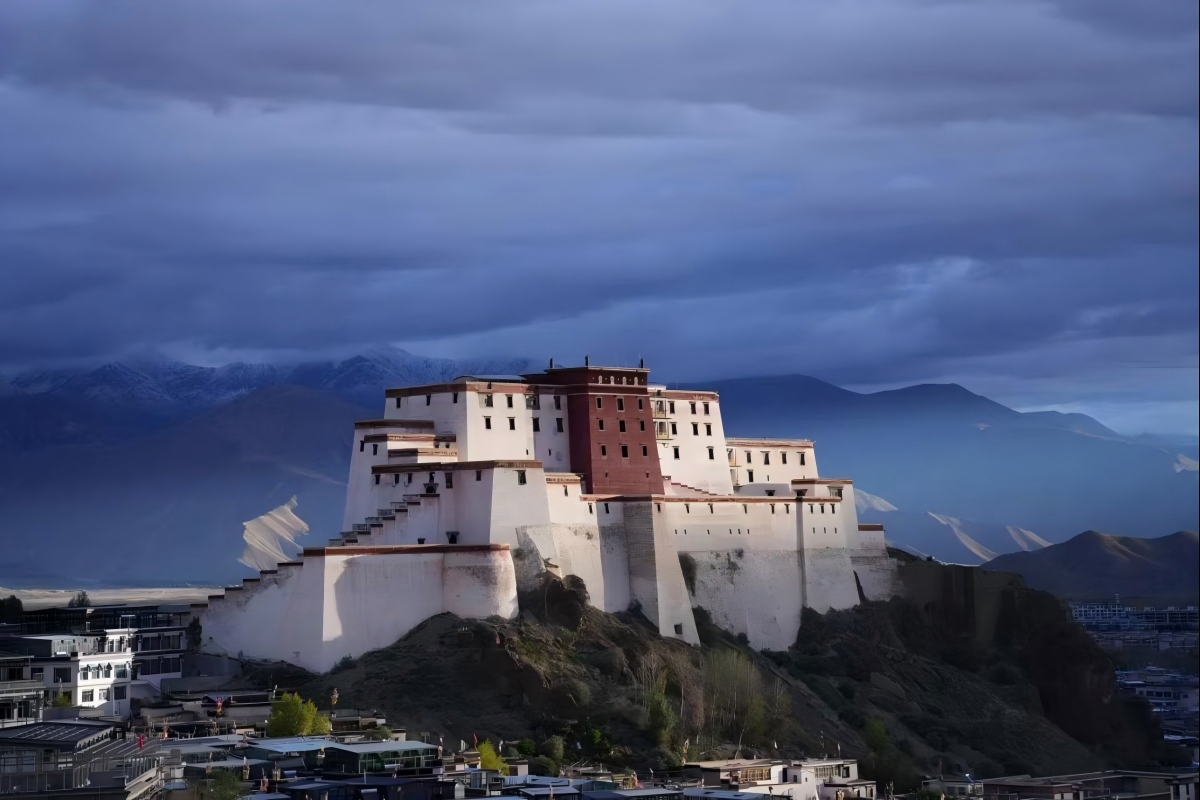
Before we begin, let's dive into a bit of history. In 1447, Gendun Drup, a principal disciple of the great Tsongkhapa (founder of the Gelug school), established this monastery to promote its teachings. He was later recognized as the 1st Dalai Lama. Tashilhunpo eventually became the traditional seat of the Panchen Lamas, creating a significant religious center that echoes the importance of the Potala Palace in Lhasa. Over the centuries, the monastery has been expanded and restored, preserving priceless statues, murals, scriptures, and standing as a testament to the deep cultural exchange between Tibetan and Han Chinese cultures.
1. The Tsokchen Hall: The Heartbeat of the Monastery
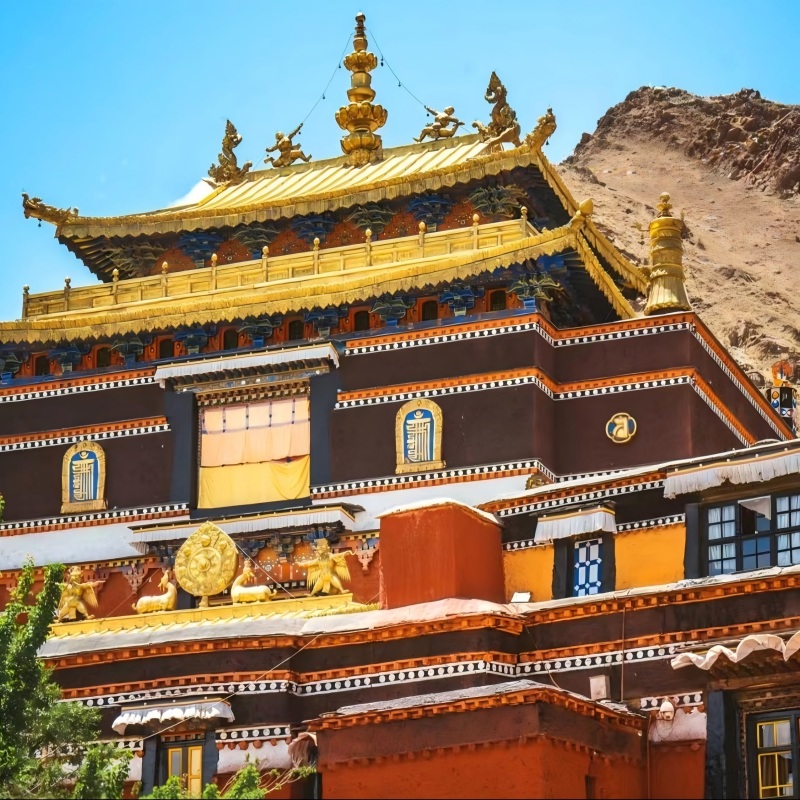
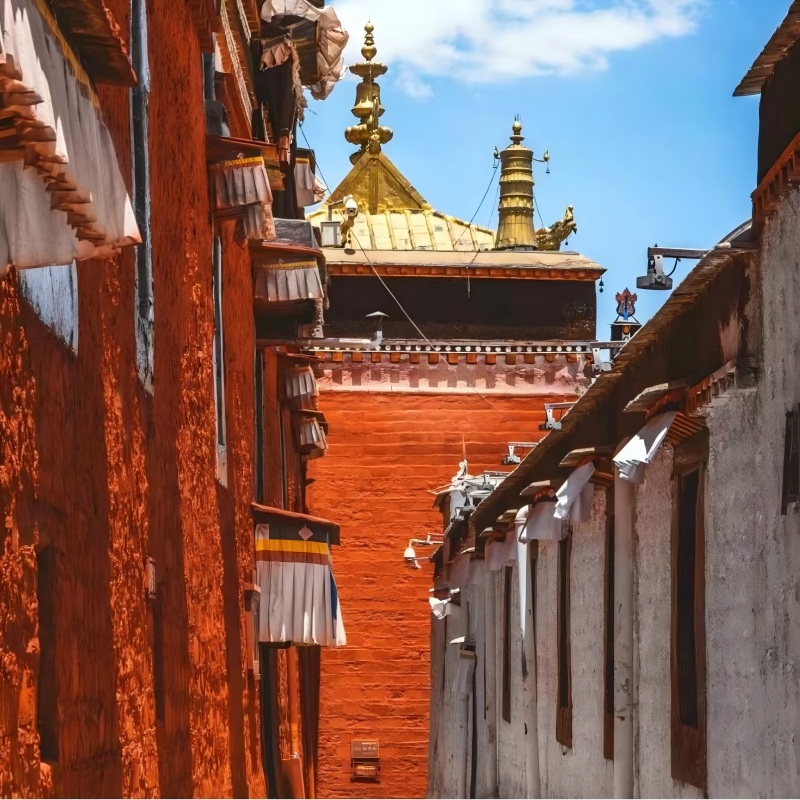
Our first stop is the Tsokchen Hall, the absolute core of Tashilhunpo, where the most important ceremonies take place. Built from 1447 onwards and expanded by successive Panchen Lamas, this massive hall covers nearly 43,000 square feet! Its classic Tibetan fortress-style architecture, with towering earth-and-stone walls and a gleaming golden roof, is both majestic and deeply spiritual.
Inside, you can't miss the breathtaking 36-foot-tall gilded copper statue of Shakyamuni Buddha. Cast in 1461 under Gendun Drup's direction, it used over 1,300 taels of gold for the gilding alone. The Buddha sits in a posture of enlightenment, exuding serenity. Flanking him are statues of his ten chief disciples, all masterpieces of Tibetan Buddhist art.
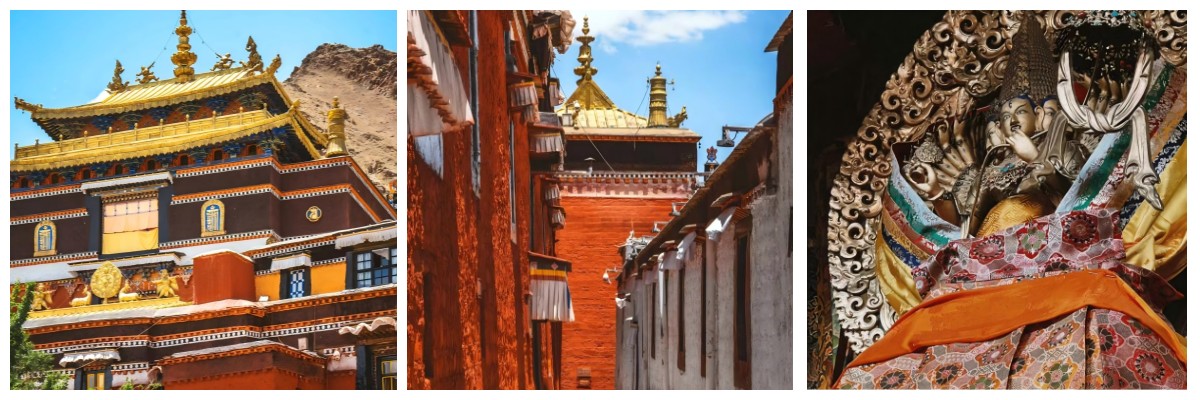
A touching story surrounds this statue: local people donated precious metals and jewels to help create it. It's said an elderly woman offered her only silver ring, her profound devotion moving the master so much that he had an inscription added to the lotus throne base to commemorate the people's faith. During major festivals, this hall fills with chanting monks and devoted pilgrims—an unforgettable, powerful experience. Don't miss the vibrant murals on the walls, painted with mineral pigments centuries ago, depicting the life of Buddha and Gelug masters.
2. The Jamba (Maitreya) Buddha Chapel: Home to a Record-Breaking Giant
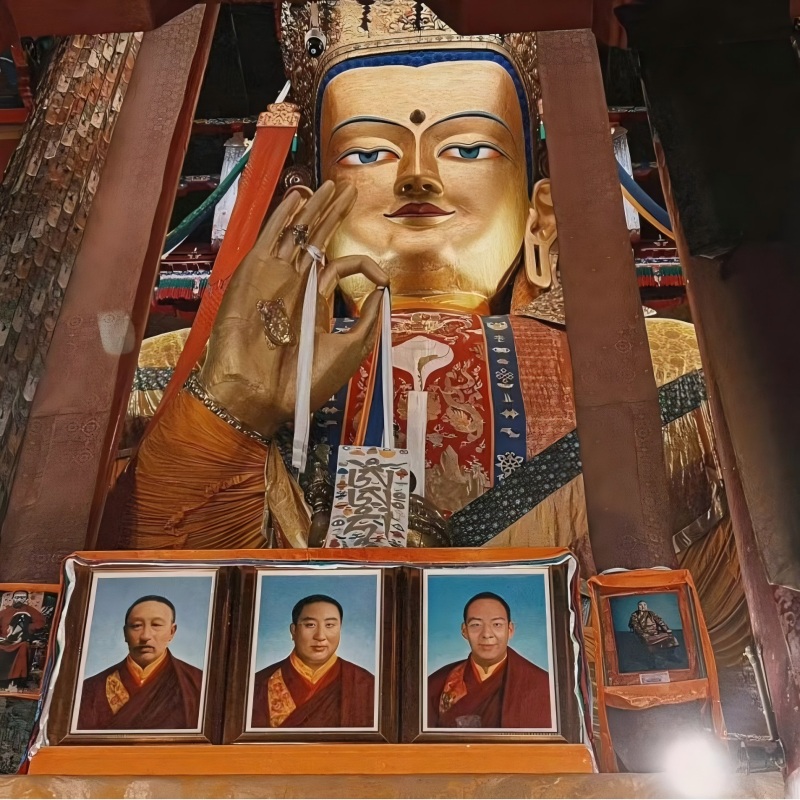
Next, we visit one of Tashilhunpo's most iconic sights: the Jamba Buddha Chapel. This is where you'll find the world's largest gilded bronze statue of Maitreya, the Future Buddha—a symbol of hope and joy.
This colossal statue is an engineering marvel. Built between 1914 and 1918 under the 9th Panchen Lama, it required over 280,000 pounds of copper and 8,000 taels of gold, along with countless precious jewels. The statue itself is a staggering 86 feet tall, sitting inside a five-story chapel it almost entirely fills! Its serene face, crowned and robed in intricate, jewel-encrusted garments, is awe-inspiring. Many of these jewels were donated by devotees, each carrying their prayers for the future.

Here's a cool fact: the project was a major collaboration. The then-Republic of China government provided funds and sent skilled artisans from inland China to work alongside Tibetan craftsmen. This statue isn't just a religious icon; it's a symbol of Han-Tibetan cultural fusion. On holy days, the chapel is packed with pilgrims offering scarves and butter lamps in a vibrant, colorful ceremony.
3. The Tashi Langyel: The Final Resting Place of the Panchen Lamas
Our journey continues to the Tashi Langyel, the stupa-tomb complex housing the reliquary stupas of most Panchen Lamas. "Tashi Langyel" means "Auspicious Heaven," a fitting name for this serene and sacred space. The complex was started in the 17th century and now contains eight stupas.
We'll see the Stupa of the 5th Panchen Lama, built in 1663—the oldest here. This 36-foot silver-gilded stupa is adorned with jewels and holds his relics, scriptures, and ritual objects. The 5th Panchen Lama was a key historical figure, promoting Buddhist teachings and national unity, even receiving a formal title from the Qing Emperor Shunzhi.
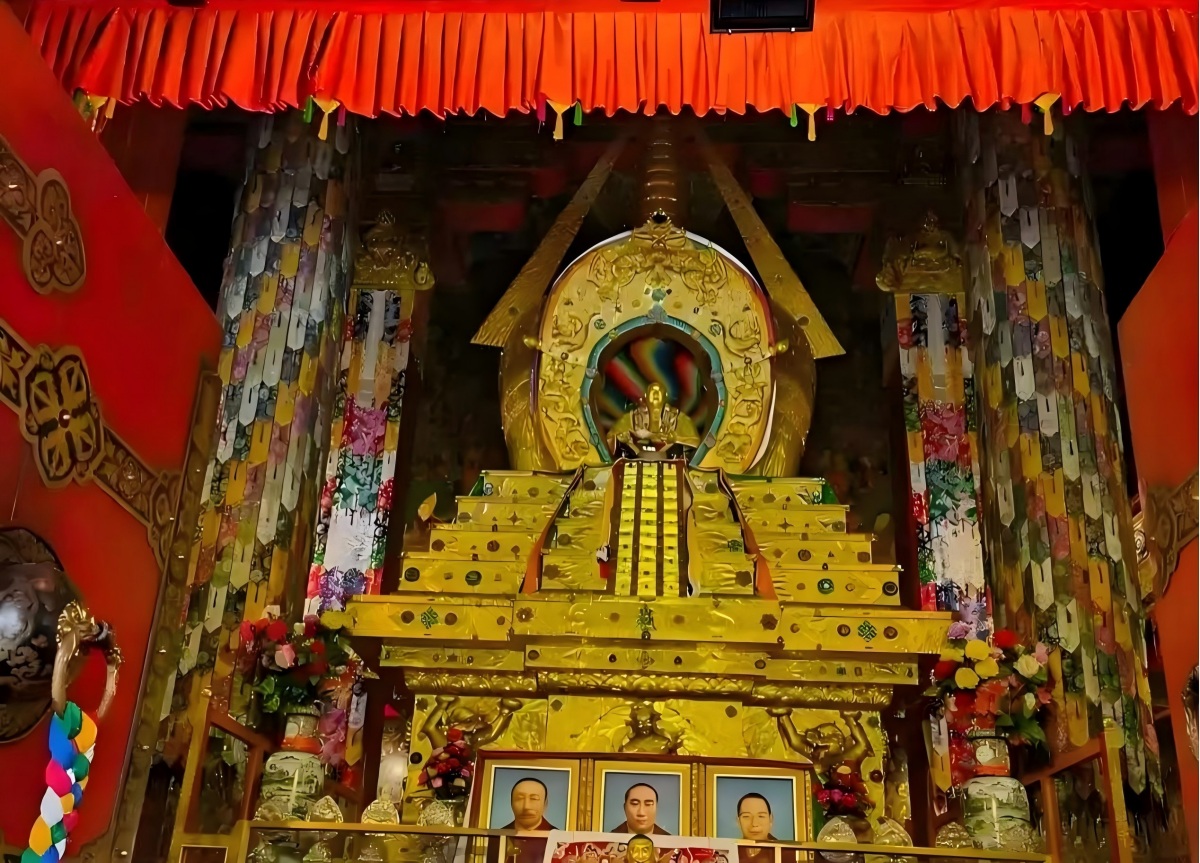
The most magnificent stupa here is for the 10th Panchen Lama. Completed in 1995, it's a masterpiece of modern Tibetan religious art. The 38-foot golden stupa is inlaid with over 2,000 jewels, including a massive 14-pound natural emerald! The 10th Panchen Lama was a great patriot, dedicating his life to national unity and Tibet's development. His final resting place is a site of deep respect and remembrance.
Throughout the Tashi Langyel, you'll find precious artifacts—ritual robes, implements, and manuscripts—that are invaluable for both religious practice and historical study. This place truly embodies the Tibetan Buddhist tradition of "loving the country and loving the faith."
4. The Shisoong Namgyel: A Memorial to the 10th Panchen Lama
Right nearby is the Shisoong Namgyel, a memorial complex built specifically to honor the 10th Panchen Lama. Its name means "Victorious and Auspicious." Constructed between 1990 and 1993 with state funding and donations from global believers, it represents the deep respect and protection for Tibetan culture.
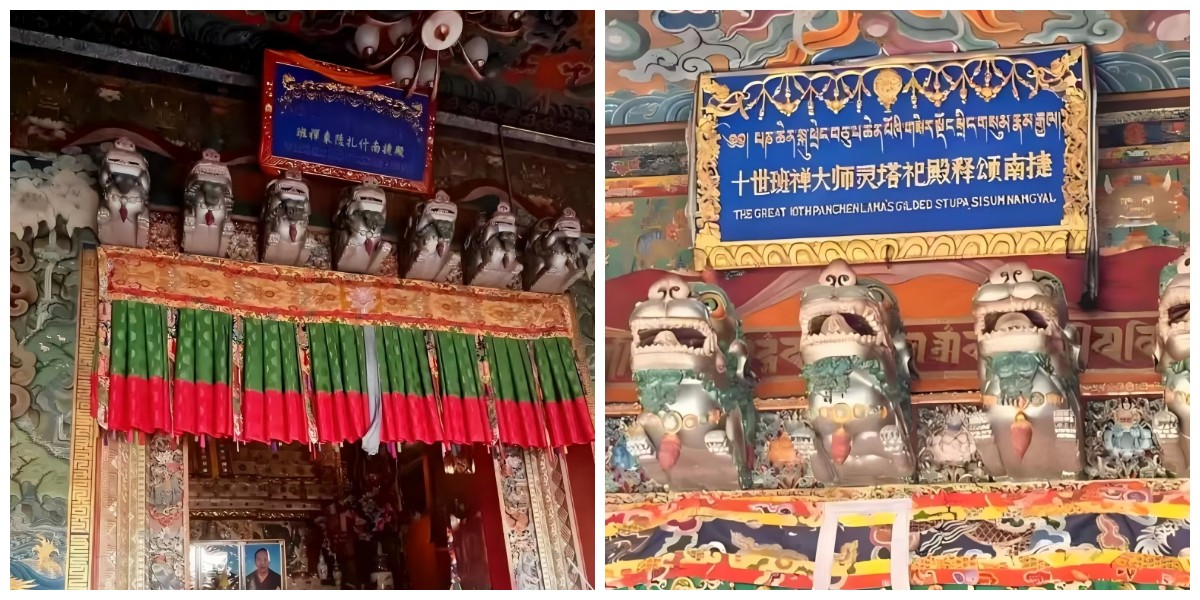
The architecture brilliantly blends traditional Tibetan styles with modern elements. Inside the main hall, you'll find another exquisite gilded copper stupa for the 10th Panchen Lama, accompanied by statues of Manjushri (Wisdom) and Avalokiteshvara (Compassion).
The complex also includes beautiful Buddha halls and scripture halls, housing finely crafted statues and priceless texts like the Kangyur and Tengyur. The murals depicting the 10th Panchen Lama's life and Buddhist stories are stunning examples of contemporary Tibetan art. This isn't just a memorial; it's a living center for cultural transmission, attracting pilgrims and curious visitors alike.
5. The Thangka Wall: The Himalayas' Most Spectacular Festival Stage
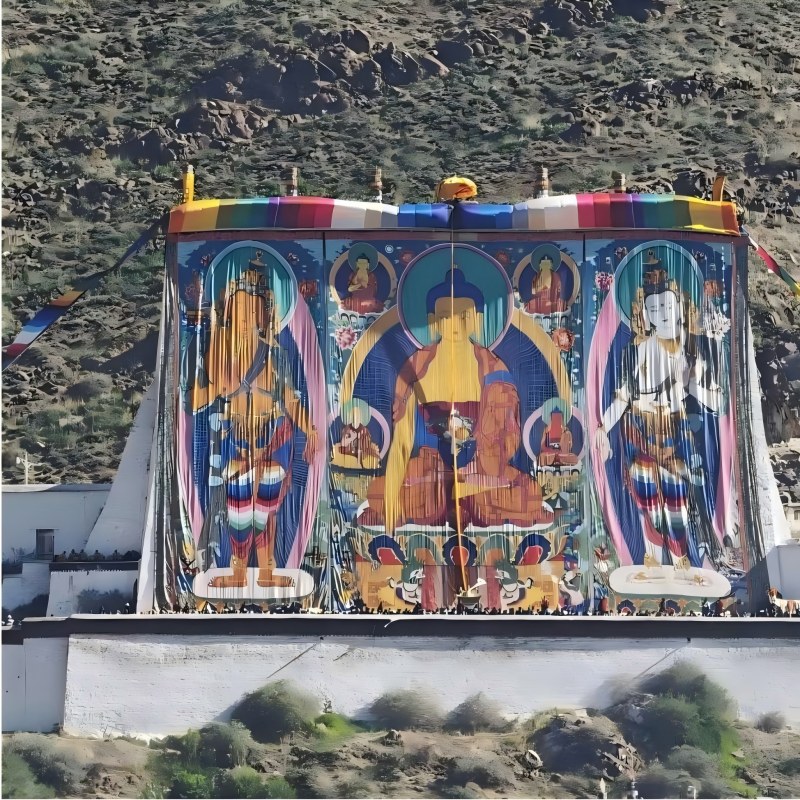
Up on the hillside behind us is the massive Thangka Wall, a 98-foot-high stone platform. This is the centerpiece for one of Tibet's most incredible festivals! Built in 1468, it's used during the Saga Dawa Festival (around May/June) to display giant embroidered thangkas (Buddhist scroll paintings).
The tradition started centuries ago practically: to air out and protect the precious, delicate thangkas from dampness. It evolved into a grand, celebratory event. Tashilhunpo has three giant thangkas—of Shakyamuni, Maitreya, and Tsongkhapa—each about 98 by 66 feet, painstakingly created by teams of artists using vibrant, long-lasting mineral pigments.
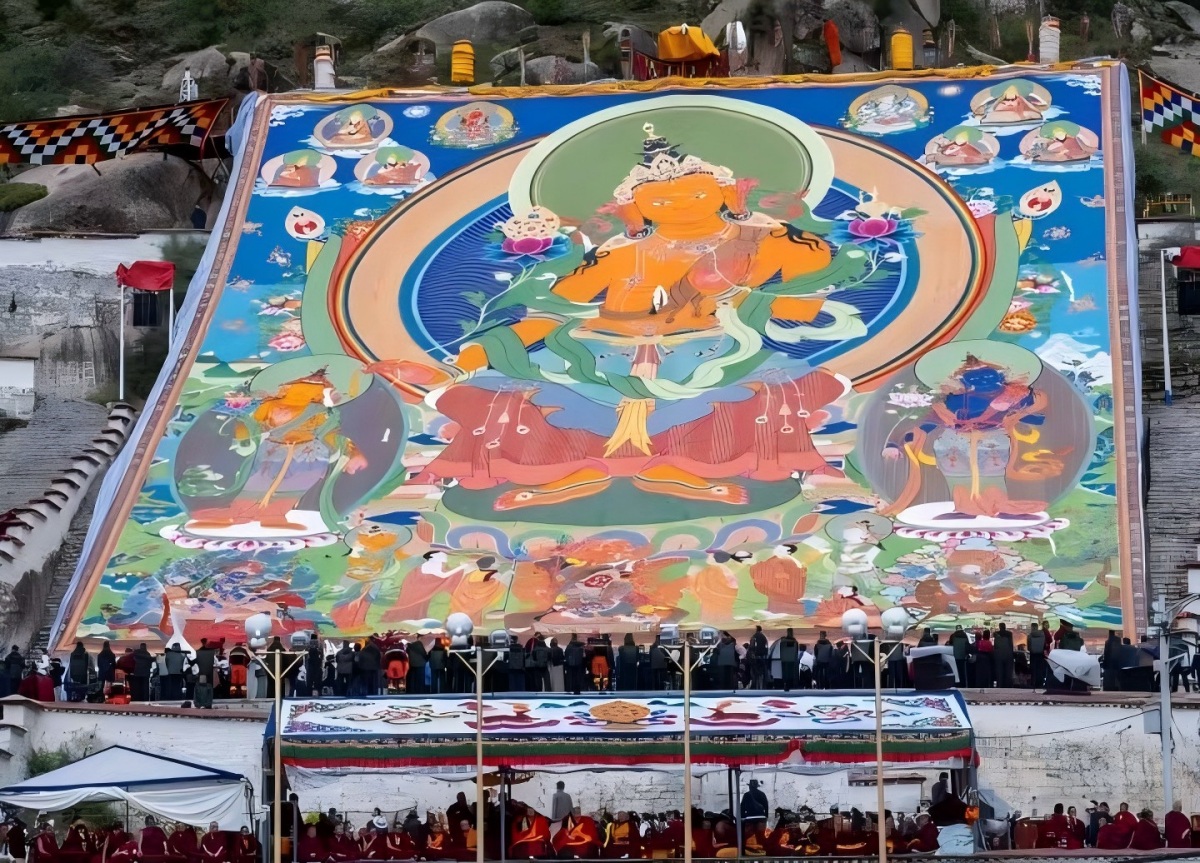
On festival mornings, it's an epic scene. Monks carry the huge, heavy thangka up and unfurl it down the wall. As the sun hits the silk, the air fills with the sounds of chanting, long horns, and the prayers of thousands of colorfully dressed pilgrims. They prostrate, offer scarves, and pray for blessings—a truly powerful, immersive cultural experience.
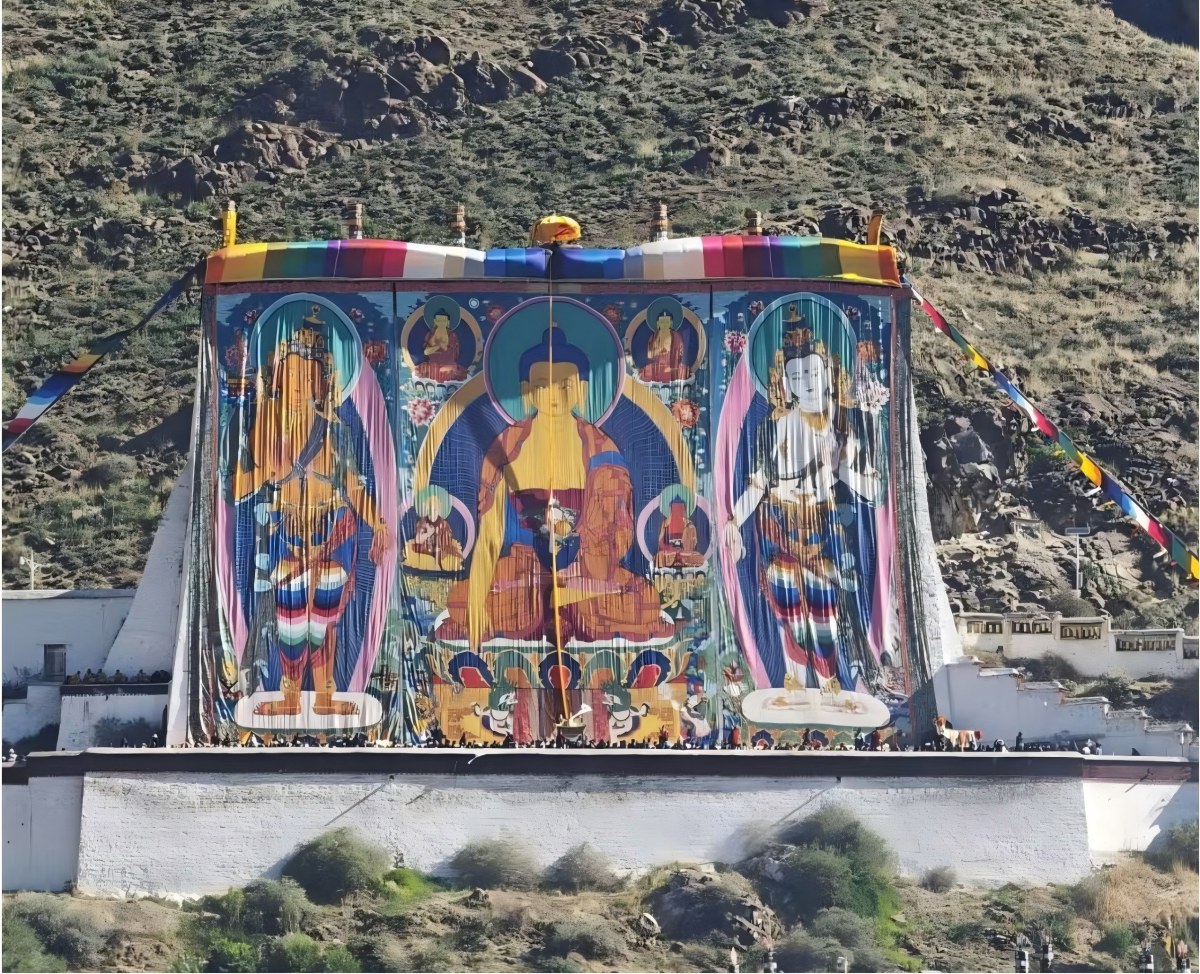
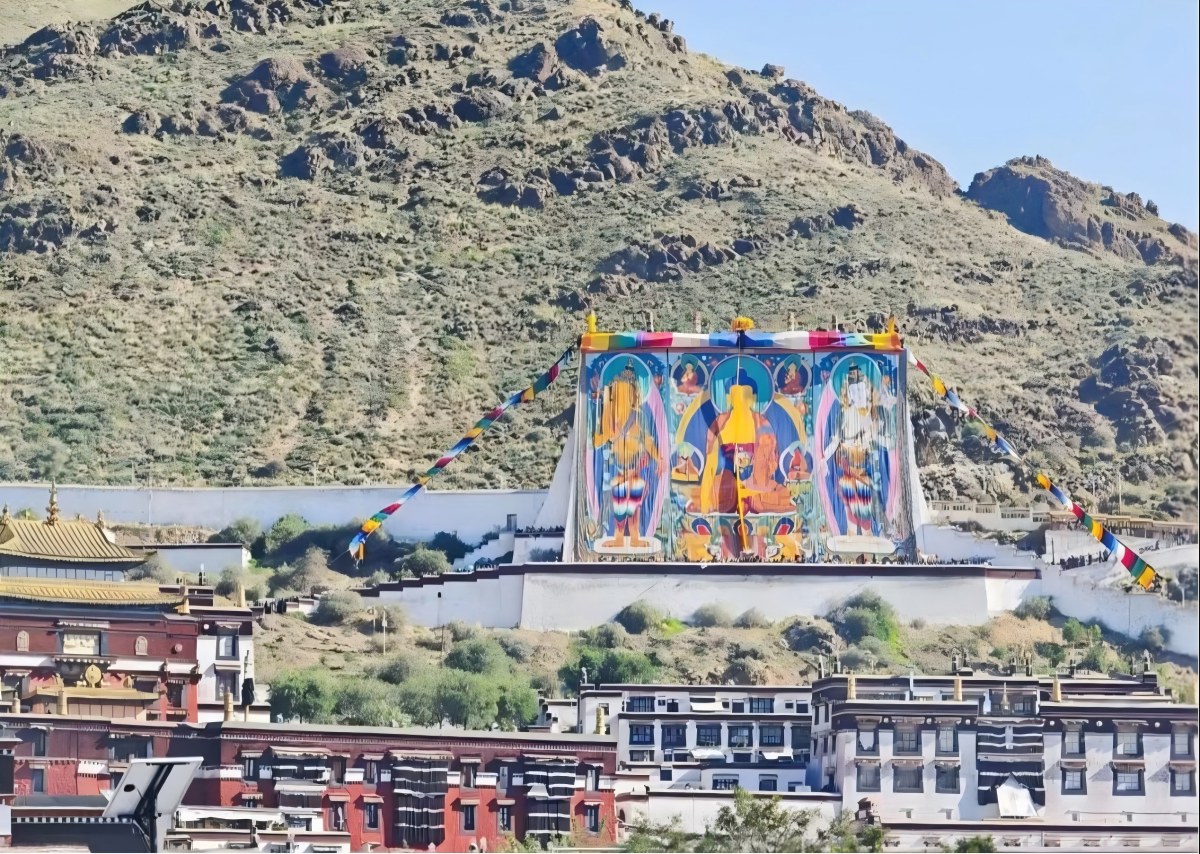
Even on a normal day, the Thangka Wall offers the best panoramic view of the entire monastery. It's the perfect spot for photos, especially at sunrise or sunset when the golden roofs glow against the mountain backdrop.
6. Tsang Cuisine: A Flavorful Taste of the Highlands
After soaking in all that culture and history, let's talk about another essential part of the Tsang experience: the food! The local cuisine is hearty, unique, and a delicious way to connect with the culture.
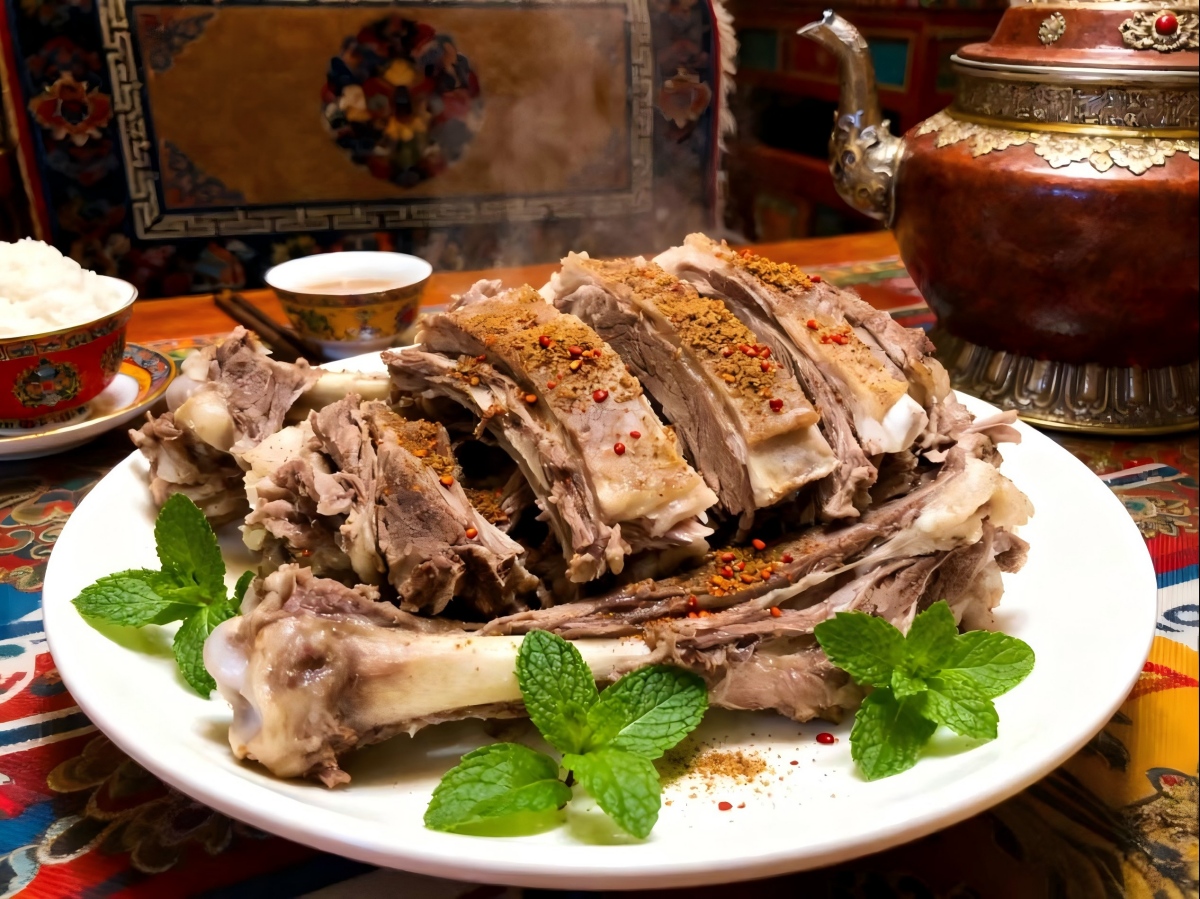
Hand-Grasped Mutton: This is a must-try meat feast. Using free-grazing Tibetan sheep, the mutton is simply boiled to keep its natural, robust flavor. You then "grasp" it with your hands and dip it in salt or chili powder. It's pure, protein-rich, and incredibly satisfying—perfect highland comfort food.
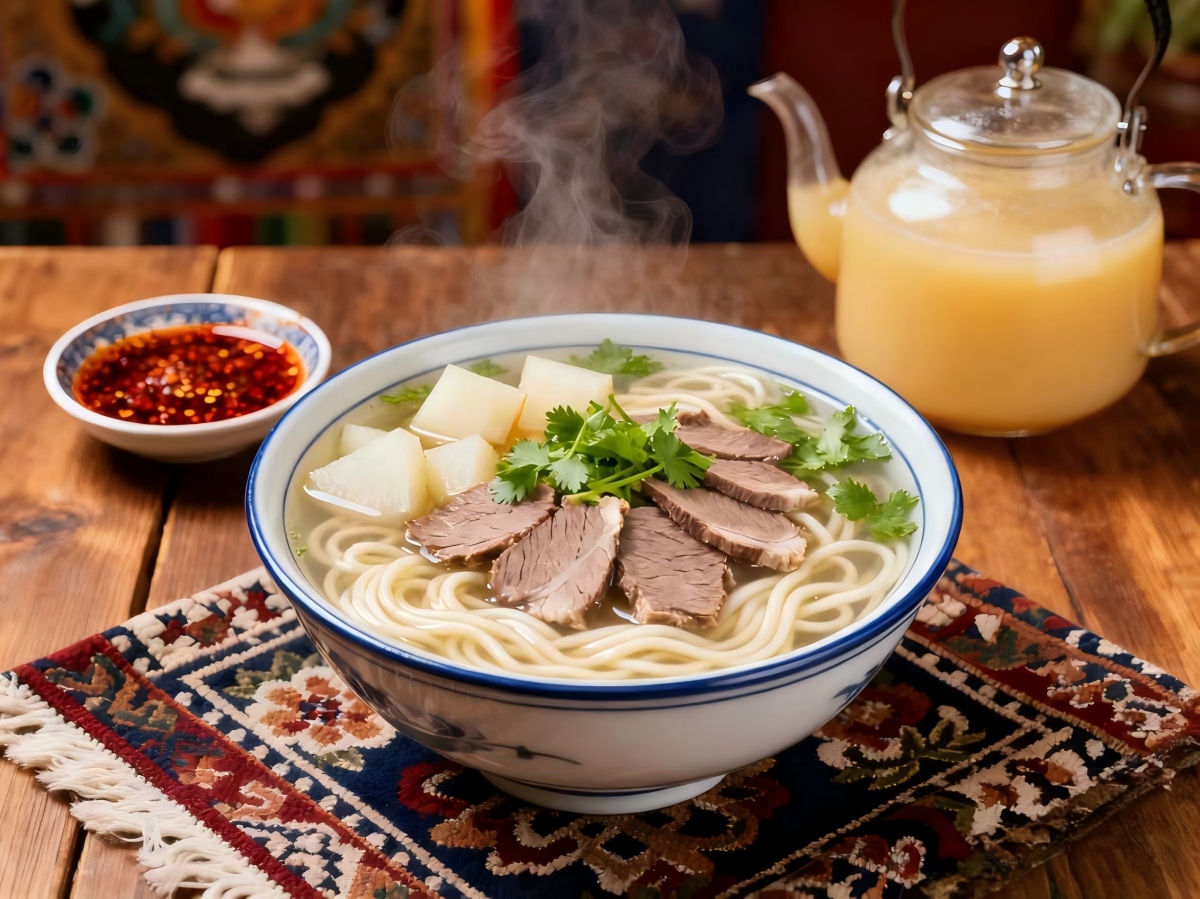
Tibetan Noodle Soup (Thenthuk): Forget your regular noodle soup! Tibetan noodles are made from a mix of barley and wheat flour, giving them a uniquely satisfying, chewy texture. The broth is the star—slow-simmered with beef or mutton bones and Tibetan herbs. Served with slices of meat and fresh herbs, it's a flavorful, warming bowl you'll find in small eateries around the monastery.
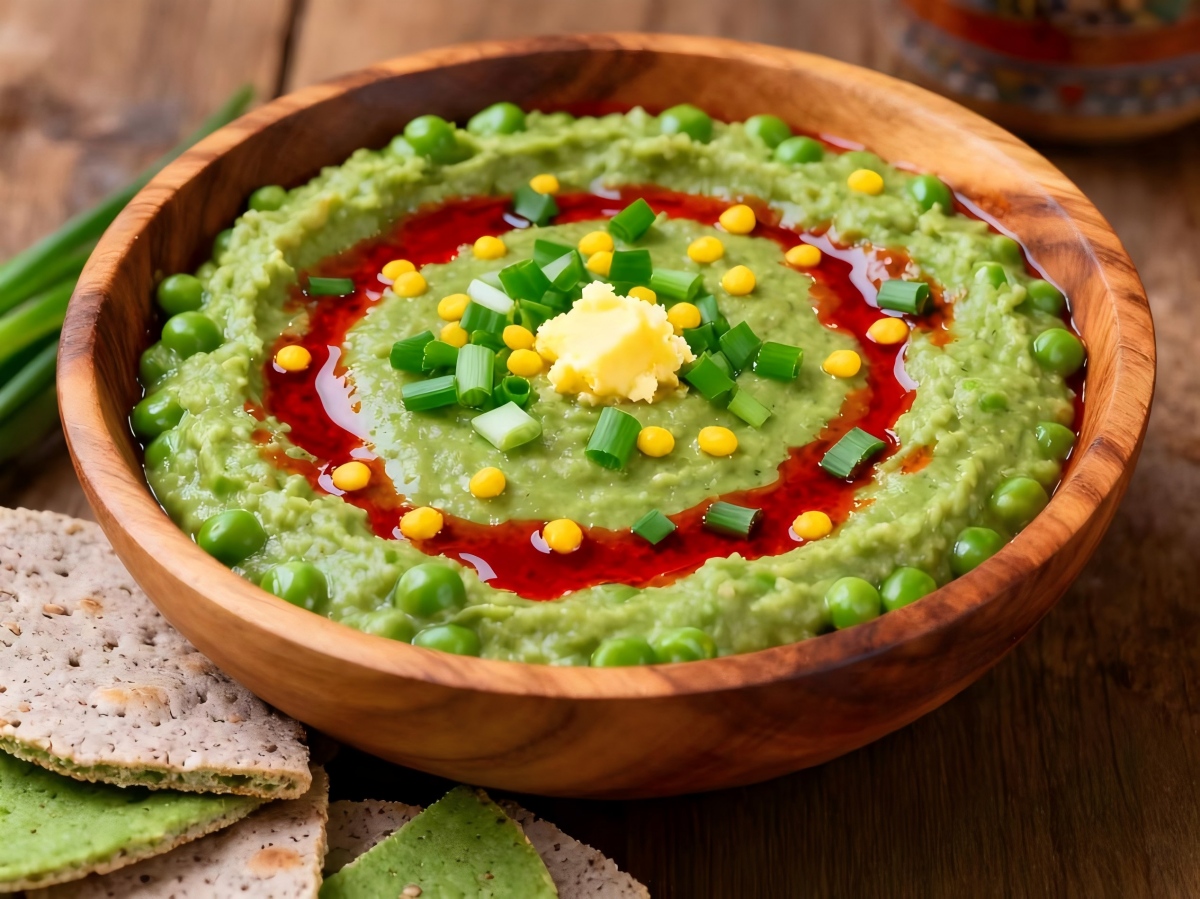
Pengo (Dried Tibetan Cheese): This is a Shigatse specialty you won't find easily elsewhere! Pengo is a dried cheese made from yak milk. It has a tangy, sharp flavor and a crumbly texture. Locals snack on it plain, or mix it with tsampa (roasted barley flour) and sugar. It's an acquired taste but a truly authentic local experience, packed with protein and calcium. Grab some from a local market!
7. Farewell: The Echoes of Glory
Well, friends, our deep dive into Tashilhunpo Monastery is coming to a close. Today, we've stood in awe before ancient statues, witnessed the scale of the Future Buddha, reflected on the legacy of the Panchen Lamas, imagined the vibrant thangka festival, and even sampled the local flavors.
Tashilhunpo is more than a museum; it's a living, breathing center of faith and culture. Every brick and painting tells a story of this sacred land and the unity of its people. We hope you carry the memories and the profound sense of peace from this place with you and share the story of Tibet with the world.
Thank you for joining us. The gates of Tashilhunpo are always open, waiting for you to return and discover its magic once more. Safe travels on the rest of your journey