Tibet Potala Palace
Potala Palace: Your Custom Tibetan Journey Awaits
As Tibet's iconic 5A-class attraction, the Potala Palace now offers you a personalized travel experience. With HuaTu International Travel, create your perfect itinerary from our exclusive menu of premium Tibetan experiences:
✓ Red Palace - Spiritual heart of Tibetan Buddhism
✓ White Palace - Historic seat of Tibetan governance
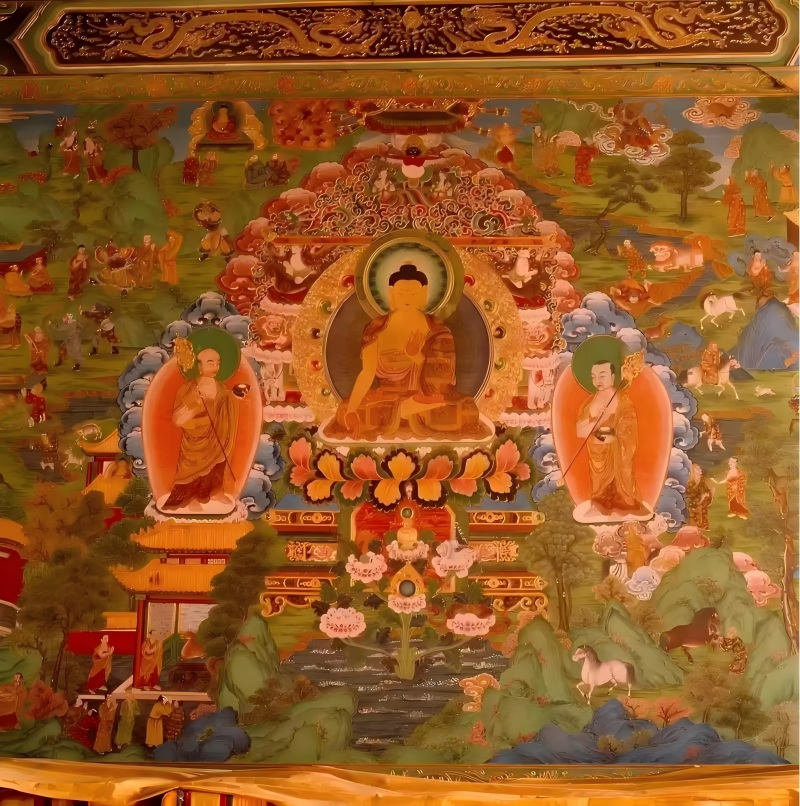
✓ Ancient Murals - Thousand-year art gallery
✓ Dragon King Lake - Scenic imperial gardens
Why Choose 【HuaTu】?
• Skip-line ticket access
• Expert English-speaking guides
• Flexible duration & photo stops
• Comfortable altitude-adapted vehicles
Book Now - Create Your Palace Memory Today!
Echoes of a Millennium Snowy Shrine: The Potala Palace
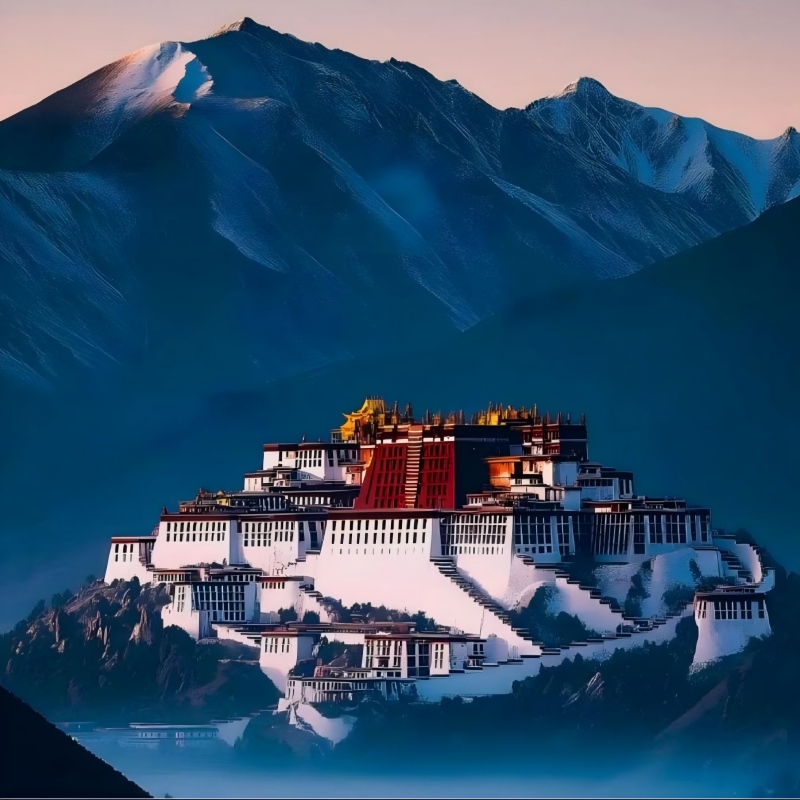
Dear friends from across the globe, a warm welcome to the Potala Palace, known as the "Pearl of the Roof of the World"! Perched majestically atop the Red Hill in Lhasa, this grand architectural complex is not only the symbol of Tibet but also the pinnacle of the "unity of man and nature" concept in traditional Chinese culture and Tibetan architectural art. Dating back to the 7th century, it was built by Songtsen Gampo, the Tibetan king, to welcome Princess Wencheng from the Tang Dynasty (618-907). For over a millennium, it has witnessed the profound and unbreakable bonds between the Han and Tibetan peoples. Now, let’s step into this snowy shrine and explore its five core attractions and the cultural secrets they hold.
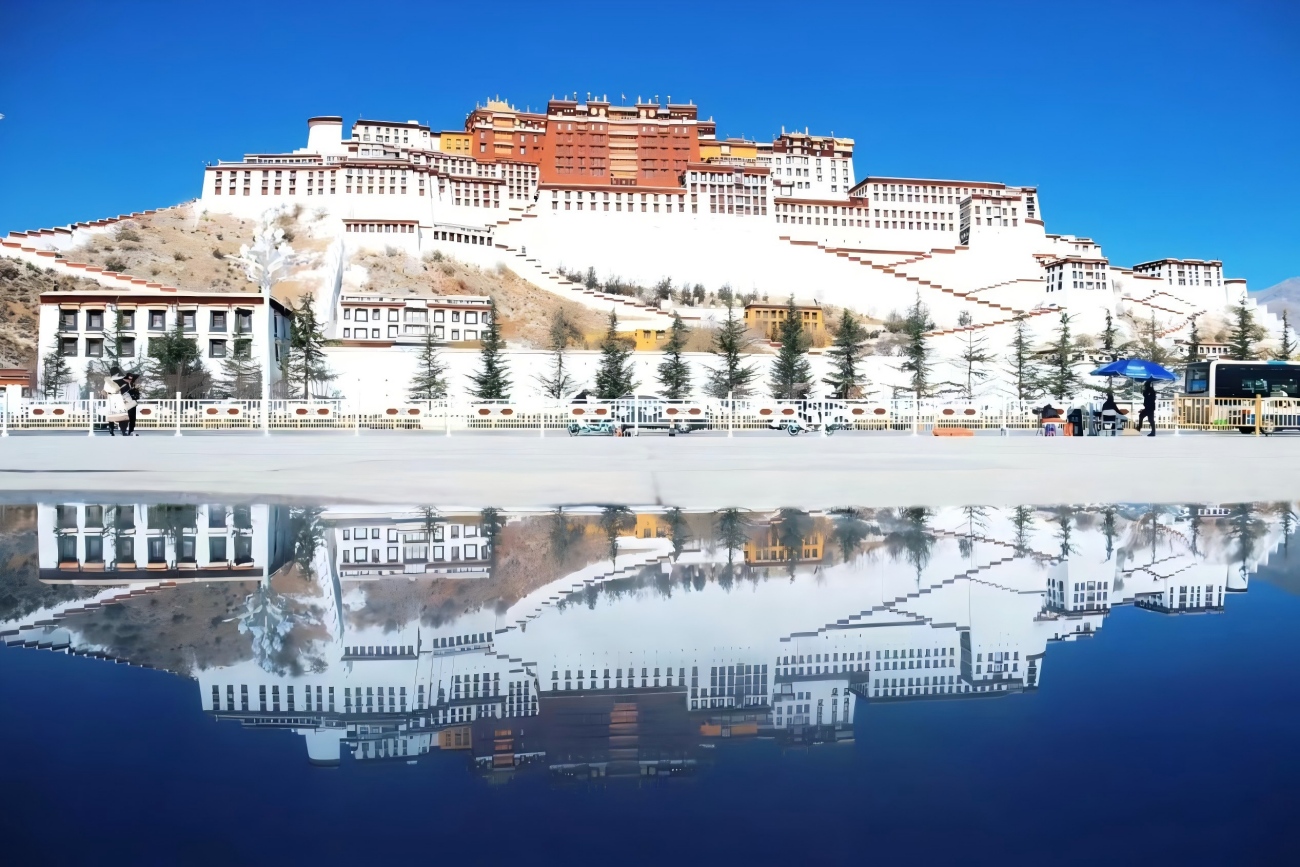
The "Palace in the Sky" on Red Hill – The Potala Palace Complex
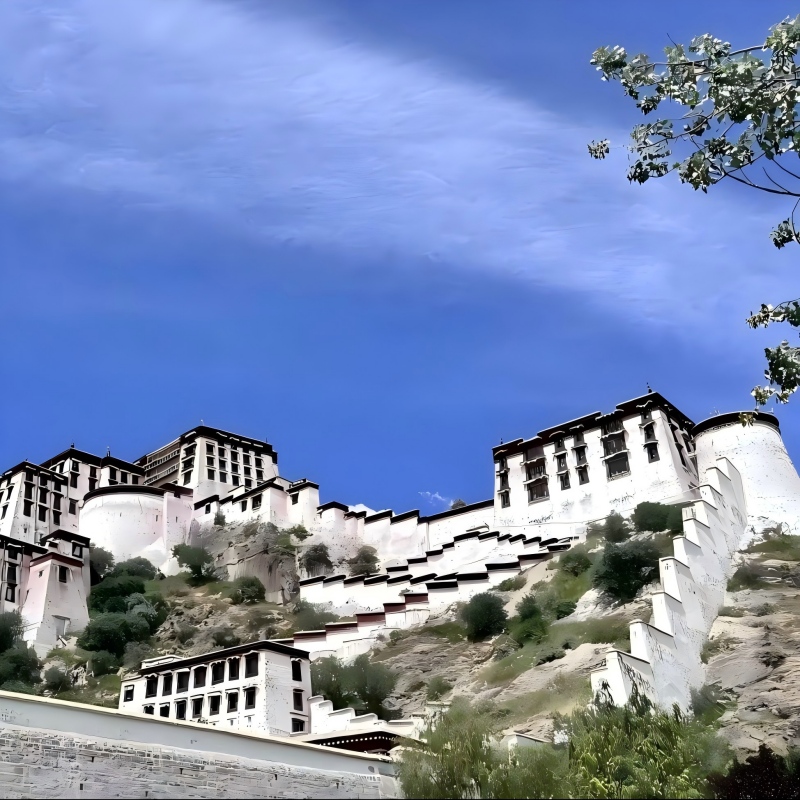
Before we step inside, let’s take in the grandeur of this architectural marvel from a distance. Sitting at an altitude of over 3,700 meters (12,139 feet) with a total area of 360,000 square meters (3,875,009 square feet), the Potala Palace consists of two main parts – the White Palace and the Red Palace – plus numerous auxiliary buildings. It climbs layer by layer along the contours of Red Hill, exuding an overwhelming sense of power and grandeur.
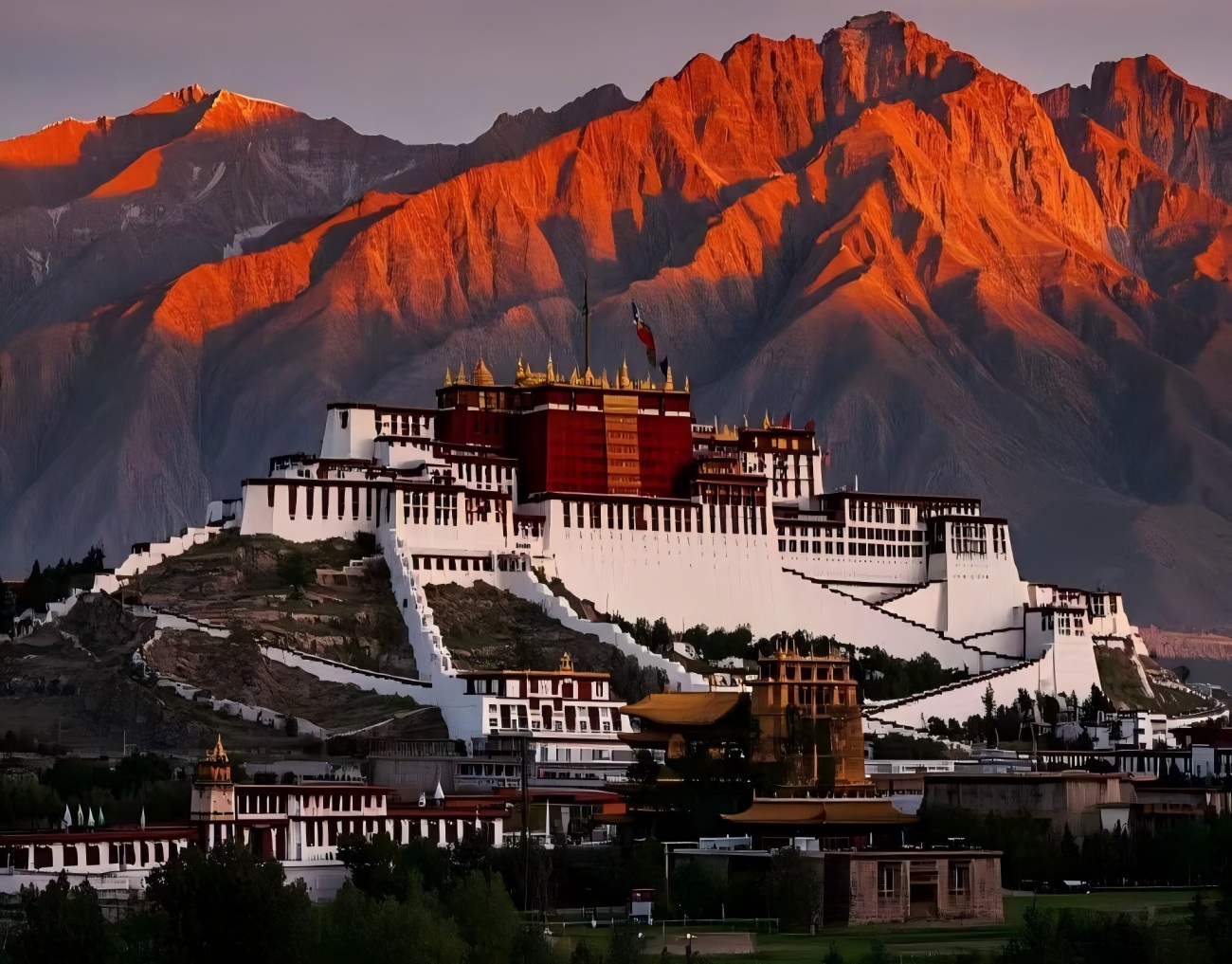
This design concept of "building with the mountain, following its natural shape" is a vivid embodiment of the traditional Chinese "unity of man and nature" philosophy. Instead of disrupting the natural landscape, the architecture blends seamlessly with the hill, becoming an extension of nature itself. Back in the 7th century, Songtsen Gampo ordered the construction of this palace specifically to greet Princess Wencheng, who traveled all the way from Chang’an (modern-day Xi’an), the capital of the Tang Dynasty. She brought with her advanced Han culture, including silk, tea, medicine, and calendars, as well as Buddhist scriptures – marking the Potala Palace as the starting point of cultural integration between Han and Tibet.
The Heart of Power and Faith: The Red Palace
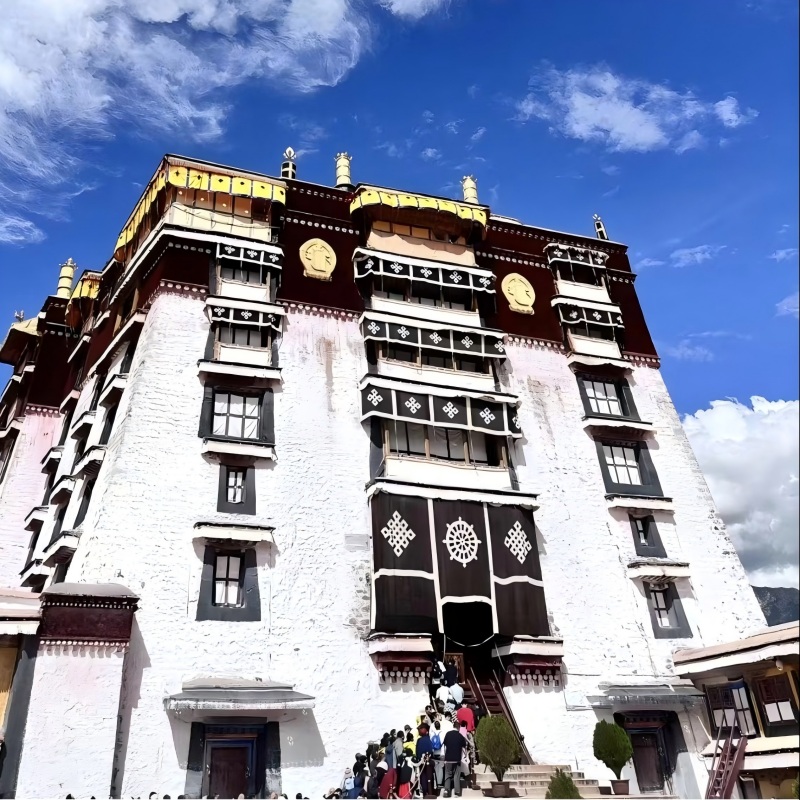
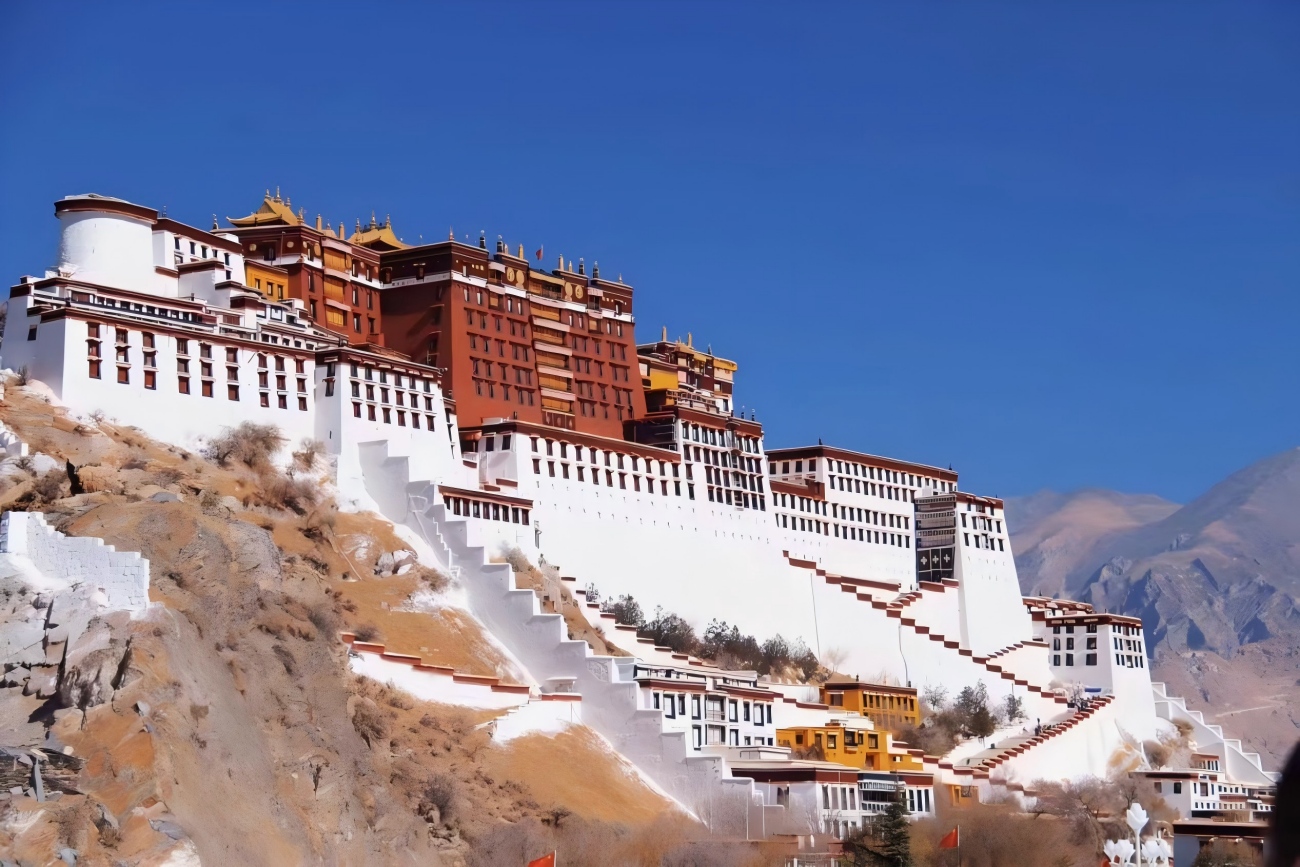
Right before us stands the striking Red Palace—the spiritual and political core of the Potala Palace. This part of the complex was dedicated to housing sacred Buddhist statues and the stupa tombs of successive Dalai Lamas. It has long served as the center of Tibetan Buddhist worship and reflects the deep devotion of the Tibetan people.
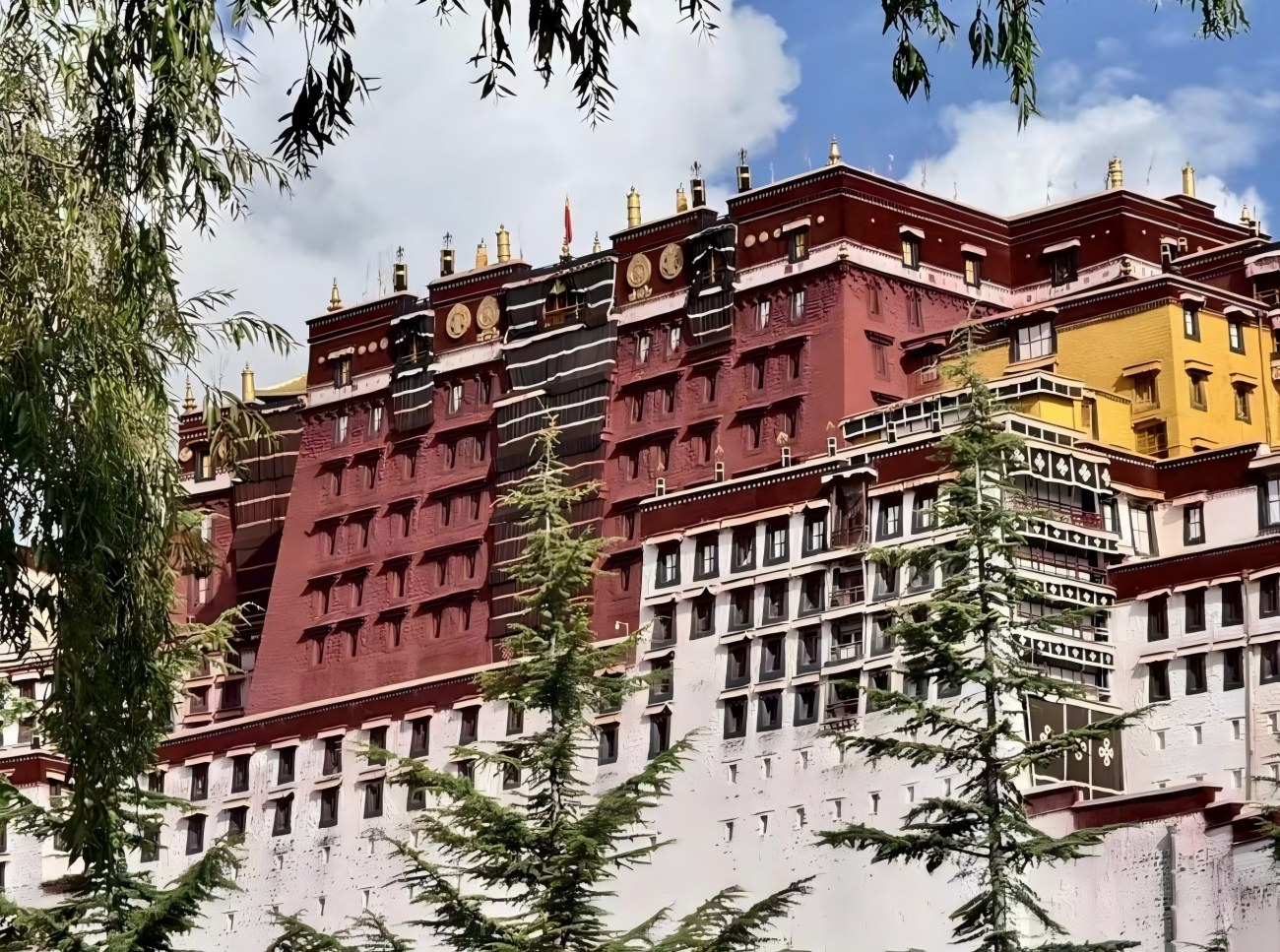
One of the most remarkable features of the Red Palace is its walls, which are built using a traditional method involving "Pema grass"—a lightweight, local willow wood—mixed with clay. This technique not only makes the structure strong and resilient but also helps it withstand the harsh, cold winds of the high plateau. It’s a brilliant example of ancient Tibetan architectural wisdom.
Inside, you’ll find five grand stupas honoring past Dalai Lamas. The most impressive belongs to the Fifth Dalai Lama—standing nearly 15 meters tall, covered in gold, and inlaid with countless pearls, agates, jade, and other precious gems. It’s said that over 3,700 kilograms of gold were used in its creation! The stupa holds the Fifth Dalai Lama’s remains, and its surface is intricately carved with Buddhist motifs and symbols like lotuses and clouds—blending Tibetan artistry with traditional Chinese decorative themes.
The Red Palace also contains thousands of Buddhist statues, some of which were brought to Tibet by Princess Wencheng herself. These sacred images stand as a lasting testament to the spread of Buddhism and the deep cultural exchange between Han Chinese and Tibetan traditions.
The White Palace: The Seat of Power and Private Life
The cluster of white buildings connected to the Red Palace is known as the White Palace. This was where successive Dalai Lamas lived and handled government affairs—essentially, it served as the administrative heart of the Potala Palace, reflecting its historical role in the "integration of religion and politics."
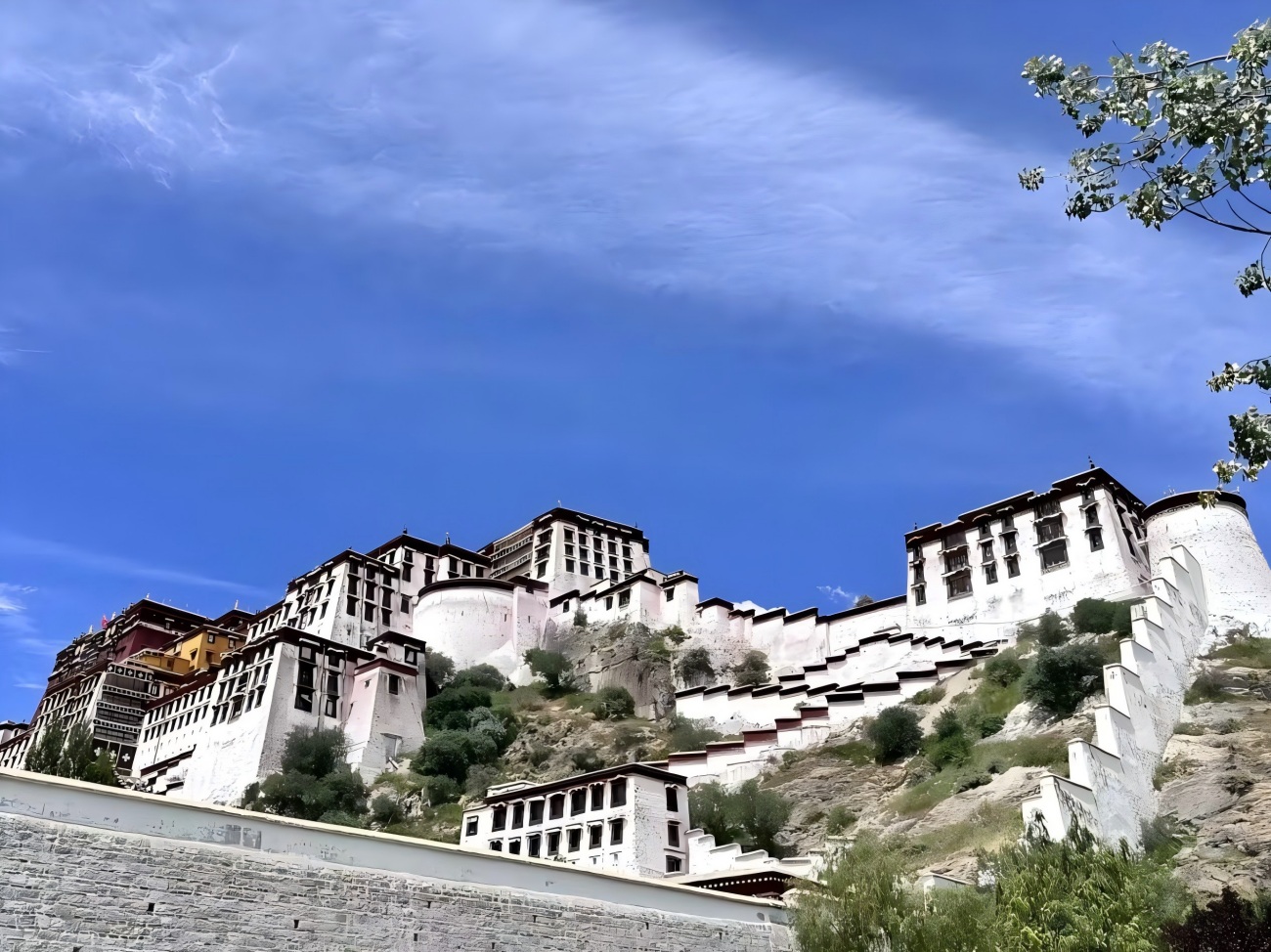
Architecturally, the White Palace blends traditional Tibetan styles with influences from central Chinese palaces. You can see this fusion in the building’s orientation, the shape of doors and windows, and overall layout.
At the heart of the White Palace is the East Hall—the main ceremonial space where major events like enthronement ceremonies and inaugurations took place. Inside, you’ll find intricately carved pillars and massive murals depicting everything from historic events, such as Songtsen Gampo marrying Princess Wencheng, to Tibetan Buddhist myths. One standout mural is the Procession of Princess Wencheng into Tibet, which vividly shows her journey with a grand entourage bringing goods and culture from central China—a timeless story of unity between Han and Tibetan peoples.
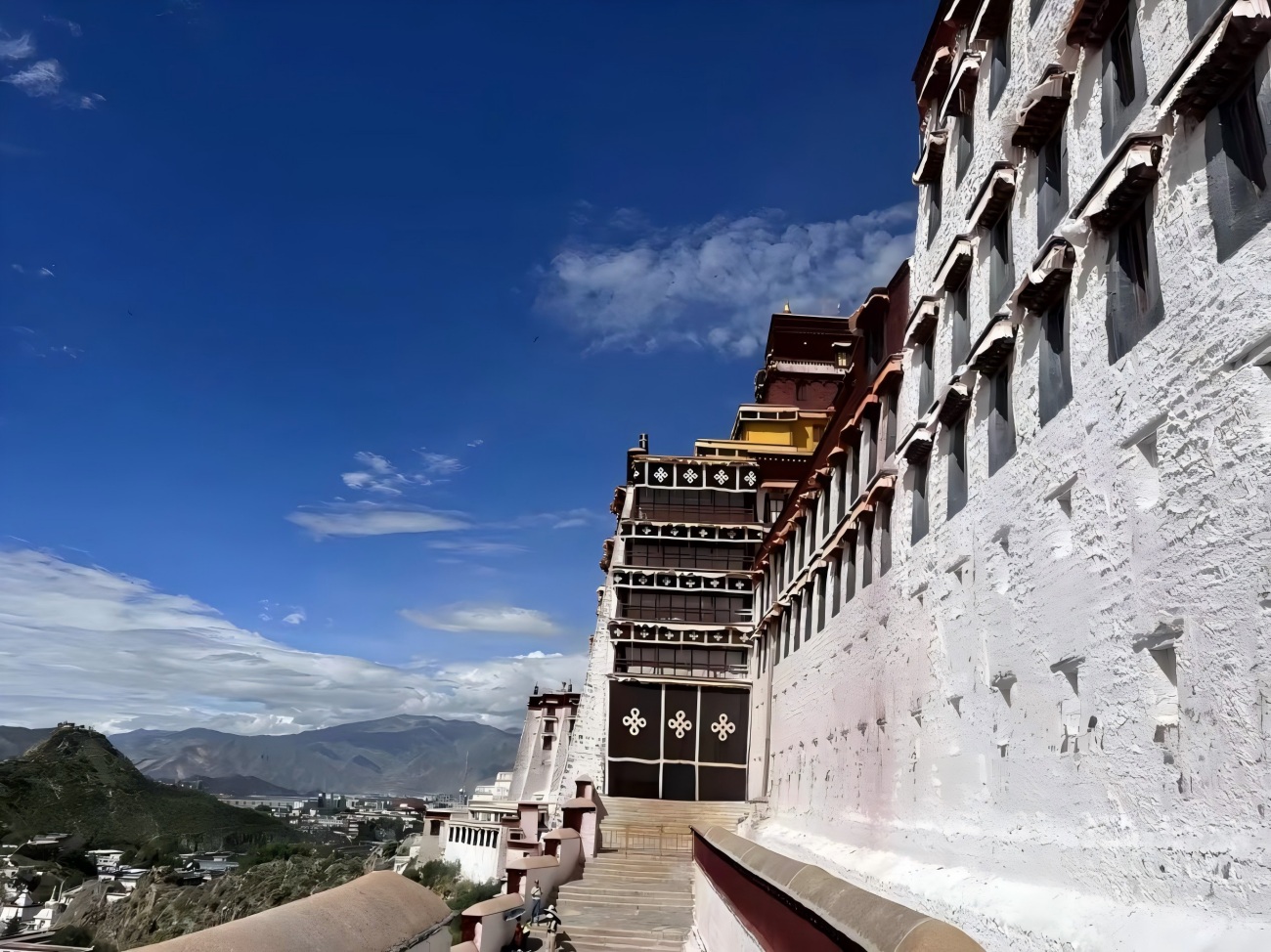
On the top floor is the Dalai Lama’s private residence, known as the "Sunlight Hall." True to its name, it’s bathed in sunlight nearly all year round. The interior combines Tibetan opulence with elegant touches from central China—think porcelain, silk carpets, and other tributes that were gifted from various parts of China.
The Everlasting Art Gallery: Potala Palace Murals
Step inside the Potala Palace, and you'll find yourself surrounded by nearly ten thousand murals painted across palace walls and corridors. Known as the "museum on the walls," these artworks are among the most precious forms of ethnic painting in China.
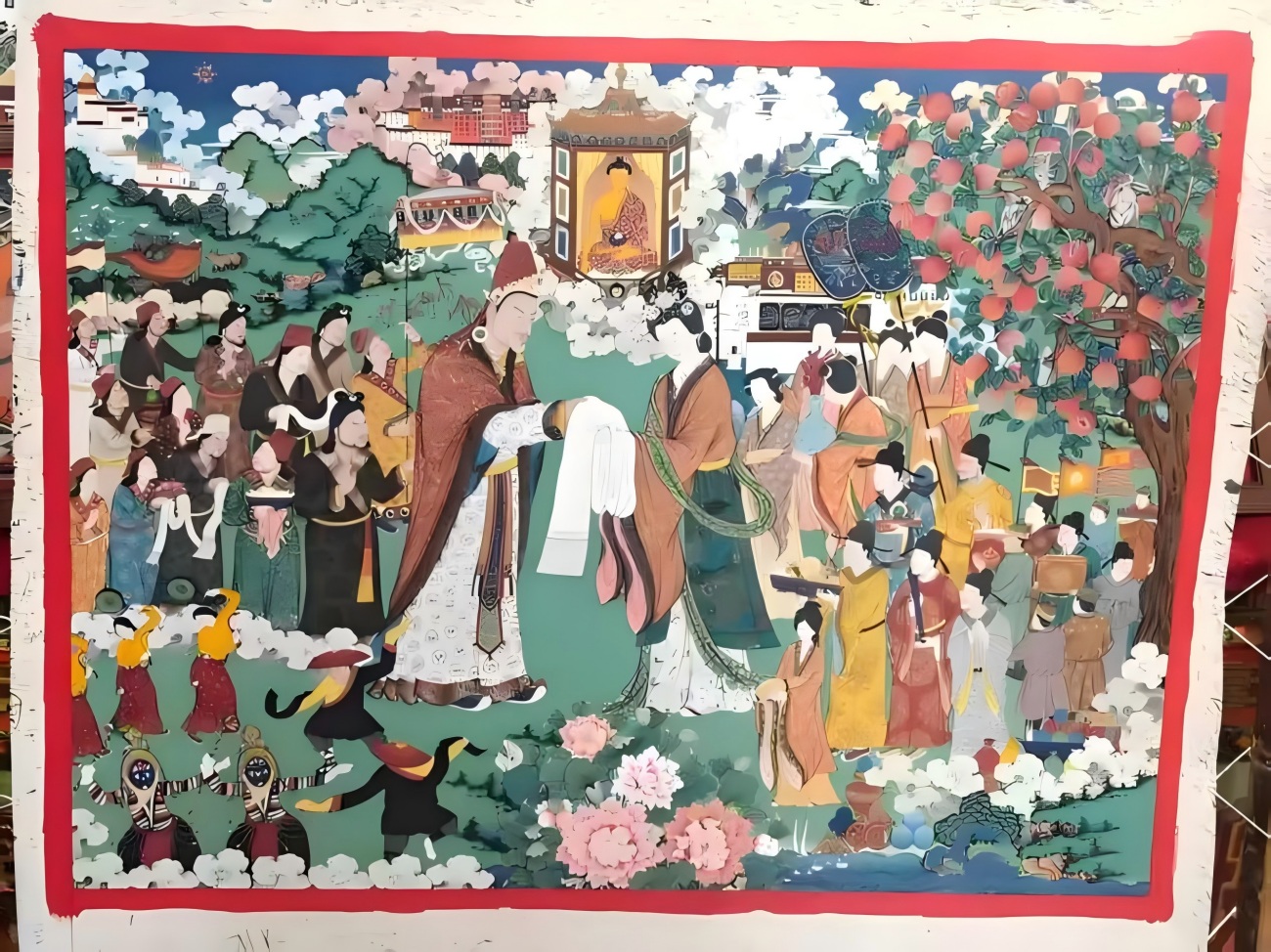
The murals cover an incredible range of themes—from historical events and religious stories to folk traditions, landscapes, and flowers and birds. They’re not just beautiful; they’re also invaluable historical records.
Painted using techniques from Tibetan thangka art, combined with the delicate brushwork of traditional Chinese painting, these murals are both vivid and detailed. Take the series Songtsen Gampo and Princess Wencheng as an example—the scenes are rich in color, and the figures are full of life. They show the king’s bravery and the princess’s grace, while also documenting Han and Tibetan clothing, rituals, and architecture of the time. These serve as essential visual materials for understanding the history of the Tang Dynasty and the Tibetan Empire.
What’s more, the pigments used are all made from natural minerals: red from cinnabar, blue from lapis lazuli, and yellow from realgar. Even after a thousand years, the colors remain strikingly bright—a testament to the mastery of ancient Tibetan artisans in paint-making and mural art.
More than just art, these murals are living witnesses to the cultural exchange between Han and Tibetan peoples. Every piece tells a story that’s lasted through millennia.
A Masterpiece of Tibetan Garden Art: Dragon King Lake Park
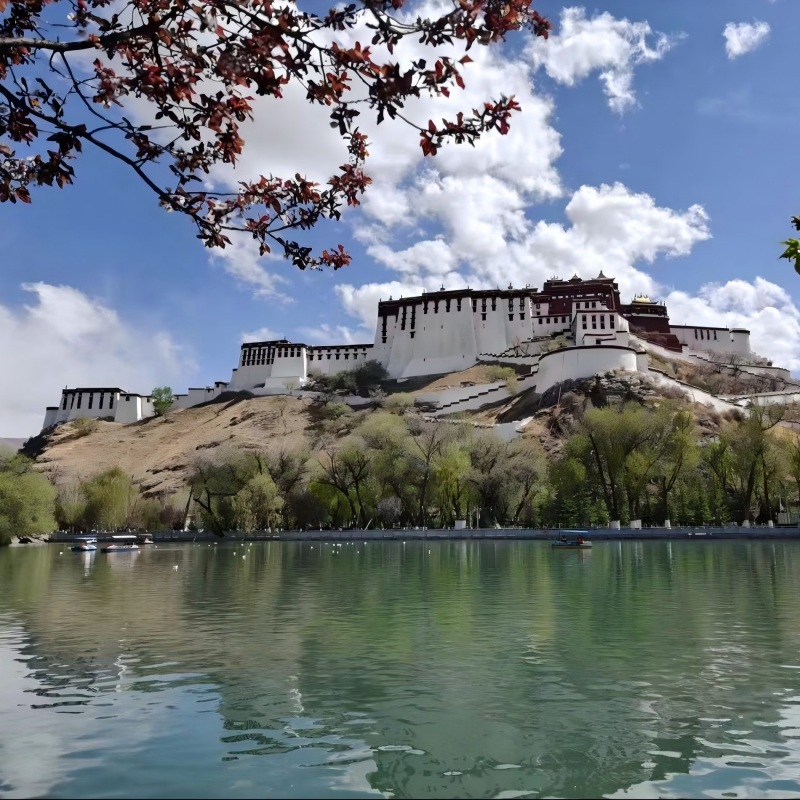
After exploring the main palace, make your way to Dragon King Lake Park, located just behind the Potala Palace. This Tibetan-style imperial garden is an essential part of the palace’s overall layout.
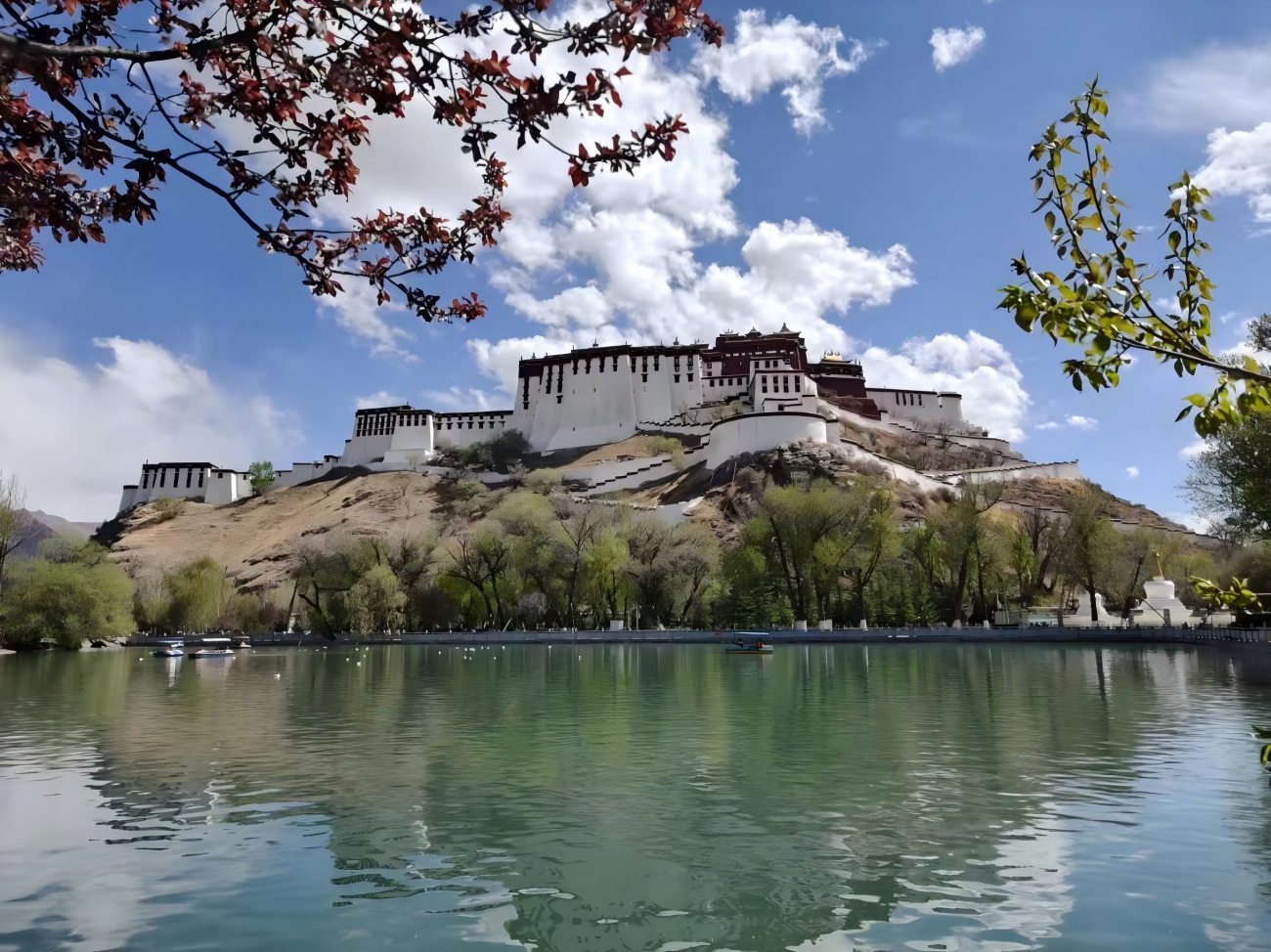
Like classical Chinese gardens, Tibetan gardens aim to create landscapes that are “made by human hands, yet look naturally formed.” Dragon King Lake Park is a perfect example of this philosophy.
Built in the 17th century during the reign of the Fifth Dalai Lama, the park was designed to add natural scenery—hills and water—to the Potala Palace complex. At its heart lies a round lake known as the “Dragon King Lake.” Legend has it that a dragon king lives in the water, guarding the Potala Palace.
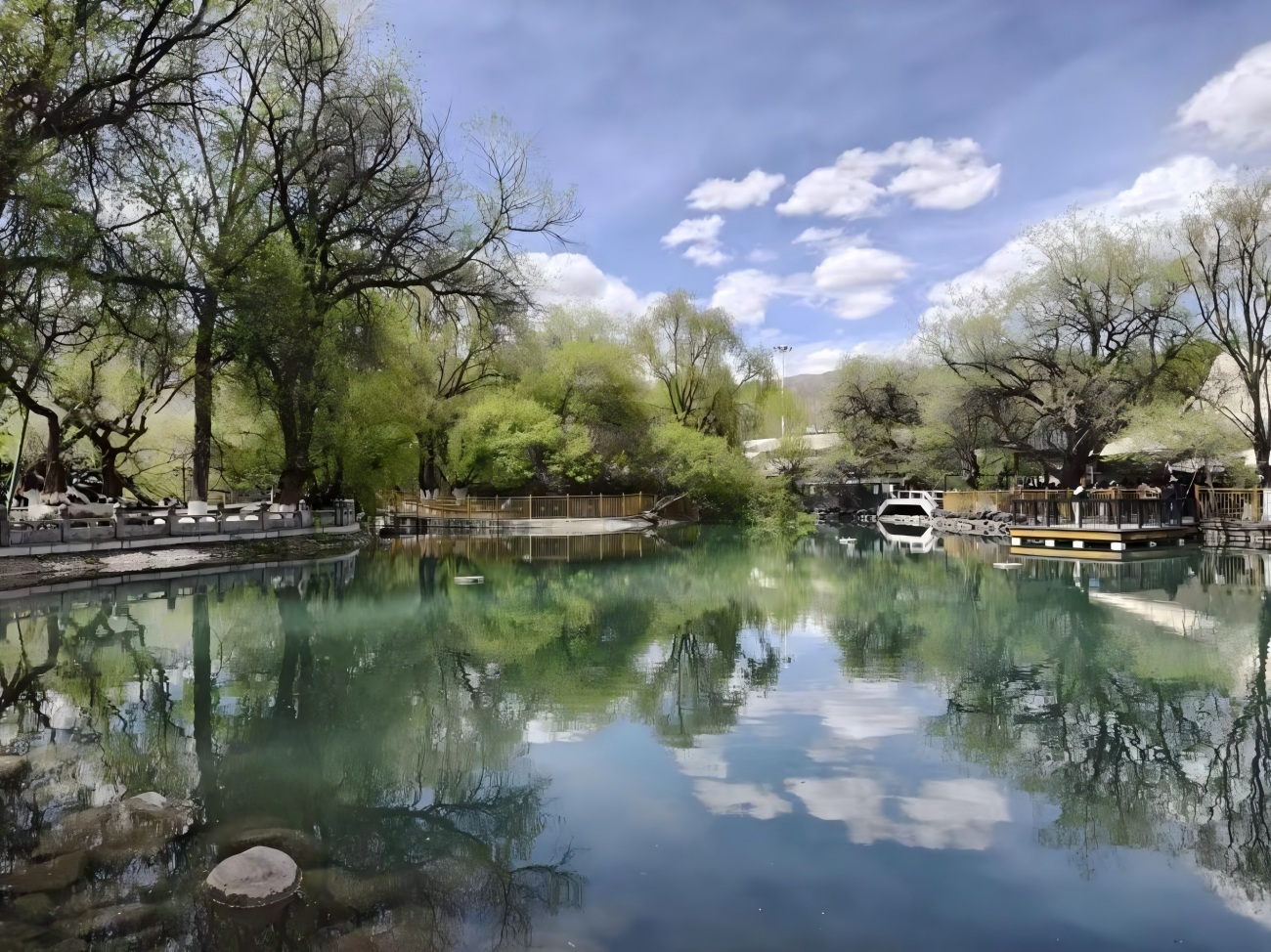
In the middle of the lake sits a small island with a Dragon King Temple, connected to the shore by a graceful stone arch bridge. This “one lake, one island, one bridge” layout shares clear roots with the “one lake, three hills” design found in Chinese classical gardens—showing how gardening traditions from central China were adopted and evolved in Tibet.
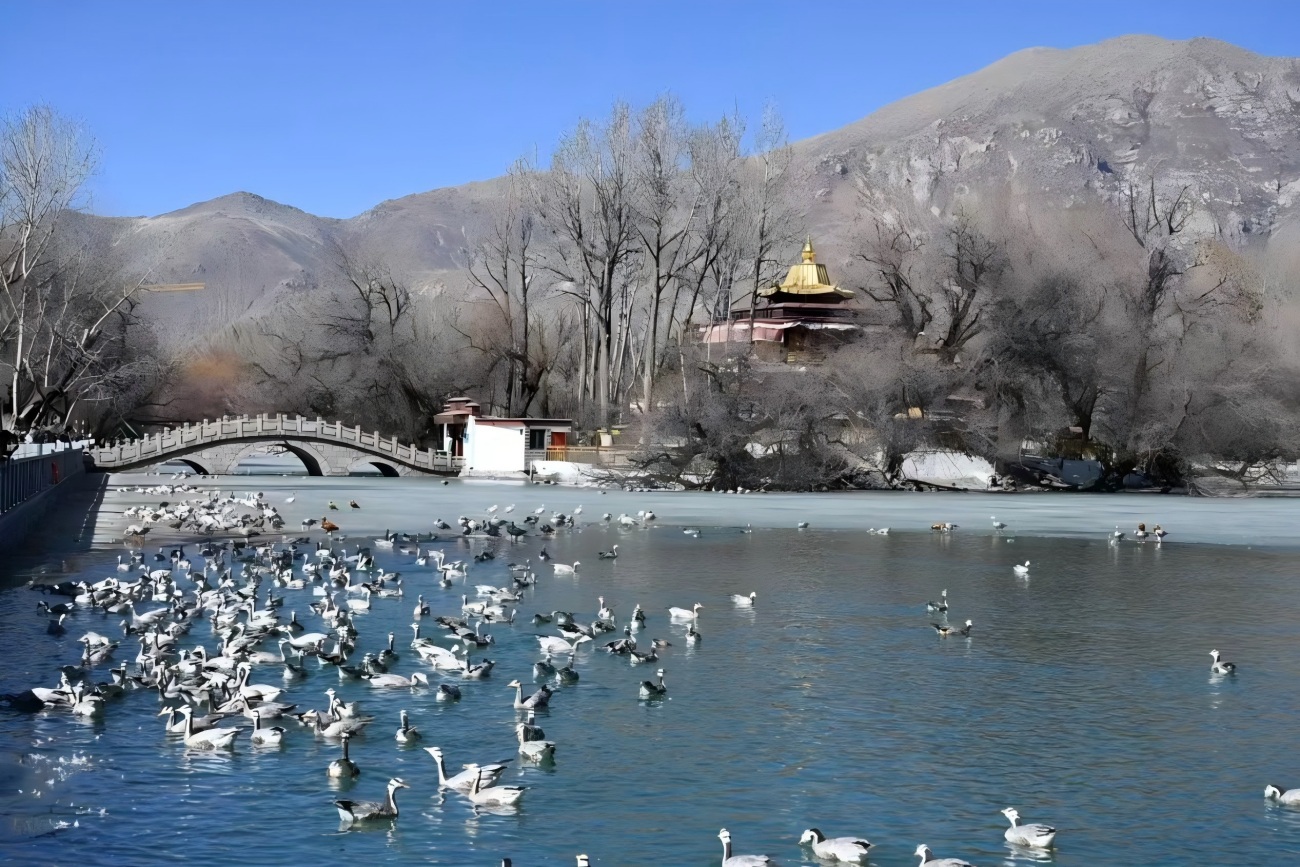
In summer, the lakeshore blooms with Tibetan wildflowers, and the water mirrors the majestic image of the Potala Palace. It’s a picture-perfect moment that captures both Tibetan reverence for nature and the beautiful fusion of Tibetan and Chinese garden artistry.