Fanjing mountain
Discover Fanjingshan’s cloud-kissed peaks and sacred temples with our trusted inbound travel team! With years of experience catering to global travelers, we craft fully customized itineraries tailored to your pace—whether you want to linger at Hongyun Jinding’s sunrise or explore Chengen Temple’s zen.
Indulge in authentic Guizhou flavors: savor sour fish hot pot, spiced tofu pudding, and wild mushroom stir-fries—all local specialties made with fresh, mountain-sourced ingredients. Rest easy in cozy, well-located accommodations that blend comfort with regional charm.
Let our expertise turn your Fanjingshan journey into an unforgettable adventure—great food, perfect stays, and your dream itinerary, all covered. Book your personalized trip now!
Mount Fanjingshan Guide: Explore China’s Cloud-Kissed Buddhist Heritage & Natural Wonders
Greetings, fellow travelers! Welcome to Mount Fanjingshan—China’s “Celestial Mountain in the Clouds” and a jewel of northeastern Guizhou Province. As a UNESCO World Natural Heritage Site and one of China’s Five Great Buddhist Mountains, Fanjingshan is where dramatic karst peaks pierce misty skies, primeval forests teem with rare life, and(millennium-old) temples whisper stories of faith. Whether you’re chasing natural wonders, spiritual experiences, or unique cultural insights, this “Buddhist Kingdom in the Clouds” delivers. Let’s uncover its treasures together.
1. Hongyun Jinding (Red Cloud Golden Summit): Twin Buddhas Above the Sea of Clouds
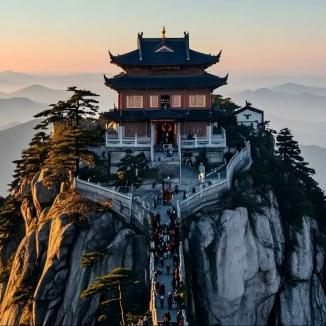
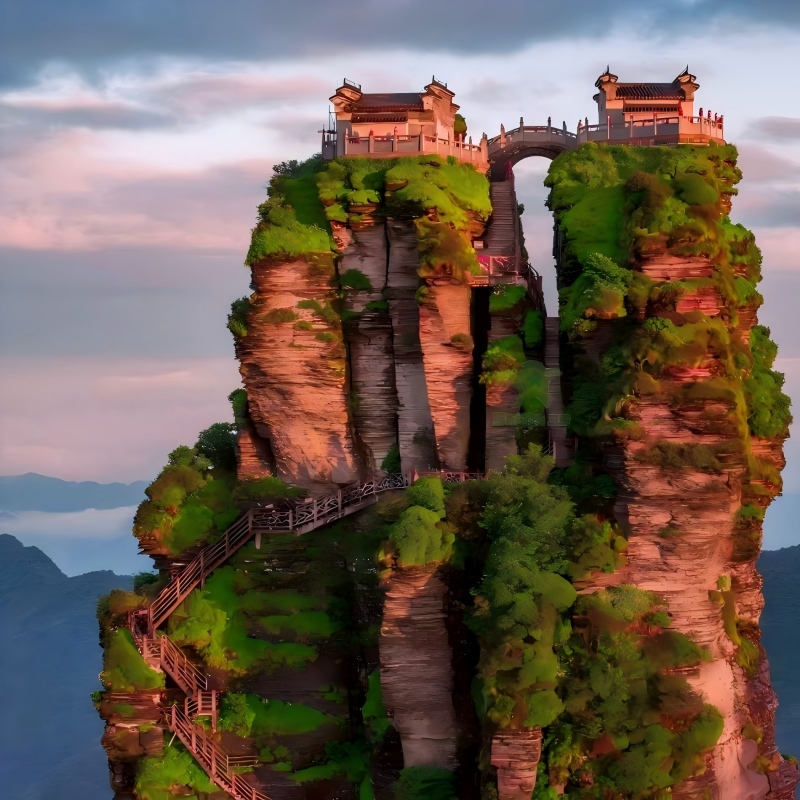
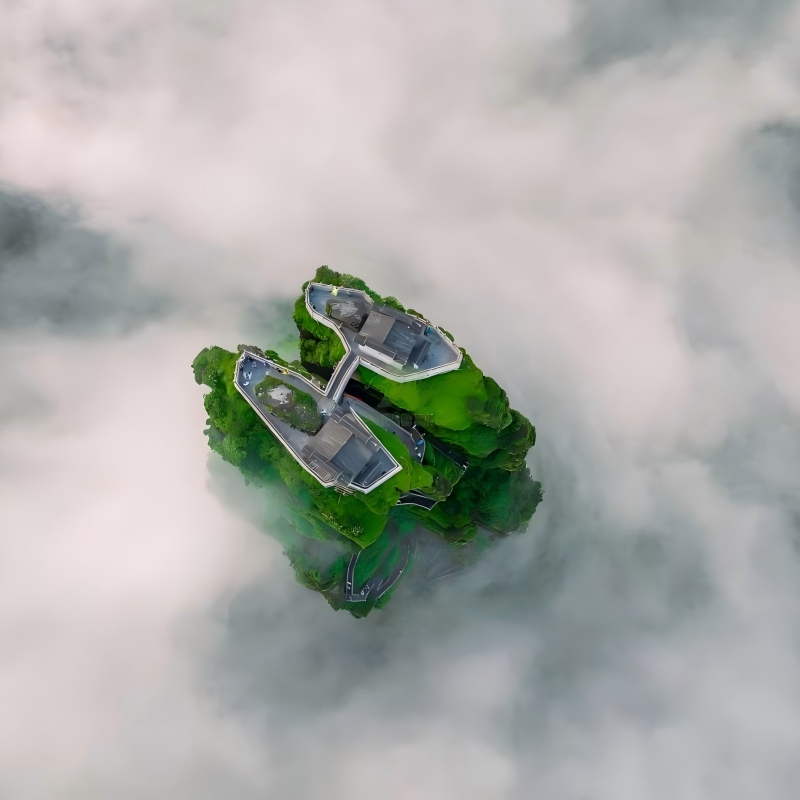
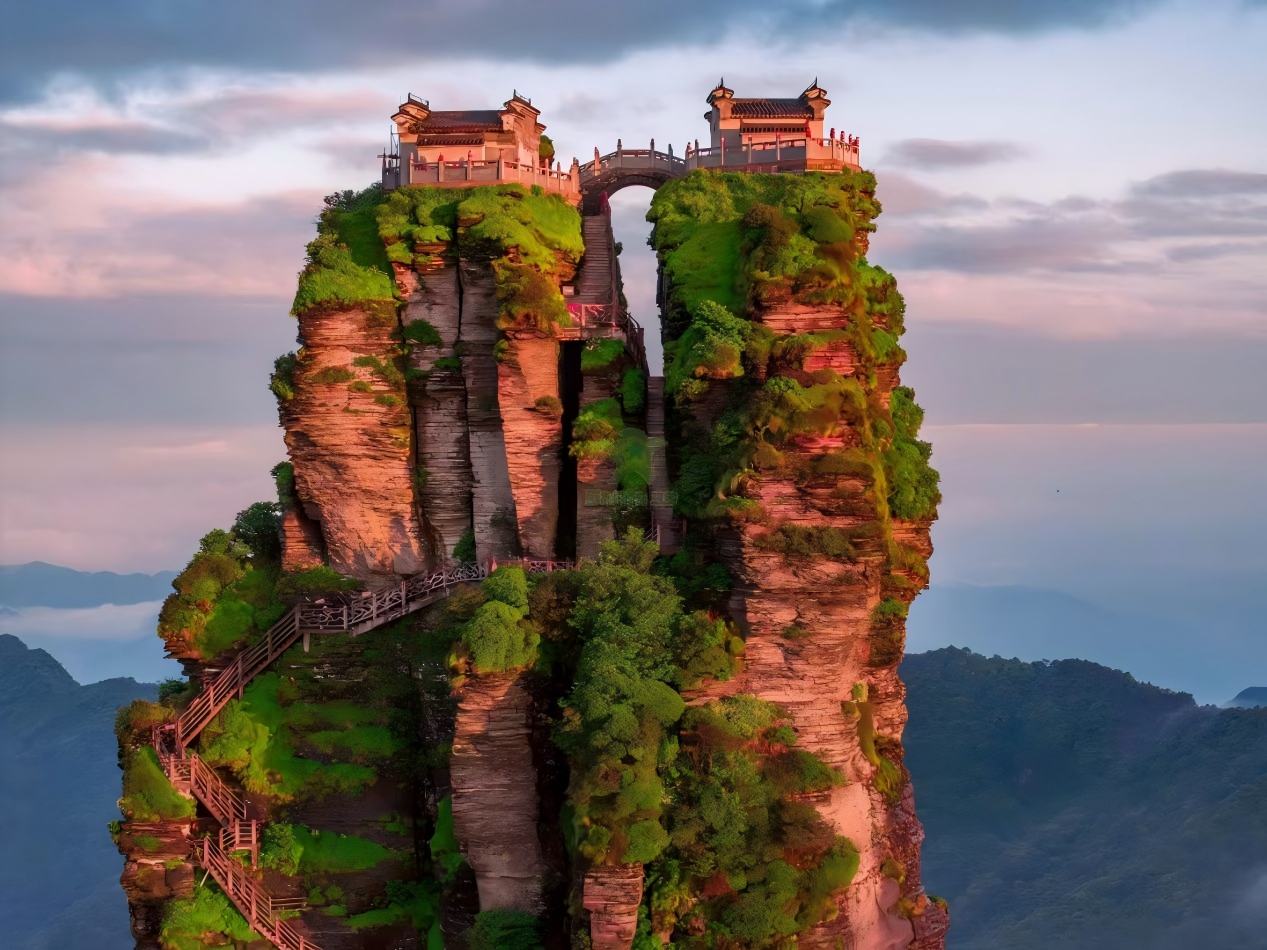
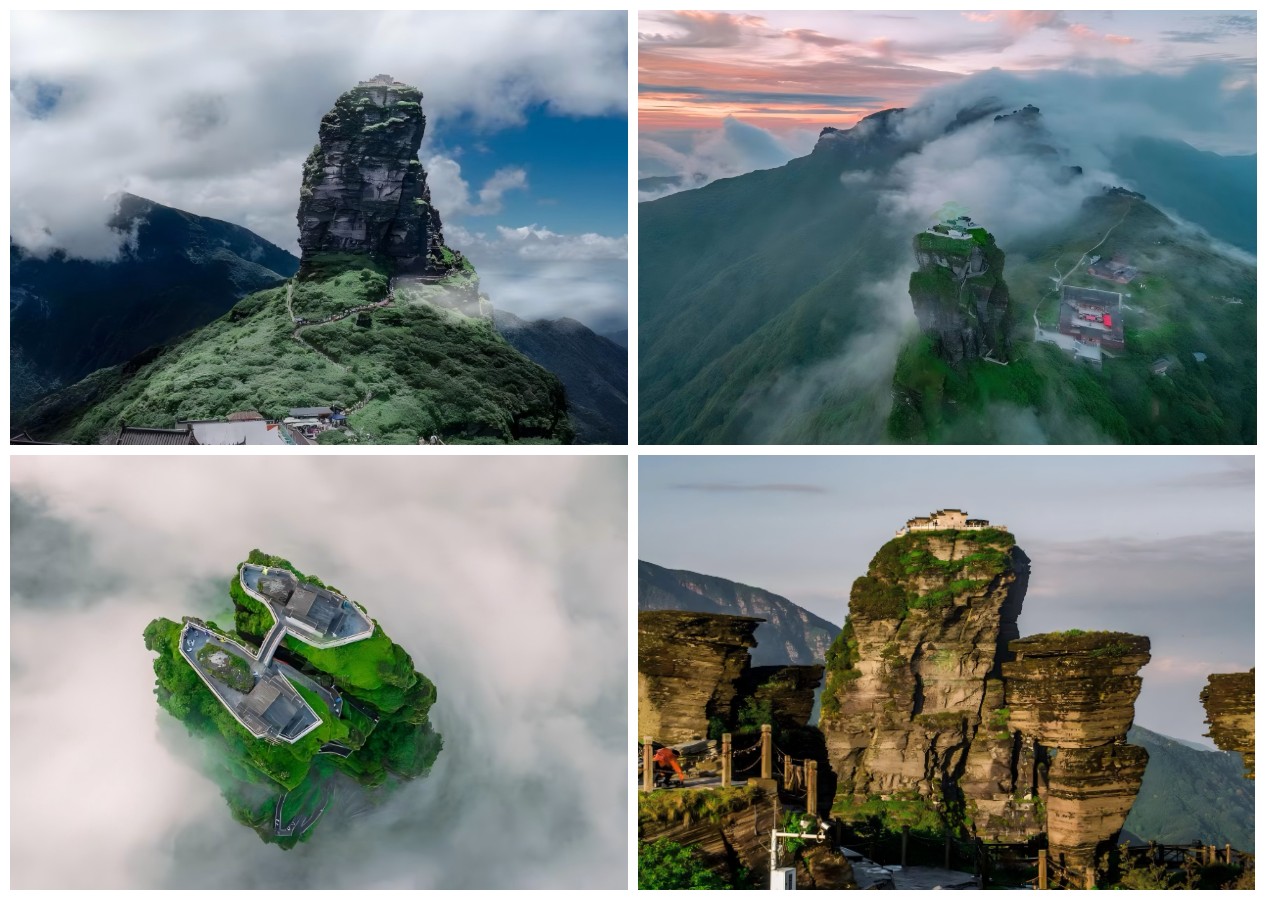
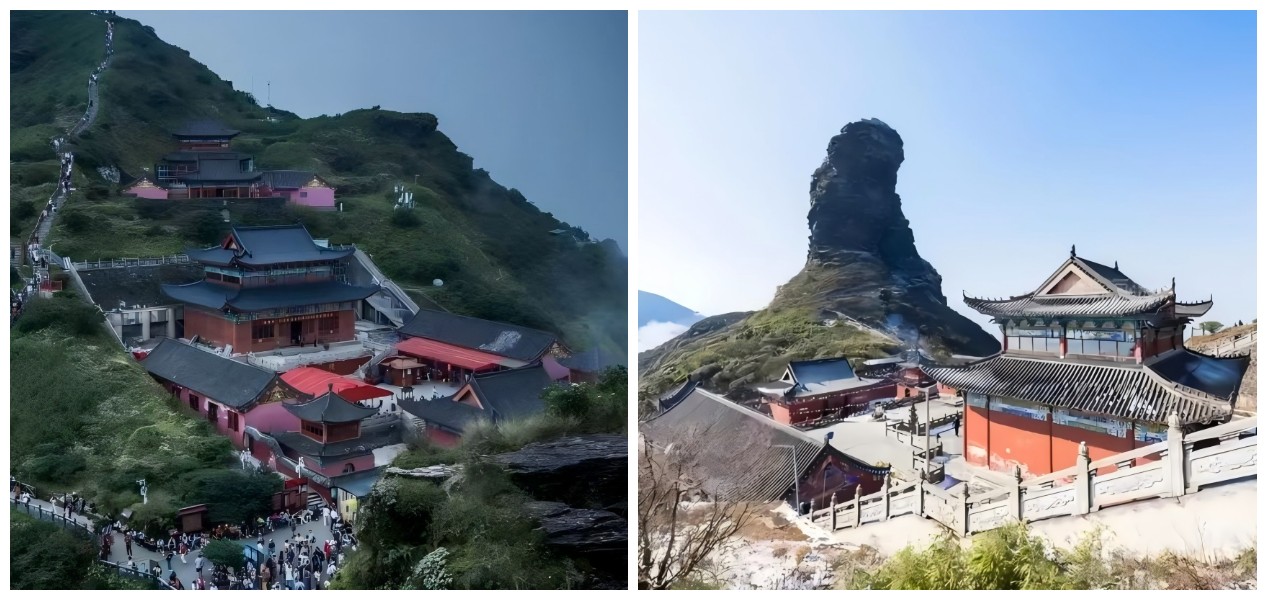
Fanjingshan’s most iconic landmark—Hongyun Jinding (2,336m)—is the first stop for every visitor. This solitary peak rises sharply from swirling clouds, named for the fiery red hues that wrap it at dawn. Locals call it “Buddha’s Hand Rock” for its graceful, palm-like shape, but its most stunning feature is the natural rift Golden Sword Gorge, which splits the summit in two. A narrow stone arch bridge, “Heavenly Bridge,” spans the chasm, creating a scene so ethereal it feels like stepping between heaven and earth.
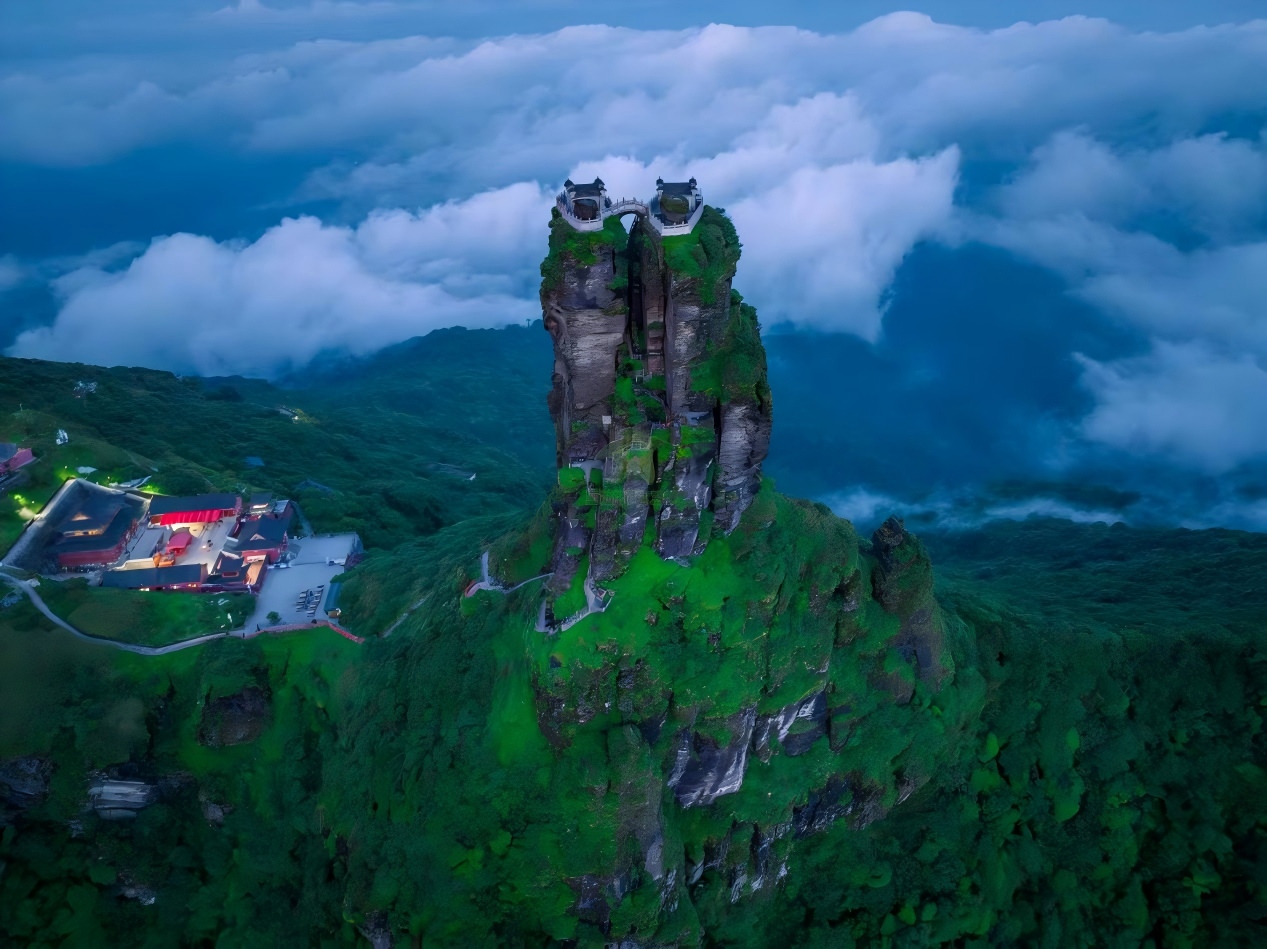
Crowning each peak are two sacred temples: the southern peak enshrines Sakyamuni Buddha (the Present Buddha), while the northern peak honors Maitreya Buddha (the Future Buddha)—a symbolic link between the present and the future. Legend tells of Sakyamuni and Maitreya joining forces to subdue demons plaguing the region; locals built the temples and bridge in gratitude, cementing Fanjingshan’s status as a Buddhist sacred site.
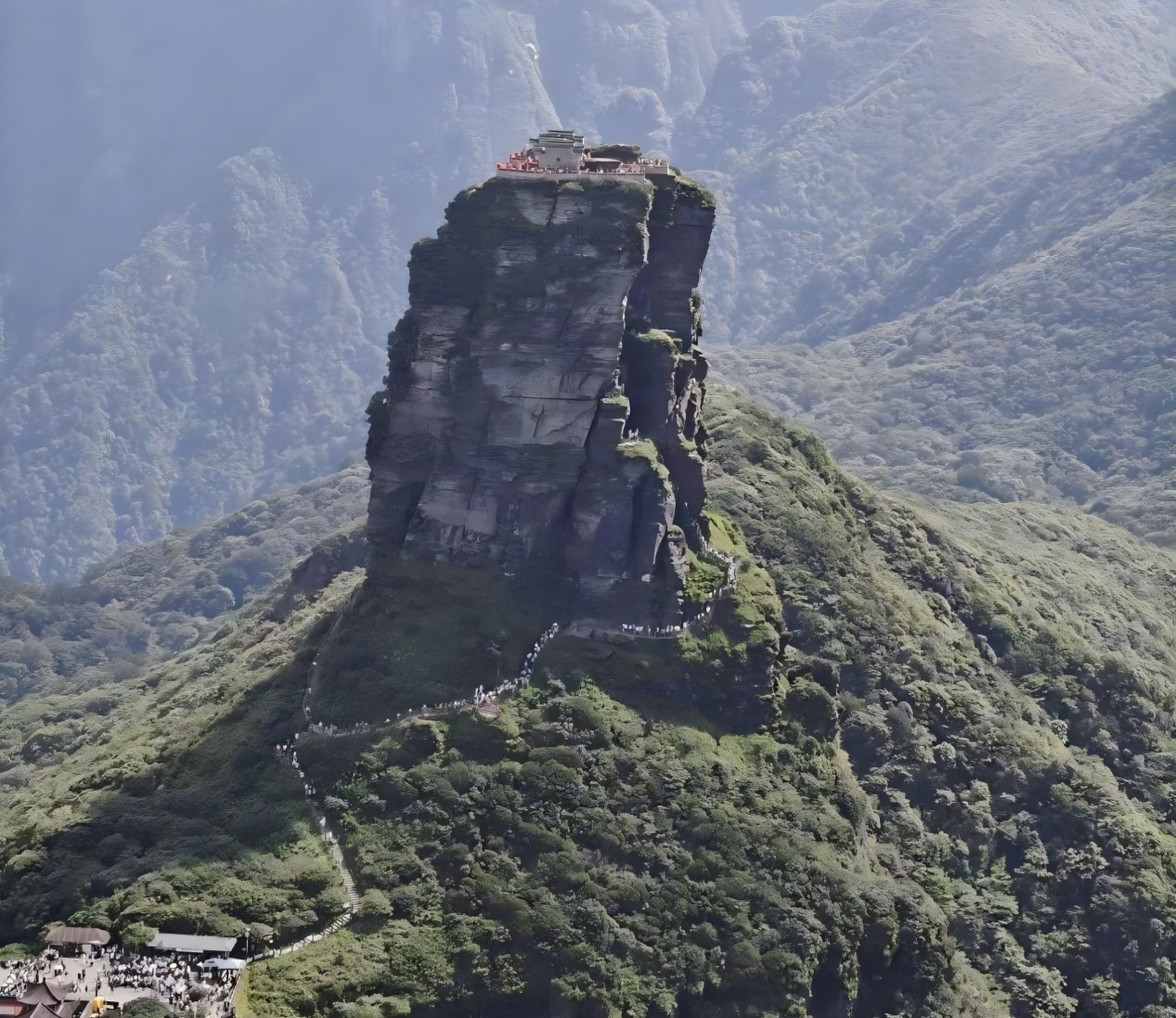
The climb to the top is part of the adventure: steep stone steps (some only wide enough for one person) wind past sheer cliffs. But the reward? Panoramic views of endless cloud seas rolling below—truly living up to its ancient name, “Brahma Heaven Pure Land.”
Pro Tip: Visit at sunrise for the famous “red cloud” effect that gives the summit its name.
2. Lao Jinding (Old Golden Summit): Zen, Sunrise & Billion-Year Rock Formations
Next, head to Lao Jinding (2,493m)—Fanjingshan’s second-highest peak and a haven for history and nature lovers. Unlike Hongyun Jinding’s dramatic rise, Lao Jinding is defined by scattered, whimsical rock formations and hidden ancient temples, making it a quieter counterpart.
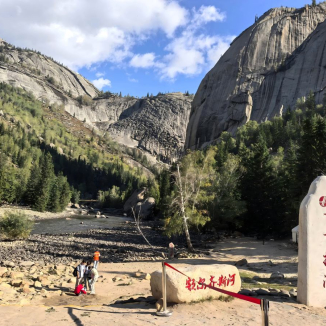
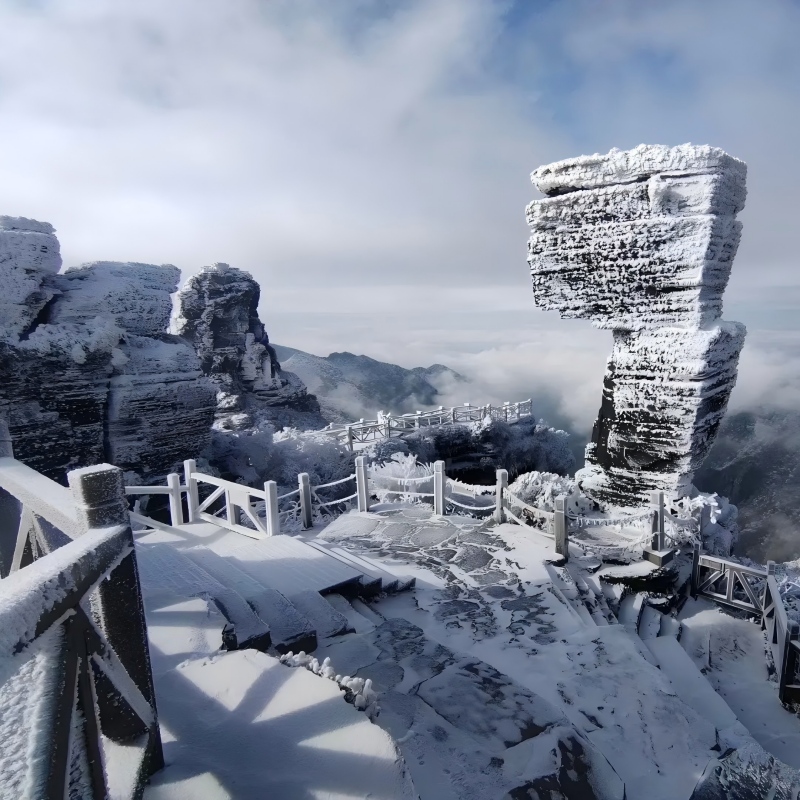
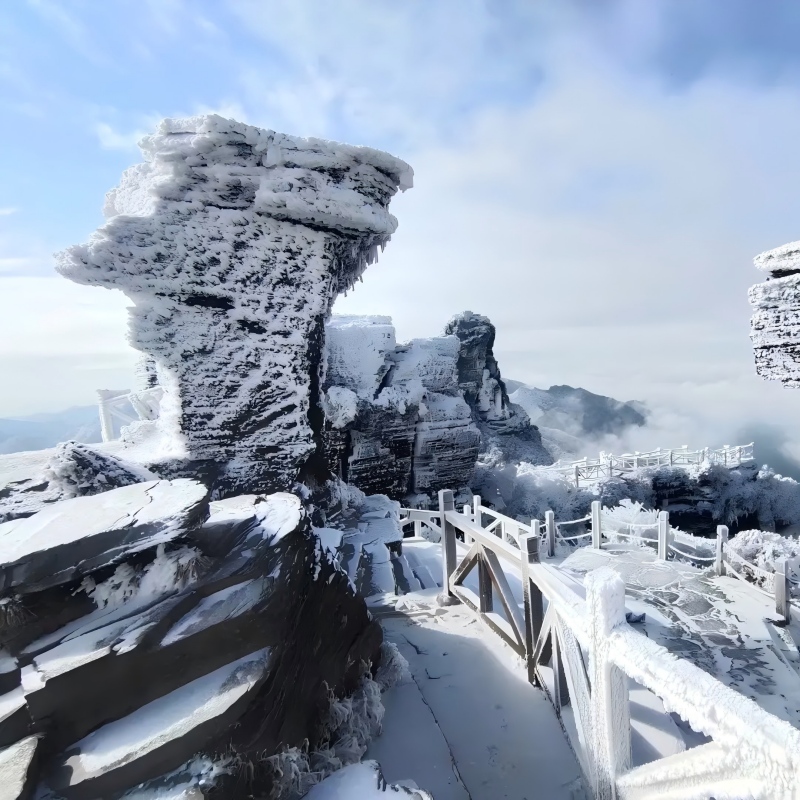
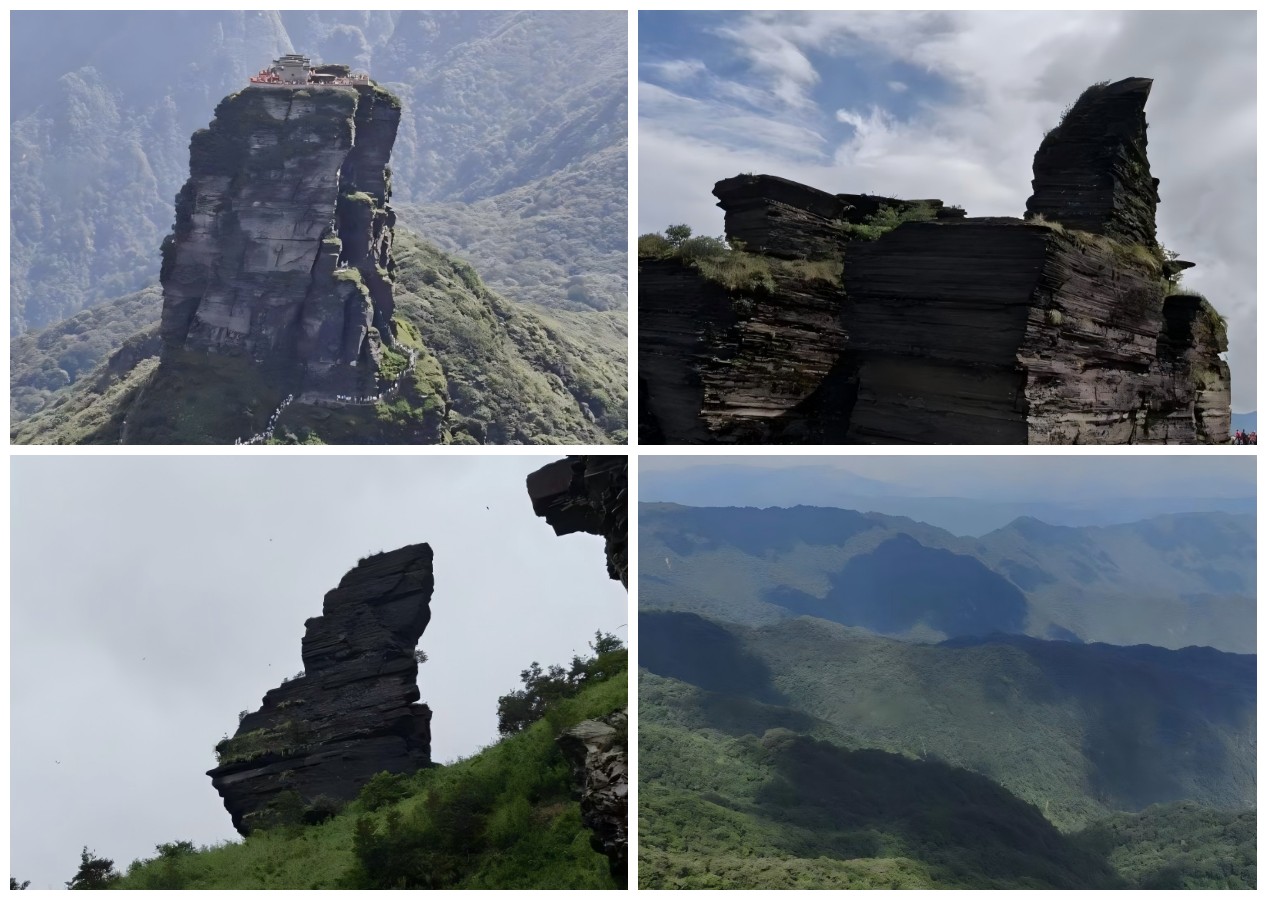
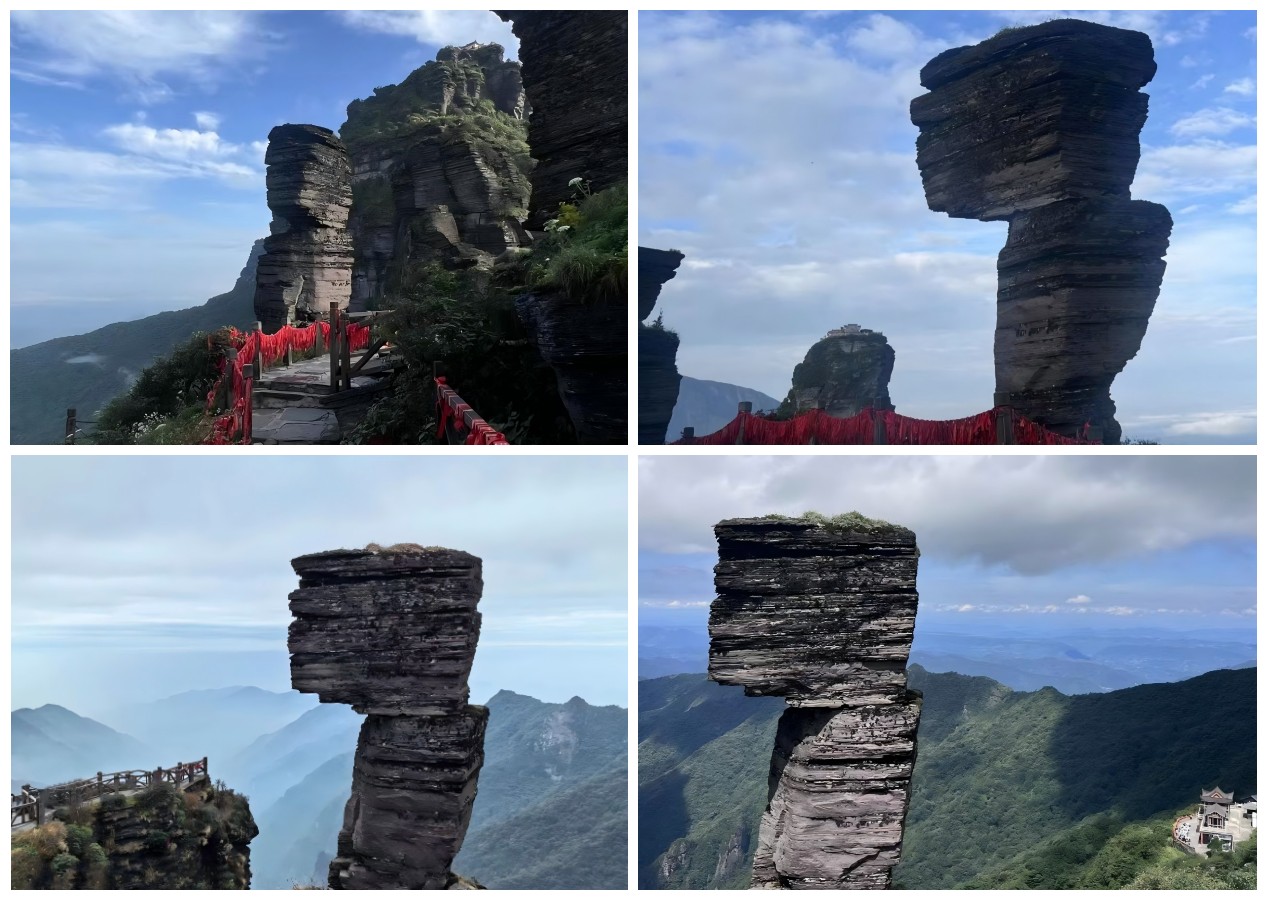
Its star attraction? Mushroom Stone—two stacked boulders (top slightly smaller than the base) that have withstood 1 billion years of erosion. This iconic “natural sculpture” is Fanjingshan’s most photographed spot—don’t forget your camera! Nearby, “Ten-Thousand Volume Scripture” (layered rocks resembling stacked books) and “One-Line Sky” (a narrow crevice where only a sliver of sky is visible) showcase nature’s artistry.
Nestled on its slopes is Zhenguo Temple, a Ming Dynasty (1368–1644) gem built into the mountain with gray tiles and wood. Though modest in size, its serene atmosphere—enhanced by ancient pines and the sound of monks chanting—offers perfect inner peace. Legend ties it to Emperor Wanli: his mother, Empress Dowager Li, prayed here for his health, and the emperor later renovated the temple, giving it the name “National Protection Temple.”
Lao Jinding is also Fanjingshan’s best sunrise spot. Watch as the sun bursts from the cloud sea, painting the peaks gold—an unforgettable moment.
3. Mushroom Stone Scenic Area: A Living Geological Museum
Descend from Lao Jinding into the Mushroom Stone Scenic Area—the concentration of Fanjingshan’s geological wonders. This is where you’ll dive deeper into the mountain’s 1-billion-year story: once an ocean, tectonic uplift, volcanic activity, and erosion transformed it into the karst landscape you see today.
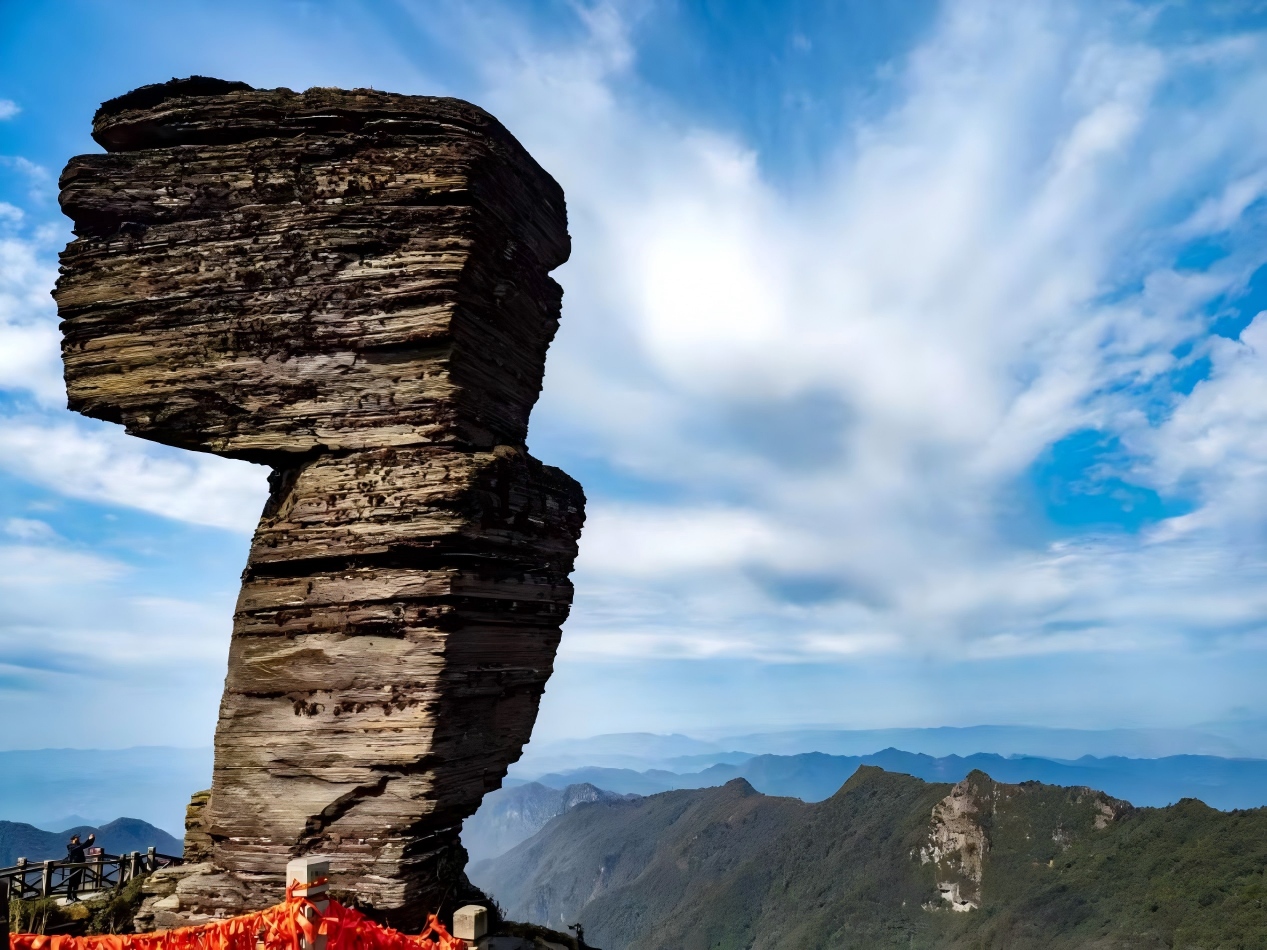
Beyond the famous Mushroom Stone, explore “Pillar Holding Up the Sky” (a towering standalone rock) and “Ten-Thousand Volume Scripture”—local folklore claims these rocks are scriptures dropped when the Monkey King (from Journey to the West) raided the Heavenly Library. Myth aside, the layered geology is fascinating for both casual visitors and geology enthusiasts.
The scenic area is also a biodiversity hotspot. Wander through dense primeval forests to spot Dove Trees (Davidia involucrata)—“living fossils” with white blooms that look like fluttering doves—and Chinese Yews (protected national treasures). Keep an ear out for the calls of the Guizhou Golden Snub-Nosed Monkey; Fanjingshan is one of the last remaining habitats for this endangered primate. With luck, you’ll see them leaping between trees!
4. Chengen Temple: The Heart of Fanjingshan’s Buddhist Culture
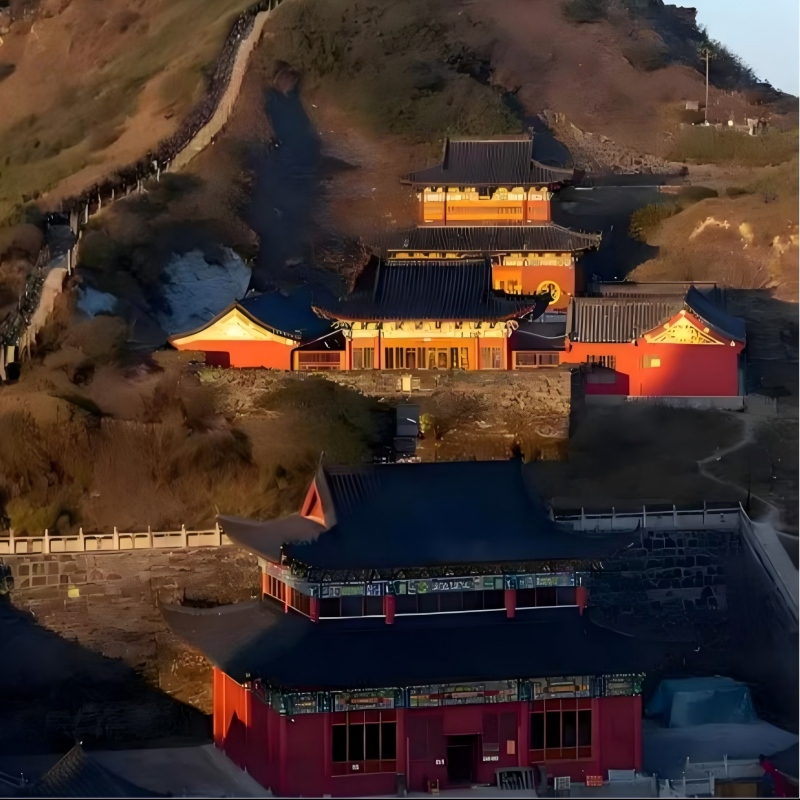
No Fanjingshan visit is complete without Chengen Temple—the mountain’s largest, highest-ranking ancient temple and the core of its Buddhist heritage. Built during the Ming Dynasty’s Wanli era (1573–1620), it once oversaw dozens of smaller temples on the mountain, serving as the central Zen monastery.
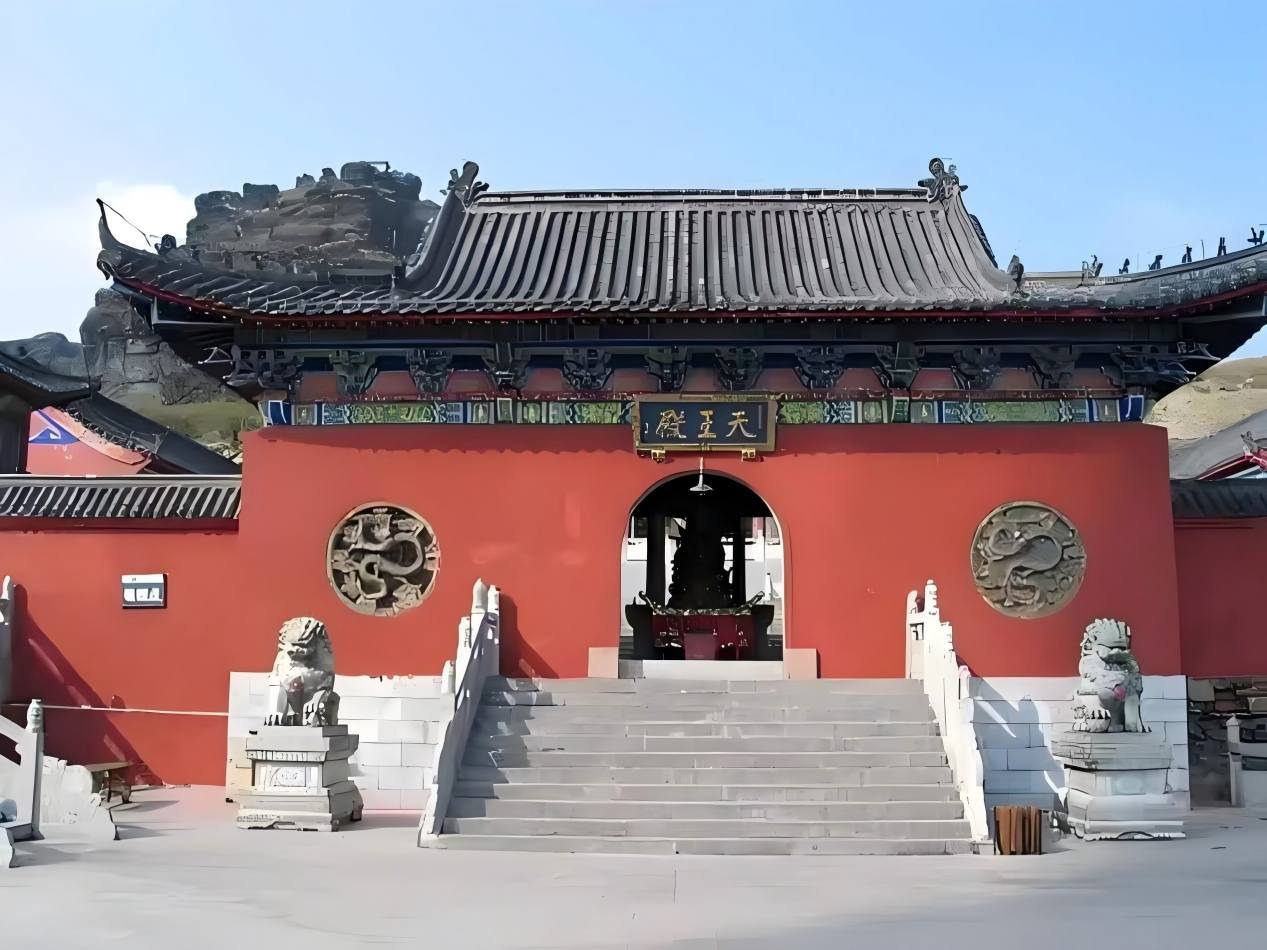
Its location is deliberate: backed by Lao Jinding and facing Hongyun Jinding, it follows traditional Chinese architectural principles of “leaning on mountains, gathering qi (energy).” The temple blends classic Buddhist temple style with Guizhou’s local architecture, featuring a Front Hall, Main Hall, and Rear Hall. The Main Hall houses the Buddhas of the Three Times (Past: Dipamkara; Present: Sakyamuni; Future: Maitreya)—their solemn expressions and the thick incense smoke create a deeply spiritual atmosphere.
Chengen Temple’s history is tied to Emperor Wanli: after his mother recovered from a serious illness following prayers at Fanjingshan, the emperor funded the temple’s 5-year construction, naming it “Receiving Grace Temple” (Chengen Si) to honor the Buddha’s mercy. Today, it preserves imperial plaques and stone tablets bestowed by the emperor—priceless relics for understanding Fanjingshan’s Buddhist past.
5. Ten-Thousand Meter Sleeping Buddha: Nature’s Divine Sculpture
Our final stop is Fanjingshan’s most magical surprise—the Ten-Thousand Meter Sleeping Buddha. Unlike other sites, this isn’t a single peak but a natural silhouette formed by several mountain ridges stretching 10,000 meters. Facing north with feet to the south, its profile is unmistakable: a high nose, gently closed lips, and serene expression, as if a Buddha slumbers peacefully in the clouds.
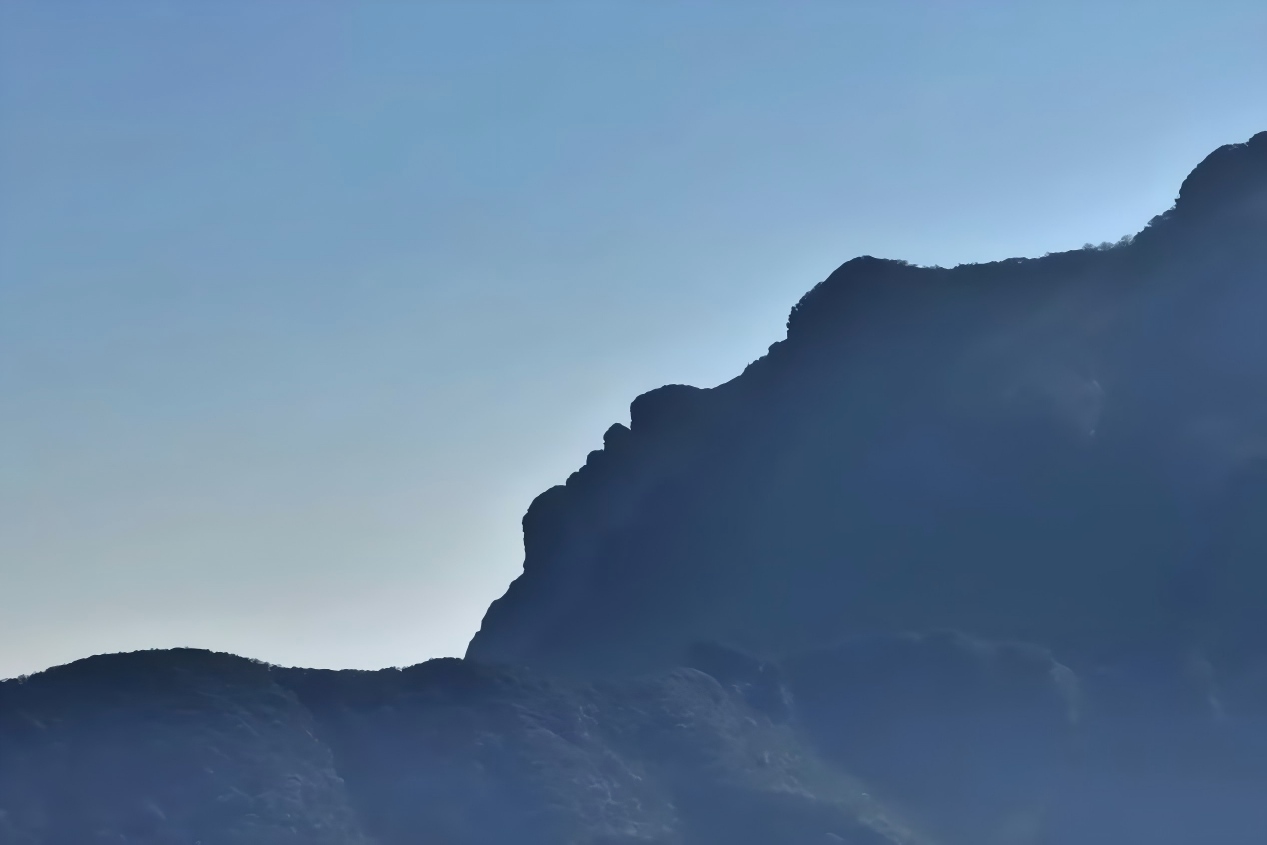
The Sleeping Buddha was discovered accidentally in the 1990s, when a photographer captured it during an aerial shoot. News spread quickly, drawing attention from Buddhists and geologists worldwide. Buddhists regard it as a manifestation of the Buddha, while geologists marvel at how natural erosion shaped this “divine outline.”
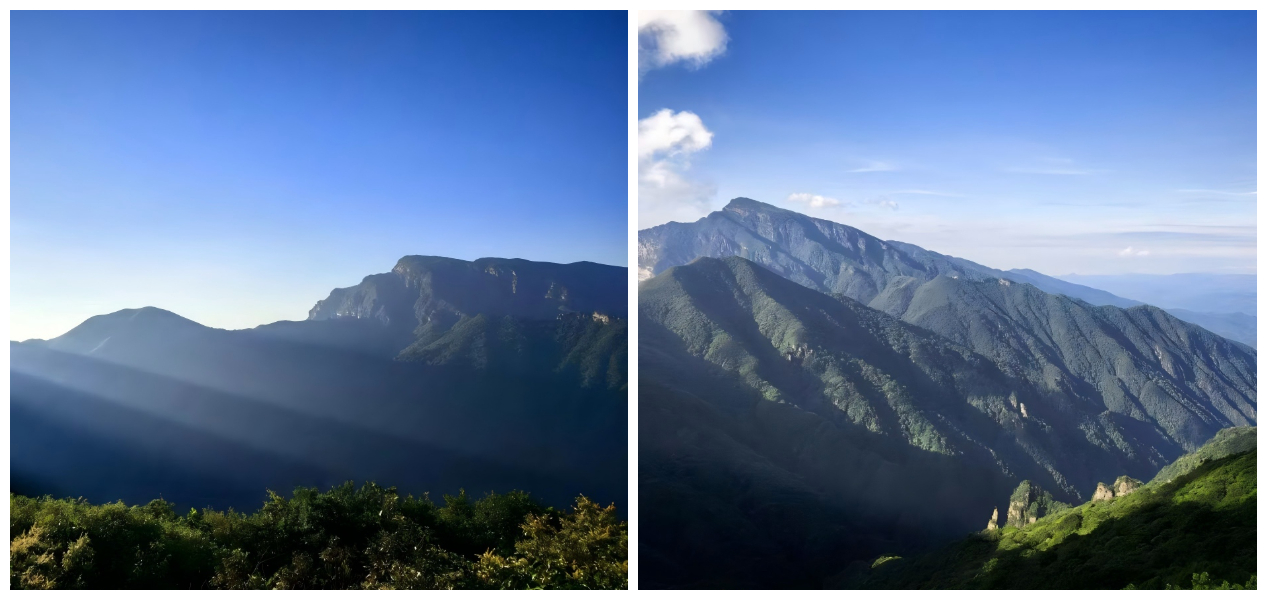
Visit the viewing platform at dawn or dusk: as clouds roll, the Buddha’s silhouette seems to breathe, evoking awe at nature’s magic. Local Tujia and Miao ethnic groups also revere it as a sacred incarnation, holding annual ceremonies here to pray for good harvests and peace.
Farewell: Take the Magic of Fanjingshan With You
Our Fanjingshan journey may be ending, but the memories will last a lifetime. You’ve stood above cloud seas on Hongyun Jinding, found peace in Ming Dynasty temples, marveled at 1-billion-year-old rocks, and gazed at a Buddha shaped by nature itself. This mountain is more than a UNESCO site—it’s a bridge between China’s natural wonders and its profound Buddhist culture.
As you leave, take a piece of Fanjingshan with you: share your photos of Mushroom Stone, your stories of the Sleeping Buddha, and your moments of calm in Chengen Temple. Let more travelers discover this “Brahma Heaven Pure Land” in Guizhou.
Thank you for joining me today. Wishing you safe travels—and may the peace of Fanjingshan stay with you always. See you on the road!