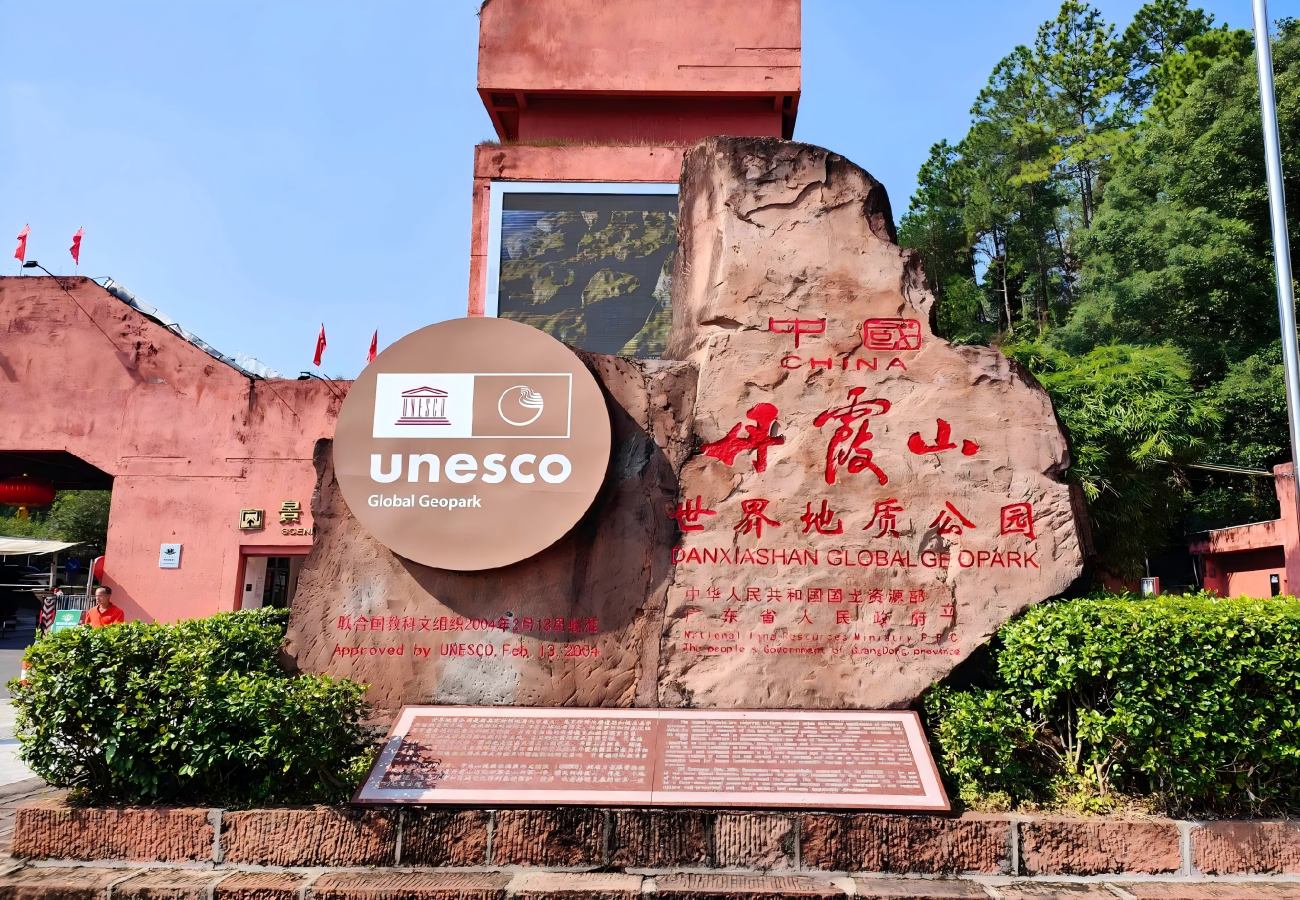
Dear friends from overseas, welcome to Mount Danxia in Guangdong, known as "China's Red Stone Park". I am your online tour guide today, and it is my great honor to lead you into this red secret land carved by nature for over 100 million years. Together, we will explore the unique landscapes of Danxia landform and listen to the historical stories and cultural legends hidden among the rocks.

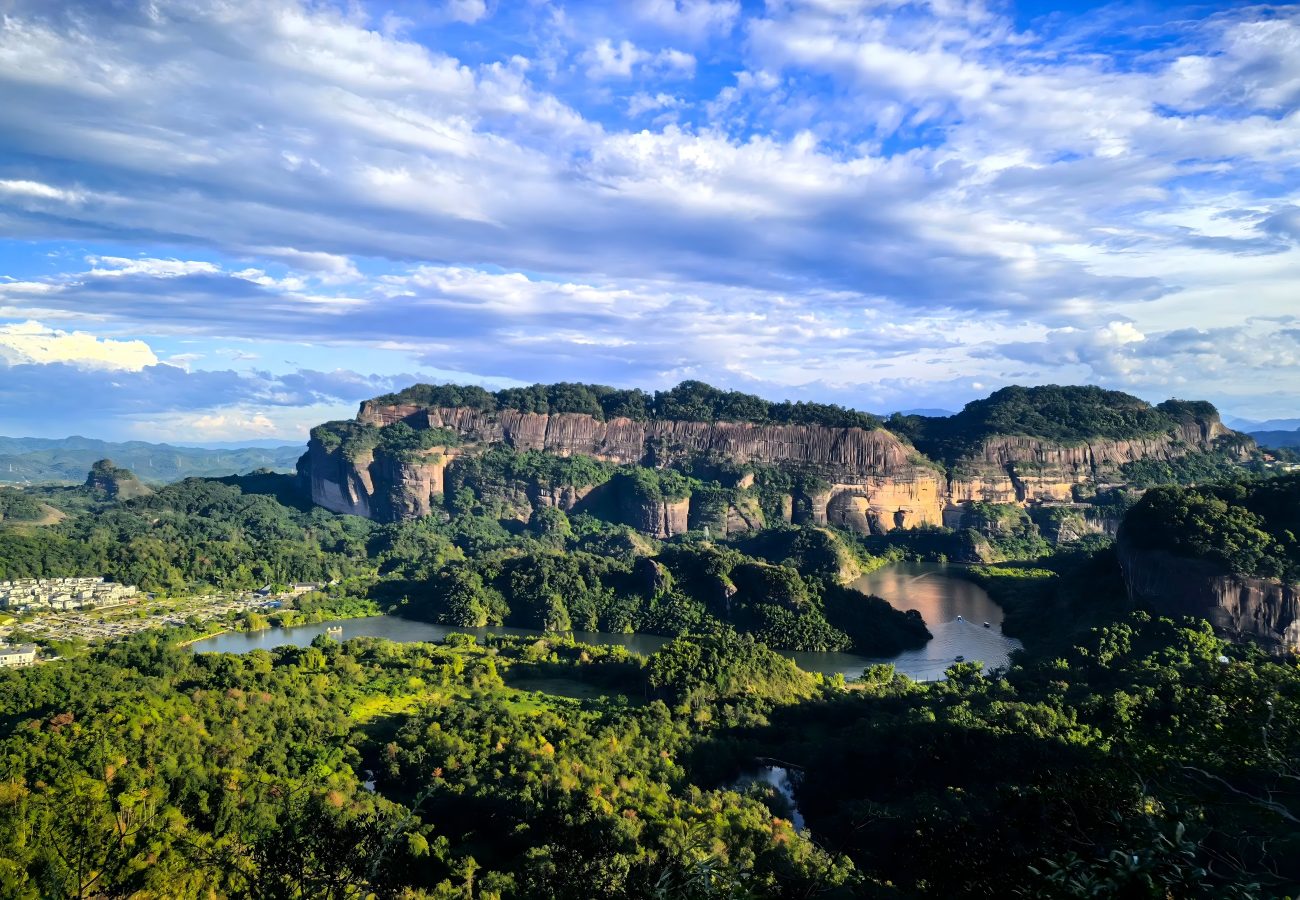
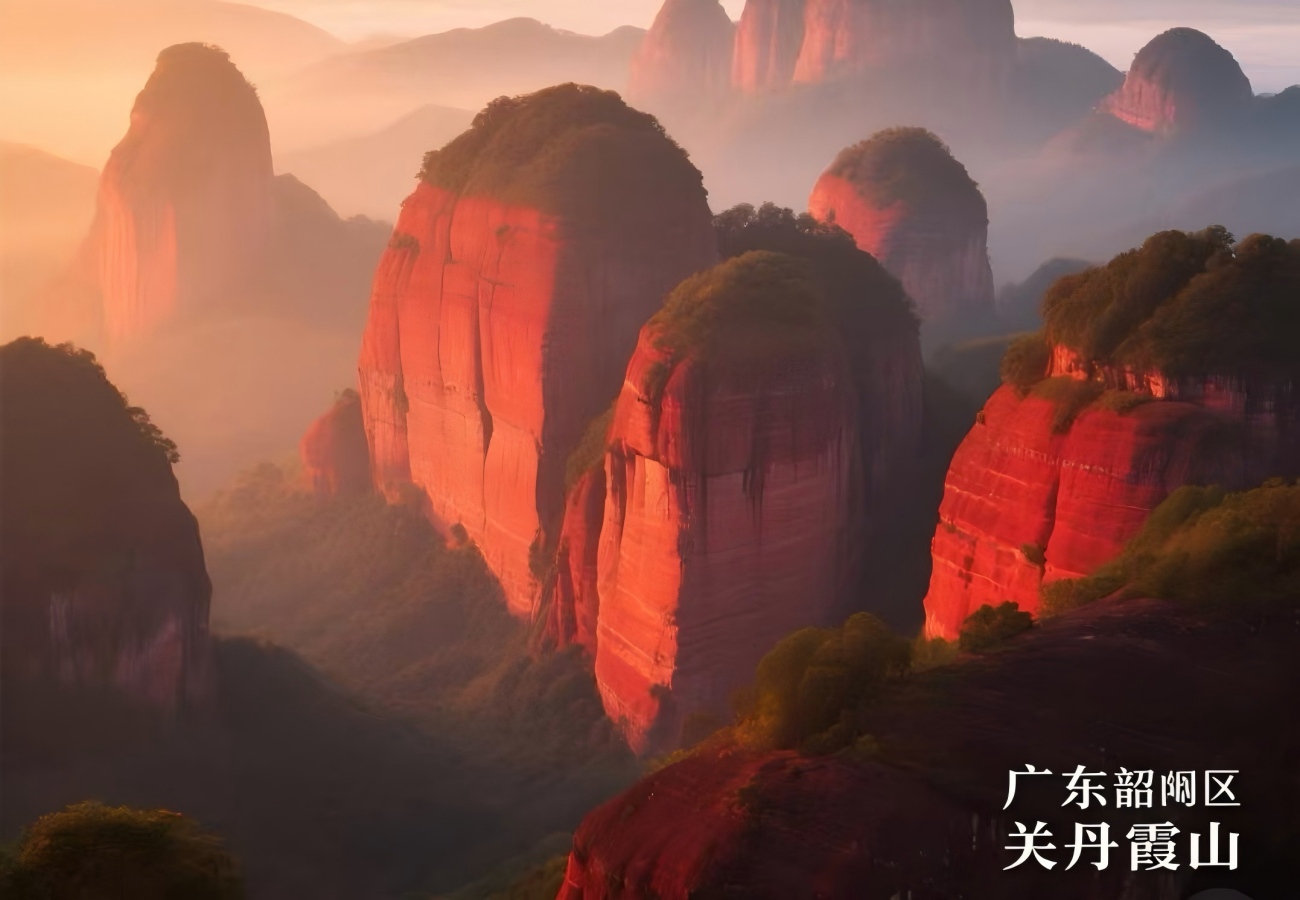
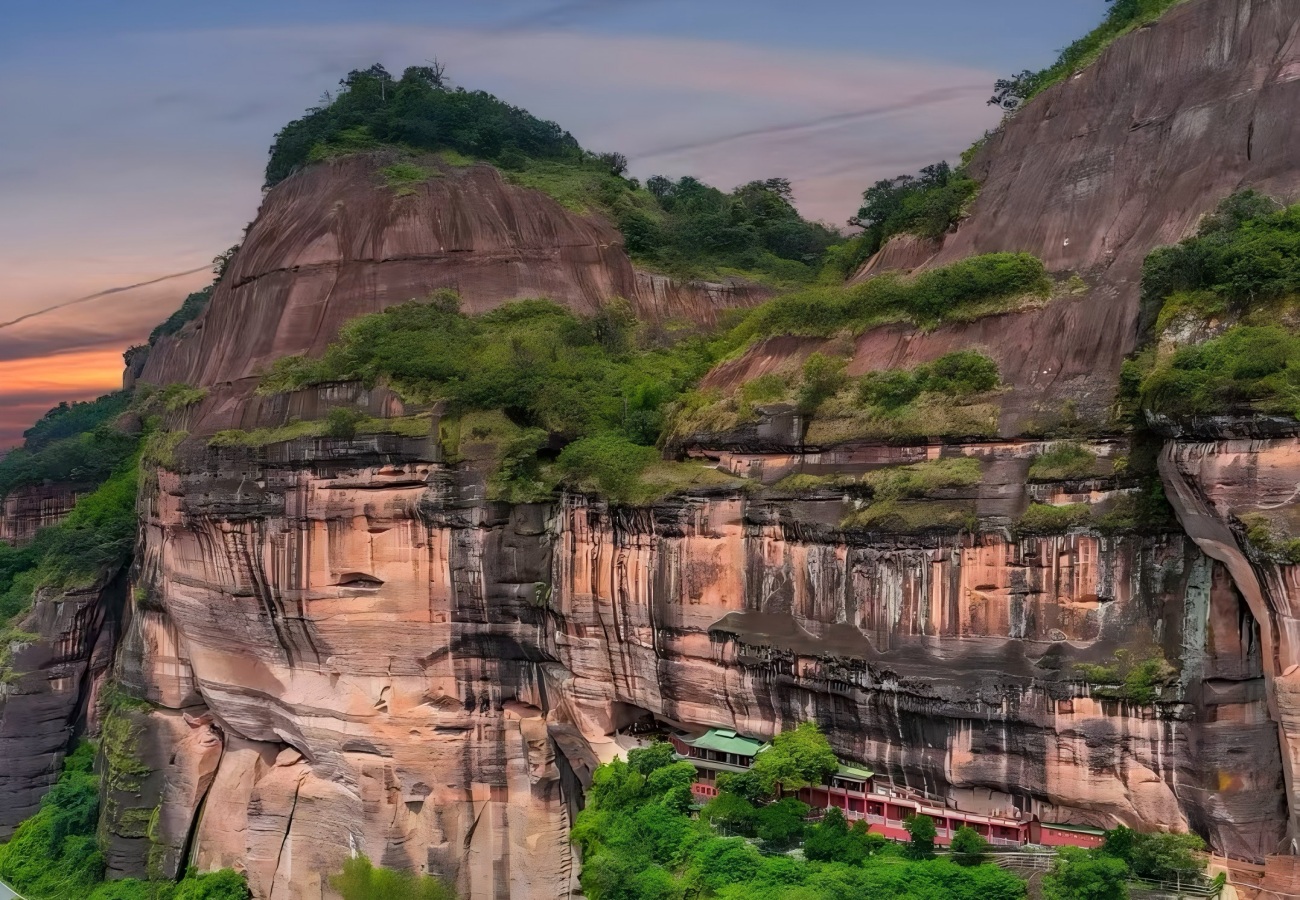
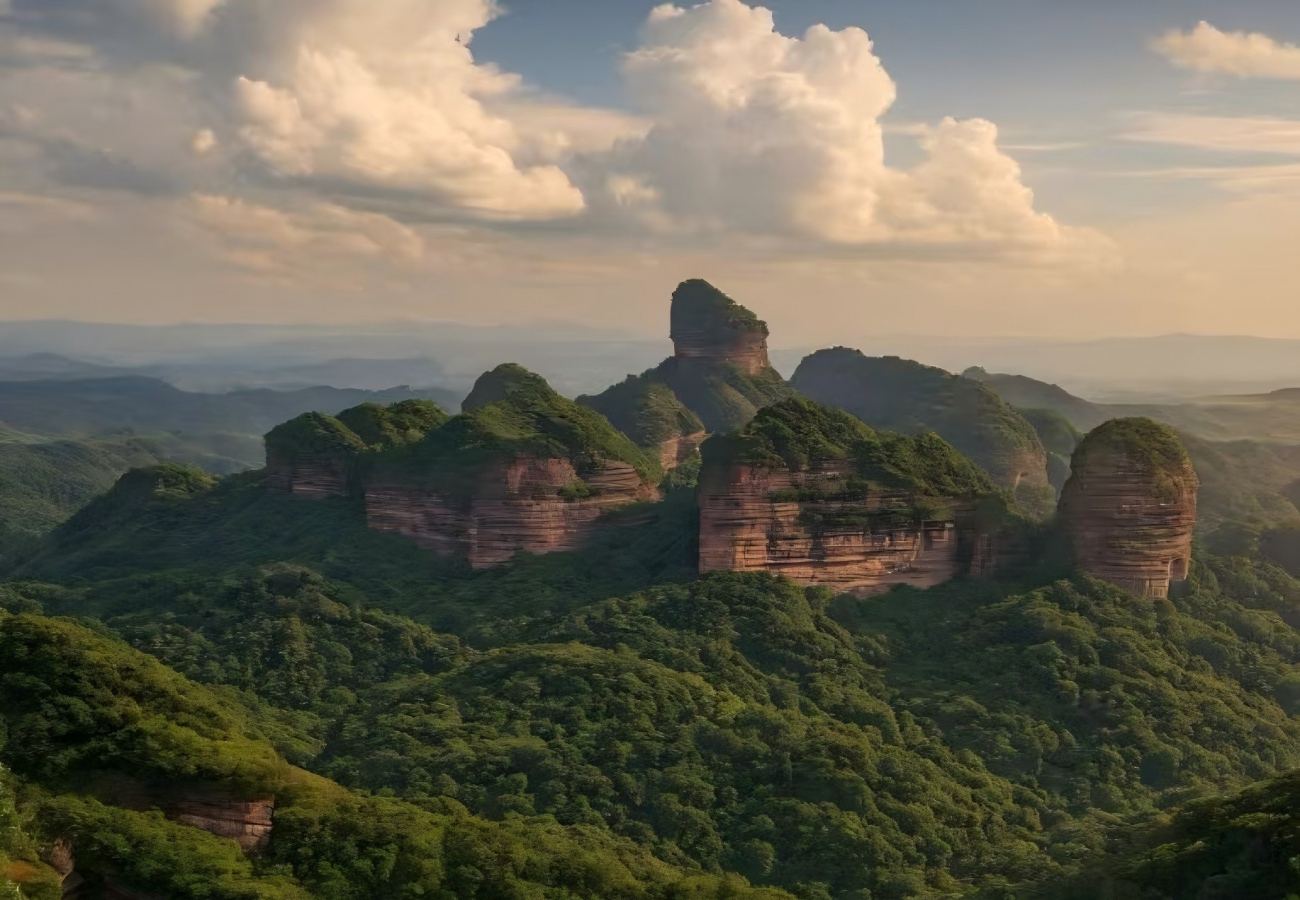
Located in Renhua County, Shaoguan City, Guangdong Province, Mount Danxia is one of the first global geoparks, a world natural heritage site, and also the naming place of China's Danxia landform. The red mountains here are composed of red sandstone formed 65 million years ago. After long-term weathering, erosion and water scouring, they have formed a variety of landform landscapes such as red cliffs, peak forests, canyons, stone forts and stone pillars, like a magnificent red scroll, combining seven characteristics: grandeur, uniqueness, danger, elegance, serenity, antiquity and vastness. Next, let's step into the five core scenic spots of Mount Danxia and start this wonderful journey integrating nature and culture.
1. Elder Peak: The "Millennium Observation Deck" at the Top of Danxia
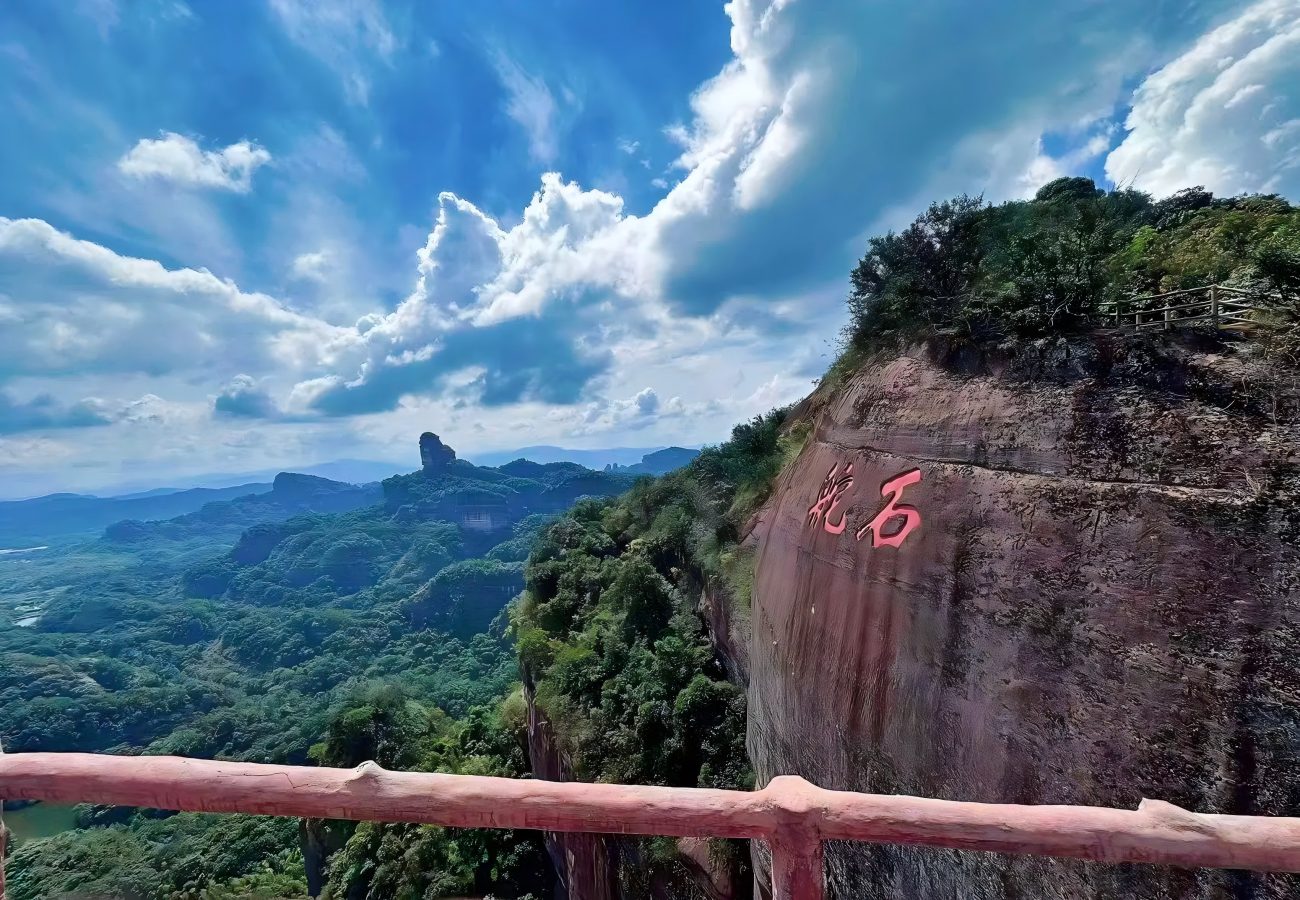
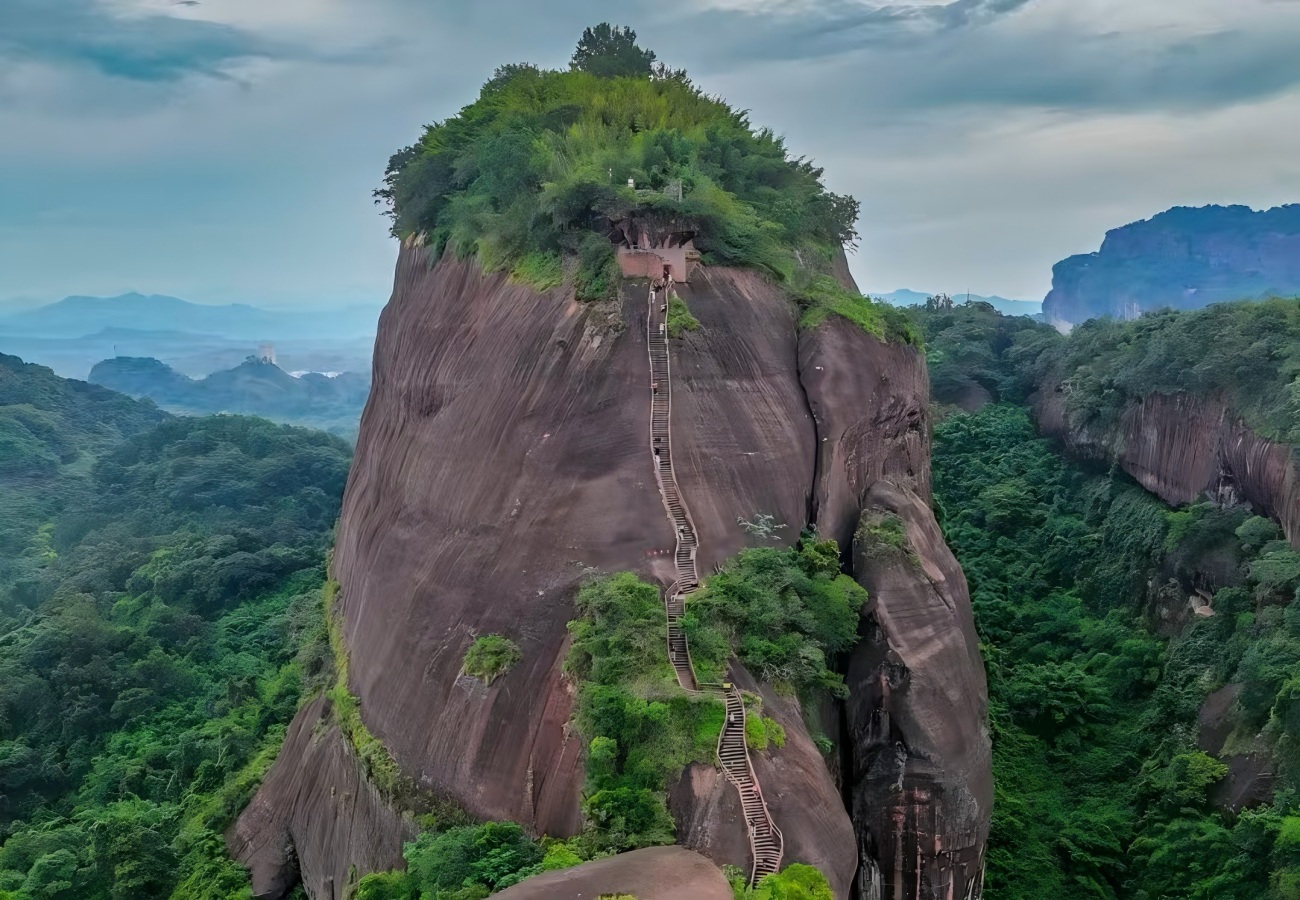
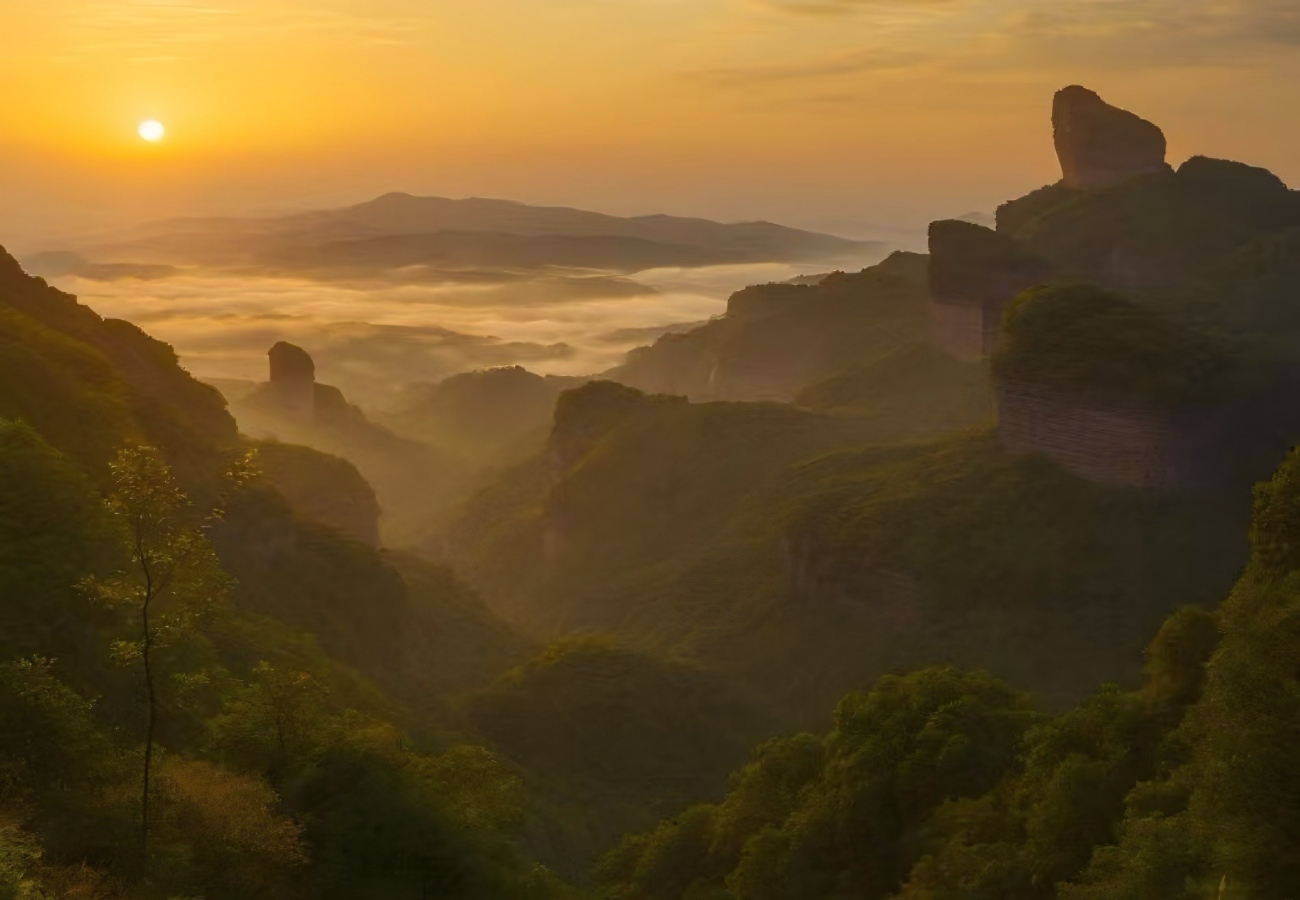
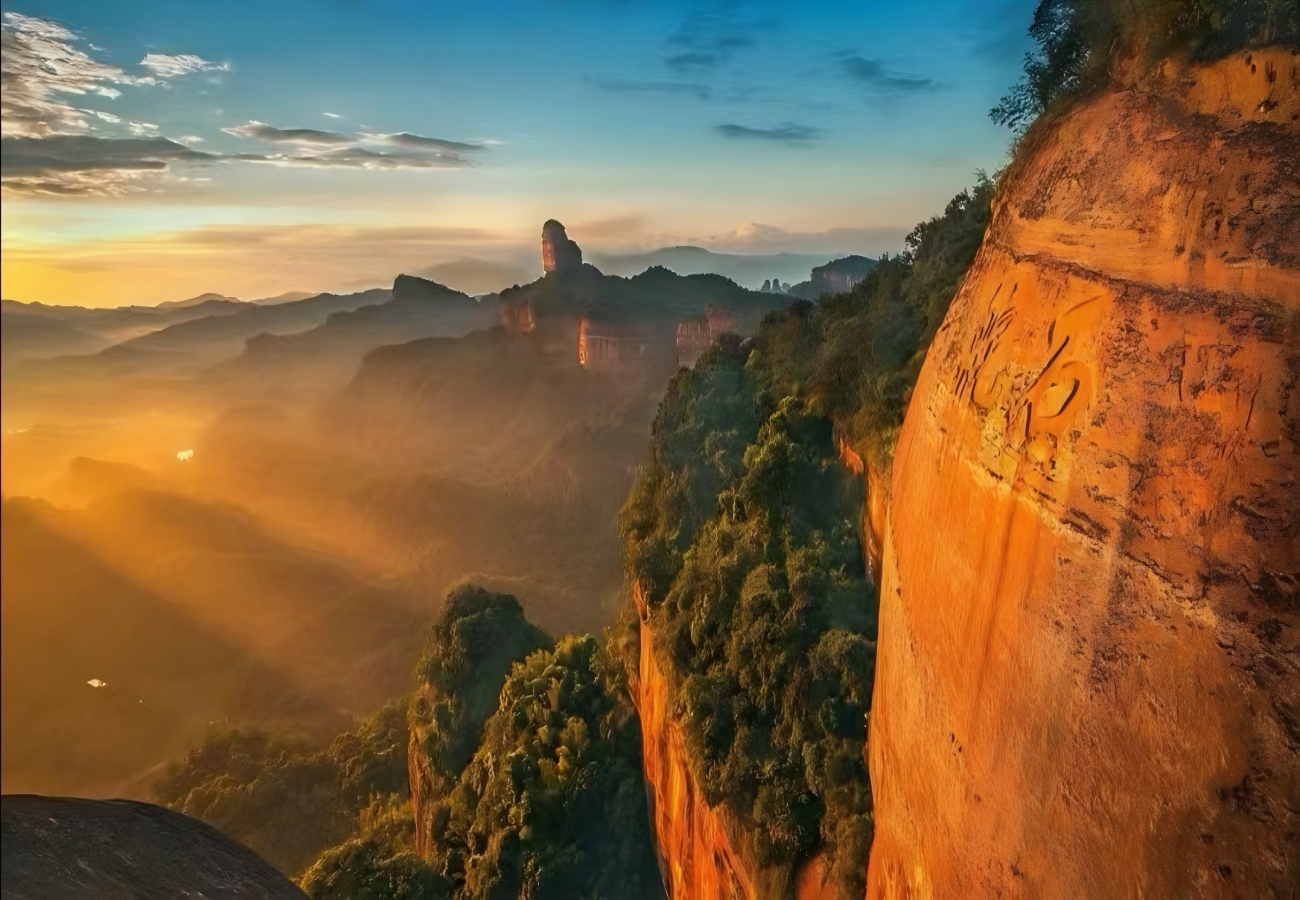
Elder Peak is one of the main peaks of Mount Danxia, with an altitude of 409 meters. It gets its name because the mountain resembles an elder with a crutch. It is not only the best place to watch the sunrise and sea of clouds at Mount Danxia, but also a "natural observation deck" carrying thousands of years of historical marks. Since the Han Dynasty, ancestors have been active here, leaving many cultural relics.

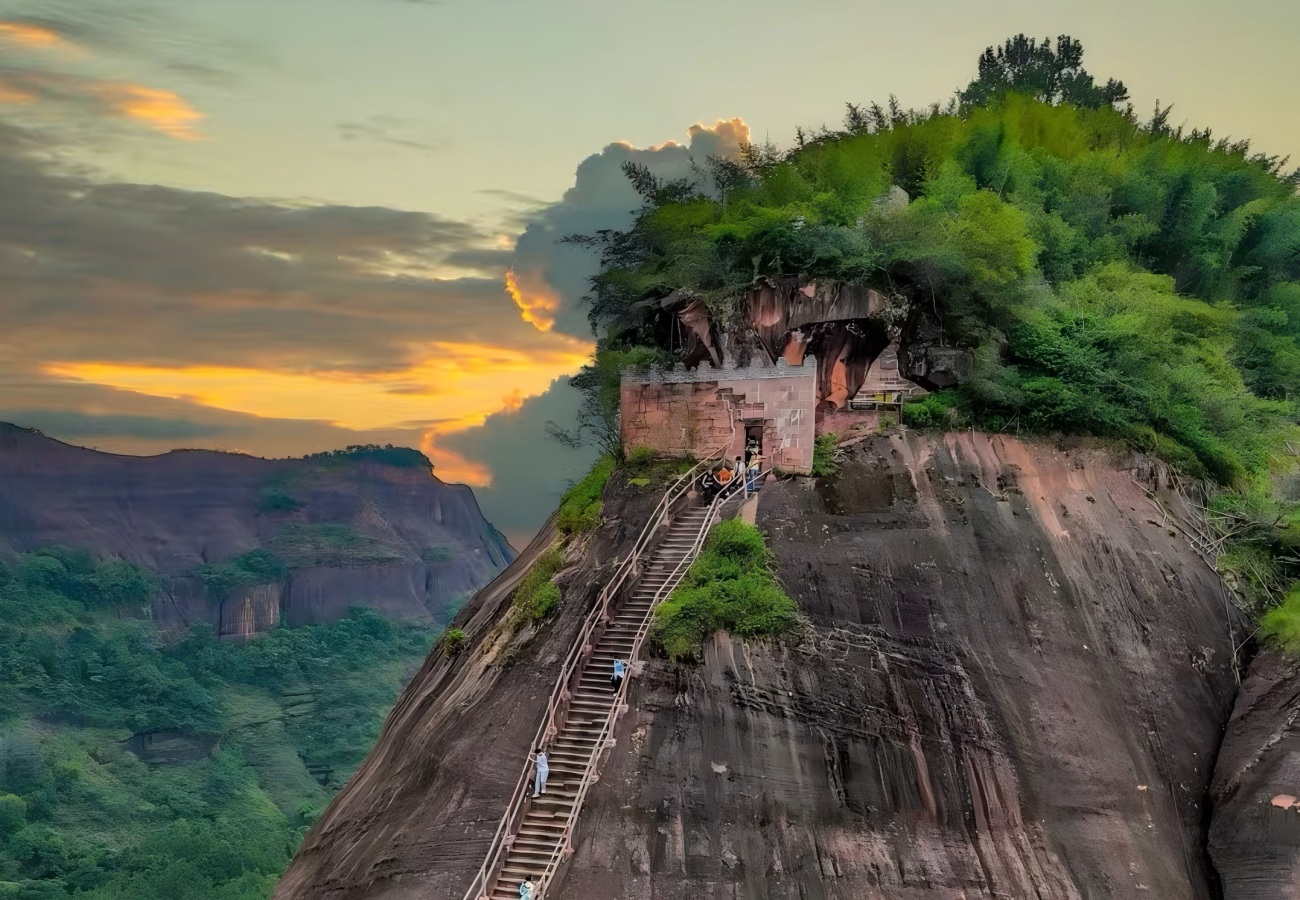
Climbing up along the hiking trail, we will first pass by "Jinyan Grotto" - one of the earliest developed grottoes in Mount Danxia. There is a statue of Guanyin enshrined in the grotto, which has been a sacred place for Buddhist practice since the Northern Song Dynasty. On the wall of the grotto, there are more than 30 cliff carvings from the Northern Song Dynasty to the Qing Dynasty. Among them, the most famous one is the inscription "Jinyan" by Zhu Xi, a Neo-Confucianist of the Southern Song Dynasty. The calligraphy is powerful, witnessing the thousand-year inheritance of religious culture here. According to legend, during the Southern Song Dynasty, a monk named Fayun traveled here. Seeing that Jinyan Grotto was deep and quiet with rocky walls like brocade, he built a hut here for practice. Since then, this place has gradually become a Buddhist sacred site in northern Guangdong, and pilgrims have flocked here during Buddhist festivals.
Continuing upwards to the "Sunrise Pavilion" at the top of Elder Peak, this is the best spot to watch the Danxia sunrise. In the early morning, when the first ray of sunlight breaks through the clouds and falls on the rolling red peak forests, the red cliffs are dyed golden red, and the sea of clouds surges among the mountains, like a fairyland. As early as the Tang Dynasty, a poet left the verse "Danxia covers the sun, and the rainbow hangs in the sky" here; Xu Xiake, a geographer of the Ming Dynasty, visited Mount Danxia twice and recorded the scenery of Elder Peak in detail in "Xu Xiake's Travel Notes", describing it as "a thousand ren of red cliffs, extremely magnificent". Today, standing on the Sunrise Pavilion and looking into the distance, we can still feel the magnificent scenery that Xu Xiake saw in those years, and imagine the scene where ancient literati climbed high, looked far, and composed poems here.

In addition, around Elder Peak, there are also unique landscapes such as "Rudder Stone" and "Yangyuan Stone" (Yangyuan Stone will be introduced in detail in the second scenic spot). The natural textures on the mountain are like the "fingerprints" of nature, recording the geological changes of hundreds of millions of years. Every rock and every gully is a witness to the evolution of the Earth, and also tells us the long journey of Mount Danxia from an ancient ocean to a red peak forest.

2. Yangyuan Stone: The "Totem of Life" Created by Nature
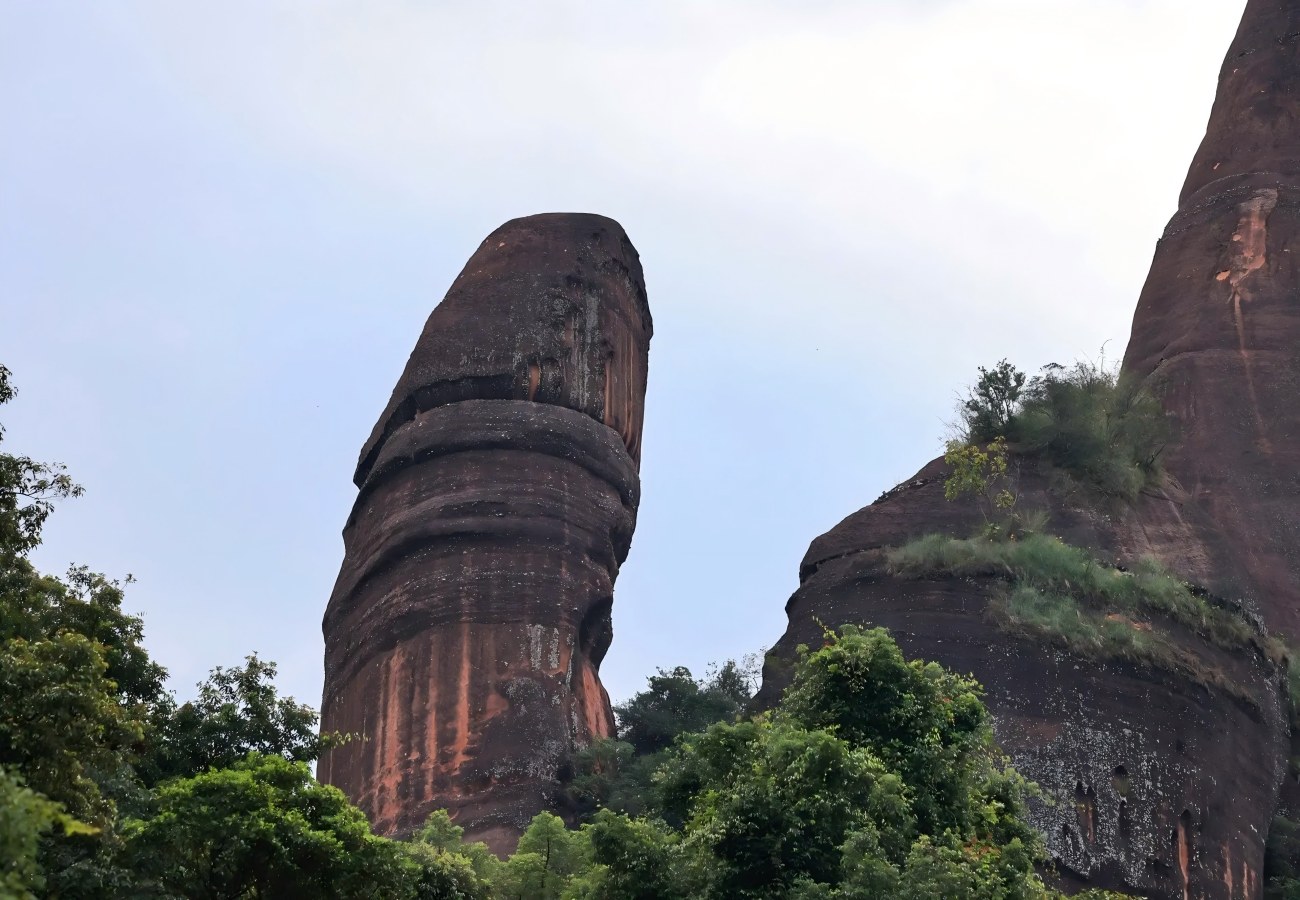
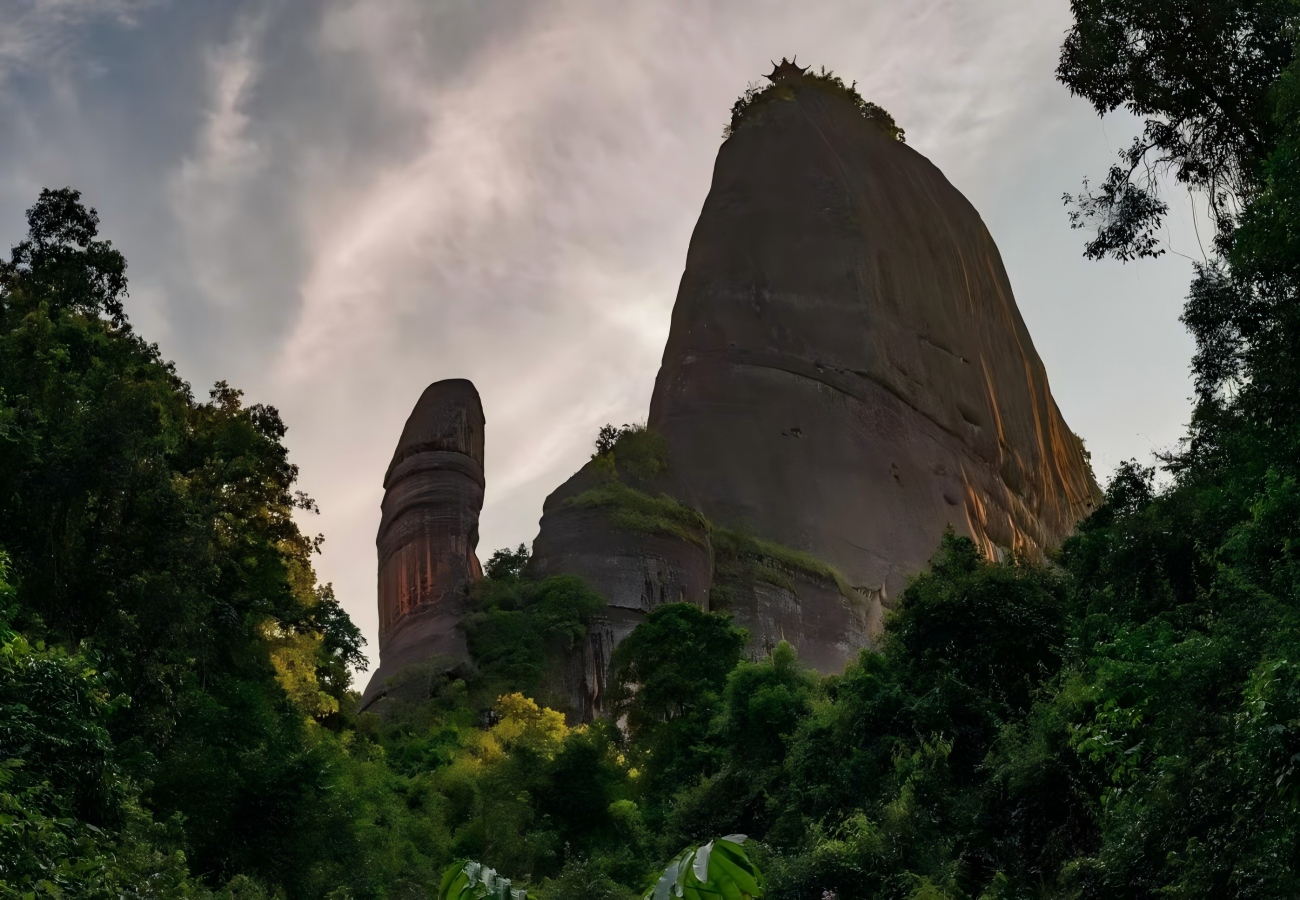
Leaving Elder Peak, we come to one of the most representative landscapes of Mount Danxia - Yangyuan Stone. This natural stone pillar, 28 meters high and 7 meters in diameter, gets its name because it resembles the male reproductive organ. Known as the "totem of life" of nature, it is not only a unique product of Danxia landform, but also carries the cultural connotation of ancient people's worship of life.

From a geological perspective, Yangyuan Stone was formed 3 million years ago. At that time, this area was a stratum of red sandstone. Due to the development of vertical joints in the rock formation, coupled with long-term weathering, erosion and gravitational collapse, this independent stone pillar was finally formed. Its shape is so lifelike that even the details are highly similar to human organs, which can be called the "masterpiece of nature". Interestingly, Yangyuan Stone echoes "Yinyuan Stone" (introduced in the third scenic spot) not far away, forming a unique "balance of yin and yang" landscape in Mount Danxia. This phenomenon also made ancient people have a strong sense of awe for this place.

In local folk legends, Yangyuan Stone is the "incarnation of the mountain god". According to legend, in ancient times, floods raged in the area around Mount Danxia, and the people were displaced. To save the people, the mountain god turned into a huge stone pillar to block the flood and protect the safety of the region. To thank the mountain god, the people regarded this stone pillar as the "god of life" and came to worship it every year, praying for the prosperity of the population and a good harvest. This worship of nature also reflects the ancient ancestors' emphasis on the reproduction of life and the concept of harmonious coexistence with nature.
From a cultural perspective, the existence of Yangyuan Stone also provides important material evidence for the study of ancient Chinese reproductive culture. In the surrounding grottoes, archaeologists have discovered carved symbols from the Neolithic Age, some of which are related to reproductive worship, proving that as early as thousands of years ago, the ancestors here had regarded Yangyuan Stone as a symbol of life. Today, Yangyuan Stone is not only a "Internet-famous scenic spot" of Mount Danxia, but also a natural wonder with profound cultural heritage, attracting tourists from all over the world to explore the mysteries of nature and the origin of human culture.
3. Yinyuan Stone: The "Mother of Life" of Mount Danxia
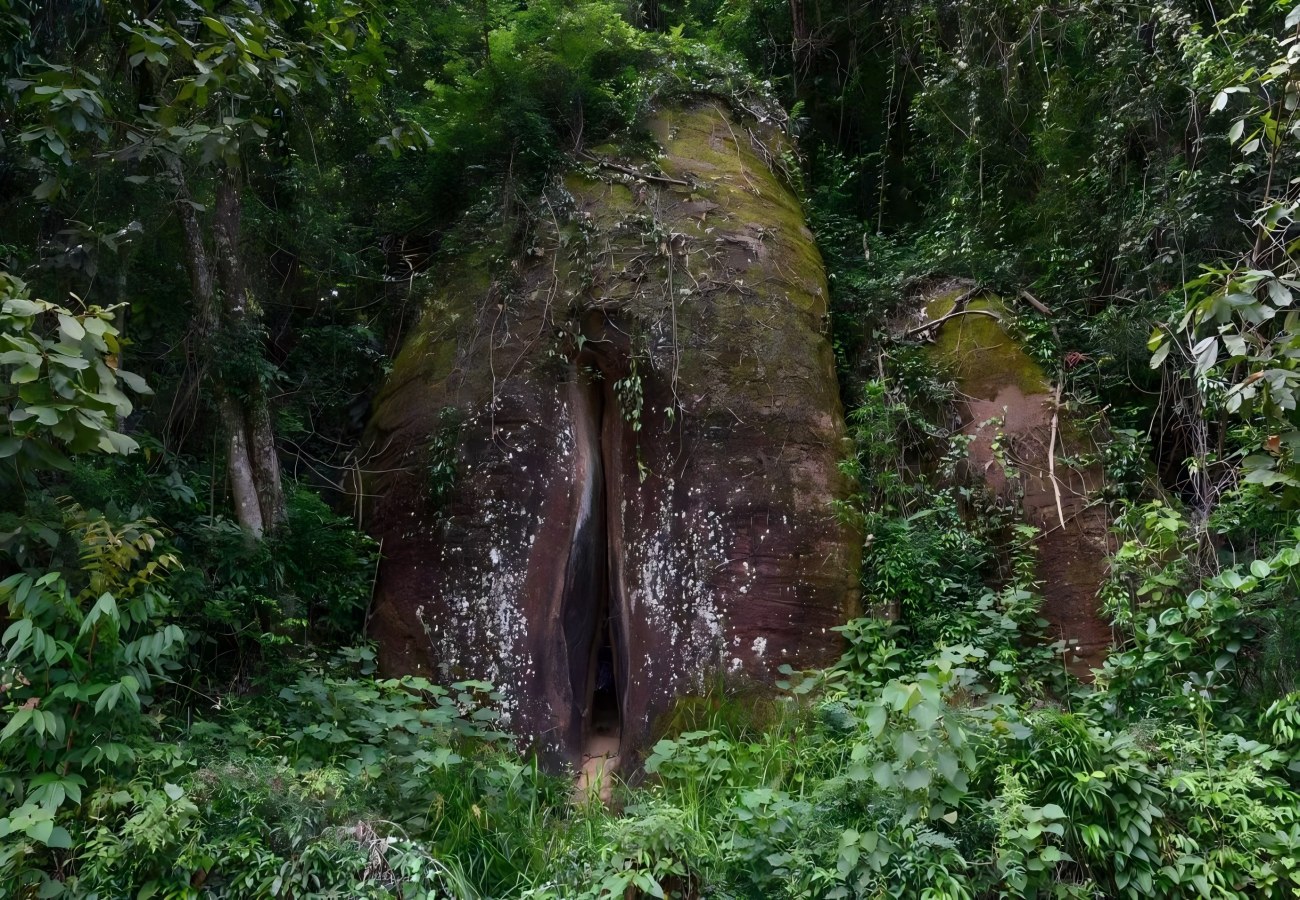
Echoing Yangyuan Stone is another unique landscape of Mount Danxia - Yinyuan Stone. This natural stone cave hidden in the rock wall along the Jinjiang River is 10.3 meters high and 4.8 meters wide. It gets its name because it resembles the female reproductive organ. Known as the "mother of life", it and Yangyuan Stone together form the "harmony of yin and yang" cultural landscape of Mount Danxia.

The formation of Yinyuan Stone is similar to that of Yangyuan Stone, both formed by the weathering and erosion of red sandstone. However, its shape is more hidden - the stone cave is embedded in the steep rock wall, and you need to take a boat along the Jinjiang River or hike through a narrow valley to see it. Looking from a distance, the outline of the stone cave is clear, and the rock texture around the cave entrance is like a skirt, as if a shy girl hiding in the mountains, giving people a sense of mystery and sanctity.

In local culture, Yinyuan Stone is regarded as a symbol of the "mother of the earth". According to legend, in ancient times, the Goddess Nüwa refined stones here to mend the sky. After mending the sky, she left this "sky-mending stone", which formed the prototype of Yinyuan Stone. Later, the Goddess Nüwa also reproduced human beings here, so Yinyuan Stone is also regarded by the people as the "cradle of life". Every year on the third day of the third lunar month, local villagers will come to the vicinity of Yinyuan Stone to hold a "mother-worshipping ceremony", offering flowers and sacrifices to pray for the health of mothers and the safety of children. This traditional custom has continued to this day and has become one of the unique folk cultures of Mount Danxia.
From a scientific perspective, the existence of Yinyuan Stone also has important geological research value. The interior of the stone cave retains a complete rock formation structure, and the rock formation also contains rich paleontological fossils, which provide important clues for the study of the paleogeographic environment and biological evolution in the Mount Danxia area. At the same time, the "correspondence between yin and yang" of Yinyuan Stone and Yangyuan Stone also reflects the thought of "balance of yin and yang" in ancient Chinese philosophy - the ancients believed that all things in the world are composed of yin and yang qi, and only the harmony of yin and yang can maintain the stability of nature and the continuation of life. This thought is not only reflected in the landscape of Mount Danxia, but also deeply influences all aspects of traditional Chinese culture, such as traditional Chinese medicine, feng shui and philosophy.
4. Jinjiang River: The "Red Gallery" of Mount Danxia
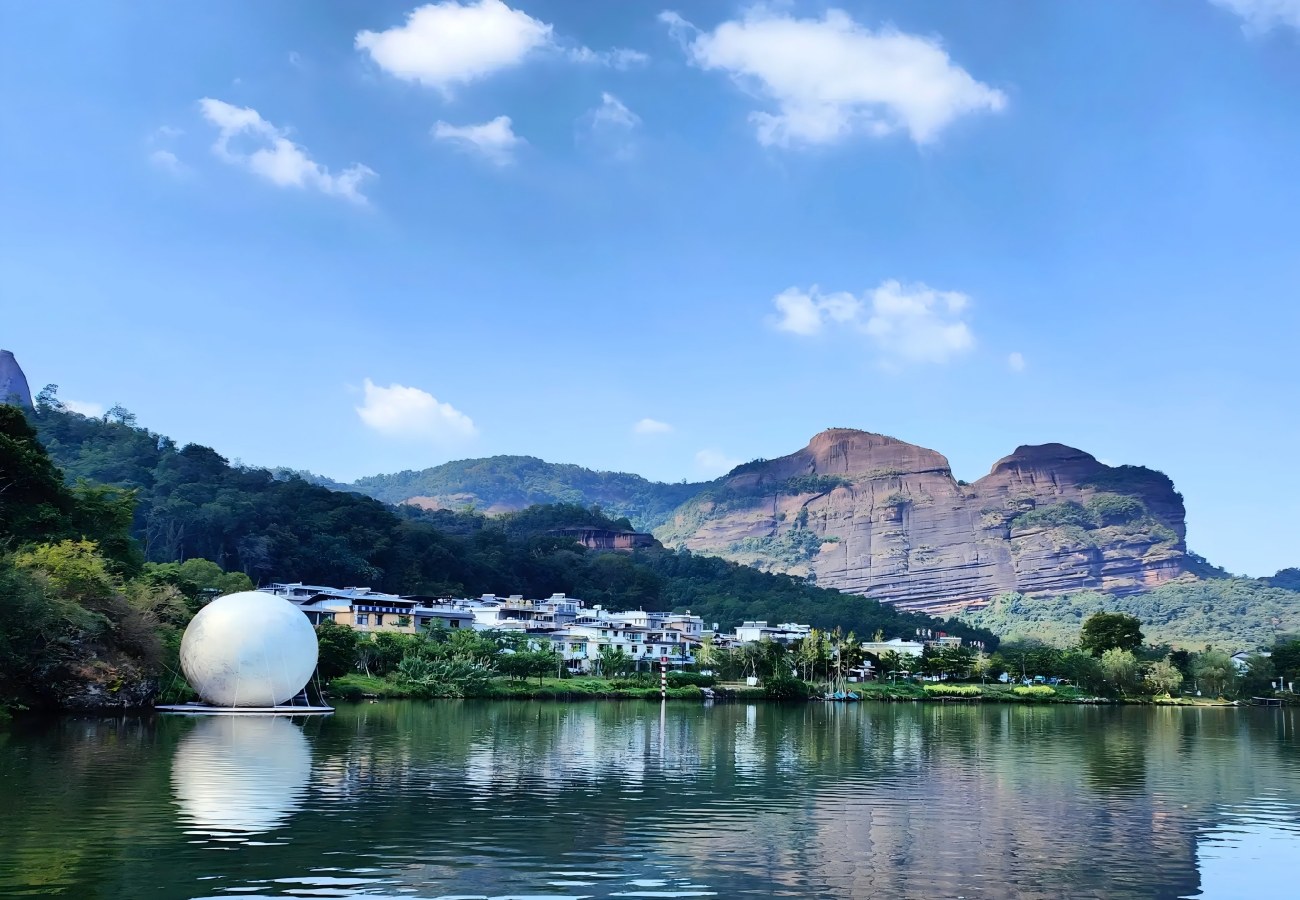
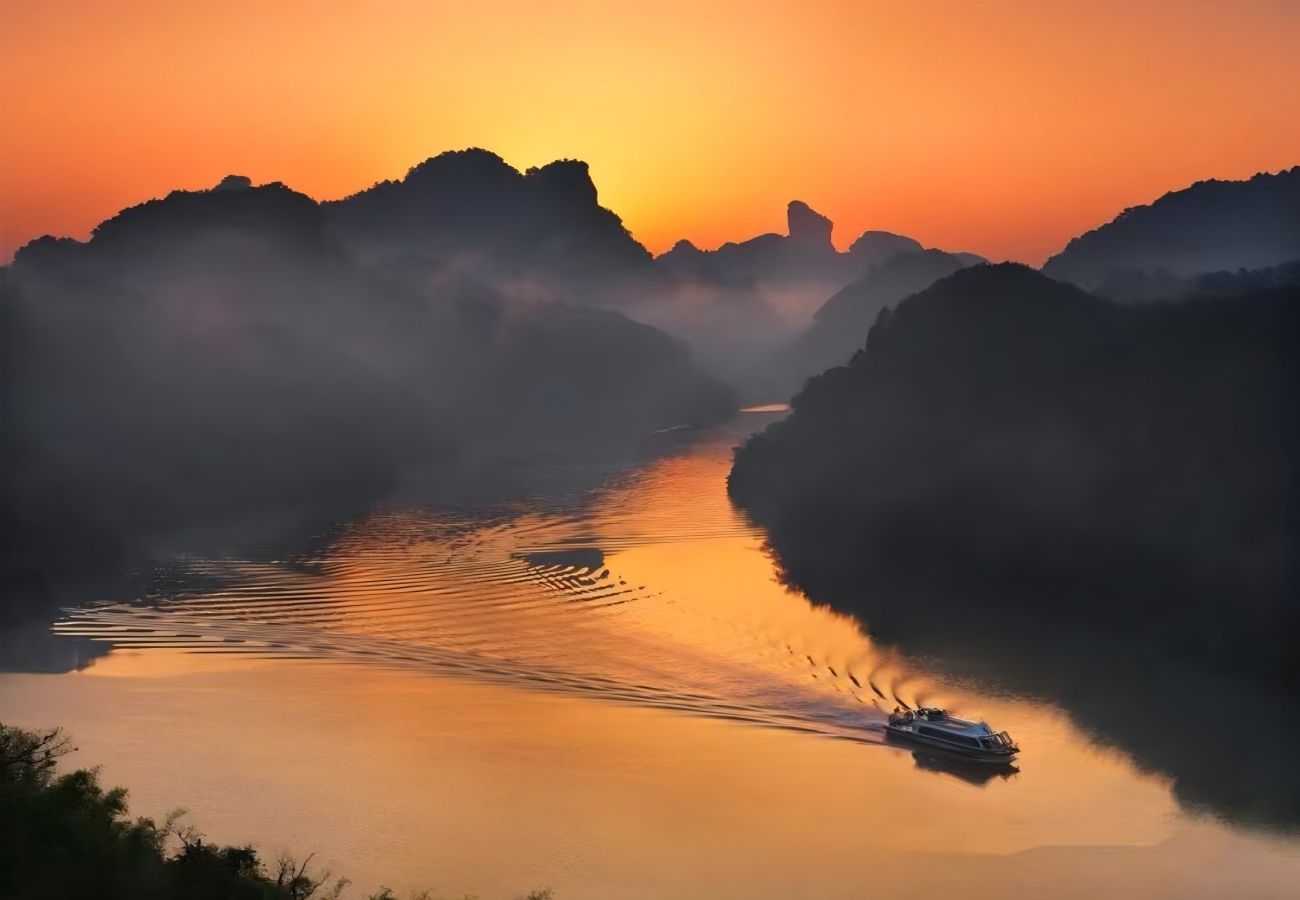
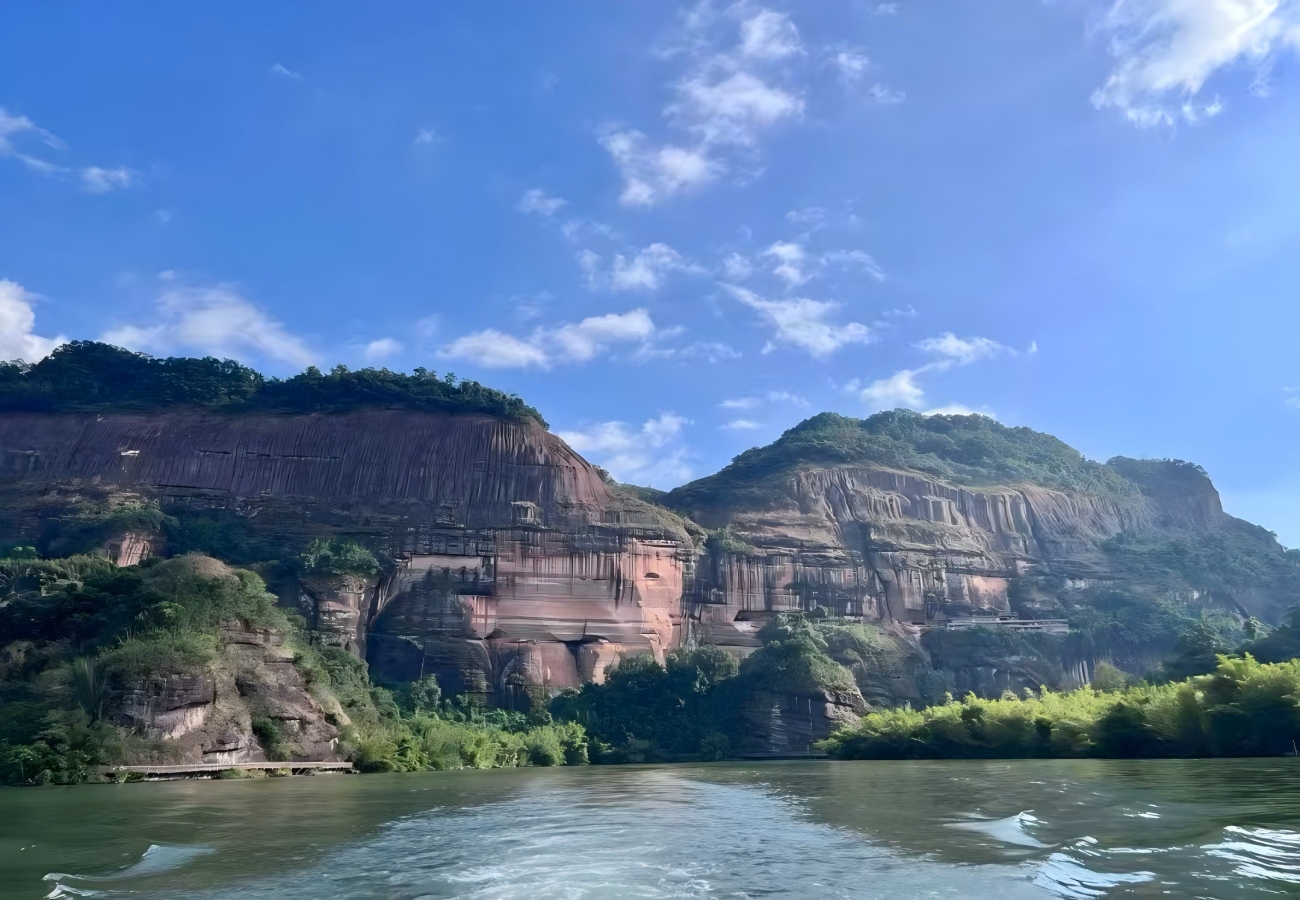
If the peak forests of Mount Danxia are a "painting", then the Jinjiang River is the "frame" - this river meandering through the hinterland of Mount Danxia has a total length of 108 kilometers, of which the section flowing through the Mount Danxia scenic area is 33 kilometers long. The red cliffs on both banks are reflected in the green water, forming a beautiful picture of "boats sailing in the water and people sitting in the painting", known as the "Red Gallery".
The history of the Jinjiang River can be traced back to ancient times. It is not only a "witness" to the geological evolution of Mount Danxia, but also the "mother river" of the local people. As early as the Neolithic Age, ancestors settled along the Jinjiang River, relying on the river water to irrigate farmland and reproduce. In the grottoes on both banks of the Jinjiang River, archaeologists have discovered a large number of Neolithic sites and unearthed cultural relics such as pottery jars and stone tools, proving that this is an important place for early human activities in northern Guangdong.

From a cultural perspective, the Jinjiang River carries rich historical memories. Since the Tang Dynasty, the Jinjiang River has been an important transportation waterway in northern Guangdong. Merchant ships sailed down the river along the Jinjiang River, transporting local tea, wood and minerals to places such as Guangzhou, and then transporting silk, porcelain and other goods back to the mountainous areas. The opening of this waterway not only promoted the economic development of the local area, but also promoted cultural exchanges - literati from the Central Plains came to Mount Danxia along the Jinjiang River and left a large number of poems and odes. For example, Han Yu, a poet of the Tang Dynasty, once visited the Jinjiang River and wrote the verse "I have long heard of the scenery of Qujiang River, but I am afraid it will be more difficult to visit if I don't know its name", praising the beautiful scenery of the Jinjiang River.

Today, taking a cruise to tour the Jinjiang River has become a classic experience project in Mount Danxia. The cruise departs from the "Mount Danxia Wharf" and passes through landscapes such as "Sleeping Beauty", "Herd of Elephants Crossing the River" and "Red Cliff Danxia" along the way - "Sleeping Beauty" is a mountain peak resembling a reclining girl with long hair draped over her shoulders and a serene expression; "Herd of Elephants Crossing the River" is a group of stone pillars resembling elephants, as if crossing the river; and "Red Cliff Danxia" refers to the steep red rock walls on both banks, shining in the sun. Sitting on the cruise ship, we can not only enjoy the natural beauty of Mount Danxia, but also listen to the tour guide tell the historical stories on both banks of the Jinjiang River and feel the cultural heritage of this land.

5. Nanhua Temple: The "Buddhist Sacred Site" of Mount Danxia
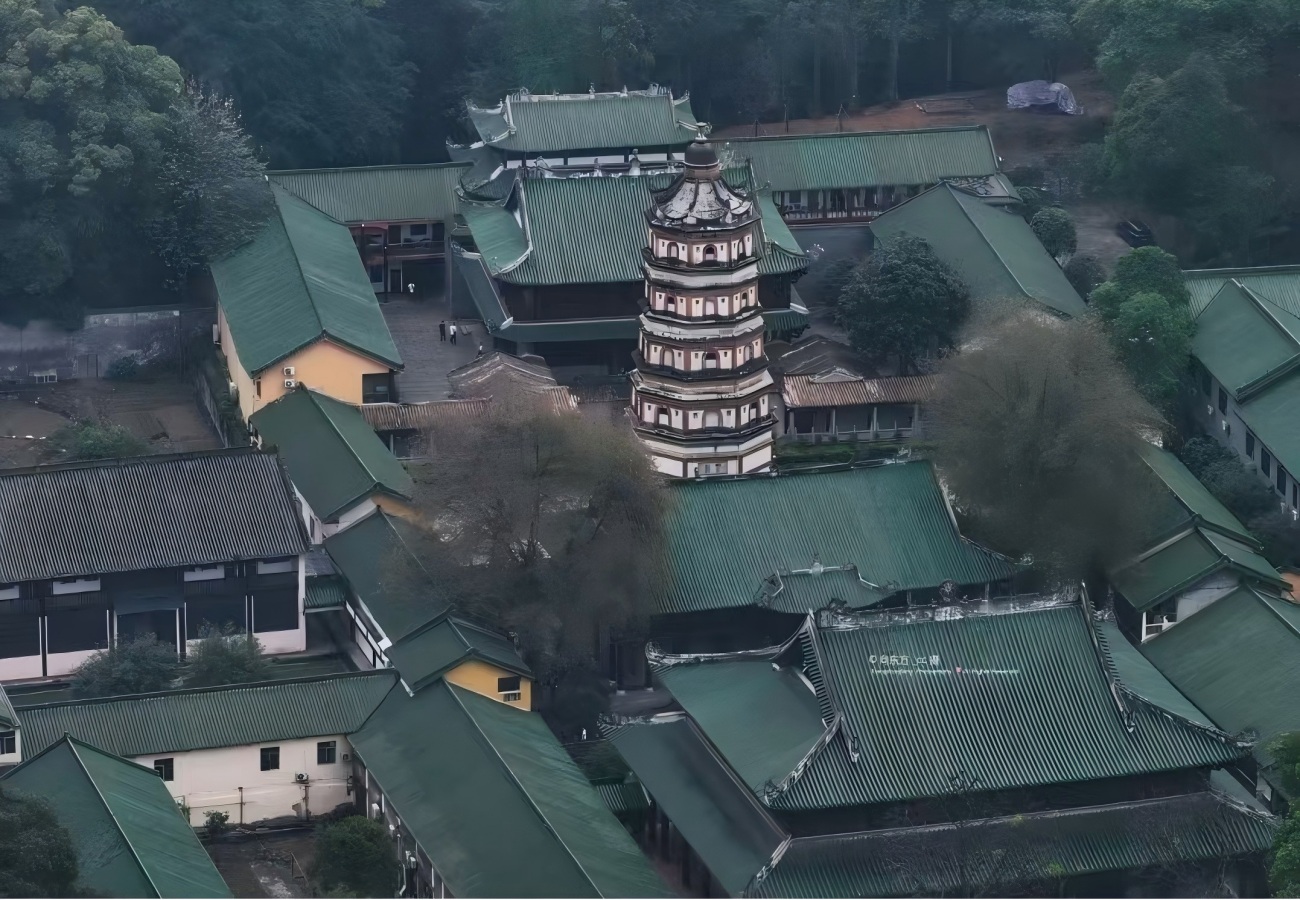
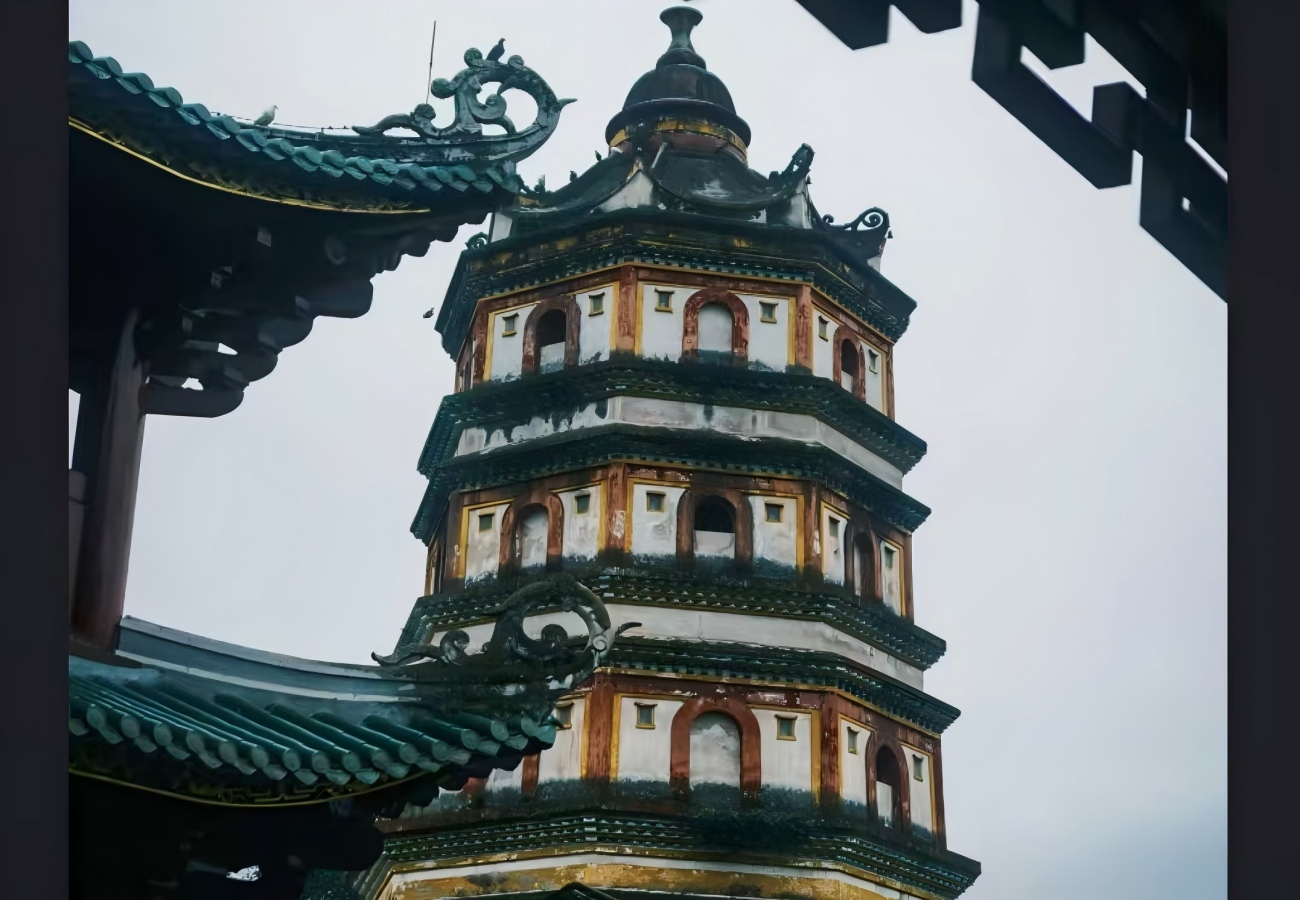
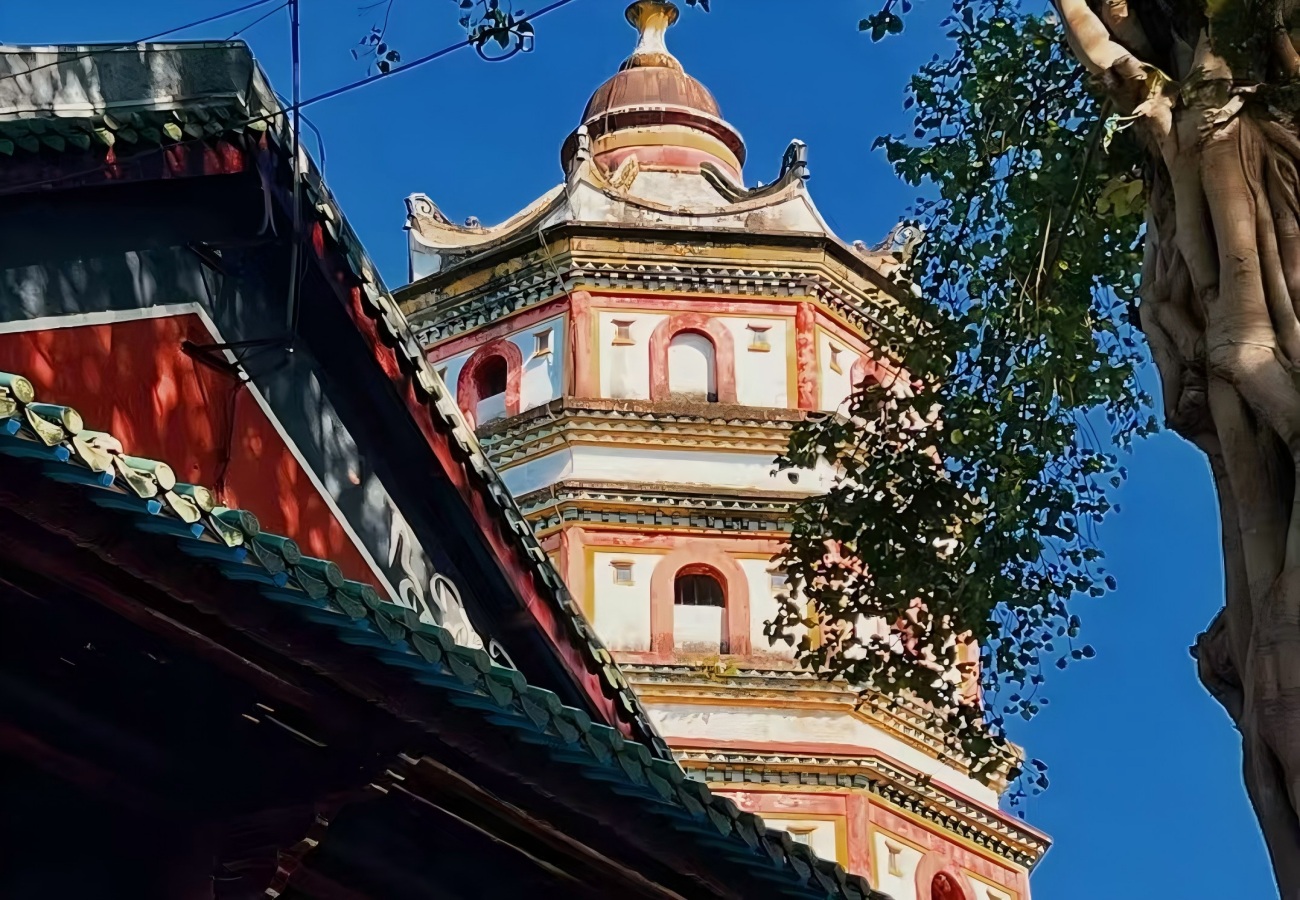
Although Mount Danxia is famous for its natural landscapes, its cultural connotation is far more than that - Nanhua Temple, located on the south side of Mount Danxia, is the ancestral court of Chinese Buddhism's Chan School, known as the "First Treasure Temple in Eastern Guangdong", adding a strong religious and cultural color to Mount Danxia.

Nanhua Temple was founded in the Northern and Southern Dynasties (502 AD) by the Indian monk Zhiyao Sanzang. During the Tang Dynasty, Master Huineng, the Sixth Patriarch, preached here for 37 years and founded the "Southern Sect" of Chinese Buddhism's Chan School, making Nanhua Temple the birthplace of the Chan School. Master Huineng is one of the most influential monks in the history of Chinese Buddhism. The concept of "achieving enlightenment suddenly" he put forward broke the traditional Buddhist practice method and had a profound impact on Chinese Buddhism and even East Asian Buddhism. His disciples compiled his words and deeds into "The Platform Sutra of the Sixth Patriarch", which is the only Buddhist scripture in China known as a "sutra" and an important document for the study of Chinese Chan culture.

Stepping into Nanhua Temple, the first thing that catches the eye is the tall mountain gate, on which the four golden characters "Nanhua Temple" are hung, written by Emperor Taizong of the Song Dynasty, Zhao Guangyi. The buildings in the temple are arranged in sequence along the central axis, including the Heavenly King Hall, the Great Buddha Hall, the Scripture Repository and the Sixth Patriarch Hall. Among them, the Sixth Patriarch Hall is the core building of Nanhua Temple, and the physical body of Master Huineng, the Sixth Patriarch, is enshrined in the hall. This physical body has a history of more than 1,300 years and is well-preserved, making it a precious cultural relic in the history of Chinese Buddhism. According to legend, after Master Huineng passed away, his disciples painted his body with lacquer for preservation and enshrined it in the temple. It has survived many wars and natural disasters and remains intact, becoming the "treasure of the temple" of Nanhua Temple.

Nanhua Temple is not only a Buddhist sacred site, but also a "cultural treasure house". The temple preserves a large number of historical relics, such as wood carvings from the Tang Dynasty, bronze bells from the Song Dynasty and murals from the Ming Dynasty. Among them, the most famous one is the "Iron Pagoda of Nanhua Temple" - this iron pagoda built in the Tang Dynasty is 7.6 meters high, cast from pig iron, and the body of the pagoda is carved with exquisite Buddhist patterns, making it one of the earliest existing iron pagodas in China. In addition, there is a thousand-year-old camphor tree in the temple, which is said to have been planted by Master Huineng, the Sixth Patriarch, with his own hands. Today, it is still lush and vigorous, witnessing the thousand-year vicissitudes of Nanhua Temple.

For overseas tourists, Nanhua Temple is not only a religious site, but also a window to understand Chinese Buddhist culture and Chan thought. Here, we can listen to monks chanting scriptures and feel the tranquility and peace of Buddhism; we can also visit the cultural relics exhibition in the temple to understand the development process of Chinese Buddhism. Whether you believe in Buddhism or are interested in culture, Nanhua Temple allows us to feel the profound heritage of traditional Chinese culture.
6. A Date with Nature and Culture at Mount Danxia
Dear friends, today's journey to Mount Danxia is coming to a successful end. During this journey, we climbed Elder Peak together and overlooked the magnificent sunrise of Mount Danxia; explored Yangyuan Stone and Yinyuan Stone, and felt the masterpiece of nature and the ancient people's worship of life; took a cruise to tour the Jinjiang River and enjoyed the beautiful scenery of the "Red Gallery"; and also stepped into Nanhua Temple and listened to the Chan stories of Master Huineng, the Sixth Patriarch. Every landscape carries the natural mysteries and cultural memories of Mount Danxia; every story tells the historical vicissitudes and human feelings of this land.
Mount Danxia is not only a "geopark", but also a "cultural treasure house" - its red mountains record the evolutionary history of the Earth over hundreds of millions of years, its cultural relics carry the thousands of years of historical culture of China, and its natural landscapes and cultural connotations blend with each other, forming a unique "Danxia culture". Here, we can not only feel the magical power of nature, but also experience the broad and profound traditional Chinese culture; we can not only enjoy the magnificent natural beauty, but also understand the wisdom and beliefs of the ancient Chinese ancestors.
It is hoped that today's journey will become an unforgettable memory in your hearts. It is also hoped that you can share the stories of Mount Danxia with more friends, so that more people can learn about the charm of this "China's Red Stone Park" and feel the harmonious beauty of nature and culture. Finally, we look forward to seeing you again at Mount Danxia, and may the red memories of Mount Danxia accompany you through more wonderful journeys.