Summer Palace
A world-famous imperial garden blending natural beauty and royal architecture.
Over 600 years of history, listed as a UNESCO World Heritage Site.
Home to iconic landmarks like Kunming Lake, Longevity Hill, and the Seventeen-Arch Bridge.
Exquisite halls, corridors, and pavilions showcasing classical Chinese aesthetics.
Rich cultural experiences with traditional art, festivals, and local crafts.
A perfect place to enjoy history, culture, and nature in harmony.
Dear friends from around the world, welcome to Beijing's Summer Palace! The Summer Palace has long been a hot topic, with search terms like “Beijing's must-visit stunning garden” and “the Oriental Pearl among World Heritage Sites” proving its enduring appeal to global visitors. Not only is the Summer Palace an outstanding example of ancient Chinese imperial gardens, but it also stands as a treasure among World Heritage Sites. It embodies millennia of Eastern wisdom, seamlessly blending the beauty of natural landscapes with the artistry of human architecture. Today, let us together unveil its mystique.
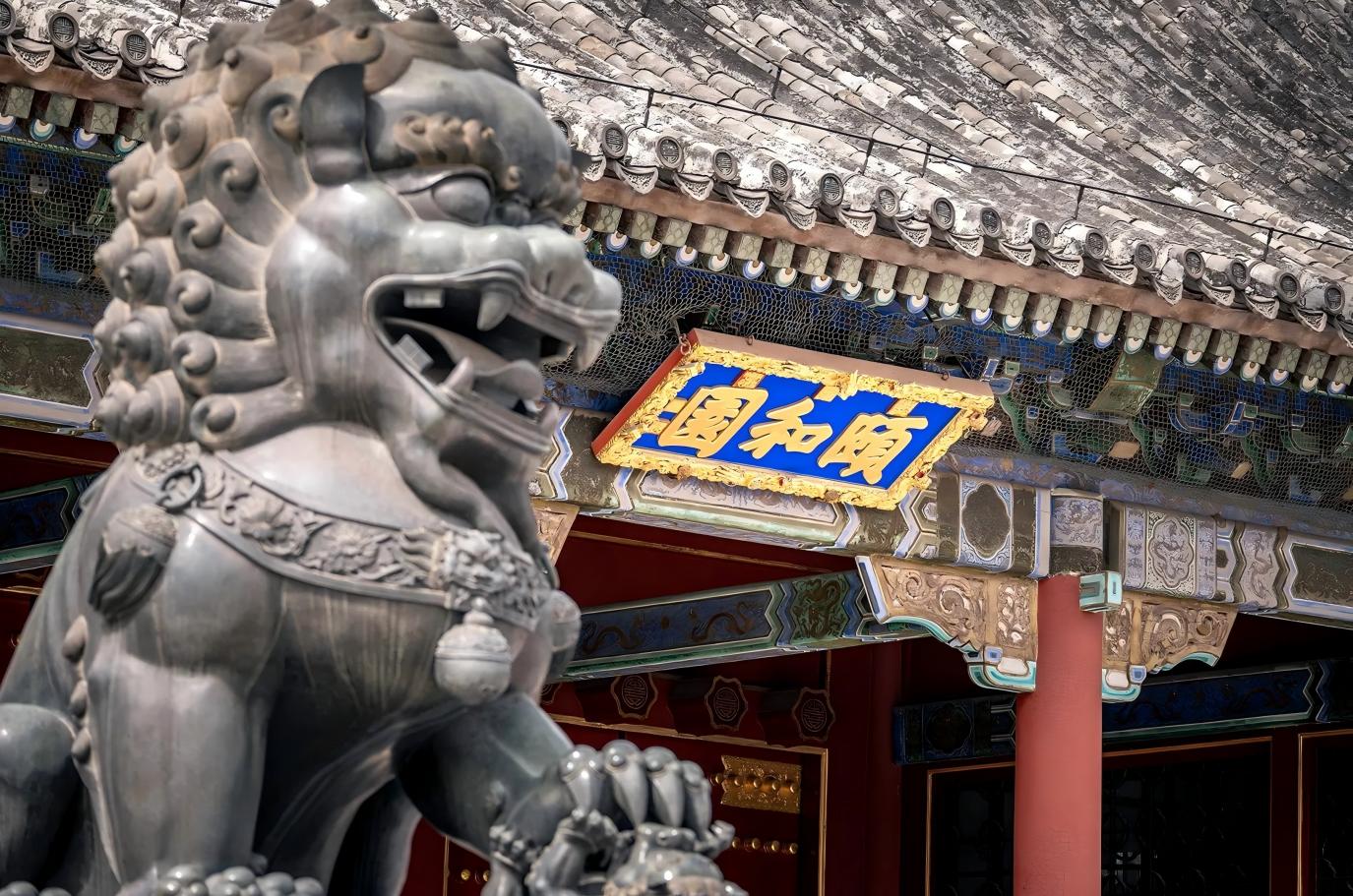
Historical Origins: From Imperial Enclave to World Heritage Site
Constructed during the Qianlong reign of the Qing Dynasty, the Summer Palace was originally named Qingyi Garden. Built as an expression of filial piety toward his mother, Empress Dowager Chongqing, its creation spanned 15 years and required immense human and material resources. The result was a magnificent garden synthesizing the refined beauty of southern Chinese landscapes with the grandeur befitting an imperial northern estate. Yet this garden faced a turbulent fate. In 1860, during the Anglo-French invasion of Beijing, Qingyi Garden was burned to the ground. Its treasures were looted, and its structures reduced to ruins. It wasn't until the 14th year of the Guangxu reign (1888) that Empress Dowager Cixi diverted naval funds to rebuild it, renaming it the Summer Palace. She used it as a retreat for summer leisure, recreation, and handling state affairs in her later years. But this tranquility was short-lived. In 1900, the Eight-Nation Alliance invaded again, inflicting severe damage on the Summer Palace. After enduring multiple calamities, the government invested heavily in comprehensive restoration and preservation following the founding of the People's Republic of China, gradually restoring the Summer Palace to its former splendor. In 1998, it was inscribed on the UNESCO World Heritage List, becoming a shared cultural treasure of humanity. This history is also a frequently searched topic about the Summer Palace on Google. Visitors can slowly immerse themselves in the profound historical weight it carries during their exploration.
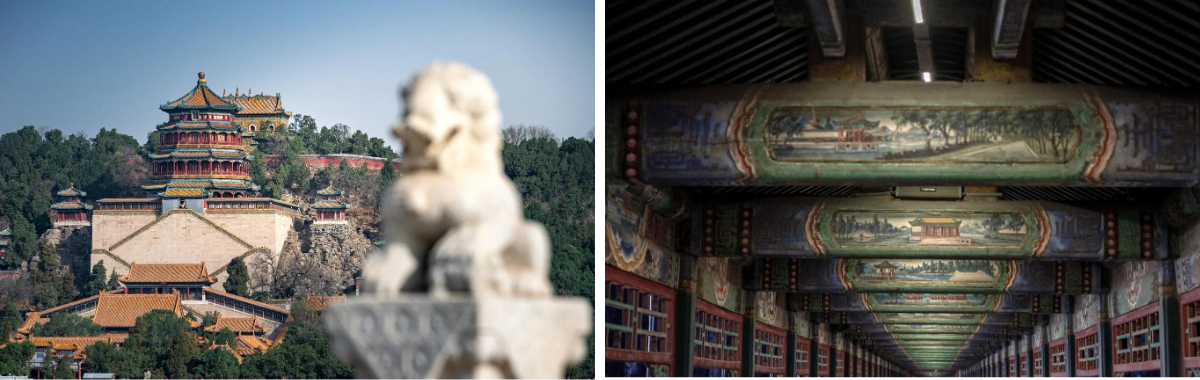
Architectural Marvel: A Perfect Fusion of Tradition and Aesthetics
1. Hall of Benevolence and Longevity: Symbol of Imperial Authority and Seat of Governance
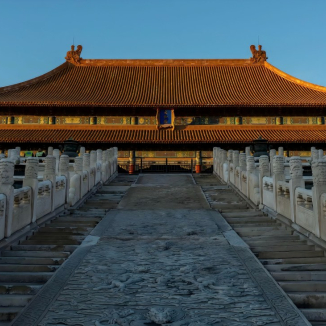
We now arrive at the Hall of Benevolence and Longevity, situated within the East Palace Gate of the Summer Palace. This hall served as the political center of the garden. The name “Benevolence and Longevity” originates from the Analects of Confucius: “The wise find joy, the benevolent find longevity,” signifying that rulers practicing benevolent governance will enjoy long life. Originally named Hall of Diligent Governance during the Qianlong era to symbolize emperors' commitment to state affairs during imperial tours, it was renamed Hall of Benevolent Longevity during the Guangxu reign. Notice the bronze dragons and phoenixes displayed outside—their arrangement is highly unusual. The phoenix occupies the center position flanked by dragons on either side, a rare configuration in feudal dynasties reflecting the unique historical context where Empress Dowager Cixi held greater actual power than the emperor during Guangxu's reign. Inside stands a massive rosewood glass screen, its top carved with nine dragons. The screen's center features a glass mirror adorned with 226 different calligraphic variations of the character for “longevity.” Commissioned as a birthday tribute for Empress Dowager Cixi, it epitomizes imperial opulence and authority. Many foreign visitors express keen interest in the architectural layout and interior furnishings of the Hall of Benevolence and Longevity through Google searches. Today, visitors can witness this unique Eastern imperial grandeur firsthand.
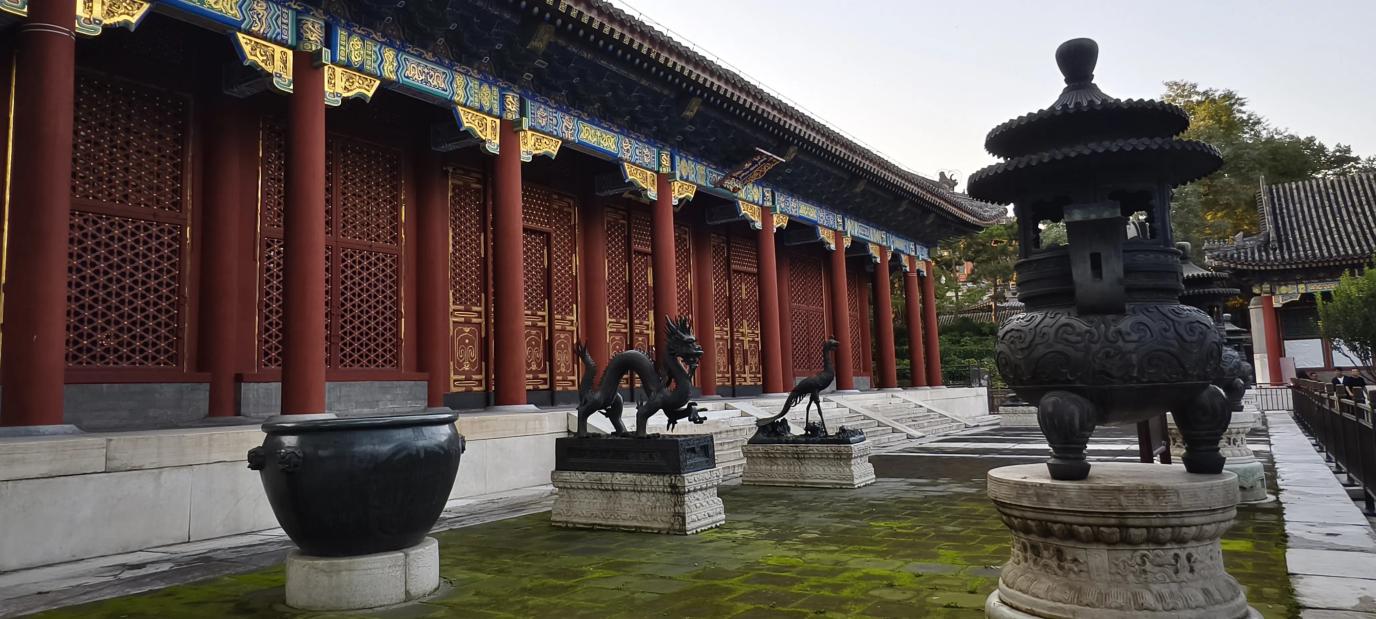
2. Hall of Joyful Longevity: A Lavish Depiction of Imperial Life
Leaving the Hall of Benevolent Longevity, we proceed to the Hall of Joyful Longevity, Empress Dowager Cixi's private quarters within the Summer Palace. Overlooking Kunming Lake, backed by Mount Wanshou, and connected to the Hall of Benevolent Longevity to the east and the Long Corridor to the west, its prime location made it an ideal residence and recreational spot within the gardens. A pier for Empress Dowager Cixi's boats stands before the hall, facilitating her excursions. The courtyard displays bronze deer, cranes, and vases, symbolizing “harmony and peace throughout the six directions.” Precious flowers like magnolias, crabapples, and peonies are planted, signifying “prosperity and nobility.” Stepping inside the hall, one encounters exquisitely crafted furnishings and an array of rare treasures, vividly showcasing the opulent lifestyle of the imperial couple. A British visitor once marveled after touring the hall: “Every detail here radiates unparalleled refinement, as if transporting one back to that glorious Eastern dynasty.”
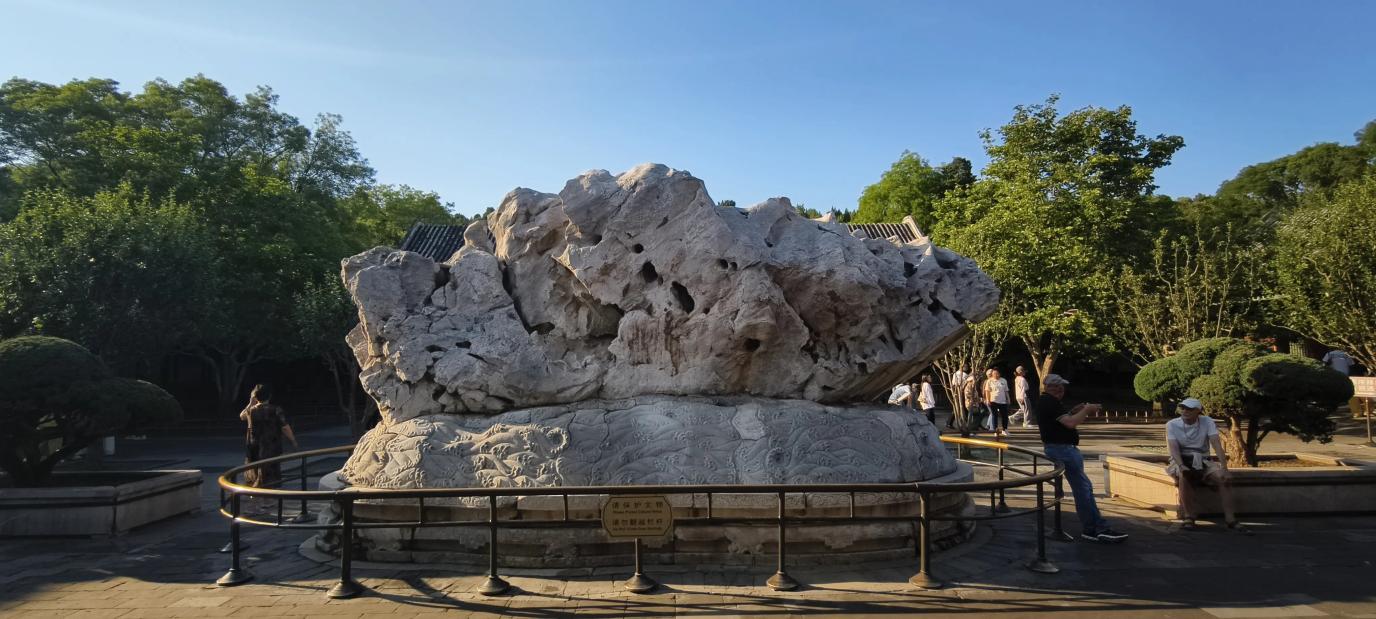
3. The Pavilion of Fragrant Incense and the Hall of Clouds Parting: The Fusion of Religion and Imperial Authority
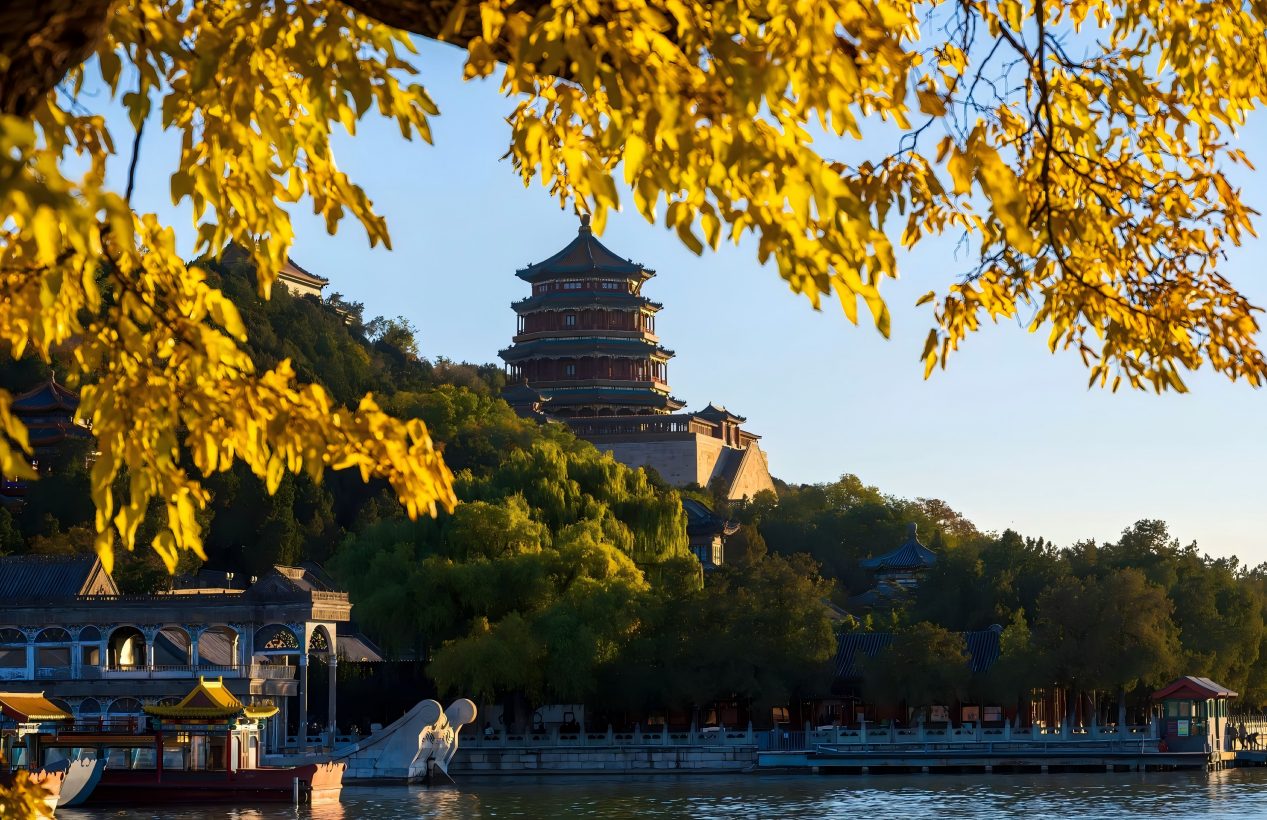
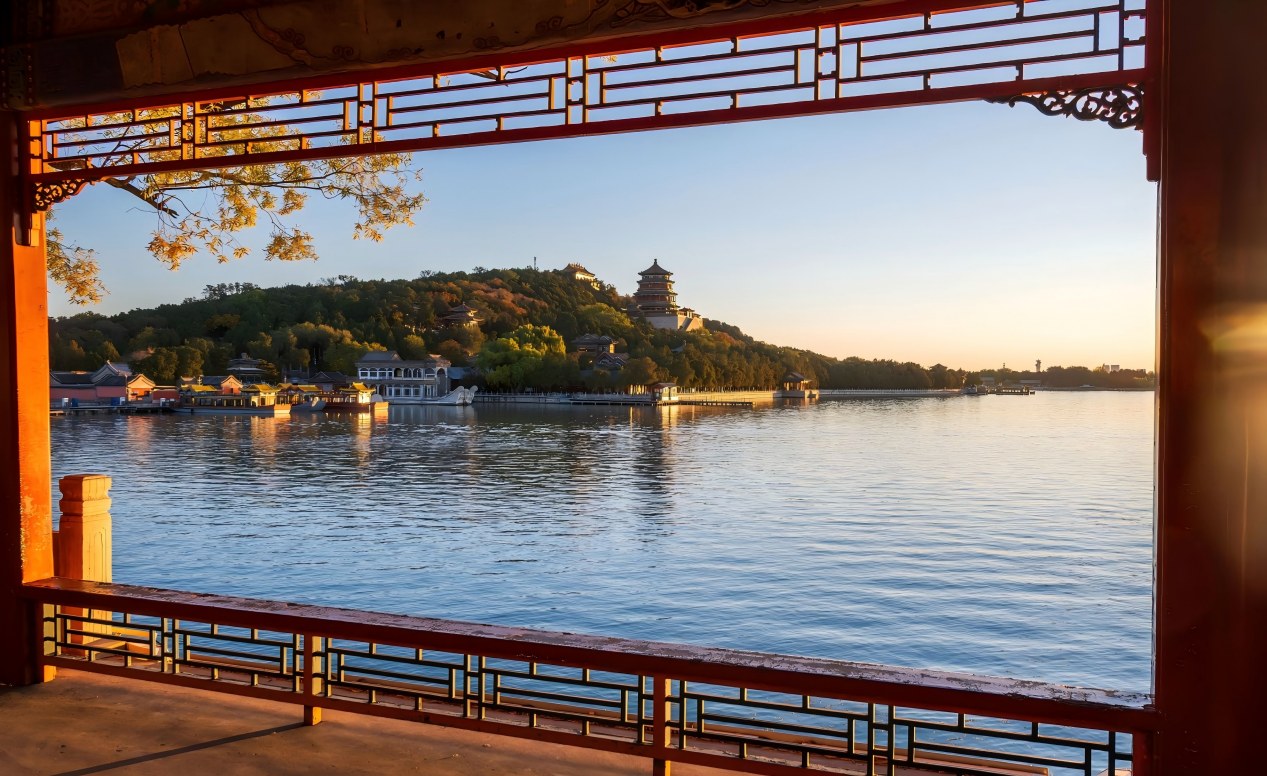
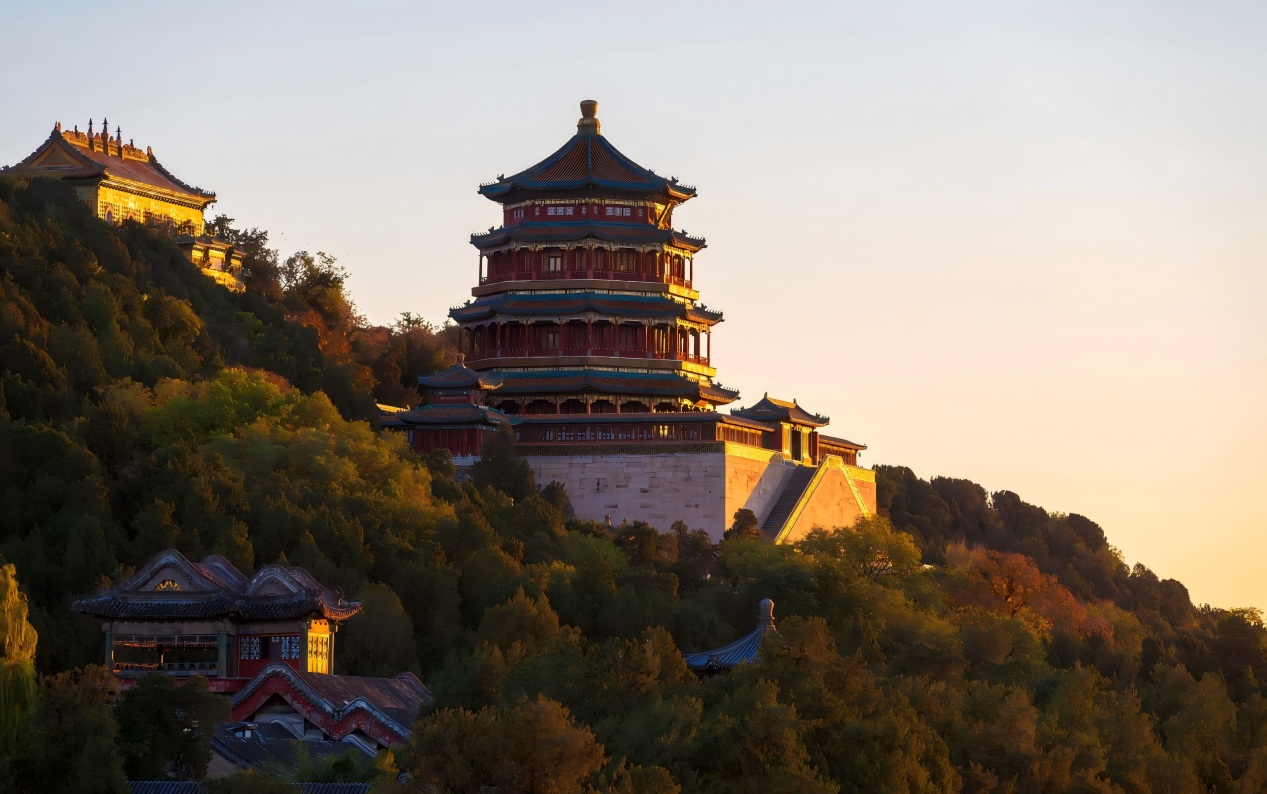
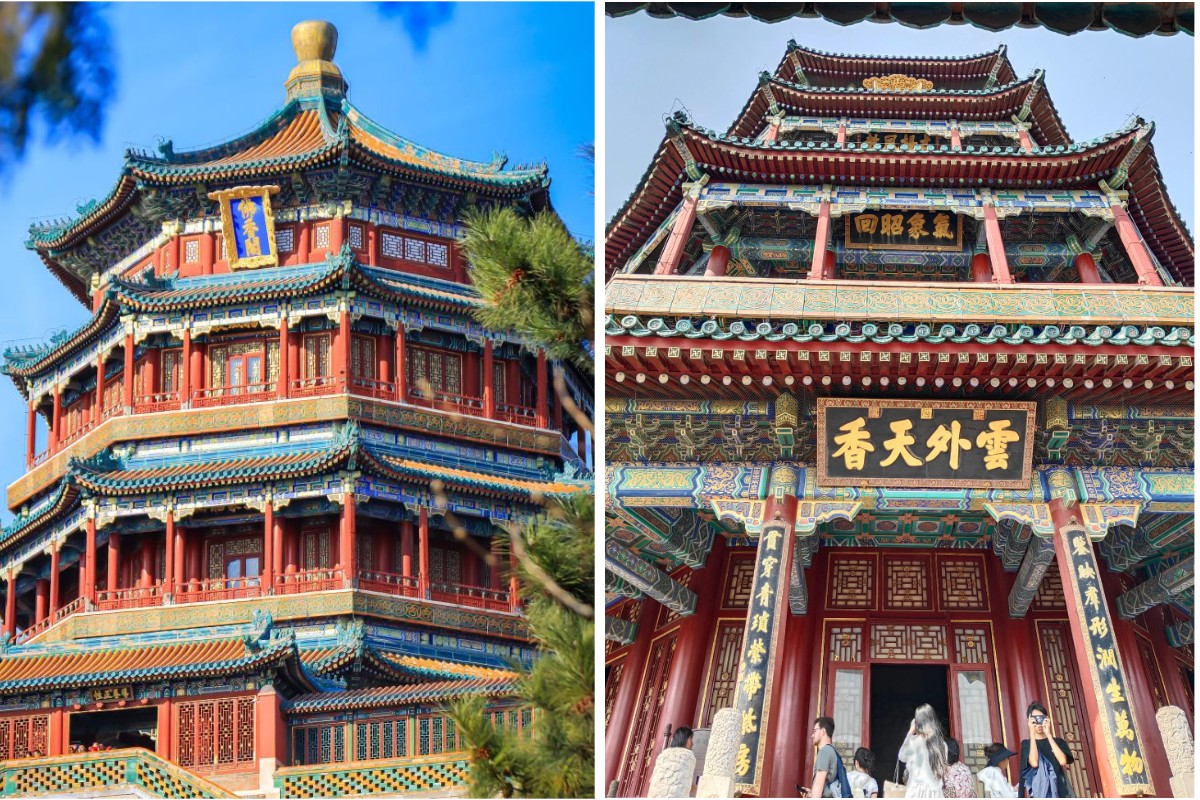
Continuing along the Long Corridor, we come upon the Pavilion of Fragrant Incense and the Hall of Clouds Parting atop Wanshou Hill. The Fragrant Buddha Pavilion stands as the iconic structure of the Summer Palace. Perched atop a 20-meter-high stone base, its three-story, eight-sided design with four tiers of eaves creates a majestic presence. Inside, a statue of the Thousand-Armed Guanyin is enshrined, where Empress Dowager Cixi once burned incense and paid homage. Standing before the pavilion offers a sweeping view overlooking the entire Kunming Lake and the Seventeen-Arch Bridge. The Hall of Cloud-Dispelling served as the venue where Empress Dowager Cixi received birthday tributes. Its name, “Cloud-Dispelling,” derives from a poem by Guo Pu of the Jin Dynasty: “Immortals emerge through parted clouds, revealing only golden and silver pavilions,” symbolizing this place as a celestial realm. The hall's interior boasts exquisite architectural ornamentation, with intricately carved beams and painted rafters, every detail radiating imperial majesty and solemnity.
4. Seventeen-Arch Bridge: A Masterpiece of Architecture and Art
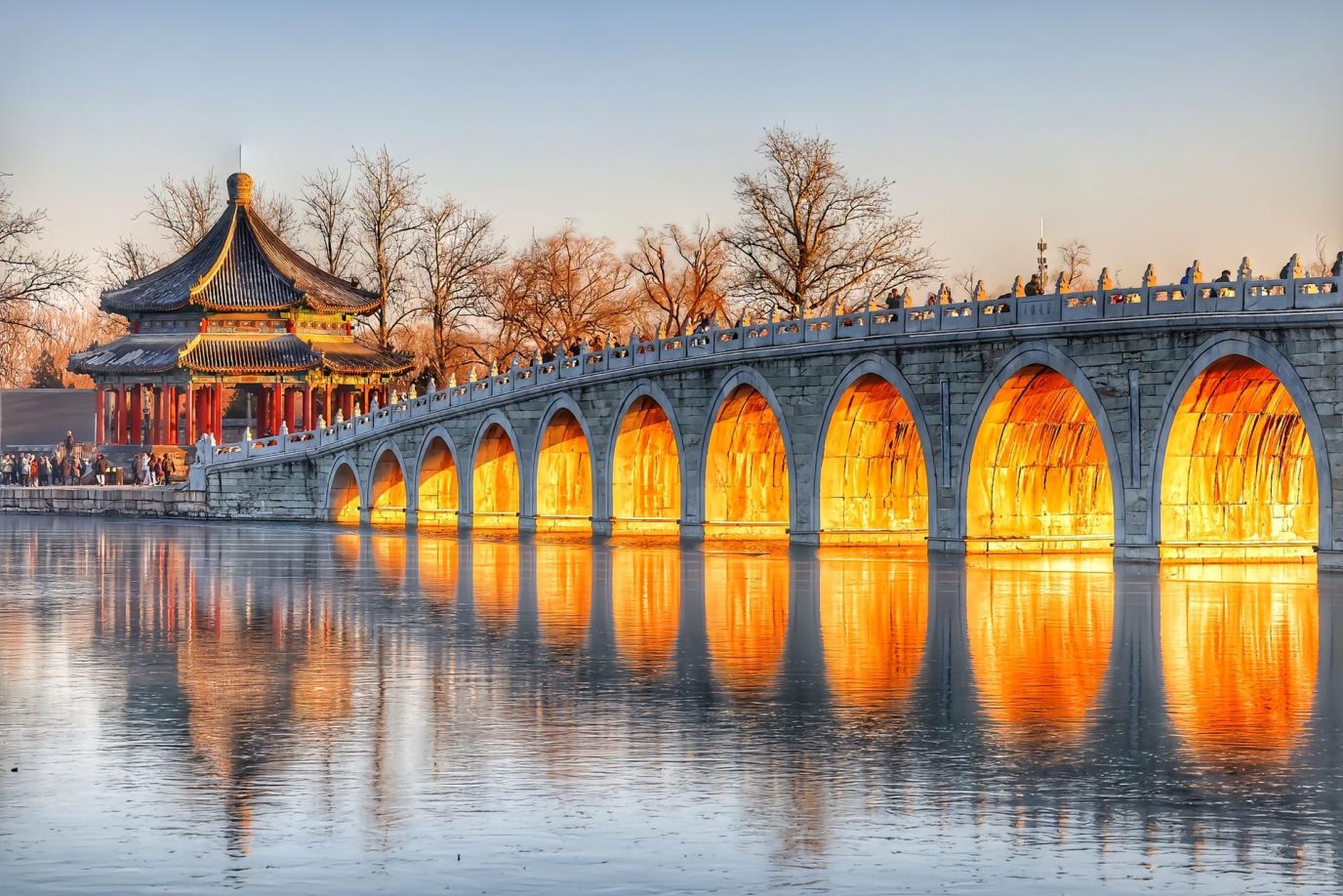
Walking through the long corridor, we arrive at the shore of Kunming Lake. Before us lies the famous Seventeen-Arch Bridge, a stone structure spanning the lake. Resembling a rainbow arching over the water, it boasts an elegant design and derives its name from its seventeen arches. The bridge's railings are adorned with 544 intricately carved stone lions, each uniquely sculpted and lifelike. No two lions are identical, showcasing an extraordinary level of craftsmanship. These lions often captivate visitors, who marvel at the mastery of ancient Chinese artisans. Connecting to Nanhu Island, the Seventeen-Arch Bridge appears from afar like a giant dragon reclining upon the water, enhancing the enchanting beauty of Kunming Lake.
Cultural Experience: Touching History, Feeling Tradition
1. The Painted Corridor: A Flowing Art Gallery
Next, let us step into the world's longest covered walkway—the Painted Corridor of the Summer Palace. This corridor stretches 728 meters from the Inviting Moon Gate in the east to the Stone Master Pavilion in the west, comprising 273 bays. Each bay's beams and rafters are adorned with painted murals, totaling over 14,000 pieces. These vibrant works depict diverse subjects including landscapes, flowers and birds, fish and insects, and historical figures and anecdotes. Most murals draw inspiration from classic Chinese literature such as Journey to the West, Romance of the Three Kingdoms, and Water Margin, each imbued with rich cultural significance. Australian tourist Tom Lin was deeply captivated by the paintings during his visit, remarking, “These paintings are like vivid storybooks, allowing me to understand traditional Chinese culture without words.” Visitors to the Corridor can take time to appreciate these paintings and experience the charm of traditional Chinese painting art.

2. Traditional Craft Demonstrations: Ingenious Oriental Artistry
In certain areas of the Summer Palace, visitors can witness live demonstrations by traditional artisans practicing crafts such as paper-cutting, sugar painting, and dough figurines. These skilled craftsmen create exquisite works in remarkably short timeframes. Paper-cutting artists need only a pair of scissors and a sheet of red paper to create lifelike depictions of flowers, birds, fish, and insects. Candy sculptors scoop molten sugar syrup with a spoon and gently sketch it onto stone slabs, bringing adorable little animals to life before your eyes. Many foreign visitors express keen interest in these traditional crafts, pausing to watch or even trying their hand at the art. Last year, an American tourist exclaimed after attempting sugar painting: “This is one of my most unforgettable experiences in China—these tiny creations hold immense wisdom.”
3. Cultural Activities: Immerse Yourself in Traditional Festival Atmosphere
Visitors fortunate enough to arrive during traditional festivals can participate in vibrant cultural events. During the Spring Festival, the park hosts temple fairs featuring folk performances like dragon and lion dances and stilt walking, alongside stalls selling traditional snacks and handicrafts. On Dragon Boat Festival, dragon boat races take place, allowing visitors to cheer for competitors along Kunming Lake and immerse themselves in the festive spirit. For the 2024 Qixi Festival, the Summer Palace hosted special events: the Seventeen-Arch Bridge was illuminated to resemble a “Magpie Bridge,” while lanterns dotted Kunming Lake like stars in the Milky Way. Classic operas like Kunqu's The Peony Pavilion and Yueju's Butterfly Lovers were performed throughout the gardens. Many international visitors participated, gaining deeper insights into China's traditional festival culture.
Natural Beauty: Mountains and Waters in Harmony, Four Seasons Like Paintings
1. Kunming Lake: The Soul of the Imperial Garden
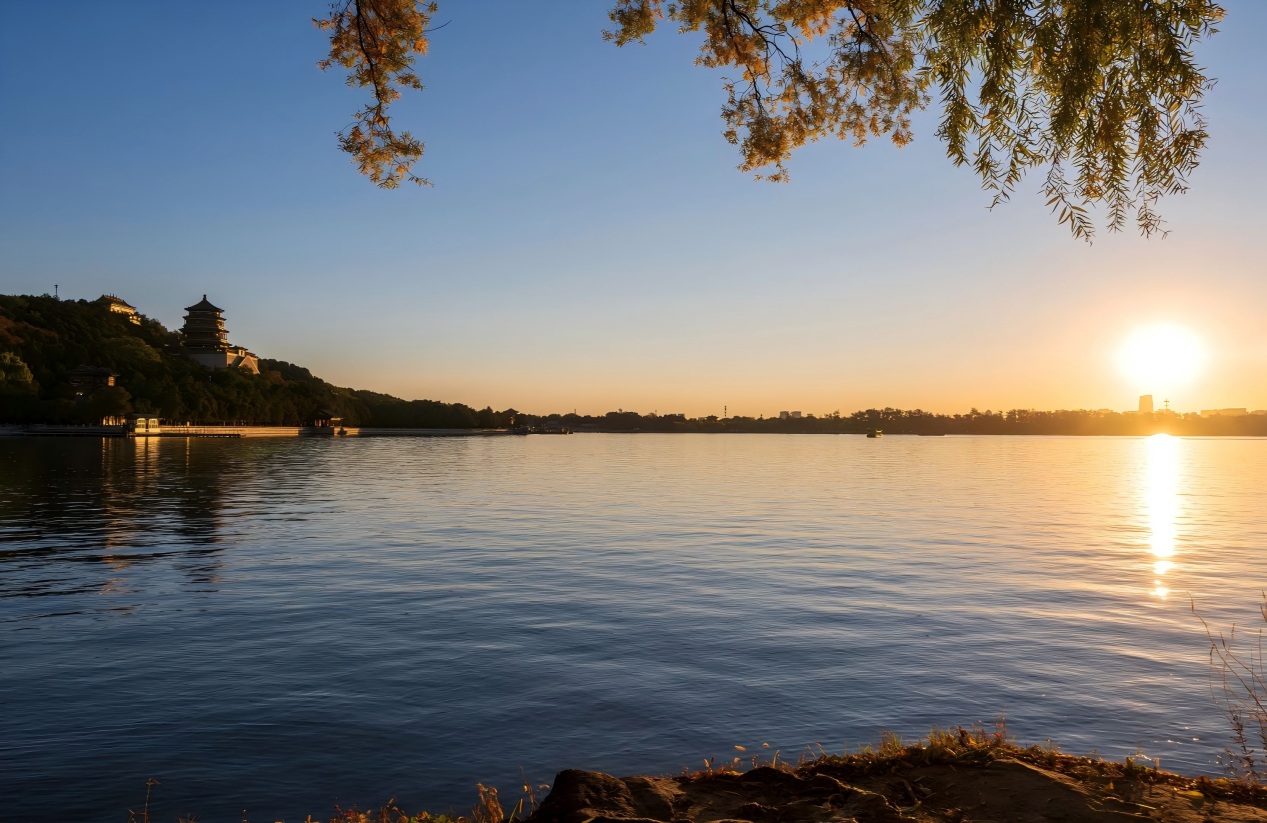
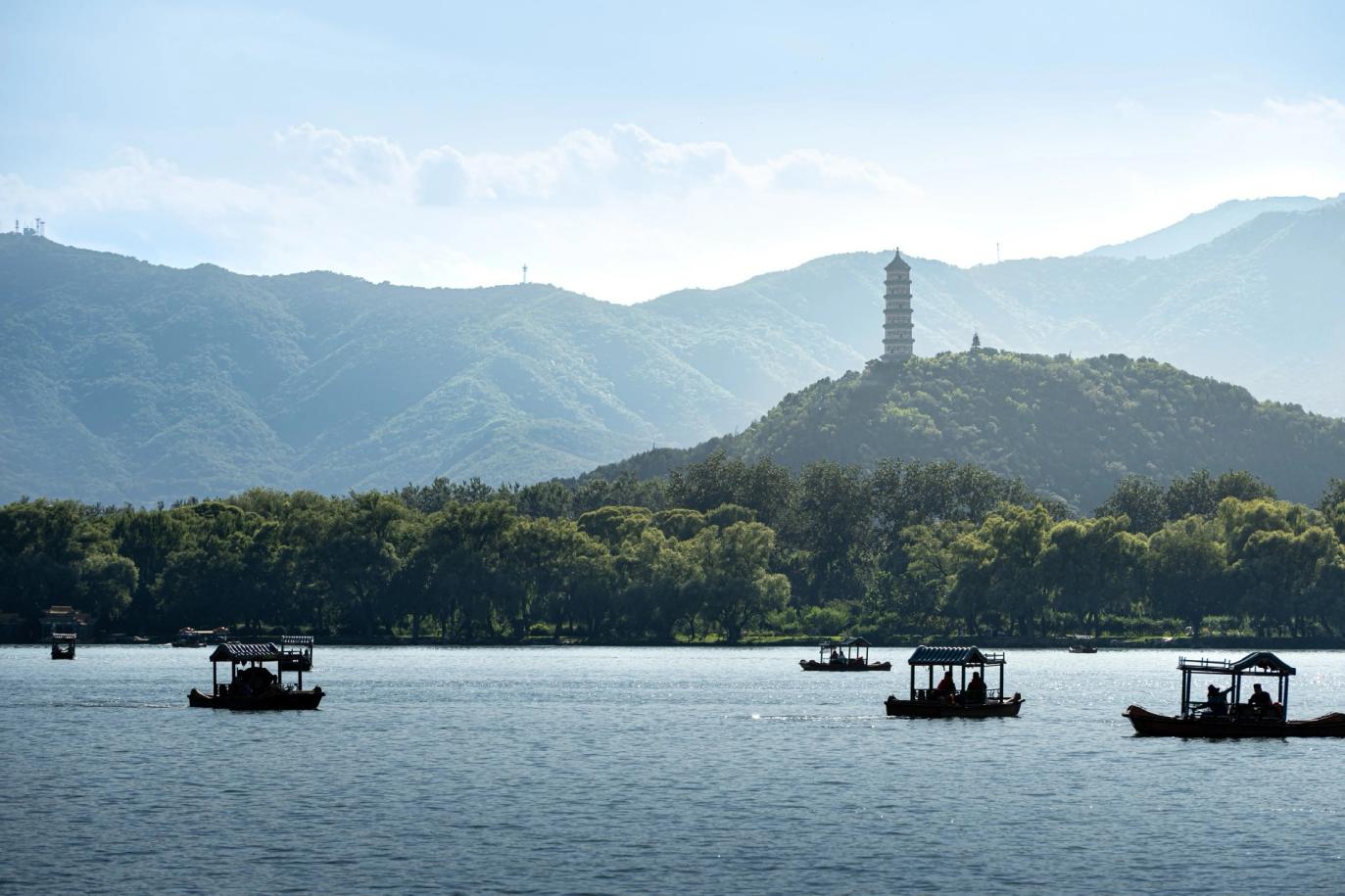
Kunming Lake is the main water feature of the Summer Palace, covering a vast area that accounts for about three-quarters of the entire garden. Its clear waters shimmer with ripples, while its winding shoreline offers breathtaking scenery. Viewed from above, Kunming Lake resembles a longevity peach, symbolizing auspiciousness. Three islands—South Lake Island, Mirror-Gazing Pavilion Island, and Algae-Reflecting Pavilion Island—dot the lake, harmonizing with structures like the Seventeen-Arch Bridge to create a stunning tableau. In summer, lotus blossoms cover the lake surface, their pink petals intertwined with green leaves in breathtaking beauty. Come winter, the frozen lake transforms into a vast mirror, shimmering brilliantly under the sun. Canadian visitor Kang Lexin once marveled, “Kunming Lake possesses a dynamic beauty that reveals different charms with each season, never ceasing to captivate.”
2. Wanshou Hill: The Garden's Green Barrier
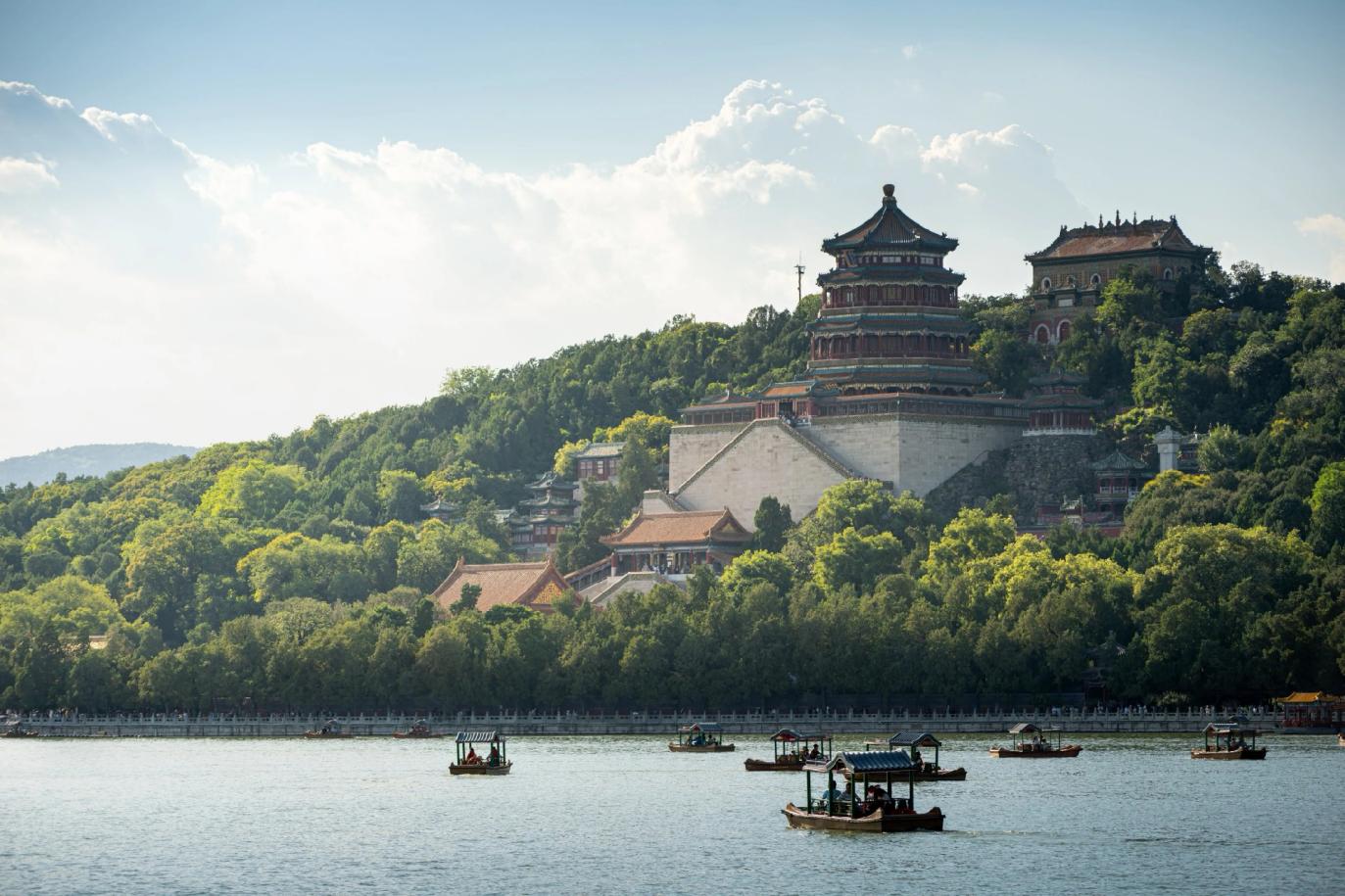
Wanshou Hill nestles against Kunming Lake, forming the landscape backbone of the Summer Palace. The hill boasts rich vegetation that remains evergreen throughout the seasons, featuring diverse tree species such as pines, cypresses, ginkgos, and maples. In spring, the hill bursts into bloom, a tapestry of vibrant flowers; In autumn, maple leaves turn crimson and ginkgo leaves turn golden, transforming the entire forest into a vibrant tapestry of colors, like a beautiful oil painting. Standing atop Wanshou Hill, one can overlook the entire Kunming Lake and the Seventeen-Arch Bridge, and even gaze upon the scenic beauty of Beijing's Western Hills in the distance. Many foreign visitors enjoy strolling on Wanshou Hill, immersing themselves in the tranquility and beauty of nature, savoring this delightful escape from the hustle and bustle of the city.
Practical Information: Tips for Exploring the Summer Palace
1. Admission Tickets and Opening Hours
Admission fees for the Summer Palace vary by season and visitor category. Tickets can be purchased via the official website or major travel platforms. The park typically opens from 6:30 AM to 8:00 PM, though hours may adjust seasonally. We recommend confirming schedules in advance to plan your visit accordingly.
2. Park Facilities
Multiple visitor service centers offer information, guided tours, and lost-and-found assistance. Numerous rest areas, restrooms, and food stalls provide convenient breaks and refreshments throughout your visit. Restrooms are clearly marked and located near major attractions. Dining options include Chinese fast food and specialty snacks, allowing visitors to savor traditional delicacies like Peking Duck wraps and Zhajiang noodles, as well as the garden's signature cultural-themed ice cream—both delicious and perfect for photo opportunities.
3. Recommended Tour Route
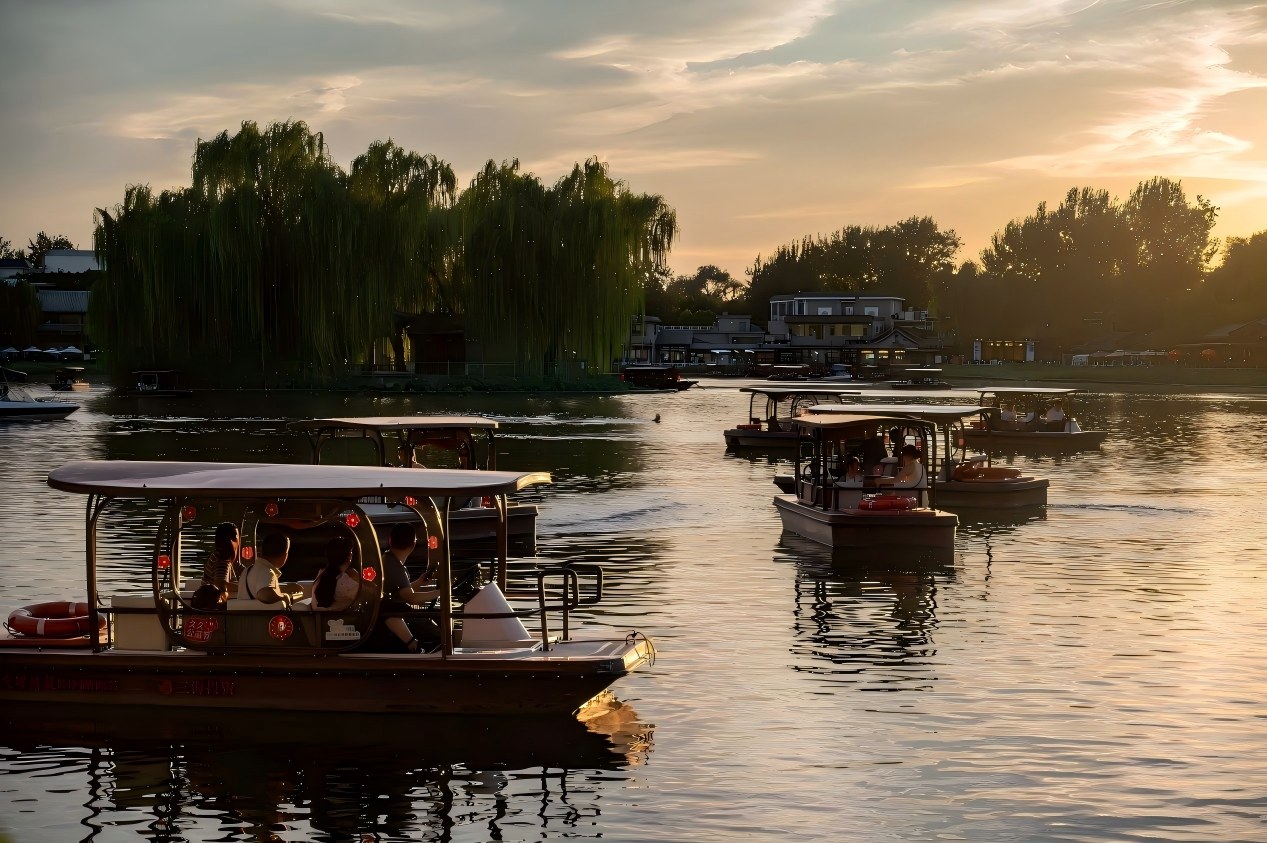
Given the park's expansive size, I recommend this classic itinerary: Enter through the East Palace Gate and begin with the Hall of Benevolent Longevity to understand imperial governance. Proceed to the Hall of Joyful Longevity to experience the opulence of imperial life. Stroll along the Long Corridor to admire its vibrant murals. Continue to the Pavilion of Fragrant Incense and the Hall of Clouds Parting to marvel at architectural grandeur. Descend to the shores of Kunming Lake, cross the Seventeen-Arch Bridge, and ascend Nanhu Island. Conclude with a boat tour of Kunming Lake to admire the garden's beauty from the water. If time permits, explore Suzhou Street on the rear mountain for a taste of Jiangnan water town charm. Feel free to adjust the itinerary based on your interests and schedule.
Dear friends, the Summer Palace is like a weighty tome of history and culture, each page brimming with tales and every vista imbued with Eastern wisdom. May today's visit deepen your appreciation for its charm and leave you with cherished memories. As British visitor Raheela remarked: “There's a unique sacred order here, utterly distinct from anything I've seen in my own country.” We encourage you to share this unforgettable experience with friends and family, helping more people discover the Summer Palace and China's traditional culture. Wishing you a delightful journey in Beijing!
About us
Currently, the company employs a total of 300 staff members, the vast majority of whom are university graduates. Our working languages include English, Japanese, German, French, Spanish, Italian, Russian, Thai, and Korean. Among our 240 tour guide and interpreter personnel, 62% hold senior, intermediate, or junior guide certifications.
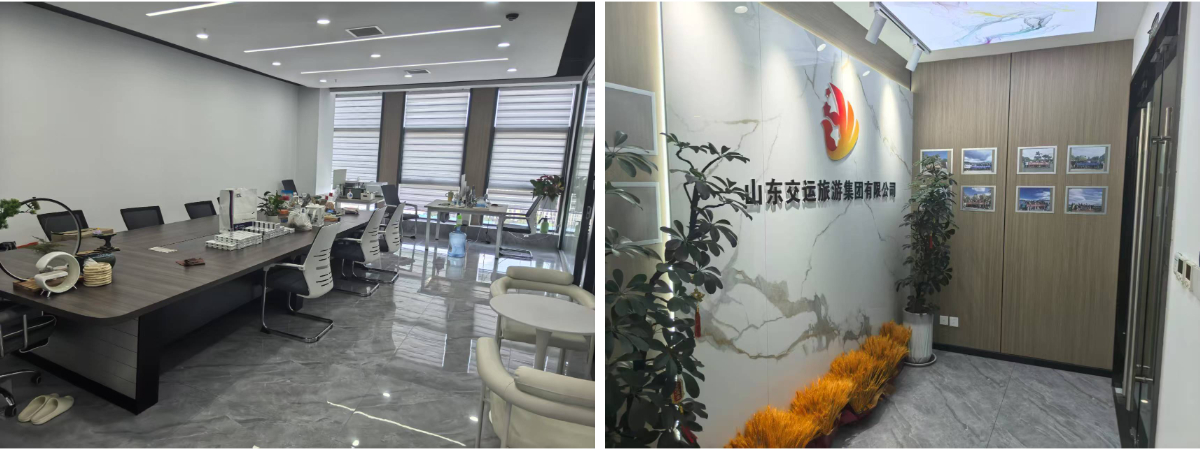
Our company offers a comprehensive range of services, including inbound tourism, domestic tourism, state-authorized outbound tourism, business travel, international conference organization, airline and train ticket reservations, and hotel bookings. Leveraging our professional expertise, we have built a robust service system centered on extensive experience, teamwork, and distinctive services, such as:
Hotline Service: Providing clients with information and consultation on various tourism products;
Documentation Service: Providing comprehensive, detailed travel product information through printed materials;
Customization Service: Assisting clients in designing optimal itinerary plans;
Attentive Service: Focusing on service details and prioritizing client interests at all times;
Tour Escort Service: Offering real-time support throughout the entire journey;
Quality Inspection Service: Collecting client feedback promptly to continuously enhance service quality.