Shanghai Bund
Iconic Shanghai waterfront with over a century of history
52 historic buildings showcasing diverse Western architectural styles
Landmarks like HSBC and Customs House highlight financial and cultural heritage
Red heritage sites reflect revolutionary history
Nearby attractions: Nanjing Road, Yuyuan Garden, Chenghuang Temple
Stunning day and night riverside views combining history and modernity
Shanghai Bund: A Century of Splendor, a Legendary Tapestry of International Architecture
Friends, today we're talking about Shanghai's iconic landmark—The Bund! Nestled along the Huangpu River in Huangpu District, it's not only one of China's first designated historic cultural districts but also a must-visit hotspot for any trip to Shanghai. Just look at it standing quietly by the river, like a seasoned old friend waiting to share its century-old tales with us.
Historical Evolution
Let's first discuss how the name “The Bund” came about. Old Shanghai locals know that in the past, when referring to rivers, the upper reaches were called ‘Li’ and the lower reaches “Wai.” Back then, people used Lujia浜 as the boundary. The sandy banks downstream of that浜 along the Huangpu River were called “Wai Huangpu Tan” (Outer Huangpu Banks). Over time, this shortened to “The Bund”—pretty down-to-earth, right?
Fast forward to 1843. After Shanghai opened as a treaty port, the central Bund area suddenly came alive. Foreign trading houses and banks sprang up like mushrooms after rain. Then in 1845, the British leveraged the Shanghai Land Charter to carve out 830 mu (about 55 hectares) west of the Bund as the British Concession. In 1849, the French joined the fray, carving out a French Concession south of the British one. As colonial powers jostled for influence here, the Bund gradually evolved into Shanghai's—and indeed China's—financial hub, earning its title as the “Financial Star of the East” (let's be clear: this refers to its historical financial stature, not the modern Oriental Pearl Tower). It wasn't until 1945 that China finally reclaimed control over the concessions, renaming the Bund's main thoroughfare Zhongshan East Road and returning this land to the embrace of the motherland. These historical tales hidden within the passage of time remain the most captivating aspects for anyone exploring the Bund's legacy.
The World Architecture Exhibition
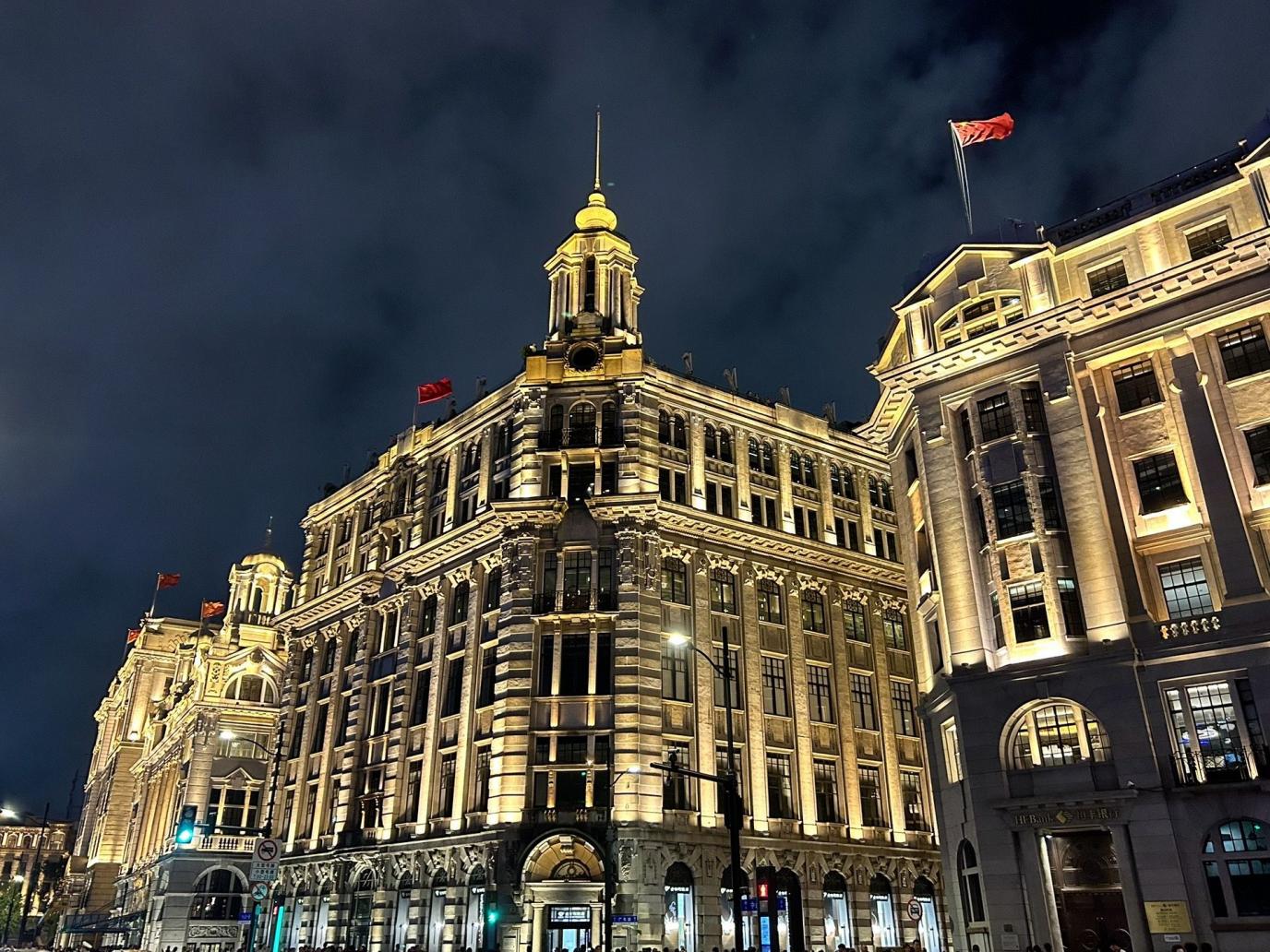
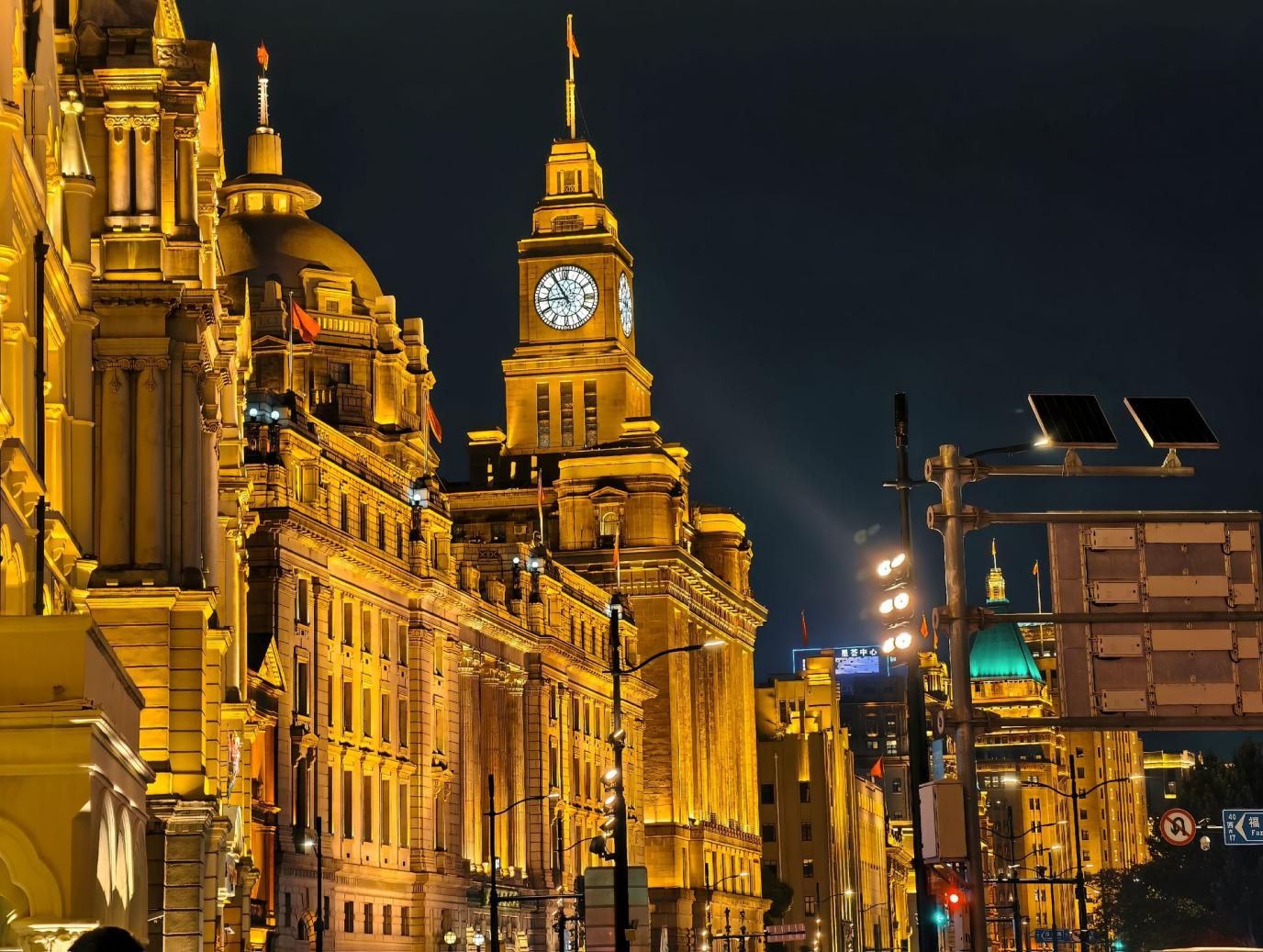
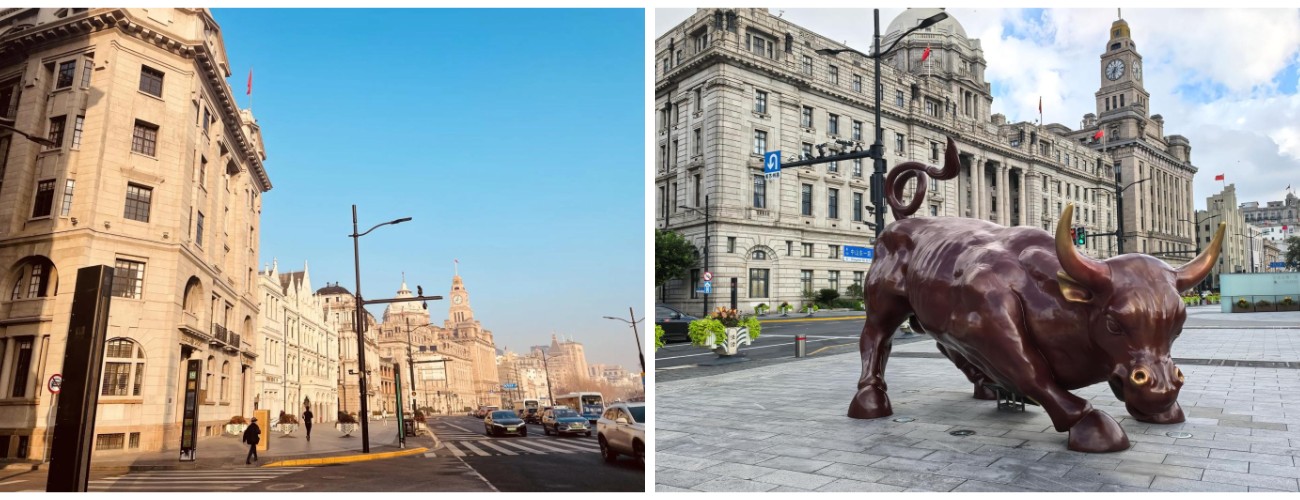
Now for the highlight! Stroll along the approximately 1.5-kilometer curve of the Bund, and you'll encounter 52 buildings, each with its own distinctive character. Locals affectionately call this collection the “World Architecture Exhibition”—and it's no exaggeration. Imagine these 52 buildings as 52 gentlemen dressed in different styles of formal wear, standing neatly along the riverbank, each with its own distinct flair. People are always fascinated by these diverse architectural styles, often pausing to admire them closely during their stroll.
As the great German poet Goethe once said, “Architecture is frozen music.” The buildings along the Bund form an extraordinary “architectural symphony.” Though designed by different architects and built at different times, they blend together in remarkable harmony. Styles range from Western Classicism and Renaissance to Art Deco, each building like a unique musical note waiting for us to listen to its story.
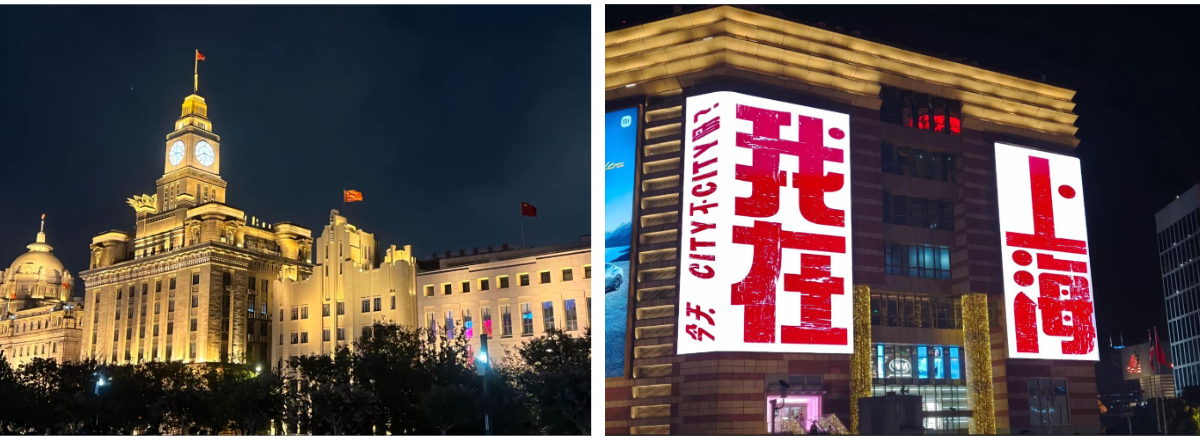
Take the Dongfeng Hotel at No. 2 New Bund, formerly the British Club. Its quintessential British classical style exudes the grace of an elegant English gentleman, radiating vintage sophistication. Its interior decoration is equally impressive. The first-floor bar once featured a 110.7-foot bar counter—the longest in the Orient at the time—which, viewed from afar, resembled a silver ribbon, exceptionally graceful. As French writer Victor Hugo aptly put it, “Architecture is history written in stone.” The British Club building truly etched its era into stone. Today, it remains a must-visit photo spot for tourists exploring the Bund.
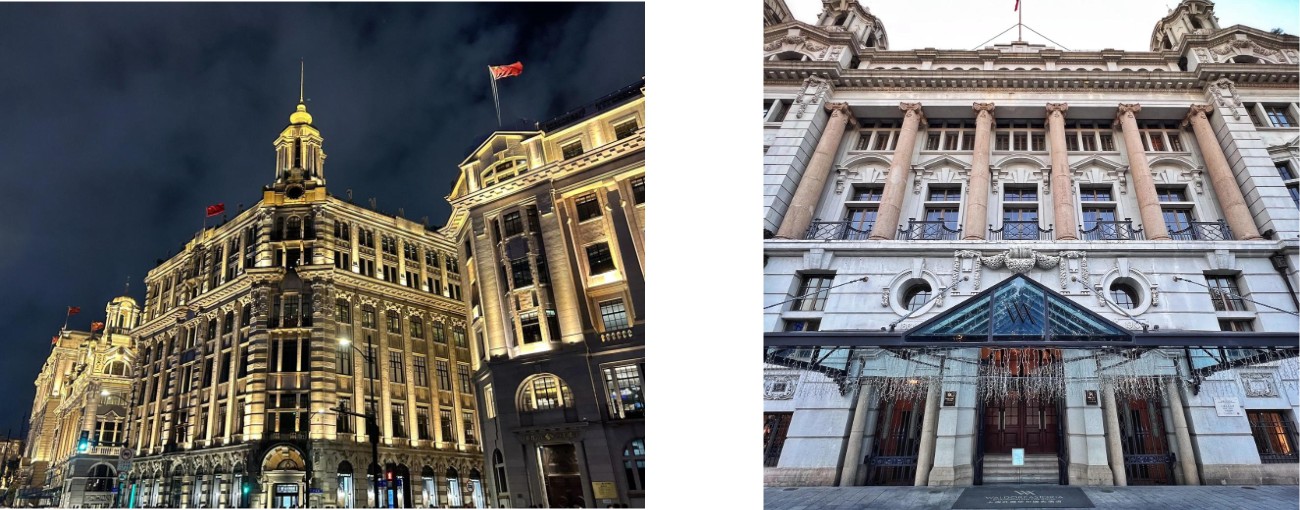
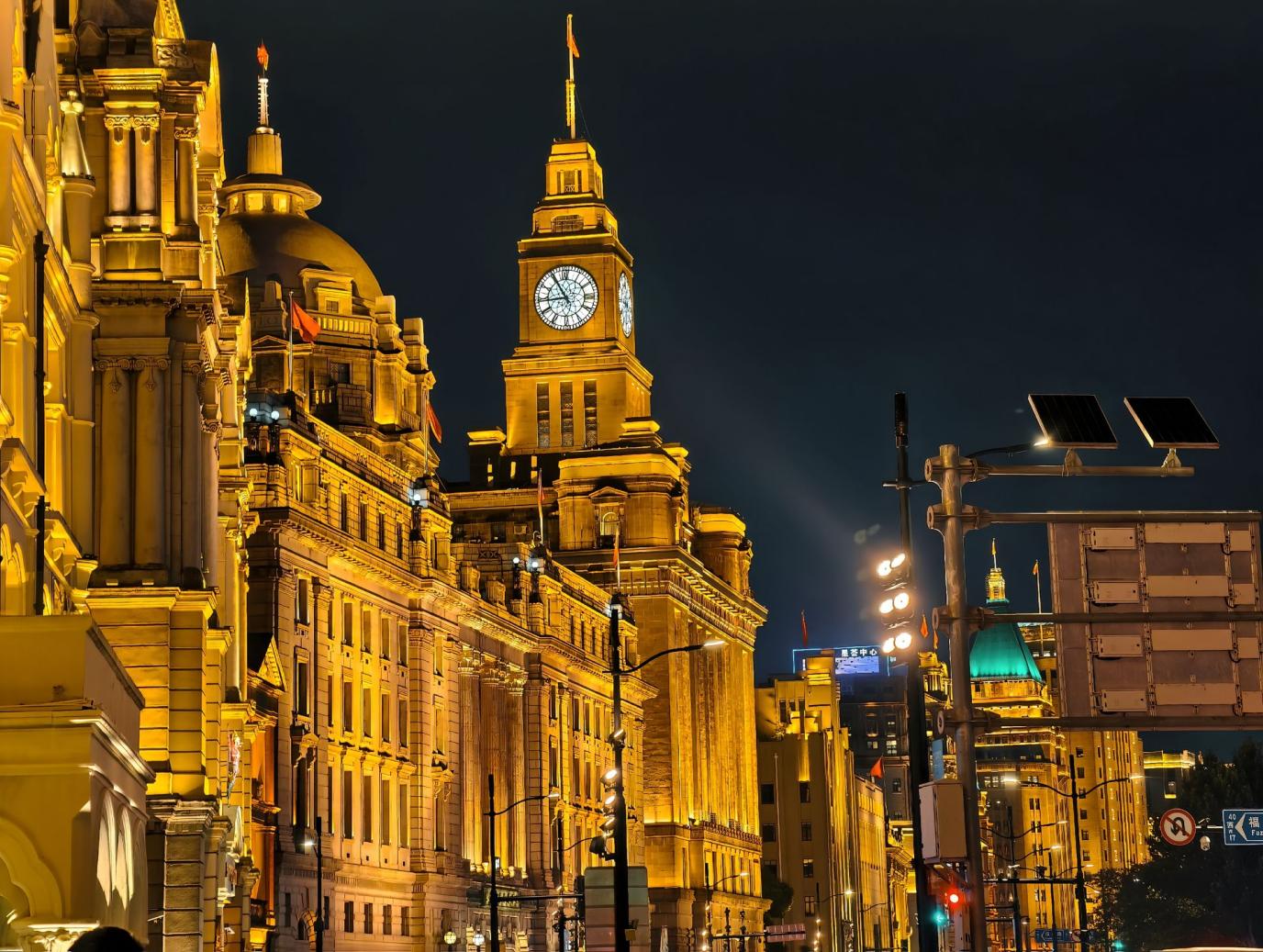
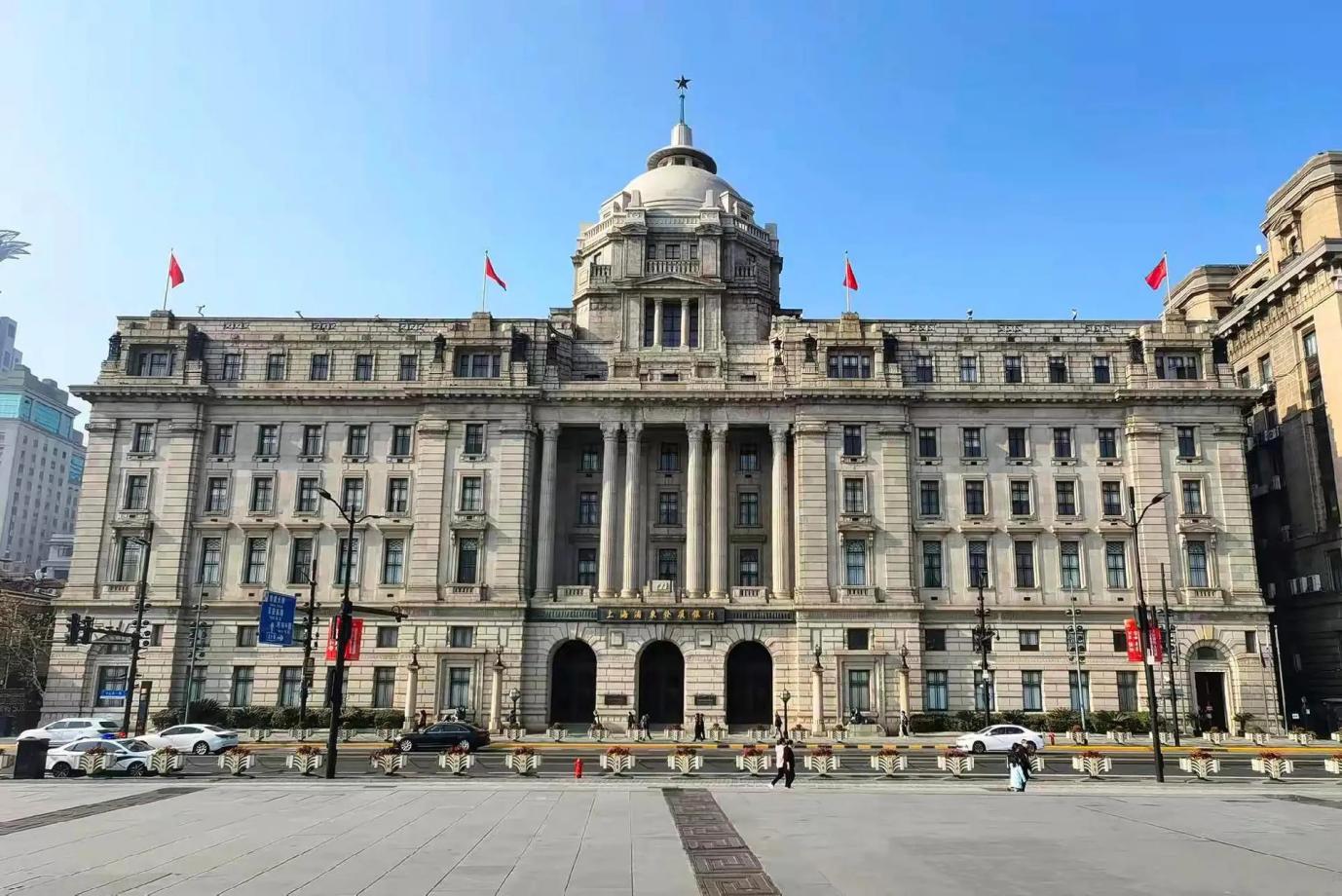
Next, consider the HSBC Building at No. 12 New Bund, constructed in 1923. Its dome, modeled after ancient Greek architecture, is round and plump, resembling a majestic crown and exuding grandeur. The British once boasted it was the most exquisite building “from the Suez Canal to the Bering Strait in the Far East.” Adjacent stands the Shanghai Customs House, completed in 1927 in a 19th-century revivalist style. Its rooftop clock has a story of its own—like a reliable timekeeper, it chimes every 15 minutes. The slow, resonant toll carries for miles, as if reminding us, “Time flies!” Both buildings were designed by British architect Wilson and affectionately called the “Sister Buildings” by Shanghai locals. Standing side by side, they've witnessed decades of change along the Bund. As Soviet aesthetician Pavel Baikov once remarked, architecture serves as the world's chronicle. When songs and legends fade from memory, buildings remain to speak, inscribing the past into these “stone books.” These two buildings are precisely such “stone books” chronicling Shanghai's modern history. Many visitors come specifically to admire their architectural features and learn the stories behind them.
Red Cultural Stories
Don't assume the Bund is only about historic buildings—it also holds hidden red stories! The Jiashi International Art Center at 1 Zhongshan East Road No. 1 dates back to 1916. Formerly known as the “McBain Building” and “Asia Building,” it stands like a weathered elder silently guarding a piece of revolutionary history. In 1933, five patriotic young men—Lu Xuzhang, Yang Yanxiu, and others—pooled their resources to establish Guangda Hua Trading Company, initially selling Western medicines and medical equipment by mail order. Little did anyone know this trading house would later become a red stronghold for the Party. After the victory in the War of Resistance in 1945, the company relocated its offices to the ground floor of this building. From this inconspicuous spot, it discreetly safeguarded the Party's “treasury,” functioning like a secret passageway to deliver intelligence and supplies to the revolutionary bases, making significant contributions to the cause. Today, with the growing popularity of red tourism, many visitors to the Bund make a point of coming here to explore this passionate chapter of revolutionary history.
Must-Visit Nearby Attractions
After exploring the Bund, don't miss these nearby spots—they're all solid choices! Visitors to Shanghai often string these locations together for a single outing, immersing themselves in the city's diverse charms all at once.
1. Nanjing Road Pedestrian Street
First, let's talk about Nanjing Road Pedestrian Street. Its origins can be traced back to 1840, when it was known as “Garden Lane.” It wasn't until 1865 that it officially became “Nanjing Road.” In its early days, this was where foreign merchants gathered to sell imported goods, witnessing Shanghai's commercial rise step by step. Now, it has become one of Shanghai's liveliest pedestrian streets.
Stretching approximately 1.2 kilometers, the street is flanked by towering buildings housing everything from century-old brands to contemporary fashion labels—virtually anything you seek. Strolling here immerses you in a vibrant commercial atmosphere while showcasing diverse architectural styles. Landmarks like the Wing On Department Store and the First Food Store exude the charm of old Shanghai. Oh, and there's a sightseeing train for those who prefer not to walk. Come nightfall, the neon lights illuminate the street, creating an incredibly lively atmosphere that instantly elevates the vibe. Whether you're a local out for a stroll or a tourist wanting to experience Shanghai's bustling energy, this is one of the top destinations.
2. Yuyuan Garden
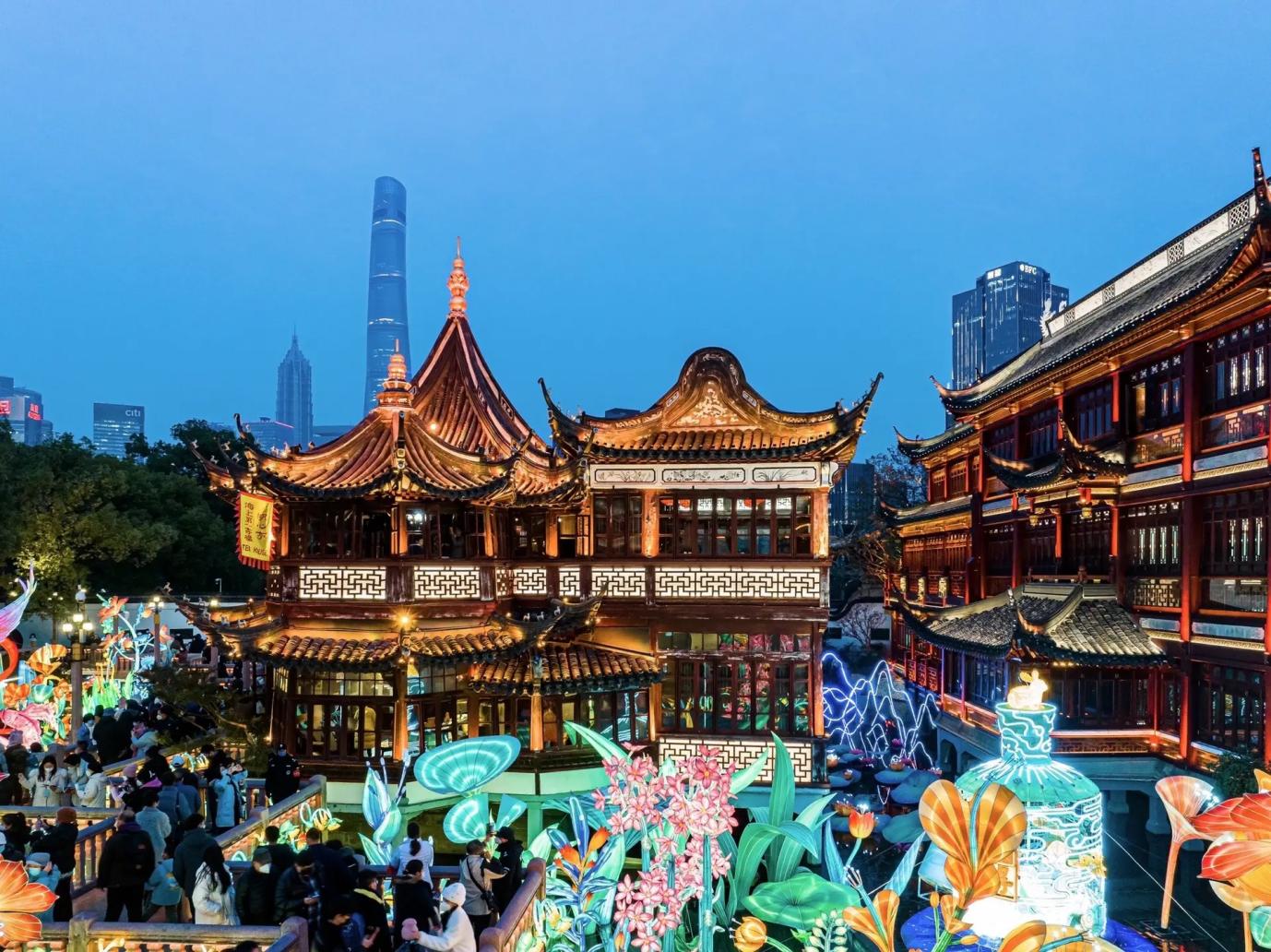
Now, let's talk about Yuyuan Garden, a true masterpiece of Jiangnan gardens. Built during the Jiajing and Longqing reigns of the Ming Dynasty (roughly 1559–1577), it was commissioned by Pan Yunduan, then Governor of Sichuan, as a filial tribute to his parents. The name “Yuyuan” means “Garden of Peace and Prosperity,” reflecting his heartfelt wish for his parents' well-being—a truly devoted gesture! However, the garden's history has been fraught with adversity. It suffered destruction multiple times throughout history, undergoing repeated repairs to preserve its current form. In 2001, it was designated a National Key Cultural Heritage Site.
The greatest feature of Yuyuan Garden is its “small yet exquisite” design. Pavilions, terraces, towers, artificial hills, ponds, flowers, trees, and bamboo groves are arranged with meticulous care. Stepping inside feels like entering an exquisitely crafted Jiangnan courtyard. The garden's crown jewel is the “Jade Linglong,” a Taihu stone standing about 3 meters tall. Legend has it this stone is a relic from the Song Dynasty's famed “Flower Stone Fleet”! With 72 holes carved into it, lighting incense beneath the stone causes smoke to mysteriously emerge from each pore. Moreover, the adjacent Yuyuan Old Street is a delightful place to stroll, lined with shops offering Shanghai's signature snacks and handicrafts. For those seeking to experience old Shanghai culture, this is the place to be. Visitors come here not only to explore the gardens but also to research various travel guides, determined not to miss any of the unique sights.
3. City God Temple
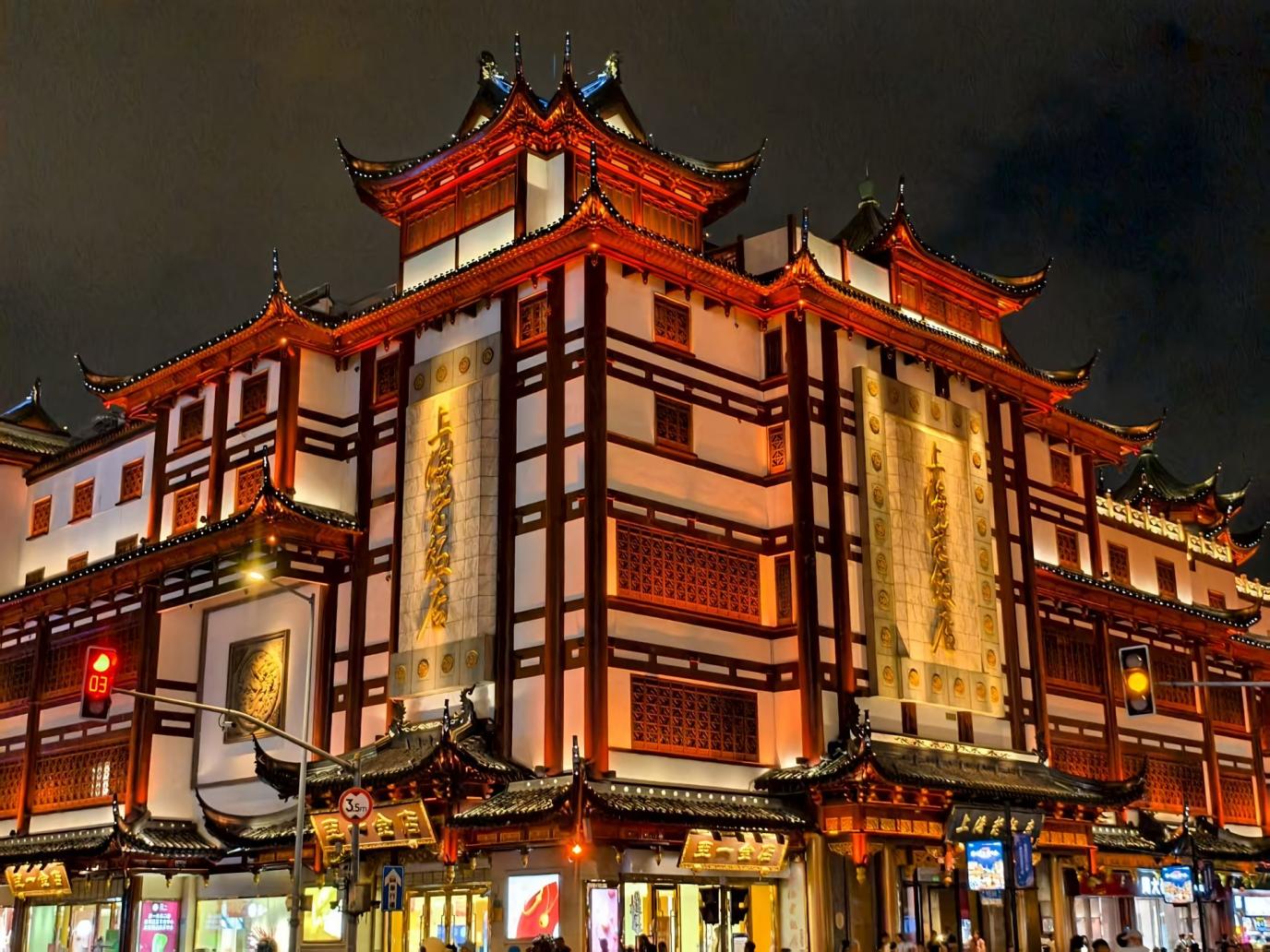
The City God Temple also has a fascinating story. Constructed during the Yongle era of the Ming Dynasty (1403–1424), it was originally built to honor Qin Yubo, the City God of Shanghai County. Over the centuries, the temple underwent multiple expansions and renovations, reaching its peak prosperity during the Ming and Qing dynasties as a major site for incense offerings and folk rituals. As the surrounding area gradually developed into a commercial district, it evolved into one of Shanghai's most distinctive attractions.
The temple's architecture exudes traditional Chinese charm, featuring red walls, black-tiled roofs, and upturned eaves that give it a distinctly rustic feel. Inside, statues of the City God and other deities are enshrined, with incense burning year-round as countless visitors come to pray for blessings. The most captivating part remains the surrounding snack street, where you can find all kinds of classic Shanghai street food. Additionally, the streets are lined with shops selling traditional handicrafts and souvenirs like paper-cutting, embroidery, and wood carvings. A stroll through the area often yields some great finds. As a landmark of Shanghai's folk culture, it consistently attracts tourists who love traditional culture, all eager to experience the old Shanghai folk customs and taste authentic local snacks.
Local Delicacies
After talking about the sights, let's talk about the food! When you come to Shanghai, don't miss these local delicacies—they'll leave you wanting more. Before visiting Shanghai, people always ask where to find the most authentic local flavors, and these dishes are always at the top of the list.
1. Shengjian mantou
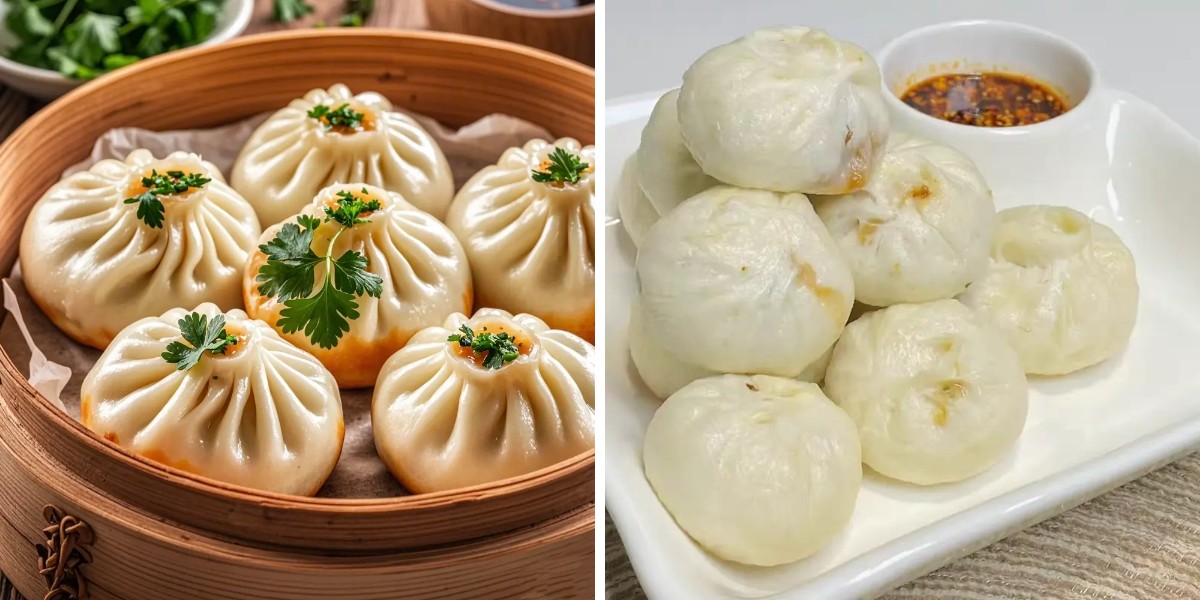
First up must be Shengjian mantou! This is a classic snack that Shanghai locals have enjoyed since childhood. Just look at that crust—golden and crispy on the bottom, soft and fluffy on top. Take a bite, and you’ll find tender meat filling and rich broth inside. The texture—crispy, soft, and savory all melting together in your mouth—is absolutely amazing! Plus, pan-fried buns come in two types: “clear broth” and “rich broth.” If you prefer a drier, crispier texture, go for the clear broth version with less juice. while those craving bursting juices should go for the “brothy” version—one bite delivers pure satisfaction. Shanghai boasts many famous shengjian shops like Dahuchun and Xiaoyang Shengjian, frequented by locals. Just head straight there. Whether you're a tourist or a native, when it comes to Shanghai snacks, shengjian buns always rank among the top.
2. Xiaolongbao
Xiaolongbao must be on the list too! Shanghai xiaolongbao are renowned for their paper-thin, translucent skins and generous, juicy fillings. You can practically see the pork filling through the delicate dough. The filling is typically pork seasoned with scallions and ginger, creating a wonderfully savory taste. Eating xiaolongbao requires technique: don't bite in hastily. First, gently nibble a small opening to sip the broth, then savor the filling and skin. Otherwise, you risk scalding your mouth. When discussing xiaolongbao, Nanxiang Xiaolongbao deserves special mention. Originating from Nanxiang Town in Shanghai, it boasts over a century of history. Today, you can enjoy authentic Nanxiang Xiaolongbao in places like the Yu Garden. As a quintessential Shanghai delicacy, xiaolongbao is a staple dish for both local gatherings and entertaining visitors.
3. Baked Stuffed Sesame Biscuit
Then there are Baked Stuffed Sesame Biscuit. As the name suggests, they resemble crab shells with their golden hue, making them instantly recognizable. This traditional Shanghai pastry comes in savory and sweet varieties. The savory version features lard, salt, and scallions for a savory, crispy texture, while the sweet version is filled with sugar, sesame seeds, and red bean paste for a rich sweetness. The Baked Stuffed Sesame Biscuit has multiple layers that crumble delightfully with each bite, while the interior remains soft. Perfect for breakfast or afternoon tea. You can find them at any snack shop along Nanjing Road Pedestrian Street or near the Yu Garden. Many shoppers grab one as a snack when they get tired, savoring the taste of old Shanghai pastries.
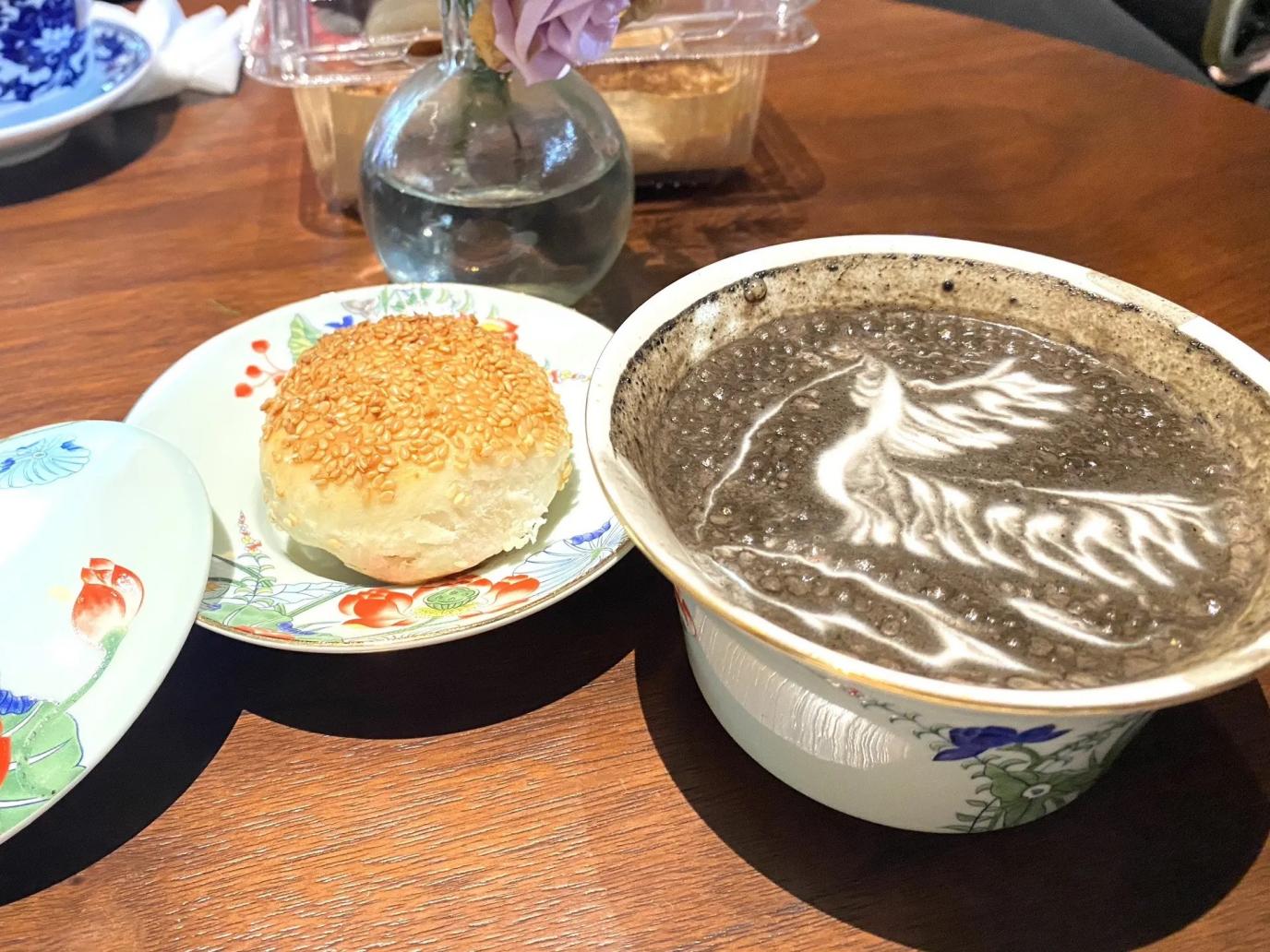
4. Shanghai Cuisine (Red braised pork belly)
Finally, let's talk about authentic Shanghai cuisine, known for its rich, savory sauces. Among these, braised pork belly stands as a classic among classics. Preparing this dish requires selecting premium pork belly, cut into uniform cubes. The meat is first blanched, then stir-fried before being simmered slowly with seasonings. The finished braised pork boasts a temptingly glossy red hue. It achieves the perfect balance—rich yet not greasy, tender without being dry—melting in your mouth with just the right sweet-salty flavor that lingers long after the first bite. Many authentic Shanghai restaurants, like Lao Jishi Restaurant and Green Wave Pavilion, serve this dish perfectly. Ordering braised pork belly at these establishments guarantees an authentic taste of Shanghai. For many visitors, experiencing genuine local cuisine is the main draw, and braised pork belly is the must-try signature dish.
Modern Vibe
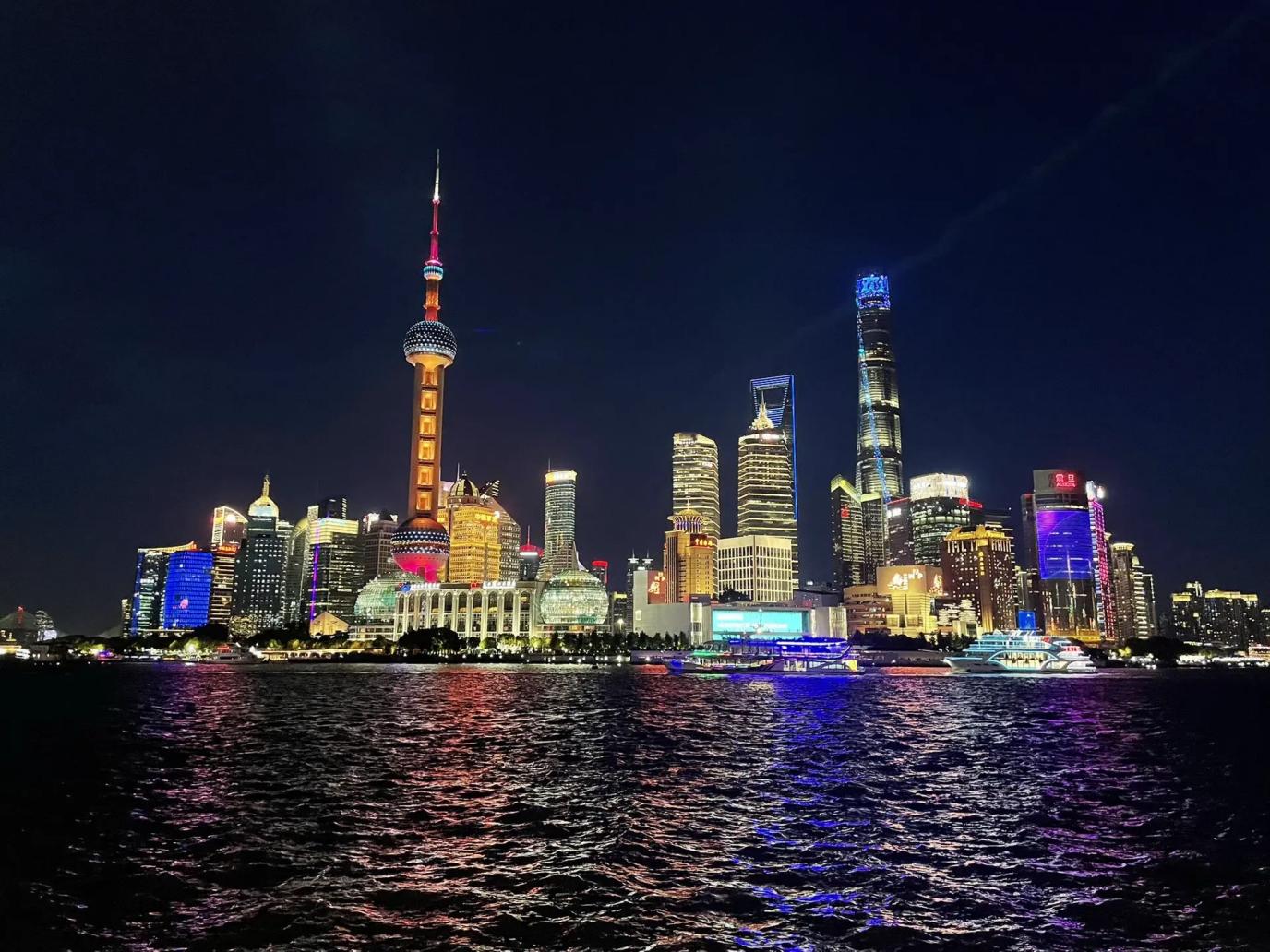
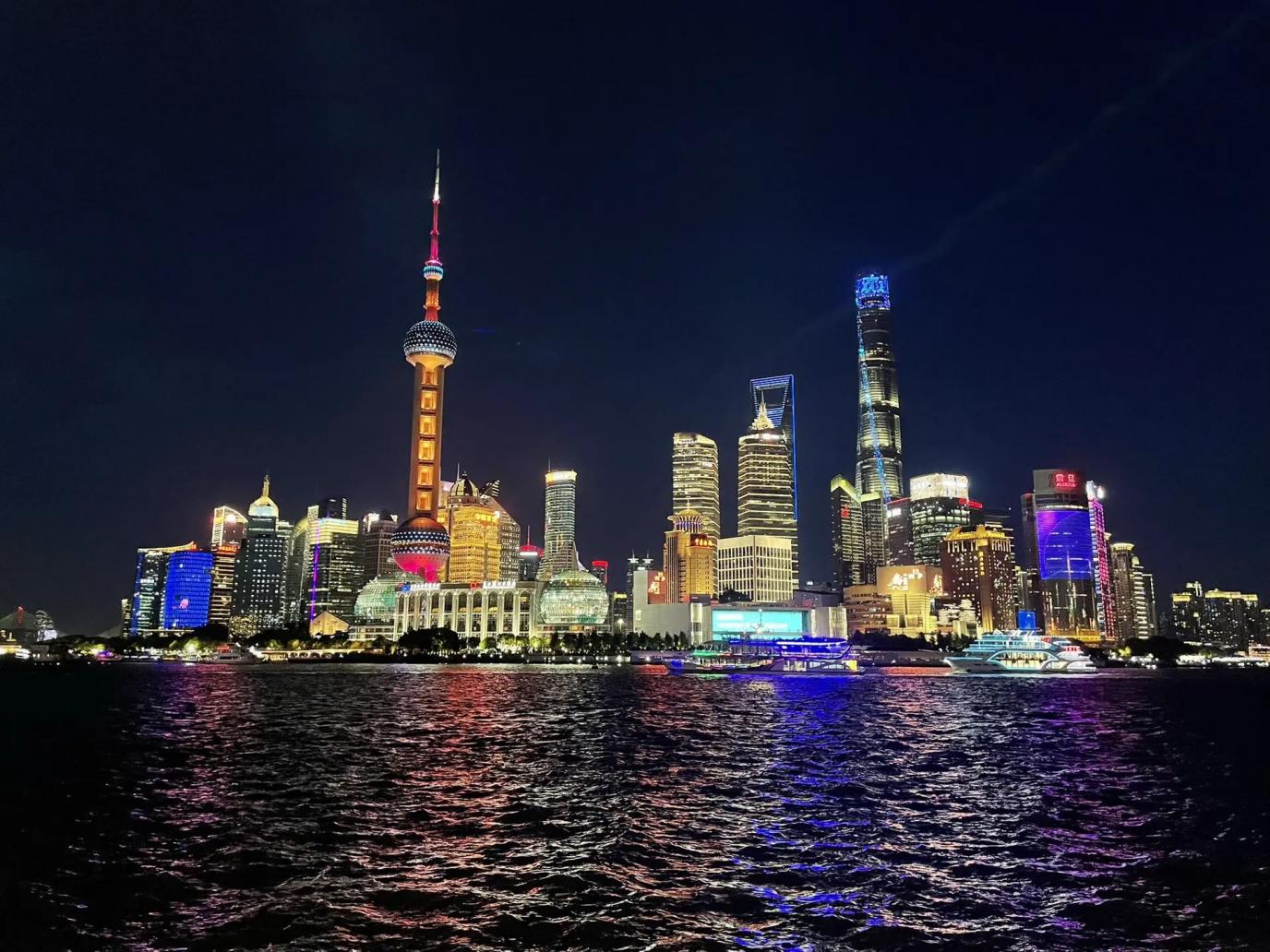
Today's Bund faces Pudong's Lujiazui across the river—one side showcasing century-old European-style architecture, the other towering modern skyscrapers. The old exudes charm while the new pulses with energy, blending harmoniously like a painting spanning time. This unique fusion of past and present captivates visitors with the Bund's timeless allure, offering fresh discoveries with every visit.
The Bund's riverside promenade is exceptionally pleasant, rich in cultural ambiance and lush greenery. Mornings see many seniors practicing Tai Chi and Qigong here, while children play nearby, filling the air with the warmth of everyday life. By day, the area buzzes with visitors from across China and beyond, admiring the architecture, snapping photos, and soaking in the Bund's allure. Come nightfall, it transforms into a romantic haven for couples. As the lights illuminate the Bund, the entire area becomes breathtakingly beautiful. The reflections on the Huangpu River sway gently, creating a dreamlike scene that draws crowds nightly to admire the night view. Visitors often capture these moments with cameras, preserving the beauty in their memories.
Shanghai's Bund is precisely such a place—filled with endless historical tales, breathtaking architecture, and surrounded by delightful attractions and delicious cuisine. It's not only a symbol of Shanghai but also holds a piece of China's modern memory. If you visit, take your time strolling and savoring its charm. You're sure to discover its beauty and create unforgettable memories! We also hope everyone can find their own unique impression of the Bund here.