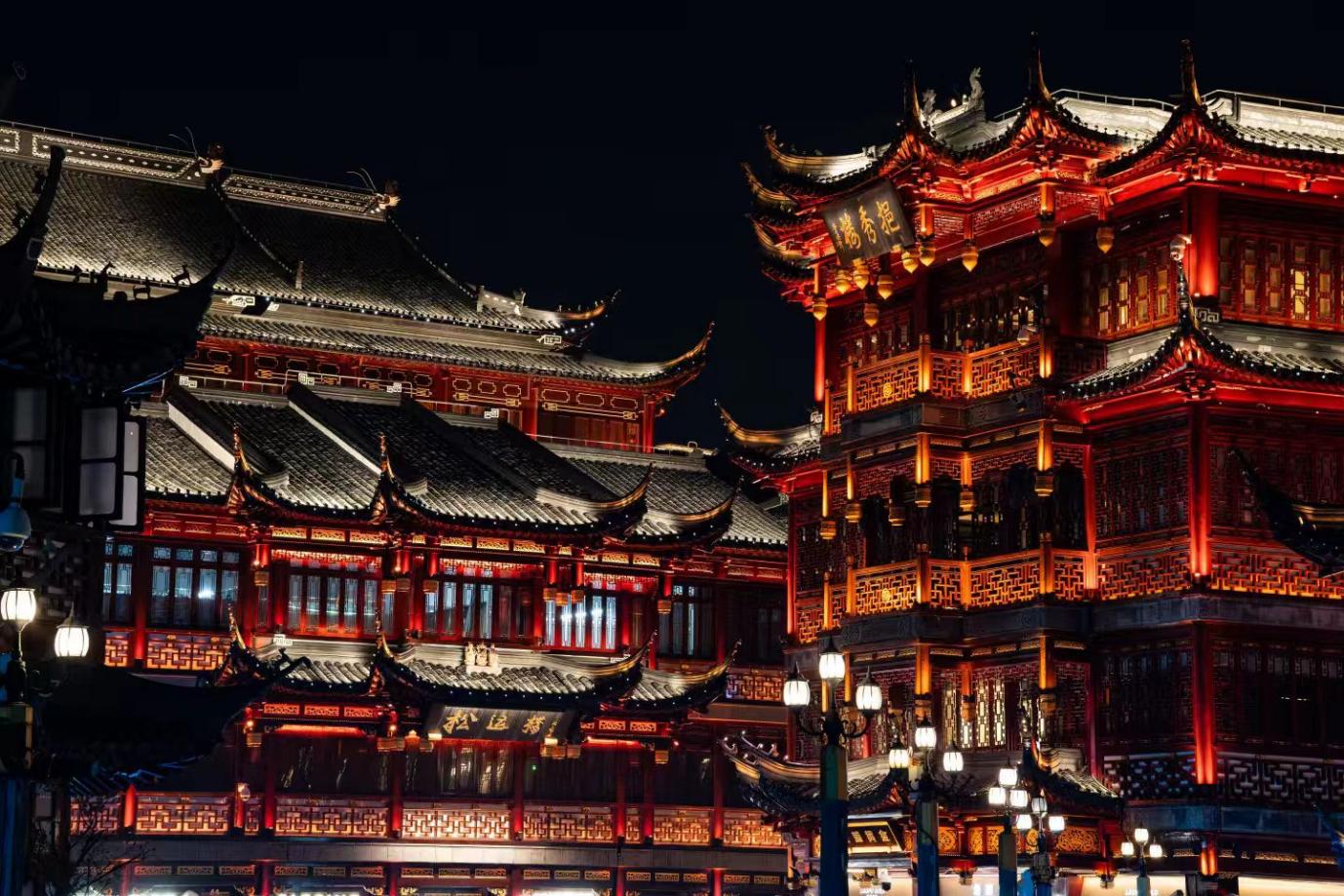
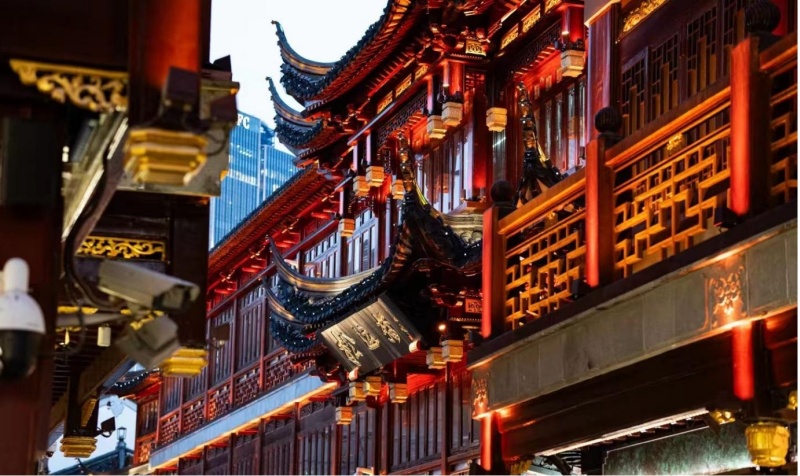
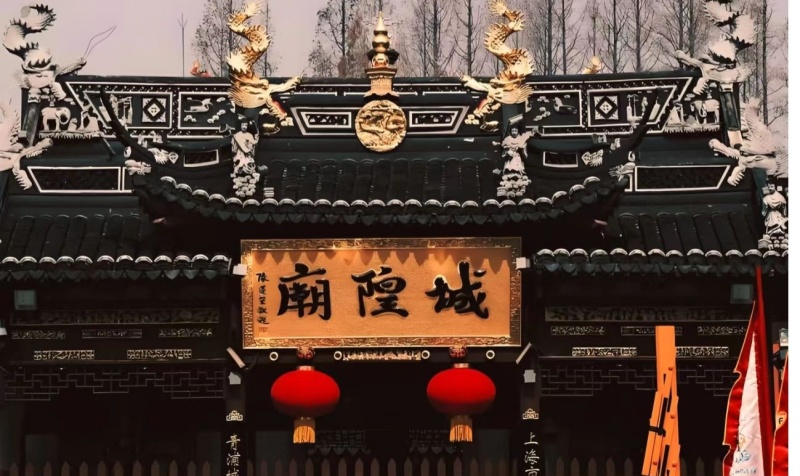
Shanghai God Temple
Catering Standard: Savor Local Delicacies
Accommodation Standard: 4-5 Star Local Hotels
Transportation Standard: Multiple Vehicle Options Tailored to Your Needs
Attraction Selection: Flexible Combinations & Professional Itinerary Design
Entertainment Activities: Immersive Local Cultural Experiences with Guide Escort
Friends, where we stand now is the soul landmark of Shanghai's Old City—the City God Temple! Don't let its bustling atmosphere fool you—behind the scenes lies over 600 years of history. Today, we'll explore this “living fossil of old Shanghai” through five aspects: historical origins, architectural features, signature attractions, culinary lore, and cultural significance. Join us as we uncover the charming spots around the City God Temple that preserve the authentic flavors of yesteryear.
I. Historical Origins: The Legacy of Two City Gods
First, it must be noted that the present City God Temple did not emerge overnight. Its origins unfolded in two distinct phases.
The first phase occurred during the Yongle era of the Ming Dynasty, when a “Temple of Huo Guang” was first erected here, honoring the renowned Western Han general Huo Guang. Why would a Western Han minister be venerated in Shanghai? Because the old Shanghai locals believed Huo Guang embodied “loyalty, bravery, and integrity,” capable of safeguarding the region's peace, and thus enshrined him as a “guardian deity.”
The second phase unfolded in the late Yongle period of the Ming Dynasty, when Shanghai produced a notable figure named Qin Yubo. A literary genius during the transition from Yuan to Ming dynasties, he repeatedly declined Zhu Yuanzhang's offers of official posts, choosing instead to dedicate himself to education and community service in Shanghai. After his death, Zhu Yuanzhang, moved by his virtue, posthumously conferred upon him the title “City God of Shanghai”—an official designation as the city's guardian deity! However, no dedicated temple existed at the time. Locals ingeniously repurposed the existing Huo Guang Temple, expanding it to house Qin Yubo's divine statue. Thus, in the temple's main hall today, Qin Yubo stands on the left and Huo Guang on the right—effectively the “old and new City Gods” jointly protecting Shanghai. This “dual City God worship” arrangement is rare nationwide.
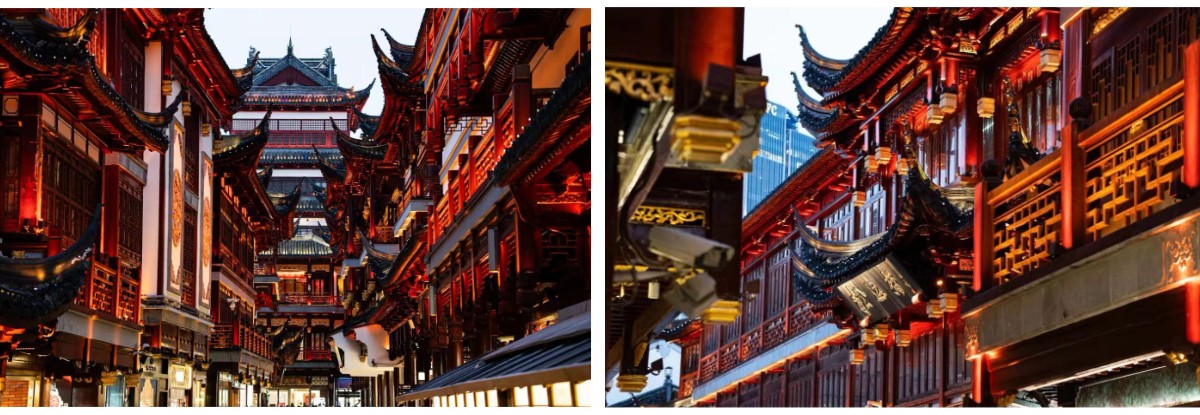
II. Architectural Features: The Artistry in Eaves and Carvings
When visiting the City God Temple, don't just admire the spectacle—pay attention to its architectural details. Every element conceals the wisdom of our ancestors. Today, we'll delve into these intricacies.
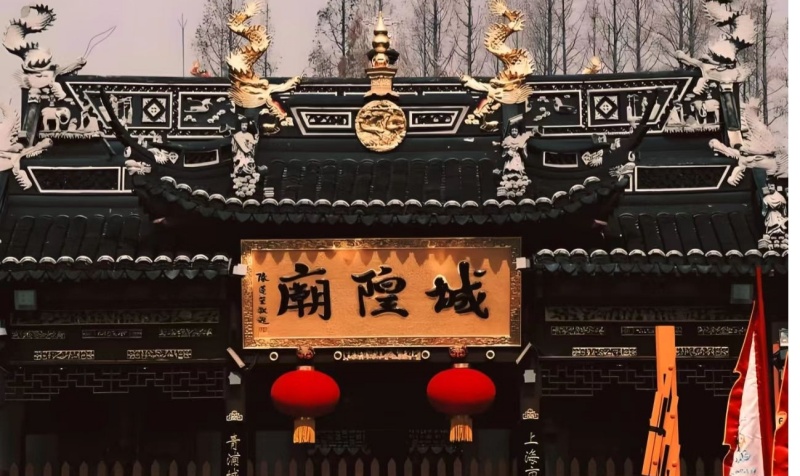
1. Roof: From Hip-and-Gable Roof to Ceremonial Beast Ornaments
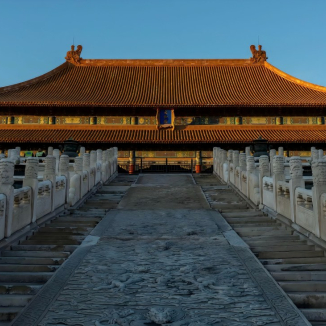
The main hall's roof features a classic hip-and-gable style. Notice how it differs from the simpler “hard-gable roof” by adding four sloping “gable ends,” creating richer visual layers. In ancient times, this roof design was reserved for “high-grade architectural forms,” permitted only for imperial temples and important government offices. This alone speaks to the status the City God Temple held in the hearts of old Shanghai residents.
The row of “small animal sculptures” along the eaves also holds significant meaning. Beyond the previously mentioned dragons, phoenixes, lions, celestial horses, and sea horses, starting from the corner of the eaves, the foremost figure is actually an “Immortal Riding a Phoenix”— — legend holds this is King Min of Qi from the Warring States period. After fleeing a military defeat to the riverbank, he was rescued by a phoenix. Placed at the very front of the roof, it symbolizes “turning misfortune into good fortune.” The five beasts behind it are arranged in order, each with a specific role: the dragon controls rainfall, the phoenix heralds auspiciousness, the lion protects the home, the heavenly horse wards off evil, and the sea horse ensures safety. Even their sequence must never be disrupted—a “rule” established by our ancestors. Moreover, these beasts are not hollow; they contain wooden frames that reinforce the eaves, preventing wind and rain from causing the timber to crack. They are both beautiful and practical.
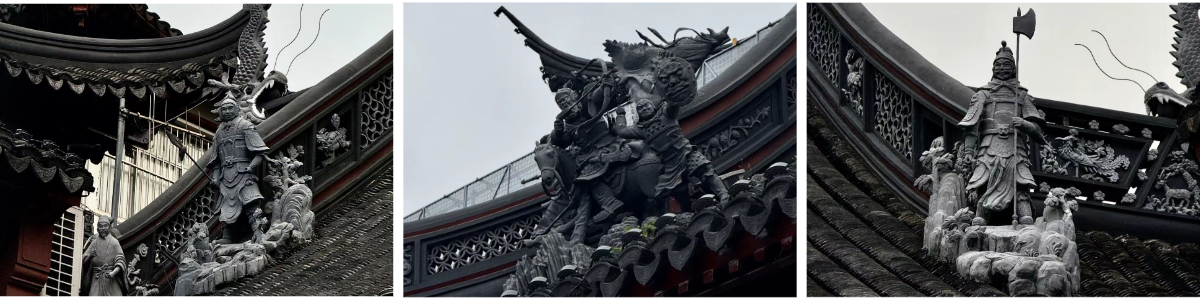
2. Carved Beams and Painted Columns: A “Storybook” in Wood
The beams and pillars within the main hall are nothing short of a “museum of wood carving art.” Look up at the central beam, where the entire scene of “The Eight Immortals Crossing the Sea” is carved: Iron Crutch Li's gourd, Lü Dongbin's sword, and He Xiangu's lotus flower are all clearly visible. Even the waves beneath the immortals' feet are carved in layered, undulating patterns, appearing as if they're truly moving. The secondary beams beside them depict tales from the Twenty-Four Filial Exemplars, such as “Lying on Ice to Catch Carp” and “Selling Oneself to Bury One's Father.” Old Shanghai residents would bring their children here, pointing to the carvings to narrate these stories of filial piety—essentially an ancient version of moral education.
The pillar decorations are even more intricate. The four “coiled dragon pillars” in the front hall each feature a carved azure dragon. The dragon's body employs “openwork carving” techniques, with scales, whiskers, and claws protruding in three dimensions. When sunlight streams in, the wood grain on the dragon's body reflects light, creating the illusion that the dragon is “swimming.” At the base of the pillars lie stone pedestals carved with lotus and peony motifs. The lotus symbolizes “integrity,” while the peony represents “wealth and honor,” subtly echoing the city god's virtues of “uprightness, love for the people, and benefiting the land.”
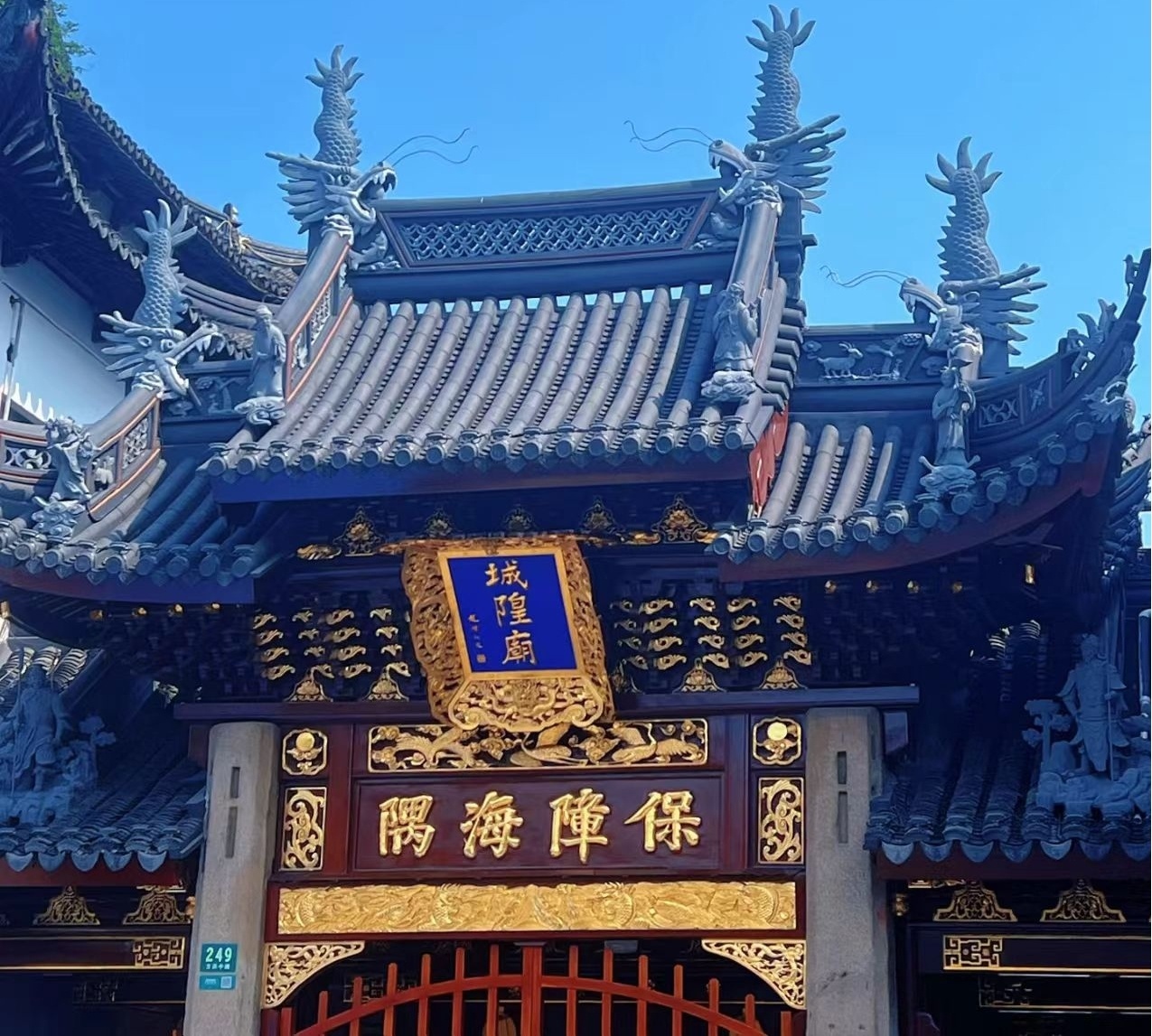
3. Doors and Windows: Hidden Symbolism Behind the Latticework
Most doors and windows within the temple feature latticework, each pattern uniquely designed with auspicious meanings. For instance, the main hall's windows feature “cracked ice patterns,” resembling fractured ice crystals. Veteran craftsmen explain this symbolizes “crystal-clear purity,” representing the City God's impartial judgment free from favoritism. The side halls' windows display “endless patterns,” forming continuous loops that signify “unbroken prosperity,” praying for the stable lives of Shanghai's citizens. Others bear bat motifs, where “bat” (蝠) sounds like ‘fortune’ (福). Some carvings depict five bats, representing “five blessings descending upon the home,” while others show bats clutching copper coins, signifying “fortune right before your eyes.”
The plaques above the doorways are also noteworthy. The “City God Temple” plaque in the main hall is an antique from the Qianlong era of the Qing Dynasty, featuring bold and powerful calligraphy. Beside it, small楷 script records the details of the temple's reconstruction. The side hall's plaque “Compassionate Voyage, Universal Salvation” is paired with a wooden Guanyin statue below, its gentle lines contrasting with the imposing City God statue beside it, embodying the cultural concept of “balance of strength and gentleness.”
4. Courtyard: A “Step-by-Step Scenic” Layout
The temple courtyard avoids a flat, open design, instead following the “front hall, rear quarters” layout with a central courtyard and connecting corridors. The front hall serves as the main worship space for visitors to offer prayers. The rear hall functions as the “sleeping quarters,” housing statues of the City God and his consort. Decorated like an ancient official's bedroom, it features a bed, tables, chairs, and wardrobes. Even the clothing is changed seasonally—winter quilts and summer robes—adding a strikingly lifelike touch.
The courtyard features an ancient well, said to have been dug during the temple's Ming Dynasty construction. Its rim is encircled by blue stone slabs inscribed with the characters “甘露井” (Sweet Dew Well). Old Shanghai locals believed its water “warded off misfortune.” During festivals, people would draw water from it to sprinkle in their courtyards for blessings. Embedded in the corridor walls are over a dozen stone steles inscribed with inscriptions documenting the temple's renovations across different dynasties. The earliest stele dates back to the Yongle era of the Ming Dynasty. Though the characters are somewhat blurred, they reveal the scale of the temple's construction at that time, serving as a “living historical record” for the study of Shanghai's past.
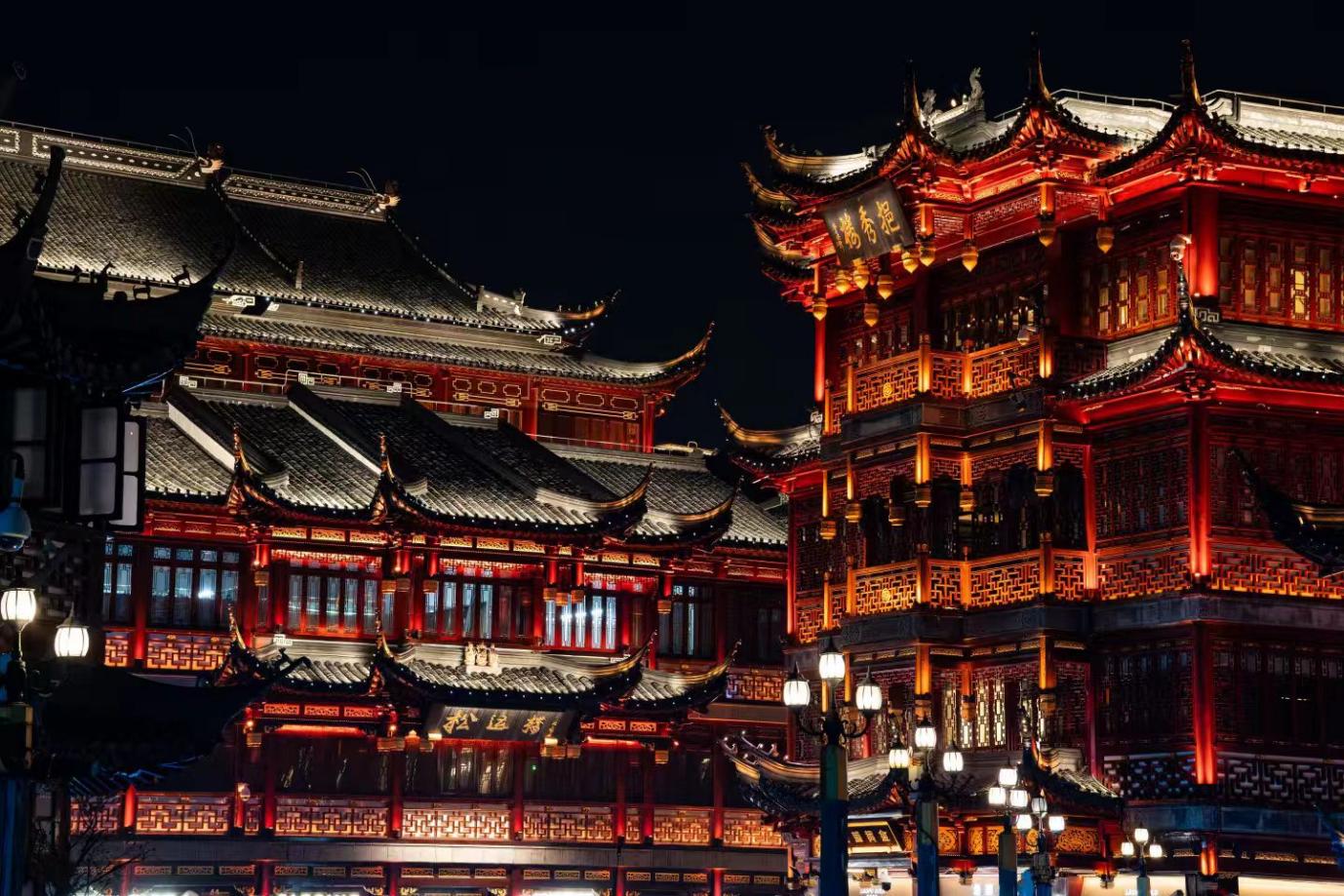
III. Folk Experiences and Diverse Beliefs
Stepping outside the main temple, the surrounding folk scenes offer the heart of experiencing old Shanghai life, where different visitors can find their own interactive delights. Shanghai Old Street's “live craft demonstrations” (paper-cutting, bamboo weaving, Mud Figurine Zhang) resemble Europe's “craft revival movement” but with a distinct Eastern delicacy. Visitors can try their hand at these crafts, comparing the differences between Eastern and Western artisanal techniques.
Festive events (Lantern Festival parades, Dragon Boat Festival dragon dances) mirror Western celebrations like Christmas processions and harvest festivals. The Old Street's evolution from incense markets to folk commercial streets parallels Europe's historical logic of markets forming around churches, illustrating the universal pattern of religious sites driving daily life. The resonance between diverse beliefs and public spirit differs from Europe's “single saint worship.” The two City Gods represent “historical loyalty and bravery” (Huo Guang) and “local benevolent governance” (Qin Yubo), embodying Eastern “inclusive pluralism” in faith—akin to the Western concept of “coexistence between secular power and spiritual authority.” Qin Yubo's life story—refusing official posts to serve his community—resonates deeply with the Western-promoted “public service ethos.” Today, scenes of elders praying for overseas descendants in foreign languages vividly demonstrate traditional faith's vitality in the globalized era. Qin Yubo's image as a “local sage” resonates deeply with the revered “Dà Bó Gōng” belief (local guardian deities) cherished by Southeast Asian Chinese communities. The “Ganyu Well” in the courtyard (whose water is said to ward off misfortune) aligns with the tradition of “faith in daily life” found in Southeast Asian Chinese temples. Visitors can experience this down-to-earth sacredness, much like praying for blessings in their homeland.
IV. Must-Visit Attractions: Hidden Gems Around the City God Temple
After exploring the main temple, linger to discover nearby spots brimming with old Shanghai's elegance and everyday charm—each deserves a leisurely visit.
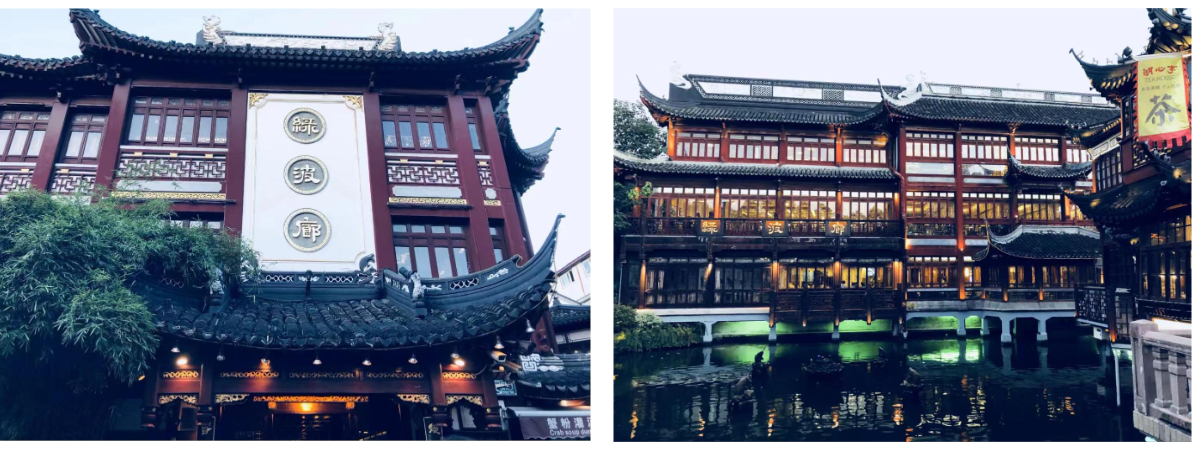
1. Green Wave Pavilion: An Old Shanghai Teahouse with “State Banquet” Credentials
Head west from the main gate of the City God Temple for less than 100 meters, and you'll find the Green Wave Pavilion—no ordinary teahouse, but a time-honored establishment that has hosted heads of state from multiple countries. Even President Nixon and Prime Minister Thatcher have savored Shanghai dim sum here.
Luobo Corridor traces its history back to the Guangxu era of the Qing Dynasty, originally operating as a teahouse named “Le Pu Lang.” It later adopted its current name, inspired by the poetic imagery: “Near the water, the pavilion first catches the moon; in Luobo Corridor, one can hear the rain.” Its architecture embodies classic Jiangnan garden style. The ground floor features a grand hall, while the second floor offers elegant window-side seating overlooking Chenghuang Temple's historic street. Sipping tea and savoring dim sum here, with bustling crowds visible below, evokes the quintessential charm of old Shanghai.
The dim sum here is truly “Shanghai's finest.” Take the “Eyebrow Pastry,” shaped like arched eyebrows with layers of crispy pastry encasing shrimp filling—each bite bursts with savory flavor. Or the “Gourd Pastry,” crafted in the shape of a gourd symbolizing “fortune and prosperity,” filled with sweet bean paste that's rich yet not cloying. For those seeking to experience “old Shanghai's refinement,” order a pot of green tea at Green Wave Pavilion paired with a few dim sum selections—you won't be disappointed.
2. Shanghai Old Street: A Century-Spanning “Time Tunnel”
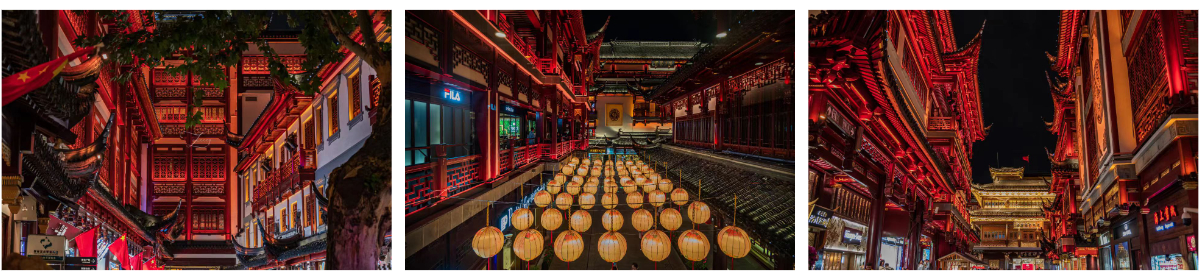
Located southeast of the City God Temple, Shanghai Old Street is a thoroughfare that instantly transports visitors back a century. Stretching less than a kilometer from Renmin Road in the south to Henan Middle Road in the north, it preserves the architectural style of the late Qing and early Republican eras. The buildings lining both sides feature arcades (“qilou”)—shops on the ground floor with upper-level corridors. Walking under these covered walkways on rainy days means you don't need an umbrella—a thoughtful touch.
Every shop on the street embraces a “vintage vibe.” Take the “Old Shanghai Clock Shop,” for instance, where century-old grandfather clocks and pocket watches line the display windows, and master clockmakers still repair antique timepieces. At the “Folk Crafts Shop,” visitors can observe traditional crafts like paper-cutting, bamboo weaving, and Mud Figurine Zhang being made by artisans on-site, with hands-on experiences available. The “Old Shanghai Clothing Shop” sells cheongsams, long gowns, and tiger-head shoes. Many rent a cheongsam here to take photos along the street, feeling as if they've stepped back into the Republican era. Numerous “vintage displays” line the street—green antique mailboxes, hanging kerosene-lamp streetlights, and intricately carved wooden benches. Walking here feels like stepping into an old Shanghai movie scene.
3. Chenxiang Pavilion: Serenity at the “First Buddhist Temple of Shanghai”
For those seeking tranquility to settle their minds, Chenxiang Pavilion—a 5-minute walk northeast of Chenghuang Temple—is the perfect choice. As one of Shanghai's oldest surviving Buddhist temples, it holds the esteemed title of “The Premier Buddhist Temple by the Sea,” named for its iconic “Agarwood Carved Guanyin Statue.”
This Guanyin statue is no ordinary artifact. Dating back to the Wanli period of the Ming Dynasty, it was carved from a single block of Hainan agarwood, standing approximately 1.8 meters tall. Its rich fragrance remains potent even after over 400 years. Legend has it that a venerable monk brought this agarwood back from Hainan, commissioning master artisans to carve it into the Guanyin statue enshrined within the temple. Since then, the Agarwood Pavilion has become a sacred site for devotees seeking blessings.
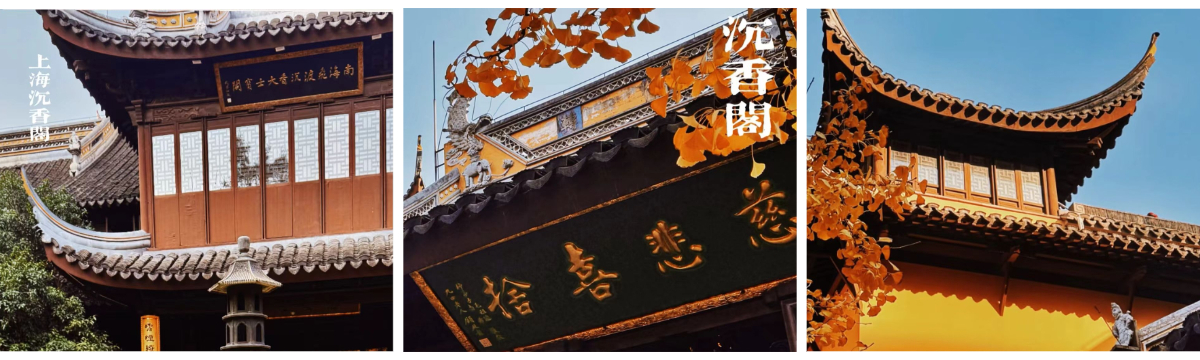
The architecture of the Agarwood Pavilion is distinctive, centered around the three-story Guanyin Tower. Each level features wooden corridors, connected by spiral staircases that offer different perspectives of the Guanyin statue as you ascend. The temple also houses the “Hall of Heavenly Kings” and the “Great Hero Hall.” Its courtyards feature century-old ginkgo and ancient cypress trees. In autumn, when the ginkgo leaves turn golden and scatter across the bluestone paths, they create a breathtaking golden carpet. The atmosphere here is remarkably serene, offering a stark contrast to the bustling City God Temple. After a tiring stroll, sitting here for a while, listening to the chimes and inhaling the incense, instantly calms the mind.
V. Culinary Tales: “Memories of City God Temple” on the Tip of the Tongue
When it comes to Chenghuang Temple, no one can resist its street food—but many of these snacks have fascinating stories behind them. Today, let's explore a few “old-school flavors” beyond xiaolongbao and pear syrup candy.
1. Five-Spice Beans
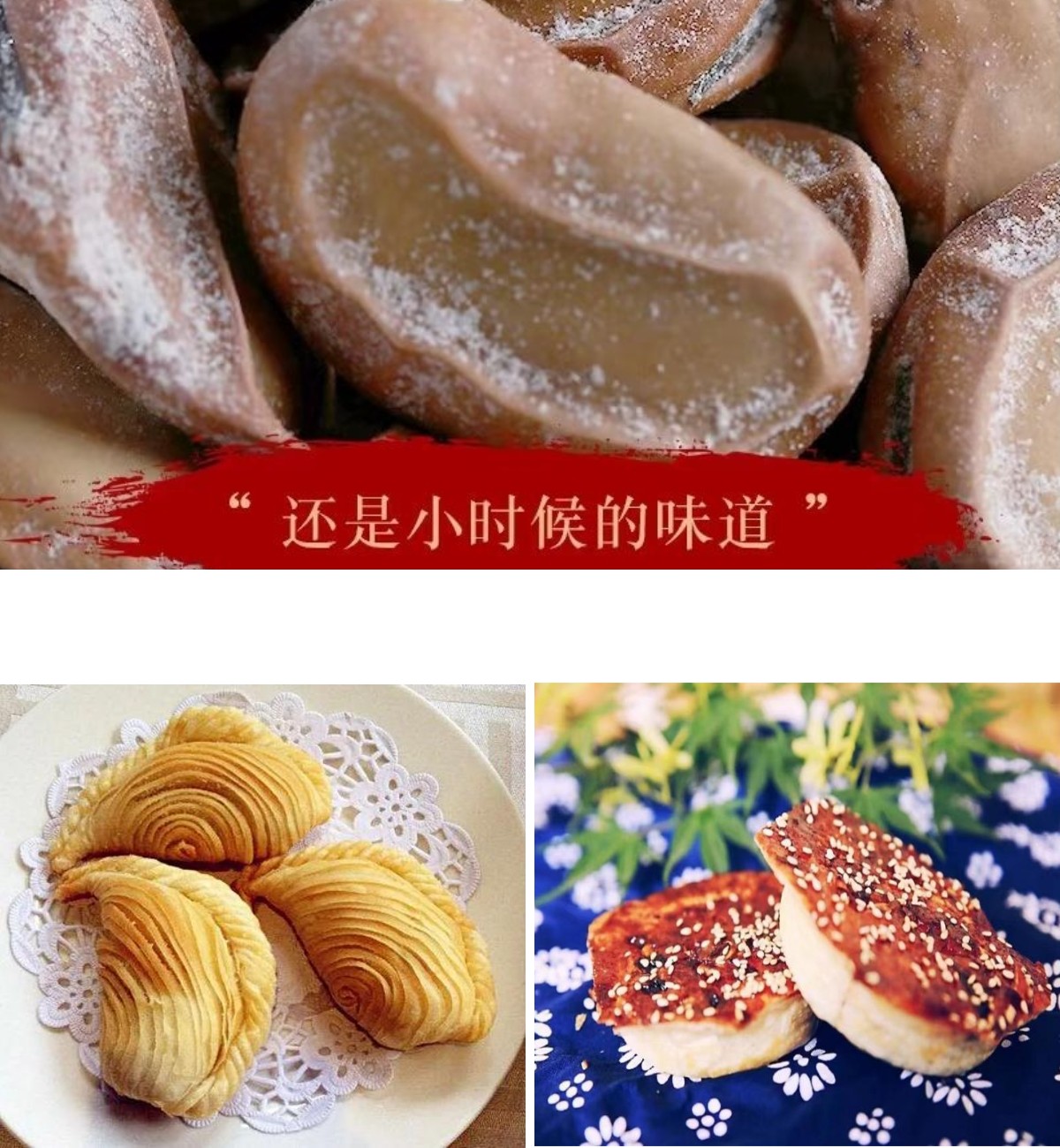
This is a true “veteran” among Chenghuang Temple snacks, dating back to the Guangxu era of the Qing Dynasty. Originally made by a vendor surnamed Chen near the temple entrance, he used a special variety of broad beans known locally as “cow-trampled beans.” These beans are flat, resembling something crushed by cattle, with plump kernels and a firm texture. Preparation involves soaking the beans until tender, then slowly simmering them with star anise, cinnamon bark, bay leaves, cloves, and fennel seeds—the “five spices”—until flavor-infused but not mushy. Finally, they're air-dried slightly, resulting in a fragrant, chewy texture. In the old days, Shanghai locals strolling through Chenghuang Temple clutched a bag of these beans, savoring them while taking in the sights—the height of leisure. Even today, many elderly Shanghainese make special trips to buy them, calling it “the taste of childhood.”
2. Eyebrow Pastry
Eyebrow Pastry is a renowned Shanghai specialty. Shaped like delicate eyebrows, these pastries boast a pale yellow hue with a flaky, layered crust—often boasting nearly a hundred layers. Fillings come in savory and sweet varieties: savory versions typically blend shredded shiitake mushrooms, bamboo shoots, and pork for savory richness; sweet versions feature date paste filling, rich with the aroma of dates and offering a smooth, sticky texture. First created by Shanghai pastry chefs, it is most famously prepared at the Green Wave Restaurant in the Old City God Temple. Made using a combination of deep-frying and boiling techniques, dry puff pastry is wrapped in water-oil pastry for layering. After filling, it is twisted into a braided pattern and deep-fried.
3. Hawthorn Flower Cake
Its name alone hints at its visual appeal—resembling a blooming hawthorn flower. The golden-brown crust is crispy, encasing sweet red bean paste. Topped with pumpkin seeds and sesame seeds, it's both beautiful and delicious. Its history dates back to the late Qing Dynasty when it first appeared in the City God Temple. Originally introduced by a Suzhou artisan, the recipe was later adapted to suit Shanghai tastes. For instance, the filling was changed from jujube paste to sweeter red bean paste, with osmanthus added for fragrance. Queues used to form at the crabapple cake stalls in Chenghuang Temple, especially among children clutching pocket money, waiting for freshly baked cakes. Taking a bite would make them puff out steam from the heat, yet they'd never spit it out—that sweet, fragrant flavor remains a cherished childhood memory for many Shanghainese.
VI. Cultural Significance: Old Shanghai's “Spiritual Symbol”
Why has the City God Temple thrived for over 600 years, becoming an emblem of Shanghai? It's more than just a temple—it served as the “stage of life” for old Shanghai residents, with surrounding attractions also preserving the city's cultural memory.
Functionally, the City God Temple district was central to old Shanghai life: people went to the temple to worship and pray for blessings, to Green Wave Restaurant for exquisite dim sum, to Old Shanghai Street to hunt for vintage treasures and experience folk customs, and to Incense Pavilion for tranquility and Zen. During festivals, the entire area buzzed with extraordinary energy. — During the Lantern Festival, lanterns adorned the City God Temple, while Shanghai Old Street hosted a “Folk Customs Parade,” with dragon and lion dance troupes winding through every street. For the Dragon Boat Festival, Green Wave Pavilion featured a “Dragon Boat Festival Zongzi Feast,” offering an overwhelming array of zongzi flavors. During the Mid-Autumn Festival, Agarwood Pavilion hosts a “Moon-Viewing Ceremony,” where devotees and visitors alike admire the moon and savor mooncakes, creating a uniquely festive atmosphere.
Spiritually, the City God Temple area embodies “heritage and perseverance.” Though Shanghai now boasts the skyscrapers of Lujiazui and the Western-style mansions along the Bund, this area still preserves the architecture, cuisine, and folk customs of old Shanghai. For instance, the chefs at Green Wave Restaurant persist in handcrafting dim sum, artisans on Shanghai Old Street continue passing down traditional crafts, and the monks at Agarwood Pavilion guard the century-old agarwood statue—all living relics of old Shanghai culture. As the couplet at the temple entrance declares: “Be a good person with upright heart, body at ease, and peaceful dreams; do good deeds known to heaven and earth, admired by gods and spirits.” This ethos of “doing good and upholding righteousness” permeates every brick, tile, cup of tea, and meal in this district, touching every visitor.
That wraps up today's introduction. I recommend starting with the main City God Temple to see the coiled dragon pillars and ancient well. Next, head to Green Wave Corridor to savor eyebrow pastries and experience old Shanghai's refinement. Then, stroll down Old Shanghai Street for some vintage photos and browse for trinkets. If time permits, visit Agarwood Pavilion for a moment of quiet reflection. May you find joy and delight in exploring the vibrant, everyday life of old Shanghai!