Xi’an Custom Tour: Explore Ancient China with 【Huatu】
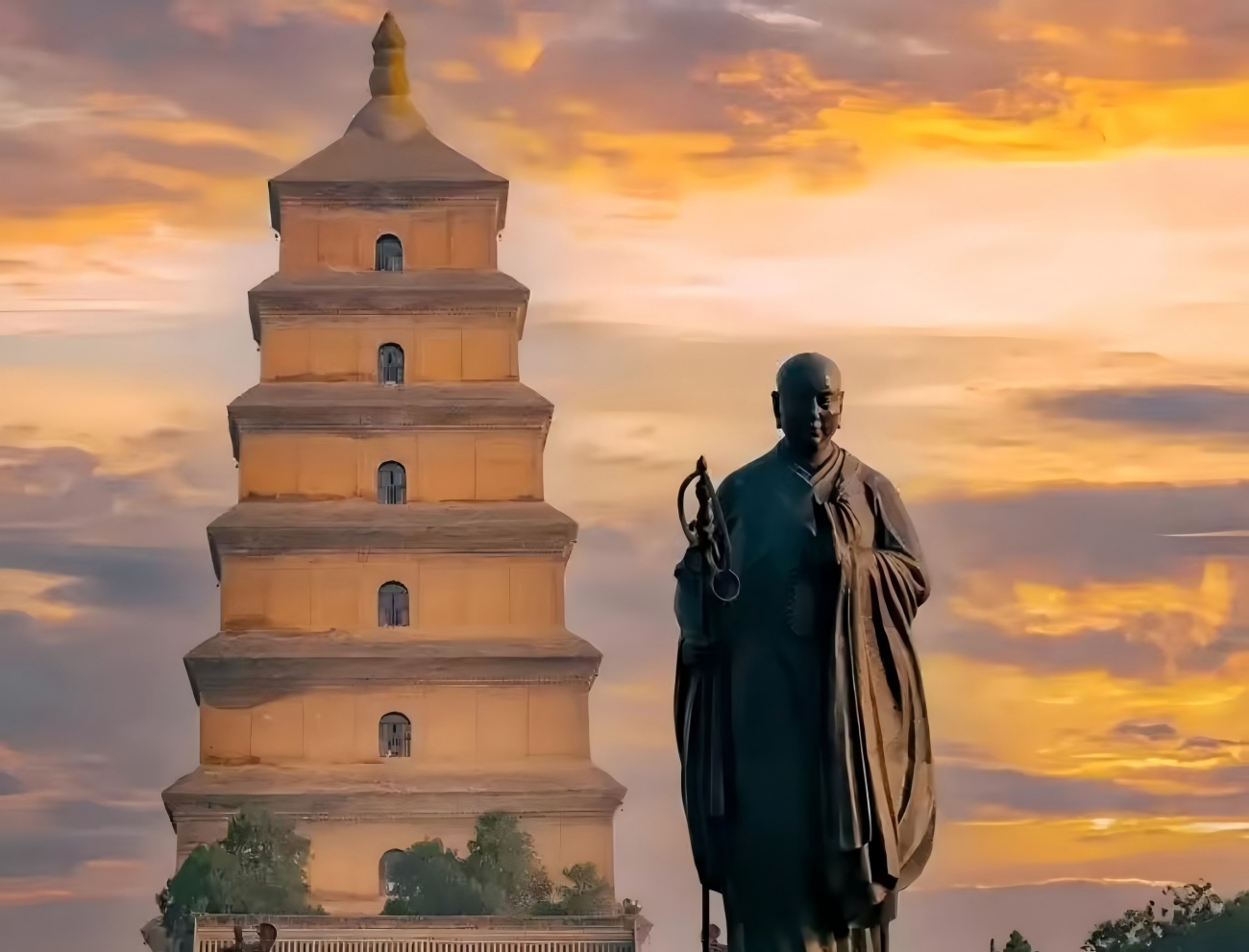
Giant Wild Goose Pagoda
Want to experience Xi’an—China’s historic gem—in your own way? Choose Huatu International Travel Service, your go-to custom travel expert!
We craft personalized trips just for you: Visit the "Eighth Wonder of the World Terracotta Army", wander Huaqing Palace’s royal gardens, and marvel at the Qin Shi Huang Terracotta Warriors at Xi’an Terracotta Army Museum. Whether you love slow history walks or quick highlights, we tailor every detail.
Stay comfy in local 4-star+ hotels—conveniently located, cozy, and perfect for unwinding after sightseeing. And don’t miss Xi’an’s iconic snacks: crispy roujiamo (Chinese hamburger), spicy liangpi (cold noodles), and hearty yangrou paomo (lamb soup with bread)—we’ll take you to authentic spots locals love!
No cookie-cutter plans here—tell us your preferences, and we’ll make your Xi’an dream trip come true. Book with Huatu today for a memorable, personalized adventure!
Product Details
A Millennium of Heritage: The Giant Wild Goose Pagoda – Tang Dynasty Legends & Cultural Journey
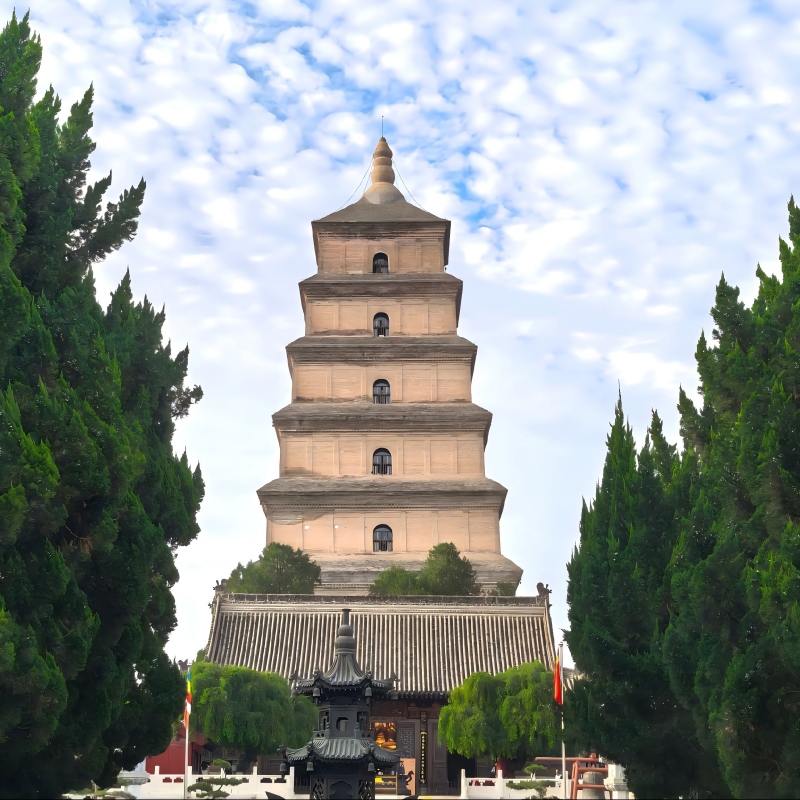
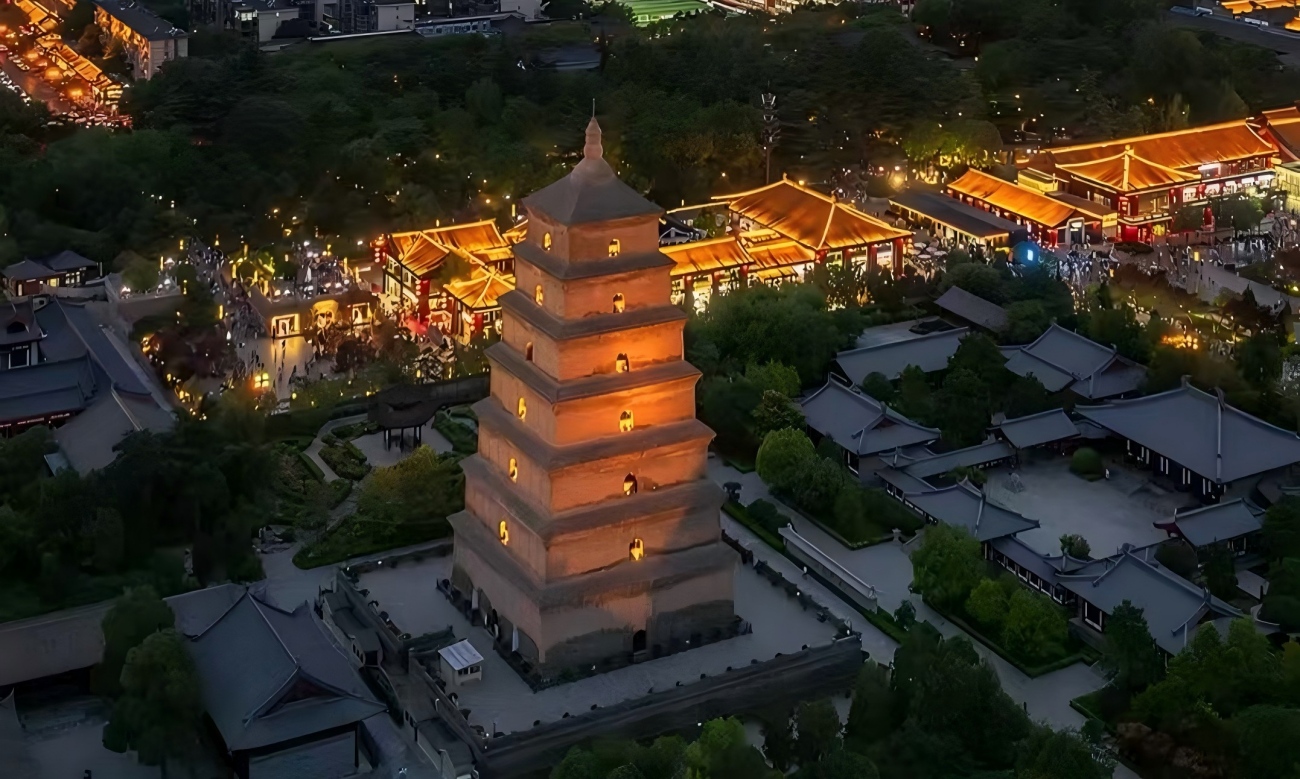
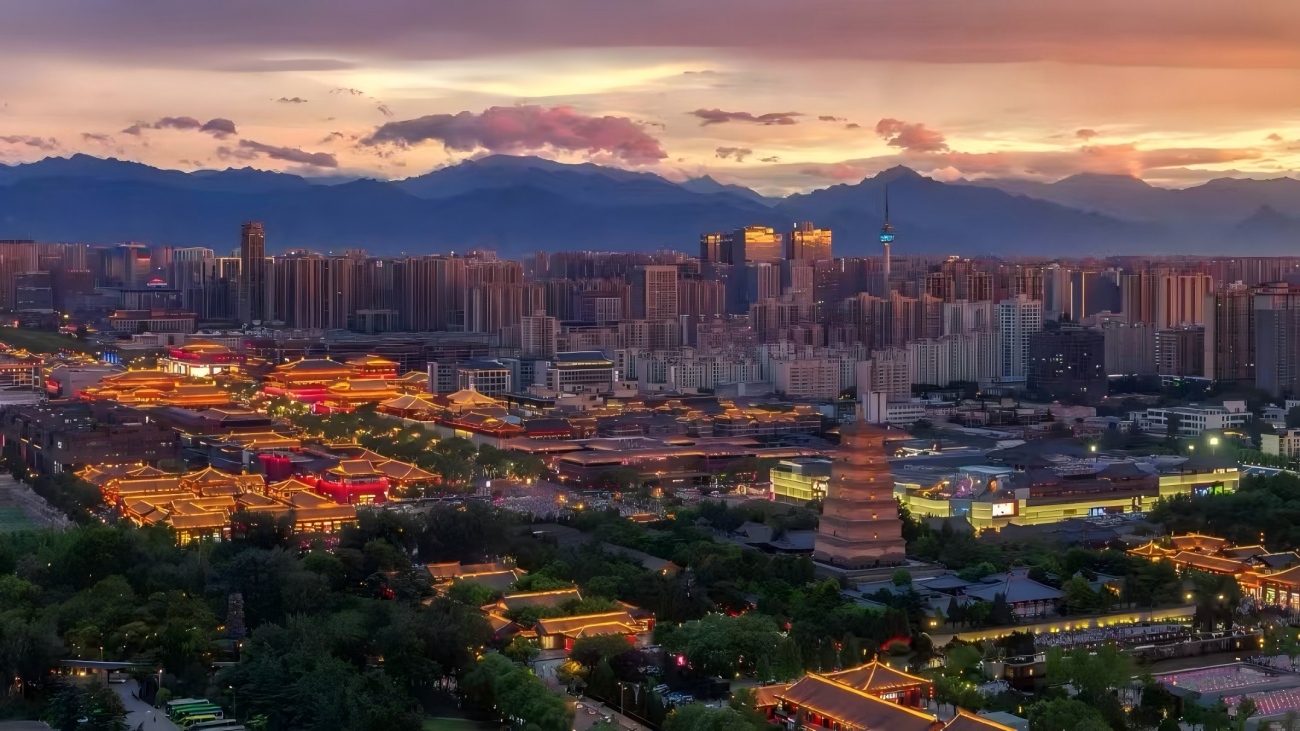
Dear international friends, welcome to the Giant Wild Goose Pagoda—the iconic symbol of Xi'an, China’s ancient capital! This thousand-year-old pagoda standing on the land of ancient Chang’an (modern-day Xi’an) is not only a masterpiece of traditional Chinese architecture but also a living witness to Buddhist culture and global exchanges during the glorious Tang Dynasty (618–907 AD). First built in 652 AD (the 3rd year of the Yonghui reign of the Tang Dynasty) under the guidance of the renowned monk Xuanzang, it originally had 5 stories. After multiple renovations and expansions, it now stands at 64.5 meters with 7 stories, making it the oldest and tallest surviving Tang Dynasty structure in Xi’an. Let’s explore the pagoda’s millennium-old stories and unique charm through five key perspectives.
1. The Giant Wild Goose Pagoda Itself: A Spiritual Landmark for Xuanzang’s Scripture Translation
The pagoda’s origin is closely tied to the legendary journey of Monk Xuanzang, a prominent Buddhist master of the Tang Dynasty. In 627 AD, driven by a desire to seek the true essence of Buddhism, Xuanzang set off alone from Chang’an on a perilous westward pilgrimage to India. After 17 years, he returned with 657 volumes of precious Buddhist scriptures. To preserve these scriptures, Buddha statues, and relics, Xuanzang petitioned Emperor Gaozong of the Tang Dynasty for permission to build a pagoda. With the emperor’s approval, Xuanzang personally selected the site, designed the structure, and oversaw its construction over two years—resulting in the original 5-story pagoda.
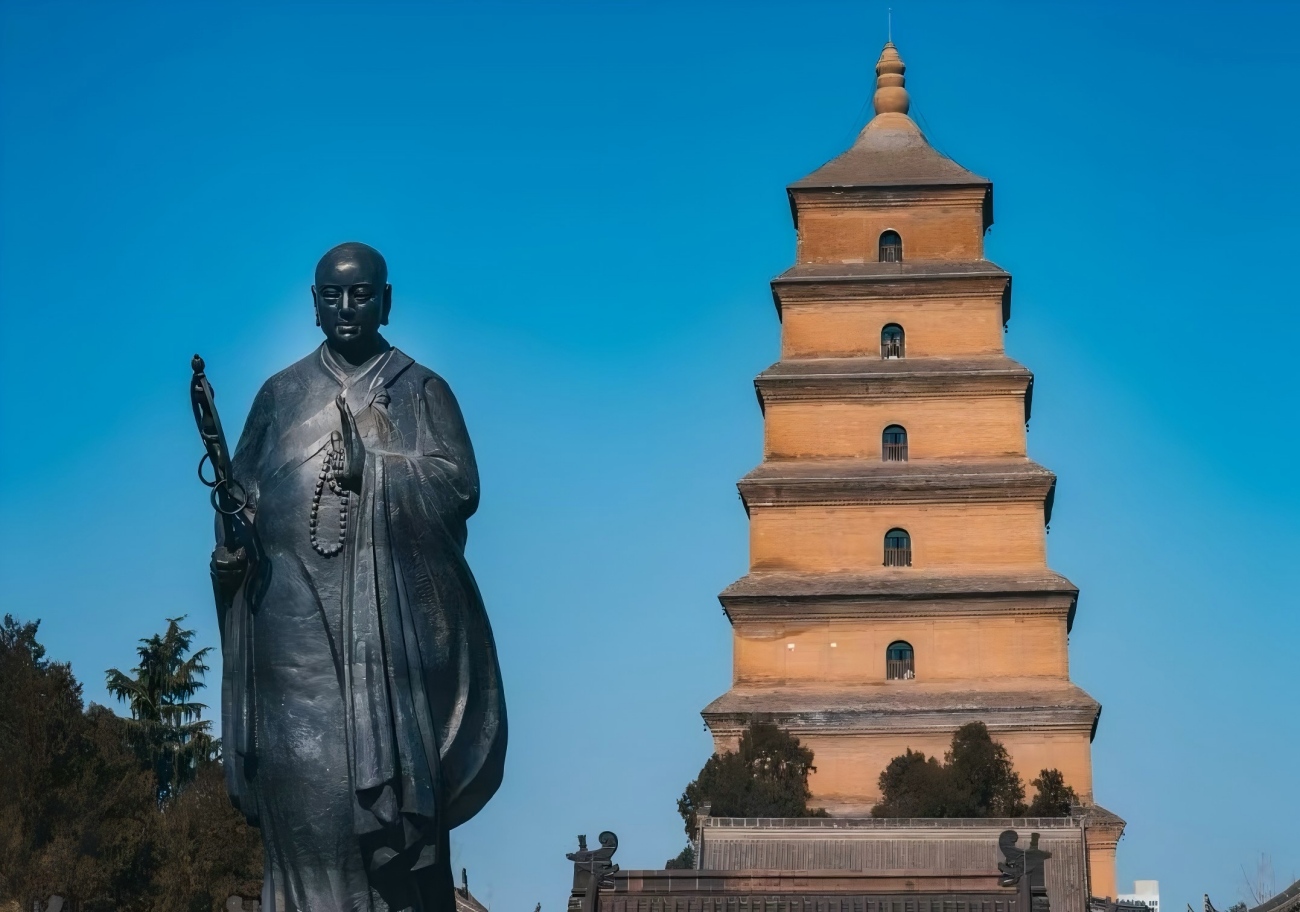
The pagoda gets its name from two sources: its shape resembles a stupa (a dome-shaped Buddhist monument from ancient India), and a legend that a wild goose fell to the ground here during its construction, symbolizing dedication to Buddhism.
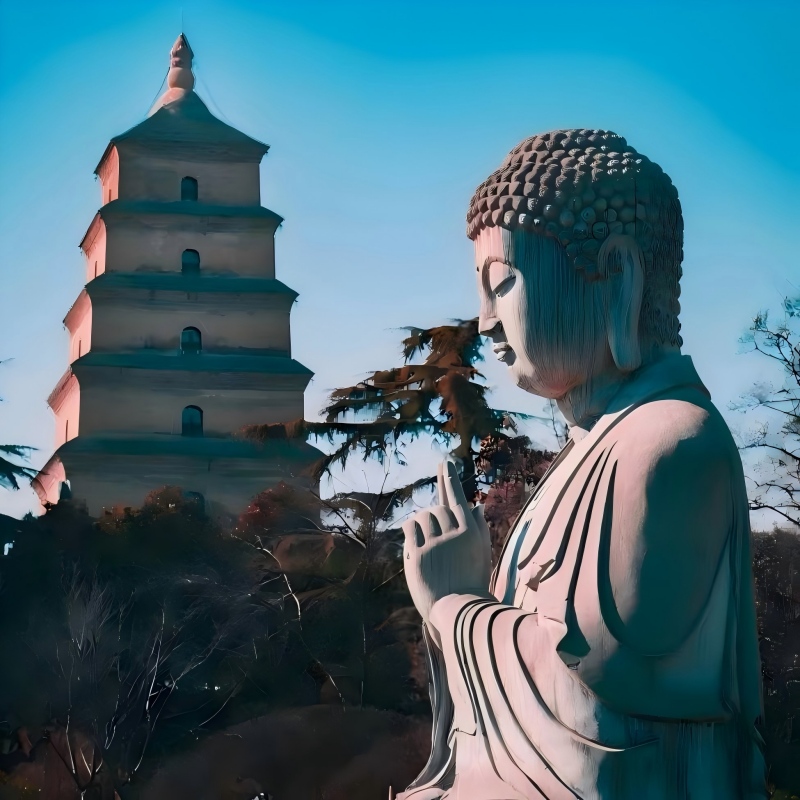
What we see today is the pagoda after renovations in the Wanli reign of the Ming Dynasty (1368–1644). It is a 7-story square brick pagoda with exquisite dougong (interlocking wooden brackets, a signature of traditional Chinese architecture), railings, and windows on each floor. Built with gray bricks and coated in fine white plaster, it remains sturdy and upright despite centuries of wind and rain. Near the pagoda, 24 bronze bells hang from the eaves of each story; their clear, melodious chimes in the wind seem to tell tales of a thousand years.
On either side of the pagoda’s south gate (ground floor), two precious stone steles are inlaid—Preface to the Sacred Teachings of the Great Tang and Postscript to the Sacred Teachings of the Great Tang, both calligraphed by Chu Suiliang, a famous Tang Dynasty calligrapher. The inscriptions detail Xuanzang’s pilgrimage and the pagoda’s construction, while Chu’s elegant, forceful handwriting (hailed as a masterpiece of “regular script,” a foundational style of Chinese calligraphy) attracts calligraphy enthusiasts worldwide who come to admire and copy it.
Climbing the narrow wooden stairs inside the pagoda reveals unique views on each floor:
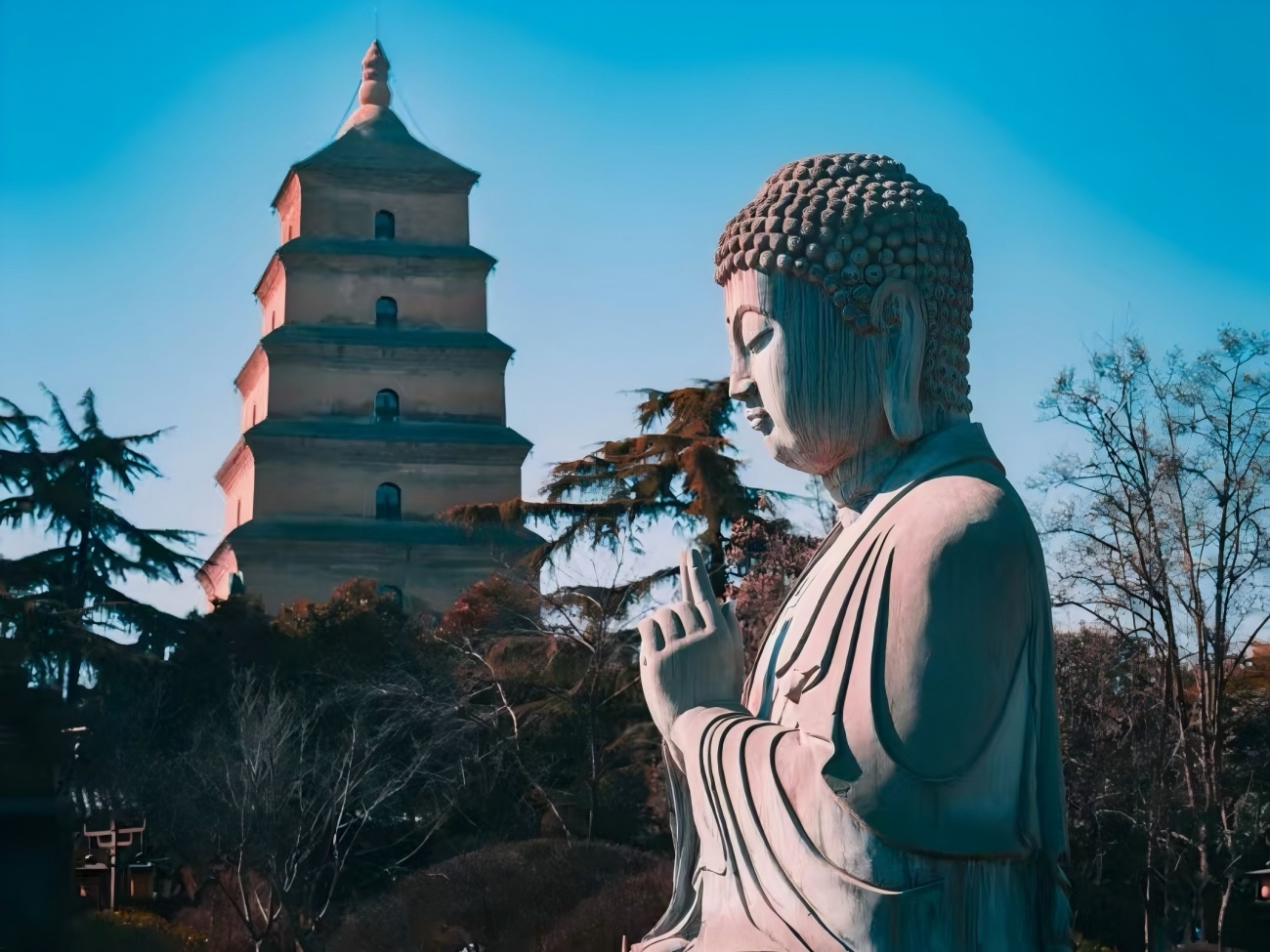
The 2nd floor houses a 1.5-meter-tall gilded Buddha statue from the Tang Dynasty, with a serene expression and smooth robe folds—an exquisite example of Tang Buddhist sculpture.
The 4th floor displays replicas of items Xuanzang used on his journey, such as scripture boxes and his monk’s robe, offering visitors a vivid sense of his hardships.
From the 7th-floor observation deck, you can overlook the bustling city of Xi’an. The ancient city walls and Bell/Drum Towers in the distance blend seamlessly with modern skyscrapers nearby—a stunning contrast of ancient and modern that evokes the grandeur of Tang Dynasty Chang’an, once described in poems as “a city laid out like a chessboard, with streets as neat as vegetable plots.”
2. Daci’en Temple: The Cultural Cradle of the Giant Wild Goose Pagoda
The Giant Wild Goose Pagoda is not standalone—it is located within Daci’en Temple, a famous Buddhist monastery in Xi’an that shares the pagoda’s legacy of Tang Dynasty Buddhist culture. Originally founded in 589 AD (the 9th year of the Kaihuang reign of the Sui Dynasty) as “Wulou Temple,” it was renamed “Daci’en Temple” in 648 AD (the 22nd year of the Zhenguan reign of the Tang Dynasty) by Emperor Taizong of Tang (Li Shimin) to honor his wife, Empress Wende. The emperor later expanded it into Chang’an’s largest and most prestigious Buddhist monastery, with 1,897 rooms and over 300 monks. It also became the ancestral temple of the Faxiang School (a major Buddhist tradition that flourished in the Tang Dynasty).
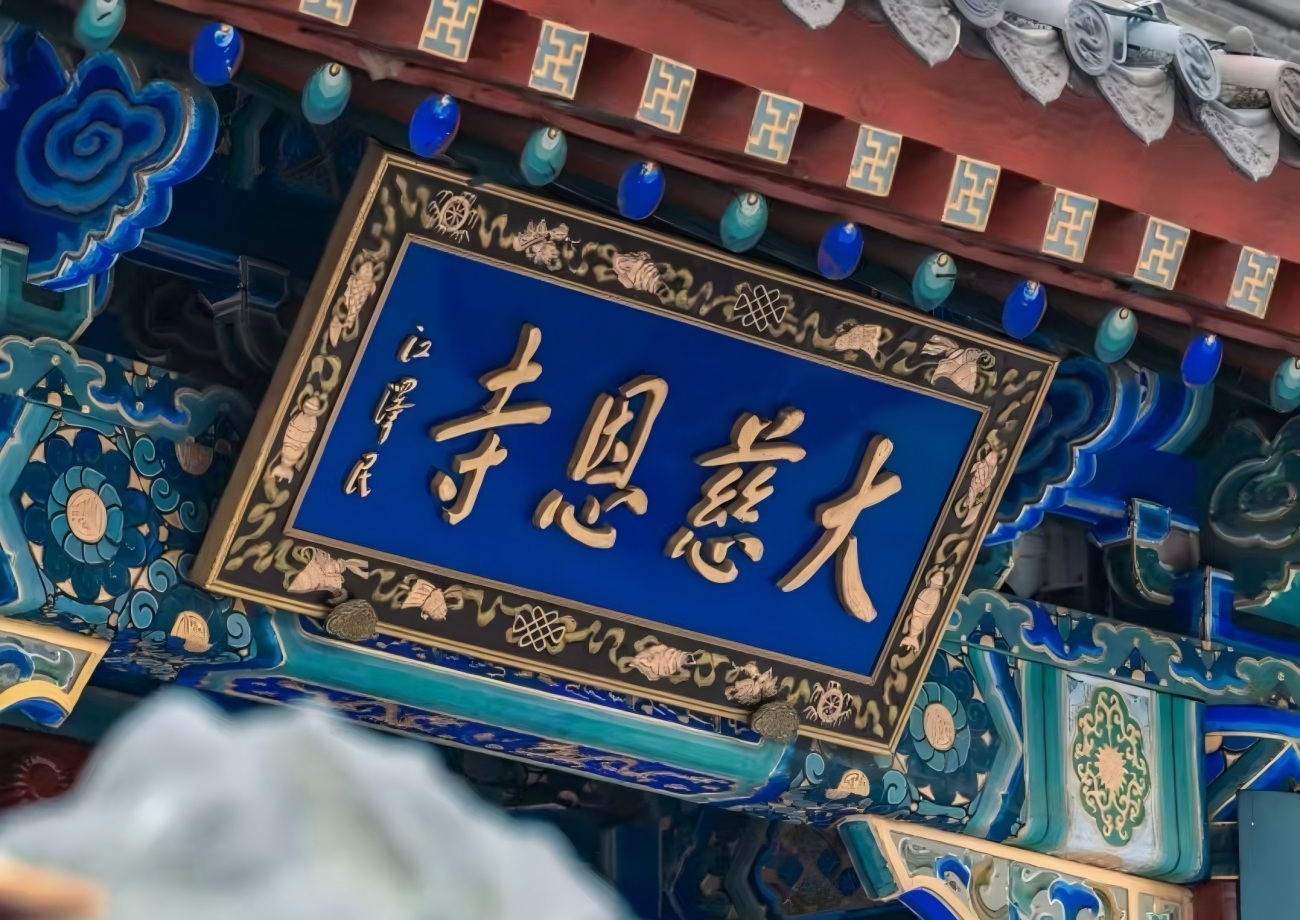
Though smaller than its Tang Dynasty size, Daci’en Temple still retains its classic Tang-style charm:
The entrance is the Mountain Gate Hall, flanked by two imposing stone lions (Ming Dynasty artifacts) that symbolize the monastery’s dignity.
Inside the gate, the Heavenly Kings Hall houses statues of the Four Heavenly Kings, each holding a ritual object representing “favorable weather for crops”—a Buddhist wish for a prosperous life.
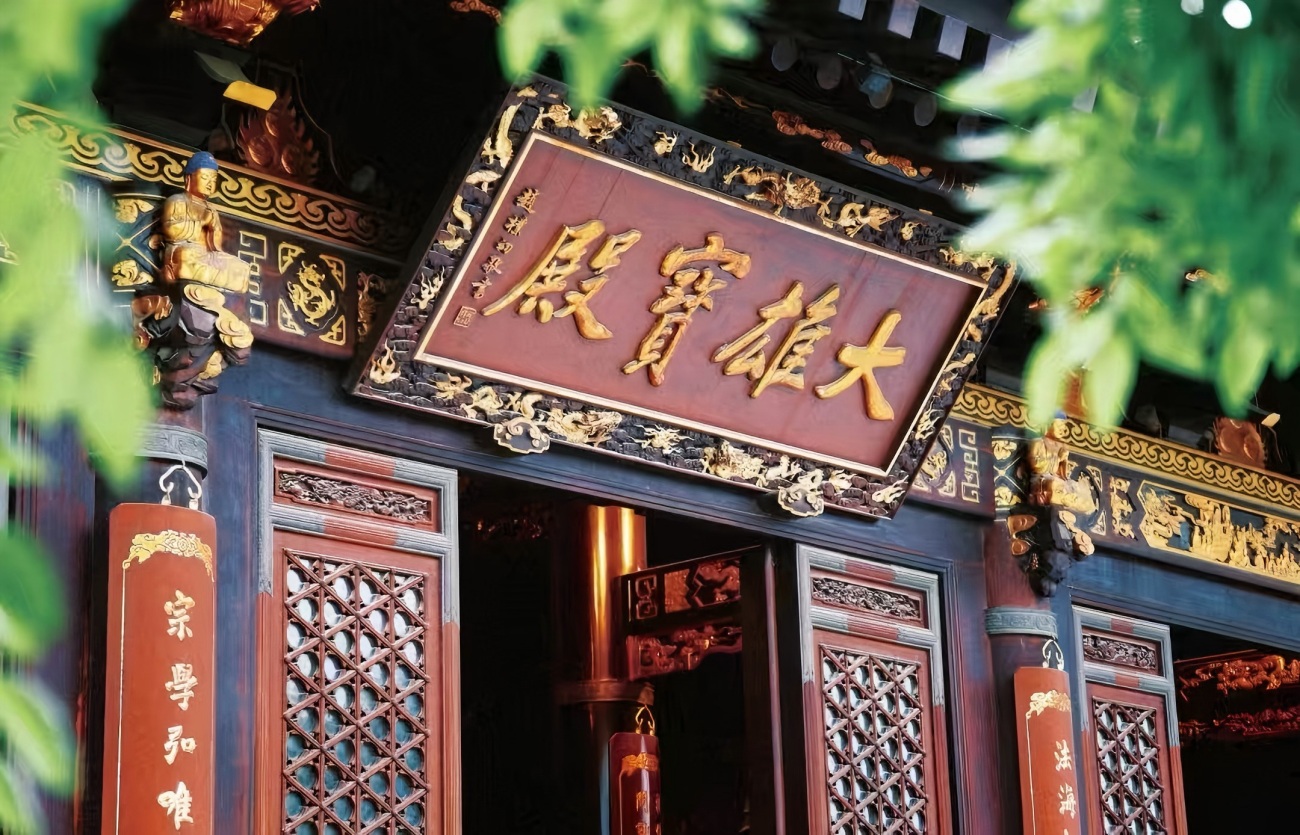
Beyond this hall stands the Mahavira Hall, the monastery’s core building. Designed in the Tang Dynasty’s “gable-and-hip roof” style, it is covered in yellow glazed tiles, with a plaque reading “Mahavira Hall” written by Emperor Kangxi of the Qing Dynasty (1644–1912). Inside, three tall gilded statues of Sakyamuni Buddha represent the “Past, Present, and Future Buddhas,” while 18 Arhat statues stand on either side, each with distinct expressions and lifelike details.
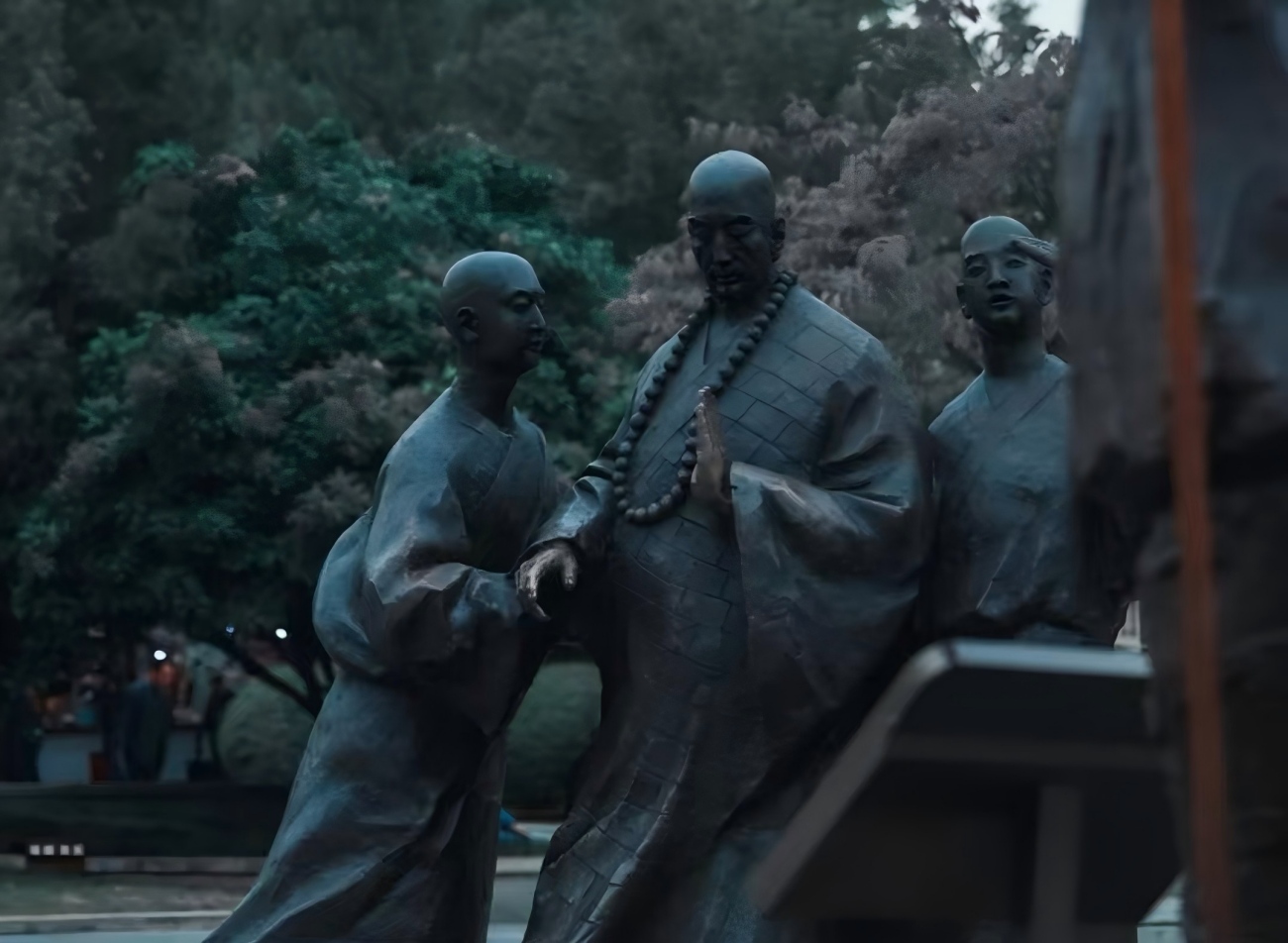
Between the Mahavira Hall and the pagoda stands the Dharma Hall, where Xuanzang translated Buddhist scriptures and gave lectures on Buddhism during the Tang Dynasty. Today, it houses the "Exhibition Hall of Xuanzang's Life Story," which vividly presents his journey to seek Buddhist teachings in the West, his efforts in translating scriptures, and his role in building pagodas and temples through graphic panels, multimedia videos, and replica cultural relics. The most precious exhibit is a replica of Xuanzang's scripture-translation manuscript from the Tang Dynasty—its neat and elegant calligraphy fully reflects his profound devotion to Buddhism.
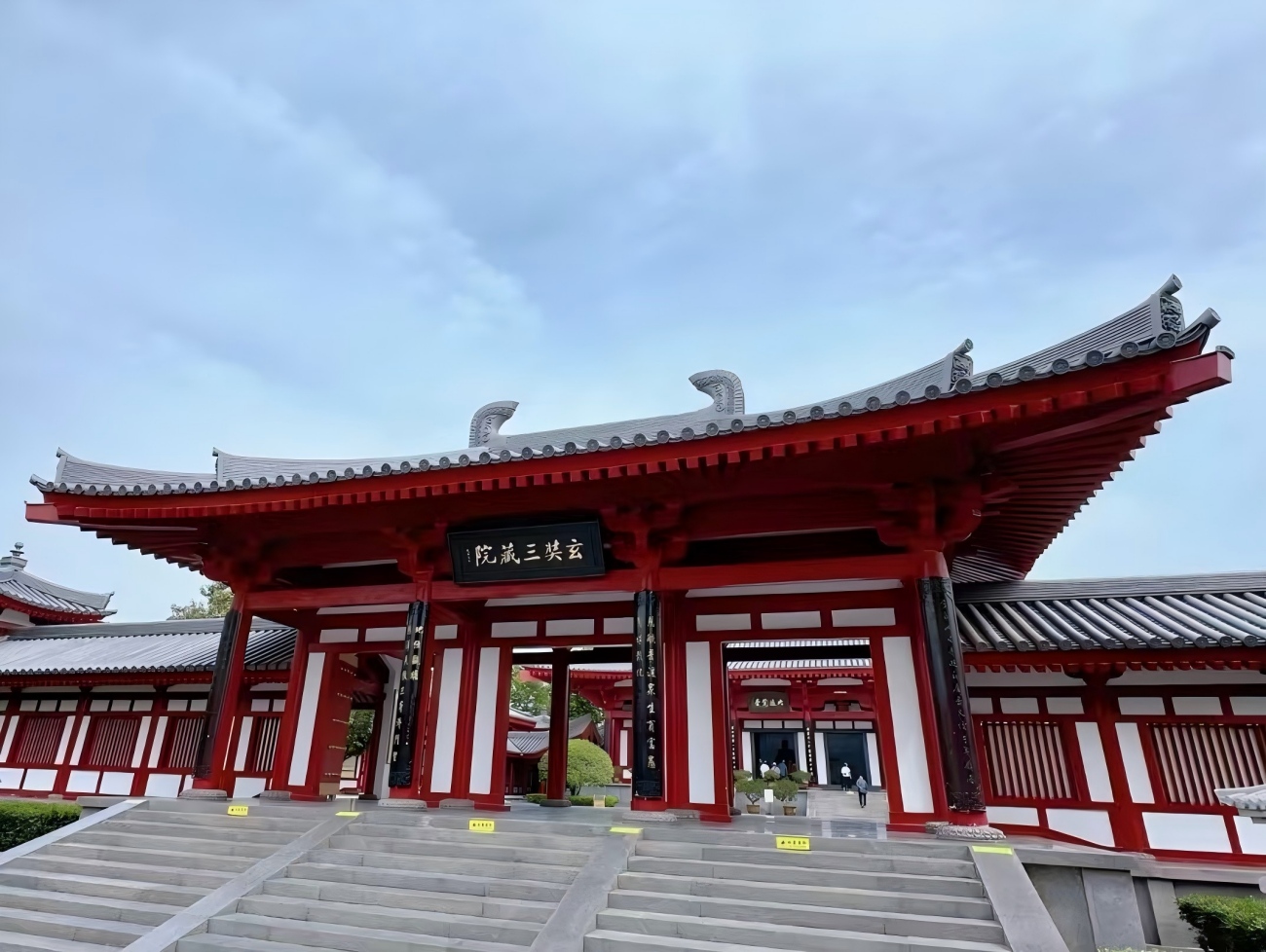
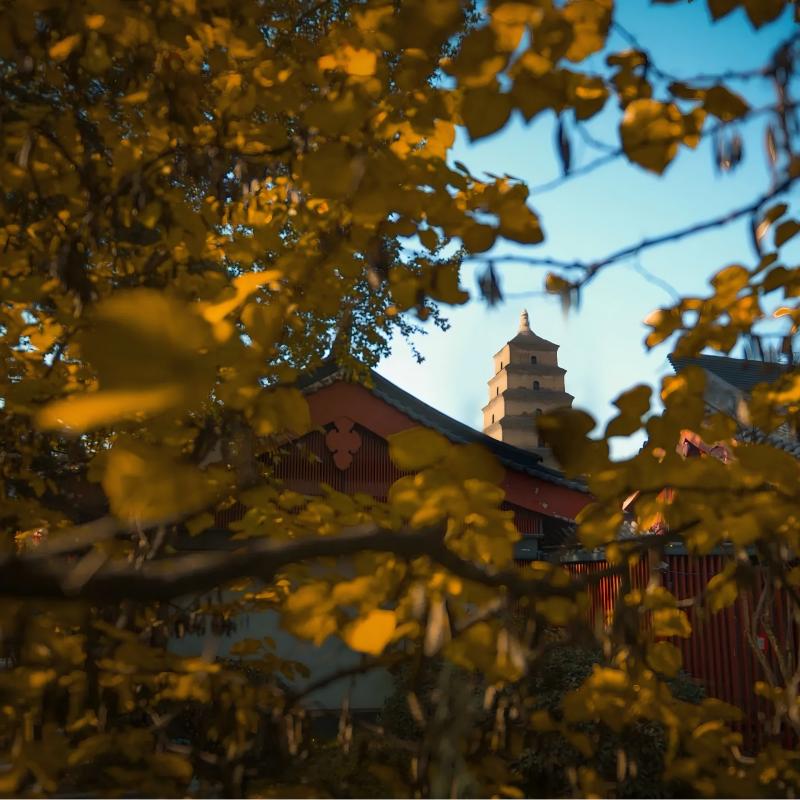
The monastery is also home to ancient cypresses and ginkgoes, some over 1,000 years old. In autumn, the ginkgoes turn golden, creating a breathtaking scene with the temple’s red walls and the pagoda—one of Xi’an’s most beautiful autumn vistas.
3. North Square of the Giant Wild Goose Pagoda: A Fusion of Ancient and Modern – The Music Fountain Spectacle
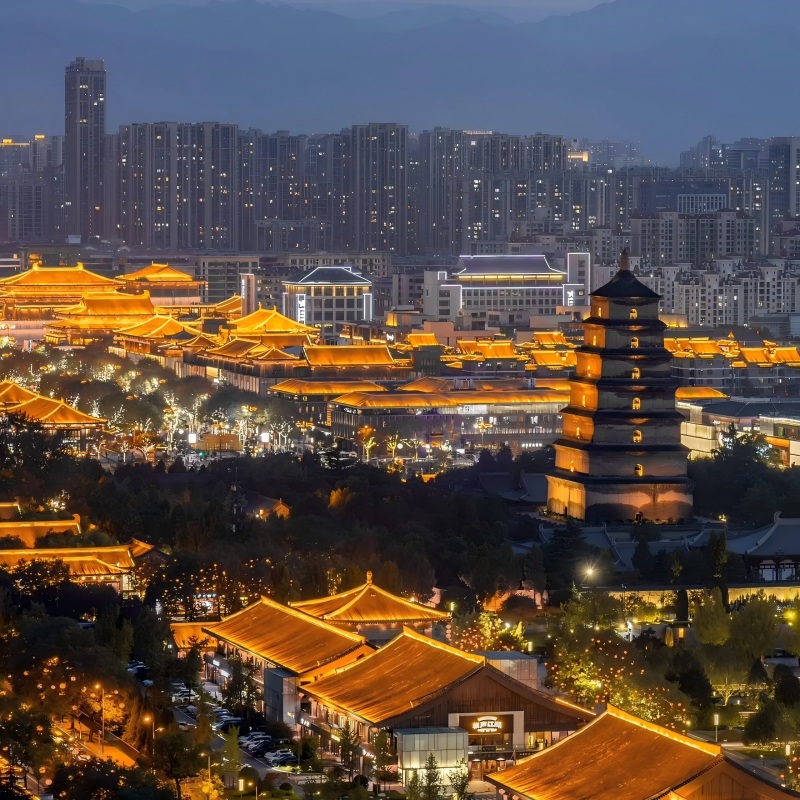
While the pagoda and Daci’en Temple showcase Tang Dynasty history and culture, North Square offers a modern Xi’an interpretation of Tang heritage. Completed in 2003 and covering about 6.7 hectares (100 mu), the square frames the pagoda as its backdrop, blending Tang architectural elements with modern landscape design. It has become a top leisure and sightseeing spot for Xi’an locals and tourists.
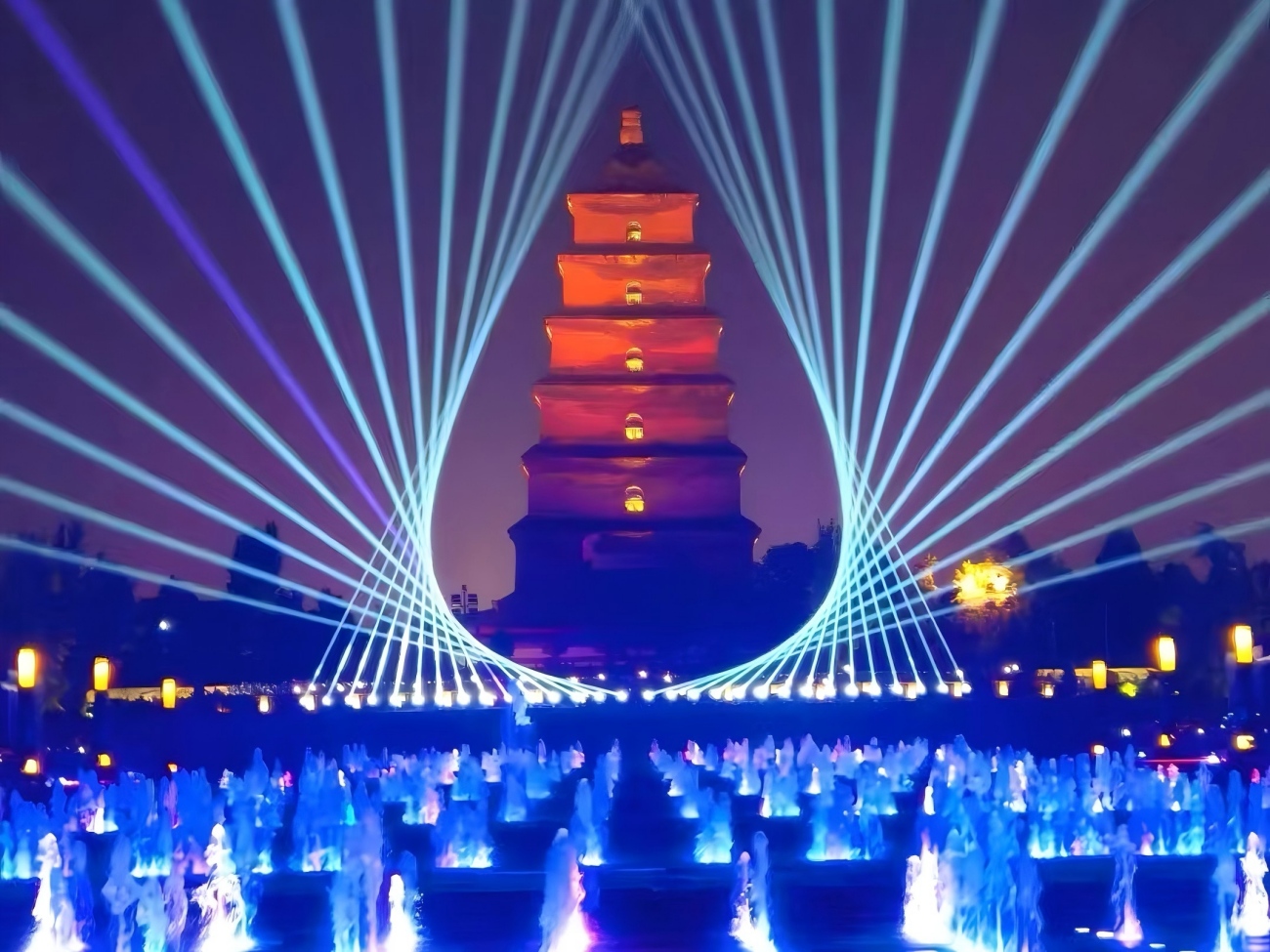
The square’s highlight is Asia’s largest musical fountain system: its fountain pool spans 20,000 square meters with over 2,000 nozzles, shooting water jets up to 60 meters high in various shapes. The daily timed fountain shows combine water curtains, lights, music, and Tang Dynasty cultural elements. When Tang-style music like Dreaming of the Tang Dynasty or Rainbow Feather Garment Melody plays, the water jets dance to the rhythm—sometimes like celestial maidens descending, sometimes like galloping horses, sometimes like blooming lotus flowers. Paired with Tang-style street lamps, sculptures, and greenery, the scene transports visitors back to the bustling streets of Tang Dynasty Chang’an.
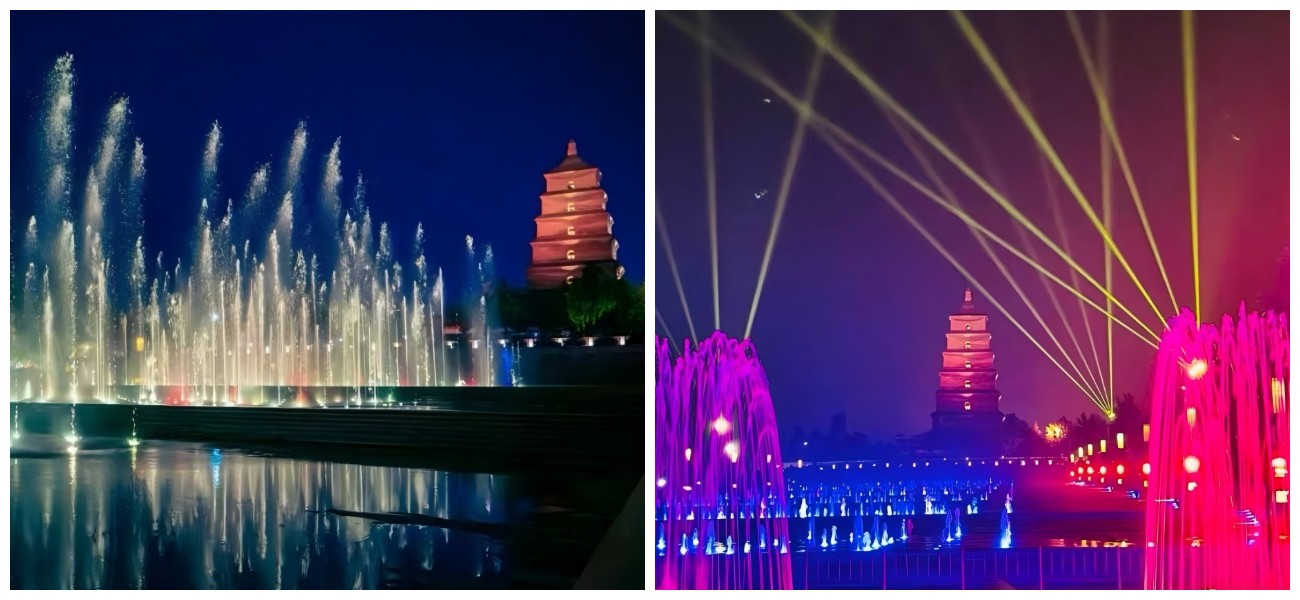
At night, the square shines with bright lights; the water jets glow in vibrant colors under the illumination, creating a stunning silhouette against the pagoda. This colorful night view attracts countless visitors to take photos.
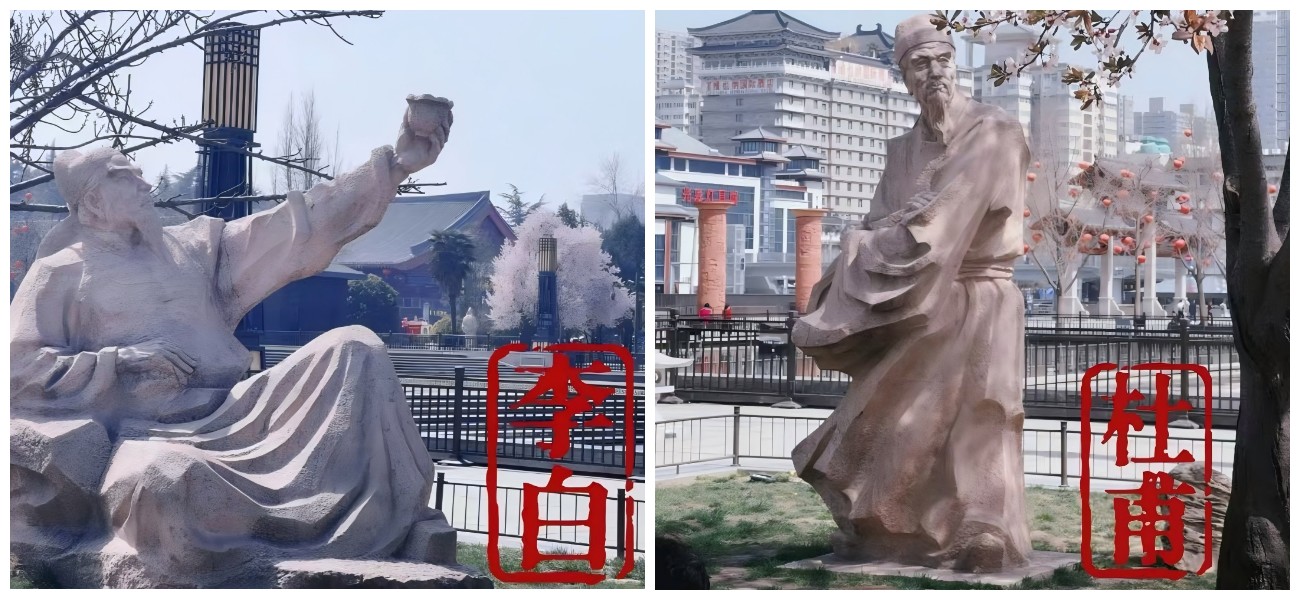
The square also features Tang Dynasty Figure Sculptures—over 50 statues of famous Tang figures, including poets Li Bai, Du Fu, and Bai Juyi; calligraphers Yan Zhenqing and Liu Gongquan; painter Wu Daozi; and Monk Xuanzang. Each statue is lifelike, with costumes and expressions strictly based on Tang historical records, and brief descriptions are provided to help visitors learn about these iconic figures. Additionally, the square has a Tang Poetry Avenue, where over 300 famous Tang poems are carved into the ground with colored stone. Visitors can stroll while reading the poems, immersing themselves in the literary brilliance of the Tang Dynasty.
4. Shaanxi History Museum: A Treasure Trove to Touch the Tang Dynasty
Though not part of the pagoda scenic area, Shaanxi History Museum is a core carrier of Xi’an’s Tang Dynasty culture—only 1.5 kilometers from the pagoda, making it a popular combination for tourists to explore Tang glory. As China’s first large-scale modern A-level museum, it houses over 370,000 artifacts, with a vast and diverse collection of Tang Dynasty relics—truly a “treasure trove of Tang Dynasty culture.”
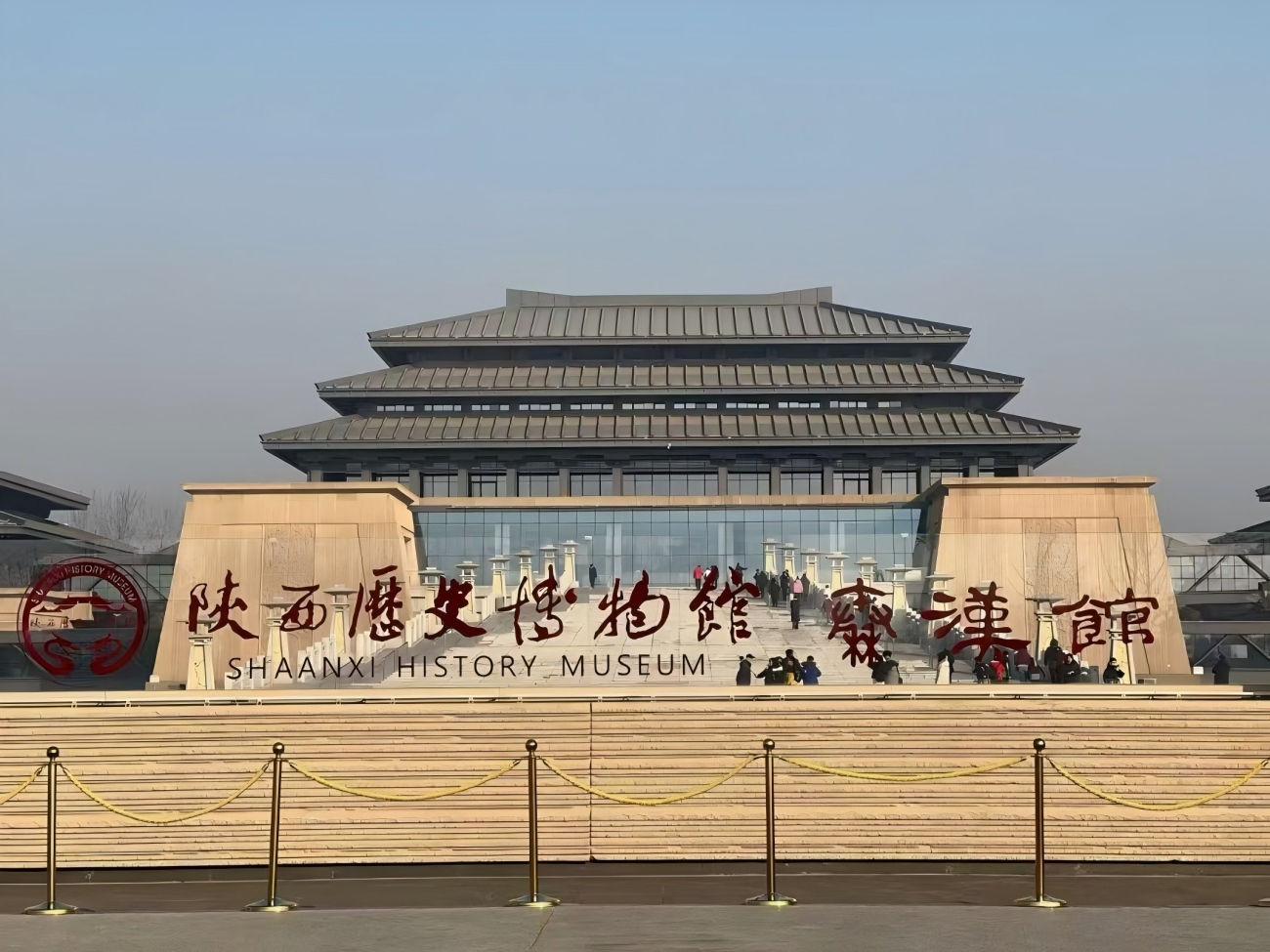
In the museum’s Tang Dynasty exhibition hall, visitors can see artifacts linked to the Giant Wild Goose Pagoda and Xuanzang:
The Gilt Bronze Stupa of the Tang Dynasty: A 36.5-centimeter-tall miniature pagoda modeled after the Giant Wild Goose Pagoda. Its surface is carved with exquisite Buddhist patterns, and it houses a relic—an exquisite example of Tang Buddhist art that highlights the pagoda’s importance in Tang Buddhism.
Other Tang Dynasty treasures include gold and silverware, ceramics, and silk fabrics. For example:
The Gilt Silver Leopard-Head Agate Cup: Carved from a single piece of agate with a unique design, it demonstrates superb craftsmanship and 见证 s cultural exchanges between Tang China and other countries.
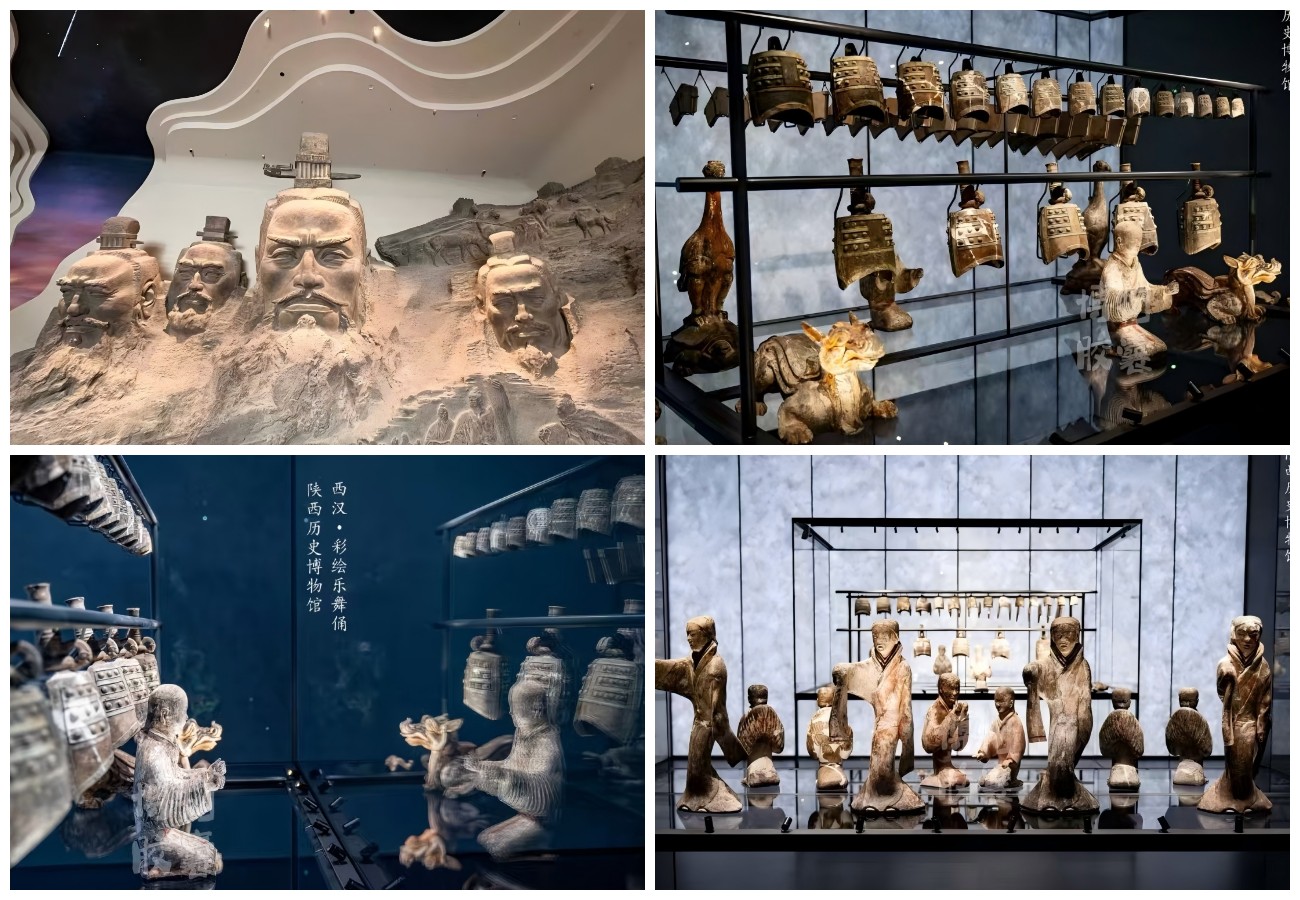
The Tri-Color Glazed Camel Carrying Musicians: A pottery camel with seven musicians holding different instruments on its back, vividly recreating the prosperity of the Silk Road during the Tang Dynasty.
These artifacts complement the pagoda’s history, helping visitors gain a comprehensive understanding of Tang Dynasty politics, economy, culture, art, and global exchanges.
5. Historical Significance and Cultural Legacy of the Giant Wild Goose Pagoda: The Millennium-Old Pagoda’s Modern Mission
After a thousand years, the Giant Wild Goose Pagoda has transcended its role as a Buddhist pagoda to become a symbol of traditional Chinese culture, Buddhism, and international exchanges. Historically, it was not only where Xuanzang stored scriptures and spread Buddhism but also a landmark of Tang Dynasty Chang’an. Many Tang poets praised it in their works—for example, Li Bai wrote, “The pagoda rises like a mountain, towering toward heaven,” while Du Fu described it as “piercing the sky, unshaken by fierce winds”—both capturing its grandeur.
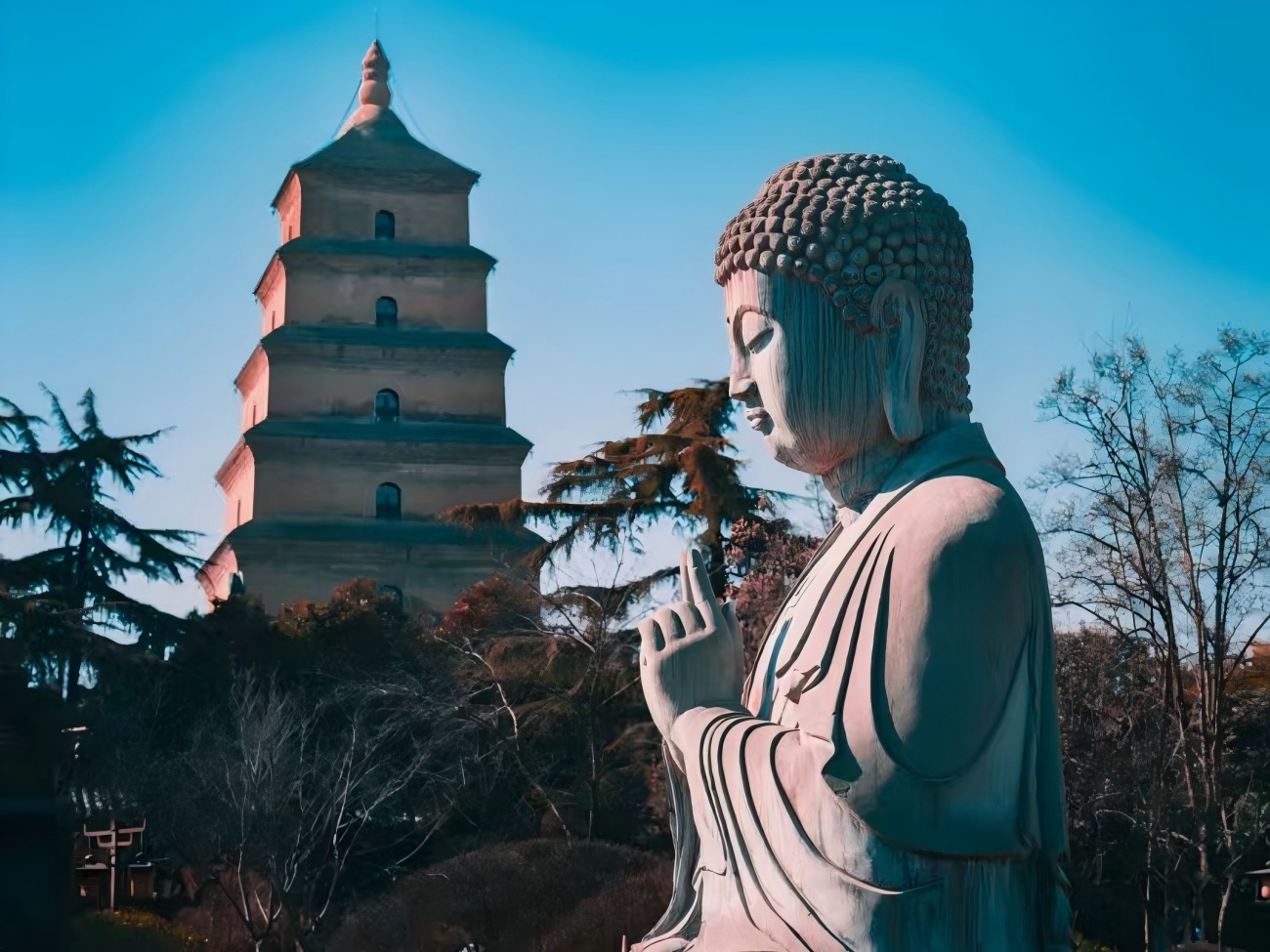
In cultural preservation, the pagoda plays a vital role:
In 1961, it was designated as one of China’s first Key Cultural Relics Under State Protection.
In 2014, it became part of the UNESCO World Heritage Site “Silk Roads: the Routes Network of Chang’an-Tianshan Corridor”, a shared cultural treasure of humanity.
Today, the pagoda scenic area attracts millions of Chinese and international visitors annually. Events like the “Xuanzang Culture Festival” and “Tang Poetry Recitals” help more people learn about the pagoda’s history and experience the charm of Tang Dynasty culture.
For international visitors, the Giant Wild Goose Pagoda is more than an ancient building—it is a window into Chinese history and culture. Here, you can feel the pulse of the Tang Dynasty, hear the legendary story of Xuanzang’s pilgrimage, admire the essence of Tang architecture, art, and literature, and appreciate the depth of traditional Chinese culture. We hope this visit will make you fall in love with this thousand-year-old pagoda—and with China’s rich history and culture—so its stories can be shared worldwide.
Dear international friends, that concludes our introduction to the Giant Wild Goose Pagoda and its surrounding attractions. You are now free to explore—take time to savor every detail of the pagoda, pray at Daci’en Temple, or enjoy the music fountain show at North Square. If you have any questions, feel free to ask the on-site staff. May you have an unforgettable “Tang Dynasty Cultural Journey” here!
Leave your messages