Libo Zhangjiang Travel
Discover Libo’s Emerald Charm with Huatu International Travel
Craving a worry-free Guizhou adventure? Huatu International Travel, your trusted expert for inbound tours, crafts perfect Libo Zhangjiang trips just for you!
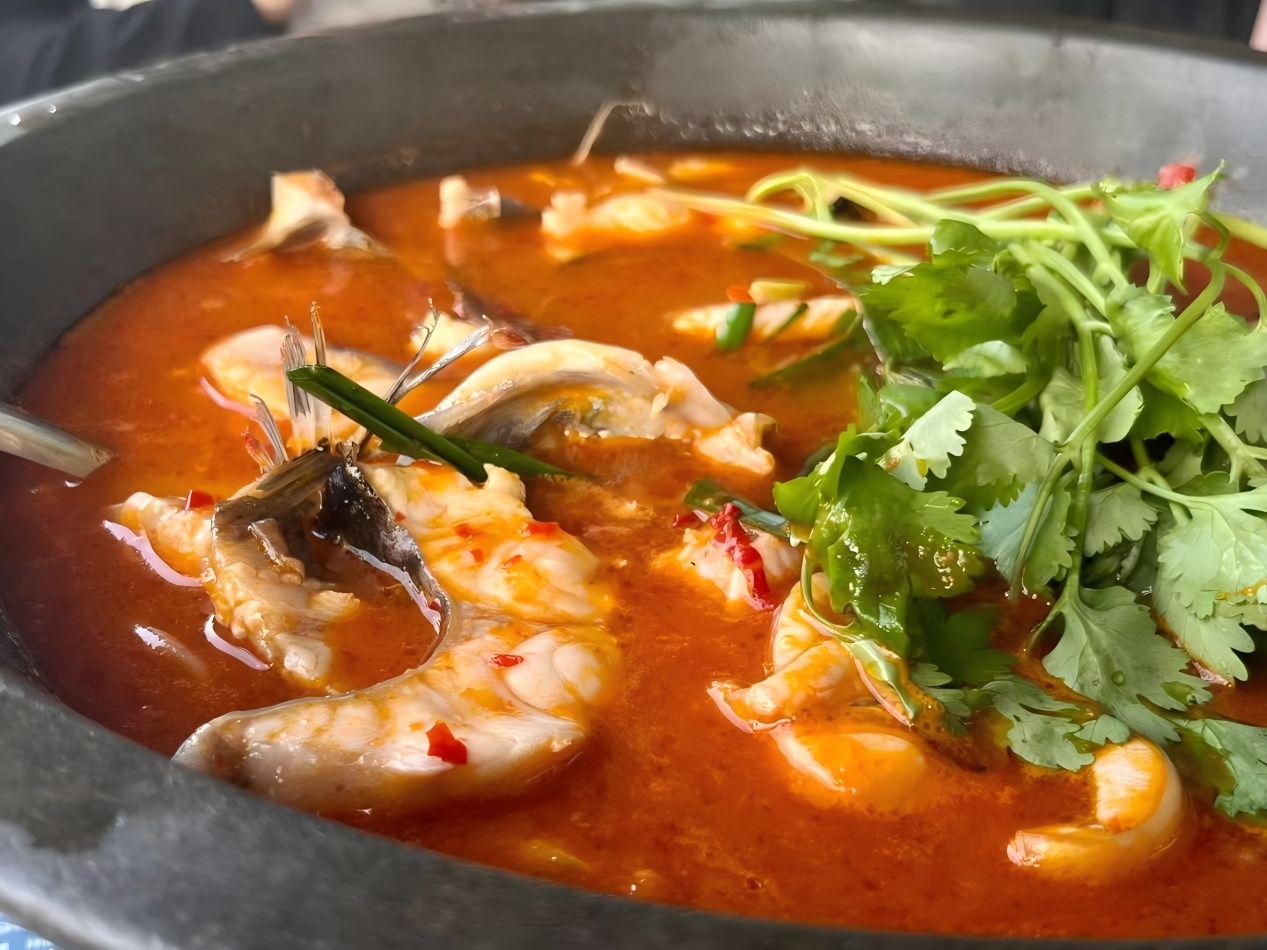
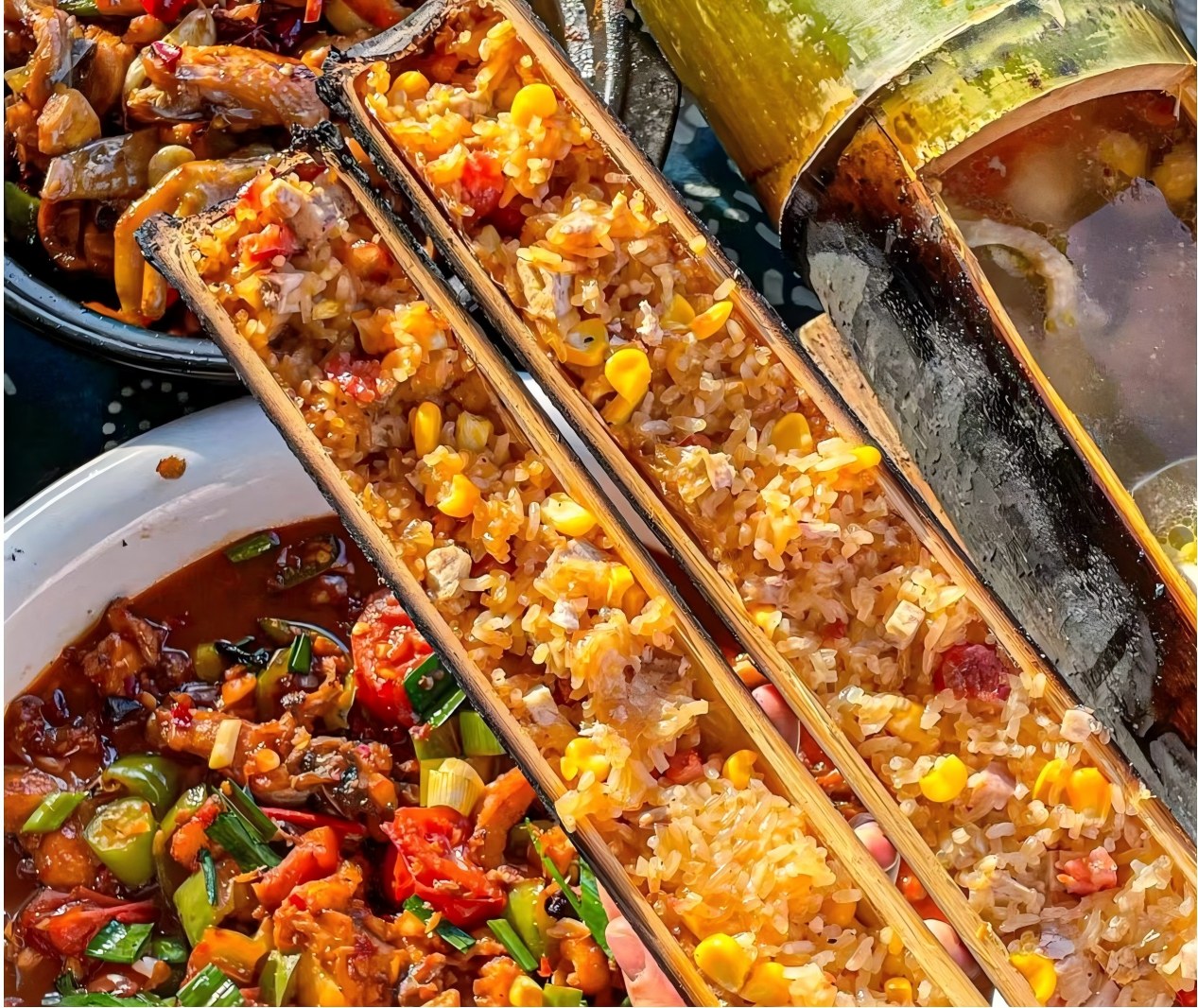
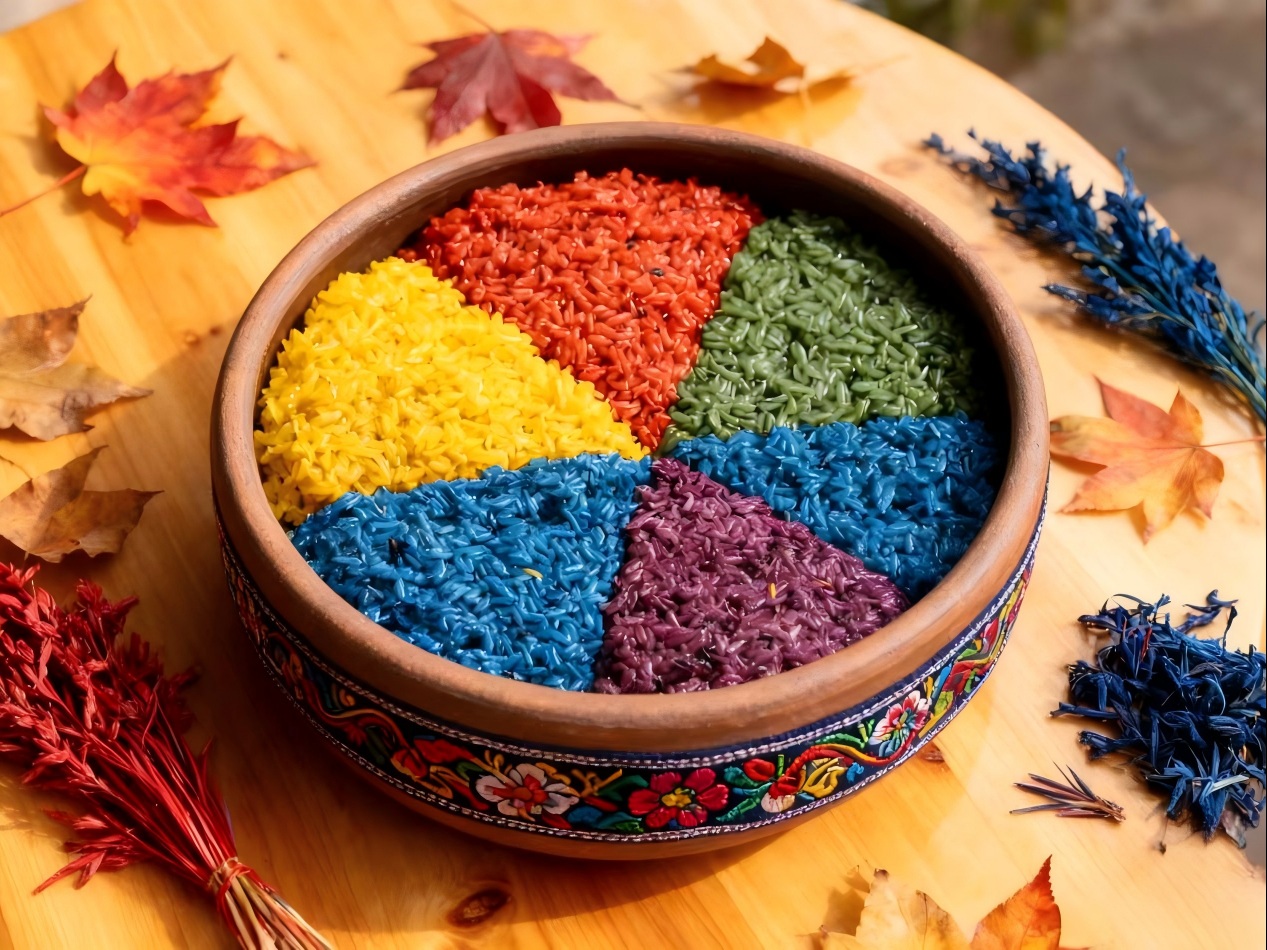
As a UNESCO gem, Libo’s beauty shines—ancient stone bridges, dramatic gorges, and lush karst forests. But the highlight? Our authentic local feasts: tangy Buyi Sour Fish Soup, fragrant Yao Bamboo Rice, and vibrant Five-Colored Sticky Rice, all made with fresh river and mountain ingredients.
We ensure cozy stays matching your style, from boutique lodges to scenic resorts. With years of experience, we tailor every detail—rafting Shuichun River, exploring Yao villages, or hiking Maolan Forest.
Let Huatu handle the rest. Book your custom Libo journey now for great food, comfy stays, and unforgettable moments!
Libo Zhangjiang Travel Guide: Explore Guizhou’s Emerald Paradise – Landscapes, Culture & Food
Hi there, fellow travelers from around the world! I’m your guide for today’s adventure to Libo Zhangjiang – a hidden gem in southern Guizhou, Southwest China. Before we dive in, let’s be real: “karst topography” might’ve just been a textbook term for you. But today, you’ll step into a living, breathing version of it – a UNESCO World Natural Heritage Site nicknamed “the Green Emerald of the Earth.”
Guizhou is famous for its landscape: 80% mountains, 10% water, 10% farmland. And Libo Zhangjiang is the most vibrant treasure in those mountains. Centered around the Zhangjiang River, it weaves together gorges, forests, ancient bridges, and villages. Better yet, it’s home to the Buyi, Miao, and Yao ethnic groups, whose thousand-year-old culture and wisdom are woven into every hill and stream. So let’s slow down, step into this living landscape painting, and uncover its beauty, culture, and stories.
I. Xiaoqikong Ancient Bridge: The 200-Year-Old Heart of Ancient Trade
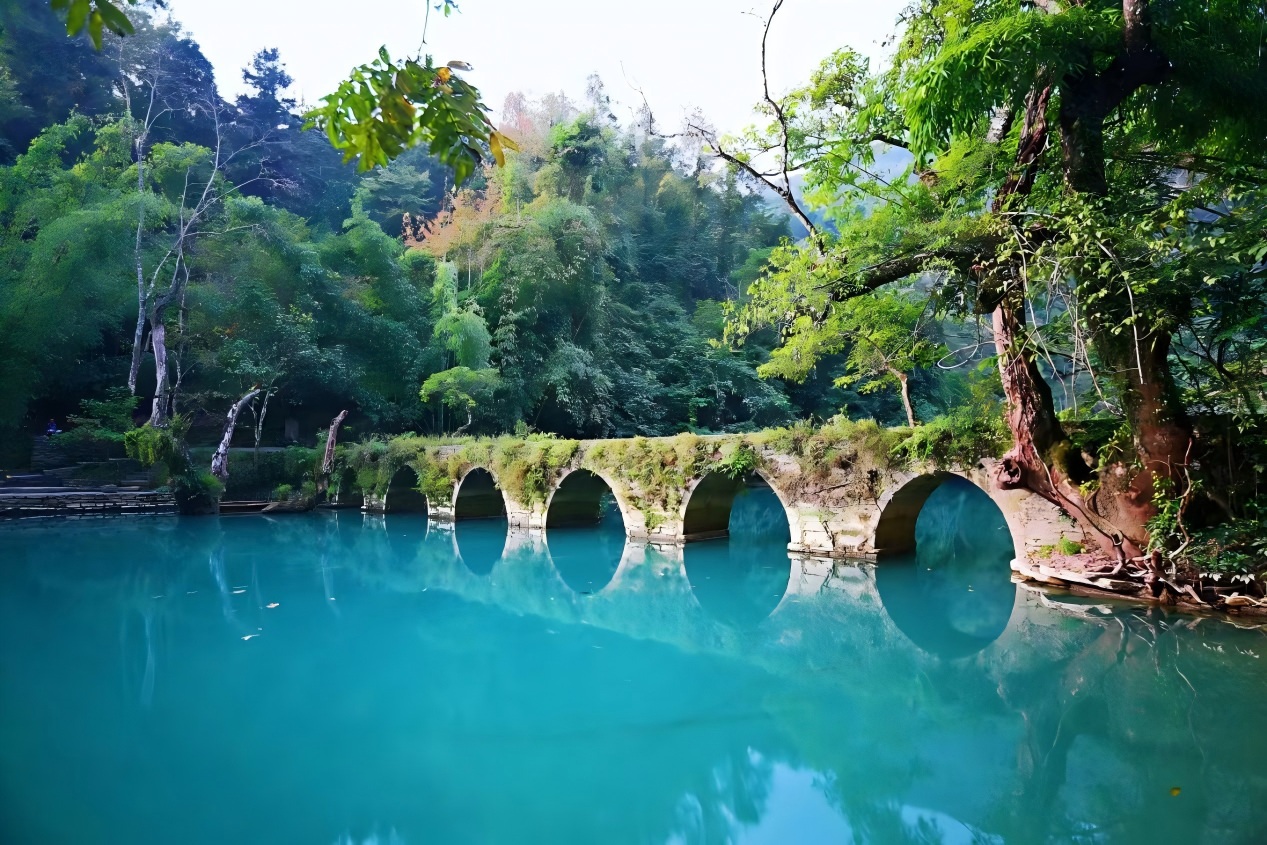
Our first stop is Libo’s most iconic landmark: Xiaoqikong Ancient Bridge. This stone arch bridge sits quietly over the Xiangshui River, and it’s one of the region’s biggest “calling cards.” Built in 1835 (the 15th year of the Daoguang Emperor’s reign in the Qing Dynasty), it was a joint project by local Buyi and Miao ancestors. The name “Seven Small Arches” comes from its seven evenly sized semicircular arches – simple, elegant, and built to last.
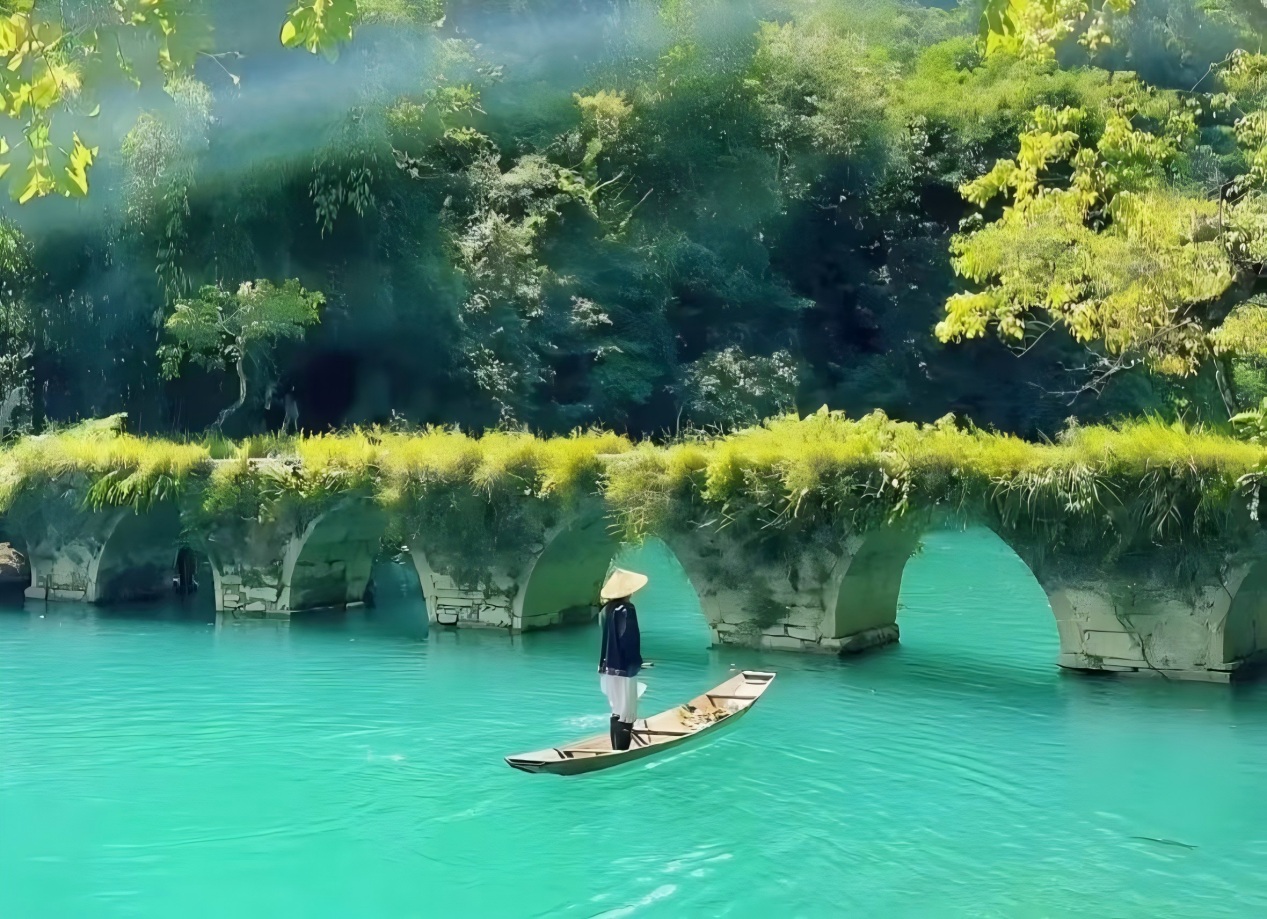
Crafted from local blue-gray limestone, every stone was carved and fitted by hand. After nearly 200 years of rain, floods, and footsteps, the bridge’s flagstones are smooth and shiny – but the structure is still rock-solid. That’s a testament to the amazing stonemason skills of Southwest China’s ethnic groups back then.
This bridge wasn’t just pretty – it was a lifeline. As a key stop on the ancient “Qian-Gui Trade Route,” caravans loaded with Guizhou’s best (cloud-mist tea, gastrodia root, hand-dyed batik) crossed it to sell in Guangxi, then on to Lingnan and coastal areas. In return, sea salt, silk, and porcelain from Guangxi made their way into Guizhou via this very bridge.
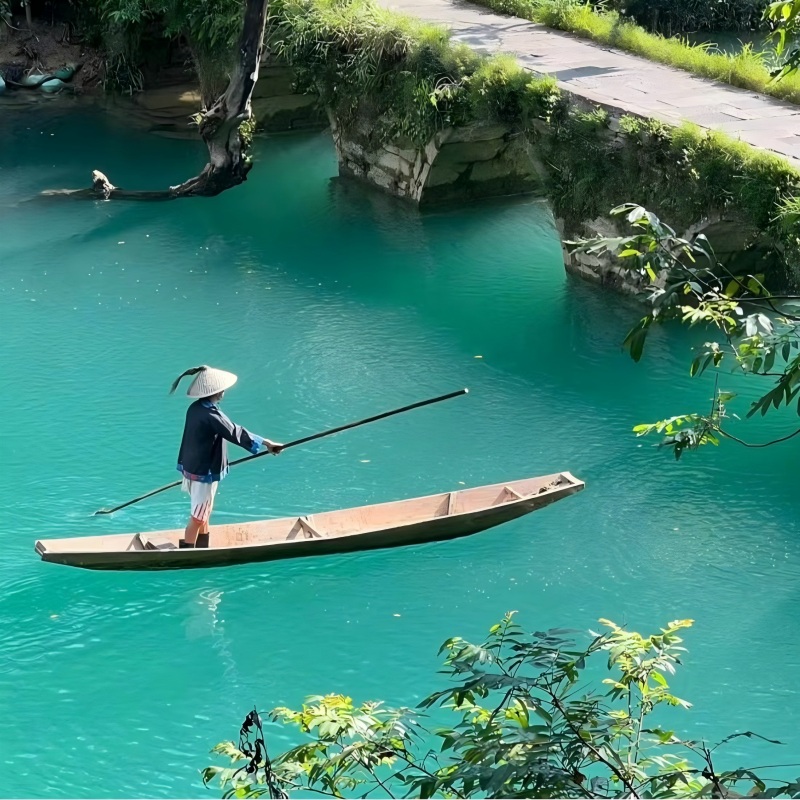
Stand on the bridge now, and you’ll see crystal-clear Zhangjiang water below – pebbles and tiny fish are totally visible. Phoenix trees and bamboo sway on the banks, their reflections mixing with the bridge in the water. Trust me, every angle is a photo op.
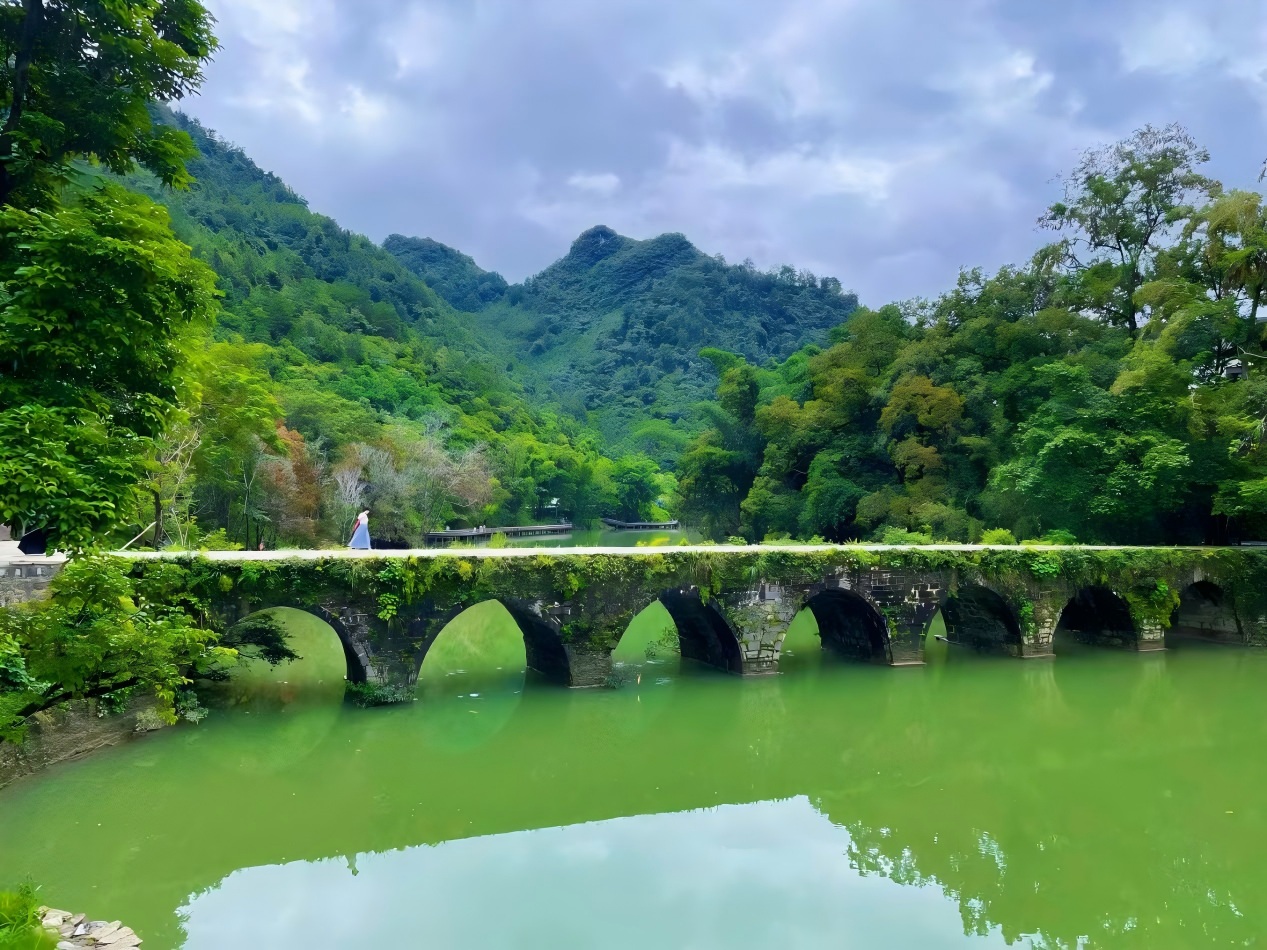
There’s a sweet local legend too. When villagers from nearby Buyi (Laya) and Miao (Langde) villages heard about the bridge plan, they all agreed it was a must. Men woke before dawn to quarry stone; Miao women carried bamboo baskets of sticky rice, sour fish soup, and pickles up the mountains to feed the workers; even kids helped move small stones. What was supposed to take a year got done in six months – all thanks to teamwork.
II. Daqikong Scenic Area: Nature’s Majestic Gorge & Millennial Wishes
Leaving Xiaoqikong’s grace behind, we head to Daqikong – and it’s a whole different vibe. If Xiaoqikong is a gentle southern beauty, Daqikong is a rugged, powerful giant, showing off karst’s raw strength.
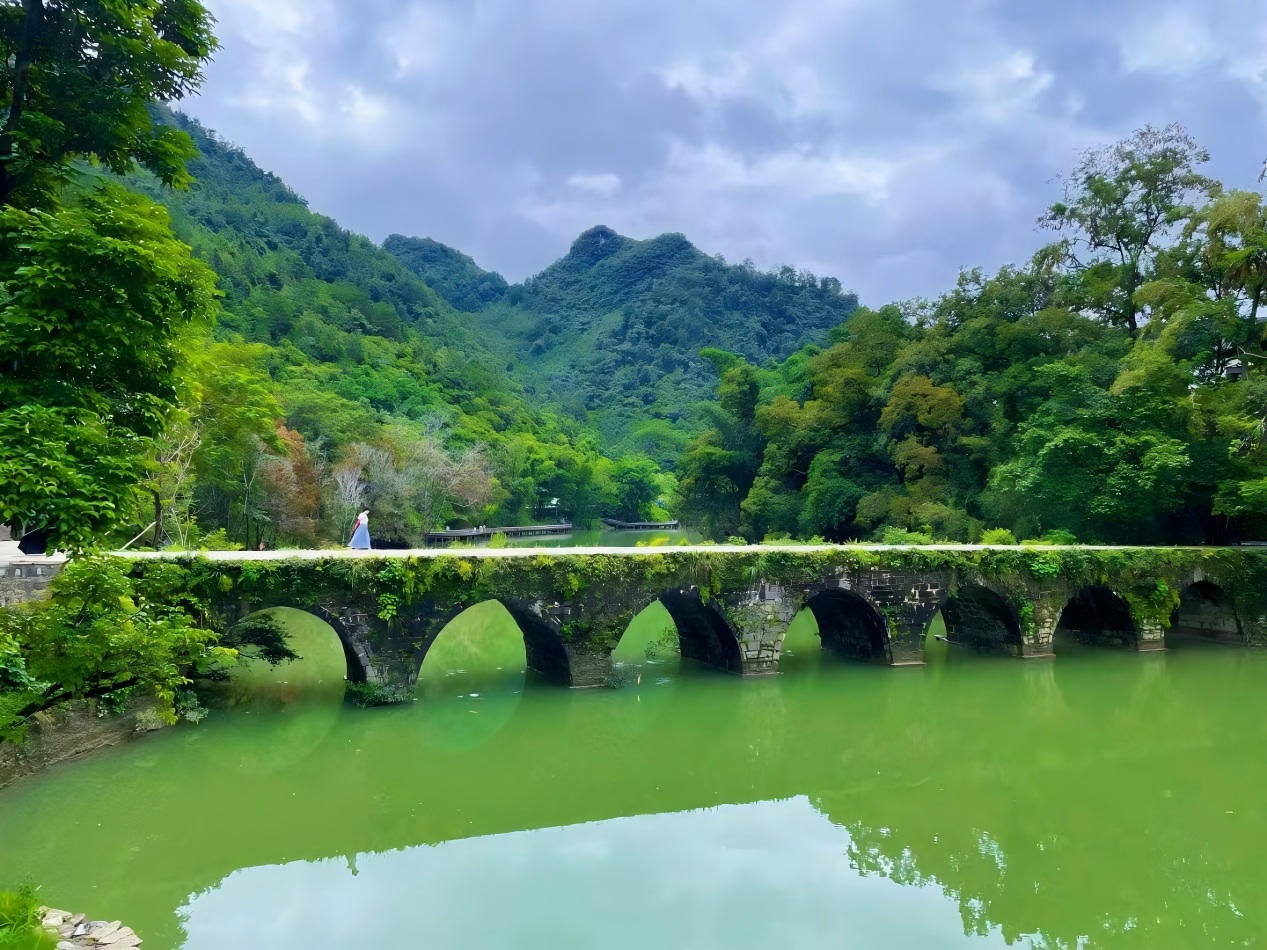
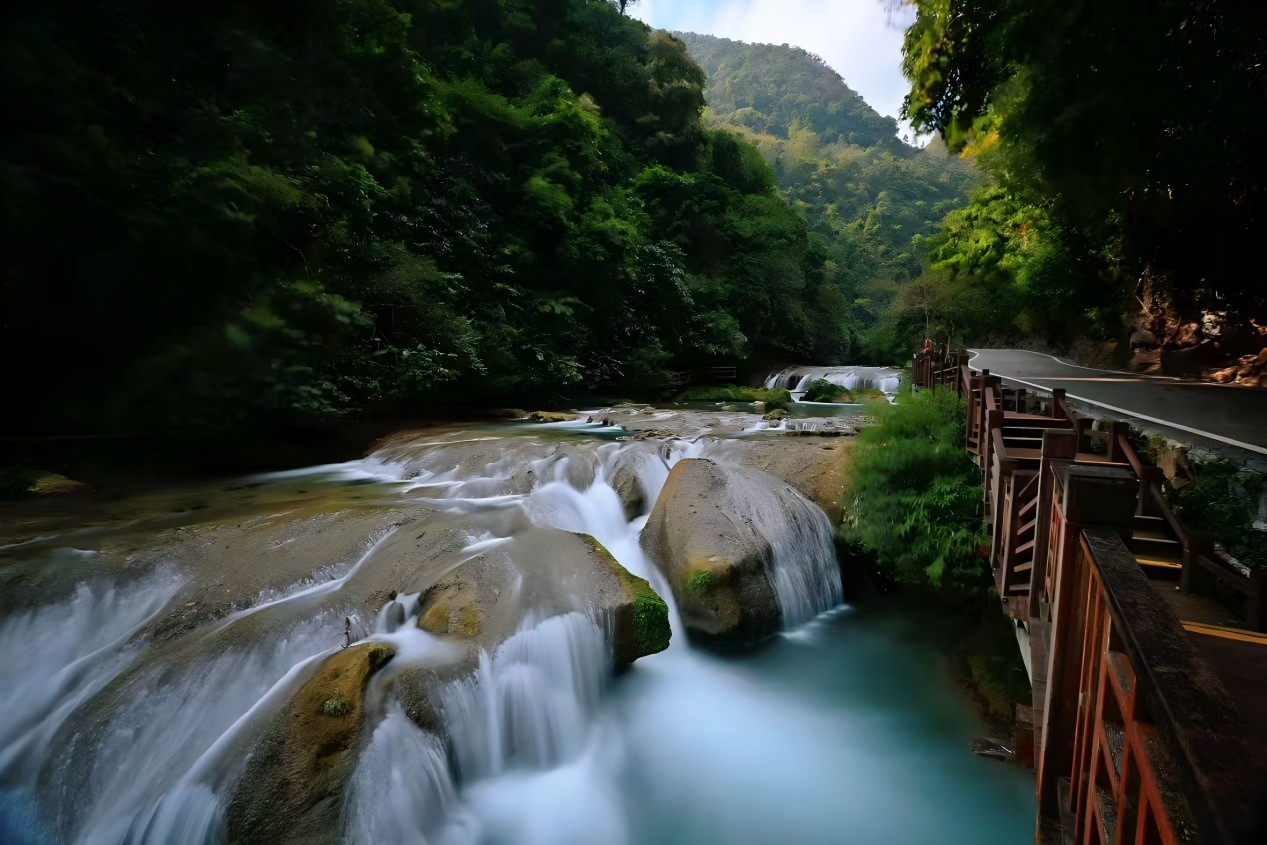
Walk the boardwalk into the gorge, and you’ll instantly feel the cool air. Cliffs tower hundreds of meters high on both sides, covered in thick vegetation that blocks most sunlight. Even in summer, it’s 5-6°C cooler here – the perfect natural escape from the heat.
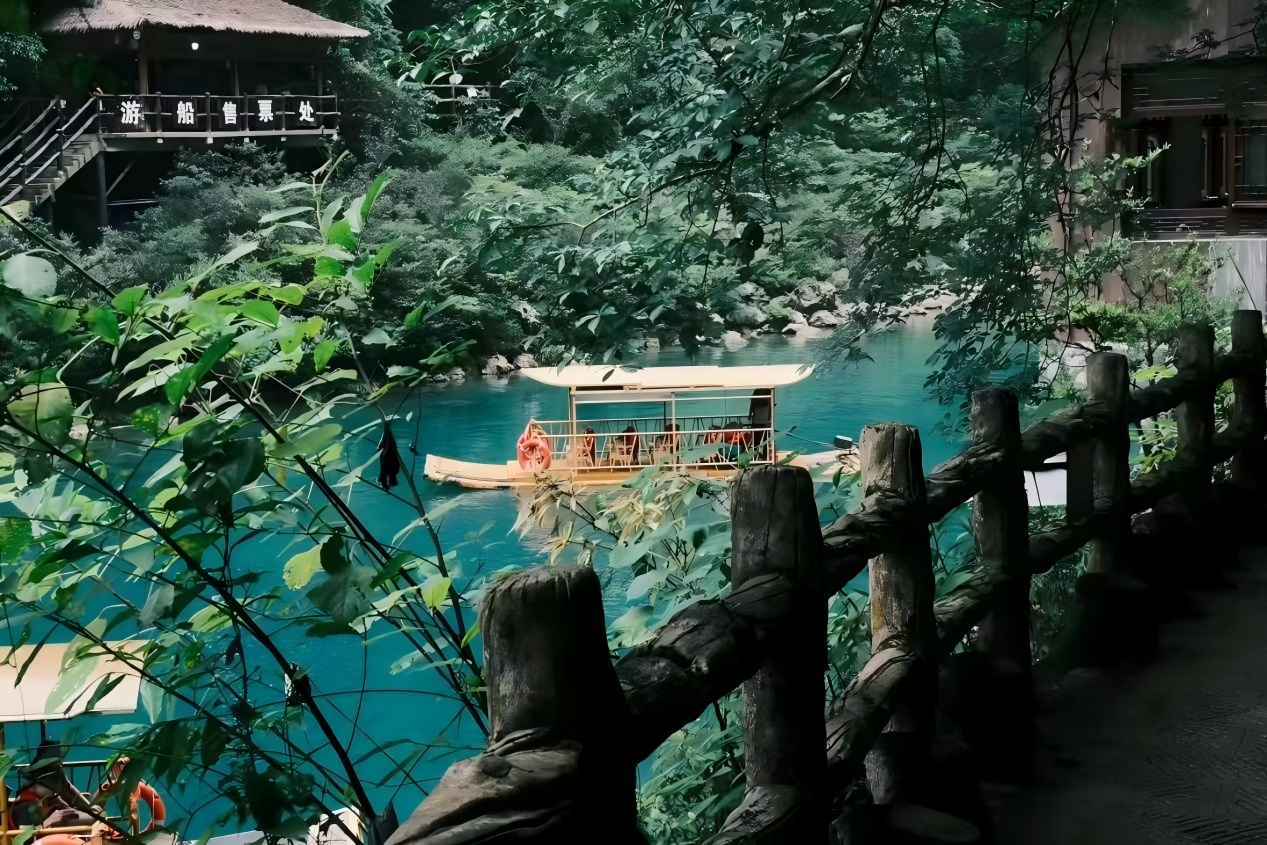
The star here is Tian Sheng Qiao (Natural Bridge) – nature’s masterpiece. This stone bridge spans the gorge, standing 73 meters tall (that’s a 24-story building!), 29 meters wide, with an arch span of 30 meters and a depth over 100 meters. Look up from below, and you’ll see it’s made of karst limestone, shaped over thousands of years by water erosion and gravity. The bridge’s surface is covered in moss, shrubs, and vines – like a green coat from nature.
The coolest part? A natural “skylight” at the top of the arch. When sunlight filters through, it creates a bright beam that lights up floating dust – it’s like a scene from a fairy tale. Photographers come from all over just to capture this moment.
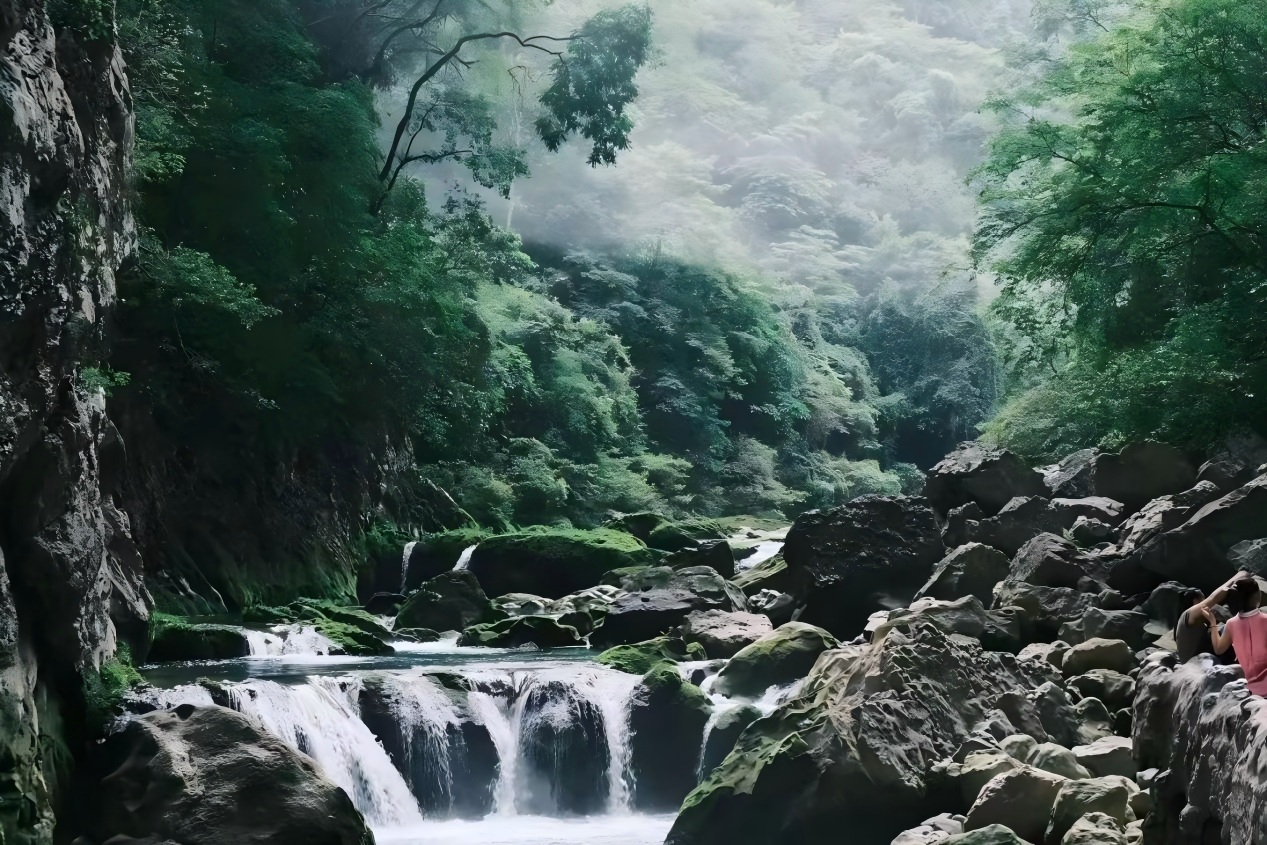
Not far away is “Terror Gorge” – don’t worry, the name is just for drama (it’s totally safe!). This 500-meter gorge has near-vertical cliffs, like someone split the mountain with an axe. At its narrowest, only a small boat can pass. The water rushes fast, crashing against rocks with a roar – standing on the boardwalk, you might even feel a tiny vibration. It’s awe-inspiring.
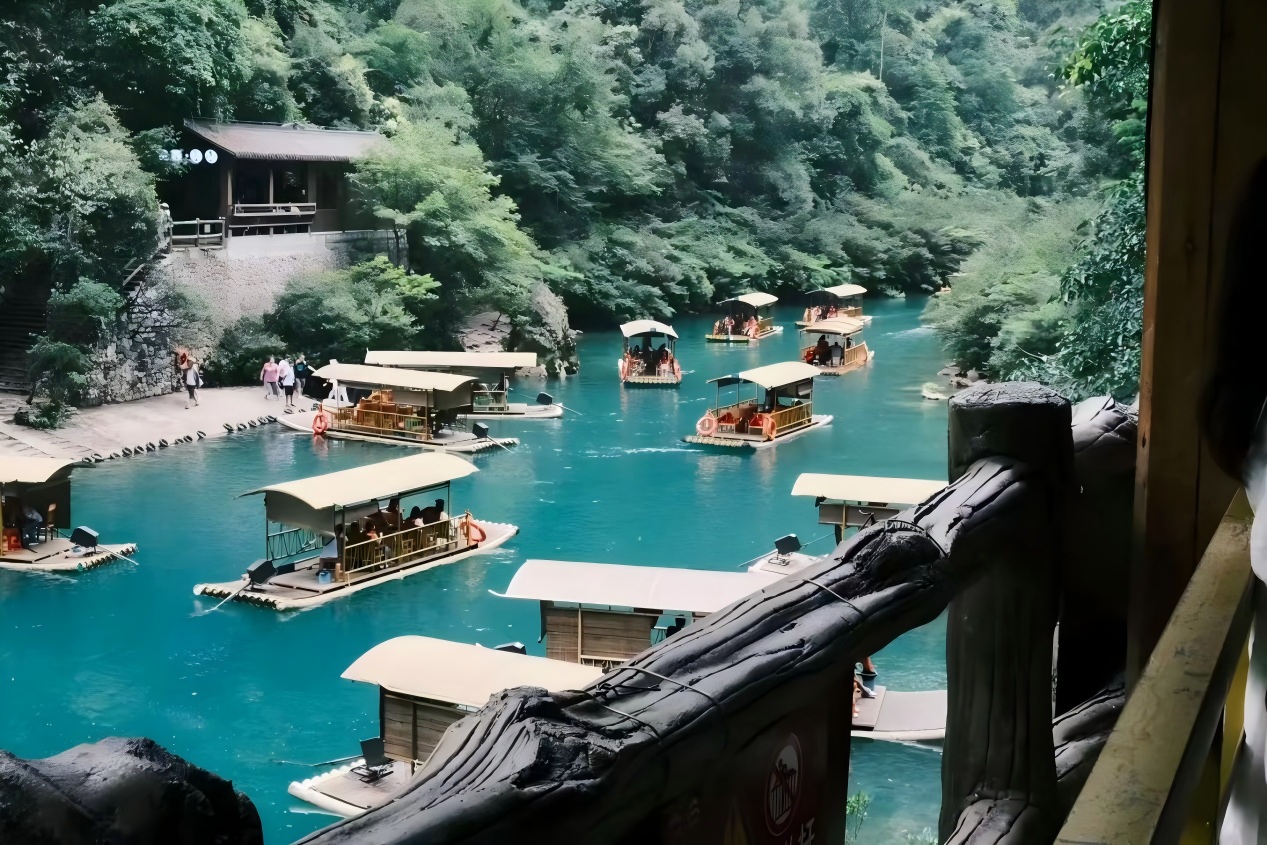
Local Buyi ancestors revered this gorge, believing it was home to “Amo,” the mountain god who controlled weather and harvests. In ancient droughts, village elders would lead ceremonies here: they brought offerings (livestock, sticky rice, rice wine), a shaman chanted prayers for rain, and then everyone danced the Buyi Bronze Drum Dance to show respect. The customs are gone, but sun patterns and blessings carved into the cliffs still tell their story.
III. Shuichun River Gorge: Rapids, Adventure & Miao Bravery
Our third stop, Shuichun River Gorge, is Libo’s “adventure zone” – and it’s a hit with young travelers. As a main tributary of the Zhangjiang, this 13-kilometer river twists through high mountain gorges, creating the “Nine Shoals and Eighteen Bends” landscape. With tons of rapids, fast currents, and big drops, it’s one of Southwest China’s top rafting spots.
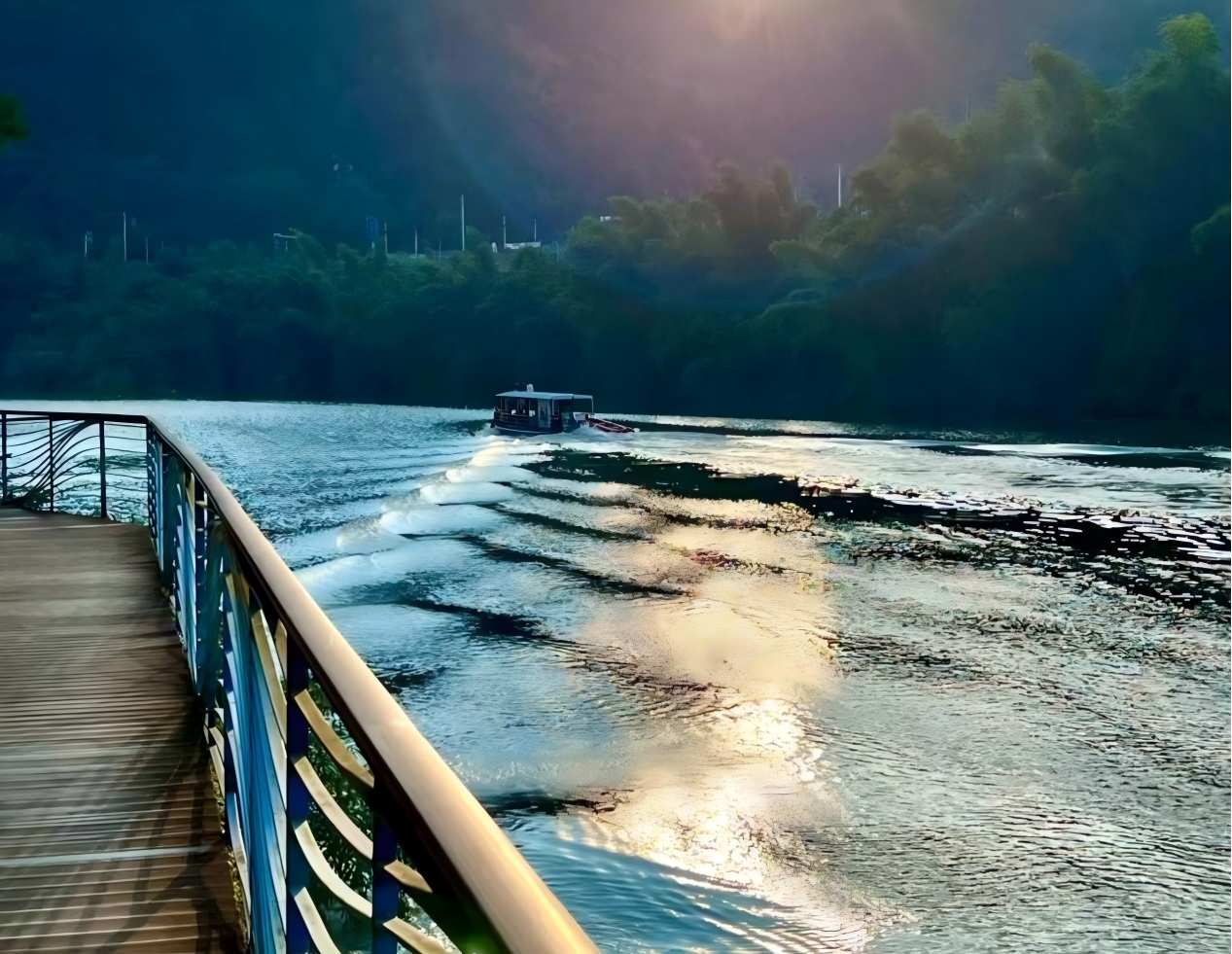
If you love thrills, rafting here (April-October is peak season) is a must. Strap on a life jacket, listen to your guide, and hold on tight: you’ll be lifted by waves, spun by whirlpools, and laughing (or screaming!) the whole way. Even if you skip rafting, the riverside trails let you feel the river’s energy.
Along the path, steep cliffs rise like carved walls, with weirdly shaped rocks – locals have given them fun names: “General Rock” looks like an armored soldier guarding the gorge; “Crouching Tiger Stone” is a tiger ready to pounce. Banyan trees with long aerial roots, bamboo groves, wildflowers, and bird songs make it feel like a lively nature painting.
This river also has a heroic story. In the late Ming Dynasty, corrupt officials troubled Miao villages. A young Miao leader named Mengge – tough and smart – rallied villagers to fight back. He used the gorge’s narrow paths to set ambushes, dropping rocks and arrows on invaders. They won, and the villages were saved.
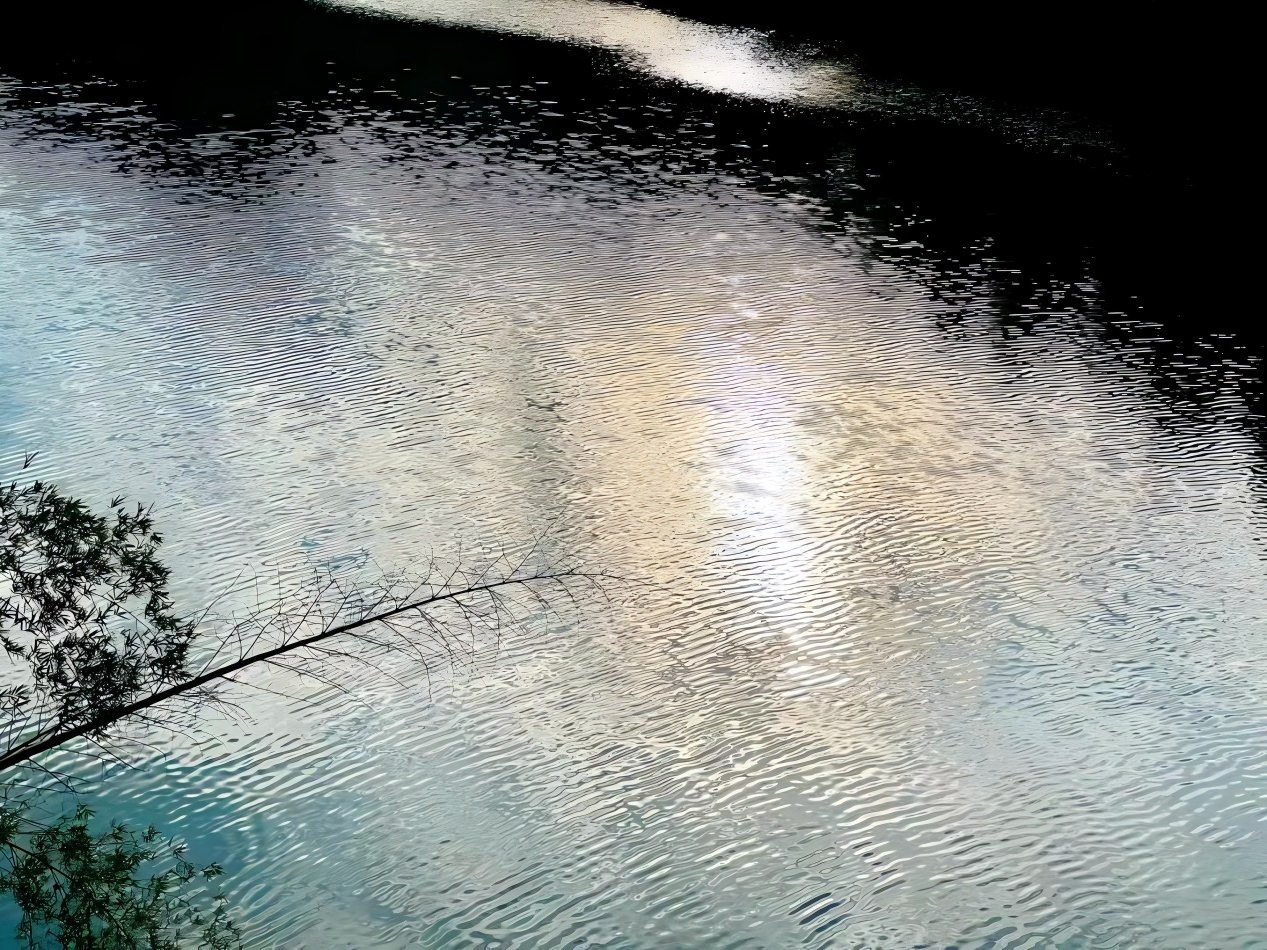
To honor Mengge, locals hold dragon boat races on the Shuichun River during the Miao New Year (10th lunar month). It’s a great time to join the celebration!
IV. Yaoshan Ancient Village: The Yao’s “Living Fossil” Culture
Next up: Yaoshan Ancient Village, home to the Bai Ku Yao (White Trousers Yao) – a branch of the Yao ethnic group. Tucked deep in the mountains, far from cities, this village preserves the most original Yao traditions. The name “White Trousers Yao” comes from the men’s unique white cotton trousers with black embroidered hems – a 1,000-year-old style that’s their signature.
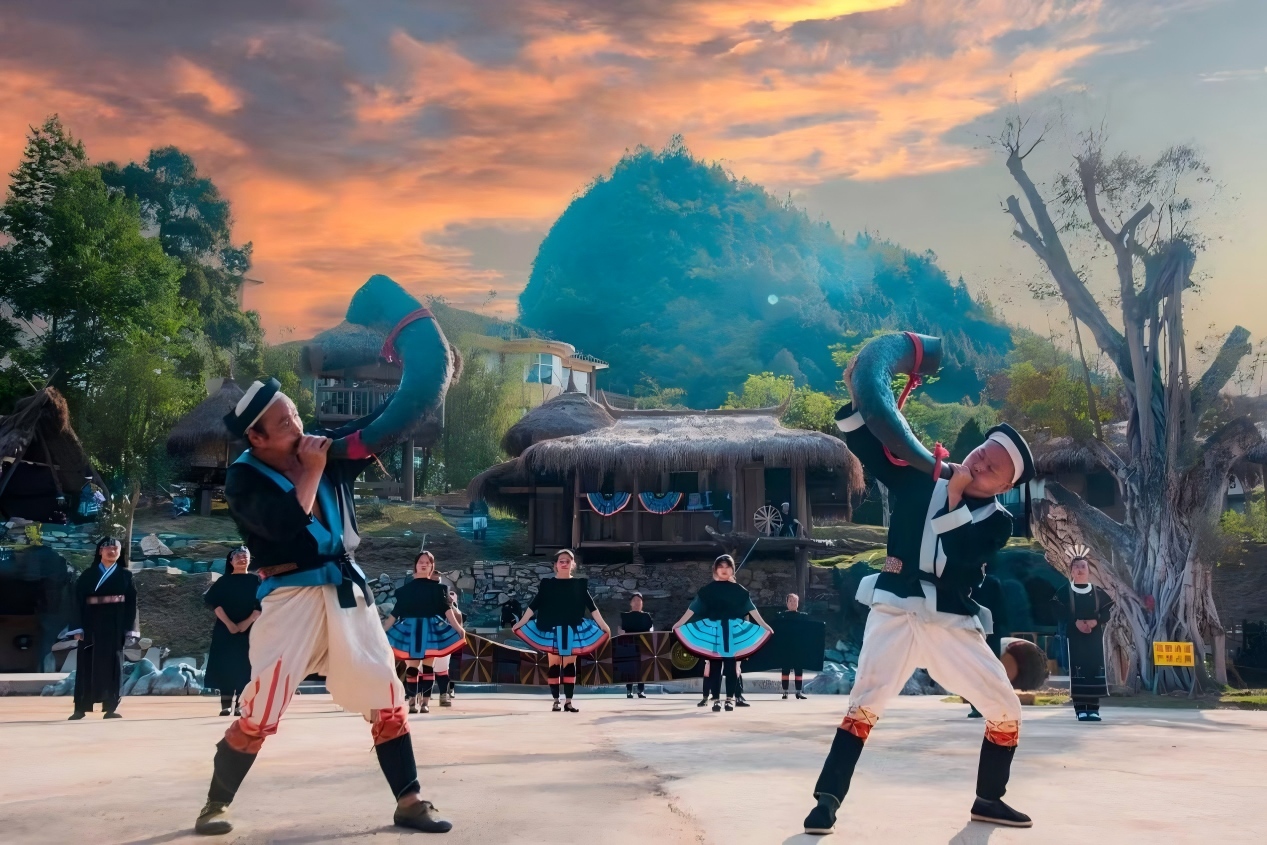
UNESCO calls them a “Living Fossil of Humanity” because their remote location kept their customs, crafts, and way of life intact. It’s totally worth exploring for its cultural value.
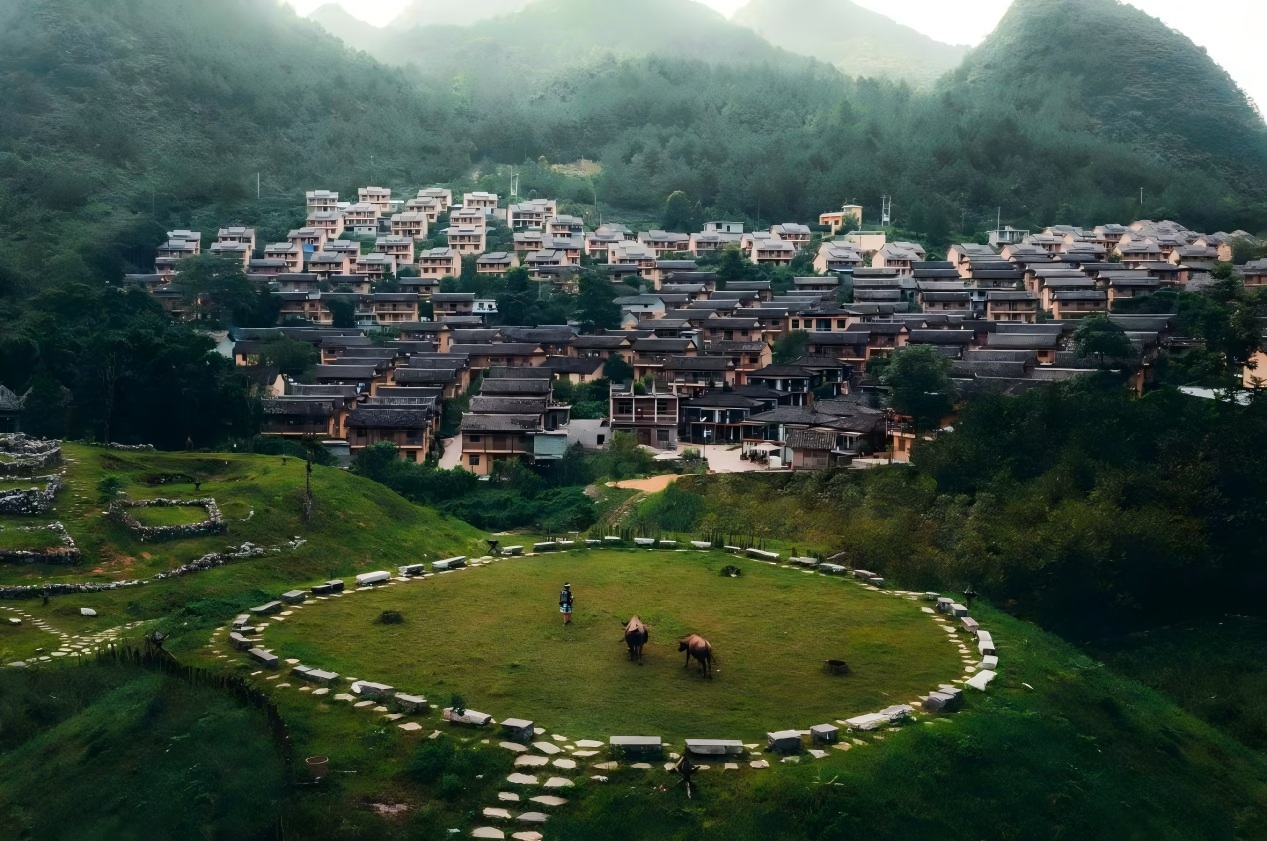
The village’s architecture is genius. Houses are made entirely of local fir wood, using a mortise-and-tenon technique – no nails, just interlocked wood. They’re sturdy and easy to take apart. Built on mountain slopes, they form a terraced layout. Roofs use local gray tiles; walls are bamboo woven with mud and straw – perfect for the mountain climate (warm in winter, cool in summer).
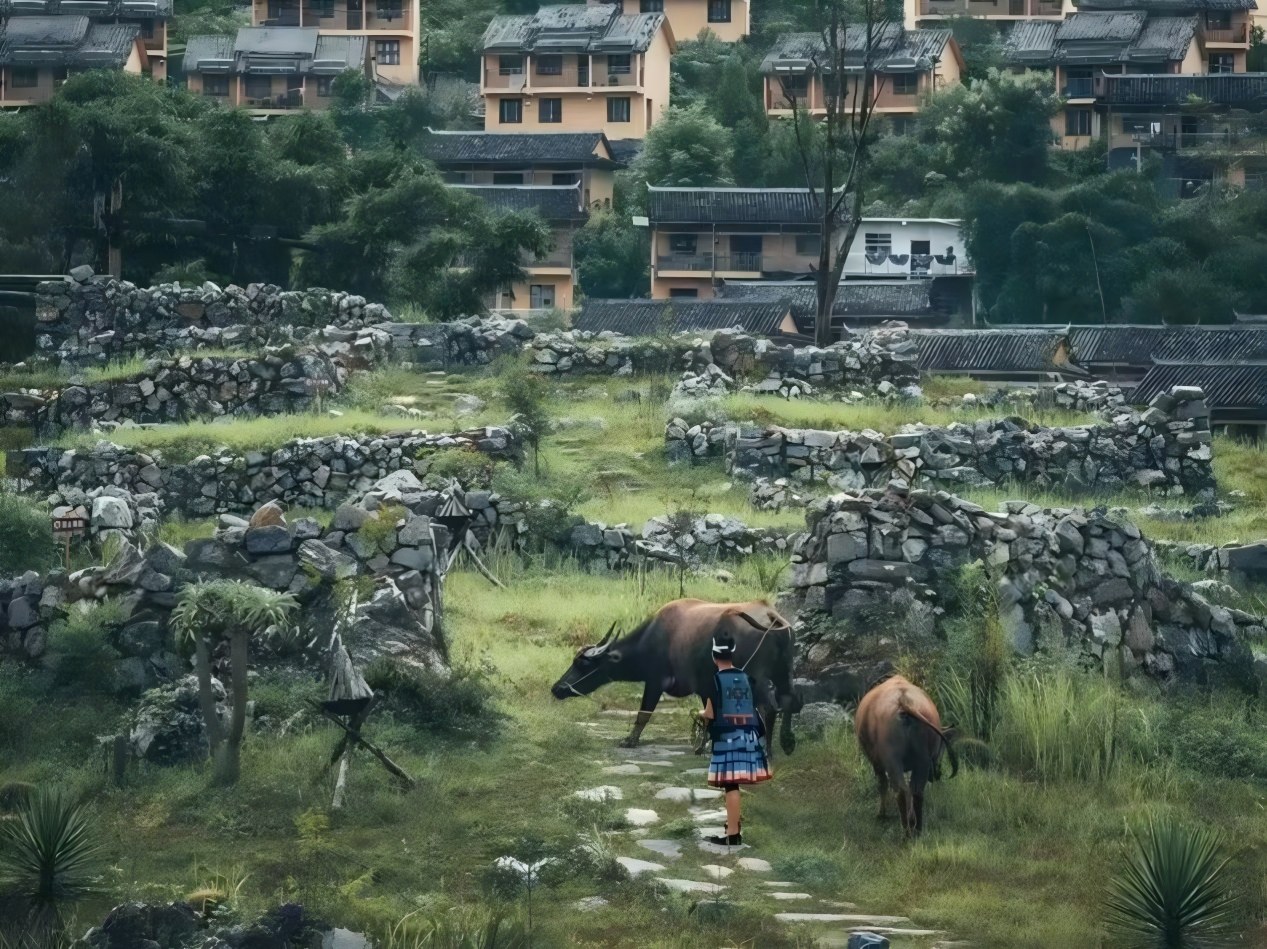
Most houses have two floors: upper for living and storage, lower for livestock or tools. Practical and smart!
In the village center is the “Bronze Drum Ground” – a flat, pebble-paved square for big events: ancestor worship, weddings, festivals. The star here is a large bronze drum – a Yao totem for power, luck, and harvest. The drum’s surface is carved with sun, cloud, and frog patterns – it’s a precious ethnic artifact.
Walk deeper into the village, and you’ll see Yao women weaving and embroidering under their eaves. These skills are taught from childhood, and they’re how the culture lives on. They use traditional waist looms: warp threads tied to a wall and their waist, weaving by hand. A simple cotton cloth takes over a month to make – every thread has love in it.
Embroidery is their masterpiece. Women stitch patterns from memory: lucky birds, flowers, fish, Yao totems (like the Pan King), suns, and farming scenes. The work is bright, lifelike, and detailed – each piece is one of a kind. Ask nicely, and they might teach you a simple stitch!
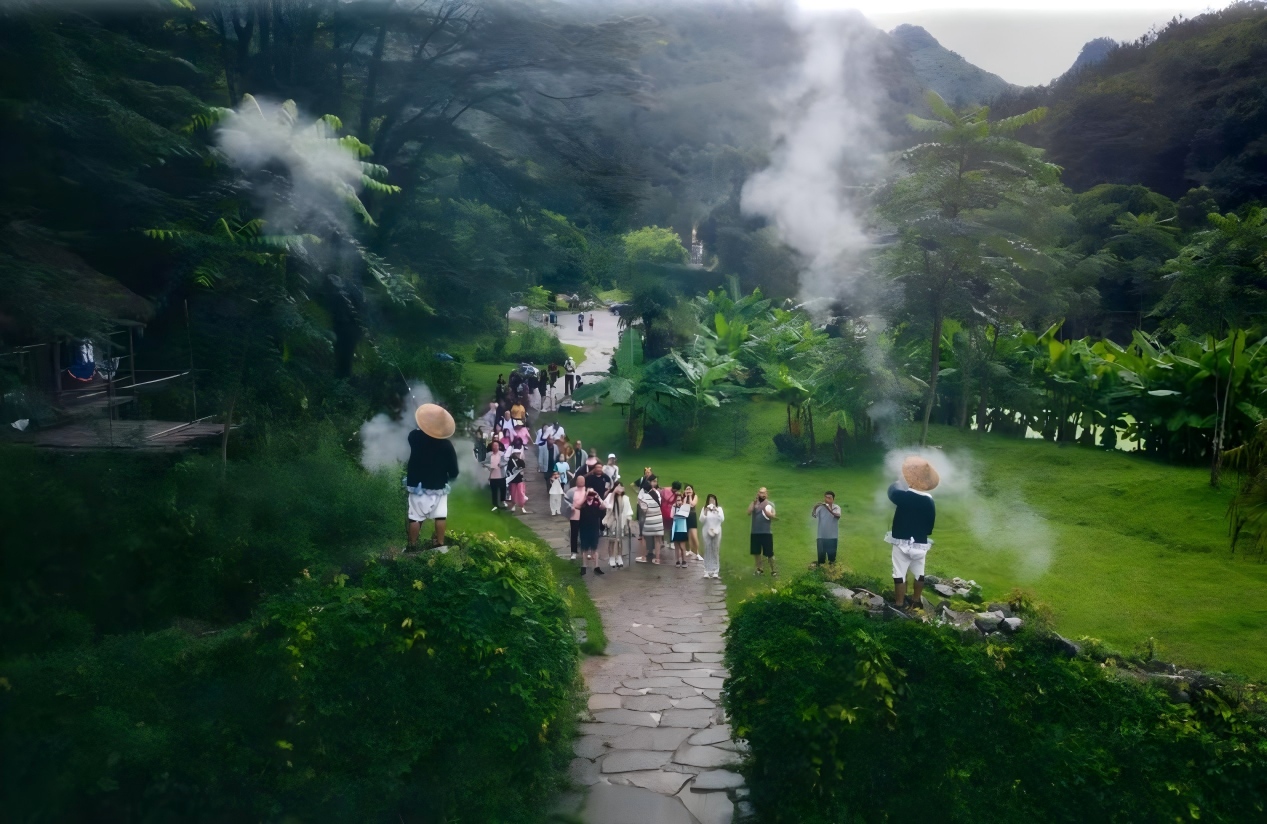
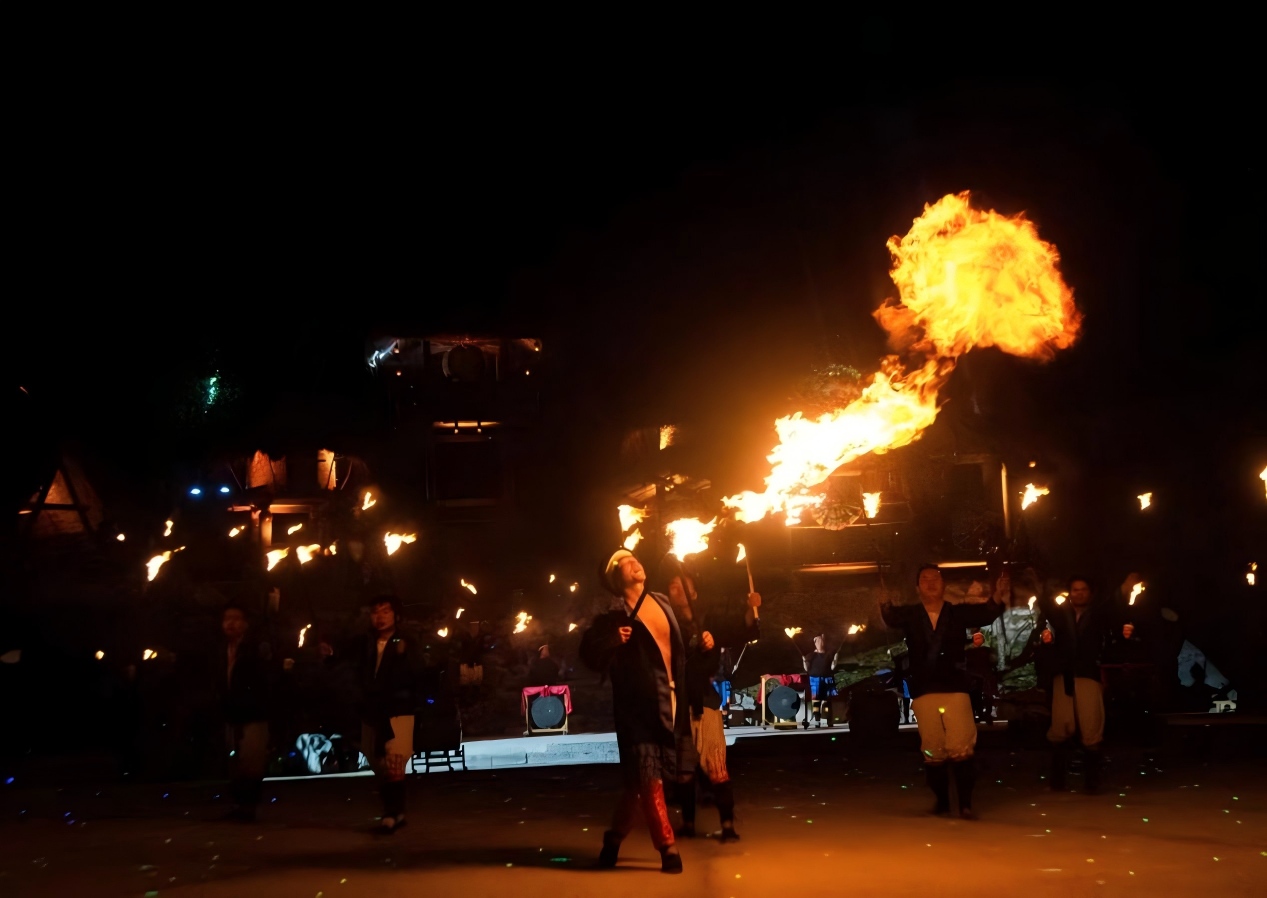
Don’t miss the food and dance either. The “Yao King Feast” is their way of honoring guests – tons of delicious dishes. While you eat, watch the “Long Drum Dance”: dancers use colorful paulownia wood drums with sheepskin heads, making deep, loud sounds. Their moves mimic hunting, farming, and celebrating – full of energy. They’ll even invite you to join!
V. Maolan Karst Forest: The Emerald’s Life Miracle
Maolan Karst Forest is Libo’s ecological crown jewel – the “Heart of the Green Emerald.” Covering 21,285 hectares, it’s the world’s largest and best-preserved primeval karst forest. Pair it with Zhangjiang’s water scenery, and you’ve got the “mountains, waters, forests, caves, waterfalls” combo that made Libo a UNESCO site.
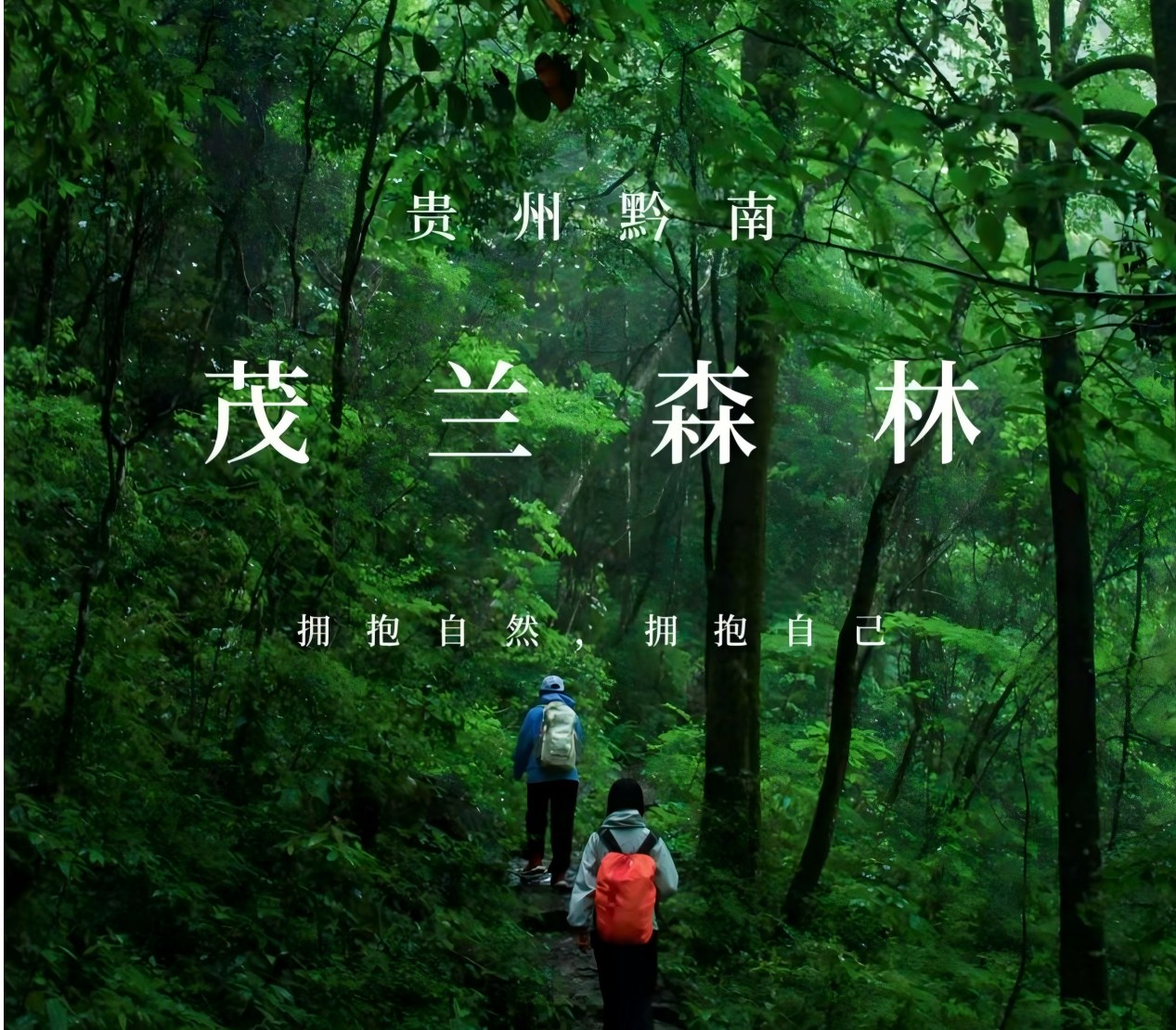
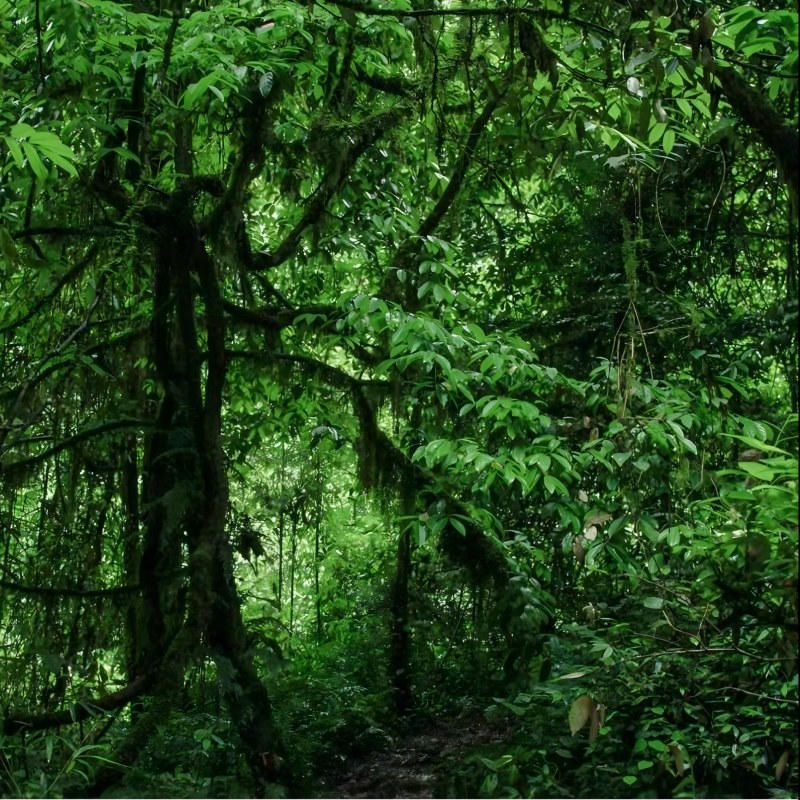
Step into Maolan, and you’re surrounded by lush green. Tall trees block the sky, sunlight filters through leaves, and the air smells like plants and soil – it’s a natural “oxygen bar.” Over 2,000 plant species grow here (90% vegetation coverage), including rare ones like Cyathea spinulosa – a “living fossil” tree fern from the dinosaur age – and Chinese Yew, whose bark has cancer-fighting taxol.
You’ll also see unique plants: “strangler figs” that wrap around host trees until they die, and “buttress root trees” with plank-like roots to hold onto rocky soil. It’s nature’s tough survival rules in action.
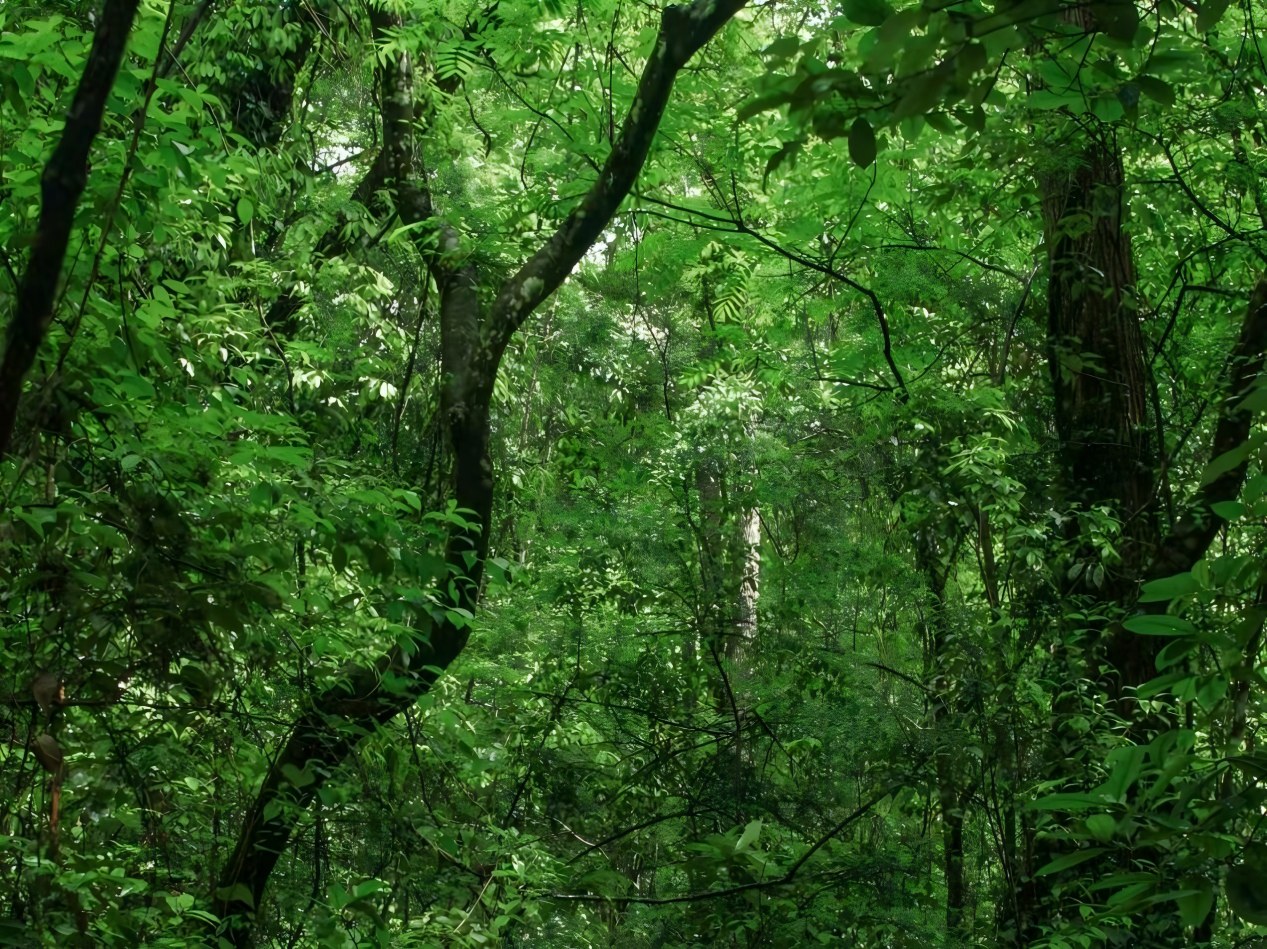
Maolan is also an animal paradise: 300+ vertebrate species, including 20+ state-protected ones like macaques, pangolins, and forest musk deer. Hiking, you’ll often see macaques playing in trees (they’re used to people!). Birds sing everywhere, and if you’re lucky, you might spot a pangolin foraging at night.
The real miracle? Karst areas are usually thought of as barren rock – but here, a lush forest thrives. Why? Two reasons: Libo’s subtropical monsoon climate (plenty of rain and sun), and the local ethnic groups’ wisdom of living in harmony with nature.
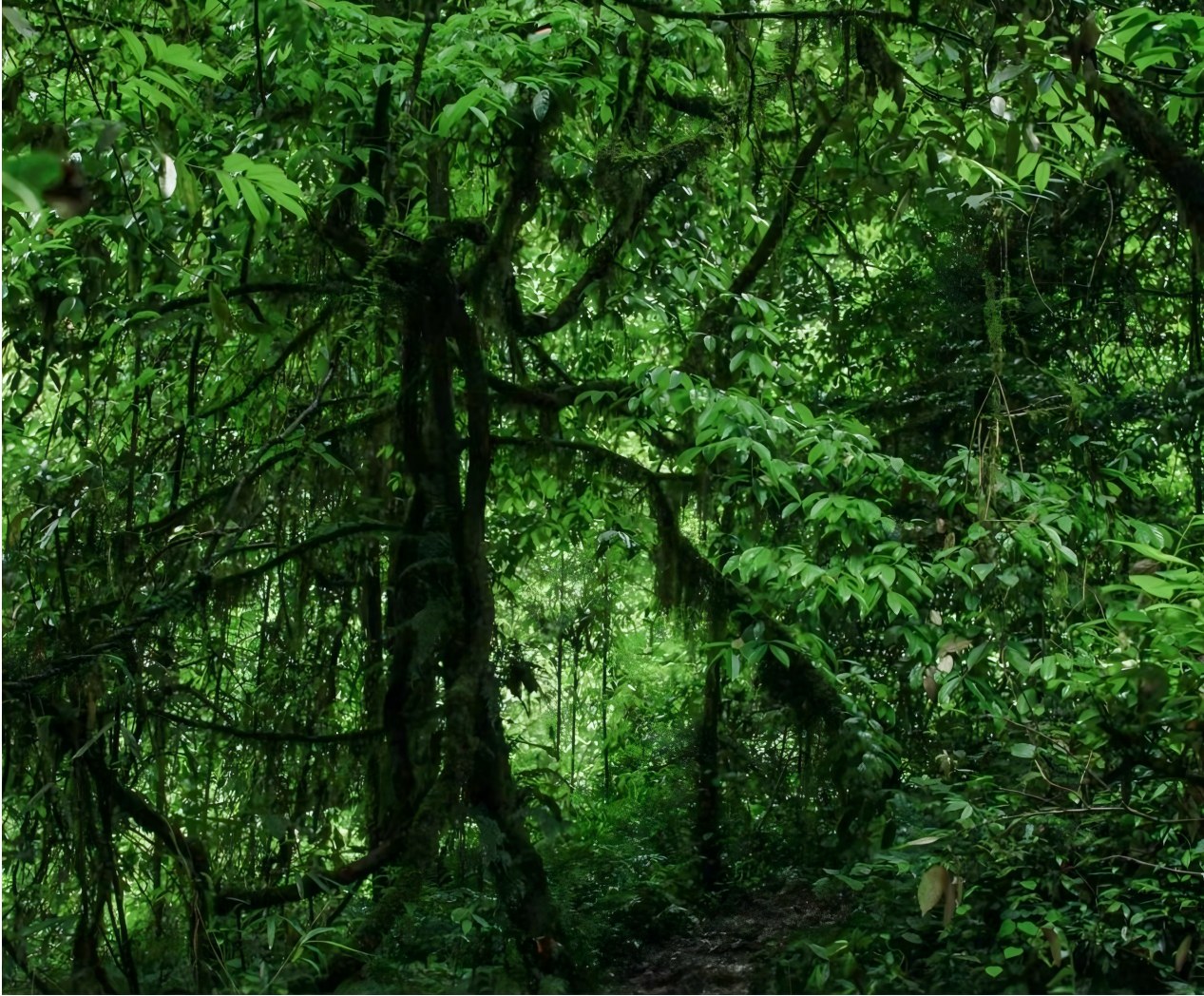
Ancestors here knew soil and water were scarce. They invented “rock fissure farming”: clearing rubble between rocks, bringing in soil to make small fields or terraces, and growing drought-resistant crops (corn, beans, sweet potatoes). To fertilize, they used forest litter and planted nitrogen-fixing plants like milk vetch. For water, they built small reservoirs and channels to collect rainwater.
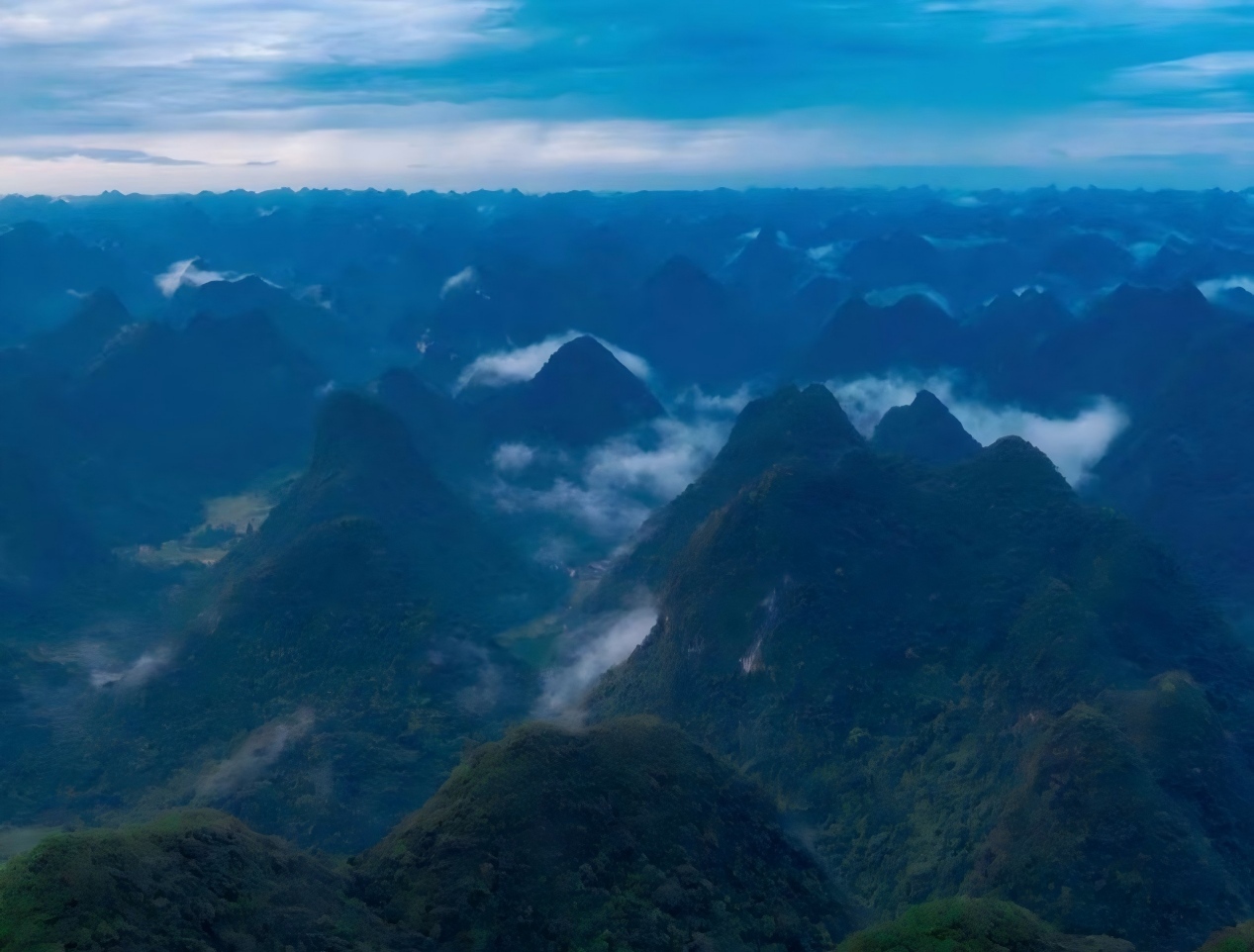
They also had strict village rules: ancient trees were “spirit trees” (protected), hunting only adult animals (no young or pregnant), and only collecting dry branches for firewood. These customs saved the forest. Today, Maolan is a global conservation model – proof that humans and nature can thrive together.
VI. Libo Food: Taste the Mountains & Waters
No trip to Libo is complete without eating like a local. The food uses fresh, local ingredients and ethnic recipes – every dish is memorable. Here are 6 must-tries:
1. Libo Sour Fish Soup: The Buyi signature – “Guizhou’s No.1 Soup.” Fresh Zhangjiang carp is cooked in a fermented red sour broth (made with sticky rice), plus mountain pepper, chili, and ginger. Tangy, spicy, and addictive – pour it over rice, and you’ll finish the bowl in minutes.
2. Yaoshan Bamboo Rice: A Yao treat for guests. Fresh bamboo sections are stuffed with soaked rice, diced smoked meat, mushrooms, and carrots. Sealed with banana leaves and roasted over fire, the rice soaks up bamboo and meat flavors – soft, sticky, and fragrant.
3. Buyi Five-Colored Sticky Rice: A festival staple (March 3rd, June 6th). Glutinous rice is dyed with natural plants: maple leaves (black), indigo grass (blue), sappanwood (red), gardenia (yellow), plus white rice. Steamed together, it’s colorful and slightly sweet – symbolizes a good harvest.
4. Libo Rice Noodles: Locals’ go-to breakfast. Tender-but-chewy rice noodles in rich pork/beef bone broth, topped with minced meat, chili oil, scallions, and pickled radish. Hearty and comforting.
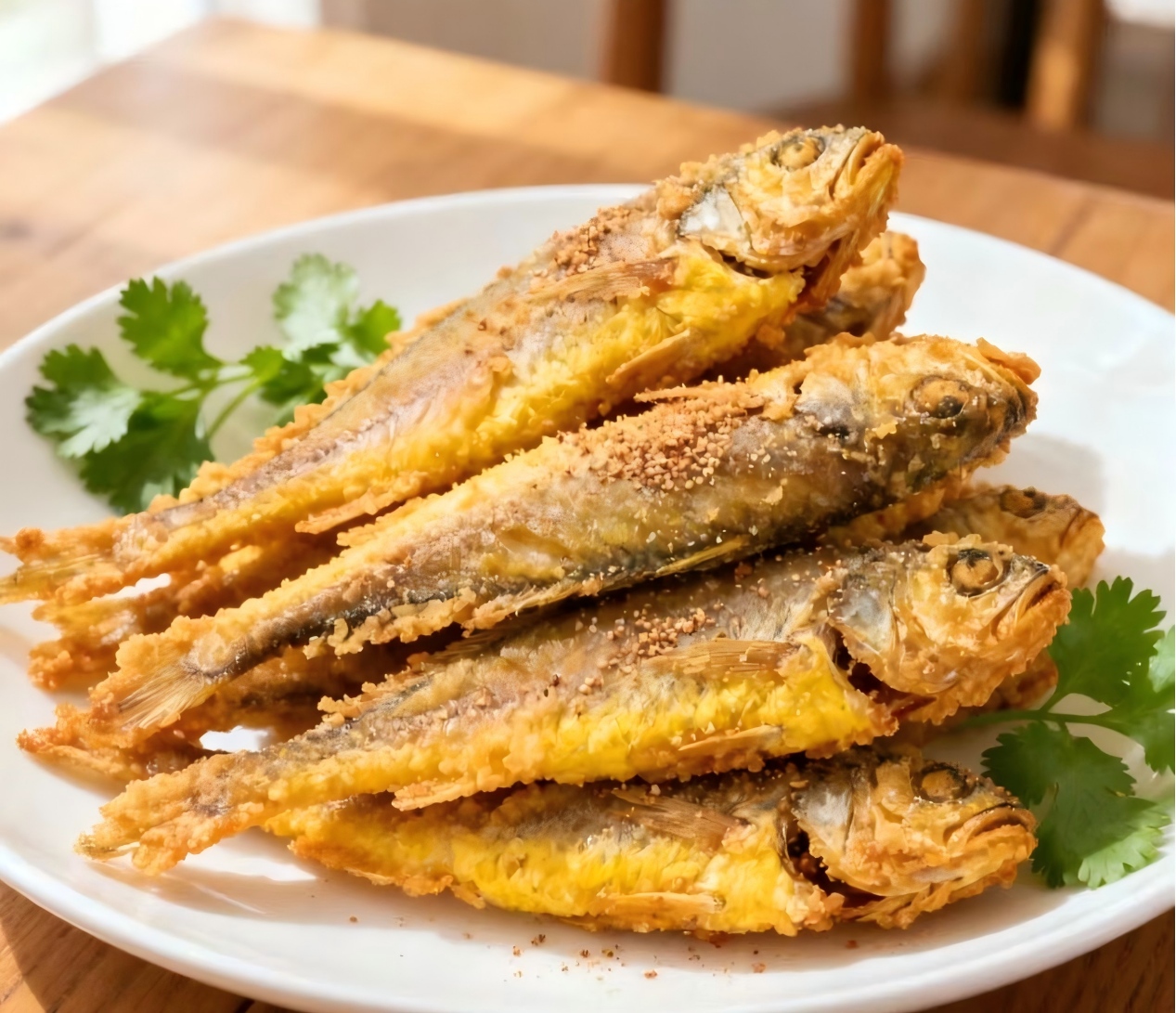
5. Fried Zhangjiang Fish: A popular snack. Small fresh river fish are marinated, coated in starch, and fried until crispy. Sprinkle with pepper-salt or chili – crunchy outside, tender inside.
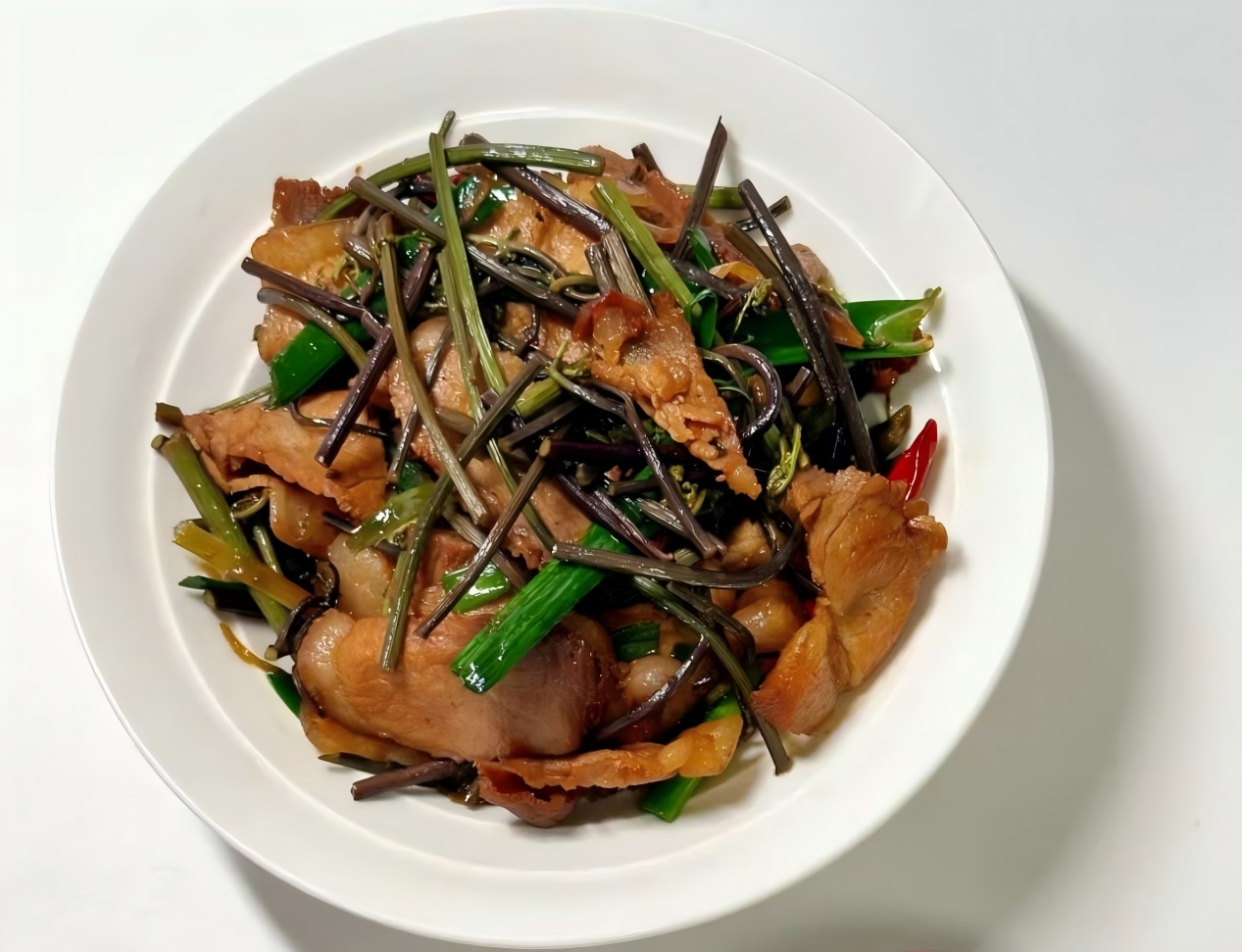
6. Yao Stir-Fried Smoked Meat with Fern Fronds: A home-style dish. Yao smoked meat (fat and lean) is stir-fried with fresh spring ferns. The meat’s saltiness mixes with the fern’s earthy taste – perfect for rice.
VII. Farewell: The Emerald Awaits Your Return
Dear friends, our Libo Zhangjiang journey is ending – but I hope you’re taking home more than photos: the grace of Xiaoqikong Bridge, the power of Daqikong Gorge, the thrill of Shuichun River, the warmth of Yaoshan Village, the vitality of Maolan Forest, and the taste of sour fish soup.
Thank you for joining me. Please share Libo’s beauty, culture, and flavors with your friends – this “Green Emerald” always has open arms for you. Safe travels, and see you again soon!