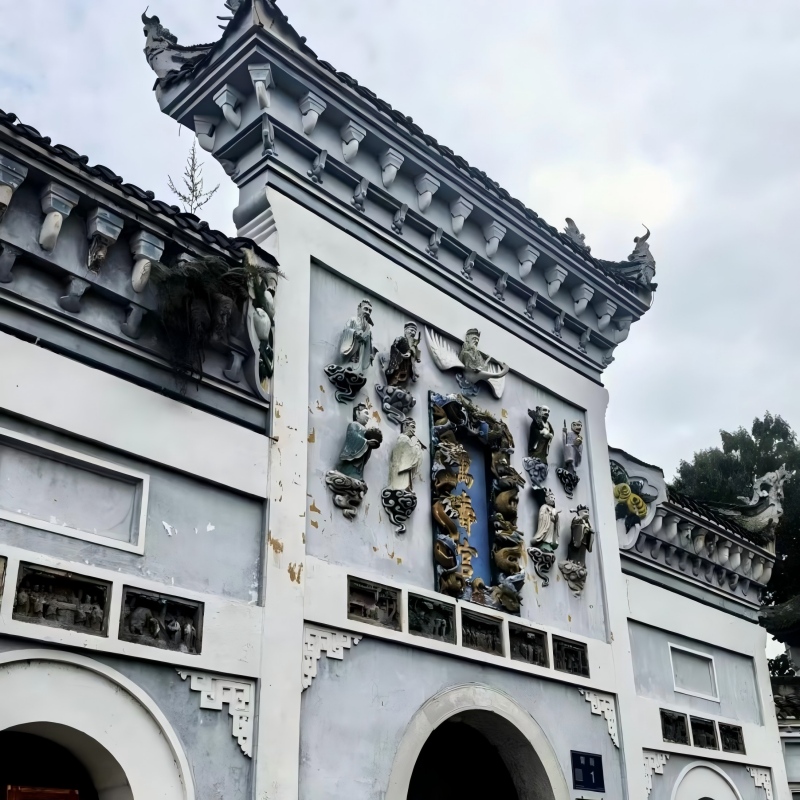
Qingyan Ancient Town
Discover Qingyan Ancient Town with Huatu International Travel
Step into 600 years of history in Guizhou’s stunning stone-built Qingyan Ancient Town! With Huatu International Travel, enjoy a personalized tour designed just for you. Taste authentic local cuisine—fresh, flavorful, and full of character. Stay in comfortable, handpicked accommodations. Our experienced team ensures a seamless, culturally rich journey from start to finish.
Customize your trip—your way. Book with Huatu, where every detail matters.
Qingyan Ancient Town: Discover Ming & Qing Dynasty Magic in Guizhou’s Stone Lanes
Hello, friends from around the world! I’m so excited to be your guide today as we explore Qingyan Ancient Town. Welcome to this remarkable "stone city" nestled in the highlands of Guizhou. Founded in 1378 during the Ming Dynasty, Qingyan started as a military fortress, later grew into a trading center, and is now one of Guizhou’s four most famous ancient towns—a nationally recognized cultural treasure.
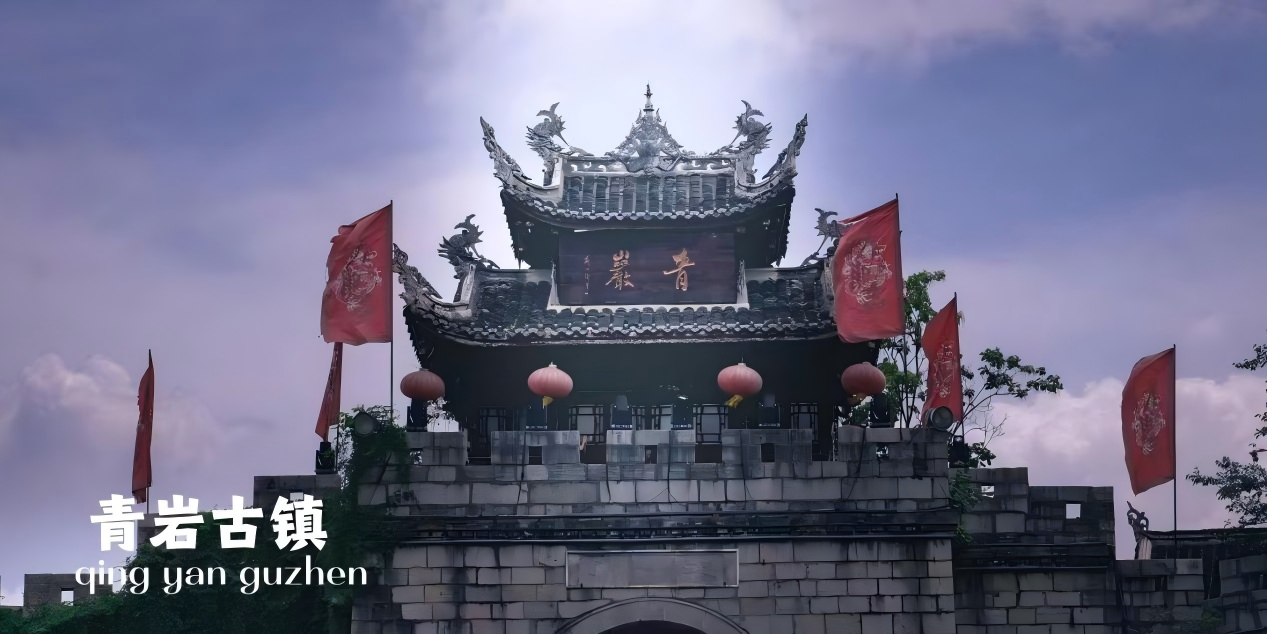
Unlike the soft, watery landscapes of southern China, Qingyan is built from stone: stone walls, stone lanes, and stone foundations. Over 600 years, this town has absorbed a fascinating mix of military, merchant, and ethnic minority cultures. Let’s step into its winding lanes and uncover its timeless stories and charm.
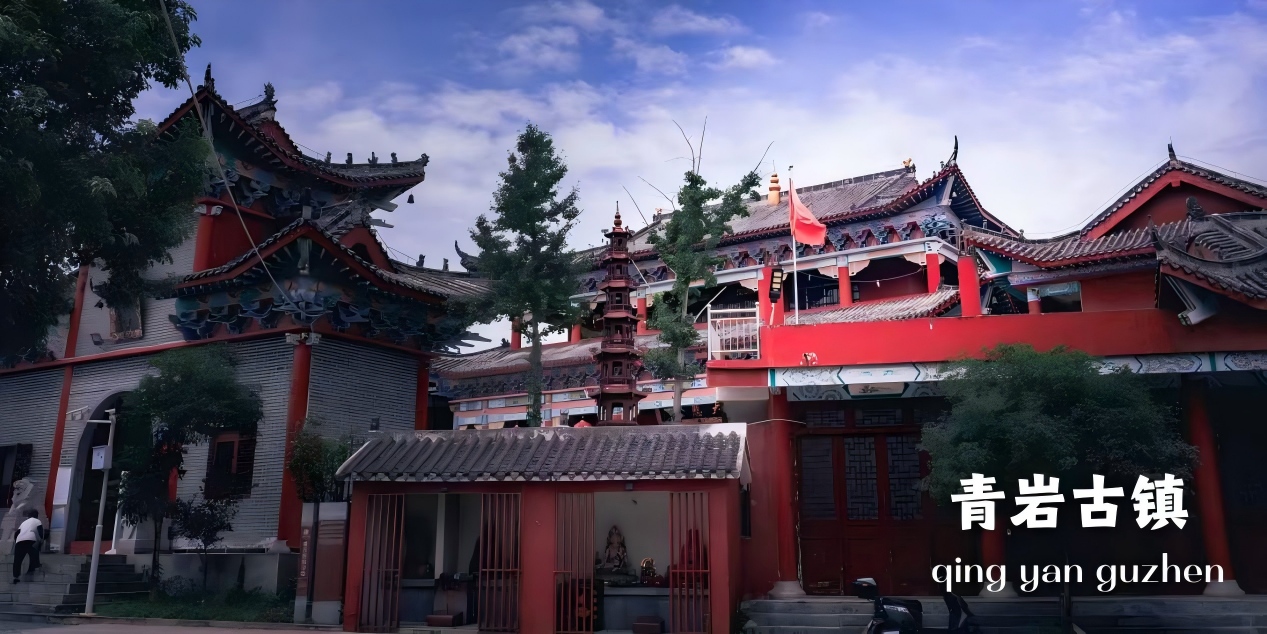
1. South Gate (Dingguang Gate) – A Military Relic from the Ming Era
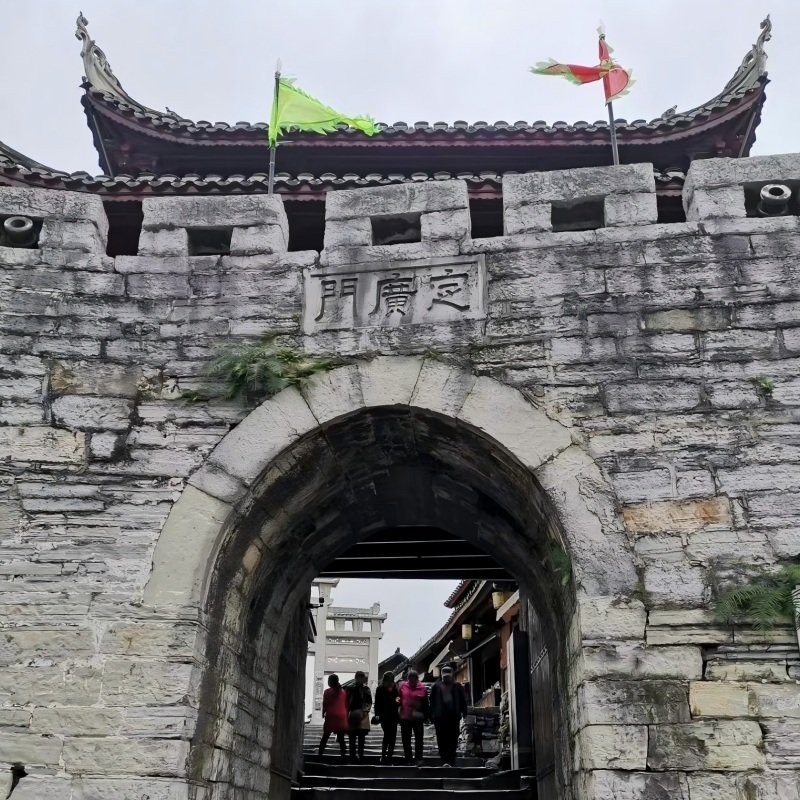
Our tour begins at the South Gate—known as Dingguang Gate—the town’s most well-preserved and impressive city gate. Built in 1378, it stands around 12 meters tall and is made entirely of local blue stone slabs. Its solid archway and walls were designed to withstand cavalry and artillery attacks.
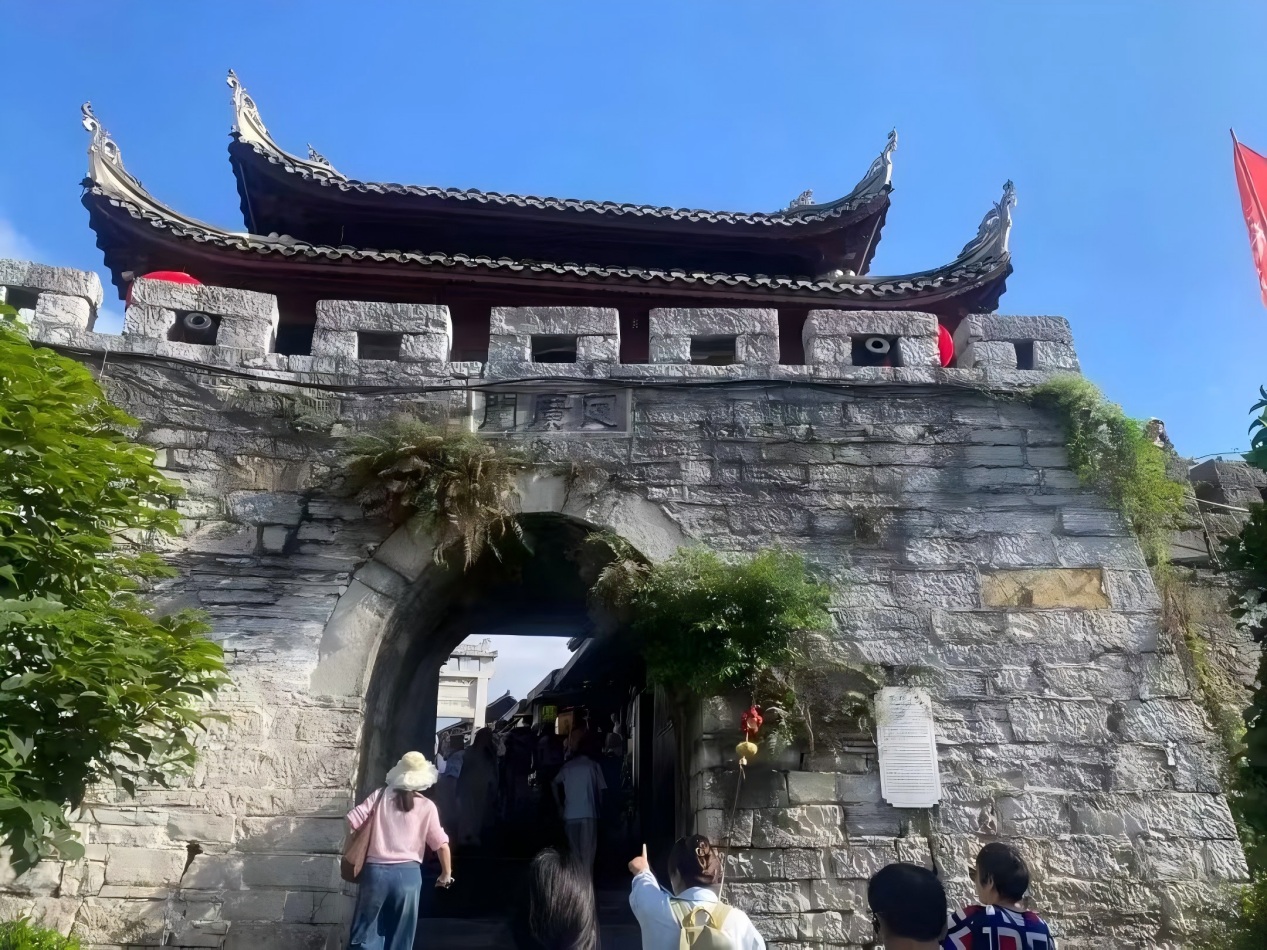
This gate has a story: It was built under General Feng Sheng, a trusted commander of the Ming Dynasty's founding emperor. He chose this location because Qingyan was a strategic military point—linking Guiyang to the east and Huishui to the south. The gate even had hidden soldier tunnels and a watchtower.
During the Ming–Qing transition, rebel forces attacked Qingyan, but the town held strong for three months thanks to this gate’s solid defenses.
Today, standing beneath the gate and touching the smooth, time-worn stones, you can almost feel the history. Climb up to the watchtower for a panoramic view of the town—a beautiful sea of blue-tiled roofs and stone walls.
2. The Former Residence of Zhao Yijiong – Where Scholars Made History
Next, let’s visit the Zhuangyuan Mansion—the former home of Zhao Yijiong, the first #1 scholar (Zhuangyuan) in imperial exams from Guizhou. Though Qingyan began as a military town, it became a center for learning and culture.
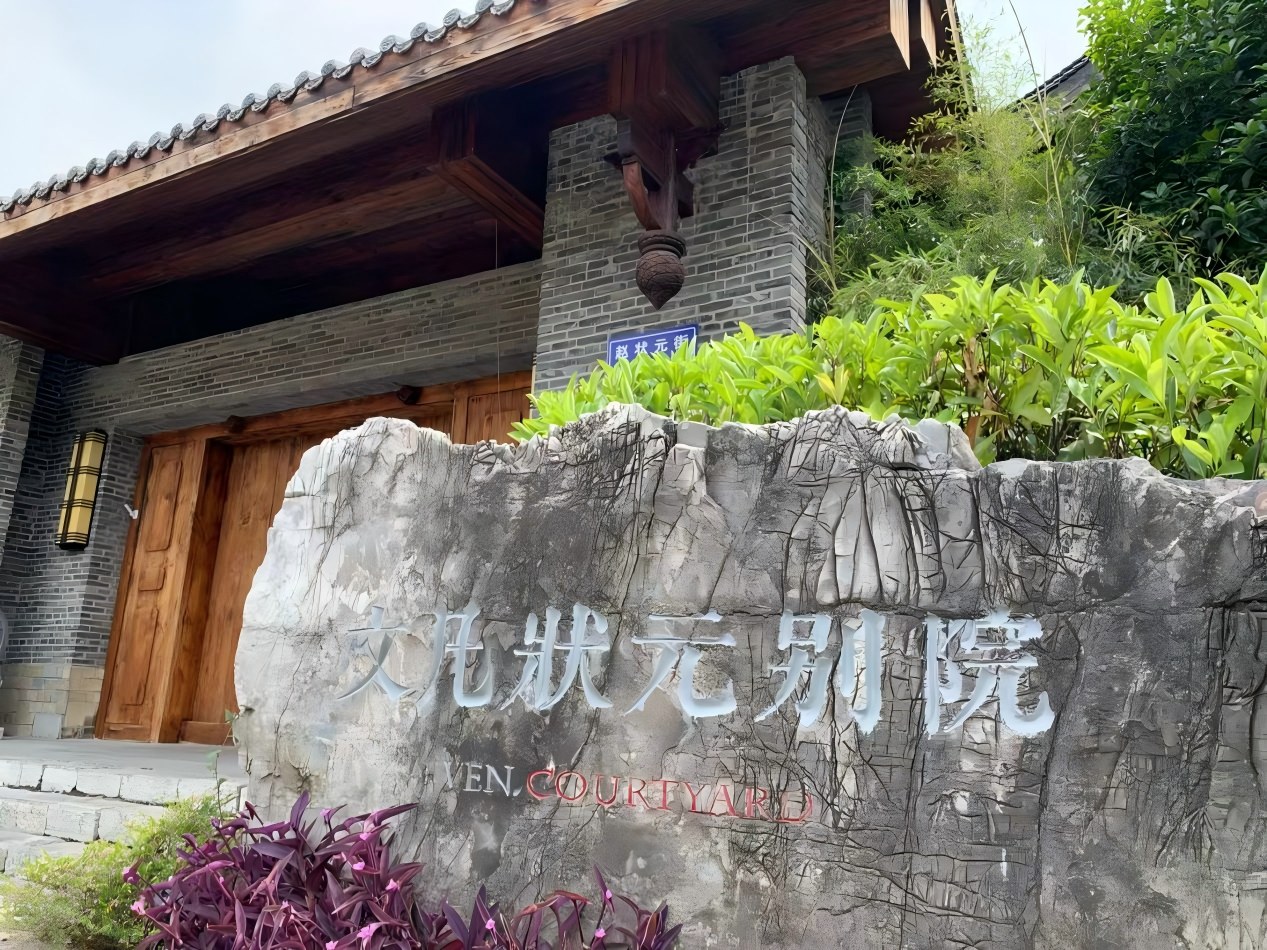
Zhao Yijiong made history in 1886 when he topped the national imperial exams—a huge achievement that broke the stereotype that “no one from Guizhou could come first.”
His residence, built during the Qing Dynasty, is a peaceful courtyard of blue stone and wood. Inside, you can see his study, bedroom, and even the royal scroll and plaque he received from the emperor. His writing tools and calligraphy are also on display.
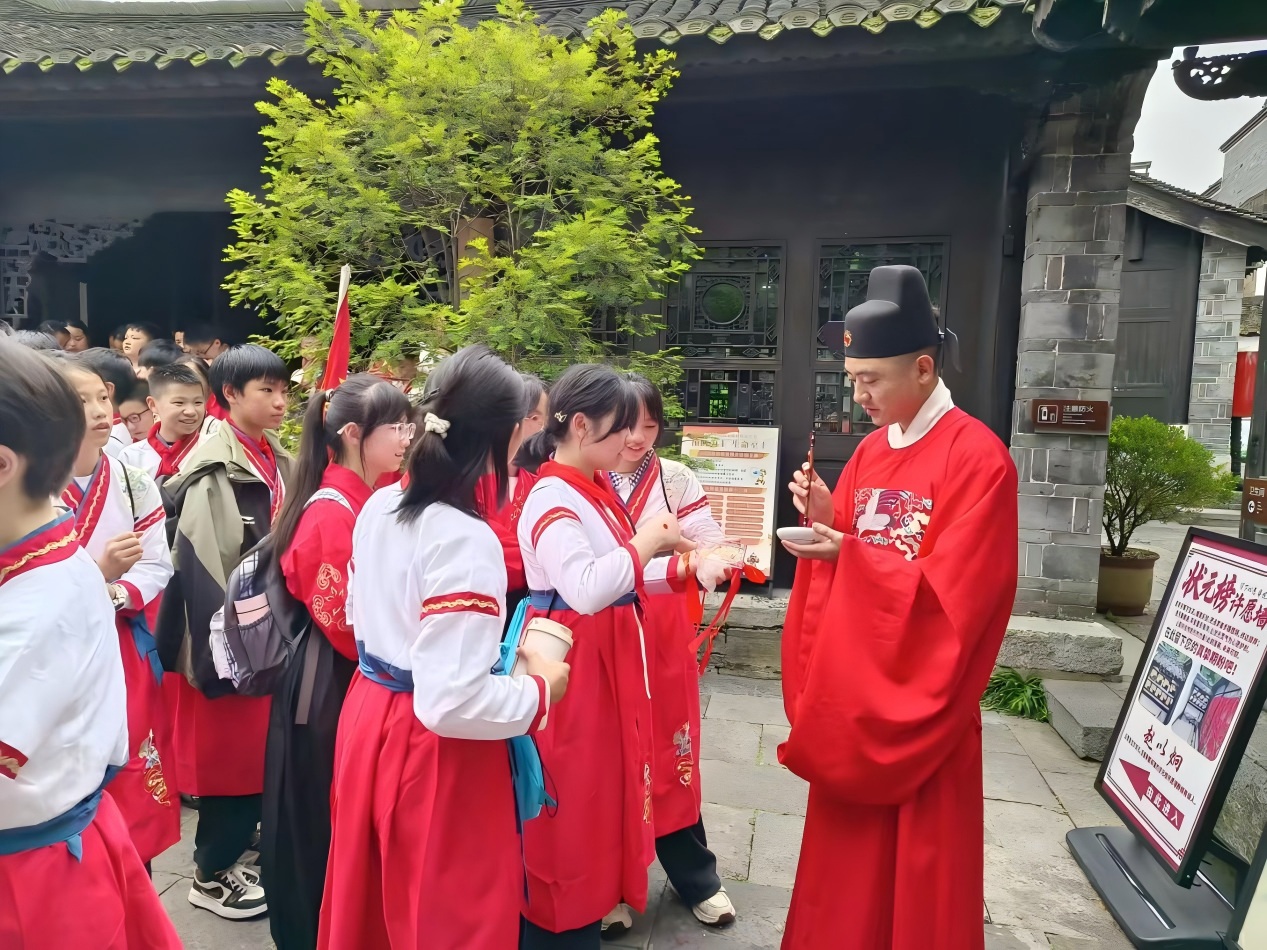
They say Zhao studied day and night, often by oil lamp, in a temple outside town. His story inspires students even today—many come here to pray for success in their studies.
3. Qingyan Catholic Church – Where East Meets West
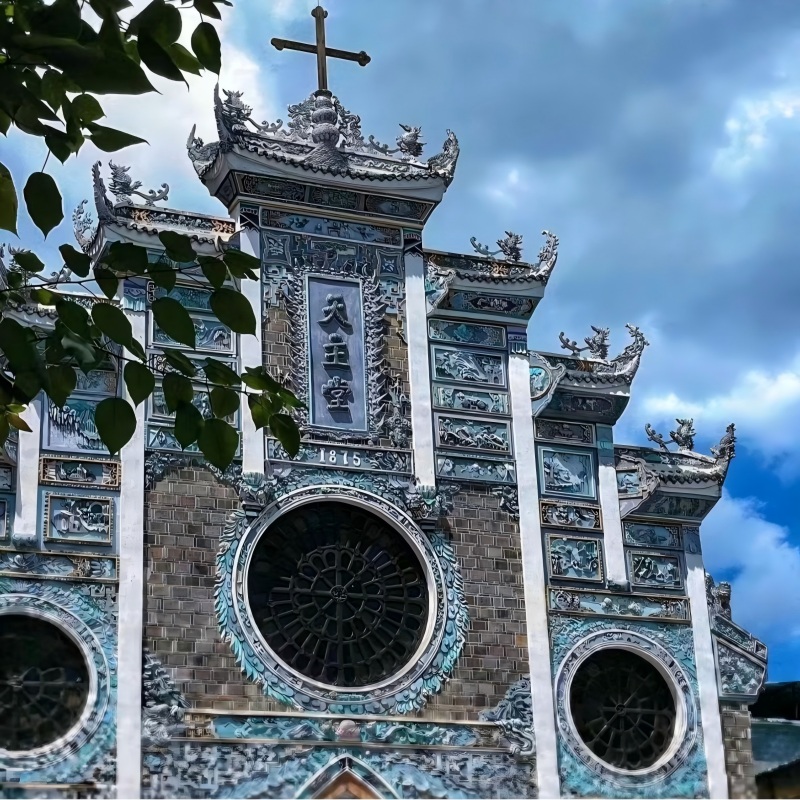
Tucked among the stone lanes is something unexpected: Qingyan Catholic Church, a beautiful symbol of cultural blending. Built in 1901 by French missionaries, it’s one of Guizhou’s earliest Catholic churches.
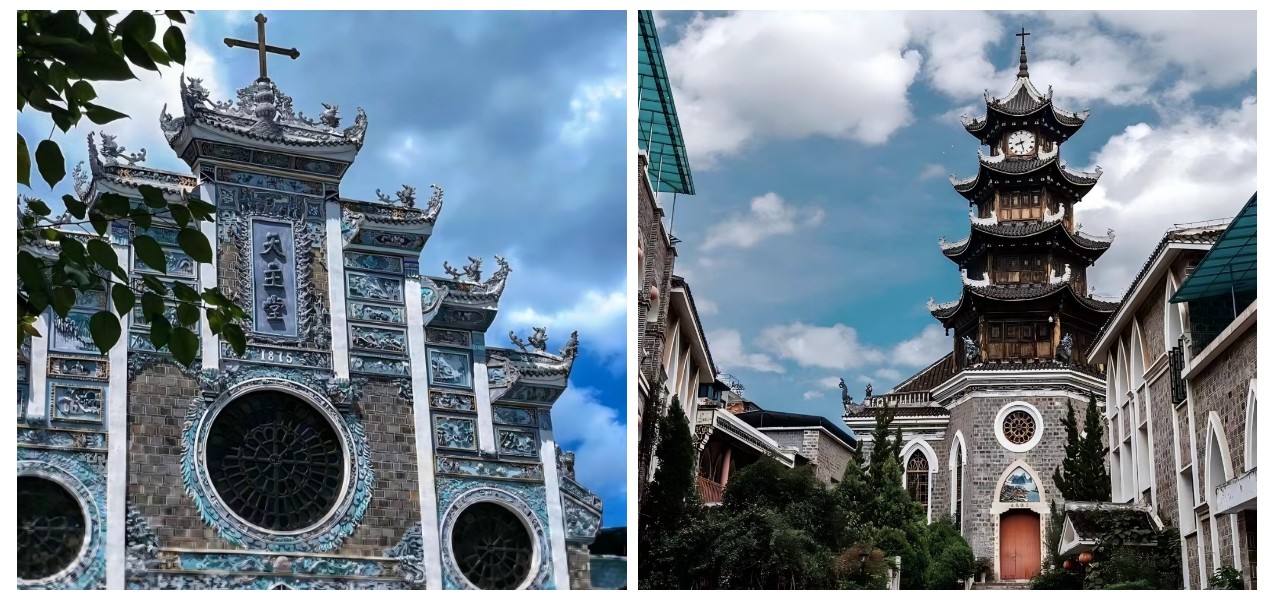
What’s special is its architecture: Gothic-style spires and arches, built with local blue stone and traditional Chinese blue tiles. Even the carvings mix Western religious themes with Chinese good-luck symbols.
During hard times, the church helped local people by providing food and opening a free school. In the war years, it gave shelter to refugees. Because of this kindness, locals protected the church during periods of unrest.
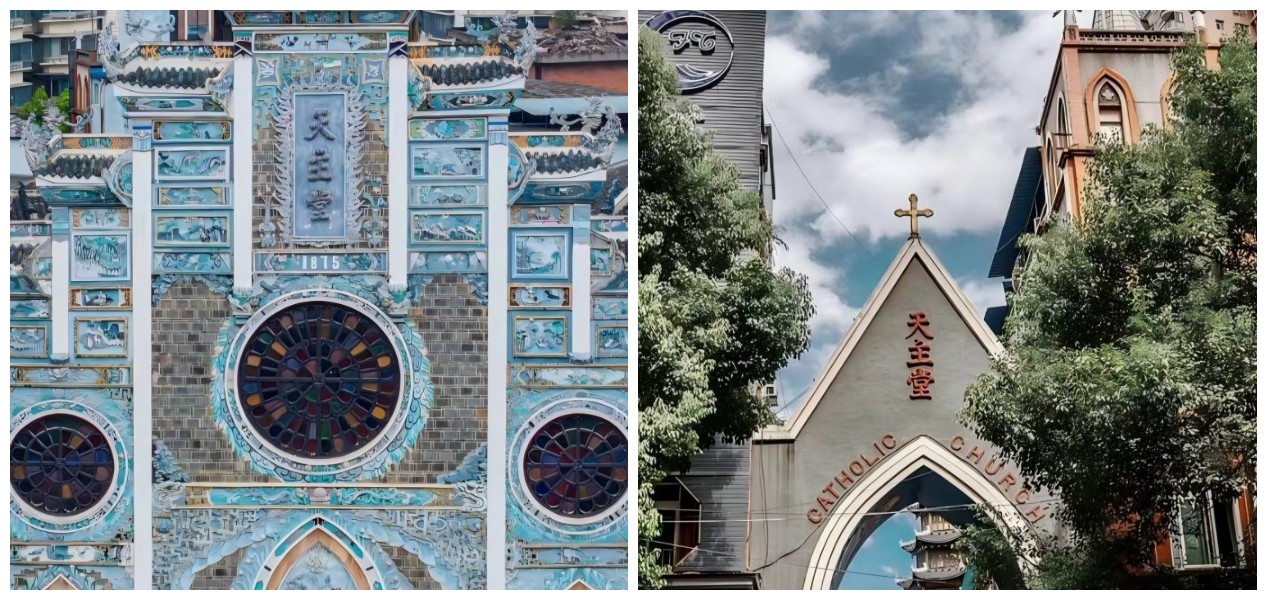
Today, it still holds services and celebrates Christmas with both locals and tourists—a lovely example of cultural harmony.
4. Wanshou Palace – A Merchant’s Legacy
Now let’s head to Wanshou Palace (Longevity Palace), built by merchants from Jiangxi during the Qing Dynasty. Qingyan was once a bustling trade hub, and merchants from all over China set up guilds here.
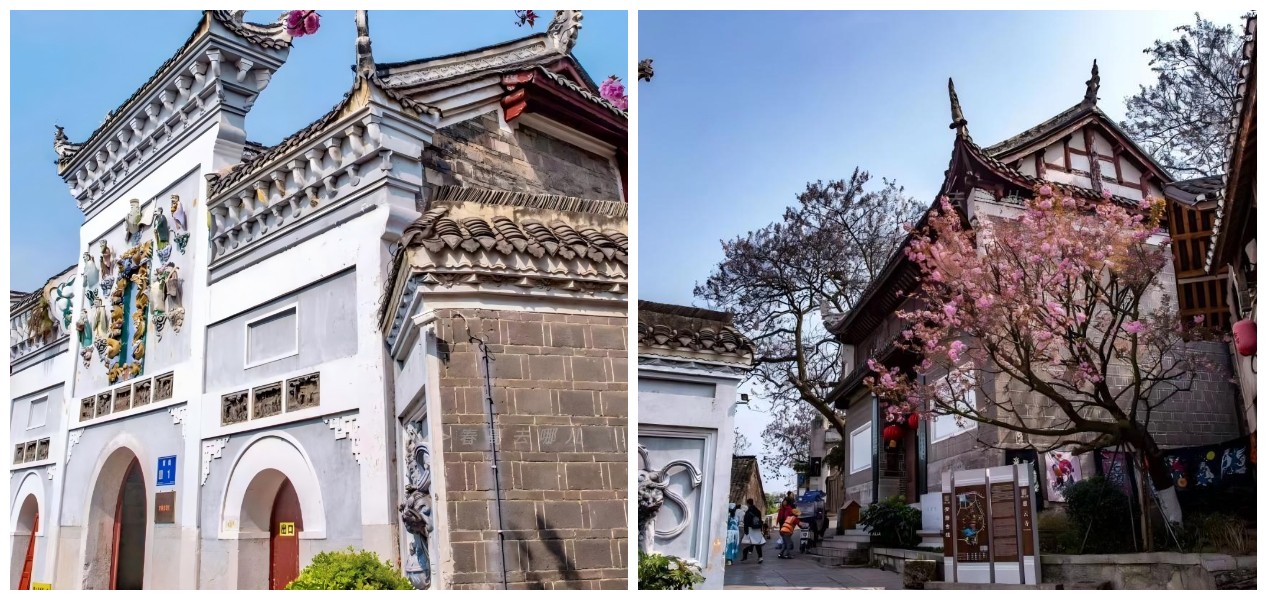
This palace was both a meeting place and a cultural center for Jiangxi merchants. It includes a main hall, side rooms, and even an opera stage! The wood and stone carvings are exquisite—showing scenes like the “Eight Immortals Crossing the Sea.”
On festive days, merchants would gather to watch performances, pray for good business, and honor the Gods of Longevity and Fortune.
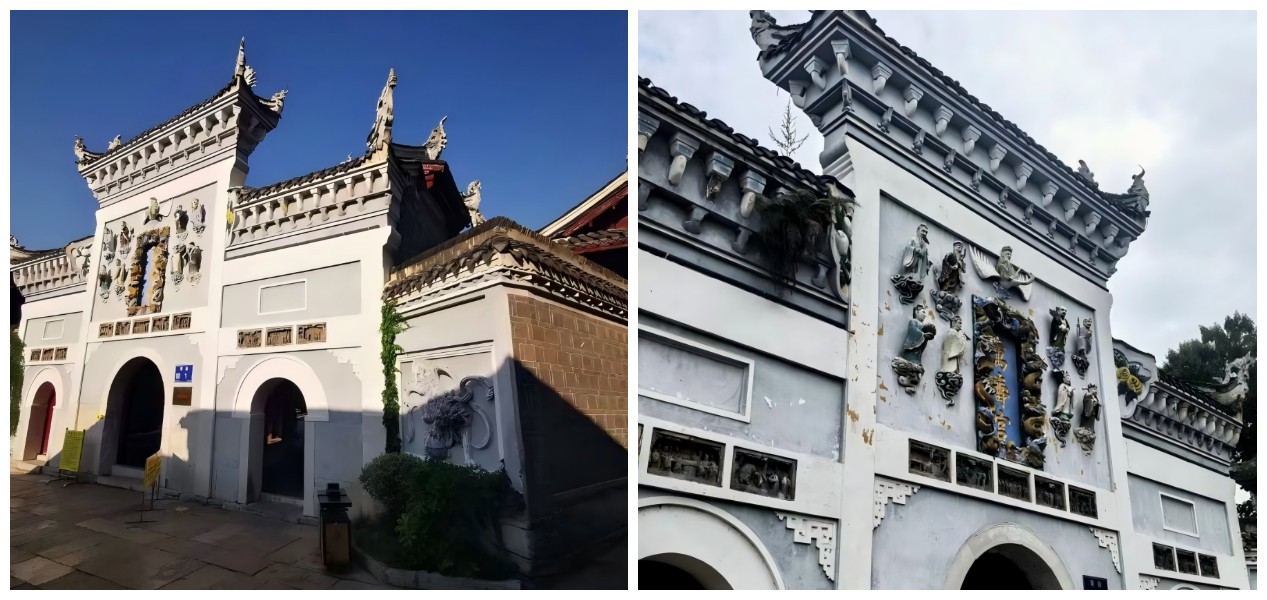
Today, the palace still hosts folk performances like Guizhou flower lantern opera—a lively way to experience local traditions.
5. Back Street Stone Alleys – Walk Through History
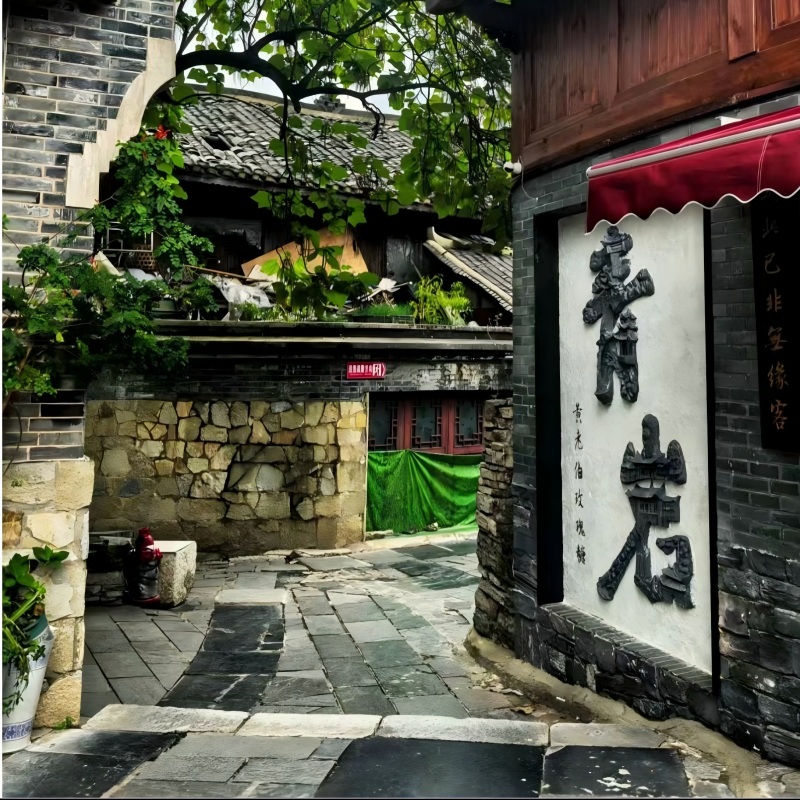
Last but not least, let’s wander through the Back Street Stone Alleys—the soul of Qingyan. These narrow lanes, paved with blue stone slabs, are the oldest streets in town.
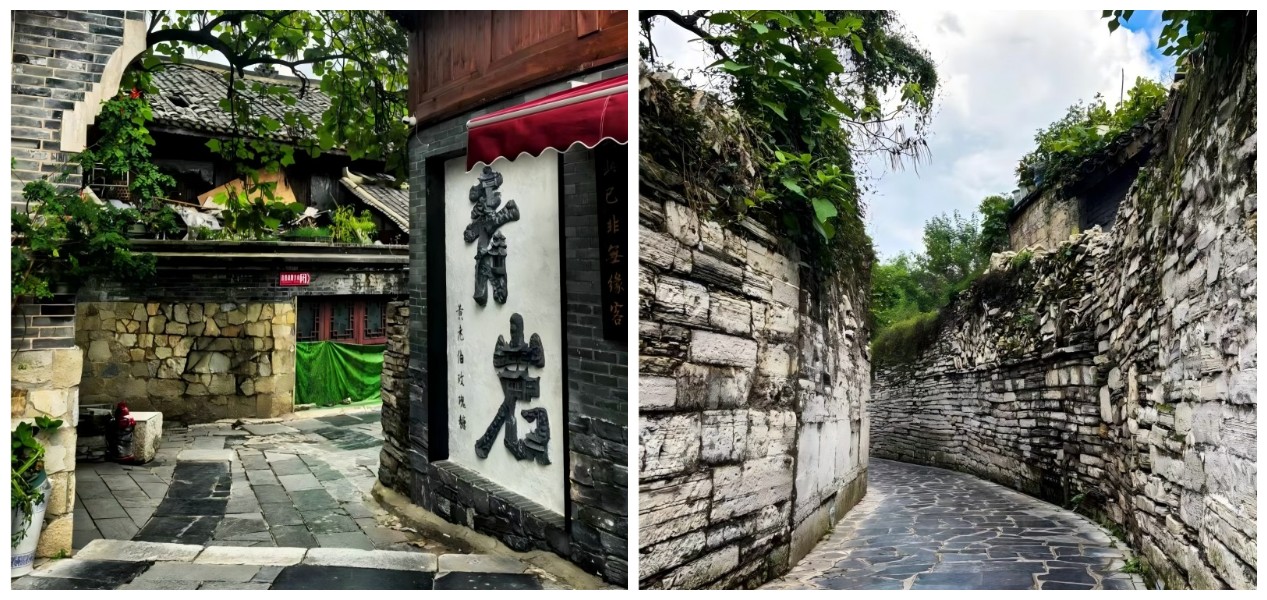
Walking here feels like stepping back in time. The stones have been worn smooth over 600 years. On both sides, you’ll see stone houses with blue-tiled roofs, red lanterns, and dried corn and chilies hanging under the eaves.
Why so narrow? Legend says the narrow, winding lanes were designed to confuse and slow down thieves!
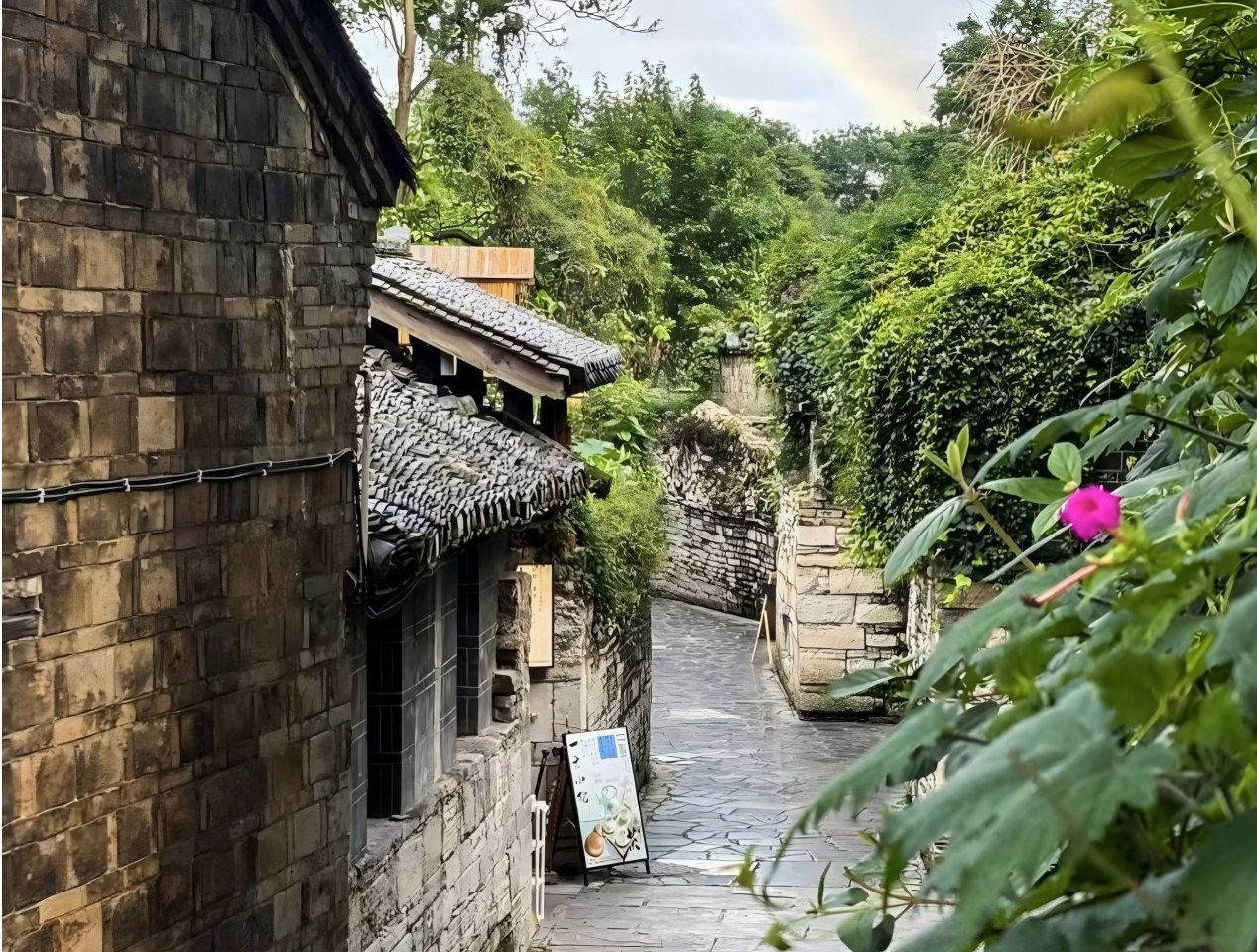
These alleys are a photographer’s dream. You might meet elderly locals selling snacks—their calls echoing just like in Ming and Qing times.
6. Final Thoughts – A Stone Town You Won’t Forget
Dear friends, our Qingyan journey is ending—but I hope its magic stays with you. You’ve seen the grand South Gate, the scholar’s quiet home, the East–West church, the merchants’ palace, and the timeless stone lanes.
Qingyan is more than just old buildings—it’s a living story of soldiers, scholars, merchants, and everyday people. It’s not a soft Jiangnan water town; it’s strong, stone-built, and full of character.
Thank you for joining me today. I hope you’ll share the beauty and stories of Qingyan with others. Let more people know about this incredible ancient town in Guizhou.
Wishing you all wonderful travels and hope to see you again soon!